The post The Flower of Scotland! appeared first on ScotClans | Scottish Clans.
]]>
The thistle is the national flower of Scotland, much like the rose is the national flower of England and the United States. Today we’re going to look at two interesting things about this flower, the tale as to why it became the national flower and also the unofficial national anthem it inspired.

There are several different legends that tell how the thistle became Scotland’s symbol, but most date from the reign of Alexander III and in particular the events surrounding the Battle of Largs in 1263.
It is often forgotten, that for hundreds of years much of Scotland was part of the Kingdom of Norway. By 1263 however, Norway seems to have had little interest in their former territory. That was until King Alexander III proposed to buy back the Western Isles and Kintyre from the Norse King Haakon IV. The thought of relieving King Alexander of some of his riches and territories appears to have re-kindled Norse interest in Scotland.
Late in the summer of 1263 King Haakon of Norway, now intent on conquering the Scots, set off with a sizeable fleet of  longships for the Scottish coast. Gales and fierce storms forced some of the ships onto the beach at Largs in Ayrshire, and a Norwegian force was landed.
Legend has it that at some point during the invasion the Norsemen tried to surprise the sleeping Scottish Clansmen. In order to move more stealthily under the cover of darkness the Norsemen removed their footwear. But as they crept barefoot they came across an area of ground covered in thistles and one of Haakon’s men unfortunately stood on one and shrieked out in pain, thus alerting the Clansmen to the advancing Norsemen.
His shout warned the Scots who defeated the Norsemen at the Battle of Largs, thus saving Scotland from invasion. The important role that the thistle had played was recognised and so was chosen as Scotland’s national emblem.

‘Flower of Scotland’ is considered the unofficial national anthem of Scotland.
 There are several other songs that have been considered to be the unofficial national anthem of Scotland including; Scots Wha Hae, Scotland the Brave and the more recent Highland Cathedral. Although in July 2006, the Royal Scottish National Orchestra conducted an online poll in which voters could choose a national anthem from one of five candidates.10,000 people took part in the poll in which Flower of Scotland came out the winner.
The lyrics were written by Roy Williamson (1936-90) and the song was performed initially by The Corries, a Scottish folk band, and refers to the victory of the Scots, led by Robert the Bruce, over England’s Edward II at the Battle of Bannockburn in 1314. The music is actually somewhat older, and was composed by Peter Dodds McCormick (c1834-1916) who emigrated to Australia as a young man, and also composed the National Anthem of Australia, “Advance Australia Fair”.
The song is also known as Flùr Na H-Alba” in Scottish Gaelic, and “Flouer O Scotland” in Scots.
The title has also been used for a history book: The Flower Of Scotland: A History Of Scottish Monarchy by James J.  Sharp, and for the biography of Roy Williamson, which was published by his daughter Karen in 1993.
There also exists a Flower of Scotland tartan which was created in the early 90′s to honour the late Roy Williamson. The design is based on the setting and thread count of the Gunn tartan, as worn by Roy Williamson, using the traditional 18th-century colours of Lichen Green and Lochan Blue although it has no Clan or family affiliation and therefore is available for all to wear.
Thistle Products from ScotClans…


The post The Flower of Scotland! appeared first on ScotClans | Scottish Clans.
]]>The post The Moffets track down the Danish Vikings appeared first on ScotClans | Scottish Clans.
]]>I know that Denmark ruled a massive area of England (called Danelaw) around the 9th century. The language spoken in England was affected by this clash of cultures with the emergence of Anglo-Norse dialects. What with this and being a big fan of The Killing, Borgen and The Bridge I thought I’d maybe have a head start in understanding Danish. This hasn’t proven to be true.
I have always been confused about which Vikings went where, Did the Danish Vikings just go to England and the Norwegian ones to Scotland and Ireland? or was it more mixed up than this? Have always found this a bit of a grey area.
Denmark
Denmark is made up of 406 islands, Scotland has around double this with nearly 800 islands - so we both have a lot of coast line. The largest of these Danish islands is called Jutland. I am currently in Copenhagan which is on the eastern island, Zealand. (Not the one New Zealand is named after, this is the Dutch province of Zeeland). Denmark has a population of around 5.6 million, a bit more than the population of Scotland’s 5.3 million.

Denmark isn’t that far away from Scotland – it was less than 1.5 hours flight. I’ve been told that by Viking boat it would take around 40 days.

Things I’ve noticed; Denmark is completely flat, rural Denmark is nearly all farm land, there are trees here but not vast forests, have been wondering if all the trees were made into ships. Also everywhere you look you see the Danish flag which I have just found out is risen at sunrise and taken down at sunset. My neighbours have been waking me up at 4 am when they do this. People in Denmark are very proud of their homes and have amazing furniture. They have a word that can’t really be translated called ‘Hugge’ it’s having cosy time, where they burn a lot of candles and enjoy good food and alcohol. This has probably come from having such extreme weather but has also added to their general content-ness and happiness they are famous for. They are completely trusting, babies are left outside in prams, bikes unlocked but are not overtly friendly, they don’t do chit chat which takes a bit of getting used to. Wonder how much of this goes back to their Viking past?

Moffet Hygge Time
Norse Settlers in Scotland
Between the periods of 8th to the 15th centuries Scotland saw a lot of Scandinavian settlement. The Vikings (Mostly Norwegian) colonised whole parts of Scotland. The height of their influence on Scotland was around the 11th Century. Some Clans proudly claim descent from Vikings; Clan MacLeod and Clan MacNeacail are two examples.
Our Trip to Roskilde
The end of last week, on a very sunny day we took a trip out to the Viking Ship Museum, Roskilde. It’s based around an exhibiton of 5 Viking ships that were discovered in 1962 nearby at Roskilde Fjord, near the village of Skuldelev. The ships had formed part of a barrier system to protect the Cathedral and Royal City of Roskilde.
The Excavation

How the five ships were found

The excavation of the Skuldelev ships in 1962.

Inside the museum – the five ships

Another original Viking Ship

Original boat
As well as seeing these original ships, which were really impressive especially seeing the size of the largest one the museum looked at all aspects of boat building, reconstructing full scale viking ships, using replica tools.
Making the Sails
Anna Nørgaard is the museum weaver. Flax has been used in Scandinavia since the Iron Age. It’s a massive process to go from the original grass to getting it into a state you can weave with.

Flax, being prepared for weaving

Weaving Flax

Making the Viking Ship’s Sails
Making Rope
This I found really interesting – did you know you can make rope from things like pig hide and sealskin? Most of the rope was from bark, here is someone making lime bast rope.

Making lime bast rope

All kinds of rope

I got beaten at a Viking game and my son dressed up as a Viking – no horned helmets here.
Ship reconstruction at the museum’ s boatyard
The workshop is an archaeological ship experiment this is ‘experimental archaeology’. By actually doing it – we constantly learn and get a fuller picture of the ships construction and it’s sailing characteristics. The boats they build here are used, lessons are learnt. It brings in the human element to archaeology and through this we can look at the interaction between Viking Age ships and society.

The ‘work shop’

Son having a go.

Making a wee viking boat
Jealously watching people departing on a 3 week Viking Voyage onboard the Sea Stallion of Glendalough, a recreation of a 9th Century Viking ship.
Just leaving while we were this is the largest reconstructed viking boat. Can seat up to 100 people and in it’s day, the original dwarfed the Mary Rose and terrorised Europe. This time they were embarking on a 3 week voyage around Denmark, stopping off at various Viking events. They have to eat as Vikings while on board, sleep onboard and who knows where the bathroom is.

Vikings Away!

We all waved and cheered it as it left, wonder if this is what happened back in Viking Times
Feel very privileged that we got to see this.

Shield and sword painted. Not quite sure how we’re going to get the shield back to Scotland.
So now the Danish Vikings are a peaceful bunch, trading in their longships for bicycles. By visiting Roskilde, it’s pretty impossible to see them as the hooligans they are quite often depicted at. This craftsmanship and teamwork can be seen today combined with strong customs – ‘The Danish Way’ as I keep hearing, it must all echo back to the past. Beginning to understand why they were such a strong influence on not just Scotland but the whole of Europe.
The post The Moffets track down the Danish Vikings appeared first on ScotClans | Scottish Clans.
]]>The post You might be a Gael if … appeared first on ScotClans | Scottish Clans.
]]> I wrote a Not Your Father’s Gaelic blog post a few weeks ago wherein I expressed how nice it would be to have neighbors who are aware of and interested in their Scottish Gaelic heritage. Perhaps even neighbors with whom I could joke around in Gaelic! As it is, even my own (Italian American) mother’s eyes glaze over when I begin to get Gaelic-y.
Of course there are loads of people with Scottish Gaelic heritage just about everywhere in America. The problem is, they have no clue of the incredible heritage that they – and their children and grandchildren – are missing. Lets face the facts: precious few Scottish Americans are actually aware that they enjoy Scottish heritage and somewhat less than a micron of that number understand their Scottish Gaelic roots. Suffice it to say that one would not likely hike through the hyper-cultural polyglot of New York City and expect to happen upon a “little Gaidhealtachd” or a corner vendor selling haggis on a stick. Not gonna happen.
Why not? Gaelic immigration to America has been significant relative to other immigrant cultures. And this is important: people came here as Gaels – these were not people who considered themselves Scottish with a side dish of Gaelic ancestry. They spoke Gaelic – many spoke it exclusively – and they engaged in Gaelic tradition and lifeways in America. It is not a difficult task to unmask at least one or three folk of Gaelic heritage in almost any office or workplace in America today. What happened to Gaelic culture in America?
I have explored a little of the “why” side of America’s Gaelic loss in prior NYFG posts and that story can be fairly depressing. You can read some of those posts here.
This particular post is not nearly as depressing and with hope it will provide a few moments of light-hearted enlightenment about what a Gael has been and is today. After all, the first job of a Gaelic activist in America is to introduce other people of Gaelic ancestry to an awesome lost heritage and in doing so, further enrich American lives.
So, in the spirit of our Ulster Scot brothers and sisters who dot the hills and hollows of Appalachia, please enjoy the inaugural edition of–
“You might be a Gael …”
You might be a Gael if you think you’re a “highlander”. Evidence of the presence and influence of Scottish Gaelic culture and language can be found throughout Scotland in clues such as Gaelic local place names. However, the Scottish highlands and islands have for centuries been the Gaelic heartland of Scotland. Gaels would not originally have referred to themselves as “highlanders” but might have used the Scottish Gaelic term “Gaidheal” or “braigheach”. Such a mountaineer would be living not in “the highlands” but in “a’ Ghaidhealtachd”. Generally accepted scholarship indicates that the modern Scottish split personality between “highland” and “lowland” – Gaelic and non-Gaelic – was not firmly in place until the 14th century. From there it only deepened and widened.
 You might be a Gael if you like Outlander. Author Diana Gabaldon is one of the first popular fiction authors to take Gaelic culture seriously – the other being author of the outstanding ”Bone Rattler” series, Eliot Pattison. Happily, Gabaldon’s pro-Gaelic approach has been taken up by the creators and crew of the StarzTV Outlander television series.
Not only is Scottish Gaelic correctly and appropriately spoken in the series but the actors and crew themselves have become outstanding ambassadors on behalf of the Scottish Gaelic culture. The three gods of Outlander Gaelic, Gillebride MacMillan, Adhamh O Broin and Gary Lewis are pictured above as part of Gary’s launch of a great online Gaelic learning site. Read about the real life Colum Mackenzie’s favorite online Scottish Gaelic language learning website LearnGaelic.scot.
You might be a Gael if you have never really got used to using the letters J, K, Q, V, X, Y and Z. That’s because the Scottish Gaelic alphabet does not use those letters. What does that sound like you ask? Try this: The website An Sgeulachd Ghoirid (the short story) is a wonderful site where you can hear Scottish short stories spoken by real people. It is a great site if you speak Gaelic but if you don’t it is absolutely fascinating. Check out the site and listen to a few stories to get an idea of what your ancestral language actually sounds like. And its nothing like English!
 You might be a Gael if every time the massed regimental pipe bands begin to march at your local highland games you drop your scotch eggs and run for the hills. Don’t feel bad, it’s a Gaelic thing. That is exactly what your Gaelic ancestors might have felt like every time one of the Royal Independent Highland Companies darkened the door of a wee Gaelic cottage. More often than not the visit was not in a friendly spirit as these precursors to the famous Black Watch regiment were hired by the Crown to keep the peace and enforce the King’s law in the Gaelic highlands.
Worse, although plenty of Gaels filled out the ranks of many brave and glorious Scottish regiments, Gaelic military service on behalf of the British crown was not always voluntary.
Indeed, it was a known practice for 18th and 19th century clan chiefs to require the military service of their clansfolk’s Gaelic sons in British foreign wars in order for clan families to be allowed to remain on clan land and continue to live and farm in the manner that their ancestors had done for hundreds of years. It was an ugly trade in sons for land. Introduction of Anglo-Norman feudal land tenure transformed clan lands into the exclusive property of the clan chief through royal grant. By adopting a feudal title, the chief became a landlord and ceased to be a clan leader. Of course the clan chief pocketed the enlistment bounties paid by the British government and thereby added another personal income stream that could help to subsidize an increasingly expensive “chiefly” lifestyle.
 You might be a Gael if you get a strange, exhilarating, warm and fuzzy feeling when you glimpse viking longships on the horizon. Yes, there was tension, battle and blood between Gaels and Vikings. Beginning in the late 8th century and continuing for six hundred years hence, the Gaelic western coast and northern islands were heavily influenced by Norsemen. But there was also trade, intermarriage, children and a blending of the Norse and the Gaelic cultures that is part of what made a Scottish Gael a unique and wonderful animal. Are you an e-book reader? If so, get a screamin’ good deal on George Henderson’s pre-1910 book The Norse Influence on Celtic Scotland. Download the Kindle edition now on Amazon for $1.59. True story. What do you have to lose?
 You might be a Gael if you secretly think that the kind of kilt that guys wear today is just wrong. It is. Well, sort of. At least from the traditional Scottish Gaelic perspective. The original Gaelic form of the kilt was developed in the 16th century and is called the “feileadh mhor” or great kilt. It is a single large wrap that is gathered around the body and fixed at the waist with a belt while the lower half of the garment is draped around the upper part of the legs to the knee. The upper part of the great kilt can be worn as a cloak over the shoulder or even over the head in bad weather. The great kilt fit the work and lifestyle of the Gael very well for centuries. Watch Outlander’s Jamie Fraser show you how to put such a thing on. If you don’t know who Jamie Fraser is, watch the clip. Then watch the Starz production of Diana Gabaldon’s Outlander.
The garment that has become so ubiquitous at Scottish highland games and other celebrations is a highly stylized version of an 18th century modification of the traditional Gaelic great kilt. It was likely developed to accommodate different sorts of work and industry and a different lifestyle that was being introduced to the highlands in the wake of the first Jacobite rising in 1715 in order to civilize Gaelic society and make it more productive for the larger United Kingdom.
By the time the small kilt or “feileadh beag” became popular among the Scottish diaspora in the late 19th and 20th centuries, it had undergone further modifications to suit kilted British military regiments. Fashion overtook function though, on the hips of romantic Victorian gentlemen who got a kick out of dressing up as a stylized version of the very same Gaels that had only recently been utterly defeated and subjugated and who would soon be physically removed from much of their Gaelic homeland altogether.
Not that there is anything wrong with your military style Victorian gentlemen’s “small kilt” – plenty a Gael wore something like it just prior to the 1746 ”Dress Act” prohibiting the wearing of any type of highland dress except in service of the Crown in Scottish military regiments. And plenty of Gaels wore the small kilt into battle as part of a kilted British regiment. But for those of Gaelic ancestry today, there is an option that is more respectful of Gaelic heritage and, frankly guys, looks a great deal better on the bod! Next time you empty your sporran and trade a son to buy a new kilt – make it a great kilt and …
Get Your Gaelic On!
The post You might be a Gael if … appeared first on ScotClans | Scottish Clans.
]]>The post An Ode to Scotland – Meeting a Modern-Day Scots Poet appeared first on ScotClans | Scottish Clans.
]]>Intertwined and impenetrably linked to Scottish culture, poetry has a long and distinguished history in Scotland. And it’s a history that’s continuing to this day – Edinburgh was recently named the world’s first UNESCO City of Literature, the publishing industry is thriving, the country has more literature festivals per capita than any other, and there’s at least a dozen spoken word monthly nights in Glasgow and Edinburgh alone which are frequented by a plethora of experienced and budding poets.
This new generation of Scottish poetry is certainly alive and well, carrying on rich literary traditions of old. However these days you’re more likely to find these modern-day versifiers using hashtags and laptops rather than quills and parchment.

Harry Giles performs in Edinburgh, January 2013. Photo by Chris Scott via The STANZA Blog.
Meet Harry Giles, 27, an Edinburgh-based poet, producer and performance artist. He’s the proud author of two poetry publications, performs regularly in England and Scotland, and is something of a luminary in the Scottish poetry slam scene – winning the UK Student Slam in 2008 followed by the BBC Slam in 2009. I first encountered him at the BBC Slam during last years Fringe festival, where his ranted, passionate ode to Scottishness entitled Brave grabbed me by the ears and demanded my attention.
I sing
o
a Scotland
whit
wadna ken workin class authenticity gin hit cam reelin aff an ile rig douned six pints o Tennent’s n glasst hit in the pus,
whit it wadna
by the way;
o google Scotland,
o laptop Scotland,
o a Scotland sae dowf on bit-torrentit HBO drama series n DLC packs fer paistapocalyptic RPGs that hit disna ken hits gowk fae hits gadjie;
- Excerpt from Brave.
Harry is one of only a handful of young poets writing and performing in Scots – one of three native languages spoken in Scotland; predominantly in the lowlands, Shetland and Orkney. He grew up immersed in a mixture of Orcadian Scots and English on the tiny island of Westray, part of the Orkney Islands, just off the northern-most tip of the Scottish mainland.
If you, like me, assumed that Orkney was Gaelic speaking, you’re not alone – it’s an assumption that is something of a hot issue amongst Orcadians. Gaelic never had a significant impact on Orkney. Instead a form of Norse introduced by the vikings, called Norn, became the spoken language before Orcadian Scots. You can still see bits of the language around to this day – Westray and many others of Orkney’s islands end in the suffix ‘ay‘, which is Norse for ‘island’.
With Celtic culture so prevalent in defining the image of Scotland both here and abroad, this different kind of Scotland, where things are more Norse than Celt is a theme that pops up in Harry’s poetry. “Scandinavian culture is very influential in Orkney. The place names, peoples names, even the architecture. It kind of feels half Scottish, half Scandinavian. And it’s even more so on Shetland.”
Along with identifying with this different type of Scottishness, Harry was born in London, but his family moved to Orkney when he was two. At that time in Westray, the Giles family were one of the only ‘incomer’ families, the Orkney term for outsiders who have adopted the isles as their home. “I have no feelings of home towards England, I’ve only had feelings of home towards Scotland. So I’ve always had this doubleness where Orkney is my only home but I don’t quite belong either.”

Visa Wedding by Harry Giles
This mash of English/Orcadian/Scottish identity makes good fodder for poetry, with Harry’s 2012 publication of Visa Wedding acting as a kind of therapy, addressing and resolving these questions about himself:
Listen, hit’s semple:
in Orkney I’m English;
in England I’m Scottish;
in Scotland, Orcadian–
this glib-gabbit, mony-littit tongue
snacks at identity as tho hit wis
a gollach piecie sappit wi
the sweet-n-soor o BELONG.
- Excerpt from Visa Wedding #1.
His love of Scots came from the sounds and rhythms, and the way it feels to speak. “When I’m writing in Scots, I’m often digging out words from my memory that have fallen off my tongue as I’ve lived in St. Andrews, London and Edinburgh. They’re words from Orkney that I knew in my childhood and used in my childhood but never identified with enough to keep using and have lost over the years. So I’m recovering a lot of those words, and recovering a part of my own identity which is Scottish and not Scottish at the same time.”
“Even as a written language, you can’t get away from how Scots sounds. It’s impossible to write without thinking about the speaking of it possibly because of the tradition of Scots literature which is so connected to speaking. So I really like that aspect of it. Something that people say to me now is that they look at my Scots poem on the page, and they have no idea what it says, and then I’ll speak it and it becomes immediately intelligible. And that’s really interesting to me.”
The status of Scots as a language is a hotly contested topic, with some claiming it’s merely a dialect, or ancient variety of English; or at the other end of the scale a completely distinct language from English, in much the same way that Norwegian is closely linked yet vastly different to Danish. Harry’s view is that what matters is where people can be understood by each other.
“If somebody in Glasgow can’t be understood by somebody in the East End of London, talking the way they would in those places, then I think it’s pretty sensible to say that they’re separate languages.”
In the 2011 Scottish census, 1.54 million Scots (30%) indicated they were able to speak Scots, however an earlier study of the language by the Scottish Government found that 64% of respondents “don’t really think of Scots as a language”. This may be because of Scots reputation as slang, as for many years the language was discouraged by officialdom and schools. Today Scots is promoted and fostered, but it’s nowhere near as threatened and in decline as Scotland’s other traditional language, Gaelic, with only 58,000 respondents in the 2011 census indicating they could speak fluently.

A leading light of the Scots Renaissance, Hugh MacDiarmid.
“There are also different type of Scots, not just regional variants, but what I would call vernacular Scots, which is the way that people actually speak. So if you go into a pub in Leith you will actually hear people speaking in what I call the (Leith Scots) vernacular. There’s also a sort of literary Scots which is not necessarily how people speak.” Harry explained that during the 50s there was an active reclamation known as the Scots Renaissance by people like Hugh MacDiarmid and Hamish Henderson who were deliberately working to preserve and recreate the language.
“Folk like MacDiarmid would read ancient Scots dictionaries and travel around and collect words from people, and then construct what he called a ‘syncretic’, as in synthesised Scots from that, taking the words the people spoke and making a literary language out of them.”
“And most poets writing in English are writing in a kind of English that’s nothing like people speak, ya know. So I’m writing mostly in literary Scots, in a sort of constructed Scots, rather than the Scots that people speak.”
While Harry agrees that cultural dominance can threaten and water down traditional language, he’s skeptical of some of the recent efforts employed to promote Scots. “It’s a very optimistic utopian project to imagine that we might have a complete body of work that’s written only in Scots. There’s too many different types and regional variants of Scots, and I’m really resistant to the idea of there being a monolithic Scots that has one form of spelling and one form of words. I’m much more interested in people writing new work and working in new ways in Scots than I am in reading a translation of Asterix in Scots.”
Harry is currently writing about 50% of his work in Scots, and said he can usually tell straight away when writing a poem if it will be in English or Scots. However sometimes he bounces a poem between the two languages, or if the poem is about Scotland, then it’s almost always in Scots. Cue what is fast becoming known as his signature piece, Brave, which was written in 2011, just as the Independence debate was starting to heat up.
cadna hink o a grander wey tae end a nite as wi a poke o chips n curry sauce,
whit chacks the date o Bannockburn on Wikipaedia,
whit draws chairts on the backs o beermats tae lear ye aboot rifts n glaciation
n when hit dis hit feels this oorie dunk,
this undesairvt wairmth
o inexplicable luve;
- Excerpt from Brave.
“I was thinking a lot about my past, and how I felt about Scotland and was reading a lot of Scots poetry. I wanted to get across something of the contradictions and complexities of Scottish-ness. I wanted to react against the tartan tat vision of Scotland. And even though Orkney is the only home I know I am still an incomer. I wanted to claim Scotland for myself in some way, and also talk about how it is and isn’t mine at the same time.”
“And I like being funny, and I like being angry, and I like being ranty, so I just wrote the longest rant that I could in Scots, about what Scotland meant to me. And what pissed me off and what I liked about Scotland. It’s kind of like my state of the nation poem; as if a wee scrote like me could write a state of the nation!”
The poem has gone on to have a life of its own, being featured on podcasts, websites, and in the Scottish literary journal New Writing Scotland. He thinks the poem gained significance as it came out just at the right time, when all across the land people are questioning their identity, just before the looming independence referendum this September.
“Literature and poetry in particular are quite central to Scotland’s self understanding. Poetry and folk music are our art forms. There are poems carved on the walls of Scottish parliament, so it definitely has a place in our political discourse. So I do feel like artists are central to the way Scotland constructs and presents itself.”

Oam by Harry Giles
Post-Brave and Visa Wedding, Harry says his writing has moved on, and he’s not writing as much about Scotland as a whole these days. His second publication Oam was the result of a five month residency at Govanhill Baths in Glasgow, with proceeds from the sale helping the project reopen as a community swimming pool and well-being centre. The poems are all written in contemporary Scots and describe the baths and their incredible history.
“(Writing Oam) was quite nice because I was writing in Scots intensely, but I wasn’t writing about Scotland. I was just writing about this one place. So I’m less interested in the big questions of Scotland at the moment, in poetry, and more interested in local stuff.”
As his body of work moves and evolves, Harry says the reason he talks so much about Orkney now is because he has an urge to go back to discover more of that part of himself. “The Scots that I write is influenced by the Scots that’s spoken in the lowlands, it’s very influenced by urban Scots, partly because that’s what i’m living in now, and partly because that has dominated the Scots literary tradition. I have an ambition to spend much longer in Orkney digging to try and get more of the Orcadian Scots into my own writing, and that would involve investigating Norn a bit more. I’m also interested in the Viking forms of poetry and how this has influenced Scots poetry. But that’s more of a long term ambition.”
As Harry’s work expands and evolves, he’s the latest in a long line of innovative writers who have been inspired and shaped by Scotland and Scottishness. As the country considers its future, Harry’s body of work mashes literary traditions of old and new, providing a pertinent and contemporary review of Scotland’s identity.
—–
You can read more about Harry here, and listen to a recording of Brave here.
The post An Ode to Scotland – Meeting a Modern-Day Scots Poet appeared first on ScotClans | Scottish Clans.
]]>The post Ambassador Claims Vikings ‘Brought Sarcasm to Britain’ appeared first on ScotClans | Scottish Clans.
]]>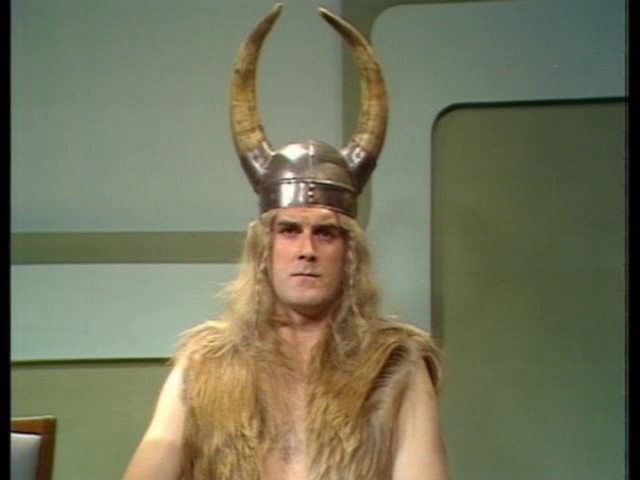
Monty Python have a lot to thank the Vikings for according to the Danish Ambassador
For over two centuries, Vikings colonised, traded and raided their way through much of Britain before disappearing form the pages of history completely. That’s not to say they didn’t leave behind a legacy that’s still able to be seen and heard to this day. Over one thousand years since the raiders from the north landed on these shores, place names still ring with the sounds of Norse, and archaeological artifacts left behind are still being found. Now sarcasm, understatement and irony can apparently be traced back to the Viking era too.
Earlier this month the story below which originally appeared in The Telegraph reported on comments by the Danish Ambassador to the UK, who said the similar sense of humour between the two countries originates from shared cultural heritage. Read on…
It may be the bedrock of British humour, but sarcasm was actually brought to the UK by the Vikings says the Danish Ambassador.
The British use of understatement and satire is thought to originate from the Vikings, typically noted for raping and pillaging throughout history, when they brought trade from across the world to British shores.
This led to exchanges with Britons, and the Vikings influencing them with the words and expressions they used. These eventually became part of everyday language, seen in some of the words and place names we use today, and ultimately in our caustic sense of humour.
Sarcasm, irony and understatement are part of the “common heritage” between Denmark and the UK says Claus Grube. He also claims there are traces in comic tales used in the later Old Norse sagas, such as Orkneyinga Saga where an Earl goes out disguised as a fisherman, to help a farmer.
These sagas, largely from the thirteenth century and known for their “laconic humour, detail examples of comedy in the face of adversity, and also contain the roots of some Danish and English words showing more similarities in how we communicate.
Sarcasm is very much inherent in British humour,” Mr Grube told the Telegraph.
He cites contemporary episodes, particularly the “extreme popularity” of Monty Python in Denmark as an example of the shared sense of comedy between the two countries which he says shows evidence of a common cultural heritage.
“It has always struck me that in the UK we have the same sense of humour as in Denmark,” he added.
“We use sarcasm and irony, and we also like understatement.
“I think this forms part of our common heritage, stemming from the Vikings and some of the legacy they have left.
“I think this legacy forms part of the way we express ourselves and the way we interact and the way you use language.”
Mr Grube cites a typical British use of sarcasm, describing something as “it could have been worse”, as humour particular to both countries that he believes could stem from expressions brought to the UK from the Vikings.
“It was not all about raping and pillaging, the Vikings were trading as well,” said Mr Grube, who has been in the UK for six months but said he has been struck by the similarities in British and Danish comedy.
“You have a more open attitude to the world around you if you are living from trade.”
Mr Grube said trading led to exchanges with the Vikings and the inheriting of expressions and body language, which influence comedy today.
He added: “Humour is actually an important part of the way you express yourself.
“The use of sarcasm and irony is quite distinct from other countries. For example if you use that in France and Germany it will often be taken literally, and the humour lost.”
Mr Grube said this difference adds to his belief that humour in the UK and Denmark dates back to our shared history.
He also cites Dane Law as an influence on words in Britain. He added: “Words were inherited, especially in the geographical sense under what you would call Dane Law. But it’s not only geography, this introduced a legal system as well.”
Dr Matthew Townsend, an expert in Old Norse from the University of York, said examples of influences on English humour can be seen from a range of periods in history, including in Old Norse sagas which were largely written in the thirteenth century – three centuries after the Viking settlement of England.
He said: “Anglo-Saxon texts also show a fondness for terse understatement, often of a humorous kind: so, for example, the poem Beowulf declares of the haunted mere where Grendel and his mother live, ‘that is not a pleasant place!’
“So one would be hard pressed to demonstrate that such understatement is a Viking import to England, rather than a common tradition.
“But it’s certainly true that the Old Norse sagas offer abundant examples of laconic humour, often in the face of adversity. My favourite comes in Grettir’s Saga : the hero’s brother, Atli, is stabbed fatally through the stomach, whereupon his dying words are (more or less) ‘I see that broad spears are in fashion this year’.”
Ivar Berg, a postdoctoral fellow at the Norwegian University of Science and Technology, said while there were close interactions between Scandanavians and the English, he did not believe the Ambassador’s statement. He said: “There are parallels, of course – sarcasm and understatements are well known and highly regarded also in Scandinavia, but to pinpoint a direction of influence seems futile.”
Dr Ragnhild Ljosland, a lecturer in Nordic Studies at the University of the Highlands and Islands, said rather than one source, it was likely English humour had been subject to a range of influences over the last 1,000 years. Dr Ljosland said: “I believe that the English have developed and refined their sense of humour through the ages and that it draws on a range of sources of cultural contact, as well as being their own, of course.
“Personally, as a Scandinavian living in the UK, I find the English understated and sarcastic sense of humour hard to understand. It often completely passes me by.”
In the chapter ‘Poetry and fishing’ in Orkneyinga saga, humour is used to describe how an Earl manages to hide his identity from villagers by pretending to be a fisherman. The Earl, dressed in a cowl, goes fishing with a farmer and gives all his haul away, before climbing a slope where “his feet shot from under him where the rain had made it slippery and he tumbled down to the bottom of the slope.”
The passage is followed by a comic verse recited by the Earl, where he reveals his identity:
“Wittily the woman
mocks my wear
but she laughs overlong,
and may not laugh last.
Early I sailed out,
eagerly, and all fully
furnished for fishing
Who’d figure me for an earl?”
The post Ambassador Claims Vikings ‘Brought Sarcasm to Britain’ appeared first on ScotClans | Scottish Clans.
]]>The post Vikings Force Closure of Shetland Fire Station appeared first on ScotClans | Scottish Clans.
]]> A Shetland fire station has been forced to close its doors as the result of a viking fire festival. Two fire fighters from the station on the Island of Bressay have refused to shave their beards ahead of today’s Up Helly Aa festival, which celebrates Shetland’s Viking heritage and culminates with the dramatic burning of a replica Viking galley.
The island with 360 residents has been without fire cover since November because the men’s beards prevent them from wearing breathing apparatus in an emergency. In the event of a fire, a crew from Lerwick would be ferried across the harbour, while officers from the island have been handing out fire prevention advice as a precautionary measure to the island’s 360 residents.
Local senior officer for the Shetland, Orkney and Western Isles, Billy Wilson, said: “Our retained staff do an excellent job and we recognise that the history and culture of a community will influence when members of a station may require time away from the service.”
“It is crucial as a service that we balance that with the wider issue of public safety and for that reason we have developed contingency plans.”
Up Helly Aa is an annual event held on a variety of differnt Shetland Islands to mark the end of the Yule season. It features a band of latter-day Viking warriors known as the Jarl Squad, and draws visitors from around the world. The Vikings traditionally spend much of the day making public appearances followed by celebrations which proceed well into the night. The day after is always a holiday on Shetland, allowing time for the vikings to recover.
Here’s the best of this years reactions on Twitter so far, and a live stream is also available from 2pm local time here
and so it begins….#UpHellyAa pic.twitter.com/h04UM0lOBG
— Bombskare (@B0MBSKARE) January 28, 2014
Hearing lots of hairy men shouting outside #uphellyaa
— Chris Cope (@chrismcope) January 28, 2014
Its no every day you sit in hairdresser an 100+ marauding vikings and a brass band march past! Must be #uphellyaa
— Rachel Laurenson (@Rua2000) January 28, 2014
Vikings having breakfast. This must be Shetland! #uphellyaa pic.twitter.com/V5pnbFcAbA
— Andy Buchanan (@acbphoto) January 28, 2014
The post Vikings Force Closure of Shetland Fire Station appeared first on ScotClans | Scottish Clans.
]]>The post Clan Television Series Axed appeared first on ScotClans | Scottish Clans.
]]>
1263 Battle of Largs
American television network ABC has scraped plans to create a sweeping TV drama set in the Highlands. Described as a ‘tartan Game of Thrones‘, the series was to be set in medieval times when the great Clans battled one another and Viking invaders.
Tentatively titled The Clan or Highlanders, a significant amount of the series’ plot is said to have been centered around the 1263 Battle of Largs. Sources close to the project said the historical drama would have featured epic battle scenes between Clansmen and invading Vikings.
The series won an ABC development deal last year, but was not part of the projects selected last month to be made into pilot episodes. Produced by Charlize Theron’s production company Denver & Delilah, the Oscar winning actress was also set to be an executive producer on the series. The script was penned by Northern Irish filmmaker Terry George whose previous credits include Hotel Rwanda. A report by the Daily Record stated that the project could be resurrected if another network showed enough interest.
The post Clan Television Series Axed appeared first on ScotClans | Scottish Clans.
]]>The post From Norway with Love appeared first on ScotClans | Scottish Clans.
]]>
The Nidelva River, with Nidaros Cathedral in the background. Trondheim, Norway.
When asked to give the name of his nearest mainline rail station on a Parliamentary expenses questionnaire, former liberal MP for Orkney Jo Grimond gave his reply as Bergen, Norway. This facetious response turned out to be correct, as Bergen’s rail station is situated 340km from the Orkney constituency, compared with the Highland Main Line station at Inverness 420km away. This geographical closeness between Norway and Scotland has provided the grounds for a lasting relationship between the two countries, with Scandinavian culture and language leaving an indelible mark upon Scotland.
From about the 8th century onwards, the North Sea was awash with Vikings, setting sail by longship on their infamous plundering invasions. Initially attracted by gold and treasures held within monasteries in the north of Scotland, Vikings could reach the Islands of Shetland in less than 24 hours by longship under good seafaring conditions. Over the centuries, Hebrides and Caithness would come under Norse rule, with Orkney and the Shetlands remaining Norwegian earldoms until 1468. Nowhere is Norwegian influence more prevalent than in the northern isles, with almost half of all people on Shetland and 30% on Orkney claiming Viking ancestry.
These days the longships have been swapped for short-haul planes, as direct flights operate between Edinburgh and Oslo. I’m writing this blog entry from Trondheim, Norway’s ancient capital. It’s a beautiful little town about a third of the way up Norway; with continuous streets of wooden houses painted in an array of different colours, Gothic architecture intertwined with modernity and innovation, and of course, snow covering everything. The city was founded in 997 as a trading post by Viking King Olav Tryggvasson, and remained the capital throughout the Viking age until 1217. The magnificent Nidaros Cathedral is located in the middle of the city, and at over 1000 years old has an impressive history, changing religious hands from Catholic to Lutheran during the protestant reformation in 1537.
My Norwegian essentially consists of one word – ‘takk’, so while watching a film last night with Norwegian subtitles I was trying to match up the words as I saw them on screen with what I could hear. I came across the Norwegian word for toddler – ‘barn’, which I thought resembled the Scots word ‘bairn’. Turns out ‘bairn’ is a direct derivative of Old Norse, along with many other Scots words including midden (rubbish dump), muckle (large) and even kilt, from the verb ‘kjalta’ (to fold).
Scandinavian heritage is also evident amongst Clans, with some being able to trace their roots back to Norse Kings. Clan MacLeod and Clan MacLeod of Lewis claim their descent from Leòd, who lived in the 13th Century. It was thought that Leòd was a son of Olaf the Black, the Viking sea-king who ruled the Isle of Mann. However this genealogy has been contested, with articles recently published in the MacLeod Clan magazine suggesting that Leòd was in fact a distant cousin of Magnus, the Last King of Mann. The name Leod is the anglicised version of the Gaelic name Leòd, which is thought to have derived from the Old Norse name Ljótr, meaning ugly. Mac is the Gaelic word for son, therefore MacLeod stands for Son of Leod. Clan Gunn in the North and Clan MacDonald of the Isles can also trace their lineage to Norse descendents.
Cultural similarities also exist in modern times, with each country sharing an interest in gloomy, gritty crime drama. The success of Norwegian detective writers like Jo Nesbø and Karin Fossum echoes that of the ‘Tartan Noir’ writers including Ian Rankin, Val McDermid and William McIlvanney. In an interview with the BBC, Ian Rankin suggested that the similarities in each countries fiction hint at something deep rooted in the national characteristic. “In countries where it’s dark half the year, you do tend to have a great tradition of storytelling … Both sides tend to share quite a dark view of the human condition, and are certainly a long way from the Agatha Christie school of crime writing.”
One thing that isn’t so similar is the price of living, in particular alcohol. On my first night here I was mortified when I went to pay for one bottle of beer, at almost £14 a pop. Punitive taxes placed on alcohol by the Government, combined with the strength of the Krone make for very expensive nights out.
—
You can read more about the return of Orkney and Shetland to Scotland here
The post From Norway with Love appeared first on ScotClans | Scottish Clans.
]]>The post Travel guide warns Vikings of hostile Scottish natives appeared first on ScotClans | Scottish Clans.
]]> An Icelandic ‘travel guide’ from the 13th century gave warning to any Viking thinking of heading to ‘Skotland’ to do a bit of plundering that they should be wary of the aggressive natives with their incomprehensible language, and, of course, the country’s dreadful weather.
This information was gathered from the experiences of a number of travelling Icelanders and Norsemen who had been to Scotland and it was written on a yellowed calf vellum sometime in the 1200s. The sagas give an impression of a very violent country, saying ‘Icelanders who want to practise robbery are advised to go there. But it may cost them their life.’ They did add, however, that Orkney and Shetland provided a friendlier welcome, and that Orkney was a handy base camp for pillaging trips to the Scottish mainland. Though this could be in part due to the fact that Orkney and Shetland were under the control of the Norse Earls of Orkney at the time.
These stories have been interpreted by historian Gisli Sigurdsson at Reykjavik University. Sigurdsson believes that a lot of these sagas are a mixture of fact and fiction, but do give some insight into the times and experiences had by the Vikings on foreign shores.
Another story mentions a Scot referred to as Grjotgard, a relative of Melkolf (Malcolm II), who, along with a dozen ships filled with angry locals, came across some Icelandic merchants. The Icelanders had sailed into a sea loch on the west coast, and when met by Grjotgard they were told, ‘You have two options. You can go ashore and we will take all your property, or we’ll attack you and kill every man we lay our hands on.’ These sort of tales made the travellers particularly hesitant about sailing along the sea lochs, which they called ‘Scottish fjords’.
The warning tales were originally passed orally from Viking to Viking over hundreds of years before they were eventually written down. The stories would generally include cautions of the weather, dangerous landings, and natives who were hostile and would probably attack on sight. The Icelandic sagas acted as an effective guide for any would-be traveller, and covered not only Scotland, but a lot of mainland Europe and parts of the Middle East too.
The post Travel guide warns Vikings of hostile Scottish natives appeared first on ScotClans | Scottish Clans.
]]>The post Castle Maol, The Viking Princess and The Chain appeared first on ScotClans | Scottish Clans.
]]>
Castle Maol
Kylekin is a small promontory that juts out of the east end of Skye and is crowned by the ruins of Castle Maol. The main wall of the ruin is an impressive eleven feet thick, but ended up defeated by the great storm of 1948. On Febuary 1st 1948, the main wall of Castle Maol cracked from top to bottom. But the castle still stands.
It was originally built by ‘Saucy Mary’, a Norwegian princess, wife of a MacDonald of the time, who used the castle to extract toll from every ship that passed through the Kyles. It is said she had a chain across from the castle to the mainland shore. This would have been some chain! Later, Castle Maol came into the possession of the MacKinnons of Strath.

Castle Maol
The post Castle Maol, The Viking Princess and The Chain appeared first on ScotClans | Scottish Clans.
]]>