The post Scottish Beef Back on US Menus appeared first on ScotClans | Scottish Clans.
]]> Here’s some delectable news for our American readers – Scottish beef is set to make a return to dinner tables across America following an almost 20 year ban. US officials are moving to reopen the American market to Scottish farmers after a scare over BSE (commonly known as Mad Cow Disease) resulted in a ban in 1990.
The move was described as a “massive breakthrough” by Scottish ministers. However there are a few technical issues to iron out, meaning it will be early 2014 before exports to America can resume.
Rural Affairs Secretary Richard Lochhead said he was delighted about the trade barrier lift, stating the announcement could mean the resumption of exports on other Scottish products such as Scotch lamb and haggis. “Scotch Beef has been off the menu in the USA for far too long and the reopening of an extremely lucrative market is a tremendous opportunity to expand our beef exports and one which I am keen for the industry to grasp.
Mr Lochhead added that it was “vitally important” to Scotland’s red meat industry that the UK government started to put procedures in place now to avoid unnecessary delay.
Anne MacColl, chief executive of trade promotion agency Scottish Development International, said: “Scottish Beef was among the first European red meat products to be awarded the coveted Protected Geographical Indication (PGI) status over 25 years ago and is recognised as being world class.
“The US continues to be the largest single export market for Scottish goods and services and food and drink exports to the US increased by 30% in 2012 to just under £1bn.
“The opportunity for Scotland’s beef industry is therefore significant and we will continue to work with Scottish producers to support their growth into new markets and capitalise on global opportunities.”
The post Scottish Beef Back on US Menus appeared first on ScotClans | Scottish Clans.
]]>The post Tartan Day 2013 Guide appeared first on ScotClans | Scottish Clans.
]]>
Tartan Day Parade, New York City
With Tartan Day just around the corner, we’ve put together a selection of global events celebrating Scotland’s contribution to the world. This year’s festivities range from a Ceilidh in Cuba, to historical reenactments in Buenos Aires and Whisky tasting in the Netherlands.
Celebrated on April 6, Tartan Day falls on the anniversary of the signing of the 1320 Declaration of Arbroath. The declaration sought to assert Scotland’s right to self-govern and to lift the church’s excommunication of Robert the Bruce. Signed by fifty-one magnates and nobles, the declaration was written in Arbroath Abbey by Bernard Linton, Abbot of Arbroath Abbey and Chancellor of Scotland. It was addressed to Pope John XXII who supported England’s Edward II’s claim to the throne in Scotland. The declaration explained how the Bruce had delivered Scotland from Edward I’s unjust atrocities, and that Scottish independence was the prerogative of the Scottish people, rather than the king of Scots.
As well as shaping Scottish national identity, the Arbroath Declaration’s ideas about kingship, independence and the rights of the people is said to have formed the basis of the American Declaration of Independence. The rich contribution Scots have made to America was recognised in 2005 with the House of Representatives declaring April 6 National Tartan Day. A Presidential Proclamation for the national day was issued by George W. Bush on April 4 2008.
Scotland:
- Arbroath – Friday March 29 – April 7
A ten day programme of events that includes a commemoration of the signing of the Declaration of Arbroath, an international golf competition and talks by geneaologists and historians. www.tartandayscotland.com
United States:
- New York City – Tartan Week April 3-9
Not satisfied with just one day, New York celebrates with an entire week dedicated to all things Scotland. The main event is the parade with over a thousand pipers and drummers marching along Sixth Avenue on April 6. Other events include The Caledonia Collective, Macbeth on Broadway and the 10K Scotland Run. www.tartanweek.com - Dallas, Texas – Tartan Day Ceilidh April 7
An annual free event held by the Scottish Society of Dallas. Features the North Texas Caledonian Pipes and Drums, Seamus Stout, Highland Dancing and educational displays. www.scottishindallas.org - Los Angeles, California – April 6
The Tartan Day Dinner will be held at the historic Tam O’Shanter Inn and will feature music by Peter Romano of The Ploughboys and piping by Cindi McIntosh. www.saintandrewsla.org
Canada:
- Halifax, Novia Scotia – April 5
The birthplace of ‘Tartan Day’ celebrations, the Halifax festivities will include stories about Prince Charlie, dancing, poetry and a four-course dinner. www.scotsns.ca - Ottawa, Ontario – April 7
A day of heritage, piping, song, dance, and drums will be celebrated in Ottawa with the Sons of Scotland Pipe Band performing. www.sospb.com
Australia and New Zealand:
Tartan Day celebrations in the Oceania region are held on July 1, the anniversary of the Repeal Proclamation of 1782 annulling the Act of Proscription of 1747, which had made wearing tartan an offense punishable with up to seven years’ transportation. Events in 2013 are currently being planned in Adelaide, Brisbane and Auckland.
Rest of the World:
- Havana, Cuba – April 6
A Ceilidh will take place in Havana at Las Estacaiones Pub, with fiddlers Chrissy Crowley and Anna Ludlow hosting and open session of Scottish and Cape Breton tunes alongside Celtic duo Sean Am. www.facebook.com/CelticMusicSessionsInHavanaCuba - Buenos Aires, Argentina – April 7
Argentinians will celebrate Tartan Day with a Celtic and Nordic Fair, pipe bands, a reenactment of the signing of the Declaration of Arbroath and a parade along Mayo Avenue. - Rotterdam, Netherlands – April 7
Events in Rotterdam will include a tartan fashion show, Whisky tasting and highland dancing. www.theworldofscotland.nl - Fish Hoek, South Africa – April 8
The Tartan Day Dance features an open evening of dance presented by the Fish Hoek Scottish Country Dance Club. www.scd.za.net
The post Tartan Day 2013 Guide appeared first on ScotClans | Scottish Clans.
]]>The post John Ross – The Scottish Cherokee Chief appeared first on ScotClans | Scottish Clans.
]]>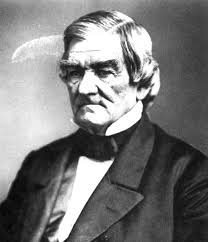
Principal Chief of the Cherokee, John Ross
John Ross was considered one of the greatest chiefs of the Cherokee tribe, having been chief for nearly 40 years from 1828 to 1866, the year of his death. However, John was not how many would have imagined a typical 19th century chief of a Native American tribe to be like. Infact, Ross was politician and a business man, and he was the son of Daniel Ross, a Scottish immigrant trader who settled with the tribe during the American War of Independence, and Mollie McDonald, who was of mixed Cherokee and Scottish blood – her father being an immigrant from Inverness.
Ross fought most of his life for the rights of his Cherokee tribe; most notably fighting against the forced move of the Cherokee nation from their lands in Georgia, Tennessee, Alabama, and North Carolina to the Indian Territory (present day Oklahoma), in the western United States. He was elected principle chief of the Cherokee Nation by free ballot ten successive times, holding the position until the day he died.
John Ross grew up in both Cherokee and frontier American enviroments. However, he came from a relatively affluent family, and so he was able to receive a more than decent education from private white tutors. This allowed him to become the sort of chief he was. Many of the older chiefs from before were not educated to anywhere near the same standard as Ross, and so could not protect and defend the Cherokee interests as well. Ross grew up having experienced both worlds. His time amongst the Cherokee gave him an understanding of their culture and their language, and his education gave him the ability to understand the complexities of negotiating with politicians and a national government, and so was more than capable of taking on his political foes. Principal Chief Pathkiller saw in John Ross a future leader, and so went about training him for the position.
Unfortunately, one of the Cherokee tribe’s most notable foe was President Andrew Jackson, a strong advocate of the Indian Removal policy. Ross did have some influential allies in Washington, however, including the Commissoner for Indian Affairs (1824-1830), Thomas L. McKenny, who described Ross as being the Moses of the Cherokee nation, who “led…his people in their exodus from the land of their nativity to a new country, and from the savage state to that of civilization.”
In the January of 1827, both Principal Chief Pathkiller and his predecessor, Charles Hicks died, leaving William Hicks, Charles’ younger brother, as interim Principal Chief. Though during that time, it is said that John Ross was the real power broker. Many within the tribe were worried that, with the deaths of Pathkiller and Charles Hicks, the time of the Cherokees was short, but Ross and others believed that in order to save the Cherokee and prevent a forced move, legal action would be needed, as would turning the tribe into a recognised nation. It was to have its own constitution, which was modeled on the United States’ one, even including a Sentate and House of Representatives. In October 1827 the constitution was ratified, though not coming into effect until the October of 1828, at which point John Ross was elected as the first Principal Chief of the Cherokee Nation, a role he would be continually elected into until the day he died.
Over the following years Ross continued to fight with the white Americans, who were trying to displace his people, but used the power of words rather than weapons. There were some favourable court rulings when battling with local authorities, but in the end when seeking for Federal protection it was ultimately denied, and in 1830 President Jackson authorised the Indian Removal Act which saw the Jackson administration starting to put real pressure on the Cherokee, amongst others, to move. When Jackson was re-elected in 1832, some within the tribe saw it as an inevitability that they were going to be displaced, and so sought out the best arrangement they could get for the Cherokee Nation from the US Government. In the end, 500 (out of tens of thousands) of the Cherokee backed a treaty to leave their land in excahnge for $5,700,000, and the land in Indian Territory. Despite the fact that this agreement was not signed by a single elected official, and not supported by nine-tenths of the tribe, the US Congress ratified the removal treaty on the 23rd of May, 1836.
Between 1836 and 1839 saw the removal of the Cherokee from their lands in Georgia, Tennessee, Alabama, and North Carolina. Ross tried in vain to overturn the removal treaty. In 1838, Jackson’s successor, Martin van Buren sent US Army and state militia, totalling around 7,000 men, to forcefully remove any men, women and children at gunpoint who hadn’t already left, and send them on their way west. This forced removal came to be known as the “Trail of Tears” – a term used to refer to the removal of all Native American tribes at this time. The 2,200 mile journey saw many lose their lives from the cold, illness, and exhaustion, including John Ross’ own full-blooded Cherokee wife, Quatie, of whom not much is known.
Ross was given permission to help supervise the move, to make sure that his people were looked after, and make the transition as smooth as possible. Though that was not enough to prevent many of his people dying en route. Estimates of how many of the Cherokee died on their mass removal vary, with numbers ranging between 4,000 and 8,000.
Principal Chief John Ross remained solely focused on the interests and protection of his Cherokee tribe even after the move. The Cherokee people were ardant supporters of him, trusting the Scottish Ross with the future of their culture and their society for 40 years, which was something he fought to protect even to his last days.
The post John Ross – The Scottish Cherokee Chief appeared first on ScotClans | Scottish Clans.
]]>