<br />
<b>Deprecated</b>:  mysql_connect(): The mysql extension is deprecated and will be removed in the future: use mysqli or PDO instead in <b>/var/www/apps/scotclans_wp/wp-includes/wp-db.php</b> on line <b>1142</b><br />
<?xml version="1.0" encoding="UTF-8"?>
<rss version="2.0"
	xmlns:content="http://purl.org/rss/1.0/modules/content/"
	xmlns:wfw="http://wellformedweb.org/CommentAPI/"
	xmlns:dc="http://purl.org/dc/elements/1.1/"
	xmlns:atom="http://www.w3.org/2005/Atom"
	xmlns:sy="http://purl.org/rss/1.0/modules/syndication/"
	xmlns:slash="http://purl.org/rss/1.0/modules/slash/"
	>

<channel>
	<title>ScotClans &#124; Scottish Clans &#187; Scottish Myths</title>
	<atom:link href="http://109.74.200.198/tag/scottish-myths/feed/" rel="self" type="application/rss+xml" />
	<link>http://109.74.200.198</link>
	<description></description>
	<lastBuildDate>Fri, 20 Jan 2017 08:08:09 +0000</lastBuildDate>
	<language>en-US</language>
	<sy:updatePeriod>hourly</sy:updatePeriod>
	<sy:updateFrequency>1</sy:updateFrequency>
	<generator>http://wordpress.org/?v=3.6.1</generator>
		<item>
		<title>Morag of Loch Morar Sightings Discovered</title>
		<link>http://109.74.200.198/morag-of-loch-morar-sightings-discovered/</link>
		<comments>http://109.74.200.198/morag-of-loch-morar-sightings-discovered/#comments</comments>
		<pubDate>Mon, 25 Feb 2013 17:08:54 +0000</pubDate>
		<dc:creator>Nadine Lee</dc:creator>
				<category><![CDATA[Scottish Myths]]></category>
		<category><![CDATA[Scottish News]]></category>
		<category><![CDATA[Loch Morar]]></category>
		<category><![CDATA[loch ness]]></category>
		<category><![CDATA[Lochaber]]></category>
		<category><![CDATA[Morag]]></category>
		<category><![CDATA[Nessie]]></category>
		<category><![CDATA[University of Edinburgh]]></category>

		<guid isPermaLink="false">http://www.bletherskite.net/?p=4531</guid>
		<description><![CDATA[<p>Researchers at the University of Edinburgh have discovered accounts dating back more than one hundred years of Morag of Loch Morar. The descriptions paint a conflicting view of the monster, who is reputed to inhabit the Loch in the remote Lochaber area of the Highlands. One account describes her as a mermaid-like creature with flowing [&#8230;]</p>
<p>The post <a rel="nofollow" href="http://109.74.200.198/morag-of-loch-morar-sightings-discovered/">Morag of Loch Morar Sightings Discovered</a> appeared first on <a rel="nofollow" href="http://109.74.200.198">ScotClans | Scottish Clans</a>.</p>
]]></description>
				<content:encoded><![CDATA[<div id="attachment_6161" class="wp-caption aligncenter" style="width: 310px"><a href="/wp-content/uploads/2013/02/morar.jpg" data-lightboxplus="lightbox[4531]" title="Morag of Loch Morar Sightings Discovered"><img class="size-full wp-image-6161" alt="Loch Morar, Lochaber." src="/wp-content/uploads/2013/02/morar.jpg" width="300" height="200" /></a><p class="wp-caption-text">Loch Morar, Lochaber.</p></div>
<p>Researchers at the University of Edinburgh have discovered accounts dating back more than one hundred years of Morag of Loch Morar. The descriptions paint a conflicting view of the monster, who is reputed to inhabit the Loch in the remote Lochaber area of the Highlands.</p>
<p>One account describes her as a mermaid-like creature with flowing hair, while the other describes her as a grim reaper whose sighting was a precursor to death. The accounts were documented by Alexander Carmichael in 1902, who was a prolific gatherer of folklore and later became a figurehead in the celtic artistic movement. He wrote the descriptions in Gaelic and is thought to only have spent a few days in the area interviewing locals, not getting a glimpse of the elusive Morag himself.</p>
<p>In the first text, Carmichael states: &#8220;Morag is always seen before a death and before a drowning.&#8221;</p>
<p>A second text reads: &#8220;There is a creature in Loch Morar and she is called Morag. She is never seen save when one of the hereditary people of the place dies. The last time she was seen was when Aeneas Macdonnell died in 1898. The Morag is peculiar to Loch Morar. She is seen in broad daylight and by many persons, including church persons. She appears in a black heap or ball slowing and deliberately rising in the water and moving along like a boat waterlogged.&#8221;</p>
<p>A final description, penned by Mr Carmichael at a later date, retains Morag&#8217;s association with death, but sees her take on more human characteristics. He wrote: &#8220;Like the other water deities, she is half-human half-fish. The lower portions of her body are in the form of a grilse and the upper in the form of a small woman of highly developed breasts with long flowing yellow hair falling down her snow-white back and breast. She is represented as being fair, beautiful and very timid and never seen, save when one of the Morar family dies or when the clan falls in battle. The Morag has often brought out of their houses at night the people living along the shores of the lake … causing much anxiety to the men and much sore weeping to the women.&#8221;</p>
<p>Dr Donald Stewart, a senior researcher on the project, discovered the texts while leafing through a &#8220;mad mixture&#8221; of folklore collected by Carmichael over 50 years. &#8220;People make sense of it in different ways, depending on who sees it, what they&#8217;re feeling at the time and how the story comes down from tradition afterwards,&#8221; he said.</p>
<p>&#8220;I think the texts are pretty exciting. They give us a window back to how people saw this monster well over 100 years ago. They&#8217;re the first reported sightings that we have.&#8221;</p>
<p>In other monster-related news, the hunt for the Loch Ness Monster is about to celebrate its 80th anniversary. Said to have been spotted in 1933 by Aldie Mackay, the sighting of the monster put Loch Ness on the map and created a global media and tourism phenomenon that continues to this day. The tiny lochside village of Drumnadrochit receives around 300,000 ­visitors each year, with visitor numbers spiking following reported sightings. Loch Ness Monster tourism is estimated to be worth around £30 million – spent on hotels and B&amp;Bs, boat trips, food and monster-branded merchandise.</p>
<p>_______</p>
<p>You can read our information pages about Morag, the Loch Ness Monster and other Scottish monsters <a href="http://www.scotclans.com/scottish_myths/scottish_monsters/index.html" target="_blank">here</a>.</p>
<p>The post <a rel="nofollow" href="http://109.74.200.198/morag-of-loch-morar-sightings-discovered/">Morag of Loch Morar Sightings Discovered</a> appeared first on <a rel="nofollow" href="http://109.74.200.198">ScotClans | Scottish Clans</a>.</p>
]]></content:encoded>
			<wfw:commentRss>http://109.74.200.198/morag-of-loch-morar-sightings-discovered/feed/</wfw:commentRss>
		<slash:comments>0</slash:comments>
		</item>
		<item>
		<title>The Witches of Logie</title>
		<link>http://109.74.200.198/the-witches-of-logie/</link>
		<comments>http://109.74.200.198/the-witches-of-logie/#comments</comments>
		<pubDate>Sat, 14 May 2011 22:59:44 +0000</pubDate>
		<dc:creator>Amanda Moffet</dc:creator>
				<category><![CDATA[Graham]]></category>
		<category><![CDATA[Scottish Myths]]></category>
		<category><![CDATA[wallace]]></category>

		<guid isPermaLink="false">http://www.scotclans.com/bletherskite/?p=2839</guid>
		<description><![CDATA[<p>This weekend we have been staying at the lovely Witches Craig campsite, just a stones throw (well maybe a few throws) away from The Wallace Monument at Abbey Craig. Next to the campsite are the remains of old Logie Church, a place with a sinister past! A church was first dedicated in this ancient parish [&#8230;]</p>
<p>The post <a rel="nofollow" href="http://109.74.200.198/the-witches-of-logie/">The Witches of Logie</a> appeared first on <a rel="nofollow" href="http://109.74.200.198">ScotClans | Scottish Clans</a>.</p>
]]></description>
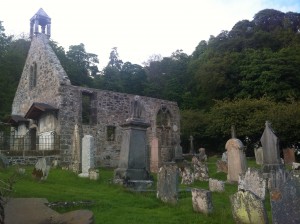
				<content:encoded><![CDATA[<p>This weekend we have been staying at the lovely Witches Craig campsite, just a stones throw (well maybe a few throws) away from The <a href="http://www.scotclans.com/scottish-clans/clan-wallace/">Wallace</a> Monument at Abbey Craig. Next to the campsite are the remains of old Logie Church, a place with a sinister past!</p>
<div id="attachment_6145" class="wp-caption aligncenter" style="width: 310px"><a href="/wp-content/uploads/2011/05/logie.jpg" data-lightboxplus="lightbox[2839]" title="The Witches of Logie"><img class="size-full wp-image-6145" alt="The Ruins of Old Logie Church" src="/wp-content/uploads/2011/05/logie.jpg" width="300" height="224" /></a><p class="wp-caption-text">The Ruins of Old Logie Church</p></div>
<p>A church was first dedicated in this ancient parish around 1173 and the ruins on old Logie Church date back to around 1592.</p>
<p>In 1720 the infamous Witches of Logie were said to use the area for their own rituals, behind the church stands &#8216;Carly Crag&#8217; or The Witches Crag. It was here that they were supposed to meet with the devil himself who took the form of a black dog with burning eyes. He would cavort among the witches with a blue torch attached to his hind quarters.</p>
<p>Its getting dark now &#8211; time to look out for mysterious blue lights in the distance!</p>
<p>The post <a rel="nofollow" href="http://109.74.200.198/the-witches-of-logie/">The Witches of Logie</a> appeared first on <a rel="nofollow" href="http://109.74.200.198">ScotClans | Scottish Clans</a>.</p>
]]></content:encoded>
			<wfw:commentRss>http://109.74.200.198/the-witches-of-logie/feed/</wfw:commentRss>
		<slash:comments>0</slash:comments>
		</item>
		<item>
		<title>The Kind Scottish Wulver</title>
		<link>http://109.74.200.198/the-scottish-wulver-the-kindly-werewolf/</link>
		<comments>http://109.74.200.198/the-scottish-wulver-the-kindly-werewolf/#comments</comments>
		<pubDate>Fri, 22 Oct 2010 22:07:38 +0000</pubDate>
		<dc:creator>Amanda Moffet</dc:creator>
				<category><![CDATA[Scottish Myths]]></category>
		<category><![CDATA[Wulver]]></category>

		<guid isPermaLink="false">http://www.scotclans.com/bletherskite/?p=2446</guid>
		<description><![CDATA[<p>Wulvers are ofter called werewolves, but legend shows they are quite different. Said to inhabit the Shetland Islands to the north of the Scottish mainland. The ancient Celts believed that the Wulver evolved from wolves, and that the Wulver symbolizes the in-between stage of man and wolf. With the head of a wolf, the body [&#8230;]</p>
<p>The post <a rel="nofollow" href="http://109.74.200.198/the-scottish-wulver-the-kindly-werewolf/">The Kind Scottish Wulver</a> appeared first on <a rel="nofollow" href="http://109.74.200.198">ScotClans | Scottish Clans</a>.</p>
]]></description>
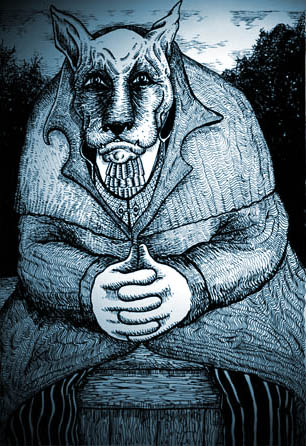
				<content:encoded><![CDATA[<div id="attachment_39337" class="wp-caption aligncenter" style="width: 316px"><a href="/wp-content/uploads/2010/10/wulver1.jpg" data-lightboxplus="lightbox[2446]" title="The Kind Scottish Wulver "><img class="size-full wp-image-39337" alt="The Wulver" src="/wp-content/uploads/2010/10/wulver1.jpg" width="306" height="446" /></a><p class="wp-caption-text">The Wulver</p></div>
<p>Wulvers are ofter called werewolves, but legend shows they are quite different. Said to inhabit the Shetland Islands to the north of the Scottish mainland. The ancient Celts believed that the Wulver evolved from wolves, and that the Wulver symbolizes the in-between stage of man and wolf. With the head of a wolf, the body of a man, and covered in short brown hair, the Wulver lives alone in a cave. Unlike his werewolf brethren, the Scottish Wulver is considered kindhearted, and he will often guide lost travelers to nearby towns and villages. There are also tales of Wulvers leaving fish on the windowsills of poor families.</p>
<p>The Wulver was frequently spotted fishing for its daily meal from a rock dubbed, &#8216;The Wulver&#8217;s Stane&#8217; (Wolf Stone), and as long as he was left alone, a Wulver showed no aggression. Habitually, this peace-loving creature demonstrated a benevolent side as well, and oft-times was observed leaving extra fish on the windowsill of poor families.</p>
<p>Unfortunately, there isn&#8217;t much documentation on the elusive Wulver, the last reported sighting being in the early twentieth century. Considering there are few bad stories connected with the beast, many believe an encounter providential, and may lead a person to treasure buried amongst ancient ruins. Conversely, others view Wulver sightings as omens of imminent death.</p>
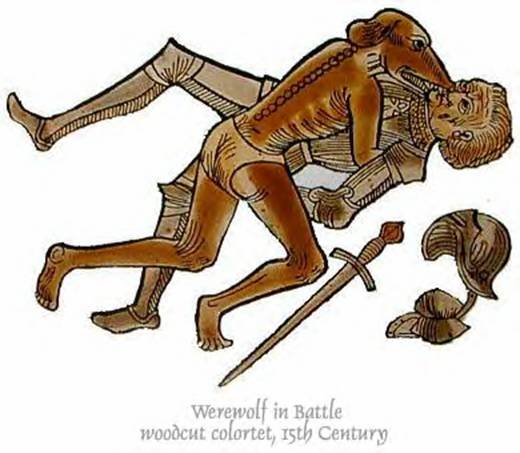
<div id="attachment_39338" class="wp-caption aligncenter" style="width: 530px"><a href="/wp-content/uploads/2010/10/wulver2.jpg" data-lightboxplus="lightbox[2446]" title="The Kind Scottish Wulver "><img class="size-full wp-image-39338" alt="The Wulver has two legs and is hal human unlike a werewolf" src="/wp-content/uploads/2010/10/wulver2.jpg" width="520" height="453" /></a><p class="wp-caption-text">The Wulver has two legs and is hal human unlike a werewolf</p></div>
<p>Werewolf tales abound, cloaked in terror, wonder and ill will. Therefore, if ever you find yourself lost on the fog-shrouded shores of the Shetland Isles, you&#8217;d do well to pray the benign Wulver finds you first, and guides you safely home.</p>
<p>The post <a rel="nofollow" href="http://109.74.200.198/the-scottish-wulver-the-kindly-werewolf/">The Kind Scottish Wulver</a> appeared first on <a rel="nofollow" href="http://109.74.200.198">ScotClans | Scottish Clans</a>.</p>
]]></content:encoded>
			<wfw:commentRss>http://109.74.200.198/the-scottish-wulver-the-kindly-werewolf/feed/</wfw:commentRss>
		<slash:comments>1</slash:comments>
		</item>
		<item>
		<title>Johnstone Legend &#8211; The Killing of Lord Maxwell</title>
		<link>http://109.74.200.198/johnstone-legend-the-killing-of-lord-maxwell/</link>
		<comments>http://109.74.200.198/johnstone-legend-the-killing-of-lord-maxwell/#comments</comments>
		<pubDate>Wed, 04 Nov 2009 14:58:32 +0000</pubDate>
		<dc:creator>Amanda Moffet</dc:creator>
				<category><![CDATA[Carruthers]]></category>
		<category><![CDATA[Elliot]]></category>
		<category><![CDATA[Graham]]></category>
		<category><![CDATA[Irving]]></category>
		<category><![CDATA[Johnstone]]></category>
		<category><![CDATA[Maxwell]]></category>
		<category><![CDATA[Scott]]></category>
		<category><![CDATA[Scottish Myths]]></category>
		<category><![CDATA[Battle of Dryfe Sands]]></category>
		<category><![CDATA[Lockerbie]]></category>

		<guid isPermaLink="false">http://www.scotclans.com/bletherskite/?p=1520</guid>
		<description><![CDATA[<p>One of the visitors to our site told us about this great Clan Johnstone legend: The Battle of Dryfe Sands on the 6th of December, 1593 saw the Johnstones and the Maxwells fight it out near the town of Lockerbie. On the day of the battle Lady Johnstone went out with her maidservant to see [&#8230;]</p>
<p>The post <a rel="nofollow" href="http://109.74.200.198/johnstone-legend-the-killing-of-lord-maxwell/">Johnstone Legend &#8211; The Killing of Lord Maxwell</a> appeared first on <a rel="nofollow" href="http://109.74.200.198">ScotClans | Scottish Clans</a>.</p>
]]></description>
				<content:encoded><![CDATA[<div id="attachment_6124" class="wp-caption alignleft" style="width: 298px"><a href="/wp-content/uploads/2009/11/johnstone11.gif" data-lightboxplus="lightbox[1520]" title="Johnstone Legend - The Killing of Lord Maxwell"><img class="wp-image-6124" alt="Johnstone crest" src="/wp-content/uploads/2009/11/johnstone11.gif" width="288" height="285" /></a><p class="wp-caption-text">Johnstone crest</p></div>
<p>One of the visitors to our site told us about this great <a href="http://www.scotclans.com/scottish-clans/clan-johnstone/" target="_blank">Clan Johnstone</a> legend:</p>
<p>The Battle of Dryfe Sands on the 6th of December, 1593 saw the Johnstones and the <a href="/scottish-clans/clan-maxwell/" target="_blank">Maxwells</a> fight it out near the town of Lockerbie.</p>
<p>On the day of the battle Lady Johnstone went out with her maidservant to see how it was all going. She locked up the castle and took the castle key with her (which was a huge iron number). During her walk she came across a &#8216;regal looking man&#8217;, badly wounded and propped up against a tree. He stretched out a hand and begged for her help. He was Lord Maxwell.</p>
<p>Upon recognising her husband&#8217;s enemy Lady Johnstone promptly stoved the man&#8217;s head in with the castle key.</p>
<p>There is another version of how Lord Maxwell died that day.</p>
<p>&nbsp;</p>
<p>&nbsp;</p>
<p>&nbsp;</p>
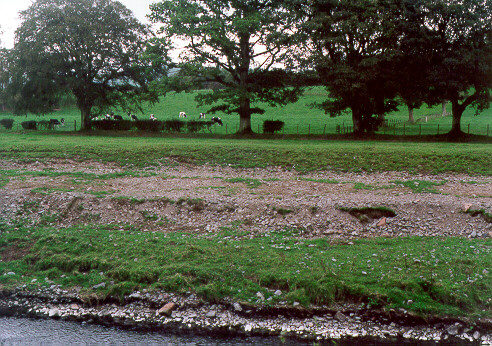
<div id="attachment_6129" class="wp-caption alignright" style="width: 354px"><a href="/wp-content/uploads/2009/11/dryfesands11.jpg" data-lightboxplus="lightbox[1520]" title="Johnstone Legend - The Killing of Lord Maxwell"><img class="wp-image-6129" alt="Dryfe Sands battle site" src="/wp-content/uploads/2009/11/dryfesands11.jpg" width="344" height="242" /></a><p class="wp-caption-text">Dryfe Sands battle site</p></div>
<p>The Maxwells were desperate to rid the land of their sworn enemy the Johnstones, and so decided to launch a surprise attack. However, fortunately for Sir James Johnstone, he was somehow warned of the approaching Maxwells. He knew that this was going to be a desperate fight for their existence and so hurriedly called for some assistance from the <a href="/scottish-clans/clan-graham/" target="_blank">Grahams</a>, <a href="http://www.scotclans.com/scottish-clans/clan-scott/" target="_blank">Scotts</a>, <a href="/scottish-clans/clan-carruthers/" target="_blank">Carrutherses</a>, <a href="http://www.scotclans.com/scottish-clans/clan-irvine/" target="_blank">Irvings</a>, <a href="http://www.scotclans.com/scottish-clans/clan-elliot/" target="_blank">Elliots</a> and others, and managed to raise an army of, perhaps, around 800 men.</p>
<p>It said that Lord Maxwell offered a reward to whichever man could bring either the hand or the head of Sir James. Upon hearing this Johnstone made a similar pledge.</p>
<p>On the 6th of December Lord Maxwell and his army approached the Johnstone town of Lockerbie, near a place called Dryfe Sands. Johnstone came up with a plan, and, as the Maxwells marched on, he kept most of his men hidden, only sending out a small number of horsemen to attract the attention of the Maxwell vanguard, and then rout.</p>
<p>The plan worked and the vanguard broke its ranks chasing after the Johnstone horsemen, allowing the main body of Johnstone men to make a surprise attack on the disorganised and surprised Maxwells.</p>
<p>The Johnstones went on to slaughter around 700 Maxwells, and those they didn&#8217;t kill were slashed in the face with a sword, recieving horrible wounds which were to become known as &#8216;Lockerbie Licks&#8217;.</p>
<p>During the carnage, it is said that Lord Maxwell begged for his life, offering to surrender. He stretched out his hand, and instead of accepting it, Sir James Johnstone cut off the arm and then killed him.</p>
<p>Legend has it that Johnstone kept the arm and head of Lord Maxwell as trophies, reminding everyone of their decisive victory against the Maxwells.</p>
<p>Whichever way Lord <a href="/scottish-clans/clan-maxwell/" target="_blank">Maxwell</a> did die, whether he was bludgeoned by Lady Maxwell and her castle key, or if he was slain by the sword of Sir James <a href="http://www.scotclans.com/scottish-clans/clan-johnstone/" target="_blank">Johnstone</a>, one thing that is for sure, it probably wasn&#8217;t a pleasant death.</p>
<p>The post <a rel="nofollow" href="http://109.74.200.198/johnstone-legend-the-killing-of-lord-maxwell/">Johnstone Legend &#8211; The Killing of Lord Maxwell</a> appeared first on <a rel="nofollow" href="http://109.74.200.198">ScotClans | Scottish Clans</a>.</p>
]]></content:encoded>
			<wfw:commentRss>http://109.74.200.198/johnstone-legend-the-killing-of-lord-maxwell/feed/</wfw:commentRss>
		<slash:comments>6</slash:comments>
		</item>
		<item>
		<title>Witchcraft on Raasay</title>
		<link>http://109.74.200.198/witchcraft-on-rassay/</link>
		<comments>http://109.74.200.198/witchcraft-on-rassay/#comments</comments>
		<pubDate>Mon, 26 Oct 2009 13:41:52 +0000</pubDate>
		<dc:creator>Amanda Moffet</dc:creator>
				<category><![CDATA[Scottish Myths]]></category>
		<category><![CDATA[Myths]]></category>
		<category><![CDATA[Raasay]]></category>
		<category><![CDATA[Skye]]></category>

		<guid isPermaLink="false">http://www.scotclans.com/bletherskite/?p=1377</guid>
		<description><![CDATA[<p>The post <a rel="nofollow" href="http://109.74.200.198/witchcraft-on-rassay/">Witchcraft on Raasay</a> appeared first on <a rel="nofollow" href="http://109.74.200.198">ScotClans | Scottish Clans</a>.</p>
]]></description>
				<content:encoded><![CDATA[<p><object width="400" height="300" classid="clsid:d27cdb6e-ae6d-11cf-96b8-444553540000" codebase="http://download.macromedia.com/pub/shockwave/cabs/flash/swflash.cab#version=6,0,40,0"><param name="flashvars" value="intl_lang=en-us&amp;photo_secret=fe87566d7f&amp;photo_id=4045622593&amp;flickr_show_info_box=true" /><param name="allowFullScreen" value="true" /><param name="src" value="http://www.flickr.com/apps/video/stewart.swf?v=71377" /><param name="allowfullscreen" value="true" /><embed width="400" height="300" type="application/x-shockwave-flash" src="http://www.flickr.com/apps/video/stewart.swf?v=71377" flashvars="intl_lang=en-us&amp;photo_secret=fe87566d7f&amp;photo_id=4045622593&amp;flickr_show_info_box=true" allowFullScreen="true" allowfullscreen="true" /></object></p>
<p>The post <a rel="nofollow" href="http://109.74.200.198/witchcraft-on-rassay/">Witchcraft on Raasay</a> appeared first on <a rel="nofollow" href="http://109.74.200.198">ScotClans | Scottish Clans</a>.</p>
]]></content:encoded>
			<wfw:commentRss>http://109.74.200.198/witchcraft-on-rassay/feed/</wfw:commentRss>
		<slash:comments>0</slash:comments>
		</item>
		<item>
		<title>The Fairy Bridge of Dunvegan</title>
		<link>http://109.74.200.198/the-fairy-bridge-of-dunvegan/</link>
		<comments>http://109.74.200.198/the-fairy-bridge-of-dunvegan/#comments</comments>
		<pubDate>Mon, 26 Oct 2009 13:10:36 +0000</pubDate>
		<dc:creator>Amanda Moffet</dc:creator>
				<category><![CDATA[MacLeod]]></category>
		<category><![CDATA[Scottish Myths]]></category>
		<category><![CDATA[Fairy Flag]]></category>
		<category><![CDATA[Myths]]></category>

		<guid isPermaLink="false">http://www.scotclans.com/bletherskite/?p=1365</guid>
		<description><![CDATA[<p>One of the most treasured possessions of the clan MacLeod is the famous Fairy Flag of Dunvegan. The story behind the flag is one of the greatest romantic tales in all the highlands.</p>
<p>The post <a rel="nofollow" href="http://109.74.200.198/the-fairy-bridge-of-dunvegan/">The Fairy Bridge of Dunvegan</a> appeared first on <a rel="nofollow" href="http://109.74.200.198">ScotClans | Scottish Clans</a>.</p>
]]></description>
				<content:encoded><![CDATA[<p><object width="400" height="300" classid="clsid:d27cdb6e-ae6d-11cf-96b8-444553540000" codebase="http://download.macromedia.com/pub/shockwave/cabs/flash/swflash.cab#version=6,0,40,0" bgcolor="#000000"><param name="flashvars" value="intl_lang=en-us&amp;photo_secret=fb6e62a5b6&amp;photo_id=4045628985&amp;flickr_show_info_box=true" /><param name="allowFullScreen" value="true" /><param name="src" value="http://www.flickr.com/apps/video/stewart.swf?v=71377" /><param name="allowfullscreen" value="true" /><embed width="400" height="300" type="application/x-shockwave-flash" src="http://www.flickr.com/apps/video/stewart.swf?v=71377" flashvars="intl_lang=en-us&amp;photo_secret=fb6e62a5b6&amp;photo_id=4045628985&amp;flickr_show_info_box=true" allowFullScreen="true" allowfullscreen="true" bgcolor="#000000" /></object></p>
<p>One of the most treasured possessions of the <a href="/scottish-clans/clan-macleod/">clan MacLeod</a> is the famous <a href="http://www.scotclans.com/scotland/scottish-myths/symbolic-scotland/flag-dunvegan/">Fairy Flag of Dunvegan</a>. The story behind the flag is one of the greatest romantic tales in all the highlands.</p>
<p>The post <a rel="nofollow" href="http://109.74.200.198/the-fairy-bridge-of-dunvegan/">The Fairy Bridge of Dunvegan</a> appeared first on <a rel="nofollow" href="http://109.74.200.198">ScotClans | Scottish Clans</a>.</p>
]]></content:encoded>
			<wfw:commentRss>http://109.74.200.198/the-fairy-bridge-of-dunvegan/feed/</wfw:commentRss>
		<slash:comments>1</slash:comments>
		</item>
		<item>
		<title>The Crystal Balls of Clan Campbell</title>
		<link>http://109.74.200.198/the-crystal-balls-of-clan-campbell/</link>
		<comments>http://109.74.200.198/the-crystal-balls-of-clan-campbell/#comments</comments>
		<pubDate>Thu, 22 Oct 2009 13:09:02 +0000</pubDate>
		<dc:creator>Amanda Moffet</dc:creator>
				<category><![CDATA[Campbell]]></category>
		<category><![CDATA[Scottish Myths]]></category>
		<category><![CDATA[Crusades]]></category>
		<category><![CDATA[Crystal Balls]]></category>

		<guid isPermaLink="false">http://www.scotclans.com/bletherskite/?p=1333</guid>
		<description><![CDATA[<p>A number of Highland families are in possession of crystal balls which are said to all share certain magical abilities such as the unexplicable cure of humans and animals, as well as ensuring the safe return of men from war or travel. Suprisingly enough, Clan Campbell seem to hold quite a number of them. None [&#8230;]</p>
<p>The post <a rel="nofollow" href="http://109.74.200.198/the-crystal-balls-of-clan-campbell/">The Crystal Balls of Clan Campbell</a> appeared first on <a rel="nofollow" href="http://109.74.200.198">ScotClans | Scottish Clans</a>.</p>
]]></description>
				<content:encoded><![CDATA[<p><a href="/wp-content/uploads/2009/10/campbell1-300x2961.gif" data-lightboxplus="lightbox[5699]" title="The Crystal Balls of Clan Campbell"><img class="alignleft size-full wp-image-6115" alt="campbell1-300x296" src="/wp-content/uploads/2009/10/campbell1-300x2961.gif" width="300" height="296" /></a>A number of Highland families are in possession of crystal balls which are said to all share certain magical abilities such as the unexplicable cure of humans and animals, as well as ensuring the safe return of men from war or travel. Suprisingly enough, <a href="http://www.scotclans.com/scottish-clans/clan-campbell/">Clan Campbell</a> seem to hold quite a number of them.</p>
<p>None of the crystal balls are especially big, with the largest said to be, at most, around 5 centimetres in diameter. They can be found on their own, or set in metal; with a couple used as the centrepiece in silver brooches.</p>
<p>However, where the crystals actually came from is still somewhat of a mystery. It has been suggested that the crystals date back to as far as the late Iron Age; originating in China where the obtained their magical powers. But some were taken by the Church to be used for Christian purposes and incorporated in reliquaries.</p>
<p>Many examples of these crystal balls, around twenty, have been found in graves in England, with the majority said to date from the Anglo-Saxon period. Three or four have also been found in Ireland, along with other examples in France, Denmark, and Germany.</p>
<p>How they ended up clustered in the West Highlands is strange enough, but so many in the hands of the Campbells is even more puzzling. Some like to think that one of the most plausible explanations of them arriving in Britain is from the Crusades; with many soldiers out in the Middle East it would have been easy enough for them to bring them home. However, if this was the case then it certainly doesn&#8217;t fit in with the crystals in England dating to the Anglo-Saxon period, prior to the start of the Crusades, and when Sir Steven Runciman, the great authority on the Crusades, was asked whether he had come across anything of this kind, his answer was a firm and decided &#8216;no&#8217;.</p>
<p>However, it is in fact said that the Breadalbane stone was brought back from Rhodes around the end of the Crusades period by Sir Colin Campbell  (or Cailean Mór Caimbeul) who is one of the earliest attested members of the Clan Campbell.</p>
<p>Here are some examples of the ones that are affiliated with the Campbells.</p>
<p><em>A&#8217; Clach Bhuidhe</em> of the <a title="Clan Campbell" href="http://www.scotclans.com/scottish-clans/clan-campbell/">Campbells</a> of Glenlyon is said to be round or oval in shape, and is set in silver. It is said to bring home safely from war or travel those who drank from a glass with the stone in it, though apparently it has to be dipped in water by the Laird before it becomes effective. Legend has it that a tailor didn&#8217;t take the precaution and was the only man of the Glenlyon contingent to fall at <a href="http://www.scotclans.com/scotland/scottish-history/jacobite-scotland/1746-culloden/">Culloden</a>.</p>
<p>The Charmstone of the Campbells of Ballochyle is in possession of the National Museum of Scotland. It is a large crystal used to cure cattle and people of any ailments.</p>
<p>A Charmstone, this one belonging to John <a title="Clan Campbell" href="http://www.scotclans.com/scottish-clans/clan-campbell/">Campbell</a>, the Ledaig Bard, is also said to cure ill cattle, however, if someone touches the stone with the index finger of their right hand, then the stone immediately loses its powers.</p>
<p>The Lochnell Charmstone is a small and rather cloudy crystal sphere which can be seen on display at Inveraray Castle.</p>
<p>The Breadalbane charmstone claimed to cure ills, protect its devotees and bring them home safely. This particular stone didn&#8217;t seem to work for an unfortunate local young man who went off to fight in the First World War. On the eve of his departure, the soldier from the 6th Black Watch went to the castle to pay his respects to Lord Breadalbane who inturn brought out the charmstone. Following ancient custom, he dipped the crystal in a glass of water from which the he and the local both drank from to ensure his safe return, but it did not work, and the soldier died.</p>
<p>It is this stone that is believed to have been brought back from Rhodes by Sir Colin Campbell.</p>
<p>Charmstone of the Campbells of Inverliever was mentioned in 1610 in a bond of manrent stating &#8216;ane precious stone&#8217; in possession of Ronald Campbell of Barrichbeyan, but belonging to Angus Campbell of Inverliever. It is thought to be the crystall ball now in the Royal Irish Academy in Dublin. At nearly 4 centimetres in diameter, it was sold by Campbell of Craignish &#8211; descendant of Barrichbeyan &#8211; in 1855.</p>
<p>It may never be known exactly where some of these crystal balls came from, or even how many ended up in the possession of the <a href="http://www.scotclans.com/scottish-clans/clan-campbell/">Campbells</a>, but what is for certain, they do have some interesting superstitions attached.</p>
<p><em>Taken and adapted from &#8216;A History of Clan Campbell, Volume 1&#8242; by Alastair Campbell of Airds</em></p>
<p>The post <a rel="nofollow" href="http://109.74.200.198/the-crystal-balls-of-clan-campbell/">The Crystal Balls of Clan Campbell</a> appeared first on <a rel="nofollow" href="http://109.74.200.198">ScotClans | Scottish Clans</a>.</p>
]]></content:encoded>
			<wfw:commentRss>http://109.74.200.198/the-crystal-balls-of-clan-campbell/feed/</wfw:commentRss>
		<slash:comments>0</slash:comments>
		</item>
		<item>
		<title>Tragedy Rock &#8211; A sad tale from Mull</title>
		<link>http://109.74.200.198/tragedy-rock-a-sad-tale-from-mull/</link>
		<comments>http://109.74.200.198/tragedy-rock-a-sad-tale-from-mull/#comments</comments>
		<pubDate>Thu, 16 Jul 2009 12:46:44 +0000</pubDate>
		<dc:creator>Amanda Moffet</dc:creator>
				<category><![CDATA[MacLean]]></category>
		<category><![CDATA[Scottish Myths]]></category>
		<category><![CDATA[Clan MacLean]]></category>
		<category><![CDATA[Mull]]></category>

		<guid isPermaLink="false">http://www.scotclans.com/bletherskite/?p=713</guid>
		<description><![CDATA[<p>This tale is one of the saddest stories on Mull. At the foot of the 1,000ft cliffs of Gribun stands Clach na Leannan, the Stone of the Courting Couple. The stone is just 50 yards inland from a road where it passes the first farm coming from Salen direction, with a windbliwn elder tree at [&#8230;]</p>
<p>The post <a rel="nofollow" href="http://109.74.200.198/tragedy-rock-a-sad-tale-from-mull/">Tragedy Rock &#8211; A sad tale from Mull</a> appeared first on <a rel="nofollow" href="http://109.74.200.198">ScotClans | Scottish Clans</a>.</p>
]]></description>
				<content:encoded><![CDATA[<p>This tale is one of the saddest stories on Mull.</p>
<p>At the foot of the 1,000ft cliffs of Gribun stands Clach na Leannan, the Stone of the Courting Couple. The stone is just 50 yards inland from a road where it passes the first farm coming from Salen direction, with a windbliwn elder tree at the gable. This stretch of road on the south side of Lich na Keal can be extremey terrifying, with the overhanging cliffs on one side and a drop into the sea below. There are many occurancs of rock avalanches after heavy rain or a passing sheep dislodging a stone.</p>
<p>In about the year 1700, in the autumn, a young man named John, a local shepherd was betrothed to Rona, daughter of a local blacksmith. The couple had been fortunate in obtaining a small but cosy cot- house that stood on a piece of flat land at the foot of the cliffs of Gribun. Their new home was situated opposite where the wedding was taking place.</p>
<p>The wedding celebrations went on until dawn in the barn of an old farmhouse. A storm had been threatening all day and broke in the night, a great wind came roaring in from the sea accompanied by torrents if rain. As time went on, the neawly-weds slipped out unoriced and hurried over to their little home. With the noise of the storm, pipes and celebrations, no-one heard the dreadful sound in the night when a great outcrop split, and a huge section rolled down, coming to rest on and completely flattening the cot-house with the young couple inside.</p>
<p>There they lie to this day with just a few flowers springing up against the rock in their memory.</p>
<p>It is told on Mull how people remembered the ends of some if the rafters were still to be seen sticking out from the bolder up to 2 centuries later.</p>
<p>&nbsp;</p>
<div id="attachment_39595" class="wp-caption aligncenter" style="width: 410px"><a href="/wp-content/uploads/2009/07/tragedy-rock212.jpg" data-lightboxplus="lightbox[5688]" title="Tragedy Rock - A sad tale from Mull"><img src="/wp-content/uploads/2009/07/tragedy-rock212.jpg" alt="tragedy-rock" width="400" height="300" class="size-full wp-image-39595" /></a><p class="wp-caption-text">tragedy-rock</p></div>
<p>&nbsp;</p>
<p>&nbsp;</p>
<p>&nbsp;</p>
<p>&nbsp;</p>
<p>&nbsp;</p>
<p>&nbsp;</p>
<p>The post <a rel="nofollow" href="http://109.74.200.198/tragedy-rock-a-sad-tale-from-mull/">Tragedy Rock &#8211; A sad tale from Mull</a> appeared first on <a rel="nofollow" href="http://109.74.200.198">ScotClans | Scottish Clans</a>.</p>
]]></content:encoded>
			<wfw:commentRss>http://109.74.200.198/tragedy-rock-a-sad-tale-from-mull/feed/</wfw:commentRss>
		<slash:comments>0</slash:comments>
		</item>
		<item>
		<title>The Annat Skull</title>
		<link>http://109.74.200.198/the-annat-skull/</link>
		<comments>http://109.74.200.198/the-annat-skull/#comments</comments>
		<pubDate>Tue, 14 Apr 2009 19:04:53 +0000</pubDate>
		<dc:creator>Amanda Moffet</dc:creator>
				<category><![CDATA[Robertson]]></category>
		<category><![CDATA[Scottish Myths]]></category>
		<category><![CDATA[Applecross]]></category>
		<category><![CDATA[MacDonald]]></category>
		<category><![CDATA[superstitions]]></category>
		<category><![CDATA[torridon]]></category>

		<guid isPermaLink="false">http://www.scotclans.com/bletherskite/?p=450</guid>
		<description><![CDATA[<p>There&#8217;s a superstition in Applecross/Torridon area of Scotland that relates to the Annat skull in which water sipped from the skull of a female suicide is a supposed cure for epilepsy. The poor woman (C. M. Robertson) is thought to have been the daughter in law of the Garve Wizzard who is said to have [&#8230;]</p>
<p>The post <a rel="nofollow" href="http://109.74.200.198/the-annat-skull/">The Annat Skull</a> appeared first on <a rel="nofollow" href="http://109.74.200.198">ScotClans | Scottish Clans</a>.</p>
]]></description>
				<content:encoded><![CDATA[<div id="attachment_6150" class="wp-caption aligncenter" style="width: 360px"><a href="/wp-content/uploads/2009/04/annat-skull12.jpg" data-lightboxplus="lightbox[5657]" title="The Annat Skull"><img class="size-full wp-image-6150" alt="The Annat Skull" src="/wp-content/uploads/2009/04/annat-skull12.jpg" width="350" height="233" /></a><p class="wp-caption-text">The Annat Skull</p></div>
<p>There&#8217;s a superstition in Applecross/Torridon area of Scotland that relates to the Annat skull in which water sipped from the skull of a female suicide is a supposed cure for epilepsy. The poor woman (C. M. <a title="Clan Robertson" href="http://www.scotclans.com/scottish-clans/clan-robertson/">Robertson</a>) is thought to have been the daughter in law of the Garve Wizzard who is said to have lured passersby to their death in the Black Water river in order that he might steal their possessions. The skull became a controversial subject in 1900 when it was alleged to still be in use in Torridon. The Rev. Duncan <a href="/scottish-clans/clan-dewar/">Dewar</a>, a minister of 24 years standing, felt compelled to respond publicaly that &#8216;no such&#8217; skull ever existed in the parish of Applecross&#8217;. Dewar may be correct in limiting his observation to his own parish but Rev. Kenneth <a title="Clan MacDonald" href="http://www.scotclans.com/scottish-clans/clan-macdonald/" target="_blank">MacDonald</a>, of the Free Church around the same time, attests to it&#8217;s use in Torridon.</p>
<p>Adapted from &#8220;Applecross and it&#8217;s Hinterland  &#8211; A Historical Miscellany&#8221; by Iain <a href="http://www.scotclans.com/scottish-clans/clan-maclennan/">MacLennan</a></p>
<p>The post <a rel="nofollow" href="http://109.74.200.198/the-annat-skull/">The Annat Skull</a> appeared first on <a rel="nofollow" href="http://109.74.200.198">ScotClans | Scottish Clans</a>.</p>
]]></content:encoded>
			<wfw:commentRss>http://109.74.200.198/the-annat-skull/feed/</wfw:commentRss>
		<slash:comments>1</slash:comments>
		</item>
		<item>
		<title>Eagles Rock at Applecross</title>
		<link>http://109.74.200.198/eagles-rock-at-applecross/</link>
		<comments>http://109.74.200.198/eagles-rock-at-applecross/#comments</comments>
		<pubDate>Mon, 13 Apr 2009 20:04:39 +0000</pubDate>
		<dc:creator>Amanda Moffet</dc:creator>
				<category><![CDATA[Scottish Myths]]></category>
		<category><![CDATA[Applecross]]></category>
		<category><![CDATA[Eagle]]></category>

		<guid isPermaLink="false">http://www.scotclans.com/bletherskite/?p=455</guid>
		<description><![CDATA[<p>There is an old tale in Applecross of how The Eagle Rock got it&#8217;s name. Legend has it a long long time ago the people of Applecross were harvesting oats. A young baby slept in it&#8217;s crib as it&#8217;s parents helped with the harvest. From the air a great eagle swooped down and picked up [&#8230;]</p>
<p>The post <a rel="nofollow" href="http://109.74.200.198/eagles-rock-at-applecross/">Eagles Rock at Applecross</a> appeared first on <a rel="nofollow" href="http://109.74.200.198">ScotClans | Scottish Clans</a>.</p>
]]></description>
				<content:encoded><![CDATA[<p>There is an old tale in Applecross of how The Eagle Rock got it&#8217;s name. Legend has it a long long time ago the people of Applecross were harvesting oats. A young baby slept in it&#8217;s crib as it&#8217;s parents helped with the harvest. From the air a great eagle swooped down and picked up the baby and it&#8217;s crib in it&#8217;s massive talons. The villagers gave chase, desperate to save the baby. But alas the eagle dropped it&#8217;s precious load, the baby landed on a rock, which we now know as Eagle&#8217;s Rock.</p>
<p>The post <a rel="nofollow" href="http://109.74.200.198/eagles-rock-at-applecross/">Eagles Rock at Applecross</a> appeared first on <a rel="nofollow" href="http://109.74.200.198">ScotClans | Scottish Clans</a>.</p>
]]></content:encoded>
			<wfw:commentRss>http://109.74.200.198/eagles-rock-at-applecross/feed/</wfw:commentRss>
		<slash:comments>0</slash:comments>
		</item>
	</channel>
</rss>