


The Union Jack

The Union Jack

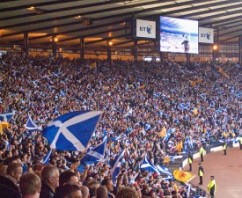
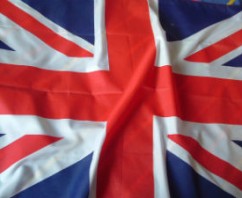
An interesting angle to the current debate on Scottish independence is what would happen to the British Flag, the Union Jack, should Scotland actually separate from the rest of the United Kingdom. It may seem a trivial point, but the flag and the union are so interwoven that it is worth looking at how it […]
Read More

Prophecy – Scottish Second Sight

Prophecy – Scottish Second Sight

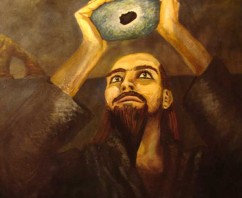
The Scots are superstitious, and one of our most strongly held beliefs is that of the gift of second sight; the ability to predict events before they occur. Prophets, or seers, are well recorded in Scottish history and mythology from the Brahan Seer to Thomas the Rhymer; and this article looks at how their predictions cast a long shadow over the lives of people of Scotland

Read More

Ice Age Scotland

Ice Age Scotland

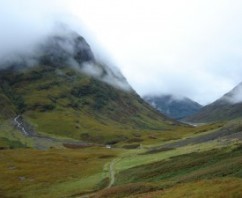
20,000 years ago Scotland, like much of the Northern Hemisphere was blanketed by a great ice sheet, over 4000ft thick in places; and the effect on our landscape of this event is huge. Ice ages occur in part because of astronomical cycles, and over the course of the last two million years the ice has waxed and waned over Scotland. The last 10,000 years have been warm and ice free, but the legacy of the glaciers upon our scenery and history is incalculable.

Read More

The Earl Haig – A Study in Controversy

The Earl Haig – A Study in Controversy

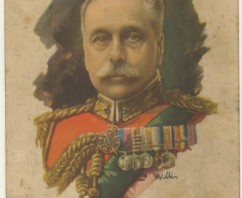
Field Marshal, the Earl Haig was born in Edinburgh’s Charlotte Square in 1861 and would gain fame and noteriety as the Supreme Commander of the British Forces during the First World War. Haig replaced Sir John French in 1916 as the conflict deteriorated into a war of attrition. At this time, the French were under severe pressure at the Battle of Verdun, so Haig launched the Somme offensive to drive back the German army. The battle lasted a little over 4 months, by which time the casualty figures had exceeded a million. Little gain was made, and Haig and his generals were blamed in many quarters for their ineptitude, and Haig himself became known as the Butcher of the Somme. A year later at the Battle of Passchendaele, huge losses for little success was repeated, but both battles had severely damaged the German army and their resilliance. In November 1918 Haig made the final breakthrough and effectively won the war.

Following the war, Sir Douglas Haig was promoted to the peerage as the Earl Haig; he was then instrumental in setting up the British Legion and the Poppy Appeal – two institutions with the purpose of raising funds and providing help and welfare for soldiers and their families, which is very much the legacy of this most controversial of Scotsmen.

Read More

The Great Wood of Caledon

The Great Wood of Caledon

For thousands of years the Scottish Highlands were covered in a forest known as the Great Wood of Caledon, an extension of the Eurasian Boreal Forest and the Wild Wood of folklore and legend. Today only fragments remain, isolated in the deepest reaches of the mountains, but exisit they do; and they offers us a glimpse into a lost world. The Caledonian Pineforest, is it is referred to today was systematically felled and burned over the last thousand years and today the remnants offer a last sanctuary for many rare and ellusive plants and animals, and are protected for the future. This is the story of that forest.

Read More

The Curious Case of Lord Home

The Curious Case of Lord Home

To many foreign observers the British political and parliamentary set up can seem a little bizarre: a sort of anachronistic parade of costume drama and archaic procedure. Our system relies on custom, often centuries old, and on checks and balances within the law. It is complex, full of pageantry and tradition; but it does work. […]

Read More

The Parallel Roads of Glen Roy

The Parallel Roads of Glen Roy

For centuries the Parallel Roads of Glen Roy had baffled both scientists and myth-makers alike; and solving the puzzle would reveal an amazing picture of our geological past. Glen Roy, in Lochaber has three distinct, parallel terraces running the length of both sides of the valley; and it wasn’t until the mid 19th century did geologists realise that they were looking at ancients shorelines from a lake dammed back by huge glaciers. The understanding that Scotland was once glaciated opened up the study across the world; but it was here that scientists had their ah-ha moment.

Read More