The post The Naming of Edinburgh’s New Town… appeared first on ScotClans | Scottish Clans.
]]>
The post The Naming of Edinburgh’s New Town… appeared first on ScotClans | Scottish Clans.
]]>The post Love for Culloden! appeared first on ScotClans | Scottish Clans.
]]>
We asked our many fans if they had ever been and if they could share their pictures in an effort to take a look at some different perspectives of the battlefield and surrounding areas. We couldn’t have been more shocked at the amazing response we had, especially on our Twitter page. Loads of amazing people shared some fantastic images alongside some of their thoughts about the site so we would like to take a little time to share them here and let everyone see how impactful such a site can be for generations to come. Take a look at a few of our favourites below and click on them to see the original post…


We would love to hear your thoughts on this historic site and if you’d like to share any images of your own feel free to email them to info@scotclans.com, and remember this is something we like to do every so often on Facebook and Twitter so make sure you like and follow us so you can keep an eye out and join in!
The post Love for Culloden! appeared first on ScotClans | Scottish Clans.
]]>The post Looking at Scottish land with an indigenous Gaelic eye appeared first on ScotClans | Scottish Clans.
]]> I am of the opinion that there is value in pre-colonial indigenous ideas about how to get on in this world and so they are worth exploring. I live in the midst of recognized indigenous cultures in every direction, as far as the eye can see. Some of these cultures are still alive; others just remnants disclosed in relics like the paintings and etchings in rocks.
Scottish Gaelic culture is an indigenous culture as well, but unlike the natives with whom I share our North American landscape, Gaels are not so well recognized for their indigenousness and do not universally recognize themselves as one of the world’s remaining indigenous people.
The label “indigenous” is not deeply understood by most and there is not popular agreement as to the word’s meaning. Merriam – Webster Dictionary provides this definition: “produced, living, or existing naturally in a particular region or environment.” Clearly, that works better with plants than humans. Coincidentally though, the Merriam – Webster online dictionary also provides the following example of the proper use of the word indigenous:
“Viking invaders quickly subdued the indigenous population, known as the Picts.” —Jared M. Diamond, Collapse, 2005
As far as official definitions go, the global indigenous community has been rightfully reluctant to subscribe to a universal definition of indigenousness, understanding that no single definition could capture the vast diversity of indigenous peoples across the planet. The U.N. has not adopted a specific definition and does not maintain a list of who is and who is not indigenous. Indeed, the United Nations Declaration on the Rights of Indigenous People (“UNDRIP”) mandates that self-determination of indigenousness is a human right, an approach that itself prohibits any “official” listing.
There is, however, some widely supported scholarly guidance and this working definition is worth quoting in its entirety, especially since we are wasting no trees in doing so, here at ScotClans.com:
Working definition of indigenous peoples by Jose R. Martinez Cobo
Indigenous communities, peoples and nations are those which, having a historical continuity with pre-invasion and pre-colonial societies that developed on their territories, consider themselves distinct from other sectors of the societies now prevailing on those territories, or parts of them. They form at present non-dominant sectors of society and are determined to preserve, develop and transmit to future generations their ancestral territories, and their ethnic identity, as the basis of their continued existence as peoples, in accordance with their own cultural patterns, social institutions and legal system.
This historical continuity may consist of the continuation, for an extended period reaching into the present of one or more of the following factors:
- Occupation of ancestral lands, or at least of part of them
- Common ancestry with the original occupants of these lands
- Culture in general, or in specific manifestations (such as religion, living under a tribal system, membership of an indigenous community, dress, means of livelihood, lifestyle, etc.)
- Language (whether used as the only language, as mother-tongue, as the habitual means of communication at home or in the family, or as the main, preferred, habitual, general or normal language)
- Residence in certain parts of the country, or in certain regions of the world
- Other relevant factors.
On an individual basis, an indigenous person is one who belongs to these indigenous populations through self-identification as indigenous (group consciousness) and is recognized and accepted by these populations as one of its members (acceptance by the group). This preserves for these communities the sovereign right and power to decide who belongs to them, without external interference.
UNDRIP also recognizes the paramount importance of self-determination:
Article 33 of the United Nations Declaration on the Rights of Indigenous Peoples
1. Indigenous peoples have the right to determine their own identity or membership in accordance with their customs and traditions. This does not impair the right of indigenous individuals to obtain citizenship of the States in which they live.
2. Indigenous peoples have the right to determine the structures and to select the membership of their institutions in accordance with their own procedures.
People like to argue about technical details of which culture is indigenous to a place and which is not. As we’ve already seen, dictionary definitions do not provide much direction. Without rehashing the facts, how about this: Scottish Gaelic is classified as an indigenous language under the European Charter for Regional or Minority Languages. Works for me. Scottish Gaelic is an indigenous culture, but how did it get to be something separate and apart from the rest of Scotland and what have been the consequences of marginalization?
A national divorce. The Scottish kingdom was a Gaelic kingdom before it was Scottish. Of course Scottish and Gaelic are very different things in this and other contexts. By the opening of the 10th century, the Dal Riata Gaels and the still mysterious Picts were united under an Alban flag and there began the kingdom of Alba. From a significant original land base the PictoGaelic realm expanded into almost all of what we know as Scotland today. Gaelic place names are found everywhere in North Britain. At its zenith Gaelic influence was ubiquitous and easily distinguished from English society to the south.
Eventually however, following several centuries of waging hot and cold war against invasive Anglo-Norman influence, the Gaelic kingdom of Alba had succumbed to a new Scottishness and the sphere of continuing Gaelic influence had retreated to the Highlands and Islands. Outside of the remote Gaelic heartland, Scottish Gaelic culture and institutions were largely replaced with Anglo-Norman norms. One of the most unfortunate aspects of this separation was the prejudicial animosity and acrimony that accompanied this divorce of Scotland’s Gaelic and non-Gaelic (highland-lowland) pathways. This is where Gaelic became indigenous and Scottish became something new.
Unfortunately for cultural diversity, even within the Highlands and Islands, traditional Gaelic communities joined their lowland neighbors in having to deal with fundamental changes in the Gaelic socio-economic building blocks. Among other things, Anglicization has been highly erosive of the primary markers of Gaelic indigenousness. By the 14th century, Lowland Scots and English commenters began to interpret and label Gaelic identity as “savage”, “barbaric” and “uncivilized” and the popular Scottish policy was, by hook or crook, to civilize the Erse savages. Today we recognize that same identity as a native or indigenous culture persistently existing within Scottish political boundaries.
One of the things that changed the most was the relationship between Gaels and the land upon which they and their ancestors lived. A society’s approach to and behavior in the natural world - including land - is a good marker of indigenous perspective. Indigenous people often tend to enjoy a more direct connection and interaction with the natural world, placing themselves squarely within nature as an interconnected part of it, as opposed to separate from, and dominant over, the natural world. According to those who are beginning to study the subject, Gaelic culture did a good bit of that. Erosion of that cultural marker turns an affectionate cohabitation with natural landscape into fear and a drive to dominate and improve the bleakness and danger of an undeveloped wilderness. Hello Scottish “civilization,” good bye indigeneity.
Historian Jim Hunter spends a bit of time contrasting a traditional Gaelic outlook toward nature and a typical Anglo-Norman outlook as part of his book On The Other Side Of Sorrow: Nature and People in the Scottish Highlands. Hunter’s aim in the book, which was re-released just last year, is to support the characterization of Gaelic society as what we would today call “green”. He presents a convincing case. Other works, including Alastair McIntosh’s Soil and Soul: People versus Corporate Power, have begun to explore the Gaelic relationship to land, resources and place in a more systematic and focused and modern way. I will take a closer look at these new interpretations, as well as the North American perspective coming from scholars Michael Newton and Colin Calloway in a future post. For now, lets just try to deal with the reality of how much Gaelicness was actually lost to modern Scotland.
Almost all of the land. We are fortunate to have Andy Wightman’s excellent reminder of the What, How, When and Why of the great Gaelic land loss. In his definitive book The Poor Had No Lawyers: Who owns Scotland and how they got it Wightman catalogues a massive legal and cultural conversion of land use and control that is as complete as if it had followed a violent conquest. As it turns out the Anglo-Norman tinged Scottish conversion of Gaelic land law and custom into its own feudal law and practice is manifested today with plenty of legal cover. Nevertheless, Wightman clearly demonstrates the varied ways in which the decision to hit the reset button on the Gaelic world was made by a small handful of powerful non-Gaelic elite.
In Wightman’s own words, his book follows on from prior scholarship focusing on “the legal and political mechanisms that enabled vast areas of Scotland to be appropriated by private interests.” Additionally, appropriation of land from the commons and conveyance into new private ownership was not just a highland occurrence. Wightman continues, “Equally, whilst for good historical reasons land issues have become associated with the Highlands and Islands almost to the exclusion of the rest of the country, the historic struggle for land rights took place across the whole country.”
The acquisitive processes and outcomes described in The Poor Had No Lawyers were more than just a rearrangement of who owns land. They were part of a larger cultural conversion from a Gaelic kingdom to a Scottish kingdom, one that was influenced largely by Anglo-Norman law and institutions and less by old Gaelic versions.
Today Scottish land law bears little resemblance to the Gaelic system it replaced and a tiny number of people continue to own and control the vast majority of Scottish land. For many reasons, it is important to try to understand what was lost as that process developed through history. Andrew Wightman notes that this is at least part of his intent in The Poor Had No Lawyers:
“But what I want to convey is how the theft of Scotland’s commons has robbed us not only of extensive communal interests in land but of a sense of connection with place which is leading to all sorts of social and economic problems.”
That’s plenty for this Sunday. There is more to the story of Gaelic relationships to land and natural resources in Scotland and in diaspora countries. Stay tuned and Get Your Gaelic On!
The post Looking at Scottish land with an indigenous Gaelic eye appeared first on ScotClans | Scottish Clans.
]]>The post Doing Something Good For Gaelic: The Scottish Gaelic Foundation of the U.S.A. is underway! appeared first on ScotClans | Scottish Clans.
]]>Scottish Gaelic in the United States truly is a marginalized language and culture, and it has been largely subsumed and reinvented on a very different Anglo-Scottish model. Thus, much of the discussion necessary to set the stage for expanded efforts at Gaelic culture and language recovery and revitalization tends to be a bit dark and more than a little uncomfortable. Such has been the case for a few of the Not Your Fathers’ Gaelic posts over the last few months.
The good news is that there is an uplifting side to the rather somber “State of Gaelic in America” type reports. Many of the comments that have come in on recent Gaelic culture and language posts have identified the need to do something helpful and have pondered about what that might be. The need is fairly inescapable. After a great deal of group discussion and individual cogitation, an impressive and excited group of Scottish Gaelic scholars, artists and activists have come together to support the creation of a new organization called The Scottish Gaelic Foundation of the U.S.A., or simply Gaelic USA.
 Creation of a national Gaelic support organization like Gaelic USA can achieve many very positive changes within the Gaelic community on behalf of Gaelic culture itself as well as outside the Gaelic community, within the larger mainstream Scottish American heritage community. There is little question that the mainstream Scottish American heritage community could be representing the diversity of Scottish heritage much better. Gaelic is certainly not the only valid heritage experience that should be better acknowledged, understood and expressed. Perhaps the long overdue recognition and development of the living Gaelic culture and heritage will highlight the potential for increased awareness of Scots language heritage and other cultural expressions that have grown from what we today call Scotland.
Another popular discussion thread seeks alternative, truly Gaelic ways to celebrate Gaelic heritage; ways to supplant or to complement those mainstream expressions of Scottish heritage that do not portray Gaelic culture and heritage with accuracy, integrity and equity. Among other initiatives, Gaelic USA will support and complement the outstanding Scottish Gaelic cultural groups already engaged in these kinds of activities on local and regional scales, such as the awesome work and energy of Slighe nan Gaidheal operating in the Seattle, Washington area.
So please hop over to the new Gaelic USA website. It is a new and developing site, but you will find a great deal of outstanding information already there. Most importantly, as Gaelic USA is still on its journey of creation, we would love to hear your ideas and reactions. You will find plenty of substance to discuss and consider and opportunity to comment.
So check it out and discover who is already backing the Mission and Scope of Work for this new, inclusive Gaelic ethnic organization. Add your name to a growing list of supporters and begin to follow along as Gaelic culture and heritage enters a new era in recovery and revitalization in the United States.
Click here to visit Gaelic USA and don’t forget to leave your thoughts and ideas! Happy exploring!
The post Doing Something Good For Gaelic: The Scottish Gaelic Foundation of the U.S.A. is underway! appeared first on ScotClans | Scottish Clans.
]]>The post Gaelic, Not Gaelic: Two Scotlands two Diasporas appeared first on ScotClans | Scottish Clans.
]]>If one looks at Scotland from a certain perspective, it is completely possible to identify two distinct worlds co-existing under one Alban sky. A close reading of north Britain human history reveals about 1,300 post-Roman years of a multi-cultural, multi-lingual, dynamic melting pot of Gaelic, Pict, Norse, Briton and finally Anglo Saxons and Normans. Rich, diverse, cultural intersection. So long as your village wasn’t burned, but even then … every century has one or two of its own challenges.
Eventually, however, history runs into an 18th century nation that has been steadily reduced to a bi-cultural, bi-lingual majority/minority society that even today hosts a societal element that prefers to reduce cultural diversity even further. An onlooker can see a Scotland that has been assimilated and strained of its former native cultural richness in such a way as to yield only two distinct products. Gaelic. Not Gaelic.
Sadly, Gaelic is the only non-Anglo culture that heavily influenced Scotland throughout history that actually persists as a vibrant human community in Scotland, natively speaking it’s own language. That is a tremendous achievement. Today’s Gaelic community in Scotland is remarkable for its tenacity in the face of an astoundingly backward opposition to Gaelic language speakers’ rights.
Now, hop across the pond. In the United States we find the Scottish diaspora suffering the same unbalanced and troublesome cultural pattern. Today’s Scottish American heritage tradition developed in the 19th and 20th centuries largely without contribution from scholarly Gaelic study and increasingly outside of native Gaelic culture including language.
In the United States, genuine understanding of Gaelic immigrant history and culture simply does not exist as the history is almost entirely yet to be written. What an awful – but real – state of affairs: Scottish Americans do not yet have access to resources necessary to understand and appreciate the reality of our distinct Gaelic heritage and identity. And we have largely lost our language, despite the thousands of Gaels who emigrated here living and speaking Gaelic when they arrived. What we can see of the culture is awesomeness. There is so much more yet to reveal.
In light of the lack of Gaelic influence, it isn’t surprising that it has been effectively argued that the Scottish diaspora is the world’s leading brand ambassador for the classic Scottish image of romanticized Tartanry and military Highlandism. That is not the sin. This is the sin: Contrary Gaelic intrusions into the popular story lines are usually discouraged as being political or, boring, or quaint, or worse yet, absolutely useless and of no interest, as Gaelic is often misunderstood to be a dead end that was properly deposited in the unrecoverable past ages ago.
My Gaelic immigrant ancestor came to America in 1776 from Inverness. He was almost certainly bilingual, speaking at least Scottish Gaelic and English, possibly Scots and likely other languages as well. Many like him came here as Gaels with Gaelic families that were left behind in Scotia. Once in North America, Gaelic immigrants spawned families each of which now number in the multi-hundreds, if not thousands in some cases. Sadly, we descendants have largely been reduced to blandly monolingual Scottish Americans, speaking English only – because that is what Americans are supposed to do.
So how should I approach today’s tartan clad, country dancing, claymore swinging Scottish heritage tradition that is so unlike my own actual Gaelic heritage? Simply stated, the Scottish heritage celebrated today is not a celebration of my culture. In many ways, it is a celebration of the marginalization of my culture.
The trend is this: studies have found that those who have become deeply interested in their real Gaelic heritage simply do not mix, by and large, with the highland games and Burns Supper crowd which is where so many people go to learn about and celebrate a Scottish heritage that is new to them. Two Scotlands; two Diasporas.
Today’s active mainstream Scottish Americans understand and celebrate a snapshot of Scotland. A slice only, and too much of it just simply made up or terribly misinformed but understood to be real and perpetuated. The Scottish American community could easily be moving to change, adapt, innovate and update to integrate new scholarship and to support new research as well as to aggressively support and encourage Gaelic language learners. A strong Gaelic American movement could help that to happen.
The truth is, the mainstream stuff is not selling very well to most Scottish Americans, especially the very savvy younger ones. On the other hand, the Outlander stuff is attractive, not in small part because it portrays Gaelic language and culture in a primary, accurate and unromanticized form. And Jamie Fraser.
The active and interested Scottish American heritage community is aging and by all indications it is not growing. As a leader in that community I used to be quite concerned about the internally acknowledged fact that younger people aren’t buying it as much as they need to. Young folks are staying away from what can often be a rigid unwelcoming sometimes nonsensical Scottish American world in droves. Oh the hand wringing.
The good news is, I no longer care so much about that part of the Scottish American world that is rigid, unwelcoming, and nonsensical, because there is an awesome true Gaelic heritage scurrying about in the wings and ready to explode with new awareness and youthful vitality. This is where Gaels’ work should focus. It is not antithetical to the Scottish clan heritage but it is not satisfied with Anglo-centrism or fantasy.
Today’s Anglo-Scottish tradition may be a valid cultural and heritage expression. It is a tradition of fairly recent birth. It doesn’t celebrate my Scottish heritage; it shuns or is indifferent to Gaelic heritage. Accepting it is like asking someone of Lakota Sioux ancestry to be satisfied describing themselves as an “early American”. It simply is not in my DNA.
For today’s Gael, congeniality with the dominant Scottish tradition is one thing; celebration of it is yet another. Everyone is free to choose. But continuing to allow today’s form of Scottish heritage to overshadow and prevent further understanding of Gaelic heritage is a third thing altogether and comes with very negative consequences for Scottish cultural celebration. The solution is more focus and initiative on Gaelic culture and language – Gaelic heritage.
Here is what is in my DNA: Gaelic history and heritage. Despite it being overshadowed and largely forgotten for so long, Gaelic culture in America is not gone. Further, the historical and cultural resources necessary to recover and reclaim Gaelic American history, culture and language are available and bursting with new information – much of it written in Gaelic. We can do this.
It is critical to understand that for my family and many others, the loss of Gaelic culture happened on our side of the Atlantic. People came to British North America and then the United States as Gaels but the culture failed to make it past the first two or three generations here. It is completely appropriate that I be interested in – not to mention a bit disturbed by – the loss of our family’s Gaelic culture particularly because it happened here, and not so very long ago.
Now as much as ever, Americans who have Gaelic ancestry should be delighted to understand themselves as Gaelic Americans. We should see and hear that term more and more often. In addition to or exclusive of Scottish American identity. And it’s not a bad idea for me and other Gaelic-Americans to spend time and interest in reconnecting with our Gaelic past. And supporting Gaelic language and culture revitalization initiatives that will help us give those young cousins who come after us a better understanding of their Gaelic heritage and identity.
Get Your Gaelic On!
The post Gaelic, Not Gaelic: Two Scotlands two Diasporas appeared first on ScotClans | Scottish Clans.
]]>The post You might be a Gael if … appeared first on ScotClans | Scottish Clans.
]]>I wrote a Not Your Father’s Gaelic blog post a few weeks ago wherein I expressed how nice it would be to have neighbors who are aware of and interested in their Scottish Gaelic heritage. Perhaps even neighbors with whom I could joke around in Gaelic! As it is, even my own (Italian American) mother’s eyes glaze over when I begin to get Gaelic-y.
Of course there are loads of people with Scottish Gaelic heritage just about everywhere in America. The problem is, they have no clue of the incredible heritage that they – and their children and grandchildren – are missing. Lets face the facts: precious few Scottish Americans are actually aware that they enjoy Scottish heritage and somewhat less than a micron of that number understand their Scottish Gaelic roots. Suffice it to say that one would not likely hike through the hyper-cultural polyglot of New York City and expect to happen upon a “little Gaidhealtachd” or a corner vendor selling haggis on a stick. Not gonna happen.
Why not? Gaelic immigration to America has been significant relative to other immigrant cultures. And this is important: people came here as Gaels – these were not people who considered themselves Scottish with a side dish of Gaelic ancestry. They spoke Gaelic – many spoke it exclusively – and they engaged in Gaelic tradition and lifeways in America. It is not a difficult task to unmask at least one or three folk of Gaelic heritage in almost any office or workplace in America today. What happened to Gaelic culture in America?
I have explored a little of the “why” side of America’s Gaelic loss in prior NYFG posts and that story can be fairly depressing. You can read some of those posts here.
This particular post is not nearly as depressing and with hope it will provide a few moments of light-hearted enlightenment about what a Gael has been and is today. After all, the first job of a Gaelic activist in America is to introduce other people of Gaelic ancestry to an awesome lost heritage and in doing so, further enrich American lives.
So, in the spirit of our Ulster Scot brothers and sisters who dot the hills and hollows of Appalachia, please enjoy the inaugural edition of–
“You might be a Gael …”
You might be a Gael if you think you’re a “highlander”. Evidence of the presence and influence of Scottish Gaelic culture and language can be found throughout Scotland in clues such as Gaelic local place names. However, the Scottish highlands and islands have for centuries been the Gaelic heartland of Scotland. Gaels would not originally have referred to themselves as “highlanders” but might have used the Scottish Gaelic term “Gaidheal” or “braigheach”. Such a mountaineer would be living not in “the highlands” but in “a’ Ghaidhealtachd”. Generally accepted scholarship indicates that the modern Scottish split personality between “highland” and “lowland” – Gaelic and non-Gaelic – was not firmly in place until the 14th century. From there it only deepened and widened.
 You might be a Gael if you like Outlander. Author Diana Gabaldon is one of the first popular fiction authors to take Gaelic culture seriously – the other being author of the outstanding ”Bone Rattler” series, Eliot Pattison. Happily, Gabaldon’s pro-Gaelic approach has been taken up by the creators and crew of the StarzTV Outlander television series.
Not only is Scottish Gaelic correctly and appropriately spoken in the series but the actors and crew themselves have become outstanding ambassadors on behalf of the Scottish Gaelic culture. The three gods of Outlander Gaelic, Gillebride MacMillan, Adhamh O Broin and Gary Lewis are pictured above as part of Gary’s launch of a great online Gaelic learning site. Read about the real life Colum Mackenzie’s favorite online Scottish Gaelic language learning website LearnGaelic.scot.
You might be a Gael if you have never really got used to using the letters J, K, Q, V, X, Y and Z. That’s because the Scottish Gaelic alphabet does not use those letters. What does that sound like you ask? Try this: The website An Sgeulachd Ghoirid (the short story) is a wonderful site where you can hear Scottish short stories spoken by real people. It is a great site if you speak Gaelic but if you don’t it is absolutely fascinating. Check out the site and listen to a few stories to get an idea of what your ancestral language actually sounds like. And its nothing like English!
 You might be a Gael if every time the massed regimental pipe bands begin to march at your local highland games you drop your scotch eggs and run for the hills. Don’t feel bad, it’s a Gaelic thing. That is exactly what your Gaelic ancestors might have felt like every time one of the Royal Independent Highland Companies darkened the door of a wee Gaelic cottage. More often than not the visit was not in a friendly spirit as these precursors to the famous Black Watch regiment were hired by the Crown to keep the peace and enforce the King’s law in the Gaelic highlands.
Worse, although plenty of Gaels filled out the ranks of many brave and glorious Scottish regiments, Gaelic military service on behalf of the British crown was not always voluntary.
Indeed, it was a known practice for 18th and 19th century clan chiefs to require the military service of their clansfolk’s Gaelic sons in British foreign wars in order for clan families to be allowed to remain on clan land and continue to live and farm in the manner that their ancestors had done for hundreds of years. It was an ugly trade in sons for land. Introduction of Anglo-Norman feudal land tenure transformed clan lands into the exclusive property of the clan chief through royal grant. By adopting a feudal title, the chief became a landlord and ceased to be a clan leader. Of course the clan chief pocketed the enlistment bounties paid by the British government and thereby added another personal income stream that could help to subsidize an increasingly expensive “chiefly” lifestyle.
 You might be a Gael if you get a strange, exhilarating, warm and fuzzy feeling when you glimpse viking longships on the horizon. Yes, there was tension, battle and blood between Gaels and Vikings. Beginning in the late 8th century and continuing for six hundred years hence, the Gaelic western coast and northern islands were heavily influenced by Norsemen. But there was also trade, intermarriage, children and a blending of the Norse and the Gaelic cultures that is part of what made a Scottish Gael a unique and wonderful animal. Are you an e-book reader? If so, get a screamin’ good deal on George Henderson’s pre-1910 book The Norse Influence on Celtic Scotland. Download the Kindle edition now on Amazon for $1.59. True story. What do you have to lose?
 You might be a Gael if you secretly think that the kind of kilt that guys wear today is just wrong. It is. Well, sort of. At least from the traditional Scottish Gaelic perspective. The original Gaelic form of the kilt was developed in the 16th century and is called the “feileadh mhor” or great kilt. It is a single large wrap that is gathered around the body and fixed at the waist with a belt while the lower half of the garment is draped around the upper part of the legs to the knee. The upper part of the great kilt can be worn as a cloak over the shoulder or even over the head in bad weather. The great kilt fit the work and lifestyle of the Gael very well for centuries. Watch Outlander’s Jamie Fraser show you how to put such a thing on. If you don’t know who Jamie Fraser is, watch the clip. Then watch the Starz production of Diana Gabaldon’s Outlander.
The garment that has become so ubiquitous at Scottish highland games and other celebrations is a highly stylized version of an 18th century modification of the traditional Gaelic great kilt. It was likely developed to accommodate different sorts of work and industry and a different lifestyle that was being introduced to the highlands in the wake of the first Jacobite rising in 1715 in order to civilize Gaelic society and make it more productive for the larger United Kingdom.
By the time the small kilt or “feileadh beag” became popular among the Scottish diaspora in the late 19th and 20th centuries, it had undergone further modifications to suit kilted British military regiments. Fashion overtook function though, on the hips of romantic Victorian gentlemen who got a kick out of dressing up as a stylized version of the very same Gaels that had only recently been utterly defeated and subjugated and who would soon be physically removed from much of their Gaelic homeland altogether.
Not that there is anything wrong with your military style Victorian gentlemen’s “small kilt” – plenty a Gael wore something like it just prior to the 1746 ”Dress Act” prohibiting the wearing of any type of highland dress except in service of the Crown in Scottish military regiments. And plenty of Gaels wore the small kilt into battle as part of a kilted British regiment. But for those of Gaelic ancestry today, there is an option that is more respectful of Gaelic heritage and, frankly guys, looks a great deal better on the bod! Next time you empty your sporran and trade a son to buy a new kilt – make it a great kilt and …
Get Your Gaelic On!
The post You might be a Gael if … appeared first on ScotClans | Scottish Clans.
]]>The post Scotland’s Most Inspiring Places: A Personal View appeared first on ScotClans | Scottish Clans.
]]>1. Skye: The Trotternish Peninsula.
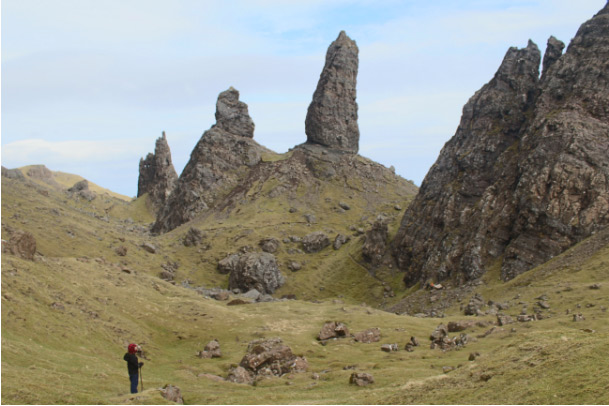
The Old Man of Storr
The Island of Skye is nearly always on peoples ‘bucket list’ and with good reason. The island is very large with so many different things to see its hard to know where to start. Dominated by the brooding ‘Black Cuillins’ a ragged mountain range that sits in its centre the island fans out to a number of peninsulas. All of them have spectacular views and hidden gems to explore but our favourite is the Trotternish peninsula.
Travelling north beyond Portree; the island’s main town a strange jagged ridge comes into view, this ridge features the Old Man of Storr, a giant rock tower that sits at an impossible angle near the rugged Storr cliffs. Further up the Quiraing extends the ridge line, the remnants of an ancient landslide of epic proportions. Walking through this area is like entering another world, the complexity of the landscape and broad vistas as you reach the ridge tops is quite simply astonishing.
What else is like this: In many ways it reminds me of Hadrian’s Wall (yes I know thats in England). Also the sea stacks of Orkney.
2. Glencoe and Rannoch Moor.
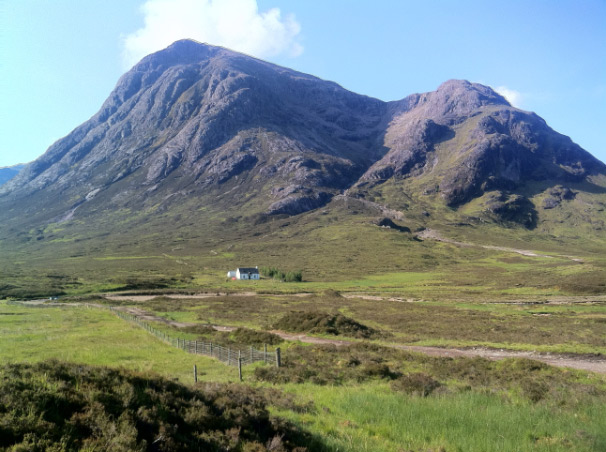
Glencoe
It would be impossible and indeed unforgivable to not include Glencoe in this list but I would extend it a little south to cover Rannoch Moor, an extraordinary landscape of bogland and small lochans that signal your approach to the glen as you venture north. The main road seems to float over the landscape and its hard not to find yourself trying to imagine what it must have felt like in the days before Thomas Telford build the first metalled road here as people picked their way through the moor. It must hold many dark secrets.
Then there is Glencoe. The majestic Buchaille Etive Mor stands guard at the entrance to the glen with her sister peaks lined up beside her, on the other side the Aonach Eagach ridge, the narrowest and most exposed ridge in Britain is a place not for the feint hearted. Handy parking places are scattered along the length of the glen, nearly always packed with tour busses and the odd bagpiper raking in the cash. The real rewards though, come when you take a step or two away from these busy lay byes and out into the glen itself. Despite its fearsome reputation in winter Glencoe has meny less challenging low level walks that get you away from the crowds and give you the space to contemplate life before the ‘quieting of the highlands’ and the tragic events that have been so linked to this place forever more. Caution and a sensible attitude (and footwear) of course goes without staying, this is a wild place that can claim lives in any season.
What else is like this: Scotland has many deep glens like Glencoe though few are so well known. Glenshiel with it towering 5 sisters comes to mind or for a more scaled down version Mennock and Enterkin passes in Dumfriesshire feels like a lowland rural equivalent.
3. The Border Abbeys
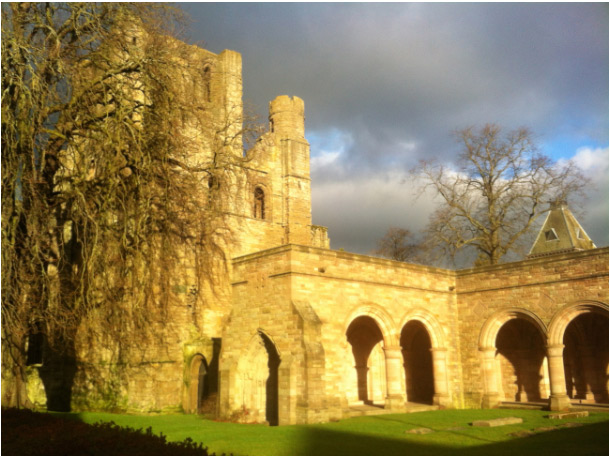
Kelso Abbey
The cluster of small border towns that nestle in the south east part of the Scottish borders feature a ring of magnificent ruined abbeys. In their heyday Monks from the Tironesian, Augustinian, Premonstratensian and Cistercian orders occupied these impressive buildings which became centres of learning and sat at the centre of many small communities. Inevitably though, sitting as they do in the heart of the sometimes lawless border region and with neighbouring England a few hours ride away the abbeys were partly destroyed, much of the damage being done during the ‘Rough wooing’ of King Henry VIII of England.
The violence of that time has long gone now and what is left of the abbeys are preserved as they were left all those centuries ago. Each has its own character and are peaceful places where you can sneak away from a busy market day and try to imagine the sounds of morning prayers being offered up in an echoing chapel.
For people of a fitter disposition it is possible to follow a 5 day walking route that takes in these wonderful buildings. The walk is not too challenging and gives you even more opportunity to explore this often missed part of Scotland.
What else is like this: Our own Holyrood Abbey in Edinburgh of course, Iona (featuring shortly) and Linlithgow Palace certainly have a similar feel in many ways.
4. Arisaig
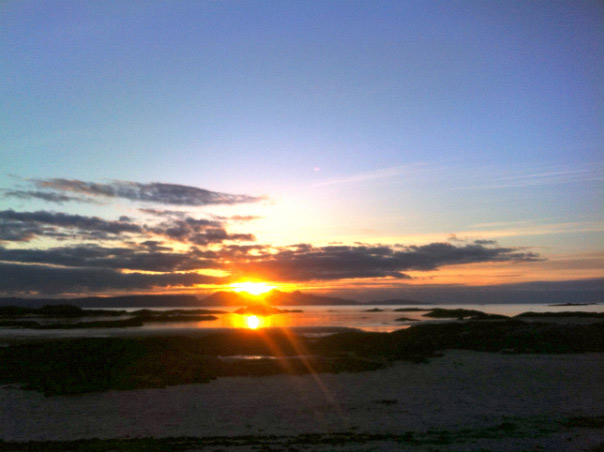
Arisiag at Sunset
As you take the route north to venture into the North West Highlands you hit the town of Fort William, spreading near the foot of Ben Nevis this busy town is an inevitable stop off for a quick snack and a stretch of the legs. Most travellers continue to the north towards Skye and Loch ness but just taking a left turn will lead you on a journey that rewards you with fantastic beaches, scenes from Harry Potter and romantic tales of Bonnie Prince Charlie. This road which was once a twisting and perilous single track is much improved, it takes in the Jacobite monument at Glenfinnan and an added bonus of a view from there of the Glenfinnan Viaduct a victorian marvel of railway engineering that will now forever be known as ‘the Harry Potter Bridge’. If you are very lucky you might catch the steam train that regularly travels this way on tourist trips puffing over the viaduct.
This was where the ‘Young Pretender’ (not the young wizard) first landed on the Scottish mainland in 1745, raised his standard and forever changed the covers of shortbread tins and tea towels, just a few minutes drive away loch Nan Uamh is where he set sail back to Europe a year later, his followers scattered in the highlands or buried in the mass graves at Culloden.
At the small village of Arisaig is what could only be described as a camper’s paradise, a collection of campsites sit along this stretch of coast set into grassy areas beside beaches with impossibly white sand. Its hard to compete with the feeling of settling down to a mug of tea or something stronger watching the waves on the shore as the sun sets over the islands of Rhum and Eigg. A sunset in Arisaig is not just a sunset, its gods own theatre, and he knows how to put on a good show!
For those who want to venture further though this route has one last gift to give, the Malliag ferry to Skye. An altogether gentler and more dignified way to reach our first destination on the list. As the ferry pulls out of Malliag harbour its inevitable that you catch yourself humming the Skye Boat Song to yourself.
What else is like this: The west coast and in particular the islands have incredible beaches, Tiree for example or Durness in the far north, The small island of Eriskay has the connection with Bonnie Prince Charlie too as of course does Culloden.
5. South Uist
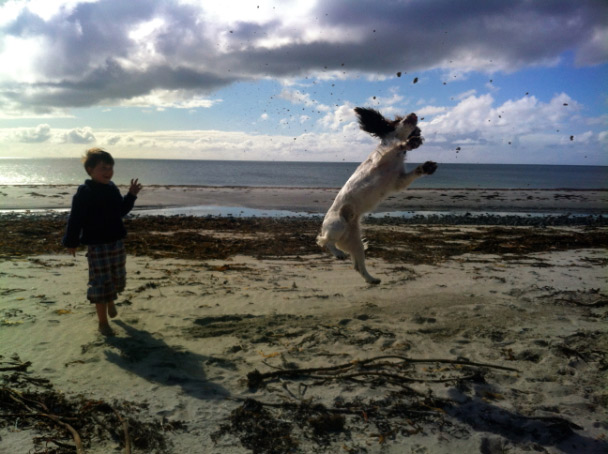
Happy Dog on South Uist!
The island of South Uist forms part of the Outer Hebrides (more of them to feature later). The island stretches from north to south linked by causeways to Benbecula and Eriskay. A modest range of low mountain peaks run like a spine down its east side and to the west is the legendary Machair. The Machair is a low lying coastal plain, formed by millennia of wind blown, calcium rich sand that forms a valuable fertile layer. The habitat is the fragile home to many species of birds and small crofting communities are scattered along the island’s east side.
There is something about the light here that feels like nowhere else on earth. There always seems to be some drama in the sky as another raincloud skids in over the Atlantic to the sound of oystercatchers and gulls.
This is an ancient place too – Settlers have been here since neolithic times and this is the only location in Britain where prehistoric mummies have been found. Looking at the ramshackle collection of little crofts you are reminded that now just as then the people who live here have a relationship with the land and pace of life that many of us would envy (in the summer at least).
What else is like this: Orkney and Shetland certainly have that feel of a link with the prehistoric past though the Machair is peculiar to the Outer Hebrides. also Barra and Vatersay just to the south and further on, the islands of Islay and Jura.
6. St Kilda
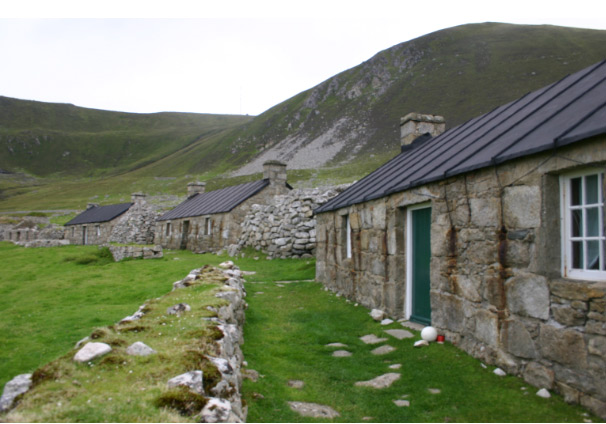
St Kilda
On 29 August 1930, 36 men women and children boarded a boat to the mainland from the island of St Kilda. Breaking a continuous period of settlement that had stretched back over two thousand years. These people were not evicted by harsh landlords, they had asked to be taken away to start a new life elsewhere. For them life in the most remote part of the British Isles had simply become too difficult.
Remote is too simple a word for St Kilda, just getting here is an adventure, and something of a hit and miss affair as the journey over rough seas is not always possible at all. Arriving at the small bay on Hirta, the main island in this small group is like arriving at the edge of the world, the deafening sounds of Gannets, Fulmars and Skuas fills the air and the island itself seems to rise out of the sea to meet you, one second there, one second disappearing as the boat lurches between the waves. As you step onto the shore you step back in time to the moment those last settlers left the island behind. The village street still stands as if trapped in amber, the remains of centuries of island life lie scattered up the hill side.
If you want to come to Scotland and get the feeling of being totally alone try spending a few days here with just the mice for company (and the army personnel who man a nearby base but thankfully never leave their quarters). There is a peculiar feeling to standing on the shore watching the tiny boat head back out into the open sea wondering if it really will be ‘back on Wednesday’ as promised.
Where else is like this: The Monach Islands off the coast of Uist were also until lately inhabited and North Rona is another remote destination. There are also a number of clearance villages such as Bororaig in skye and near Tongue in Sutherland.
7. The Isle of Lewis.
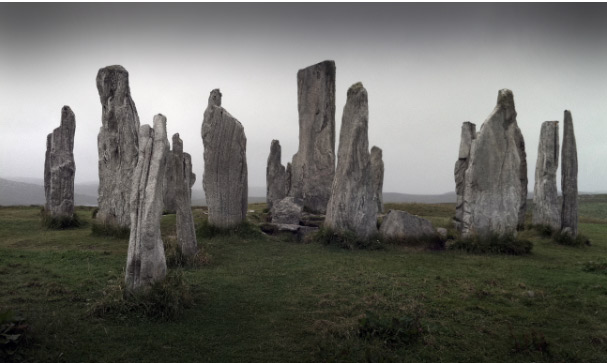
Callanish Standing Stones – Lewis
A few years ago I was on a flight back from Iceland on a clear summer evening. The flight path took us over the Butt of Lewis and as first sights of ‘home’ go, its about as good as it gets (also see entry number 10). Lewis has become a popular destination recently thanks to Peter May’s ‘Black House’ trilogy of books, May’s infectious description of the landscape has also inspired an excellent coffee table photography book. A trip to Lewis inevitably begins with the long ferry journey from Ullapool to Stornoway, passing by the Summer Isles, the setting for the classic British horror movie ‘The Wicker Man. Stornoway is a bustling small town that has a bit of a frontier feel about it, its a bit rough round the edges and can be a bit wild of a Saturday night before the ‘sabbath’ calls a halt to all activity. But before you disappear off to explore the island, stop off at MacLeod’s Butchers and stock up on as much Black Pudding as you can sensibly carry.
The stand out feature of Lewis is the standing stones at Callanish. For nearly 5,000 years these remarkable stones have stood here. Academics still argue over their true purpose, partly as a burial site possibly as a calendar no one can really say for certain. Folk tales say that they were a family of giants who refused to convert to Christianity and Saint Kieran turned them to stone as punishment.
Like many parts of the west coast, Lewis has its fair share of incredible coastal landscapes with wide open beaches and stark cliffs. As you travel south from Stornoway towards the mountains of Harris you pass seemingly endless expanses of peat bog, stacks of freshly cut peat stacked up and drying ready for collection. The smell of peat smoke is the air is a reminder once again that this is a place where people work and live not just a toilet stop and cafe.
What else is like this: Again, Orkney springs to mind for its unrivalled collection of ancient artefacts (the only reason Orkney is not on our list is because we have yet to visit there and this is our personal list). Wick and Thurso in Caithness have a similar frontier feel about them that Stornaway does and the wetlands of Caithness and Sutherland are very much like the Interior of Lewis in some ways.
8. Iona
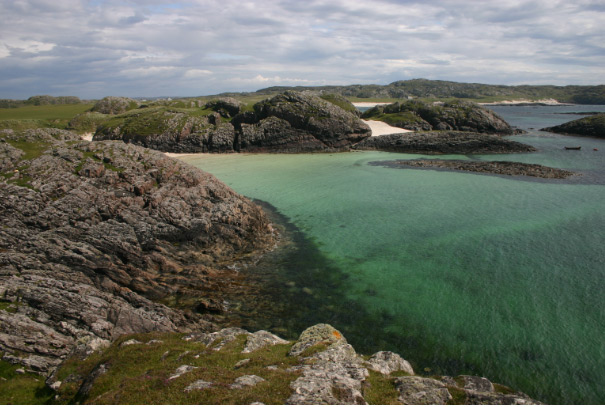
West Coast of Iona
Sometimes the beauty of a place is magnified by the effort it takes to get there. If thats the case then Iona must be one of the most beautiful places on earth! First of all you need to get to the island of Mull, that is either reached via a ferry from Oban or by a couple of smaller ferries and a long drive down towards Ardnamurchan. This is followed by a long drive down the Ross of Mull until you literally ‘run out of island’. From there a small ferry takes mostly foot passengers (theres is not much point in taking the car as theres not really anywhere to drive to) over the short hop to Iona. The famous abbey is immediately visible as you land in the tiny village that sits beside it.
Iona abbey is one of the most famous in Scotland. its by no means the largest and would be dwarfed by the Border abbeys though it is one of the best preserved. St Martins Cross is probably the most photographed and recognisable celtic cross there is and the abbey grounds have more than a few famous interments: Kenneth MacAlpine, Donald II, Malcolm I, Duncan I and Macbeth all lie here, as does the late Labour leader John Smith.
The island is tiny and can be walked round entirely in a day. If you chose to do this there is a good chance you will hardly spot a soul the whole time as pretty much all the tourists flock to the abbey. Their loss is your gain though, the island circuit takes in more sandy beaches on the north shore the rugged west coast with crustal clear waters and small secluded bays, a spouting cave and the remains of an abandoned marble quarry before returning back to the village for a well earned drink while you wait for the ferry back.
What else is like this: Right next to Iona is the small island of Erraid. its tidal so can easily be walked to. There is an incredible campsite at Fidden farm nearby too. Holy isle (in England,,, just) is also very similar and also Inchcolm Abbey in the Forth Estuary.
9. Plockton
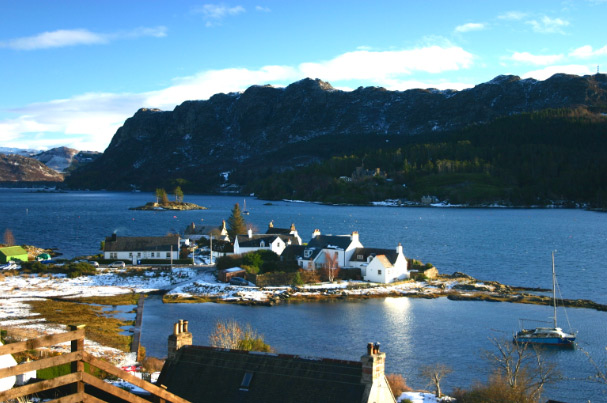
Plockton
The tiny village of Plockton sits at around the same line of latitude as Moscow, yet the little road around the bay is lined with palm trees! These are not made of plastic but thrive here thanks to a phenomena properly known as the Atlantic Conveyor though most of you know it as the Gulf Stream. a current of warmer water that runs North-East from the Gulf of Mexico makes landfall on Scotland’s north west coast leading to a far milder climate than we would expect. Before you pack your bermuda shorts and beach volleyball set though remember this is STILL Scotland.
The small village was a fishing community that sprung up in the 19th and 20th centuries in an attempt to slow down emigration from the highlands. The end result is possibly the most picturesque small village in Scotland. Just like Iona above, getting here is half the fun. There is the long drive skirting within touching distance of the Skye bridge and up the road to the ironically named ‘Stromferry (no ferry)’ , or you can take a more indirect route via Lochcarron, or you can treat yourself to one of the worlds greatest train journeys, travelling north to Inverness and then west via the tiny settlement of Achnasheen through some of the grandest majesty that the highlands can serve up, it might be a long journey but I really wouldn’t bother with a book unless its dark 
For those who like an element of terror on their days out then its not too far from Plockton to the small town of Applecross. The last half hour of your trip will be memorable as you wind up the notorious Bealach na Ba (the pass of the cattle) a single track road that twists steeply up an impossible looking slope before sliding down the other side. On the way back you can reward yourself with an early tea at the excellent seafood cafe at Kishorn, where the seafood is so fresh it answers you back.
What else is like this: Rothsay on the Isle of Bute is also known for its palm trees though its a much larger and busier town. The East Neuk of Fife also has a string of quaint fishing villages and Tobermory on Mull is also very picturesque.
10. Edinburgh
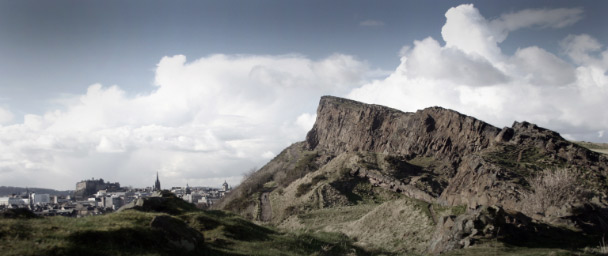
Salisbury Crags, Edinburgh
This comes as no surprise to anyone who knows us, after all its where we live. what can you say about Edinburgh that not already been said. Known as the Athens of the North the city has some of the most impressive architecture in the world covering the Middle ages, and Neo Classical eras in particular. Arriving in Edinburgh by train is one of the great tourist experiences of all time: As the train slips through the outskirts it could be anywhere in Britain, then the train dives into a long tunnel, for a moment you emerge to catch a glimpse of the castle rock and gardens before ducking under the art galleries on the mound and arriving in the station. If you have never been before (or even if its been a while) Then walk up the sloping roadway to emerge on Waverly Bridge. Ahead of you stands the impressive if rather rocket like structure of the Scott Monument, the Classical pillars of the National Gallery and Royal Scottish Academy and behind that Castle rock with the iconic Edinburgh Castle crowning the top. It really is one of the most impressive cityscapes in Europe if not the world.
Edinburgh is bursting to the point of overflowing with history and culture, the compact city centre makes most sites easily walkable (for those who can easily walk), you can take in an art gallery, loose yourself in a museum or scare yourself witless on one of the many ghost tours that run from the high street.
And if all that bustle is too much then in 15 minutes or so on foot you can find yourself at the bottom of the Royal Mile past Holyrood palace and into Holyrood park, Here you can leave the city behind and feel like you are back in the highland wildernesses that I’ve eulogised about above (in fact parts of Arthurs Seat in Holyrood park have been used to represent the wild highlands in film shoots). After half an hour or so of puffing you might find yourself on top of Arthurs seat or nearby Salisbury Crags giving you a reward of an incredible view over the city and down the east coast on one side and up to the Forth bridges on the other.
What else is like this: Glasgow’s west end is for Victorian architecture what Edinburgh is for Georgian. Stirling has its castle too and is handy for Wallace Monument and Bannockburn, Inverness too is worth visiting if only for the beautiful Ness islands and Leakeys bookshop.
Well thats our personal top ten list for now. I’ve set a date in the Calendar to revisit this list same time next year and see what new places we have discovered by then…
Rodger and Amanda Moffet – Scotclans
The post Scotland’s Most Inspiring Places: A Personal View appeared first on ScotClans | Scottish Clans.
]]>The post Introducing Susan McIntosh – Our latest member of team ScotClans! appeared first on ScotClans | Scottish Clans.
]]>Hàlo! Is mise Siusaidh Nic An Toisich!

Susan McIntosh
In case you didn’t quite recognize that it is Scots Gaelic for “Hello! I am Susan McIntosh” – and I am honored and excited to begin blogging for the great team at ScotClans. A few folks may already know me as the immediate past president of the Council of Scottish Clans & Associations (COSCA). I stepped down as COSCA President in March of this year so that I could slow down a bit and try my hand at a few new tricks. Some of you might also have run across nearly three years of my column on the back page of Scots Heritage Magazine called “McLetter From America”. While all of that was great fun, I am chuffed to say that I have consolidated my efforts into the most active, inquisitive and engaging Scottish heritage presence on the web and on the field – ScotClans. Whether we are old friends or new I can’t wait to begin to interact with you here on Bletherskite.
I will be writing about the two Scots loves of my life. No, not Sean Connery and Sam Heughan, although I would not shrink from that duty. I will be reporting on Scots Gaelic culture and history and on Scottish contemporary affairs with an eye to making both easily accessible, intelligible and fun for folks of the global Scottish diaspora. Here’s a bit more about what’s in store.
Not your father’s Gaidhlig
Not everyone with a Scottish heritage sports Gaelic ancestry or interest but many do. Even if yours is a family of Scottish Normans, who somehow never made the Bruce mistake of marrying into those wild eyed Gaels, a better knowledge of the Scots Gaelic culture will enrich the larger brotherhood of Scots. Plus its just plain fascinating stuff.
I will be looking at our Gaelic ancestors using a different lens, using resources that focus with and on Gaelic eyes and words free of non Gaelic interests and bias. This will be a story that has gone untold and is largely forgotten in the Scottish diaspora world. Resources with which to learn about Gaeldom from the Gaelic perspective based upon resources written in Gaelic by Gaels are tragically few and largely inaccessible to the Scots Diaspora.
The good news is, over the last few decades, more scholars and institutions are locating and digging into these true primary Gaelic resources and they are providing insight from a native perspective. The less good news is that most of these resources and scholarly interpretations are widely dispersed and hard to find, often written fully or partially in the Gaelic language, and not easily available and organized for those who have the greatest hunger for the information and the least time to spend hunting for it – the Gaelic Diaspora.
Americans learn virtually nothing about our Scots Gaelic past in school and those of us with an interest must take it upon ourselves to go find answers. Yet when we discover what has been written about our ancient indigenous roots we too often find that it fails to satisfy. We learn about Gaelic culture through the filter of words such as “savage”, “barbaric”, “primitive”, “outlaw”, “backward” and “anxious to be improved by British civilization.” We have been fast forwarded to a history told from the perspective of a growing, Anglicized, urban-centered, industrializing and outward looking 19th Century British Scotland. As you might guess we aren’t getting the whole story. Or necessarily the correct story all the time. We want to know as much about our ancestors’ worlds as possible. Consequently, we want to know their world through their own eyes.
But what is that story? It’ll be my job to begin to chase that down and bring it to Bletherskite. I am not a Gaelic scholar and my own knowledge of the language is steadily approaching rudimentary. I will be picking the brains of the best scholars out there today to begin to paint the picture of what it means to be a Gael – from our own perspective.
And lest we forget, Gaelic culture is a living thing. So don’t be surprised to find some chatter about the contemporary arts side of our Gaelic world to complement and give context to the ancient roots. I look forward to an exciting and enlightening journey to recover and learn about a great Gaelic civilization and I hope you join in!
Watching Scotland: The world is watching Scotland – maybe we should find out what all the buzz is about.
While most of us in the Scottish Diaspora can extemporaneously provide a rousing and mostly accurate recount of the Jacobite rebellion of 1745, few of us can do the same for 2014′s version of “the 45” or “the 56” for that matter. My second job at Bletherskite is to begin to change that for anyone that is interested.
Both “the 45” and “the 56” are new monikers, freshly minted in the exciting and turbulent world of contemporary Scottish politics. Scotland boasts an extremely engaged, creative and energetic society today and Scottish independence from the United Kingdom is only one area that has garnered huge worldwide attention.
Scotland is currently in the midst of fundamental land reform discussions the outcome of which could have profound consequences for the Scottish diaspora, including our built and environmental heritage. In other news, the very backbone of Scottish politics and government, the Labour party, has recently imploded while a record 56 Scottish National Party (SNP) MPs were sent to Westminster recently, one of whom is the youngest Minister of Parliament in the history of the Union at 20 and she has a colleague who is 23. Scotland is folding 16 and 17 year olds into the electoral process as the nation recognizes the importance of youthful views and judgment for the future. Scotland is an exceptionally exciting place to live – and watch – right now!
No one outwith Scotia is more interested in Scotland than the Scottish Diaspora but geez-Louise it is difficult to find trustworthy straightforward reporting on the subject. America is a particularly difficult market as we are not of the Commonwealth and thus one more step removed from news of the United Kingdom.
Then there is the challenge of understanding it all. From the American perspective just about everything about Scottish and United Kingdom politics and government are, well, foreign. Who can tell a Labour or a Tory MSP from a hole in a pine tree over here? Ta da! I can and I’m going to help you make some sense of it all too.
Specifically, I will abandon the comfort of good ol’ American news sources and daringly sift through actual British and Scottish news and opinion and blog about the stuff that matters most to the Diaspora:
• Scottish independence (or not)
• Scottish natural environment
• Scottish heritage
You’ll see a few interviews with key Scottish leaders here as well. As we go along, Rodger, Amanda and I will be providing some keen resources to help folks in the Diaspora interpret what is going on in your ancestral homeland today. Look for my first Watching Scotland post here on Bletherskite for a wee glossary of terms necessary for understanding what the heck is going on over there.
So that’s it! If you have any thoughts or suggestions or comments or gripes, fire them over. We are interested in your ideas. I can’t wait to get started and I hope to see and hear from everyone in the ScotClans extended family!
The post Introducing Susan McIntosh – Our latest member of team ScotClans! appeared first on ScotClans | Scottish Clans.
]]>The post What Now Scotland? appeared first on ScotClans | Scottish Clans.
]]>
Saltires being carried up Arthur’s Seat
Last Thursday evening I set my alarm for 2am and took to bed early, the fridge was stocked with snacks and beer and a bottle of wine sat in the kitchen, champagne seemed too much like tempting fate.
I checked my phone just before 2.00 to find a message from a friend, Clackmannanshire had declared for no and it was already not looking good. My heart sank. Nevertheless I got out of bed and tuned into the BBC coverage. It was relentless and despairing, as each declaration came in the inevitable result became clearer and clearer. For some reason my mind drifted back to the awful night my father passed away, the family were together through the night by his hospital bed and looked at each other as he slowly drifted away over the course of the night and into the next morning. We were helpless and powerless and as I watched him I thought about all those memories and experiences that were about to be extinguished forever. That same feeling washed over me as I watched the dreams of so many Scots being slowly strangled by fear.
Around 7am I crept into my sons bedroom and sat beside him on the bed, he woke and sat up, looking at me through sleepy eyes, ‘I’m sorry, it’s a no’ was all I could say. He lay back down and pulled the covers over his head, I heard him struggle to hold in his emotions. Back in the living room I returned to the TV coverage but I could now hear the sobs coming from his room.
I opened my laptop and began to remove myself from numerous pro independence Facebook groups, to ‘unlike’ all those many pages that had for months tried to spread a positive message of hope. Slowly my social media feed began to return to normal.
And that was it… The dream of a better Scotland was just that, a dream and I’d woken up on a grey September morning to contemplate a bleak future. However in all of this I’d forgotten one simple and unforgettable truth…
This is Scotland and we are the Scots.
As Friday wore on my mood began to lift. As my friends across our wide social networks began to react to the result I saw each find their own way of dealing with it. Some changed their Facebook profile pure black or white in mourning. Others returned their images to how they had been before. Collectively we were going through the stages of grief.
And then it stopped.
In the end Scotland had voted against independence by 55% to 45%. That 45% represented over 1.6 Million Scots, far more people than the entire turn out for most elections. 1.6 million people had said that they would not be frightened by the scare stories in the media, that they did not believe the establishment’s promises of extra powers. 1.6 million of us chose hope over fear. And that was quite an achievement.
Around lunchtime on Friday some inventive person started up a little Facebook community, they borrowed a slogan from the ‘occupy’ movement and called it ‘we are the 45%’. What happened over the next few hours was quite incredible; within minutes several hundred had joined the community, within hours it was in the thousands, by the early evening it was tens of thousands. As I write this over 175,000 people have joined this online gathering. A beacon had been lit and the shell-shocked troops of the yes campaign had seen it and they were regrouping. Suddenly it became clear that we were not dead, this was not over, and this fight was really just beginning.
But then the news started filtering in from George Square in Glasgow and reality bit hard again. For weeks the Yes movement had more or less occupied the square, a multi cultural festival of singing and dancing and speeches had shown the world what was great about Scotland. For the next few hours we were about to see the other side, the darker side, the Janus face of Scotland. Like a scene from some zombie horror movie the square began to fill with union flag wearing bully boys, throwing flares, making nazi salutes and attacking anyone wearing a Yes badge or holding a saltire flag. Within minutes the square, which had focus of peace and hope became an ugly scene of threat and intimidation. And these were the so-called ‘winners’?
The next morning I left a grey overcast Edinburgh behind and headed up into the highlands with some old friends to climb in Glencoe. It was as spectacular a day as you could imagine, a perfect day to clear the head, blow away the blackness of the last few days. We even managed to joke about the spectacular views of ‘North Britain’ from the top of Buchaille Etive Beag. That evening we settled down for a night of drinking and entertainment in the famous Clachaig Bar; A Saturday night at the Clachaig is always a bit special and fairly rowdy but in all my years I’ve never seen it like this. The bar was packed and people sang along to the band and danced on the tables even though the low ceiling forced them to be bent near double. A divided nation? Not here it wasn’t.
 Online though the immediate aftermath of the result had some strange effects on people. In all of this it’s been very easy to ignore how those who actually voted no have reacted to the result; The vast majority have gone back to business as usual but for others the fact that the ‘45’ have refused to just go away has caused frustration and anger. I probably lost more friends in the days immediately after the vote than I lost in the weeks leading up to it. Strangely many who had been deafeningly silent for weeks found a voice and the internet was charged with negative particles mostly, unremarkably, finding Facebook and Twitter as an outlet.
But the 45 were not going to be silenced. A grass roots movement this big was never going to disappear overnight. What none of us expected however was the overwhelming reaction in the week that followed; Within a few days the membership of the SNP (Scottish National Party) more than doubled making it the third largest political party in the UK ahead of the UK wide Liberal Democrats, other ‘pro’ parties such as the Scottish Greens also saw a growth spurt so great that over the week they were actually one of the fastest growing political parties in the whole of Europe. Even the fairly modest Scottish Socialist Party were overwhelmed by applications for membership. It was clear that this huge political movement were ready to send out a message to the rest of the UK establishment. “we are still here, and we are watching”.
And just as well too, for it took less that a few hours before the promises made to us to secure a no vote were beginning to unravel. Within a few days news reports of huge oil discoveries in the North Sea magically began to surface in the media and a little over a week since the referendum we are about to go to war in the Middle East again! The last week has been nothing short of Orwellian.
We are watching, and we are no going to be quiet.
So on Saturday, 10 days after the referendum day thousands gathered at the Holyrood parliament building in Edinburgh. The event was not organised by the SNP or Yes Scotland or any other political group, it was organised instead by a mum who wanted to show the rest of Scotland that the fight was not over. Under a tree in one corner at the far end of the parliament square hundreds of shopping bags were being deposited, all donations for food banks. As I stood in wonder I watched a severely crippled man struggle over the last few yards, a Sainsbury’s bag swinging from his crooked arm, he stopped and carefully added his contribution to the sea of goodwill. And that was when the wave hit me full in the face. I could not hold back the tears and had to find a quiet spot to let it out.

Food Bank Donations
For the next few hours the crowds of saltires grew and people listened patiently as speakers got up to say how they felt. Some were professionals such as SNP MSP Marco Biaggi but others had just found their way to the microphone to vent their anger, their frustration, their defiance and their testimony. Somehow my son who a week ago had been devastated by the result managed with his friend to get himself behind the speakers and he stood holding his end of a saltire flag aloft to provide a backdrop. I don’t think I’ve ever been so proud in all my life. Every speaker had one common message – this is not over.

Rally at Holyrood, Edinburgh
The fat lady is not for singing.
So what have we learned over this week? I think the overriding lesson has been that what lost the referendum was not the argument it was our lack of control of the message that was being fed to the public. The fact that many more older people voted no was almost certainly because they were the demographic that the online media was not reaching. Forced to rely on the press and TV they were never given a chance to make a balanced decision.
When the campaign begins again (and begin it will) we need to have better control of traditional media. The move to ensure that begins now; already plans are underway for the foundation of a new red top newspaper for Scotland. Plans to enter into the broadcast arena are being formed too, all coming together thanks to crowd funding. The grass roots basis of the yes campaign once again proving its resilience by ensuring that within days many of the initial crowd funding projects designed to work on simple feasibility studies had already met their targets.
And then there was Labour. Their red hand had been all over the No campaign, from its leader right down to its show of strength in the last days before the vote and Gordon Browns maniacal speeches. In less than a year we will have a general election and its already clear that this political monster that has been created will work as one unit to ensure the utter destruction of Labour in Scotland. It may be almost unrecoverable for them across the UK too, The Conservative led government have collectively taken one pace backwards and Labour in their utter idiocy have been set up.
And it’s exactly what they deserve.
Because here’s the thing. If next years general election result is a complete rout of Labour and we can assume by that same token the Conservative’s and Lib Dems will continue with their pathetic showing north of the border then the Scottish part of the UK will return a huge SNP representation, and if that is large enough it would constitutionally permit Scotland to declare UDI; a Unilateral Declaration of Independence, this was the route that led both the Republic of Ireland AND the USA to declare Independence and it might yet be our route too. No referendum, no conspiracies of recounts, no media interference. Job done.
The 2014 referendum was not the end of the fight. It was a bloody nose but that’s all and Scotland is not out. We are back off the ropes and now we know our opponents best moves we can counter the punches and fight back.
“Wha’s like us? 1.6 million and were nae deid”
Rodger Moffet
The post What Now Scotland? appeared first on ScotClans | Scottish Clans.
]]>The post The View From the Ground in Aberdeen appeared first on ScotClans | Scottish Clans.
]]>
The view from my window in Aberdeen
It could be any other lazy, late summer afternoon today in Aberdeen. Sunlight is attempting to squeeze its way through the clouds, seagulls are circling in droves, and ship horns are belching at the city’s bulging harbour. Right on cue, the haar has begun to roll in off the North Sea, making the crowd of the oil industry’s supply ships anchored off the coast look spectacularly ghostly.
But there’s something peculiar in the air today. The view from my window looks out on to one of Aberdeen’s relics from the not-so-distant past – a magnificent 1950s council tower block, that’s today dotted with saltires and simple one-worded banners. I kid you not, I can also hear the sound of someone playing Flower of Scotland on the bagpipes somewhere down the street. Today the atmosphere in Aberdeen, and indeed all over Scotland, is a mash of anxious-electric-hope as we all sit on the very edge of history.
I’m roughly 17,800 kilometers from my hometown of Rotorua, New Zealand. Sitting here today in the North East of Scotland, I somehow have landed myself right at the crossroads of what is one of the most important moments in this country’s already exceptional history. And thanks to my London-born father I’m one of those lucky buggers with dual-citizenship, which alongside my Scottish address gives me the right to vote in Thursday’s Independence Referendum.
New Zealand’s path to independence from the UK is, I’m rather embarrassed to admit, one of national confusion. We don’t even have an Independence Day, because no one can agree on when it actually happened. However we’re still part of the Commonwealth – which to me means that a well-to-do woman from London graces us with her presence on our coins and banknotes.

The Signing of the Treaty of Waitangi by Marcus King
Our independence came about after well over 150 years worth of baby steps, beginning with the signing of the ‘Treaty of Waitangi’ in 1840. The Treaty is a hotly contested topic at home to this day, and depending on who you speak to, it’s either the official date that we became a Crown Colony of Britain, or, when Maori chiefs gained sovereignty over the Crown. See why we’re so confused?
Over the next century, following our own war, then two world wars, our relationship with Old Blighty eroded as we slowly found our own feet in the world. We established and gained more and more degrees of self-rule, until finally, one day in 1986 the last remaining shreds of apron strings that stretched to the other side of the globe were cut. We developed our own constitution, removing the residual power of the UK to legislate.
A few weeks before I moved to Scotland almost two years ago, I watched from the other corner of the globe as Mr Cameron and Mr Salmond signed the Edinburgh Agreement. I remember thinking that Cameron seemed a little too calm in his post-signatory interview, and wondered why the prospect of the break-up of perhaps the mightiest Union in history didn’t seem to bother him. I thought perhaps the campaign for independence was too small and wasn’t perceived as a serious matter by Downing Street.
It’s now two years later, and let me tell you that this matter is so very far from small. Never mind what the people in suits have said – whichever side of the campaign ordinary folk are on, the sheer engagement and engrossment by every man, woman and child in the future of this land has been unprecedented. It’s been a truly electrifying and galvanising experience that I will cherish with all my heart for the rest of my days.
And so here I sit in my adopted home, right in the thick of it, poised and ready with poll card in hand.
I look around me at the gigantic gap between the rich and the poor in this city and wonder how the outcome on Thursday will affect the people who are visibly struggling to make ends meet. I look at the single mother and her daughter who walk past my door on the way to school each morning and wonder if my vote will affect that girl’s education prospects. And the wee old man who gives me a wave from his window every afternoon on my way home from work, how will this affect his pension scraps?
On Thursday morning I will place a tick beside the box marked Yes. Because I believe that there is a real genuine hunger in this country for something better. And I believe that the alternative is something that we will all be better off without. How incredibly fortunate we all are, that we have the right to choose.
As we say in my home – Kia kaha, Scotland. It means stay strong. If little old New Zealand can do it, then you sure as hell can too. Grab your independence by the baws and aim for the stars.
The post The View From the Ground in Aberdeen appeared first on ScotClans | Scottish Clans.
]]>