The post The Voyage of the Hector appeared first on ScotClans | Scottish Clans.
]]> It was only 28 years after the infamous Battle of Culloden, in 1773, when the Hector was moored within Loch Broom taking onboard a group of people from the Highlands. 189 passengers joined the Hector that day, 25 single men, 33 families, a piper and their agent, all of which had one thing in common. They had a fire in their hearts to find a better life and a new land. A land where they were free to speak their own language, Gaelic, to play the music of their ancestors and to wear their beloved tartan without fear of repercussions. This hefty and dangerous journey was to take three months, but would represent the first significant migration of Scottish settlers to Canada.
The Hector was a fully rigged fluyt built in the Netherlands sometime before 1750. She was employed in the local trade off the coasts of Great Britain but was also involved in the immigrant trade to North America. Whilst she had already made a trip carrying Scottish emigrants to Boston, Massachusetts in 1770, she had never before made a voyage to Canada. By the time of this voyage the Hector was an old ship and had definitely seen better days.

This famous voyage began with her departure from Loch Broom in the second week of July, 1773. Mr. John Pagan, the ships owner, had purchased three shares of land near Pictou, Nova Scotia, along with Dr. John Witherspoon, a presbyterian minister who is most famous for being one of the Founding Fathers of the United States. John Ross was hired by Pagan and Witherspoon to act as a recruiting agent for settlers willing to emigrate to Nova Scotia and was given authority to offer free passage, one years worth of free provisions and a farm as an incentive. John Ross recruited those that went from Greenock and Lochbroom in Rossshire, with the majority coming from Lochbroom. Most of those that boarded the Hector were poor crofters and artisans who only spoke Gaelic. There was a school teacher onboard, William McKenzie, who was one of only a few passengers who spoke both English and Gaelic.
The arduous journey was a long one and was not without troubles. The journey was delayed by 14 days due to increasingly bad weather. Dysentry and smallpox spread throughout the passengers and claimed the lives of 18 passengers. But spirits were not dampened, and in fact, were raised with the birth of a child not far fro the Canadian coast. A long 11 weeks after it left Scotland the Hector finally reached Pictou harbour. On the 15th September 1773 she made her landing at Browns Point, immediately west of the present day town of Pictou, just as the harsh winter weather was setting in.
Unfortunately the provisions they had been promised never materialised and the settlers had to hurry to build shelter without them before the harsh weather set in and starved them. This was a hard task, but the hardy Scottish settlers managed and proceeded to tame a small part of this wild new continent, naming it Nova Scotia in honour of their roots.

The town of Pictou holds great significance within the history of the Scots spreading throughout Canada. It is known as the ‘Birthplace of New Scotland’. Whilst there was already a great number of Scots settled in other areas of Nova Scotia by the time of the towns founding, it was the first settlement that was primarily made up of Scottish immigrants and was a receiving point for many Scottish immigrants moving to a new home in northern Nova Scotia and Cape Breton Island following the Highland Clearances.
During the early 90′s, officials in Nova Scotia sought to commemorate the Hector‘s contribution to Pictou’s, and Nova Scotiain, history. The Ship Hector Foundation was formed in 1992 as a result. Consisting of volunteers from Pictou county, the group began to raise funds in order for a replica of the Hector to be built. After several years of fundraising and construction, the replica Hector was launched with great fanfare and media coverage on September 17, 2000 and can still be visited today.
The post The Voyage of the Hector appeared first on ScotClans | Scottish Clans.
]]>The post The Fair Lady of Strathglass – Heroine of The Clearances appeared first on ScotClans | Scottish Clans.
]]>
The Clan system was soon to end. The defeat of the Jacobite cause at Culloden in 1746 heralded the beginning of the end for the Clan system that had sustained the old way of life across the highlands. Retribution for supporting Bonnie Prince Charlie was swift. Raiding parties were sent into the straths and the glens throughout the highlands seeking out those who had supported the Prince. Strathglass suffered from a number of bloody incursions by Cumberland’s troops. The people who lived in this area were known to be Catholic and possible Jacobites. Now the British crown had control.
So families in the Strathglass area had survived Catholic persecution, then the hunting down of Jacobites but nothing prepared them for what was to happen next. In the latter half of the 18th century the infamous Highland Clearances saw people cleared from the land, often by their own kinfolk, to provide grazing for sheep. These were gaelic people who expected to live and die on the same land their ancestors had.

Tenants were forcibly evicted
The population of Strathglass and the surrounding glens were decimated as they were forced to leave their homeland forever, many starting a new life in the new world. This was a harsh desperate time where human lives counted for nothing and land owners just wanted money from having sheep on their land. But in the midst of all this inhumanity were real heroes – in this case heroines - landowners fought against the Clearances.
The Chief of the Chisholms (Known as the “fair-haired Chisholm”) at this time was Chief Alexander XXIII with the support of Elizabeth and their only daughter Mary, he resisted the temptation to put the clansmen out of their homes and lease the Chisholm lands to southern sheep farmers. In doing so defied the orders and pressure coming from London.
When the chief Alexander died in 1793, he left his widow, Elisabeth the rental of a number of crofting settlements – ‘townships’ as they were called.

Elizabeth Wilson (1760-1826), the wife of Chief Alexander XXIII
The chiefship of Clan Chisholm had gone to Alexander’s brother William. The widow Elizabeth and her only child, Mary, kept the tenantry intact for 33 years, never turning anyone off their land. Once, soon after Alexander’s death, the new chief came over to see Elizabeth at Comar together with many Southern men to try and intimidate her and arrange a deal for the best parts of the Glen to be turned over to sheep. Mary, a teenager, objected, and was sent to bed in disgrace. She crept down to the kitchen and told the servants what was afoot. By early next morning about a 1,000 men had gathered outside Comar House, and the southerners avoided trouble by slipping out of the back. When they looked back they saw the chief, carried on the shoulders of his clansmen being piped back from Comar to Invercannich House.

Comar Lodge

While Elizabeth and her daughter, Mary, did everything they could to stop the evictions of their tenants the chief William, the 24th Chisholm, began the clearances in Strathglass in 1801.
“By and bye, I will tell you how the tenantry were treated by the young Chief and his advisers. But I feel bound to tell you first, that repeated efforts were made by some of those who were acting for the Chief to get hold of the land still in possession of the widow. However, the great good sense of this noble- minded Edinburgh lady, and the sincere attachment of her daughter, Mrs Gooden, to her father’s tenantry stood firm against all the advances made to deprive her of the faithful Highland tenantry entrusted to her care.
For the long space of thirty-three years she kept her tenantry intact, never turned one of them out of a farm, nor did she ever deprive any man of an acre of land. As The Chisholm, her husband, left them at the time of his death in 1793, so they were left by his beloved widow at the time of her death in 1826. This excellent lady was well known and distinguished in the Highlands by the endearing term of “A Bhantigheama-Bhan”—the English equivalent of which is “the fair lady.”(From ‘From the Transactions of the Gaelic Society of Inverness’)
Many who rented on the Chief’s land were forcibly removed to make way for the sheep farming. Many of the evicted families fled across the Atlantic and settled principally in Nova Scotia and Cape Breton Island.
“They gave the names of some Strathglass farms to their freehold lands in their adopted country. In the Island there is even the county ot Inverness.” (From ‘From the Transactions of the Gaelic Society of Inverness’).
They sailed from Fort William to Pictou in Nova Scotia on the Sarah. During the passage, some fifty persons died of smallpox, the disease having been spread by a family called Robertson.
The first Chisholm families at Long Point, Judique would appear to have been those of Colin, William, Alexander, John and Alexander Ban. They too came to Pictou from Strathglass in 1801. They crossed over to Long Point a year later where they built grist and saw mills and, as soon as possible, established a school. Soon after, Alexander Chisholm was killed by a falling tree. He was the first person to be buried in the Long Point graveyard. Over his remains was mournfully sprinkled consecrated earth brought by the emigrants from Strathglass.
In Cape Breton Donald Chisholm, who left Strathglass for Nova Scotia in 1803 at 68 settled near Antigonish, in mainland Nova Scotia wrote a poem called ’When I was young in Strathglass’ (‘Bah mi ogam a Strathglais’) in it he expresses his sorrow at having to leave home in old age and his anger at the clan chiefs for betraying the old social order.
When I was young in Strathglass
I had no thought of leaving,
Now that the gallant men have gone, I too, shall leave
The coward who now rules us
Evicted his own, few remain
He prefers sheep in the hills to a kilted retinue.
(From The Last of the Celts by Marcus Tanner)
William, the chief, was always in delicate health, and the management of the estates fell largely into the hands of his wife, whom the natives of Strathglass to this day blame for having cleared the whole clan out of their native glen. In the period of one year, half of the clan were evicted.
After William’s death, his son was still a minor; but his wife Elizabeth continued with the evictions for one sole purpose – to pay for her son’s (the future 25th Chisholm) education at Cambridge.
Bishop Chisholm had pleaded with her to end the evictions:
“Oh! Madam, you would really feel if you only heard the pangs and saw the oozing tears by which I am surrounded in this once happy but now devastated valley of Strathglass, looking out all anxiously for a home without forsaking their dear valley; but it will not do, they must emigrate!”
She promised the tenants, who had gone to her for help, to come up with a solution. But she never did. Two sheep farmers, Thomas Gillespie and William MacKenzie, had convinced her that she should continue with the “improvements” to her land.
The evictions continued with the Cambridge educated son, Alexander. He followed in his parents’ footsteps and totally depopulated Strathglass. It was said that only one Chisholm remained. Bard and poet in the old Gael tradition, Donald Chisholm, wrote these words:
“Our chief is losing his kin! He prefers sheep in the glens, and his young men away in the camp of the army!”
A man of the time described Alexander as wanting nothing so much as to replace all his people, “his family from the beginning of time,” with sheep. And, unfortunately, it was true.
One house belonging to a man called William Chisholm was especially singled out. Chisholm was a tinker, and probably a squatter, but this does not condone the act. In the house was the mother of Chisholm’s wife, a bed-ridden woman of over ninety. When Sellar was told that she was too ill to be removed, he replied: “Damn her, the old witch; she has lived too long. Let her burn!”’
The house was set on fire and by the time she was pulled out, the blankets she was covered with were also burning. She was set down in an adjoining shed, which only with great trouble they were prevented from burning also. The old woman died within the week.
The news of this, and other acts, began to ripple through the country. Sellar was taken into custody and a trial began on 23 April 1816. The jury consisted of 15 men; eight were local landed proprietors, two merchants, two tacksmen, and one a lawyer. Most were magistrates and Justices of the Peace. Sellar was charged with culpable homicide.
When Lord Pitmilly came to sum up, he instructed the jury to bear in mind the character of the tinker, Chisholm, versus the character of the accused. The jury were quite clear what he meant and returned a verdict of not guilty in fifteen minutes.
Sellar’s work as a factor for Stafford would be remembered as Bliadhna an Losgaidh, the year of the burnings.

Joe K. Chisholm’s farm at Harbour Centre, Antigonish. Joe’s great grandparents came from Strathglass to Nova Scotia in 1801 on the Nora.
Sadly Elizabeth passed away in 1826. Her nephew, The Chisholm, Alexander William, having succeeded his father in 1817, succumbed immediately, and Round 2 of the Chisholm clearances commenced.
The post The Fair Lady of Strathglass – Heroine of The Clearances appeared first on ScotClans | Scottish Clans.
]]>The post Royal Storm hits over Gaelic College Name appeared first on ScotClans | Scottish Clans.
]]>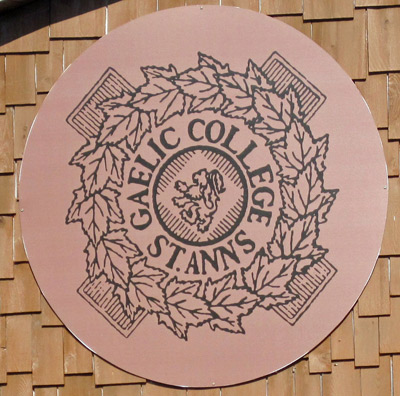
A Storm is Brewing at the Royal Cape Breton Gaelic College
A storm is erupting over the Royal designation given to a Canadian Gaelic College by Queen Elizabeth II. Colaisde na Gàidhlig – The Gaelic College in Cape Breton, Nova Scotia is to be styled immediately as The Royal Cape Breton Gaelic College, for its contribution to preserving Gaelic and Scottish culture in Canada.
The designation has caused a huge amount of controversy in the community, resulting in the chair of the college board of governors stepping down over the issue earlier today.
The Member of the Legislative Assembly for Inverness, Nova Scotia said the addition of the word ‘royal’ doesn’t sit well with people who have a strong understanding of the history of the Gaels. Allan MacMaster, who is also the conservative critic for Gaelic Affairs, delivered a speech in the House of Assembly last week following the colleges decision to change its name.
He said you have to look at the history that brought many people to Nova Scotia, and that at one time as much as 80 per cent of the province spoke Gaelic.
“If you look, after the Battle of Culloden (in the 1700s), there were efforts made in Scotland to destroy the clan system and some of that was to try to eliminate the speaking of Gaelic in Scotland,” MacMaster said.
In the 1600s, Scottish Highland clan chiefs were required to send their heirs to other parts of the country to be educated in a different language, he said.
“All of those things emanate from England and from the Crown,” MacMaster said. “To have the Gaelic College today be given the title of royal and connecting it to the Crown, for a lot of people, they find it offensive.”
Situated in the heart of Cape Breton’s earliest Scottish settlement, the institution is the only one of its kind in North America, and was founded in 1938 by Rev. A.W.R. MacKenzie devoted to the study and preservation of the Gaelic language and Celtic arts and culture. During the first half of the 19th century, Cape Breton experienced an influx of Highland Scots numbering approximately 50,000 as a result of the Highland Clearances. Today, the descendants of the Scots dominate Cape Breton Island’s culture, particularly in rural communities. Gaelic is still the first language of a number of elderly Cape Bretoners.
The acting chair of the College, Kirk McRae, says the honour is a welcome one. He said: “It creates more awareness and things with the college,
“It’s a designation that doesn’t come easy. It’s just an honour of name, it doesn’t take away what the goals are of the college and what the goals are of our instructors, students and staff, that is to grow the Gaelic culture.”
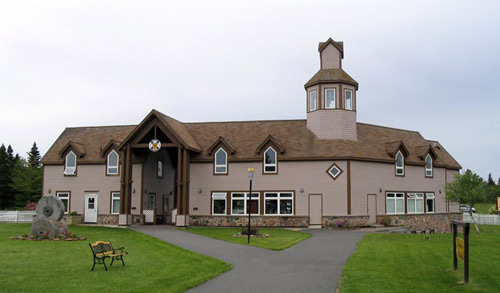
The Royal Cape Breton Gaelic College
Alex Morrision, a retired military officer, has stepped down as his voluntary role as board chair as a result of the controversy. According to the college’s Facebook page, while Morrison contacted the Queen’s offices without consulting the members of the board, the decision to change the college’s name was not his alone, with the board voting on and accepting the name change.
The response to the name change on the Facebook page has been largely negative, however others thought people were overreacting to the name change. One commenter said: “Good Lord what a tempest in a teapot. So if the Queen provides her coat of arms to HP sauce am I not to eat it?”
MacRae said he was somewhat surprised by the amount of feedback on the name change, but said the board doesn’t plan to reverse its decision.
“There’s going to be no change,” said MacRae. “It’s wonderful the passion people have and I understand their points of view, and I respect their points of view. We (were) bestowed this, and for the board, everyone I felt genuinely thought we were going forward and it was a good thing. The name doesn’t take away from the day-to-day activities of college, and that’s to grow the Gaelic culture and language.”
The post Royal Storm hits over Gaelic College Name appeared first on ScotClans | Scottish Clans.
]]>The post Outer Hebrides Adventure – Live Blog appeared first on ScotClans | Scottish Clans.
]]>31st October – Edinburgh to Barra via Oban
This entry comes to you from terribly, terribly rough seas. I thought I had seasoned sea legs, but maybe I’ll have to work on them a bit more considering I’ve spent the last hour unable to do anything but lie horizontally with my guts somewhere near the roof of the cabin. It’s a little bit like those pirate ship rides at theme parks that swing back and forth, but instead of lasting five minutes it’s going to last another three hours.

Loch Long, West Highland Line
The first leg of my journey began this morning at Edinburgh Waverley Station, where I caught the train to Glasgow then changed to the West Highland Line to take me to Oban. I was lost in the world of my newspaper when I looked out the window and suddenly realised we were in the Highlands. It’s incredible how the scenery changes so quickly in Scotland. One minute we’re in quaint countryside and the next we’re surrounded by the beautiful reds and browns of the Highlands. The train hurtled along the edge of Loch Long, then Loch Lomond providing a magnificent view of the steep, steep side of Ben Loman. The train was delayed for about 10 minutes in Ardlui which was a bit stressful considering I would already only have a 15 minute stopover in Oban before the ferry embarked for Barra. However the good people at ScotRail assured me the ferry would wait for me (if we weren’t too late…!). Arriving in Oban, the sun came out and was bouncing off the water to greet me. But I had no time to loose – after a mad dash I made it to my ferry with about five seconds to spare before we embarked. Ironically the ship I’m on is called the MV Clansman. And was a bit confused when I was greeted on board by a man dressed as a witch before remembering today is Halloween.

Made it aboard!
I would say there’s only about 10 passengers max on board. And it’s a big ferry so it feels a wee bit lonely. I guess one of the reasons it’s so empty is the terrible weather that is battering the UK at the moment. Or maybe people just prefer to fly these days. I spent the first hour of the trip with my eyes glued to the window as we sailed through the Sound of Mull. I ventured outside before the sun set and got absolutely pelted with hail while I took the picture below. You’re welcome, dear readers.

The sun went down about the same time we hit the Minch, and that’s when the weather got really rough. I’m pleased to report I haven’t needed to use the sick bags that are planted around the ferry in excess. It’s actually kind of fun going up and down on the high seas – as long as I keep lying down hopefully I’ll be fine!

The Calm Before the Storm – The Sound of Mull
31st October – Arrival in Barra
After four hours of train travel and five ropey hours of ferrying, I’ve finally made it to Barra! However it’s very dark and oh so windy, so adventures will have to wait till tomorrow. I feel a bit sorry for the people who were meant to be sailing onto Lochboisdale after Barra. The captain decided the sea was far to rough to continue the journey tonight. I had my first glimpse of Kisimul Castle rising up out of the water as we arrived, it’s a lot bigger than I imagined and can’t wait to head out there tomorrow. The wind is absolutely howling outside, I was almost picked up and blown away as I trudged towards my B&B. Today’s entry ends with a quote a found in a book when I arrived in Barra – Over and out!
Mountains divide us, and a waste of seas;
yet still the blood is strong;
the heart is Highland
And we in dreams behold the Hebrides.
- Canadian Boat Song, circa 1829
1st November – Kisimul Castle Conservation Plan

The view from my room this morning. Nask, Isle of Barra
As luck would have it, The only other guests at the B&B this morning were a journalist and a cameraman from STV who were here also to cover the Kisimul Castle story. I hitched a ride with them to the other side of Barra, past the wild west coast beaches, to Barra Airport to greet the chief as he arrived on a plane from Glasgow. Barra Airport is another story in itself all together -it’s the only airport in the world where scheduled flights use the beach as the runway. Also at the airport to greet the chief was Ian Walford, Chief Executive of Historic Scotland and Alasdiar Allen, MSP for the Western Isles.

The Macneil and Barra Airport tarmac
From there we traveled along the decidedly calmer eastern side of the isle, back to Castlebay for the ceremony at Kisimul Castle. It was announced today that Kisimul Castle, seat of Clan Macneil of Barra, is to undergo major conservation, archaeological and interpretation work as part of an agreement reached between Historic Scotland and the clan. The announcement was finalised today, thirteen years after Historic Scotland was granted stewardship of the Castle by Ian Roderick Macneil of Barra, the late 46th chief, for £1 and a bottle of Tallisker whisky per year. Construction of the castle began around 1039, making Kisimul one of the oldest castles in Europe.
The work will see and investment of over £200,000, half of which has come from funds donated by Clan Macneil members, and will go towards three key projects to be completed by the end of 2015. This includes re-roofing the flat roof over the main hall; reinforcing concrete structures and overhauling the chapel roof and incorporating a new timber walkway. The chief was especially pleased that Historic Scotland have made special efforts to record local knowledge of the source of materials used to build Kisimul, conserving the fabric of this stunning ancient monument. You can read the full statement from Historic Scotland by clicking here. I’ve also posted the statement from the Macneil which you can view here.

A Piper welcomes the Macniel and guests to Kisimul Castle

The Macniel and guests at Kisimul Castle
School children from Castlebay School welcomed the Macneil, Ian Walford and Alasdair Allen to the island, with a lovely wee lass playing the pipes. A short ceremony was then conducted in the courtyard of the castle. Later on in the day I met with The Macneil again and interviewed him for about an hour – you’ll have to stay tuned for my upcoming feature with him
I ended the day by venturing up into the hills north of Castlebay where I was treated to a blusteringly beautiful sunset and some spectacular views of Barra, Vatersay and the Bishop’s Isles. I felt like the only person in the world as there wasn’t a soul up in the hills. I can’t quite believe that me, a young woman from small town New Zealand, has ended up here – It really was exceedingly beautiful and some off the most impressive landscapes I have ever seen. Off to Eriskay and Lochboisdale tomorrow – I’m dead tired so better get some sleep!

Hills above Castlebay, looking towards Vatersay and the Bishop’s Isles.
2nd November – Vatersay
On Barra, the main topic on conversation is not the weather, but the ferry. However, I can assure you that all anyone on the island was talking about today was the absolutely horrendous weather that hit the island this morning. I had planned on popping over to Eriskay and Lochboisdale via the ferry, but while walking to the bus stop this morning I got caught in a everlasting downpour and was completely soaked through by the time I reached the stop. I met the island bus driver, Hector MacNeil, at Castlebay Pier and we decided today probably wasn’t the best day to go island hopping. The storm seemed to be getting worse so he very kindly dropped me back at my B&B and told me I could accompany him on his run over to Vatersay later in the day once I had dried off.
It didn’t take me long to dry off (thank the stars for double glazing and central heating – something my modest home in Edinburgh sadly doesn’t have!), and I met Hector a couple of hours later outside my B&B in Nask, just slightly south of Castlebay. We then descended up the hill towards Vatersay, an island separated from Barra by a 250m body of water. Vatersay is the most southerly inhabited island in the Western Isles. There are a few more islands south of Vatersay (known as Bishop’s Isles), but these days the islands are home only to a variety of birdlife.

Hector Macneil on the daily bus and package delivery run to Vatersay
Hector also doubles as a package delivery driver, so he had a few parcels to drop off around the island. In 1990 a causeway was built between Barra and Vatersay so now it’s possible to drive between the two islands. Previously the only way to get to Vatersay was by Ferry from Castlebay. For years the military opposed residents petitions to build the causeway, but in 1987 the Council got an Act of Parliament which said the causeway was needed ‘to maintain the present population of Vatersay and relieve hardship’. The immediate reaction to the causeway saw the population rise from 65 in 1988 to 83 in 1993, and planning applications soar from a mere two in 1985-9 to 24, including four new houses, in 1990-3. The current population of Vatersay is somewhere around 100.
We chatted about the similarities of my home and the Western Isles. Hector told me he knows of a fair few people who have moved out to New Zealand, probably because the industries are the same – farming and fishing. It definitely looks similar except for one difference – there are no trees here – it’s just rolling, rocky machair and heather-ladden hills.

New Zealand or Scotland?

Catalina Wreckage, Vatersay
We then came to the wreckage of a Catalina – a 70 year old plane wreck from the Second World War. Catalinas were often referred to as a flying boat for their ability to land and take off at sea. On the night of 12th May 1944 this particular plane took off from Oban with nine crew on board for a training exercise. They were due to fly over the nearby point of Barra Head, but lost their way and found themselves well off their intended course. The pilot tried in vain to gain altitude and the plane crashed into the side of the nearby hill Heishavel Beag. Three of the crew were killed, with six surviving the crash. The wreckage was dragged down the hill by the RAF, where it has been left to rust in peace for the last 70 years.

Bagh Bhatarsaigh
The wreckage is just near a beautiful white sandy beach on the east coast of the island. You can’t tell from the photos but the rain was absolutely heaving down on us. Further along the road was a monument to the emigrant ship ‘Annie Jane’ which was lost just off the coast of Vatersay in 1853. The ship was en route to Quebec from Liverpool via Glasgow, and no doubt contained many Scottish folk in search of a new life. I’ve been thinking a lot about the people who left Barra and Vatersay, either by force or choice at the turn of the 20th century, and hope to follow this up with a blog post over the coming weeks.
As we approached the village of Vatersay, Hector pointed out the ruins of a substantial house looming in the distance. The house was belonged to the old landlord of the island – Lady Cathcart – and this house was where the shepherd stayed when Vatersay was cleared for sheep. Lady Catchart, who visited the island only once, refused to allow crofting tenants back on her land, and after various court interdicts and some imprisonment of crofters, the Department of Agriculture bought the island and reinstated the crofts.

Back to Barra
We dropped off a few more packages and turned around to make our way back to Barra. On the way we stopped to pick up another passenger, who turned out to be one of the Barra’s celebrities. Maggie ‘Scraggie Aggie’ Mackinnon was featured in the 2008 BBC2 series An Island Parish, which followed the day to day life of parishes in Barra, Eriskay and South Uist. Of course the first topic of conversation was the weather, followed by the latest news on the ferry crossings. We then chatted about Kisimul Castle and the plans announced yesterday. Maggie spoke very highly of the late clan chief, Iain MacNeil, saying how much of a lovely man he was.
Tomorrow I plan to hit the beaches on the West side of the island, but not before attending a Catholic Church service at the Church of Our Lady, Star of the Sea. I was intrigued to discover that Barra is predominately Catholic, and it seems as if religion is a big part of island life, with 80.2% of the population identifying as Catholic during the 2001 census.
3rd November – Star of the Sea and the West Coast of Barra
Barra is one of the only places in Scotland where the Scottish Reformation didn’t really make an impact. Interestingly the North of the Western Isles is predominantly Protestant, with clashes between the two christian factions on the isles extremely rare. I was intrigued to find that Catholicism has had a stronghold on the island since the 17th century – possibly because it was the religion of Clan Macneil, who were ardent Stuart supporters. Even the Cromwellian laws forbidding the practice of the Catholic faith seem to have been ignored on Barra – in Cromwellian times in 1671 the priest at the time claimed his flock numbered 1000. Four years later, two Catholic priests were held virtual prisoner on the island by locals who demanded the priests cater to their spiritual needs.

Church of Our Lady, Star of the Sea, Castlebay
This morning I attended a Catholic Mass at the Church of Our Lady, Star of the Sea – one of 5 Roman Catholic churches on Barra and Vatersey. The church opened on Christmas Eve 1888 when people from all around the islands gathered for Midnight Mass. It seats around 800 people, however today I would say there was around 150 people at mass. I was raised in the Catholic Church back home in New Zealand, so the mass felt very familiar apart from a few prayers and words that were slightly different. Sunday mass still seems to be a staple of island life here on Barra.
I spent the afternoon wandering about the wild west coast of the island. Every now and then I would pass a ruin of somebodys home – i’m constantly reminded of the people who lived here long ago on Barra, what happened to them and where they have gone. The beaches here are absolutely beautiful – the sand is white and the water a deep blue. I kept expecting it to rain all day, and amazingly the bad weather held off! But it’s oh so very windy!


4th November – Back to the Mainland

Sunrise from Nasg, Isle of Barra this morning
I am pleased to report that this morning’s journey has been the most spectacular smooth sail across the minch. The ferry (this time i’m onboard the Hebridean Isles) left Castlebay loaded to the brim at 8:50am. There are a lot more passengers on board this time, and since it is a bright beautiful day I am able to see everything around for miles. I’m even able to go and stand out on the deck without risk of being blown overboard into the rolling Atlantic.

Hebridean Isles at Castlebay Port
The scenery was amazing as we left Barra, providing spectacular views of Vatersay, Sandray, Barra, Eriskay and South Uist. As we got further out into the ocean I could see the snow-capped mountains of Skye off in the distance, behind the Isle of Rum. We’ve just hit the Sound of Mull, and already am feeling a little bit sad to be back in civilisation. After four days of not seeing any trees, I found it quite bizarre to see a large forest of pines on entrance to the sound.

Bye Bye Barra
I’m currently reading a book about the history of Barra by Kenneth Branigan. It’s quite fitting that as we’ve been sailing this morning I’ve been reading all about the emigration periods in Barra between 1770 and 1840. Most of those who left Barra went to Canada – namely Nova Scotia, Prince Edward Island and Cape Bretton. There are lots of theories about why people left Barra, but mostly it seems they were fed up with their landlord (Roderick the Gentle – chief of Clan Macneil) and went in search of a better life. Another theory is that by the time the late 18th century rolled around, the Macneil chiefs had converted to protestantism so were rather nasty to their largely Catholic tenants on Barra.
Branigan’s book also goes into what life would have been like for the people of Barra arriving in Canada. Barra, although very windy, is known for having generally mild winters – which isn’t the case on the east coast of Canada. Nova Scotia offered plenty of pine forests for shelter from the elements, and an endless supply of firewood. But to go from having no trees at all to the vast forests of Canada that needed to be cleared in order to make way for farms was the bane of many a new settlers existence. However Canada provided far better farming than Barra, and land grants were extremely generous (especially to Catholics). Although initially their new life would have been hard, it certainly would have paid off in the end.
4th November – Oban

Dunollie Castle (bottom right), seat of Clan MacDougall, as seen from the ferry coming into Oban
I’m now on the train heading back to Edinburgh. I had a few hours stopover this afternoon in Oban which was delightful as the sun was out in full force. I was going to try and head up to Dunstaffnage or Dunollie Castle – steeped in MacDougall history – but I’m sorry to say the Oban Whisky Distillery well and truly distracted me. I took a tour of the distillery and where I whole-heatedly indulged in a few samples. The town of Oban was built around the distillery, which was established in 1794. I was glad to learn that there are hardly any waste products in the making of whisky – most of the by-products are used or sold. One example being the grain that is left over from the mash is made into pellets and sold to farmers. In some of the bigger distilleries, the c02 that is released during the distilling process is captured and sold to soft drink manufacturers. Apparently the c02 you’ll find in Irn-Bru comes from the Macallan distillery.

Gull’s Paradise, Oban
I’m running low on battery so I better sign off – It’s been an amazing trip and feel so lucky to have experienced this remote little corner of Scotland. On the ferry back from Barra I picked up a little self-published book in the gift shop called Jura and George Orwell. It’s been my dream for a long time to visit the Isle of Jura and to stay in the cottage where Orwell lived out the final years of his life writing 1984. Here’s to more adventures in West Scotland! Sláinte
The post Outer Hebrides Adventure – Live Blog appeared first on ScotClans | Scottish Clans.
]]>