The post An Ode to Scotland – Meeting a Modern-Day Scots Poet appeared first on ScotClans | Scottish Clans.
]]>Intertwined and impenetrably linked to Scottish culture, poetry has a long and distinguished history in Scotland. And it’s a history that’s continuing to this day – Edinburgh was recently named the world’s first UNESCO City of Literature, the publishing industry is thriving, the country has more literature festivals per capita than any other, and there’s at least a dozen spoken word monthly nights in Glasgow and Edinburgh alone which are frequented by a plethora of experienced and budding poets.
This new generation of Scottish poetry is certainly alive and well, carrying on rich literary traditions of old. However these days you’re more likely to find these modern-day versifiers using hashtags and laptops rather than quills and parchment.

Harry Giles performs in Edinburgh, January 2013. Photo by Chris Scott via The STANZA Blog.
Meet Harry Giles, 27, an Edinburgh-based poet, producer and performance artist. He’s the proud author of two poetry publications, performs regularly in England and Scotland, and is something of a luminary in the Scottish poetry slam scene – winning the UK Student Slam in 2008 followed by the BBC Slam in 2009. I first encountered him at the BBC Slam during last years Fringe festival, where his ranted, passionate ode to Scottishness entitled Brave grabbed me by the ears and demanded my attention.
I sing
o
a Scotland
whit
wadna ken workin class authenticity gin hit cam reelin aff an ile rig douned six pints o Tennent’s n glasst hit in the pus,
whit it wadna
by the way;
o google Scotland,
o laptop Scotland,
o a Scotland sae dowf on bit-torrentit HBO drama series n DLC packs fer paistapocalyptic RPGs that hit disna ken hits gowk fae hits gadjie;
- Excerpt from Brave.
Harry is one of only a handful of young poets writing and performing in Scots – one of three native languages spoken in Scotland; predominantly in the lowlands, Shetland and Orkney. He grew up immersed in a mixture of Orcadian Scots and English on the tiny island of Westray, part of the Orkney Islands, just off the northern-most tip of the Scottish mainland.
If you, like me, assumed that Orkney was Gaelic speaking, you’re not alone – it’s an assumption that is something of a hot issue amongst Orcadians. Gaelic never had a significant impact on Orkney. Instead a form of Norse introduced by the vikings, called Norn, became the spoken language before Orcadian Scots. You can still see bits of the language around to this day – Westray and many others of Orkney’s islands end in the suffix ‘ay‘, which is Norse for ‘island’.
With Celtic culture so prevalent in defining the image of Scotland both here and abroad, this different kind of Scotland, where things are more Norse than Celt is a theme that pops up in Harry’s poetry. “Scandinavian culture is very influential in Orkney. The place names, peoples names, even the architecture. It kind of feels half Scottish, half Scandinavian. And it’s even more so on Shetland.”
Along with identifying with this different type of Scottishness, Harry was born in London, but his family moved to Orkney when he was two. At that time in Westray, the Giles family were one of the only ‘incomer’ families, the Orkney term for outsiders who have adopted the isles as their home. “I have no feelings of home towards England, I’ve only had feelings of home towards Scotland. So I’ve always had this doubleness where Orkney is my only home but I don’t quite belong either.”

Visa Wedding by Harry Giles
This mash of English/Orcadian/Scottish identity makes good fodder for poetry, with Harry’s 2012 publication of Visa Wedding acting as a kind of therapy, addressing and resolving these questions about himself:
Listen, hit’s semple:
in Orkney I’m English;
in England I’m Scottish;
in Scotland, Orcadian–
this glib-gabbit, mony-littit tongue
snacks at identity as tho hit wis
a gollach piecie sappit wi
the sweet-n-soor o BELONG.
- Excerpt from Visa Wedding #1.
His love of Scots came from the sounds and rhythms, and the way it feels to speak. “When I’m writing in Scots, I’m often digging out words from my memory that have fallen off my tongue as I’ve lived in St. Andrews, London and Edinburgh. They’re words from Orkney that I knew in my childhood and used in my childhood but never identified with enough to keep using and have lost over the years. So I’m recovering a lot of those words, and recovering a part of my own identity which is Scottish and not Scottish at the same time.”
“Even as a written language, you can’t get away from how Scots sounds. It’s impossible to write without thinking about the speaking of it possibly because of the tradition of Scots literature which is so connected to speaking. So I really like that aspect of it. Something that people say to me now is that they look at my Scots poem on the page, and they have no idea what it says, and then I’ll speak it and it becomes immediately intelligible. And that’s really interesting to me.”
The status of Scots as a language is a hotly contested topic, with some claiming it’s merely a dialect, or ancient variety of English; or at the other end of the scale a completely distinct language from English, in much the same way that Norwegian is closely linked yet vastly different to Danish. Harry’s view is that what matters is where people can be understood by each other.
“If somebody in Glasgow can’t be understood by somebody in the East End of London, talking the way they would in those places, then I think it’s pretty sensible to say that they’re separate languages.”
In the 2011 Scottish census, 1.54 million Scots (30%) indicated they were able to speak Scots, however an earlier study of the language by the Scottish Government found that 64% of respondents “don’t really think of Scots as a language”. This may be because of Scots reputation as slang, as for many years the language was discouraged by officialdom and schools. Today Scots is promoted and fostered, but it’s nowhere near as threatened and in decline as Scotland’s other traditional language, Gaelic, with only 58,000 respondents in the 2011 census indicating they could speak fluently.

A leading light of the Scots Renaissance, Hugh MacDiarmid.
“There are also different type of Scots, not just regional variants, but what I would call vernacular Scots, which is the way that people actually speak. So if you go into a pub in Leith you will actually hear people speaking in what I call the (Leith Scots) vernacular. There’s also a sort of literary Scots which is not necessarily how people speak.” Harry explained that during the 50s there was an active reclamation known as the Scots Renaissance by people like Hugh MacDiarmid and Hamish Henderson who were deliberately working to preserve and recreate the language.
“Folk like MacDiarmid would read ancient Scots dictionaries and travel around and collect words from people, and then construct what he called a ‘syncretic’, as in synthesised Scots from that, taking the words the people spoke and making a literary language out of them.”
“And most poets writing in English are writing in a kind of English that’s nothing like people speak, ya know. So I’m writing mostly in literary Scots, in a sort of constructed Scots, rather than the Scots that people speak.”
While Harry agrees that cultural dominance can threaten and water down traditional language, he’s skeptical of some of the recent efforts employed to promote Scots. “It’s a very optimistic utopian project to imagine that we might have a complete body of work that’s written only in Scots. There’s too many different types and regional variants of Scots, and I’m really resistant to the idea of there being a monolithic Scots that has one form of spelling and one form of words. I’m much more interested in people writing new work and working in new ways in Scots than I am in reading a translation of Asterix in Scots.”
Harry is currently writing about 50% of his work in Scots, and said he can usually tell straight away when writing a poem if it will be in English or Scots. However sometimes he bounces a poem between the two languages, or if the poem is about Scotland, then it’s almost always in Scots. Cue what is fast becoming known as his signature piece, Brave, which was written in 2011, just as the Independence debate was starting to heat up.
cadna hink o a grander wey tae end a nite as wi a poke o chips n curry sauce,
whit chacks the date o Bannockburn on Wikipaedia,
whit draws chairts on the backs o beermats tae lear ye aboot rifts n glaciation
n when hit dis hit feels this oorie dunk,
this undesairvt wairmth
o inexplicable luve;
- Excerpt from Brave.
“I was thinking a lot about my past, and how I felt about Scotland and was reading a lot of Scots poetry. I wanted to get across something of the contradictions and complexities of Scottish-ness. I wanted to react against the tartan tat vision of Scotland. And even though Orkney is the only home I know I am still an incomer. I wanted to claim Scotland for myself in some way, and also talk about how it is and isn’t mine at the same time.”
“And I like being funny, and I like being angry, and I like being ranty, so I just wrote the longest rant that I could in Scots, about what Scotland meant to me. And what pissed me off and what I liked about Scotland. It’s kind of like my state of the nation poem; as if a wee scrote like me could write a state of the nation!”
The poem has gone on to have a life of its own, being featured on podcasts, websites, and in the Scottish literary journal New Writing Scotland. He thinks the poem gained significance as it came out just at the right time, when all across the land people are questioning their identity, just before the looming independence referendum this September.
“Literature and poetry in particular are quite central to Scotland’s self understanding. Poetry and folk music are our art forms. There are poems carved on the walls of Scottish parliament, so it definitely has a place in our political discourse. So I do feel like artists are central to the way Scotland constructs and presents itself.”

Oam by Harry Giles
Post-Brave and Visa Wedding, Harry says his writing has moved on, and he’s not writing as much about Scotland as a whole these days. His second publication Oam was the result of a five month residency at Govanhill Baths in Glasgow, with proceeds from the sale helping the project reopen as a community swimming pool and well-being centre. The poems are all written in contemporary Scots and describe the baths and their incredible history.
“(Writing Oam) was quite nice because I was writing in Scots intensely, but I wasn’t writing about Scotland. I was just writing about this one place. So I’m less interested in the big questions of Scotland at the moment, in poetry, and more interested in local stuff.”
As his body of work moves and evolves, Harry says the reason he talks so much about Orkney now is because he has an urge to go back to discover more of that part of himself. “The Scots that I write is influenced by the Scots that’s spoken in the lowlands, it’s very influenced by urban Scots, partly because that’s what i’m living in now, and partly because that has dominated the Scots literary tradition. I have an ambition to spend much longer in Orkney digging to try and get more of the Orcadian Scots into my own writing, and that would involve investigating Norn a bit more. I’m also interested in the Viking forms of poetry and how this has influenced Scots poetry. But that’s more of a long term ambition.”
As Harry’s work expands and evolves, he’s the latest in a long line of innovative writers who have been inspired and shaped by Scotland and Scottishness. As the country considers its future, Harry’s body of work mashes literary traditions of old and new, providing a pertinent and contemporary review of Scotland’s identity.
—–
You can read more about Harry here, and listen to a recording of Brave here.
The post An Ode to Scotland – Meeting a Modern-Day Scots Poet appeared first on ScotClans | Scottish Clans.
]]>The post Ambassador Claims Vikings ‘Brought Sarcasm to Britain’ appeared first on ScotClans | Scottish Clans.
]]>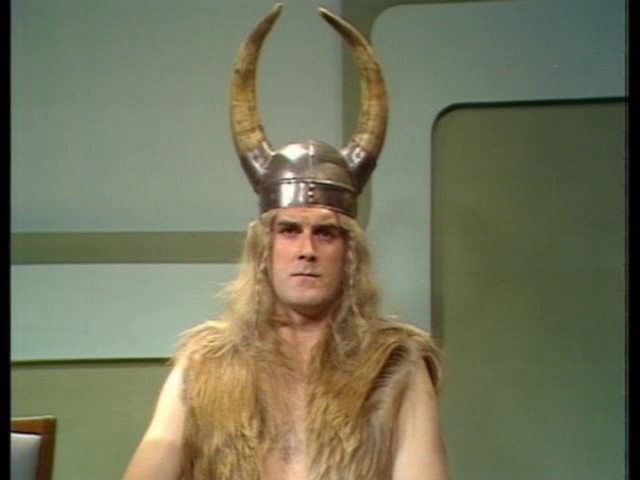
Monty Python have a lot to thank the Vikings for according to the Danish Ambassador
For over two centuries, Vikings colonised, traded and raided their way through much of Britain before disappearing form the pages of history completely. That’s not to say they didn’t leave behind a legacy that’s still able to be seen and heard to this day. Over one thousand years since the raiders from the north landed on these shores, place names still ring with the sounds of Norse, and archaeological artifacts left behind are still being found. Now sarcasm, understatement and irony can apparently be traced back to the Viking era too.
Earlier this month the story below which originally appeared in The Telegraph reported on comments by the Danish Ambassador to the UK, who said the similar sense of humour between the two countries originates from shared cultural heritage. Read on…
It may be the bedrock of British humour, but sarcasm was actually brought to the UK by the Vikings says the Danish Ambassador.
The British use of understatement and satire is thought to originate from the Vikings, typically noted for raping and pillaging throughout history, when they brought trade from across the world to British shores.
This led to exchanges with Britons, and the Vikings influencing them with the words and expressions they used. These eventually became part of everyday language, seen in some of the words and place names we use today, and ultimately in our caustic sense of humour.
Sarcasm, irony and understatement are part of the “common heritage” between Denmark and the UK says Claus Grube. He also claims there are traces in comic tales used in the later Old Norse sagas, such as Orkneyinga Saga where an Earl goes out disguised as a fisherman, to help a farmer.
These sagas, largely from the thirteenth century and known for their “laconic humour, detail examples of comedy in the face of adversity, and also contain the roots of some Danish and English words showing more similarities in how we communicate.
Sarcasm is very much inherent in British humour,” Mr Grube told the Telegraph.
He cites contemporary episodes, particularly the “extreme popularity” of Monty Python in Denmark as an example of the shared sense of comedy between the two countries which he says shows evidence of a common cultural heritage.
“It has always struck me that in the UK we have the same sense of humour as in Denmark,” he added.
“We use sarcasm and irony, and we also like understatement.
“I think this forms part of our common heritage, stemming from the Vikings and some of the legacy they have left.
“I think this legacy forms part of the way we express ourselves and the way we interact and the way you use language.”
Mr Grube cites a typical British use of sarcasm, describing something as “it could have been worse”, as humour particular to both countries that he believes could stem from expressions brought to the UK from the Vikings.
“It was not all about raping and pillaging, the Vikings were trading as well,” said Mr Grube, who has been in the UK for six months but said he has been struck by the similarities in British and Danish comedy.
“You have a more open attitude to the world around you if you are living from trade.”
Mr Grube said trading led to exchanges with the Vikings and the inheriting of expressions and body language, which influence comedy today.
He added: “Humour is actually an important part of the way you express yourself.
“The use of sarcasm and irony is quite distinct from other countries. For example if you use that in France and Germany it will often be taken literally, and the humour lost.”
Mr Grube said this difference adds to his belief that humour in the UK and Denmark dates back to our shared history.
He also cites Dane Law as an influence on words in Britain. He added: “Words were inherited, especially in the geographical sense under what you would call Dane Law. But it’s not only geography, this introduced a legal system as well.”
Dr Matthew Townsend, an expert in Old Norse from the University of York, said examples of influences on English humour can be seen from a range of periods in history, including in Old Norse sagas which were largely written in the thirteenth century – three centuries after the Viking settlement of England.
He said: “Anglo-Saxon texts also show a fondness for terse understatement, often of a humorous kind: so, for example, the poem Beowulf declares of the haunted mere where Grendel and his mother live, ‘that is not a pleasant place!’
“So one would be hard pressed to demonstrate that such understatement is a Viking import to England, rather than a common tradition.
“But it’s certainly true that the Old Norse sagas offer abundant examples of laconic humour, often in the face of adversity. My favourite comes in Grettir’s Saga : the hero’s brother, Atli, is stabbed fatally through the stomach, whereupon his dying words are (more or less) ‘I see that broad spears are in fashion this year’.”
Ivar Berg, a postdoctoral fellow at the Norwegian University of Science and Technology, said while there were close interactions between Scandanavians and the English, he did not believe the Ambassador’s statement. He said: “There are parallels, of course – sarcasm and understatements are well known and highly regarded also in Scandinavia, but to pinpoint a direction of influence seems futile.”
Dr Ragnhild Ljosland, a lecturer in Nordic Studies at the University of the Highlands and Islands, said rather than one source, it was likely English humour had been subject to a range of influences over the last 1,000 years. Dr Ljosland said: “I believe that the English have developed and refined their sense of humour through the ages and that it draws on a range of sources of cultural contact, as well as being their own, of course.
“Personally, as a Scandinavian living in the UK, I find the English understated and sarcastic sense of humour hard to understand. It often completely passes me by.”
In the chapter ‘Poetry and fishing’ in Orkneyinga saga, humour is used to describe how an Earl manages to hide his identity from villagers by pretending to be a fisherman. The Earl, dressed in a cowl, goes fishing with a farmer and gives all his haul away, before climbing a slope where “his feet shot from under him where the rain had made it slippery and he tumbled down to the bottom of the slope.”
The passage is followed by a comic verse recited by the Earl, where he reveals his identity:
“Wittily the woman
mocks my wear
but she laughs overlong,
and may not laugh last.
Early I sailed out,
eagerly, and all fully
furnished for fishing
Who’d figure me for an earl?”
The post Ambassador Claims Vikings ‘Brought Sarcasm to Britain’ appeared first on ScotClans | Scottish Clans.
]]>The post Learn to Speak Norn For Only £120 appeared first on ScotClans | Scottish Clans.
]]> A dictionary of an extinct language spoken only in the remote Scottish Highlands has been uncovered in an English charity shop. The two-volume Norn Dictionary was anonymously donated to the Willow Burn bookshop in County Durham, and with a price tag of £120 is the most valuable item to date handed into the shop.
Originally influenced by the Old Norse spoken by Norwegian settlers in the 8th Century, Norn gradually developed in the Northern Isles into its own distinctive language. The sheer scale of Norse settlement obliterated the Pictish language previously spoken in the Northern Isles, with Norn becoming the dominant language over the coming centuries. Interestingly Gaelic was never spoken in the islands, unless the language of Orkney’s Pictish inhabitants – the predecessors of the Norsemen – was variant, or precursor, to Gaelic.
Scots gradually began to replace Norn after control of Shetland and Orkney passed from Denmark to Scotland in the 15th century. From 1400 many people also moved to the islands from the Scottish mainland and as Scots became the official language, Norn became marginalised as the language of poor crofters and fishermen and thus was never written down. Although official documents do exist from this period, they were generally written in Norwegian.
When the Reformation reached Scotland in 1560, new Scots-medium schools were set up in the islands, along with Scots-speaking clergy. From 1740 an English version of the Bible was being taught in schools, and negative attitudes to Norn were becoming common. By the 19th century the shift from Norn to Scots was more or less complete, except on the more isolated islands such as Foula, Unst, Yell and Fetlar, where some people knew fragments of the language, such as songs and poems until the 1890s. The last native speaker of Norn is cited as Walter Sutherland from Skaw in Unst, who died in 1850.
Before the discovery of the dictionary, very few texts and no recordings of Norn were known to exist, making details of Norn pronounciation uncertain. Attempts have been made to reconstruct and revive Norn, including the Nynorn Project which aims to re-create Norn as a usable language.
The Lord’s Prayer* in Orkney Norn:
Favor i ir i chimrie,
Helleur ir i nam thite,
gilla cosdum thite cumma,
veya thine mota vara gort
o yurn sinna gort i chimrie,
ga vus da on da dalight brow vora
Firgive vus sinna vora
sin vee Firgive sindara mutha vus, lyv vus ye i tumtation,
min delivera vus fro olt ilt,
Amen.
_______
*Recorded in the late 1690′s by James Wallace and first published in his An Account of the Islands of Orkney.
The post Learn to Speak Norn For Only £120 appeared first on ScotClans | Scottish Clans.
]]>The post From Norway with Love appeared first on ScotClans | Scottish Clans.
]]>
The Nidelva River, with Nidaros Cathedral in the background. Trondheim, Norway.
When asked to give the name of his nearest mainline rail station on a Parliamentary expenses questionnaire, former liberal MP for Orkney Jo Grimond gave his reply as Bergen, Norway. This facetious response turned out to be correct, as Bergen’s rail station is situated 340km from the Orkney constituency, compared with the Highland Main Line station at Inverness 420km away. This geographical closeness between Norway and Scotland has provided the grounds for a lasting relationship between the two countries, with Scandinavian culture and language leaving an indelible mark upon Scotland.
From about the 8th century onwards, the North Sea was awash with Vikings, setting sail by longship on their infamous plundering invasions. Initially attracted by gold and treasures held within monasteries in the north of Scotland, Vikings could reach the Islands of Shetland in less than 24 hours by longship under good seafaring conditions. Over the centuries, Hebrides and Caithness would come under Norse rule, with Orkney and the Shetlands remaining Norwegian earldoms until 1468. Nowhere is Norwegian influence more prevalent than in the northern isles, with almost half of all people on Shetland and 30% on Orkney claiming Viking ancestry.
These days the longships have been swapped for short-haul planes, as direct flights operate between Edinburgh and Oslo. I’m writing this blog entry from Trondheim, Norway’s ancient capital. It’s a beautiful little town about a third of the way up Norway; with continuous streets of wooden houses painted in an array of different colours, Gothic architecture intertwined with modernity and innovation, and of course, snow covering everything. The city was founded in 997 as a trading post by Viking King Olav Tryggvasson, and remained the capital throughout the Viking age until 1217. The magnificent Nidaros Cathedral is located in the middle of the city, and at over 1000 years old has an impressive history, changing religious hands from Catholic to Lutheran during the protestant reformation in 1537.
My Norwegian essentially consists of one word – ‘takk’, so while watching a film last night with Norwegian subtitles I was trying to match up the words as I saw them on screen with what I could hear. I came across the Norwegian word for toddler – ‘barn’, which I thought resembled the Scots word ‘bairn’. Turns out ‘bairn’ is a direct derivative of Old Norse, along with many other Scots words including midden (rubbish dump), muckle (large) and even kilt, from the verb ‘kjalta’ (to fold).
Scandinavian heritage is also evident amongst Clans, with some being able to trace their roots back to Norse Kings. Clan MacLeod and Clan MacLeod of Lewis claim their descent from Leòd, who lived in the 13th Century. It was thought that Leòd was a son of Olaf the Black, the Viking sea-king who ruled the Isle of Mann. However this genealogy has been contested, with articles recently published in the MacLeod Clan magazine suggesting that Leòd was in fact a distant cousin of Magnus, the Last King of Mann. The name Leod is the anglicised version of the Gaelic name Leòd, which is thought to have derived from the Old Norse name Ljótr, meaning ugly. Mac is the Gaelic word for son, therefore MacLeod stands for Son of Leod. Clan Gunn in the North and Clan MacDonald of the Isles can also trace their lineage to Norse descendents.
Cultural similarities also exist in modern times, with each country sharing an interest in gloomy, gritty crime drama. The success of Norwegian detective writers like Jo Nesbø and Karin Fossum echoes that of the ‘Tartan Noir’ writers including Ian Rankin, Val McDermid and William McIlvanney. In an interview with the BBC, Ian Rankin suggested that the similarities in each countries fiction hint at something deep rooted in the national characteristic. “In countries where it’s dark half the year, you do tend to have a great tradition of storytelling … Both sides tend to share quite a dark view of the human condition, and are certainly a long way from the Agatha Christie school of crime writing.”
One thing that isn’t so similar is the price of living, in particular alcohol. On my first night here I was mortified when I went to pay for one bottle of beer, at almost £14 a pop. Punitive taxes placed on alcohol by the Government, combined with the strength of the Krone make for very expensive nights out.
—
You can read more about the return of Orkney and Shetland to Scotland here
The post From Norway with Love appeared first on ScotClans | Scottish Clans.
]]>