<br />
<b>Deprecated</b>:  mysql_connect(): The mysql extension is deprecated and will be removed in the future: use mysqli or PDO instead in <b>/var/www/apps/scotclans_wp/wp-includes/wp-db.php</b> on line <b>1142</b><br />
<?xml version="1.0" encoding="UTF-8"?>
<rss version="2.0"
	xmlns:content="http://purl.org/rss/1.0/modules/content/"
	xmlns:wfw="http://wellformedweb.org/CommentAPI/"
	xmlns:dc="http://purl.org/dc/elements/1.1/"
	xmlns:atom="http://www.w3.org/2005/Atom"
	xmlns:sy="http://purl.org/rss/1.0/modules/syndication/"
	xmlns:slash="http://purl.org/rss/1.0/modules/slash/"
	>

<channel>
	<title>ScotClans &#124; Scottish Clans &#187; Nicolson</title>
	<atom:link href="http://109.74.200.198/tag/nicolson/feed/" rel="self" type="application/rss+xml" />
	<link>http://109.74.200.198</link>
	<description></description>
	<lastBuildDate>Fri, 20 Jan 2017 08:08:09 +0000</lastBuildDate>
	<language>en-US</language>
	<sy:updatePeriod>hourly</sy:updatePeriod>
	<sy:updateFrequency>1</sy:updateFrequency>
	<generator>http://wordpress.org/?v=3.6.1</generator>
		<item>
		<title>The Lion and the Clans</title>
		<link>http://109.74.200.198/the-lion-and-the-clans/</link>
		<comments>http://109.74.200.198/the-lion-and-the-clans/#comments</comments>
		<pubDate>Thu, 13 Sep 2012 14:33:09 +0000</pubDate>
		<dc:creator>rodger moffet</dc:creator>
				<category><![CDATA[Bruce]]></category>
		<category><![CDATA[CLANS - Big List of Scottish Clans]]></category>
		<category><![CDATA[Cumming]]></category>
		<category><![CDATA[Farquharson]]></category>
		<category><![CDATA[Gaelic Heritage]]></category>
		<category><![CDATA[Hume]]></category>
		<category><![CDATA[MacGregor]]></category>
		<category><![CDATA[MacLaren]]></category>
		<category><![CDATA[MacPhee]]></category>
		<category><![CDATA[Middleton]]></category>
		<category><![CDATA[Scottish History]]></category>
		<category><![CDATA[Stewart]]></category>
		<category><![CDATA[Baxter]]></category>
		<category><![CDATA[Broun]]></category>
		<category><![CDATA[bruce]]></category>
		<category><![CDATA[Chalmers]]></category>
		<category><![CDATA[Dundas]]></category>
		<category><![CDATA[Fairlie]]></category>
		<category><![CDATA[Heron]]></category>
		<category><![CDATA[Home]]></category>
		<category><![CDATA[Inglis]]></category>
		<category><![CDATA[Little]]></category>
		<category><![CDATA[Lundin]]></category>
		<category><![CDATA[MacDowall]]></category>
		<category><![CDATA[MacDuff]]></category>
		<category><![CDATA[Maitland]]></category>
		<category><![CDATA[Moncrieffe]]></category>
		<category><![CDATA[Moubray]]></category>
		<category><![CDATA[Newton]]></category>
		<category><![CDATA[Nicolson]]></category>
		<category><![CDATA[Pentland]]></category>
		<category><![CDATA[Primrose]]></category>
		<category><![CDATA[Stuart of Bute]]></category>
		<category><![CDATA[Vans]]></category>
		<category><![CDATA[Young]]></category>

		<guid isPermaLink="false">http://www.bletherskite.net/?p=4055</guid>
		<description><![CDATA[<p>Why is the image of a lion so prevalent in Scottish Clan heraldry? Why would a beast that was never native to Scotland feature so heavily? The image of the lion in art and culture dates back to pre history and cave paintings. Our ancient ancestors who&#8217;s story began in Africa would have admired these [&#8230;]</p>
<p>The post <a rel="nofollow" href="http://109.74.200.198/the-lion-and-the-clans/">The Lion and the Clans</a> appeared first on <a rel="nofollow" href="http://109.74.200.198">ScotClans | Scottish Clans</a>.</p>
]]></description>
				<content:encoded><![CDATA[<p><strong><em>Why is the image of a lion so prevalent in Scottish Clan heraldry? Why would a beast that was never native to Scotland feature so heavily?</em></strong></p>
<p><a href="/wp-content/uploads/2012/09/lion1.gif" data-lightboxplus="lightbox[4055]" title="The Lion and the Clans"><img class="alignleft size-full wp-image-6220" alt="lion1" src="/wp-content/uploads/2012/09/lion1.gif" width="300" height="296" /></a>The image of the lion in art and culture dates back to pre history and cave paintings. Our ancient ancestors who&#8217;s story began in Africa would have admired these powerful beasts and they would become symbols of noble savagery. As society advanced the symbolism became stronger; In ancient Egypt the lioness was merged with the human to create the sphinx.</p>
<p>In almost every other culture the lion was also present. Hittites, Assyrians, Babylonians, Persian and many early islamic cultures. Its not hard to understand, after all the lioness is a dedicated mother and ruthless hunter, the male lion a majestic animal that defends his pride with fury. a good role model for early civilisations.</p>
<p>The lion probably entered early Christian culture via a manuscript called the &#8216;Physiologus&#8217;. This document probably dates back to around the 2nd century AD and consists of a number of descriptions of animals and birds as characters in a series of moral tales. In the opening story a lioness gives birth to stillborn cubs but the lioness brings them to life by breathing upon them, this and other similar stories are a direct reference to the idea of Christ&#8217;s resurrection and the redemption of man. The Physiologicus also gives us the story of the Pelican wounding herself to feed her young, an image that can be seen on the <a title="Clan Stewart" href="http://www.scotclans.com/scottish-clans/clan-stewart/">Stewart</a> crest.</p>
<p>In the middle ages the manuscript was translated into latin and spread through central Europe and was adapted into several &#8216;Bestiaries&#8217; With such strong links to these moral tales such animals would naturally form the cornerstone of heraldic symbolism where they would become like &#8216;moral flash cards&#8217;.</p>
<p><a href="/wp-content/uploads/2012/09/lion2.gif" data-lightboxplus="lightbox[4055]" title="The Lion and the Clans"><img class="alignleft size-full wp-image-6222" alt="lion2" src="/wp-content/uploads/2012/09/lion2.gif" width="300" height="178" /></a>Such tales established the idea of the lion as the &#8216;king of the beasts&#8217; and so its understandable that heraldic art would take on this concept of using the lion as a symbol of the ruling elite. This symbol entered Scottish heraldry with King William I. Known as William the Lion this tag did not come from his appearance of character but simply from his adoption of the lion as part of his own standard. His successor Alexander II took the same red lion rampant on a yellow ground and made this the royal symbol that would become the well known Royal Standard of Scotland.</p>
<p>I have used the phrase &#8216;rampant&#8217; above. this refers to the attitude that the animal adopts, in this case raised up on hind legs and paws raised to strike (the lion can stand on either one or two legs depending on tradition although in British heraldry it tends to be one with the other also poised to strike). There are many other attitudes that animals such as lions, wildcats etc can assume; &#8216;Passant&#8217; is walking with one fore paw raised, &#8216;Statant&#8217; is standing with all paws on the ground, &#8216;Salient&#8217; is leaping, &#8216;Sejant&#8217; means in a sitting position and so on. Other phrases you may hear are &#8216;Guardant&#8217; or &#8216;Affrontee&#8217;, where the animal faces the viewer and &#8216;Regardant&#8217; where the animal looks to its rear.</p>
<p>With such strong links to Scottish royalty its no surprise that the Scots nobility would incorporate the lion into their own arms, some such as MacGregor make no secret of this with a lions head and the motto which translates as &#8216;Regal is my Race&#8217;. Here are the clans  and Scottish armigerous families we know of that use the lion symbol in their crests.</p>
<p><a title="Clan Baxter" href="http://www.scotclans.com/scottish-clans/clan-baxter/">Baxter</a> (A Lion Passant)</p>
<p><a title="Clan Broun" href="http://www.scotclans.com/scottish-clans/clan-broun/">Broun</a> (Rampant)</p>
<p><a title="Clan Bruce" href="http://www.scotclans.com/scottish-clans/clan-bruce/">Bruce</a> (Statant)</p>
<p><a title="Clan Chalmers" href="http://www.scotclans.com/scottish-clans/clan-chalmers/">Chalmers</a> (Head and Neck)</p>
<p><a title="Clan Cumming" href="http://www.scotclans.com/scottish-clans/clan-cumming/">Cumming</a> (Rampant)</p>
<p><a title="Clan Dundas" href="http://www.scotclans.com/scottish-clans/clan-dundas/">Dundas</a> (Head, Guardant)</p>
<p><a title="Clan Fairlie" href="http://www.scotclans.com/scottish-clans/clan-fairlie/">Fairlie</a> (Head Couped)</p>
<p><a title="Clan Farquharson" href="http://www.scotclans.com/scottish-clans/clan-farquharson/">Farquharson</a> (Rampant)</p>
<p><a title="Clan Heron" href="http://www.scotclans.com/scottish-clans/clan-heron/">Heron</a> (Demi Lion Rampant)</p>
<p><a title="Clan Home" href="http://www.scotclans.com/scottish-clans/clan-home/">Home / Hume</a> (Head)</p>
<p><a title="Clan Inglis" href="http://www.scotclans.com/scottish-clans/clan-inglis/">Inglis</a> (Demi Lion Rampant)</p>
<p><a href="http://www.scotclans.com/scottish-clans/clan-little/">Little</a> (Demi Lion Rampant)</p>
<p><a title="Clan Lundin" href="http://www.scotclans.com/scottish-clans/clan-lundin/">Lundin</a> (Demi Lion Rampant)</p>
<p><a title="Clan MAcDowall" href="http://www.scotclans.com/scottish-clans/clan-macdowall/">MacDowall</a> (Lion&#8217;s Paw)</p>
<p><a title="Clan MAcDuff" href="http://www.scotclans.com/scottish-clans/clan-macduff/">MacDuff</a> (Rampant)</p>
<p><a title="Clan MacGregor" href="http://www.scotclans.com/scottish-clans/clan-macgregor/">MacGregor</a> (Head)</p>
<p><a title="Clan MacLaren" href="http://www.scotclans.com/scottish-clans/clan-maclaren/">MacLaren</a> (Head)</p>
<p><a title="Clan MAcPhee" href="http://www.scotclans.com/scottish-clans/clan-macphee/">MacPhee</a> (Demi Lion Rampant)</p>
<p><a title="Clan MAitland" href="http://www.scotclans.com/scottish-clans/clan-maitland/">Maitland</a> (Sejant, Affrontee)</p>
<p><a title="Clan Middleon" href="http://www.scotclans.com/scottish-clans/clan-middleton/">Middleton</a> (Demi Lion Rampant)</p>
<p><a title="Clan Moncrieffe" href="http://www.scotclans.com/scottish-clans/clan-moncrieffe/">Moncrieffe</a> (Demi Lion Rampant)</p>
<p><a title="Clan Moubray" href="http://www.scotclans.com/scottish-clans/clan-moubray/">Moubray</a> (Demi Lion Rampant)</p>
<p><a title="Clan Newton" href="http://www.scotclans.com/scottish-clans/clan-newton/">Newton</a> (Demi Lion Rampant)</p>
<p><a title="Clan Nicholson" href="http://www.scotclans.com/scottish-clans/clan-nicholson/">Nicolson</a> (Demi Lion Rampant)</p>
<p><a title="Clan Pentland" href="http://www.scotclans.com/scottish-clans/clan-pentland/">Pentland</a> (Head)</p>
<p><a title="Clan Primrose" href="http://www.scotclans.com/scottish-clans/clan-primrose/">Primrose</a> (Demi Lion Rampant)</p>
<p><a title="Clan Stuart of Bute" href="http://www.scotclans.com/scottish-clans/clan-stuart-of-bute/">Stuart of Bute</a> (Demi Lion Rampant)</p>
<p><a title="Clan Vans" href="http://www.scotclans.com/scottish-clans/clan-vans/">Vans</a> (Rampant)</p>
<p><a title="Clan Young" href="http://www.scotclans.com/scottish-clans/clan-young/">Young</a> (Demi Lion Rampant)</p>
<p>Its easy to be confused about how an animal native to Africa could have such a profound symbolic influence in Europe, we should also remember that lions though not native or wild would have been brought over with invading Romans who would have kept the creatures for games or even as status symbols. Personally though I prefer to believe that it was not these poor caged beasts that influence the heralds of early mediaeval Europe but the lion tales of old that were seen as symbols of the ancient code of chivalry.</p>
<p>The post <a rel="nofollow" href="http://109.74.200.198/the-lion-and-the-clans/">The Lion and the Clans</a> appeared first on <a rel="nofollow" href="http://109.74.200.198">ScotClans | Scottish Clans</a>.</p>
]]></content:encoded>
			<wfw:commentRss>http://109.74.200.198/the-lion-and-the-clans/feed/</wfw:commentRss>
		<slash:comments>2</slash:comments>
		</item>
		<item>
		<title>MacNicol Mor and the Macleods of Raasay</title>
		<link>http://109.74.200.198/macnicol-mor-and-the-macleods-of-raasay/</link>
		<comments>http://109.74.200.198/macnicol-mor-and-the-macleods-of-raasay/#comments</comments>
		<pubDate>Sat, 24 Apr 2010 22:55:56 +0000</pubDate>
		<dc:creator>Amanda Moffet</dc:creator>
				<category><![CDATA[MacNeacail]]></category>
		<category><![CDATA[Nicolson]]></category>
		<category><![CDATA[Lewis]]></category>
		<category><![CDATA[MacLeod]]></category>
		<category><![CDATA[Raasay]]></category>
		<category><![CDATA[Skye]]></category>

		<guid isPermaLink="false">http://www.scotclans.com/bletherskite/?p=1928</guid>
		<description><![CDATA[<p>MacNicol Mor, a chief of the MacNicol clan was engaged in a heated discussion with MacLeod of Raasay. While the two men argued away in English a servant, who could speak only gaelic, presumed that the two leaders were quarreling. The servant, thinking his master in danger,  drew out his sword and slew MacNicol Mor. [&#8230;]</p>
<p>The post <a rel="nofollow" href="http://109.74.200.198/macnicol-mor-and-the-macleods-of-raasay/">MacNicol Mor and the Macleods of Raasay</a> appeared first on <a rel="nofollow" href="http://109.74.200.198">ScotClans | Scottish Clans</a>.</p>
]]></description>
				<content:encoded><![CDATA[<p><a href="http://www.scotclans.com/scottish-clans/clan-macneacail/">MacNicol</a> Mor, a chief of the <a href="http://www.scotclans.com/scottish-clans/clan-nicolson/">MacNicol clan</a> was engaged in a heated discussion with <a href="http://www.scotclans.com/scottish-clans/clan-macleod/">MacLeod</a> of Raasay. While the two men argued away in English a servant, who could speak only gaelic, presumed that the two leaders were quarreling. The servant, thinking his master in danger,  drew out his sword and slew MacNicol Mor.</p>
<p>The clan elders and chiefs in an attempt to prevent a feud breaking out, held council to determine the manner in which to appease the MacNicols. In true Clan style the decision agreed upon was that the &#8220;meanest&#8221; of Clan Nicol would behead <a href="http://www.scotclans.com/scottish-clans/clan-macleod/">Macleod</a> of Raasay.</p>
<p>The man chosen for this task was Lomach, a lowly maker of Pannier baskets, he carried out his task and cut off the head of the Laird of Raasay.</p>
<p>The post <a rel="nofollow" href="http://109.74.200.198/macnicol-mor-and-the-macleods-of-raasay/">MacNicol Mor and the Macleods of Raasay</a> appeared first on <a rel="nofollow" href="http://109.74.200.198">ScotClans | Scottish Clans</a>.</p>
]]></content:encoded>
			<wfw:commentRss>http://109.74.200.198/macnicol-mor-and-the-macleods-of-raasay/feed/</wfw:commentRss>
		<slash:comments>1</slash:comments>
		</item>
		<item>
		<title>Nicholson&#8217;s Leap</title>
		<link>http://109.74.200.198/nicholsons-leap/</link>
		<comments>http://109.74.200.198/nicholsons-leap/#comments</comments>
		<pubDate>Sat, 24 Apr 2010 22:38:43 +0000</pubDate>
		<dc:creator>Amanda Moffet</dc:creator>
				<category><![CDATA[MacNeacail]]></category>
		<category><![CDATA[Nicolson]]></category>
		<category><![CDATA[Lewis]]></category>

		<guid isPermaLink="false">http://www.scotclans.com/bletherskite/?p=1924</guid>
		<description><![CDATA[<p>There is an old legend from the Isle of Lewis which tells the story behind &#8220;Leum Mhac Nicol&#8221; or &#8220;Nicholson&#8216;s Leap&#8221;, a rockravine which seperates Dùn Othail from the mainland. Legend has it a MacNeacail man had commited a crime and was sentenced by the chief of Lewis to be castrated.  Once this horrific sentance [&#8230;]</p>
<p>The post <a rel="nofollow" href="http://109.74.200.198/nicholsons-leap/">Nicholson&#8217;s Leap</a> appeared first on <a rel="nofollow" href="http://109.74.200.198">ScotClans | Scottish Clans</a>.</p>
]]></description>
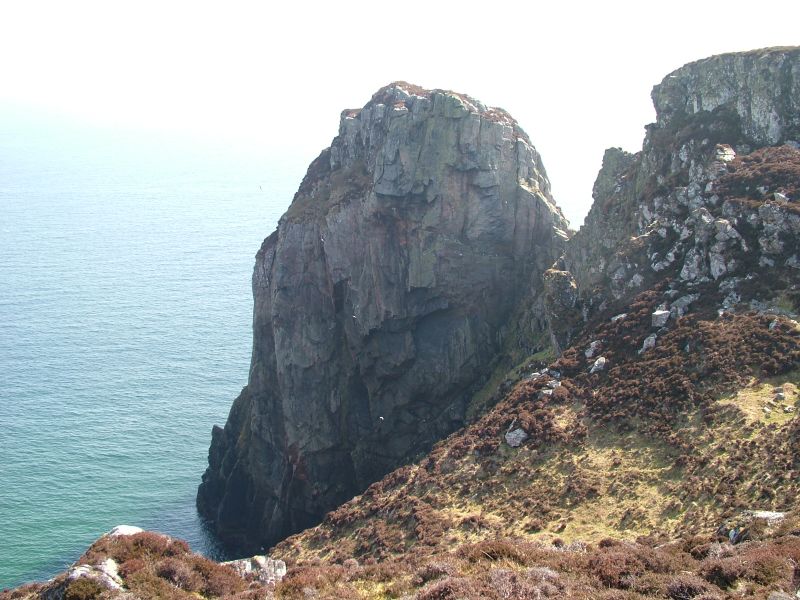
				<content:encoded><![CDATA[<div id="attachment_39464" class="wp-caption aligncenter" style="width: 810px"><a href="/wp-content/uploads/2010/04/dun-othail1.jpg" data-lightboxplus="lightbox[1924]" title="Nicholson's Leap"><img class="size-full wp-image-39464" alt="Dùn Othail" src="/wp-content/uploads/2010/04/dun-othail1.jpg" width="800" height="600" /></a><p class="wp-caption-text">Dùn Othail</p></div>
<p>There is an old legend from the Isle of Lewis which tells the story behind &#8220;Leum Mhac Nicol&#8221; or &#8220;<a href="http://www.scotclans.com/scottish-clans/clan-nicolson/">Nicholson</a>&#8216;s Leap&#8221;, a rockravine which seperates Dùn Othail from the mainland.</p>
<p>Legend has it a <a href="http://www.scotclans.com/scottish-clans/clan-macneacail/">MacNeacail</a> man had commited a crime and was sentenced by the chief of Lewis to be castrated.  Once this horrific sentance was carried out, the castrated man full of fury at what had been done to him sought revenge by kidnapping the chief&#8217;s only child.  MacNeacail took the child  to the ravine and leaped across the chasm. He threatened to throw the child into the sea unless the chief himself agreed to be mutilated as well. Attempts at rescuing the child failed and the chief finally agreed to the mans terms. Just as the chief consented <a href="http://www.scotclans.com/scottish-clans/clan-macneacail/">MacNeacail</a> leaped over the cliff and into the sea with the child crying out in Gaelic. &#8220;I shall have no heir, and he shall have no heir&#8221;.</p>
<p>The post <a rel="nofollow" href="http://109.74.200.198/nicholsons-leap/">Nicholson&#8217;s Leap</a> appeared first on <a rel="nofollow" href="http://109.74.200.198">ScotClans | Scottish Clans</a>.</p>
]]></content:encoded>
			<wfw:commentRss>http://109.74.200.198/nicholsons-leap/feed/</wfw:commentRss>
		<slash:comments>1</slash:comments>
		</item>
	</channel>
</rss>