<br />
<b>Deprecated</b>:  mysql_connect(): The mysql extension is deprecated and will be removed in the future: use mysqli or PDO instead in <b>/var/www/apps/scotclans_wp/wp-includes/wp-db.php</b> on line <b>1142</b><br />
<?xml version="1.0" encoding="UTF-8"?>
<rss version="2.0"
	xmlns:content="http://purl.org/rss/1.0/modules/content/"
	xmlns:wfw="http://wellformedweb.org/CommentAPI/"
	xmlns:dc="http://purl.org/dc/elements/1.1/"
	xmlns:atom="http://www.w3.org/2005/Atom"
	xmlns:sy="http://purl.org/rss/1.0/modules/syndication/"
	xmlns:slash="http://purl.org/rss/1.0/modules/slash/"
	>

<channel>
	<title>ScotClans &#124; Scottish Clans &#187; MacPhee</title>
	<atom:link href="http://109.74.200.198/tag/macphee/feed/" rel="self" type="application/rss+xml" />
	<link>http://109.74.200.198</link>
	<description></description>
	<lastBuildDate>Fri, 20 Jan 2017 08:08:09 +0000</lastBuildDate>
	<language>en-US</language>
	<sy:updatePeriod>hourly</sy:updatePeriod>
	<sy:updateFrequency>1</sy:updateFrequency>
	<generator>http://wordpress.org/?v=3.6.1</generator>
		<item>
		<title>The Lion and the Clans</title>
		<link>http://109.74.200.198/the-lion-and-the-clans/</link>
		<comments>http://109.74.200.198/the-lion-and-the-clans/#comments</comments>
		<pubDate>Thu, 13 Sep 2012 14:33:09 +0000</pubDate>
		<dc:creator>rodger moffet</dc:creator>
				<category><![CDATA[Bruce]]></category>
		<category><![CDATA[CLANS - Big List of Scottish Clans]]></category>
		<category><![CDATA[Cumming]]></category>
		<category><![CDATA[Farquharson]]></category>
		<category><![CDATA[Gaelic Heritage]]></category>
		<category><![CDATA[Hume]]></category>
		<category><![CDATA[MacGregor]]></category>
		<category><![CDATA[MacLaren]]></category>
		<category><![CDATA[MacPhee]]></category>
		<category><![CDATA[Middleton]]></category>
		<category><![CDATA[Scottish History]]></category>
		<category><![CDATA[Stewart]]></category>
		<category><![CDATA[Baxter]]></category>
		<category><![CDATA[Broun]]></category>
		<category><![CDATA[bruce]]></category>
		<category><![CDATA[Chalmers]]></category>
		<category><![CDATA[Dundas]]></category>
		<category><![CDATA[Fairlie]]></category>
		<category><![CDATA[Heron]]></category>
		<category><![CDATA[Home]]></category>
		<category><![CDATA[Inglis]]></category>
		<category><![CDATA[Little]]></category>
		<category><![CDATA[Lundin]]></category>
		<category><![CDATA[MacDowall]]></category>
		<category><![CDATA[MacDuff]]></category>
		<category><![CDATA[Maitland]]></category>
		<category><![CDATA[Moncrieffe]]></category>
		<category><![CDATA[Moubray]]></category>
		<category><![CDATA[Newton]]></category>
		<category><![CDATA[Nicolson]]></category>
		<category><![CDATA[Pentland]]></category>
		<category><![CDATA[Primrose]]></category>
		<category><![CDATA[Stuart of Bute]]></category>
		<category><![CDATA[Vans]]></category>
		<category><![CDATA[Young]]></category>

		<guid isPermaLink="false">http://www.bletherskite.net/?p=4055</guid>
		<description><![CDATA[<p>Why is the image of a lion so prevalent in Scottish Clan heraldry? Why would a beast that was never native to Scotland feature so heavily? The image of the lion in art and culture dates back to pre history and cave paintings. Our ancient ancestors who&#8217;s story began in Africa would have admired these [&#8230;]</p>
<p>The post <a rel="nofollow" href="http://109.74.200.198/the-lion-and-the-clans/">The Lion and the Clans</a> appeared first on <a rel="nofollow" href="http://109.74.200.198">ScotClans | Scottish Clans</a>.</p>
]]></description>
				<content:encoded><![CDATA[<p><strong><em>Why is the image of a lion so prevalent in Scottish Clan heraldry? Why would a beast that was never native to Scotland feature so heavily?</em></strong></p>
<p><a href="/wp-content/uploads/2012/09/lion1.gif" data-lightboxplus="lightbox[4055]" title="The Lion and the Clans"><img class="alignleft size-full wp-image-6220" alt="lion1" src="/wp-content/uploads/2012/09/lion1.gif" width="300" height="296" /></a>The image of the lion in art and culture dates back to pre history and cave paintings. Our ancient ancestors who&#8217;s story began in Africa would have admired these powerful beasts and they would become symbols of noble savagery. As society advanced the symbolism became stronger; In ancient Egypt the lioness was merged with the human to create the sphinx.</p>
<p>In almost every other culture the lion was also present. Hittites, Assyrians, Babylonians, Persian and many early islamic cultures. Its not hard to understand, after all the lioness is a dedicated mother and ruthless hunter, the male lion a majestic animal that defends his pride with fury. a good role model for early civilisations.</p>
<p>The lion probably entered early Christian culture via a manuscript called the &#8216;Physiologus&#8217;. This document probably dates back to around the 2nd century AD and consists of a number of descriptions of animals and birds as characters in a series of moral tales. In the opening story a lioness gives birth to stillborn cubs but the lioness brings them to life by breathing upon them, this and other similar stories are a direct reference to the idea of Christ&#8217;s resurrection and the redemption of man. The Physiologicus also gives us the story of the Pelican wounding herself to feed her young, an image that can be seen on the <a title="Clan Stewart" href="http://www.scotclans.com/scottish-clans/clan-stewart/">Stewart</a> crest.</p>
<p>In the middle ages the manuscript was translated into latin and spread through central Europe and was adapted into several &#8216;Bestiaries&#8217; With such strong links to these moral tales such animals would naturally form the cornerstone of heraldic symbolism where they would become like &#8216;moral flash cards&#8217;.</p>
<p><a href="/wp-content/uploads/2012/09/lion2.gif" data-lightboxplus="lightbox[4055]" title="The Lion and the Clans"><img class="alignleft size-full wp-image-6222" alt="lion2" src="/wp-content/uploads/2012/09/lion2.gif" width="300" height="178" /></a>Such tales established the idea of the lion as the &#8216;king of the beasts&#8217; and so its understandable that heraldic art would take on this concept of using the lion as a symbol of the ruling elite. This symbol entered Scottish heraldry with King William I. Known as William the Lion this tag did not come from his appearance of character but simply from his adoption of the lion as part of his own standard. His successor Alexander II took the same red lion rampant on a yellow ground and made this the royal symbol that would become the well known Royal Standard of Scotland.</p>
<p>I have used the phrase &#8216;rampant&#8217; above. this refers to the attitude that the animal adopts, in this case raised up on hind legs and paws raised to strike (the lion can stand on either one or two legs depending on tradition although in British heraldry it tends to be one with the other also poised to strike). There are many other attitudes that animals such as lions, wildcats etc can assume; &#8216;Passant&#8217; is walking with one fore paw raised, &#8216;Statant&#8217; is standing with all paws on the ground, &#8216;Salient&#8217; is leaping, &#8216;Sejant&#8217; means in a sitting position and so on. Other phrases you may hear are &#8216;Guardant&#8217; or &#8216;Affrontee&#8217;, where the animal faces the viewer and &#8216;Regardant&#8217; where the animal looks to its rear.</p>
<p>With such strong links to Scottish royalty its no surprise that the Scots nobility would incorporate the lion into their own arms, some such as MacGregor make no secret of this with a lions head and the motto which translates as &#8216;Regal is my Race&#8217;. Here are the clans  and Scottish armigerous families we know of that use the lion symbol in their crests.</p>
<p><a title="Clan Baxter" href="http://www.scotclans.com/scottish-clans/clan-baxter/">Baxter</a> (A Lion Passant)</p>
<p><a title="Clan Broun" href="http://www.scotclans.com/scottish-clans/clan-broun/">Broun</a> (Rampant)</p>
<p><a title="Clan Bruce" href="http://www.scotclans.com/scottish-clans/clan-bruce/">Bruce</a> (Statant)</p>
<p><a title="Clan Chalmers" href="http://www.scotclans.com/scottish-clans/clan-chalmers/">Chalmers</a> (Head and Neck)</p>
<p><a title="Clan Cumming" href="http://www.scotclans.com/scottish-clans/clan-cumming/">Cumming</a> (Rampant)</p>
<p><a title="Clan Dundas" href="http://www.scotclans.com/scottish-clans/clan-dundas/">Dundas</a> (Head, Guardant)</p>
<p><a title="Clan Fairlie" href="http://www.scotclans.com/scottish-clans/clan-fairlie/">Fairlie</a> (Head Couped)</p>
<p><a title="Clan Farquharson" href="http://www.scotclans.com/scottish-clans/clan-farquharson/">Farquharson</a> (Rampant)</p>
<p><a title="Clan Heron" href="http://www.scotclans.com/scottish-clans/clan-heron/">Heron</a> (Demi Lion Rampant)</p>
<p><a title="Clan Home" href="http://www.scotclans.com/scottish-clans/clan-home/">Home / Hume</a> (Head)</p>
<p><a title="Clan Inglis" href="http://www.scotclans.com/scottish-clans/clan-inglis/">Inglis</a> (Demi Lion Rampant)</p>
<p><a href="http://www.scotclans.com/scottish-clans/clan-little/">Little</a> (Demi Lion Rampant)</p>
<p><a title="Clan Lundin" href="http://www.scotclans.com/scottish-clans/clan-lundin/">Lundin</a> (Demi Lion Rampant)</p>
<p><a title="Clan MAcDowall" href="http://www.scotclans.com/scottish-clans/clan-macdowall/">MacDowall</a> (Lion&#8217;s Paw)</p>
<p><a title="Clan MAcDuff" href="http://www.scotclans.com/scottish-clans/clan-macduff/">MacDuff</a> (Rampant)</p>
<p><a title="Clan MacGregor" href="http://www.scotclans.com/scottish-clans/clan-macgregor/">MacGregor</a> (Head)</p>
<p><a title="Clan MacLaren" href="http://www.scotclans.com/scottish-clans/clan-maclaren/">MacLaren</a> (Head)</p>
<p><a title="Clan MAcPhee" href="http://www.scotclans.com/scottish-clans/clan-macphee/">MacPhee</a> (Demi Lion Rampant)</p>
<p><a title="Clan MAitland" href="http://www.scotclans.com/scottish-clans/clan-maitland/">Maitland</a> (Sejant, Affrontee)</p>
<p><a title="Clan Middleon" href="http://www.scotclans.com/scottish-clans/clan-middleton/">Middleton</a> (Demi Lion Rampant)</p>
<p><a title="Clan Moncrieffe" href="http://www.scotclans.com/scottish-clans/clan-moncrieffe/">Moncrieffe</a> (Demi Lion Rampant)</p>
<p><a title="Clan Moubray" href="http://www.scotclans.com/scottish-clans/clan-moubray/">Moubray</a> (Demi Lion Rampant)</p>
<p><a title="Clan Newton" href="http://www.scotclans.com/scottish-clans/clan-newton/">Newton</a> (Demi Lion Rampant)</p>
<p><a title="Clan Nicholson" href="http://www.scotclans.com/scottish-clans/clan-nicholson/">Nicolson</a> (Demi Lion Rampant)</p>
<p><a title="Clan Pentland" href="http://www.scotclans.com/scottish-clans/clan-pentland/">Pentland</a> (Head)</p>
<p><a title="Clan Primrose" href="http://www.scotclans.com/scottish-clans/clan-primrose/">Primrose</a> (Demi Lion Rampant)</p>
<p><a title="Clan Stuart of Bute" href="http://www.scotclans.com/scottish-clans/clan-stuart-of-bute/">Stuart of Bute</a> (Demi Lion Rampant)</p>
<p><a title="Clan Vans" href="http://www.scotclans.com/scottish-clans/clan-vans/">Vans</a> (Rampant)</p>
<p><a title="Clan Young" href="http://www.scotclans.com/scottish-clans/clan-young/">Young</a> (Demi Lion Rampant)</p>
<p>Its easy to be confused about how an animal native to Africa could have such a profound symbolic influence in Europe, we should also remember that lions though not native or wild would have been brought over with invading Romans who would have kept the creatures for games or even as status symbols. Personally though I prefer to believe that it was not these poor caged beasts that influence the heralds of early mediaeval Europe but the lion tales of old that were seen as symbols of the ancient code of chivalry.</p>
<p>The post <a rel="nofollow" href="http://109.74.200.198/the-lion-and-the-clans/">The Lion and the Clans</a> appeared first on <a rel="nofollow" href="http://109.74.200.198">ScotClans | Scottish Clans</a>.</p>
]]></content:encoded>
			<wfw:commentRss>http://109.74.200.198/the-lion-and-the-clans/feed/</wfw:commentRss>
		<slash:comments>2</slash:comments>
		</item>
		<item>
		<title>Mingulay: 100 years of abandonement.</title>
		<link>http://109.74.200.198/mingulay-100-years-of-abandonement/</link>
		<comments>http://109.74.200.198/mingulay-100-years-of-abandonement/#comments</comments>
		<pubDate>Fri, 15 Jun 2012 13:58:26 +0000</pubDate>
		<dc:creator>rodger moffet</dc:creator>
				<category><![CDATA[Gordon]]></category>
		<category><![CDATA[MacNeil]]></category>
		<category><![CDATA[MacPhee]]></category>
		<category><![CDATA[Scottish History]]></category>
		<category><![CDATA[Scottish Nature]]></category>
		<category><![CDATA[barra]]></category>
		<category><![CDATA[clearances]]></category>
		<category><![CDATA[mingulay]]></category>

		<guid isPermaLink="false">http://www.bletherskite.net/?p=3977</guid>
		<description><![CDATA[<p>In June 1912 a flotilla of small boats sailed away from the tiny island of Mingulay, the boats carried a handful of crofters and their families and marked the end of over a thousand years of island history. The island of Mingulay forms part of the Bishop Islands, a small collection of islands that lie [&#8230;]</p>
<p>The post <a rel="nofollow" href="http://109.74.200.198/mingulay-100-years-of-abandonement/">Mingulay: 100 years of abandonement.</a> appeared first on <a rel="nofollow" href="http://109.74.200.198">ScotClans | Scottish Clans</a>.</p>
]]></description>
				<content:encoded><![CDATA[<p><strong>In June 1912 a flotilla of small boats sailed away from the tiny island of Mingulay, the boats carried a handful of crofters and their families and marked the end of over a thousand years of island history.</strong></p>
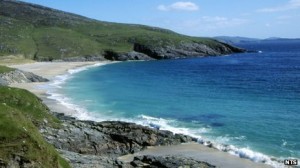
<p><a href="/wp-content/uploads/2012/06/60905800_mingulay_nts_464-300x1681.jpg" data-lightboxplus="lightbox[3977]" title="Mingulay: 100 years of abandonement."><img class="alignleft size-full wp-image-5871" alt="60905800_mingulay_nts_464-300x168" src="/wp-content/uploads/2012/06/60905800_mingulay_nts_464-300x1681.jpg" width="300" height="168" /></a>The island of Mingulay forms part of the Bishop Islands, a small collection of islands that lie off the south coast of Barra at the bottom of the Hebrides chain. Its an island of incredible drama; some of the tallest sea cliffs in Europe, sea stacks and arches, one tiny sheltered sandy bay and spectacular views across to its sister islands such as Pabbay and Berneray. Just at the end of the last ice age when the massive European ice sheets retreated from the Western Isles Mingulay would have been connected to the rest of the outer Hebrides, but as sea levels rose it was eventually cut off. There are traces of settlements dating back to the Iron Age and until that day in 1912 the island had been almost continually inhabited.</p>
<p>The sea around the island is dangerous and unpredictable, sailing out from Mingulay could be a one way trip and it was not uncommon for the island to be completely unreachable for months on end. One story that illustrates this concerns two friends who had left the island, one on a trip to Barra and the other who was heading to America to seek his fortune. The friends said their goodbyes at the quayside at Castlebay on Barra. Many months later the one who had made his way to America returned after deciding the new world was no for him. He was surprised to bump into his friend back in Castlebay. The poor man had been stuck on Barra all that time still unable to return home.</p>
<p>Up until the Mid 13th century the islands were under Norse control and indeed the name Mingulay is derived from the old Norse &#8216;Mikil -ay&#8217; which means &#8216;big island&#8217;. When the Norse invaders finally gave up control of the western isles around 1266 the islands passed to the Lords of the Isles and then to the <a href="http://www.scotclans.com/scottish_clans/clans/macneill_of_barra/">MacNeils of Barra</a>, in fact it is the rocks of Builacraig on Mingulay that are featured on the crest of <a href="http://www.scotclans.com/scottish_clans/clans/macneill_of_barra/crest.html">Clan MacNeil of Barra</a>.</p>
<p>Although the islands had been long converted to christianity it was a version tempered with a mix of many other older beliefs. Islanders firmly believed in the faery folk and in many other supernatural creatures. Their belief could it times prove disastrous; one example occured during the early tenure of The <a href="http://www.scotclans.com/scottish_clans/clans/macneill_of_barra/">MacNeils</a>. The chief had grown concerned having not heard from the residents of Mingulay for many months. He sent a ship over to the island and one man called <a href="http://www.scotclans.com/scottish_clans/clans/macphee/">MacPhee</a> was sent ashore. he searched the island and discovered all the inhabitants had died of disease. His crewmates fearing an outbreak of plague left him on the island where he was exiled for a year, climbing the hill every day to look out for rescue. When the boat finally returned to repopulate the island he was granted land there and the lookout hill was named <a href="http://www.scotclans.com/scottish_clans/clans/macphee/">MacPhee&#8217;s</a> hill in his honour.</p>
<p>Alas MacNeil sold the island in 1840 along with the other Barra islands to Colonel John <a href="http://www.scotclans.com/scottish_clans/clans/gordon/">Gordon</a> of Aberdeenshire. Gordon had little concern or charity for the islanders and proceeded to clear his new property to make way for sheep though oddly during the height of <a href="http://www.scotclans.com/scottish_history/modern_scotland/1785_clearances.html">the clearances</a> the population actually increased as many islanders from nearby Barra fled to the more remote Mingulay rather than make the perilous journey to Nova Scotia. around this time the island population peaked at around 150 inhabitants.</p>
<div id="attachment_3982" class="wp-caption alignleft" style="width: 310px"><a href="http://www.bletherskite.net/wp-content/uploads/2012/06/026389_7d3f0e851.jpg" data-lightboxplus="lightbox[3977]" title="026389_7d3f0e85"><img class="size-medium wp-image-3982" style="margin: 5px;" title="026389_7d3f0e85" alt="" src="http://www.bletherskite.net/wp-content/uploads/2012/06/026389_7d3f0e851-300x200.jpg" width="300" height="200" /></a><p class="wp-caption-text">The Old School House on Mingulay</p></div>
<p>Gradually though the population began to decline, one theory was that it was sparked by a disaster that befell the residents of nearby Pabbay. A boat from the neighbouring island had sunk loosing all 5 hands on board. On such a small island as Pabbay this equated to half the male population. For the residents of Mingulay this brought home the fragility of their own existence and as knowledge of the world beyond their island began to improve many began to realise there were altogether safer and more prosperous ways to make a living away from this tiny outcrop.</p>
<p>From the start if the 1900s islanders began to abandon Migulay, some headed to nearby Vatersay and Sandray where they illegally occupied land there. in 1910 there were only six families living on the island and in 1912 the decision was reached to abandon the island for good.</p>
<p>Since 1912 the island has passed through a few owners who had used it for grazing land until it was finally taken over by the National Trust for Scotland in 2000. The island is now a home to an impressive seabird population.</p>
<p>This weekend the NTS will mark the centenary of the final abandonment of Mingulay with a series of events. A time to reflect on the fragile communities that have existed along the Hebridean chain.</p>
<p>&nbsp;</p>
<p>The post <a rel="nofollow" href="http://109.74.200.198/mingulay-100-years-of-abandonement/">Mingulay: 100 years of abandonement.</a> appeared first on <a rel="nofollow" href="http://109.74.200.198">ScotClans | Scottish Clans</a>.</p>
]]></content:encoded>
			<wfw:commentRss>http://109.74.200.198/mingulay-100-years-of-abandonement/feed/</wfw:commentRss>
		<slash:comments>2</slash:comments>
		</item>
		<item>
		<title>Clan MacPhee/MacFie Descended from a Selkie</title>
		<link>http://109.74.200.198/clan-macpheemacfie-descended-from-a-selkie/</link>
		<comments>http://109.74.200.198/clan-macpheemacfie-descended-from-a-selkie/#comments</comments>
		<pubDate>Fri, 08 Apr 2011 11:14:11 +0000</pubDate>
		<dc:creator>Amanda Moffet</dc:creator>
				<category><![CDATA[Scottish Myths]]></category>
		<category><![CDATA[MacFie]]></category>
		<category><![CDATA[MacPhee]]></category>

		<guid isPermaLink="false">http://www.scotclans.com/bletherskite/?p=2730</guid>
		<description><![CDATA[<p>The origins of Clan MacFie/MacPhee and all it&#8217;s name variations are said to be descended from a Selkie or seal woman. Selkies are a mythical people who can change from human form to seal form with the aid of a detachable skin. These skins are individual and only can be used by the person who [&#8230;]</p>
<p>The post <a rel="nofollow" href="http://109.74.200.198/clan-macpheemacfie-descended-from-a-selkie/">Clan MacPhee/MacFie Descended from a Selkie</a> appeared first on <a rel="nofollow" href="http://109.74.200.198">ScotClans | Scottish Clans</a>.</p>
]]></description>
				<content:encoded><![CDATA[<p>The origins of <a href="http://www.scotclans.com/scottish_clans/clan_macphee/">Clan MacFie/MacPhee</a> and all it&#8217;s name variations are said to be descended from a Selkie or seal woman.</p>
<p><a href="/wp-content/uploads/2011/04/selkie.jpg" data-lightboxplus="lightbox[2730]" title="selkie"><img class="alignleft size-medium wp-image-3636" title="selkie" alt="" src="http://www.letsbuyscottish.com/wp-content/uploads/2011/04/selkie-214x300.jpg" width="214" height="300" /></a>Selkies are a mythical people who can change from human form to seal form with the aid of a detachable skin. These skins are individual and only can be used by the person who owns them. If a selkie loses her skin, she is forced to remain in human form until she finds the skin again. The skins, however, are known to be enchanted and will find their way back to their owner no matter how long it takes. Selkies are found along the coasts of Scotland, Ireland, Britain, and in some parts of Norway and Iceland. When in seal form, the Selkies look like an ordinary seal, but when in human form the Selkies are usually dark skinned, with dark hair and beautiful dark eyes. Human Selkies are quite shy and sing beautifully. Some say a Selkie in human form will be surrounded by a faint glow, which only increases their attractiveness.</p>
<p>While one such selkie was in her beautiful human form, her skin of seal, she married the first MacFie, who hid her fur so she could not return to the sea.</p>
<p>The orgin of Selkies isn&#8217;t exactly clear. Some peoples believe that angels who fell to the earth became faeries if they landed on solid ground, and selkies if they fell in the sea. Others believe that Selkies are the souls of people drowned at sea who were being given a second chance at life as a shapeshifter.</p>
<p>Selkies often fall in love with humans and vice versa, but the relationship seldom ends happily. The pull of the sea is so strong that the selkie usually returns, leaving a heartbroken mortal behind, and sometimes the children of the pairing are left as well. A human male is able to force a selkie woman to stay with him as his wife if he can steal away her sealskin and hide it. Only by locating her skin can she return to the sea, and if she does indeed find it she always leaves the man, sometimes taking her children to the sea with her. If the husband was good to his wife, she will protect and assist him from the sea, filling his pots with crab, warning him of storms, and ensuring good fishing for him. If a male selkie leaves his mortal wife for the sea, he will return to claim his children after 7 years, paying the mother for caring for the child and leaving her childless.</p>
<p>The children born of a union between a selkie and a human are known as &#8220;Sliocha nan Ron&#8221; meaning &#8220;children of the seals&#8221;. They are known as the Roan, and some are capable of turning into a seal if they possess their seal skin. The child is born with this skin and often with webbed feet or hands and rough patches of skin on their head and body. Parents of Roan children usually take the skin and hide it from the child, giving it back when the child is old enough to understand their gift. Even today, entire families are thought to be the distant descendants of Selkies. One of these families is the clan Macfie of Scotland. The name Macfie is derived from an older version of the name &#8220;Macduffie&#8221; which is derived from the gaelic term &#8220;MacDubhSithe&#8221; meaning &#8220;son of the dark fairy of elf&#8221;. The legend claims that the first Macfie took a selkie as a bride.</p>
<p>The post <a rel="nofollow" href="http://109.74.200.198/clan-macpheemacfie-descended-from-a-selkie/">Clan MacPhee/MacFie Descended from a Selkie</a> appeared first on <a rel="nofollow" href="http://109.74.200.198">ScotClans | Scottish Clans</a>.</p>
]]></content:encoded>
			<wfw:commentRss>http://109.74.200.198/clan-macpheemacfie-descended-from-a-selkie/feed/</wfw:commentRss>
		<slash:comments>0</slash:comments>
		</item>
	</channel>
</rss>