<br />
<b>Deprecated</b>:  mysql_connect(): The mysql extension is deprecated and will be removed in the future: use mysqli or PDO instead in <b>/var/www/apps/scotclans_wp/wp-includes/wp-db.php</b> on line <b>1142</b><br />
<?xml version="1.0" encoding="UTF-8"?>
<rss version="2.0"
	xmlns:content="http://purl.org/rss/1.0/modules/content/"
	xmlns:wfw="http://wellformedweb.org/CommentAPI/"
	xmlns:dc="http://purl.org/dc/elements/1.1/"
	xmlns:atom="http://www.w3.org/2005/Atom"
	xmlns:sy="http://purl.org/rss/1.0/modules/syndication/"
	xmlns:slash="http://purl.org/rss/1.0/modules/slash/"
	>

<channel>
	<title>ScotClans &#124; Scottish Clans &#187; Lewis</title>
	<atom:link href="http://109.74.200.198/tag/lewis/feed/" rel="self" type="application/rss+xml" />
	<link>http://109.74.200.198</link>
	<description></description>
	<lastBuildDate>Fri, 20 Jan 2017 08:08:09 +0000</lastBuildDate>
	<language>en-US</language>
	<sy:updatePeriod>hourly</sy:updatePeriod>
	<sy:updateFrequency>1</sy:updateFrequency>
	<generator>http://wordpress.org/?v=3.6.1</generator>
		<item>
		<title>BBC on the lookout for Canadian/American descendants of the Marloch &amp; Metagama</title>
		<link>http://109.74.200.198/bbc-on-the-lookout-for-canadianamerican-descendants-of-the-marloch-metagama/</link>
		<comments>http://109.74.200.198/bbc-on-the-lookout-for-canadianamerican-descendants-of-the-marloch-metagama/#comments</comments>
		<pubDate>Wed, 26 Aug 2015 17:49:41 +0000</pubDate>
		<dc:creator>Nadine Lee</dc:creator>
				<category><![CDATA[Lewis and Harris]]></category>
		<category><![CDATA[Scottish Diaspora]]></category>
		<category><![CDATA[Scottish History]]></category>
		<category><![CDATA[Scottish News]]></category>
		<category><![CDATA[Scottish Places & Buildings]]></category>
		<category><![CDATA[BBC]]></category>
		<category><![CDATA[Canada]]></category>
		<category><![CDATA[First World War]]></category>
		<category><![CDATA[Lewis]]></category>
		<category><![CDATA[Lochboisdale]]></category>
		<category><![CDATA[Marloch]]></category>
		<category><![CDATA[Metagama]]></category>
		<category><![CDATA[Stornoway]]></category>

		<guid isPermaLink="false">http://www.scotclans.com/?p=56776</guid>
		<description><![CDATA[<p>BBC Scotland is on the lookout for Scottish-Canadians descendant from two 1920s emigrant ships for a new documentary series looking at the aftermath of the First World War. Within two weeks in 1923, two ships carried approximately 600 people from the Outer Hebrides of Scotland to their new home in Canada. At the time most [&#8230;]</p>
<p>The post <a rel="nofollow" href="http://109.74.200.198/bbc-on-the-lookout-for-canadianamerican-descendants-of-the-marloch-metagama/">BBC on the lookout for Canadian/American descendants of the Marloch &#038; Metagama</a> appeared first on <a rel="nofollow" href="http://109.74.200.198">ScotClans | Scottish Clans</a>.</p>
]]></description>
				<content:encoded><![CDATA[<p>BBC Scotland is on the lookout for Scottish-Canadians descendant from two 1920s emigrant ships for a new documentary series looking at the aftermath of the First World War.</p>
<p>Within two weeks in 1923, two ships carried approximately 600 people from the Outer Hebrides of Scotland to their new home in Canada.<br />
At the time most Scottish emigrant ships were leaving from Glasgow, however the April 1923 voyages of the SS Marloch and SS Metagama embarked first from Glasgow, then stopped en-route to pick up passengers in Lochboisdale and Stornoway respectively.</p>
<p><img alt="" src="http://www.historytoday.com/sites/default/files/emigration.jpg" /></p>
<p>The Marloch set sail for St John, New Brunswick from Lochboisdale on the 15<sup>th</sup> of April 1923. On board were at least 50 families from the southern outer islands of the Outer Hebrides, including Barra, Eriskay and North and South Uist. Over 300 men, women and children were on their way to the Clandonald colony in the Red Deer area of Alberta.</p>
<p>When the Metagama sailed for from Stornoway on the 23<sup>rd</sup> of April 1923, the ship contained 300 people mostly from Lewis with an average age of twenty two &#8211; all but twenty were young men. They were on their way to Montreal, Quebec.</p>
<p>The BBC is keen to hear any personal stories from any Canadians or Americans descendant from those who boarded either ship in Lochboisdale or Stornoway in 1923. Similarly, any stories from people descendant from those who stayed behind in the Scotland will be gratefully received.</p>
<p>You can contact researcher Nadine Lee by e-mail <a href="mailto:nadine.lee02@bbc.co.uk">nadine.lee02@bbc.co.uk</a> or by phone +44 1224 384 816.</p>
<p>The post <a rel="nofollow" href="http://109.74.200.198/bbc-on-the-lookout-for-canadianamerican-descendants-of-the-marloch-metagama/">BBC on the lookout for Canadian/American descendants of the Marloch &#038; Metagama</a> appeared first on <a rel="nofollow" href="http://109.74.200.198">ScotClans | Scottish Clans</a>.</p>
]]></content:encoded>
			<wfw:commentRss>http://109.74.200.198/bbc-on-the-lookout-for-canadianamerican-descendants-of-the-marloch-metagama/feed/</wfw:commentRss>
		<slash:comments>0</slash:comments>
		</item>
		<item>
		<title>Photographs Reveal Croft Memories</title>
		<link>http://109.74.200.198/photographs-reveal-croft-memories/</link>
		<comments>http://109.74.200.198/photographs-reveal-croft-memories/#comments</comments>
		<pubDate>Mon, 14 Oct 2013 13:39:14 +0000</pubDate>
		<dc:creator>Nadine Lee</dc:creator>
				<category><![CDATA[Scottish History]]></category>
		<category><![CDATA[Scottish News]]></category>
		<category><![CDATA[boarded out children]]></category>
		<category><![CDATA[croft]]></category>
		<category><![CDATA[emmigration]]></category>
		<category><![CDATA[Eriskay]]></category>
		<category><![CDATA[Exhibition]]></category>
		<category><![CDATA[hebrides]]></category>
		<category><![CDATA[Homes]]></category>
		<category><![CDATA[Ian Peterson]]></category>
		<category><![CDATA[John Maher]]></category>
		<category><![CDATA[Lewis]]></category>
		<category><![CDATA[Photography]]></category>
		<category><![CDATA[Stornoway]]></category>
		<category><![CDATA[western isles]]></category>

		<guid isPermaLink="false">http://www.bletherskite.net/?p=5492</guid>
		<description><![CDATA[<p>A new photographic exhibition is set to open that will shine a light on abandoned crofts throughout the Western Isles of Scotland. Entitled Leaving Home: An Alternative View of the Outer Hebrides, selected photographs will be accompanied by memoirs from those who grew up in the houses, which reveal what life was like in the [&#8230;]</p>
<p>The post <a rel="nofollow" href="http://109.74.200.198/photographs-reveal-croft-memories/">Photographs Reveal Croft Memories</a> appeared first on <a rel="nofollow" href="http://109.74.200.198">ScotClans | Scottish Clans</a>.</p>
]]></description>
				<content:encoded><![CDATA[<div id="attachment_5494" class="wp-caption aligncenter" style="width: 444px"><a href="http://www.bletherskite.net/wp-content/uploads/2013/10/5ec8c65cf7346b2fbdf1ab490e458664_large.jpg" data-lightboxplus="lightbox[5492]" title="Photographs Reveal Croft Memories"><img class="wp-image-5494" alt="3:44am, Isle of Harris (John Maher)" src="http://www.bletherskite.net/wp-content/uploads/2013/10/5ec8c65cf7346b2fbdf1ab490e458664_large.jpg" width="434" height="414" /></a><p class="wp-caption-text">3:44am, Isle of Harris (John Maher)</p></div>
<p>A new photographic exhibition is set to open that will shine a light on abandoned crofts throughout the Western Isles of Scotland. Entitled <a href="http://leavinghome.co.uk/" target="_blank"><em>Leaving Home: An Alternative View of the Outer Hebrides</em></a>, selected photographs will be accompanied by memoirs from those who grew up in the houses, which reveal what life was like in the second half of the 20th century in an outer Hebridean croft.</p>
<p>John Maher and Ian Paterson, the pair behind the exhibition, said their interest lay in exploring the domestic landscape and social histories of the people who once made a living in the Outer Hebrides. The area is known for its stunning landscapes featuring white sandy beaches and endless machair, rather than its crofting history. This is the first time many of the crofts have been photographed and exhibited, offering a unique and fresh insight into the almost forgotten history of the area.</p>
<div id="attachment_5495" class="wp-caption aligncenter" style="width: 430px"><a href="http://www.bletherskite.net/wp-content/uploads/2013/10/Kitchen-Eriskay-HDRi_7012954.jpg" data-lightboxplus="lightbox[5492]" title="Photographs Reveal Croft Memories"><img class="wp-image-5495" alt="George's House, Eriskay II, 2012 (Ian Paterson)" src="http://www.bletherskite.net/wp-content/uploads/2013/10/Kitchen-Eriskay-HDRi_7012954.jpg" width="420" height="315" /></a><p class="wp-caption-text">George&#8217;s House, Eriskay II, 2012 (Ian Paterson)</p></div>
<p>One croft featured in the exhibition was once home to a man named Seoras (George) Skillanders, who was a young boy when he was bought to Erskay as a &#8216;homer&#8217; or &#8216;boarded-out child&#8217;. During Victorian times, young children from homeless or very poor families were relocated to the Highlands to cope with Scotland&#8217;s central belt sprawl. This practice carried on for at least 100 years, with reports suggesting that checks of the suitability of surrogates were largely inadequate. According to accounts form the 1950s and 60s, staff members would set off north with a vanload of children, stopping at villages along the way and asking if anyone needed a child. This practice would continue until the van was empty. Seoras was almost certainly from a Polish family, and possibly came from Greenock. He was a fluent Gaelic speaker and was left the croft when the family who took him in died. He died in the 1980s and the croft has remained vacant ever since.</p>
<div id="attachment_5496" class="wp-caption aligncenter" style="width: 430px"><a href="http://www.bletherskite.net/wp-content/uploads/2013/10/harris.jpg" data-lightboxplus="lightbox[5492]" title="Photographs Reveal Croft Memories"><img class="wp-image-5496" alt="Domestic Decay, Isle of Harris, 2013 (Ian Paterson)" src="http://www.bletherskite.net/wp-content/uploads/2013/10/harris.jpg" width="420" height="315" /></a><p class="wp-caption-text">Domestic Decay, Isle of Harris, 2013 (Ian Paterson)</p></div>
<p>Another croft in the exhibition is located in the Bays of Harris, and was once the childhood home to Morag Morrison. Morag&#8217;s grandfather built the house, and she recalled fondly the men who would sit around the Rayburn stove in the kitchen, telling stories and smoking Black Twist tobacco. There was no road near the home when it was built, as the main method of transport being boat in and out of the bays. Morag has returned to live in the Bay of Harris, living only yards from her childhood home. Today the only inhabitants of the croft are the sheep, who gather there to escape the cold.</p>
<p>An message by an ex-crofter published on the exhibition&#8217;s website also provides an account as to why the houses were simply abandoned as they were. The photographers received an e-mail from Flora MacDonald in Australia, who came from a family of nine from Harris. In 1957 the family left Harris for Glasgow, and from there went to Australia, as at the time it was not permitted to emigrate directly from Harris to Australia. Almost all of their possessions were left behind, as they were only allowed to bring one suitcase. Ms MacDonald said she identified strongly with the homes in the photographs, saying: &#8220;We just closed the door behind us and left.&#8221;</p>
<p>Ian and John are both self-taught photographers who became aware of each others work through social media, including Flickr and Facebook. They kept in touch mostly via e-mail and by following each others postings on various websites. Collaboration and the subsequent development of an exhibition came about when they realised that between them they had amassed a considerable body of work on a subject they were equally as fascinated by. John said he was repeatedly drawn to the crofts, saying: &#8220;The people may have left long ago, but it&#8217;s the things they left behind with only the passage of time and the elements to disturb them that make these places so special.&#8221; John lives on Harris and was once the drummer for the legendary and influential punk band <em>The Buzzcocks</em>. Ian lives in Fife and has spent the last 25 years working as a veterinary surgeon.</p>
<p>The exhibition is set to open from 9th November until 31st December at <em>An Lanntair</em> in Stornoway on the Isle of Lewis. The pair are currently running a KickStarter campaign (which you can donate to <a href="http://www.kickstarter.com/projects/491244993/leaving-home-an-alternative-view-of-the-outer-hebr" target="_blank">here</a>) to cover the costs of printing, mounting and framing the photographs. As additional funds become available they plan to increase the body of work and to assemble a traveling exhibition that will enable the stories and images of the crofts to live on.</p>
<p>The post <a rel="nofollow" href="http://109.74.200.198/photographs-reveal-croft-memories/">Photographs Reveal Croft Memories</a> appeared first on <a rel="nofollow" href="http://109.74.200.198">ScotClans | Scottish Clans</a>.</p>
]]></content:encoded>
			<wfw:commentRss>http://109.74.200.198/photographs-reveal-croft-memories/feed/</wfw:commentRss>
		<slash:comments>4</slash:comments>
		</item>
		<item>
		<title>The Icelandic Woman Behind the Lewis Chessman</title>
		<link>http://109.74.200.198/lewis-chessman-made-by-a-woman/</link>
		<comments>http://109.74.200.198/lewis-chessman-made-by-a-woman/#comments</comments>
		<pubDate>Mon, 13 Sep 2010 12:48:28 +0000</pubDate>
		<dc:creator>Amanda Moffet</dc:creator>
				<category><![CDATA[Lewis and Harris]]></category>
		<category><![CDATA[Scottish News]]></category>
		<category><![CDATA[Lewis]]></category>
		<category><![CDATA[Lewis Chessmen]]></category>

		<guid isPermaLink="false">http://www.scotclans.com/bletherskite/?p=2286</guid>
		<description><![CDATA[<p>During a seminar at the National Museum of Scotland claims were made that the iconic Lewis Chessmen could have been made in Iceland by a priest&#8217;s wife. These chessmen have fascinated historians and scholars since they were found in Uig in Lewis in 1831. But fresh claims challenge some long-held beliefs about the pieces. The [&#8230;]</p>
<p>The post <a rel="nofollow" href="http://109.74.200.198/lewis-chessman-made-by-a-woman/">The Icelandic Woman Behind the Lewis Chessman</a> appeared first on <a rel="nofollow" href="http://109.74.200.198">ScotClans | Scottish Clans</a>.</p>
]]></description>
				<content:encoded><![CDATA[<div id="attachment_39374" class="wp-caption aligncenter" style="width: 580px"><a href="/wp-content/uploads/2010/09/chessmen1.jpg" data-lightboxplus="lightbox[2286]" title="The Icelandic Woman Behind the Lewis Chessman"><img class="size-full wp-image-39374" alt="The Lewis Chessmen, carved about 800 years ago mostly from walrus tusks, had previously been considered of Norwegian origin Picture" src="/wp-content/uploads/2010/09/chessmen1.jpg" width="570" height="851" /></a><p class="wp-caption-text">The Lewis Chessmen, carved about 800 years ago mostly from walrus tusks, had previously been considered of Norwegian origin Picture</p></div>
<p>During a seminar at the National Museum of Scotland claims were made that the iconic Lewis Chessmen could have been made in Iceland by a priest&#8217;s wife.</p>
<p>These chessmen have fascinated historians and scholars since they were found in Uig in Lewis in 1831. But fresh claims challenge some long-held beliefs about the pieces.</p>
<p>The most commonly held view on the origin of the 93 pieces, primarily made from walrus tusks, is that they were made in Norway in the 12th or 13th century and were buried for safe keeping on route to be traded in Ireland.</p>
<p>The new theory has been put forward by Icelandic chess fans Einar Einarsson and Gudmundur Thórarinsson, who was the chairman of the organising committee of the famous world championship match between Bobby Fischer and Boris Spassky in Reykavik 1972.</p>
<p>They argue that at the time of the creation of the Lewis Chessmen &#8211; around 1150-1200 &#8211; it is likely that no nation except Iceland had connected chess with bishops or the church.</p>
<p>They say the word &#8220;bishop&#8221; for a chess piece is used in only two languages, Icelandic and English. In most other languages, including Norwegian, this piece is known as a &#8220;runner&#8221;.</p>
<p>Other pieces of evidence include the chess knights being mounted on horses that seem Icelandic in both size and head shape and the rooks resembling berserkers (an Icelandic word for a soldier wearing a shirt made of bearskin) who figure prominently in contemporary Icelandic writings but not in written works in Norway at the time.</p>
<p>Mr Thórarinsson says historic writings refer to Bishop Páll in Iceland sending carved gifts made from tusks. These were made by Margrét the Adroit, his wife, so called because of her prodigious skill at carving walrus tusks.</p>
<p>He added: &#8220;One might even entertain the notion that the Lewis chessmen were made at the request of Bishop Páll of Skálholt and carved by Margrét the Adroit whose carving skills were the stuff of legend.</p>
<p>&#8220;The pieces were then sent abroad for sale or as a gift, but the ship was then lost&#8221;.</p>
<p>The British Museum presently holds 82 of the chess pieces and the National Museum of Scotland in Edinburgh has the other 11.</p>
<p>Yesterday the Icelandic theory was not ruled out by experts.</p>
<p>A spokeswoman for the British Museum said: &#8220;The British Museum states that the Lewis Chessmen were probably made in Norway, but the theory that they were produced in Iceland is certainly a possibility.</p>
<p>&#8220;The background of the Lewis Chessmen is open to debate and the British Museum is pleased that they still generate such interest.&#8221;</p>
<p>Dr David <a href="/scottish-clans/clan-caldwell/">Caldwell</a> from the National Museums Scotland, added: &#8220;As the Lewis Chessmen are such remarkable and fascinating objects, there are naturally a lot of theories surrounding them.</p>
<p>&#8220;I am pleased that our own research and our extremely popular exhibition &#8216;The Lewis Chessmen: Unmasked&#8217; is reigniting debate and discussion.</p>
<p>&#8220;Although the origin of the chessmen can never be certain, we would support the present evidence and research that they came from Norway, as there is less evidence for an Icelandic connection.&#8217;</p>
<p>The post <a rel="nofollow" href="http://109.74.200.198/lewis-chessman-made-by-a-woman/">The Icelandic Woman Behind the Lewis Chessman</a> appeared first on <a rel="nofollow" href="http://109.74.200.198">ScotClans | Scottish Clans</a>.</p>
]]></content:encoded>
			<wfw:commentRss>http://109.74.200.198/lewis-chessman-made-by-a-woman/feed/</wfw:commentRss>
		<slash:comments>1</slash:comments>
		</item>
		<item>
		<title>MacNicol Mor and the Macleods of Raasay</title>
		<link>http://109.74.200.198/macnicol-mor-and-the-macleods-of-raasay/</link>
		<comments>http://109.74.200.198/macnicol-mor-and-the-macleods-of-raasay/#comments</comments>
		<pubDate>Sat, 24 Apr 2010 22:55:56 +0000</pubDate>
		<dc:creator>Amanda Moffet</dc:creator>
				<category><![CDATA[MacNeacail]]></category>
		<category><![CDATA[Nicolson]]></category>
		<category><![CDATA[Lewis]]></category>
		<category><![CDATA[MacLeod]]></category>
		<category><![CDATA[Raasay]]></category>
		<category><![CDATA[Skye]]></category>

		<guid isPermaLink="false">http://www.scotclans.com/bletherskite/?p=1928</guid>
		<description><![CDATA[<p>MacNicol Mor, a chief of the MacNicol clan was engaged in a heated discussion with MacLeod of Raasay. While the two men argued away in English a servant, who could speak only gaelic, presumed that the two leaders were quarreling. The servant, thinking his master in danger,  drew out his sword and slew MacNicol Mor. [&#8230;]</p>
<p>The post <a rel="nofollow" href="http://109.74.200.198/macnicol-mor-and-the-macleods-of-raasay/">MacNicol Mor and the Macleods of Raasay</a> appeared first on <a rel="nofollow" href="http://109.74.200.198">ScotClans | Scottish Clans</a>.</p>
]]></description>
				<content:encoded><![CDATA[<p><a href="http://www.scotclans.com/scottish-clans/clan-macneacail/">MacNicol</a> Mor, a chief of the <a href="http://www.scotclans.com/scottish-clans/clan-nicolson/">MacNicol clan</a> was engaged in a heated discussion with <a href="http://www.scotclans.com/scottish-clans/clan-macleod/">MacLeod</a> of Raasay. While the two men argued away in English a servant, who could speak only gaelic, presumed that the two leaders were quarreling. The servant, thinking his master in danger,  drew out his sword and slew MacNicol Mor.</p>
<p>The clan elders and chiefs in an attempt to prevent a feud breaking out, held council to determine the manner in which to appease the MacNicols. In true Clan style the decision agreed upon was that the &#8220;meanest&#8221; of Clan Nicol would behead <a href="http://www.scotclans.com/scottish-clans/clan-macleod/">Macleod</a> of Raasay.</p>
<p>The man chosen for this task was Lomach, a lowly maker of Pannier baskets, he carried out his task and cut off the head of the Laird of Raasay.</p>
<p>The post <a rel="nofollow" href="http://109.74.200.198/macnicol-mor-and-the-macleods-of-raasay/">MacNicol Mor and the Macleods of Raasay</a> appeared first on <a rel="nofollow" href="http://109.74.200.198">ScotClans | Scottish Clans</a>.</p>
]]></content:encoded>
			<wfw:commentRss>http://109.74.200.198/macnicol-mor-and-the-macleods-of-raasay/feed/</wfw:commentRss>
		<slash:comments>1</slash:comments>
		</item>
		<item>
		<title>Nicholson&#8217;s Leap</title>
		<link>http://109.74.200.198/nicholsons-leap/</link>
		<comments>http://109.74.200.198/nicholsons-leap/#comments</comments>
		<pubDate>Sat, 24 Apr 2010 22:38:43 +0000</pubDate>
		<dc:creator>Amanda Moffet</dc:creator>
				<category><![CDATA[MacNeacail]]></category>
		<category><![CDATA[Nicolson]]></category>
		<category><![CDATA[Lewis]]></category>

		<guid isPermaLink="false">http://www.scotclans.com/bletherskite/?p=1924</guid>
		<description><![CDATA[<p>There is an old legend from the Isle of Lewis which tells the story behind &#8220;Leum Mhac Nicol&#8221; or &#8220;Nicholson&#8216;s Leap&#8221;, a rockravine which seperates Dùn Othail from the mainland. Legend has it a MacNeacail man had commited a crime and was sentenced by the chief of Lewis to be castrated.  Once this horrific sentance [&#8230;]</p>
<p>The post <a rel="nofollow" href="http://109.74.200.198/nicholsons-leap/">Nicholson&#8217;s Leap</a> appeared first on <a rel="nofollow" href="http://109.74.200.198">ScotClans | Scottish Clans</a>.</p>
]]></description>
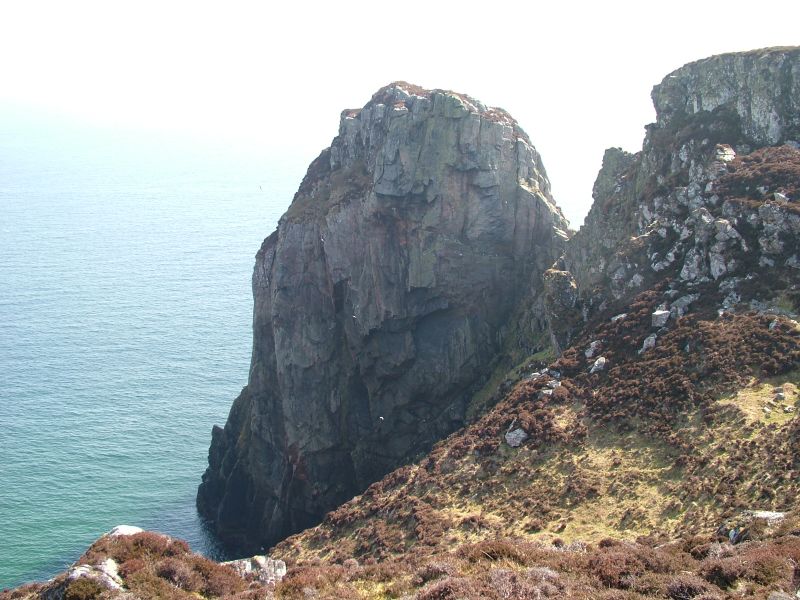
				<content:encoded><![CDATA[<div id="attachment_39464" class="wp-caption aligncenter" style="width: 810px"><a href="/wp-content/uploads/2010/04/dun-othail1.jpg" data-lightboxplus="lightbox[1924]" title="Nicholson's Leap"><img class="size-full wp-image-39464" alt="Dùn Othail" src="/wp-content/uploads/2010/04/dun-othail1.jpg" width="800" height="600" /></a><p class="wp-caption-text">Dùn Othail</p></div>
<p>There is an old legend from the Isle of Lewis which tells the story behind &#8220;Leum Mhac Nicol&#8221; or &#8220;<a href="http://www.scotclans.com/scottish-clans/clan-nicolson/">Nicholson</a>&#8216;s Leap&#8221;, a rockravine which seperates Dùn Othail from the mainland.</p>
<p>Legend has it a <a href="http://www.scotclans.com/scottish-clans/clan-macneacail/">MacNeacail</a> man had commited a crime and was sentenced by the chief of Lewis to be castrated.  Once this horrific sentance was carried out, the castrated man full of fury at what had been done to him sought revenge by kidnapping the chief&#8217;s only child.  MacNeacail took the child  to the ravine and leaped across the chasm. He threatened to throw the child into the sea unless the chief himself agreed to be mutilated as well. Attempts at rescuing the child failed and the chief finally agreed to the mans terms. Just as the chief consented <a href="http://www.scotclans.com/scottish-clans/clan-macneacail/">MacNeacail</a> leaped over the cliff and into the sea with the child crying out in Gaelic. &#8220;I shall have no heir, and he shall have no heir&#8221;.</p>
<p>The post <a rel="nofollow" href="http://109.74.200.198/nicholsons-leap/">Nicholson&#8217;s Leap</a> appeared first on <a rel="nofollow" href="http://109.74.200.198">ScotClans | Scottish Clans</a>.</p>
]]></content:encoded>
			<wfw:commentRss>http://109.74.200.198/nicholsons-leap/feed/</wfw:commentRss>
		<slash:comments>1</slash:comments>
		</item>
	</channel>
</rss>