The post You might be a Gael if … appeared first on ScotClans | Scottish Clans.
]]> I wrote a Not Your Father’s Gaelic blog post a few weeks ago wherein I expressed how nice it would be to have neighbors who are aware of and interested in their Scottish Gaelic heritage. Perhaps even neighbors with whom I could joke around in Gaelic! As it is, even my own (Italian American) mother’s eyes glaze over when I begin to get Gaelic-y.
Of course there are loads of people with Scottish Gaelic heritage just about everywhere in America. The problem is, they have no clue of the incredible heritage that they – and their children and grandchildren – are missing. Lets face the facts: precious few Scottish Americans are actually aware that they enjoy Scottish heritage and somewhat less than a micron of that number understand their Scottish Gaelic roots. Suffice it to say that one would not likely hike through the hyper-cultural polyglot of New York City and expect to happen upon a “little Gaidhealtachd” or a corner vendor selling haggis on a stick. Not gonna happen.
Why not? Gaelic immigration to America has been significant relative to other immigrant cultures. And this is important: people came here as Gaels – these were not people who considered themselves Scottish with a side dish of Gaelic ancestry. They spoke Gaelic – many spoke it exclusively – and they engaged in Gaelic tradition and lifeways in America. It is not a difficult task to unmask at least one or three folk of Gaelic heritage in almost any office or workplace in America today. What happened to Gaelic culture in America?
I have explored a little of the “why” side of America’s Gaelic loss in prior NYFG posts and that story can be fairly depressing. You can read some of those posts here.
This particular post is not nearly as depressing and with hope it will provide a few moments of light-hearted enlightenment about what a Gael has been and is today. After all, the first job of a Gaelic activist in America is to introduce other people of Gaelic ancestry to an awesome lost heritage and in doing so, further enrich American lives.
So, in the spirit of our Ulster Scot brothers and sisters who dot the hills and hollows of Appalachia, please enjoy the inaugural edition of–
“You might be a Gael …”
You might be a Gael if you think you’re a “highlander”. Evidence of the presence and influence of Scottish Gaelic culture and language can be found throughout Scotland in clues such as Gaelic local place names. However, the Scottish highlands and islands have for centuries been the Gaelic heartland of Scotland. Gaels would not originally have referred to themselves as “highlanders” but might have used the Scottish Gaelic term “Gaidheal” or “braigheach”. Such a mountaineer would be living not in “the highlands” but in “a’ Ghaidhealtachd”. Generally accepted scholarship indicates that the modern Scottish split personality between “highland” and “lowland” – Gaelic and non-Gaelic – was not firmly in place until the 14th century. From there it only deepened and widened.
 You might be a Gael if you like Outlander. Author Diana Gabaldon is one of the first popular fiction authors to take Gaelic culture seriously – the other being author of the outstanding ”Bone Rattler” series, Eliot Pattison. Happily, Gabaldon’s pro-Gaelic approach has been taken up by the creators and crew of the StarzTV Outlander television series.
Not only is Scottish Gaelic correctly and appropriately spoken in the series but the actors and crew themselves have become outstanding ambassadors on behalf of the Scottish Gaelic culture. The three gods of Outlander Gaelic, Gillebride MacMillan, Adhamh O Broin and Gary Lewis are pictured above as part of Gary’s launch of a great online Gaelic learning site. Read about the real life Colum Mackenzie’s favorite online Scottish Gaelic language learning website LearnGaelic.scot.
You might be a Gael if you have never really got used to using the letters J, K, Q, V, X, Y and Z. That’s because the Scottish Gaelic alphabet does not use those letters. What does that sound like you ask? Try this: The website An Sgeulachd Ghoirid (the short story) is a wonderful site where you can hear Scottish short stories spoken by real people. It is a great site if you speak Gaelic but if you don’t it is absolutely fascinating. Check out the site and listen to a few stories to get an idea of what your ancestral language actually sounds like. And its nothing like English!
 You might be a Gael if every time the massed regimental pipe bands begin to march at your local highland games you drop your scotch eggs and run for the hills. Don’t feel bad, it’s a Gaelic thing. That is exactly what your Gaelic ancestors might have felt like every time one of the Royal Independent Highland Companies darkened the door of a wee Gaelic cottage. More often than not the visit was not in a friendly spirit as these precursors to the famous Black Watch regiment were hired by the Crown to keep the peace and enforce the King’s law in the Gaelic highlands.
Worse, although plenty of Gaels filled out the ranks of many brave and glorious Scottish regiments, Gaelic military service on behalf of the British crown was not always voluntary.
Indeed, it was a known practice for 18th and 19th century clan chiefs to require the military service of their clansfolk’s Gaelic sons in British foreign wars in order for clan families to be allowed to remain on clan land and continue to live and farm in the manner that their ancestors had done for hundreds of years. It was an ugly trade in sons for land. Introduction of Anglo-Norman feudal land tenure transformed clan lands into the exclusive property of the clan chief through royal grant. By adopting a feudal title, the chief became a landlord and ceased to be a clan leader. Of course the clan chief pocketed the enlistment bounties paid by the British government and thereby added another personal income stream that could help to subsidize an increasingly expensive “chiefly” lifestyle.
 You might be a Gael if you get a strange, exhilarating, warm and fuzzy feeling when you glimpse viking longships on the horizon. Yes, there was tension, battle and blood between Gaels and Vikings. Beginning in the late 8th century and continuing for six hundred years hence, the Gaelic western coast and northern islands were heavily influenced by Norsemen. But there was also trade, intermarriage, children and a blending of the Norse and the Gaelic cultures that is part of what made a Scottish Gael a unique and wonderful animal. Are you an e-book reader? If so, get a screamin’ good deal on George Henderson’s pre-1910 book The Norse Influence on Celtic Scotland. Download the Kindle edition now on Amazon for $1.59. True story. What do you have to lose?
 You might be a Gael if you secretly think that the kind of kilt that guys wear today is just wrong. It is. Well, sort of. At least from the traditional Scottish Gaelic perspective. The original Gaelic form of the kilt was developed in the 16th century and is called the “feileadh mhor” or great kilt. It is a single large wrap that is gathered around the body and fixed at the waist with a belt while the lower half of the garment is draped around the upper part of the legs to the knee. The upper part of the great kilt can be worn as a cloak over the shoulder or even over the head in bad weather. The great kilt fit the work and lifestyle of the Gael very well for centuries. Watch Outlander’s Jamie Fraser show you how to put such a thing on. If you don’t know who Jamie Fraser is, watch the clip. Then watch the Starz production of Diana Gabaldon’s Outlander.
The garment that has become so ubiquitous at Scottish highland games and other celebrations is a highly stylized version of an 18th century modification of the traditional Gaelic great kilt. It was likely developed to accommodate different sorts of work and industry and a different lifestyle that was being introduced to the highlands in the wake of the first Jacobite rising in 1715 in order to civilize Gaelic society and make it more productive for the larger United Kingdom.
By the time the small kilt or “feileadh beag” became popular among the Scottish diaspora in the late 19th and 20th centuries, it had undergone further modifications to suit kilted British military regiments. Fashion overtook function though, on the hips of romantic Victorian gentlemen who got a kick out of dressing up as a stylized version of the very same Gaels that had only recently been utterly defeated and subjugated and who would soon be physically removed from much of their Gaelic homeland altogether.
Not that there is anything wrong with your military style Victorian gentlemen’s “small kilt” – plenty a Gael wore something like it just prior to the 1746 ”Dress Act” prohibiting the wearing of any type of highland dress except in service of the Crown in Scottish military regiments. And plenty of Gaels wore the small kilt into battle as part of a kilted British regiment. But for those of Gaelic ancestry today, there is an option that is more respectful of Gaelic heritage and, frankly guys, looks a great deal better on the bod! Next time you empty your sporran and trade a son to buy a new kilt – make it a great kilt and …
Get Your Gaelic On!
The post You might be a Gael if … appeared first on ScotClans | Scottish Clans.
]]>The post A Walk Through Culloden appeared first on ScotClans | Scottish Clans.
]]>

John W. Patterson
This is a personal account on my trip to the Culloden Battle Field and visitor centre. I visited Culloden on August 12th of this year. For those who have never visited, it is a very solemn place.
Culloden is a historical site managed by the National Trust for Scotland. On 16 April 1746 a fierce and bloody battle took place on this spot near Inverness between the Jacobite army of Bonnie Prince Charlie and the Royal Troops of George II led by The Duke of Cumberland. This was the last stand of Charles Edward Stuart, commonly known as “Bonnie Prince Charlie” or “the Young Pretender”. Bonnie Prince Charlie and his sympathisers wanted the Stuarts on the throne rather than the Hanoverians.
There were 7,000 in the Jacobite army and 8,000 in the royal army. It is thought that around 1,500 to 2,000 Jacobites were killed or wounded in what was a terrible defeat for Bonnie Prince Charlie and his army which was made up of mostly highlanders who were volunteers rather than soldiers. Clans fought on both sides. On the Government side the losses and injuries were a lot lighter at around 300. The battle was over in less than an hour, it was a slaughter. This was the last pitched battle on British soil.
Leaving opinions aside and the circumstances that led up to the battle I would like to focus on my experience. When you arrive at the visitors centre and leave your car your experience begins as you start walking up a sidewalk adorned with Clan names, those that were involved in the battle, alongside their names are their clan crests. When you enter the visitor centre the cafe is to the left, which I found to be excellent and the gift shop. Walking straight ahead you begin the indoor portion of the tour.

Photo’s by John W. Patterson
Upon entering the tour you find large displays on both walls and many interactive displays. There are many exhibits of actual articles from the times with explanations of their significance. I found this to be a great addition to the experience and helps you connect with that awful day and the life the soldiers led. You are free to explore the exhibition in any way, and are not forced down one route, so the narrative is pieced together as you see fit. On one side of the exhibition is the Government side and the other for the Jacobite side. This is interesting as the exhibition does give you both sides of the story and it is up to you what you want to make of it. You start with the lead up to the battle, on one side the events of the Jacobites and the other the Loyalists. So you do end up seeing both sides, there isn’t a bias.
At the end of this part of the exhibition you enter a room with large screens on all four walls. It puts you in the middle of a re-enactment of the battle, you are charged at from one wall and muskets fire from another. The sound is amazing and really gives you the feel of being there. When you exit you see names of known Clansmen who fell during the battle. For me, I saw many Farquharson names and it really brought it home to me and gave me a personal connection to this event and an insight into my family and how brave they were. When you exit the hall you enter into another interactive room with a large animated map of the battle and many hands on displays.

The Walk outside
When you begin the outside portion of the tour you are given a headset with a GPS device. When you walk outside the GPS begins to give you information about the day. As you walk to points the GPS will chime and tell you about the point you are standing and gives you further information on specific people or a side note of the day by a touch on the screen. You immediately get the feeling of the day and as you walk the paths the battlefield the solemnity falls on you.
You can see blue flags that mark the Jacobite line and red flags the mark the Government side. Paths take you to each point and you pass various Clan Stones, these stones commemorate the members of the different branches of the Clan who fought and died on that fateful day in 1746. As well as specific Clan Stones there was also one labelled “Mixed Clans” for all those not listed. You walk by many markers of where certain Clans would have been lined or where certain people would have been standing that day.
In the end I want to say the National Trust for Scotland has done an amazing job with the centre. It should be noted that Culloden is a burial site for many who fell that day and the most respect should be given while walking the field. The feeling you get while walking the field is hard to describe, you are standing on the ground of a battle that had consequences for so many, some very harsh. History could have sent us in quite a different direction if Bonnie Prince Charlie had been successful in restoring the House of Stuart to the British throne.

John W. Patterson is the Editor of the Lion’s Face, Clan Farquharson UK
The post A Walk Through Culloden appeared first on ScotClans | Scottish Clans.
]]>The post A Beginner’s Guide To The Jacobites appeared first on ScotClans | Scottish Clans.
]]>The reason I wrote this was to put together a newbies guide to what this period of history was all about, what started it and most importantly to dispel the misinformation that this was some Scotland V England struggle. Ive tried to keep it as light and simple as possible, I tested it on my 12 year old daughter last night and it made sense to her so fingers crossed here goes….

Charlie Tour T Shirt
It all started with King James the VII as we called him in Scotland or James II as he was known in England. He was the second surviving son of Charles I
First, A bit of Background…
Charles I had a pretty difficult relationship with parliament and this led to the English Civil War, which, actually started in Scotland not England when Charles managed to also get on the wrong side of the Church as well and started the bishop’s war. Incredibly the Bishops war was started by Charles attempting to introduce a new prayer book so two sides who couldn’t agree on how to give praise to the same god started a fight which spilled over into Ireland and then into England like some sort of viral cowboy bar brawl and ended up creating the biggest armed conflict on British soil. Say what you like about the Scots we are damned good at starting a fight.
Charles lost the war and his head in 1649 which in turn led to Oliver Cromwell, the Protectorate and a ban on Christmas, singing and anything else regarded as mildly fun. When Cromwell died of a mixture of malaria and kidney stones he was succeeded by his son who couldn’t get the hang of ‘protecting’ at all and the Monarchy was restored, Charles II became King with much rejoicing and Cromwell was executed, yes I know he was already dead but they hung him again anyway just to make sure.
Charles II was known as the ‘Merry Monarch’ and his reign began with one massive party although it wasn’t all fun since his reign also included the great plague and the great fire of London. Charles II had one last laugh on his people though when he converted to Catholicism on his deathbed.
Now it would take more time than I have here and more pages than I’d like to fill to explain why the Monarchy and parliament had a bit of an issue with Catholicism so trust me, from around the time of the Tudors they most definitely did, it goes without saying that the Church of England were not huge fans, after all they were the competition in the business of eternal life and The Catholic church had some pretty good moves like ‘give us lots of money and we will fast track you through purgatory’ etc.
Charles’ late entry into the world of Catholicism before his exit from the world of the living was inconvenient to say the least but with no heir the next in line was his brother James and what wasn’t so well known was that James had been a practicing Catholic for some time. Like it or not Britain was about to get a Catholic monarch.
James VII takes charge (briefly)…
This led to a number of problems for James. For starters two rebellions kicked off, one led by Duke of Monmouth and another by Campbell of Argyll in Scotland, Argyll’s rebellion came to nowt as they say and his head was soon gracing the space formerly occupied by Royalist hero and shampoo model the Marquis of Montrose. Monmouth was a tougher nut to crack and James also had another issue to deal with, literally as he had quite inexplicably allowed his daughter to marry his protestant Dutch nephew William of Orange, a bit of an own goal as this handed the protestant supporters a ready made replacement..
The protestant nobles called on William and over he came in 1688 to take the throne, James legged it and in the process chucked the Great Seal of the Realm into the River Thames. He was captured before he could leave England but William, not keen to create a Stuart martyr sort of turned his back, whistled a bit and left the cell door slightly open and allowed James to escape. After a great deal of parliamentary debate it was decided that James throwing the Great Seal in the Thames like Dirty Harry throwing away his cop badge was really an act of abdication so that was good enough for them (don’t let anyone ever tell you there aren’t any seals in the Thames). They also quickly shored up the legislation to make sure there could NEVER be another Catholic monarch, a statute that has stood to this day, albeit recently amended.
So that was it. The Stuart dynasty that had ruled Scotland for nearly 300 years and latterly the whole of the newly United Kingdom was over, or was it?
James was determined for a rematch and his campaign began and pretty much ended in Ireland with defeat at the Battle of the Boyne, an event that has been celebrated by the Orange Order to this day, mostly by people in bowler hats parading with flute bands round small towns in Northern Ireland and Lanarkshire.
If anyone wants to discover what is essentially wrong with Scotland then you have to look no further than the petty sectarian nonsense that has plagued this country since then. Where we have become a country divided by tribal lines mostly based on which Glasgow based football team you support, insular, inward looking and regressive.
But enough about that back to the Jacobites…
The Old Pretender…
James may have been done with the throne of Britain but his progeny were not. His second daughter, Anne became queen in 1702. Queen Anne gave us many things including the Act of Union and bow legged furniture (considering she had 17 pregnancies during here reign you can see where they got the idea from).
When Anne died in 1714 succession fell in a rather oblique way to George of Hannover, a German and grandson of James VI(and I) as the nearest non Catholic everyone could agree on. (there were 50 more eligible Catholics in the way which the Act of Settlement conveniently ignored).
A year later in 1715 the Whig party won a majority to become the new government defeating the Tory party. Many rebels in the Tory party were Jacobites (from ‘Jacobus’ the Latin for ‘James’) and supported the return of the Stuart Dynasty. James VII was long dead but his son James Francis Edward Stuart was very much alive and in exile in France. Although the support for his claim sprouted in the Tory rebellion in London it really took root in Scotland. There was still a strong Catholic contingent in Scotland and James was able to get support from them. He arrived in Scotland in 1715 to start his campaign to regain the throne but it didn’t go at all well. James (the Old Pretender) was timid, didn’t like crowds and couldn’t handle cold weather, not ideal traits for fighting battles in Scotland!
He abandoned the whole idea in 1716 and headed back to France where he was welcomed with… folded arms. And sent off to Italy to bother someone else.
In 1719 he married Maria Clementina Sobieska a Polish princess and they had two sons, the eldest being Charles Edward Louis John Casimir Sylvester Severino Maria Stuart (I’d hate to have been the one icing his birthday cakes), fortunately he was more commonly referred to as Charles Edward Stuart or ‘Bonnie Prince Charlie.
Charlie was a very different man to his father. Born in Italy he was determined to restore the Stuarts to the throne so his father named him regent in 1743 and his adventures began…
Bonnie Prince Charlie and the ’45…
Charlie managed to get some support in kind from France and was given a pair of well fitted out ships. His hopes of getting some well fitted out men too were less successful but nevertheless he set off for the West of Scotland, preferring his fathers recruiting ground to the North. The Jacobites still had much support from the Northern Clans mostly, but not exclusively Catholic, he also had Jacobite support from Ireland and places like Carlisle and Manchester in the North of England.
Resistance to the Jacobites came not just from England (who made up the bulk of the UK population and still do) but also from Scotland and Ireland.
As everyone probably knows by now the second Jacobite rebellion made it as far south as Derby before turning back when they picked up far less support along the way than they were expected, the additional French troops didn’t turn up and the Scots army were frustrated at the lack of square sausage and irn bru.
They headed back for Scotland, managing a last hurrah at Falkirk before the whole thing came to a sticky end on Culloden Moor in 1746. Bonny Prince Charlie fled the field and pursued by redcoats managed to hide in every cave in Scotland if tourist brochures are to be believed, disguised himself as a woman and high tailed it back to France, where after numerous affairs, not the least of which was with the bottle, he died in Italy.
The reason I was inspired to write this really is because all too often I see Culloden mentioned as some sort of romantic defeat where the dastardly English dashed Scotland’s hopes. This is sentimental rubbish. If you really want to understand Culloden and the Jacobite rising all you need to do is memorize this Sentence:
“Culloden was a battle between an army of Scots, English and Irish led by an Italian against an army of Scots, English and Irish led by an Englishmen with a German dad representing a German king over the throne of the United Kingdom.”
Simples…
The post A Beginner’s Guide To The Jacobites appeared first on ScotClans | Scottish Clans.
]]>The post ‘Outlander’ Set For The Small Screen appeared first on ScotClans | Scottish Clans.
]]> With over 20 million copies sold, Diana Gabaldon’s hugely successful series of novels set in the Highlands has been greenlit for televison. Outlander centres around a love story between an 18th Century Mackenzie clansman and a 20th Century WWII nurse, and has received a 16-episode order from American cable network Starz.
The Outlander series spans the genres of romance, historical fiction and sci-fi, and follows Claire Randall who is transported back to Scotland circa 1743 after she touches part of a stone circle near Inverness. While there, she meets a Clan Mackenzie warrior named Jamie Fraser and is torn between him and her husband back in 1945. Their journey leads them throughout Scotland (including the 1745 Jacobite Rising), France, the West Indies and America. The series currently spans seven books, with an eighth due for release later this year.
The television series is due to begin filming in October in the Highlands, and is slated for broadcast in April 2014. Gabaldon is expected to be a consultant and co-producer, with the entire series masterminded by Battlestar Galactica developer Ron Moore. Gabaldon was inspired to create the central character of Jamie after catching a repeat of a Dr Who episode from the 1960s, in which Frazer Hines played a kilted character of the same name from the same era.
Gabaldon previously said: “That’s where I began, knowing nothing about Scotland or the 18th century, with no plot, no outline, no characters – nothing but the rather vague images conjured up by a man in a kilt.” Meticulous background checks and fact finding missions are incredibly important to Gabaldon’s writing process, saying she feels a large amount of responsibility to her readers and the people of the past to maintain historical accuracy.
Lord Jamie Sempill said Gabaldon’s work captures the highly appealing romantic element of the history of the clans. “I believe (the) series has been instrumental in raising awareness of the clan system which has been beneficial in complementing the hard work done by the clan commissioners to increase their membership in North America”. Lord Sempill invited Gabaldon to The Gathering in 2009, where she was invested as a Lady of the Garrison of the 78th Fraser Highlanders.
Gabaldon also recently visited the Mackenzie seat of Castle Leod, where along with clan chief John Mackenzie the Earl of Cromartie planted a Rowan tree in the grounds. Gabaldon is a guardian of Castle Leod, which is said to be the inspiration for the book’s location of Castle Leoch. The books have developed a loyal fan following, with various companies running ‘Jamie and Claire’ tours of Scotland. Starz also recently announced plans for a series centered around Phillipa Gregory’s War of the Roses trilogy entitled The White Queen.

Diana Gabaldon and the Chief of Clan Mackenzie planting a tree at Castle Leod
The post ‘Outlander’ Set For The Small Screen appeared first on ScotClans | Scottish Clans.
]]>The post Shining in History – Five Scottish Heroines appeared first on ScotClans | Scottish Clans.
]]>Dr. Elsie Inglis – Surgeon and Suffragette
16 August 1864 – 26 November 1917
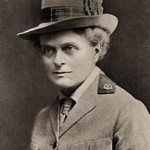
Dr Elsie Inglis
Elsie Inglis had the good fortune of having enlightened parents who considered the education of their daughter just as important as that of their sons. Upon the family’s return to Scotland from India, Elsie enrolled at the Edinburgh School of Medicine for Women in 1886 under Dr Sophia Jex-Blake. At the time women were barred from admission to Scottish universities. Upon qualification Inglis was appalled at the general standard of care and lack of specialisation in the needs of female patients. This prompted her to establish a medical practice, followed soon after by a maternity hospital in Edinburgh’s slums and a midwifery resource centre. Inglis often waived fees for patients and would also pay for her patients to recuperate by the seaside.
Inglis was an active suffrage campaigner in Scotland – by 1900 she was speaking at up to four meetings a week throughout Scotland, and in 1909 was made secretary of the Federation of Scottish Suffrage Socieites.
On the outbreak of World War One, Inglis suggested to the war office that women’s medical units be allowed to serve on the Western Front, to which the office famously replied – “My good lady, go home and sit still.” However other allies were desperate for help, with France and Serbia accepting her offer. The first unit left for France in November 1914, and by 1916 units had been stationed in Serbia, Corsica, Salonika, Romania, Russia and Malta. Inglis went with the teams sent to Serbia, where her work was instrumental in restricting the spread of typhus.
During active service in Russia in 1917, Inglis was taken ill with cancer and died a day after returning home. A memorial plaque hangs on the wall of St Gile’s Cathedral in Edinburgh, and from 2009 Elsie’s image appeared on £50 notes issued by the Clydesdale Bank.
Flora MacDonald – Jacobite Heroine
1722 – 1790
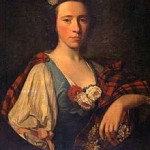
Flora MacDonald
Perhaps the most well known of Scottish Heroines, Flora MacDonald’s story has been immortalised in many Jacobite ballads and legends. Bought up under the care of the chief of the MacDonalds of Clanraid, Flora was living on the island of Benbecula in the Outer Hebrides when Prince Charlie sought refuge there following his defeat at Culloden. The island was controlled by the Hanoverian Government, but the MacDonalds were secretly sympathetic to the Jacobite cause.
After some hesitation Flora agreed to help the Prince escape the island by disguising him as the Irish spinning maid, ‘Betty Burke’. She obtained permission for her party to leave the island, and set sail to Skye on 27 June, 1746. Flora and her party hid overnight in a cottage and then traveled over the next few days overland to Portree, at one point narrowly avoiding government soldiers. Charles eventually escaped to France, however Flora was arrested after one of the boatmen had talked about the strange maid who had traveled with them to Skye. She was imprisoned, first in Dunstaffnage Castle, then in the Tower of London, where she was allowed to live nearby “on parole”. Flora was later released under the Indemnity Act of 1747.
Three years later Flora married Allan MacDonald of Kingsburgh, and in 1774 they emigrated to North Carolina. Allan was captured while fighting for the British in the American Revolutionary War. They returned to Skye following Allan’s release in 1779. It is said that Flora was buried in a bed sheet used by Prince Charlie during his stay in Benbecula.
Captain Betsy Miller – Sea Captain and Businesswoman
11 June 1792 – 12 May 1864

Captain Betsy Miller
Captain Elizabeth (Betsy) Miller achieved the distinction of being the first woman to be certified as a ships captain by the Board of Trade. Born in Saltcoats on the Ayrshire Coast, Betsy was employed in the family shipping business as an office assistant. Her brother Hugh was in line to take over the seafaring side of the business, but tragically drowned in a shipping accident. When the increasingly elderly Captain Miller succumbed to an illness that left him bedridden, the business rapidly started running up debts.
Approaching 40, Betsy stepped in to take command of the family’s brig Clytus and 14 man crew, soon gaining a reputation as a fine seawoman capable of handling the brig in the stormiest of conditions. Betsy came to be known as ‘The Queen of Saltcoats’, and was mentioned in the House of Commons during a debate on the provisions of the Merchant Shipping Act 1834.
For more than three decades Betsy sailed between Ayrshire and Ireland, also becoming well-known as a shrewd businesswoman. She expanded the cargo of goods shipped by the business to Ireland to include limestone and coal, reinstating the family name and making her fortune. She retired at the age of 70 and died two years later, leaving her younger sister Hannah to continue where she had left off.
Black Agnes Randolph – Countess of Dunbar and March
1312 – 1369
She kept a stir in tower and trench,
That brawling, boisterous Scottish wench,
Came I early, came I late,
I found Agnes at the gate.
- From a ballad attributed to the Earl of Salisbury
Named after her flowing black hair, Black Agnes was married to Patrick Dunbar, 9th Earl of Dunbar and 2nd Earl of March and keeper of Dunbar Castle. Situated near Berwick in South-East Scotland, the castle was considered the key to Scotland and was the scene of many battles during the Scottish Wars of Independence. Edward III was determined to conquer Scotland and sent the Earl of Sailsbury to take Dunbar Castle. With Patrick away on military duties, William considered the castle easy pickings with only Agnes and a handful of men keeping guard.
On 13th January 1338, Sailsbury presented himself and his army in front of the castle, demanding that Agnes surrender. To his suprise she refused and stayed in the castle, stating “Of Scotland’s King I haud my house, He pays me meat and fee, And I will keep my gude and house, While my house will keep me.” Sailsbury ordered his army to fire catapults loaded with lead and rocks at the castle walls. Lady Agnes responded by having her maids dress in their Sunday best; leading them to the outer walls, where with their handkerchiefs they nonchalantly and slightingly dusted away the damage from the bombardment.
Sailsbury’s next attempt at taking the castle was by battering ram. Agnes gave the signal to her men as the ram approached the gate, and they dropped over the castle wall a boulder captured on the earlier assault, smashing the battering ram and dispersing the English troops. Over the coming five months, Sailsbury attempted many methods to force Agnes to leave the castle, including forcing the occupants out by starvation. However, he knew nothing of the secret door, partly underwater, that lay off the unguarded rocky side of the castle. Under cover of darkness, Sir Alexander Ramsay of Dalhousie arrived with men and supplies and delivered them through the concealed entrance. Salisbury was none too pleased when a few days later, Agnes sent him down a fresh loaf of bread and some fine wine. On 10 June 1338, Sailsbury was ordered to withdraw from Dunbar, leaving Agnes in sole possession of the castle.
Anne Farquharson, Lady MacKintosh – The Beautiful Rebel
1723 – 1787
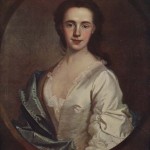
Anne Farquharson, Lady Mackintosh
Lady Anne was a Jacobite of Clan Farquharson and wife of Angus, chief of Clan MacKintosh. Despite her husband fighting for the Government during the ’45 Rising, Anne raised around 300 men from Clan MacKintosh and Clan Chattan to fight for Bonnie Prince Charlie. As women could not command in the field, the command of the regiment was given to MacGillivray of Dunmaglass. The regiment joined the Prince at Bannockburn in January 1746, twelve days before the Battle of Falkirk.
One month later, the Prince was staying at Moy Hall, Lady Anne’s home when Anne received a message from her mother-in-law that Lord Loudon’s men (including her husband’s company) were planning a night raid to steal the Prince. Anne sent five of her staff out with guns to crash about and shout clan battle cries to trick the government forces into thinking they were about to face the Jacobite army. The ploy worked and the government army fled. The event became known as ‘The Rout of Moy’.
The next month her husband and 300 of Loudon’s men were captured north of Inverness. The Prince paroled Captain MacKintosh into the custody of his wife, Lady Anne, commenting “he could not be in better security, or more honourably treated.” She famously greeted him with the words, “Your servant, captain” to which he replied, “your servant, colonel” thereby giving her the nickname “Colonel Anne”. She was also called La Belle Rebelle (the beautiful rebel) by the Prince.
After the Battle of Culloden, Lady Anne was arrested and turned over to the care of her mother-in-law for a time. She later met the Duke of Cumberland at a social event in London with her husband. He asked her to dance to a pro-Government tune and she returned the favour by asking him to dance to a Jacobite tune.
The post Shining in History – Five Scottish Heroines appeared first on ScotClans | Scottish Clans.
]]>The post Braveheart Impersonator Charged With Firearms Offences appeared first on ScotClans | Scottish Clans.
]]>
Adam Watters – Braveheart Impersonator
A Braveheart impersonator has been charged with firearms offences after police received a complaint about “a man with a blue face firing a gun”. Adam Watters, who performs dressed as William Wallace in Edinburgh’s tourist hotspots, insists that his weapons are blank-firing replicas and that he has been the victim of heavy-handed policing.
Police in Edinburgh seized the performer’s replica guns in February 2012 following an incident on the Royal Mile. Watters was detained by police and had his entire collection confiscated after informing officers he had more replicas at home. Earlier this month he was advised he was being charged with possessing guns without a licence.
As a result of the charges, Watters said he is unable to teach Jacobite history at schools in Edinburgh and East Lothian. “I just feel it is an injustice. It is like taking paint from a painter as these are the tools of my trade. They are all part of an act that I have put my heart into to teach schoolchildren and build up my performance.”
Watters has worked with the Clanranald Trust on stunts for a number of movies, including Pirates of the Caribbean, Gladiator and King Arthur, and claims to have documentation that will certify the weapons are blank-firers.
“I don’t need a licence for them because they were never real guns – they are for use by actors and entertainers. They fire blanks and cannot be converted to fire projectiles. If they make me get a licence it opens up a whole can of worms for thousands of people across the world who use these blank-firers.”
Watters is currently awaiting the outcome of a report sent to the procurator fiscal. “My weapon was about as harmless as a fart, I just want my stuff back so I can go back to my school teaching as at the moment I can’t teach because of this charge. You get a bang, smoke and a spark, that’s all. I’m no threat to anyone.”
You can support Adam on Facebook, and sign the petition to get the charges dropped here.
*** UPDATE – We’re glad to hear that the charges against Adam were dropped on 4/4/2013.
The post Braveheart Impersonator Charged With Firearms Offences appeared first on ScotClans | Scottish Clans.
]]>The post An Unlikely Jacobite Hero appeared first on ScotClans | Scottish Clans.
]]> A number of molehills have sprung up across the battlefield site at Culloden, much to the delight of a Jacobite supporters group. The Circle of Gentlemen – a Highland based Jacobite supporters society – is welcoming the site’s newest residents and hoping the creatures will be kept from harm.
Said to have played a role in the death of Protestant monarch William of Orange, the humble mole is much respected in Jacobean circles. In 1702 King William III’s horse stumbled on a molehill, causing him to fall and break his collarbone, subsequently developing pneumonia which killed him. Jacobite supporters still toast “the wee gentleman in the black velvet waistcoat” at gatherings.
Alasdair MacNeill of the Circle of Gentlemen said the Culloden moles are not desecrating the historic site. “Although the molehills have been appearing around Culloden, with some extremely close to markers of where clan leaders are thought to have fallen in battle, there is no concern by the society.”
“The men buried there had no choice in their final resting places but, to the moles, it’s their natural habitat. They have no concept of history or appreciation of the bones they tunnel around. Given this, I can’t really see it as a desecration. Humans souvenir-hunting, or sitting atop a grave mound munching on a Scotch egg is desecration, but moles doing what they were designed to do is entirely different.”
Owners of the battlefield, The National Trust for Scotland, said they are aware of the molehills but are not currently concerned about the numbers – much to the relief of MacNeill. “Perhaps if bones start appearing among the molehills then something may possibly need to be done. But I’m certainly not in favour of any sort of cull.”
William III was a staunch Protestent who deposed King James II and VII of England and Scotland in 1688, during the Glorious Revolution, to prevent Catholicism in the monarchy. This sparked the Jacobite Wars and culminated in the final confrontation of the 1745 Rising at Culloden – the last civil conflict on British soil.
The Circle of Gentlemen were established in Edinburgh in 1748 and were originally a secret society who remained loyal to Bonnie Prince Charlie after the defeat at Culloden. Membership was by invitation only, however in 2011 the group began to accept membership from people anywhere in the world in order to support Jacobite heritage and archaeology projects.
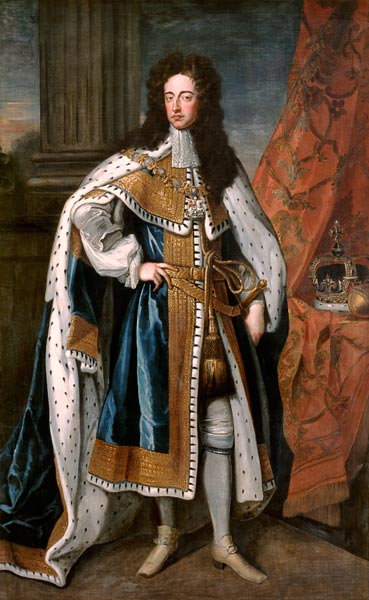
William III by Sir Godfrey Kneller
The post An Unlikely Jacobite Hero appeared first on ScotClans | Scottish Clans.
]]>The post The Massacre of Glencoe appeared first on ScotClans | Scottish Clans.
]]>A memorial stands at the site today, with the Scottish Socialist Republican Movement marching through the streets of the village of Glencoe to the memorial annually on the anniversary. This year, a copy of the proclamation instructing troops to massacre the MacDonalds (below) was set alight. In recent commemorations the group have filmed themselves burning a Union flag.
Following a series of Jacobite risings in 1689 (including the Battle of Killcrankie), newly crowned King William III sought to subdue rebellious Highlanders by offering them a pardon. An order was received that all clan chiefs must swear allegiance to the King by 1 January 1692 or be punished with the “utmost extremity of the law”. John Dalrymple, Master of Stair and Scottish Secretary of State, used the deadline to his own political advantage and set about hindering clans from signing their allegiance. He had a deep dislike for highlanders (particularly the MacDonalds of Glencoe) and felt their way of life was a step backwards for Scotland.
MacIain, chief of the MacDonalds, was still bound by oath to James Stuart, the deposed King in France. It was December 12 before James had released the clans from their oath and December 28 before a messenger arrived in the Highlands with the news. MacIain rushed to sign the oath but was delayed and detained by Campbell soldiers along the way. He eventually signed the oath late, but it was rejected by John Dalrymple in Edinburgh, providing a way for him to get rid of the MacDonalds once and for all.
A Campbell-dominated Argyll regiment arrived in Glencoe twelve days before the massacre, claiming the nearby fort was full. The MacDonalds, honouring the Highland hospitality code, duly gave the soldiers quarter in their own houses, with neither clan nor soldiers aware of what lay ahead. On the night of February 13, a blizzard howled through Glencoe, and the soldiers received orders that they were to kill all MacDonald clansmen. In the morning, 38 lay dead including the chief MacIain, with another 40 women and children dead as a result of exposure after their houses had been burned.
Many were able to escape the massacre with some historians claiming that some Campbell men, disgusted at their orders, alerted the families who had been their hosts, giving them time to wrap up for the terrible wintery conditions outside. News of the massacre provoked outrage around Scotland resulting in an inquiry conducted by the Scottish Parliament. Even though the orders had been signed by the King himself, the inquiry sought to exonerate the King and place the blame on John Dalrymple, who had resigned from his post. The whole matter was forgotten in a matter of months, even though it was suggested that the government should pay compensation to the surviving members of the MacDonald Clan.

You are hereby ordered to fall upon the rebels, the McDonalds of Glenco, and put all to the sword under seventy. you are to have a speciall care that the old Fox and his sons doe upon no account escape your hands, you are to secure all the avenues that no man escape. This you are to putt in execution att fyve of the clock precisely; and by that time, or very shortly after it, I’ll strive to be att you with a stronger party: if I doe not come to you att fyve, you are not to tarry for me, but to fall on. This is by the Kings speciall command, for the good & safety of the Country, that these miscreants be cutt off root and branch. See that this be putt in execu- tion without feud or favour, else you may expect to be dealt with as one not true to King nor Government, nor a man fitt to carry Commissione in the Kings service. Expecting you will not faill in the full- filling hereof, as you love your selfe, I subscribe these with my hand att Balicholis Feb: 12, 1692 (signed) R. Duncanson For their Majesties service To Capt. Robert Campbell of Glenlyon
The post The Massacre of Glencoe appeared first on ScotClans | Scottish Clans.
]]>The post Twilight of the Stewarts appeared first on ScotClans | Scottish Clans.
]]>The Stewarts rose from relative obscurity to a place of importance in the Scottish Court through the 13th century, and during the Wars of Independence they sided with the Bruce faction; and Walter Stewart married Robert the Bruce’s daughter Marjorie. Eventually, in 1371 after a half-century wait for his uncle to die Robert Stewart became king ofScotland. It was the beginning of a dynastic rule that would last 343 years until the death of Queen Anne in 1714. Throughout that time, the family – which employed mafia tactics – extended their control over Scotland, and finally reached the giddy heights of the throne of England.
As British kings their successes were less evident – one was executed and another deposed; and their increasing disengagement with the political momentum and religious intolerance of the times would see the great House permanently exiled. From James VII to his grandson Charles Edward the exiled Stuarts (French spelling) would set up counter-courts in France and Italy; where they’d be hocked from palace to palace maintaining a veneer of royalty and influence. It was back to this fantasy world that the L’Heureux would bring the young Pretender following the disaster of the ’45: but in reality it was to an alcohol fuelled life of obscurity.
Charles’ stay in France was short-lived, for within a couple of years of the rising the British and the French signed the Treaty of Aix-la-Chapelle’ effectively ending the War of the Austrian Succession, which the Jacobite rebellion was essentially part of; and with the deal the Pretender was expelled. He returned to Italy, where his father still held a degree of social influence. Shattered by the failure of the Cause, and haunted by ghosts of Culloden Charles began a string of affairs and sought solace in the bottom of a bottle. His principal mistress was the Scottish socialite, Clementina Walkinshaw, who in 1753 bore him a daughter, Charlotte.
Henry Stuart, Charles’ younger brother took a different route after 1746, perhaps armed with more realism, and entered the Catholic Church. His father was on good terms with the Pope, who still recognised him as the rightful king, and Henry made a meteoric rise through the ranks of the episcopacy, becoming Cardinal-Bishop of Frascati in 1761. While his brother became a Prince of the Church; Charles, drunk half the time, still entertained dreams of fantasy thrones.
In 1759, at the height of the Seven Years War, a conflict that for the first time took on a global perspective, the French drew up plans for a full-scale invasion of England. As part of the project he wanted to enlist the support of the still-loyal Jacobites; and Charles was summoned to Paris. Boorish and unrealistic, the French government were soon repelled by him, and sent him packing: he’d play no part in the operation. However, significant British victories overseas essentially put paid to the expedition and it was permanently shelved. This was Charles’ last true, albeit slim, chance to be king. His drinking worsened, his life increasingly nomadic and his treatment of Clementina increasingly abusive. In 1760 she left him, and took Charlotte with her. There is a strong suspicion that Prince James helped out, and gave her an allowance.

Prince Charles Edward Stuart in later life
As she grew up, Charlotte was bounced from convent to convent as her father refused to provide for her or her mother; and with James dead in 1766 that avenue dried up as well. James Francis Stuart, born in 1688 to James VII was the last prince of the House of Stewart to be born in Britain and to the reigning dynasty. As such the Pope and kings across Europe still either recognised his claim, or treated him on an equal footing. The world by 1766 had moved on, and neither the Papacy nor the crowned heads would give the increasingly distant, melancholic and unpopular Charles the same recognition. His downward spiral continued.
In 1772 he married Princess Louise of Stolberg-Geden; but, due to the nature of the man, now a broken alcoholic, it was doomed to failure: she left him eight years later. Now an old man in ill-health he reached out again to his family, and was reconciled with his daughter; who also engaged her uncle, the Cardinal Henry, to bring the once-Bonnie Prince back to Rome, where she would care for him until he died of a stroke in 1788. Chronically ill herself, she died three years later.
Charles Edward Stuart had lit up Scotland like a firework during the 1745 rebellion; but the rest of his life had been an unfulfilled damp-squib; and on his death the Jacobite claim fell to his brother: Cardinal Henry Stuart. As a successful and powerful clergyman (Henry was raised to the Dean of the College of Cardinals in 1803) he did not press his case. He died in 1807: last of the Royal Stewarts. Both he and Charles were buried within the Basilica of St Peter’s in the Vatican. He may have been the last of the dynasty; but not last of the bloodline.
In the years before she returned to her father, Charlotte Stuart had a long term affair with Ferdinand de Rohan, Archbishop of Bordeaux, which considering his position was a risky enterprise. She had three children by him: Marie Victoire, Charlotte and a boy, Charles Edward. Little is known about the two girls, or whether they married and had children – it is believed that Marie Victoire ended up in Poland (Charles’ mother was Polish) and that Charlotte was absorbed into polite society in England. Either way, they and any possible descendants vanished into anonymity.
The son, Charles became a distinguished soldier and something of a globetrotter; and while he never pressed his Jacobite claim, he did maintain links with leading Scots. Indeed, it was while returning from a meeting with the Duke of Atholl in 1854 he was killed in a coaching accident; and is buried in the grounds of Dunkeld Cathedral in Perthshire. With him, the last of the true direct bloodline ended. Meanwhile, fanatical Jacobites searched around for an heir to Henry Stuart; and with his death the ‘claim’ passed to King Charles Emmanuel IV of Sardinia; the senior living descendant of Charles I Stuart through his daughter Henrietta. In a parallel universe the line has passed down to Franz von Wittelsbach, Duke of Bavaria; although he declines ever to talk about his Stewart ancestry.
The bitter wars of the 17th and 18th centuries shaped the modern Britain that emerged, the nature of the monarchy, and indeed the dynastic future itself. The Royal Stewarts had their time; their crown slipped, fell and it was eventually buried in the setting sun amid the hallowed walls of Dunkeld. And few were there to mourn it.
The post Twilight of the Stewarts appeared first on ScotClans | Scottish Clans.
]]>