The post You might be a Gael if … appeared first on ScotClans | Scottish Clans.
]]> I wrote a Not Your Father’s Gaelic blog post a few weeks ago wherein I expressed how nice it would be to have neighbors who are aware of and interested in their Scottish Gaelic heritage. Perhaps even neighbors with whom I could joke around in Gaelic! As it is, even my own (Italian American) mother’s eyes glaze over when I begin to get Gaelic-y.
Of course there are loads of people with Scottish Gaelic heritage just about everywhere in America. The problem is, they have no clue of the incredible heritage that they – and their children and grandchildren – are missing. Lets face the facts: precious few Scottish Americans are actually aware that they enjoy Scottish heritage and somewhat less than a micron of that number understand their Scottish Gaelic roots. Suffice it to say that one would not likely hike through the hyper-cultural polyglot of New York City and expect to happen upon a “little Gaidhealtachd” or a corner vendor selling haggis on a stick. Not gonna happen.
Why not? Gaelic immigration to America has been significant relative to other immigrant cultures. And this is important: people came here as Gaels – these were not people who considered themselves Scottish with a side dish of Gaelic ancestry. They spoke Gaelic – many spoke it exclusively – and they engaged in Gaelic tradition and lifeways in America. It is not a difficult task to unmask at least one or three folk of Gaelic heritage in almost any office or workplace in America today. What happened to Gaelic culture in America?
I have explored a little of the “why” side of America’s Gaelic loss in prior NYFG posts and that story can be fairly depressing. You can read some of those posts here.
This particular post is not nearly as depressing and with hope it will provide a few moments of light-hearted enlightenment about what a Gael has been and is today. After all, the first job of a Gaelic activist in America is to introduce other people of Gaelic ancestry to an awesome lost heritage and in doing so, further enrich American lives.
So, in the spirit of our Ulster Scot brothers and sisters who dot the hills and hollows of Appalachia, please enjoy the inaugural edition of–
“You might be a Gael …”
You might be a Gael if you think you’re a “highlander”. Evidence of the presence and influence of Scottish Gaelic culture and language can be found throughout Scotland in clues such as Gaelic local place names. However, the Scottish highlands and islands have for centuries been the Gaelic heartland of Scotland. Gaels would not originally have referred to themselves as “highlanders” but might have used the Scottish Gaelic term “Gaidheal” or “braigheach”. Such a mountaineer would be living not in “the highlands” but in “a’ Ghaidhealtachd”. Generally accepted scholarship indicates that the modern Scottish split personality between “highland” and “lowland” – Gaelic and non-Gaelic – was not firmly in place until the 14th century. From there it only deepened and widened.
 You might be a Gael if you like Outlander. Author Diana Gabaldon is one of the first popular fiction authors to take Gaelic culture seriously – the other being author of the outstanding ”Bone Rattler” series, Eliot Pattison. Happily, Gabaldon’s pro-Gaelic approach has been taken up by the creators and crew of the StarzTV Outlander television series.
Not only is Scottish Gaelic correctly and appropriately spoken in the series but the actors and crew themselves have become outstanding ambassadors on behalf of the Scottish Gaelic culture. The three gods of Outlander Gaelic, Gillebride MacMillan, Adhamh O Broin and Gary Lewis are pictured above as part of Gary’s launch of a great online Gaelic learning site. Read about the real life Colum Mackenzie’s favorite online Scottish Gaelic language learning website LearnGaelic.scot.
You might be a Gael if you have never really got used to using the letters J, K, Q, V, X, Y and Z. That’s because the Scottish Gaelic alphabet does not use those letters. What does that sound like you ask? Try this: The website An Sgeulachd Ghoirid (the short story) is a wonderful site where you can hear Scottish short stories spoken by real people. It is a great site if you speak Gaelic but if you don’t it is absolutely fascinating. Check out the site and listen to a few stories to get an idea of what your ancestral language actually sounds like. And its nothing like English!
 You might be a Gael if every time the massed regimental pipe bands begin to march at your local highland games you drop your scotch eggs and run for the hills. Don’t feel bad, it’s a Gaelic thing. That is exactly what your Gaelic ancestors might have felt like every time one of the Royal Independent Highland Companies darkened the door of a wee Gaelic cottage. More often than not the visit was not in a friendly spirit as these precursors to the famous Black Watch regiment were hired by the Crown to keep the peace and enforce the King’s law in the Gaelic highlands.
Worse, although plenty of Gaels filled out the ranks of many brave and glorious Scottish regiments, Gaelic military service on behalf of the British crown was not always voluntary.
Indeed, it was a known practice for 18th and 19th century clan chiefs to require the military service of their clansfolk’s Gaelic sons in British foreign wars in order for clan families to be allowed to remain on clan land and continue to live and farm in the manner that their ancestors had done for hundreds of years. It was an ugly trade in sons for land. Introduction of Anglo-Norman feudal land tenure transformed clan lands into the exclusive property of the clan chief through royal grant. By adopting a feudal title, the chief became a landlord and ceased to be a clan leader. Of course the clan chief pocketed the enlistment bounties paid by the British government and thereby added another personal income stream that could help to subsidize an increasingly expensive “chiefly” lifestyle.
 You might be a Gael if you get a strange, exhilarating, warm and fuzzy feeling when you glimpse viking longships on the horizon. Yes, there was tension, battle and blood between Gaels and Vikings. Beginning in the late 8th century and continuing for six hundred years hence, the Gaelic western coast and northern islands were heavily influenced by Norsemen. But there was also trade, intermarriage, children and a blending of the Norse and the Gaelic cultures that is part of what made a Scottish Gael a unique and wonderful animal. Are you an e-book reader? If so, get a screamin’ good deal on George Henderson’s pre-1910 book The Norse Influence on Celtic Scotland. Download the Kindle edition now on Amazon for $1.59. True story. What do you have to lose?
 You might be a Gael if you secretly think that the kind of kilt that guys wear today is just wrong. It is. Well, sort of. At least from the traditional Scottish Gaelic perspective. The original Gaelic form of the kilt was developed in the 16th century and is called the “feileadh mhor” or great kilt. It is a single large wrap that is gathered around the body and fixed at the waist with a belt while the lower half of the garment is draped around the upper part of the legs to the knee. The upper part of the great kilt can be worn as a cloak over the shoulder or even over the head in bad weather. The great kilt fit the work and lifestyle of the Gael very well for centuries. Watch Outlander’s Jamie Fraser show you how to put such a thing on. If you don’t know who Jamie Fraser is, watch the clip. Then watch the Starz production of Diana Gabaldon’s Outlander.
The garment that has become so ubiquitous at Scottish highland games and other celebrations is a highly stylized version of an 18th century modification of the traditional Gaelic great kilt. It was likely developed to accommodate different sorts of work and industry and a different lifestyle that was being introduced to the highlands in the wake of the first Jacobite rising in 1715 in order to civilize Gaelic society and make it more productive for the larger United Kingdom.
By the time the small kilt or “feileadh beag” became popular among the Scottish diaspora in the late 19th and 20th centuries, it had undergone further modifications to suit kilted British military regiments. Fashion overtook function though, on the hips of romantic Victorian gentlemen who got a kick out of dressing up as a stylized version of the very same Gaels that had only recently been utterly defeated and subjugated and who would soon be physically removed from much of their Gaelic homeland altogether.
Not that there is anything wrong with your military style Victorian gentlemen’s “small kilt” – plenty a Gael wore something like it just prior to the 1746 ”Dress Act” prohibiting the wearing of any type of highland dress except in service of the Crown in Scottish military regiments. And plenty of Gaels wore the small kilt into battle as part of a kilted British regiment. But for those of Gaelic ancestry today, there is an option that is more respectful of Gaelic heritage and, frankly guys, looks a great deal better on the bod! Next time you empty your sporran and trade a son to buy a new kilt – make it a great kilt and …
Get Your Gaelic On!
The post You might be a Gael if … appeared first on ScotClans | Scottish Clans.
]]>The post ‘Outlander’ Set For The Small Screen appeared first on ScotClans | Scottish Clans.
]]> With over 20 million copies sold, Diana Gabaldon’s hugely successful series of novels set in the Highlands has been greenlit for televison. Outlander centres around a love story between an 18th Century Mackenzie clansman and a 20th Century WWII nurse, and has received a 16-episode order from American cable network Starz.
The Outlander series spans the genres of romance, historical fiction and sci-fi, and follows Claire Randall who is transported back to Scotland circa 1743 after she touches part of a stone circle near Inverness. While there, she meets a Clan Mackenzie warrior named Jamie Fraser and is torn between him and her husband back in 1945. Their journey leads them throughout Scotland (including the 1745 Jacobite Rising), France, the West Indies and America. The series currently spans seven books, with an eighth due for release later this year.
The television series is due to begin filming in October in the Highlands, and is slated for broadcast in April 2014. Gabaldon is expected to be a consultant and co-producer, with the entire series masterminded by Battlestar Galactica developer Ron Moore. Gabaldon was inspired to create the central character of Jamie after catching a repeat of a Dr Who episode from the 1960s, in which Frazer Hines played a kilted character of the same name from the same era.
Gabaldon previously said: “That’s where I began, knowing nothing about Scotland or the 18th century, with no plot, no outline, no characters – nothing but the rather vague images conjured up by a man in a kilt.” Meticulous background checks and fact finding missions are incredibly important to Gabaldon’s writing process, saying she feels a large amount of responsibility to her readers and the people of the past to maintain historical accuracy.
Lord Jamie Sempill said Gabaldon’s work captures the highly appealing romantic element of the history of the clans. “I believe (the) series has been instrumental in raising awareness of the clan system which has been beneficial in complementing the hard work done by the clan commissioners to increase their membership in North America”. Lord Sempill invited Gabaldon to The Gathering in 2009, where she was invested as a Lady of the Garrison of the 78th Fraser Highlanders.
Gabaldon also recently visited the Mackenzie seat of Castle Leod, where along with clan chief John Mackenzie the Earl of Cromartie planted a Rowan tree in the grounds. Gabaldon is a guardian of Castle Leod, which is said to be the inspiration for the book’s location of Castle Leoch. The books have developed a loyal fan following, with various companies running ‘Jamie and Claire’ tours of Scotland. Starz also recently announced plans for a series centered around Phillipa Gregory’s War of the Roses trilogy entitled The White Queen.

Diana Gabaldon and the Chief of Clan Mackenzie planting a tree at Castle Leod
The post ‘Outlander’ Set For The Small Screen appeared first on ScotClans | Scottish Clans.
]]>The post The Sonny Sonny Banks of Loch Lomond appeared first on ScotClans | Scottish Clans.
]]>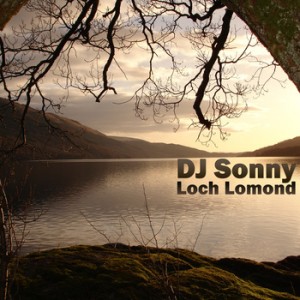
Loch Lomond by DJ Sonny
In the little community of Marchmont in Edinburgh, one of the interesting characters you’ll see about the streets is Sonny Fascia, otherwise known as DJ Sonny. I first met Sonny at the cosy pub in the heart of the area The Earl of Marchmont, where he introduced me to his unique brand of Scottish turntablism and hip-hop.
Upon further research into Sonny’s repertoire I discovered his version of the traditional Scottish tune Loch Lomond, which samples American jazz artist Maxine Sullivan’s 1955 recording. The song became a career defining hit for Maxine, and coincidentally was the first and last song she recorded over her 40 year career. Sonny’s version is a distinctly more 21st century affair – mixing jazz, beats and scratch to form an upbeat and contemporary version of the veteran Scottish classic.
Loch Lomond is one of those perennial tunes that has had the ability to stay popular over hundreds of years, through either its infectious melody or the surprisingly dark historical context behind the song. Unfortunately nothing concrete is known about Lomond’s original composer, however the tune’s conception can be traced to sometime between the Jacobite Rebellion of 1745 and the song’s earliest printed publication in 1841. In John Purser’s monumental 1992 work Scotland’s Music, Purser states that the song is usually attributed to a languishing Jacobite prisoner sentenced to death in a prison at Carlisle around the time of the Rebellion.

Early publication, circa 1880
According to legend, the Government soldiers were rather fickle in the way they decided the fate of the Jacobite prisoners. Some were picked at random to be hung, while others were simply released and told to walk home back to Scotland. The dominant theme of the song is said to refer to the ancient Celtic belief that if you die away from your home country, then your spirit returns home by an underground route called ‘the low road’. However the lack of a definitive connection with the songwriter lends the song open for a multitude of interpretations – with others believing the song was sung by the lover of a captured Jacobite soldier set to be executed in London following a show trial. The heads of the executed soldiers were then set upon pikes and exhibited in all of the towns between London and Edinburgh in a procession along the ‘high road’ (the most important road), while the relatives of the soldiers walked back along the ‘low road’ (the ordinary road traveled by peasants and commoners). In another version dated around 1880, the song’s lyrics have been altered to become a lament between Jacobite heroine Flora MacDonald and Bonnie Prince Charlie (see image).
Refrain:
O ye’ll tak’ the high road and I’ll tak’ the low road,
An’ I’ll be in Scotland afore ye;
But me and my true love will never meet again
On the bonnie, bonnie banks O’ Loch Lomond.
Verse 1:
By yon bonnie banks and by yon bonnie braes,
Where the sun shines bright on Loch Lomond.
Where me and my true love were ever wont to gae
On the bonnie, bonnie banks O’ Loch Lomond.
Verse 2:
‘Twas there that we parted in yon shady glen,
On the steep, steep side O’ Ben Lomon’,
Where in purple hue the Hieland hills we view,
An’ the moon comin’ out in the gloamin’
Sonny’s version of Lomond came about after a fruitless search on the net for hip-hop with a Scottish flavour. He made the song over two days and released it earlier this year online. A regular DJ at clubs around Edinburgh, Sonny produces music through his record label Burgh Records and forms half of the Scottish hip-hop group Perfect Practice. After DJing his way around the world, Sonny returned to Scotland and began producing his own hip-hop gaining him an international following.
The song has been appropriated by artists in many different mediums over the years including Bill Haley & His Comets, Mark Knopfler, Rod Stewart, Runrig and AC/DC. The tune is featured in a song sung by Scottish Terrier Jock in the Disney film Lady and The Tramp, and Scottish poet and folklorist Andrew Lang wrote a poem based on the song in 1876:
-
There’s an ending o’ the dance, and fair Morag’s safe in France,
And the Clans they hae paid the lawing,
And the wuddy has her ain, and we twa are left alane,
Free o’ Carlisle gaol in the dawing.(Morag meaning great one in Gaelic, referring to Bonnie Prince Charlie; and wuddy meaning a hangman’s noose).
Whatever the truth of the tune’s origins, the famous song has timeless appeal proved by it’s constant reincarnation in so many endearing ways. Sonny’s 2013 version provides a contemporary connection to Scotland’s history, using an iconic melody bound with a very 21st century way of making music.
——-
You can download Loch Lomond by DJ Sonny by clicking here, and can check out his other tunes via his Bandcamp page.
The post The Sonny Sonny Banks of Loch Lomond appeared first on ScotClans | Scottish Clans.
]]>The post Clach na Bratach appeared first on ScotClans | Scottish Clans.
]]>
Clach na Bratach image from Gordon M Robertson
The Clach na Bratach is considered to be the most precious relic of the Clan Robertson. It is a rock crystal charm stone and was unearthed when the chief’s standard pole was pulled from the ground while on the march to Bannockburn. Since then the stone has been carried into battle by every Robertson chief.
The Clach na Bratach is said to have been a mystical, power stone which could do many magical things such as heal humans and animals, and it could also predict the future.
It is said that the Robertsons used to carry the Clach na Bratach into battle, and it was originally done by hand until they caged it on top of their standard pole. When it wasn’t being carried to battle the stone was kept in a silken purse made by the Countess of Breadalbane.
They say that the stones primary function was to heal, and if the Clach na Bratach came into contact with water, the water automatically gained curative properties for all.
Legend tells that the stone could also predict the death of a Robertson clan chief. If the stone turned cloudy, then people would know that the chief’s death would be imminent.
In 1715 Alexander Robertson of Strowan, also known as the Poet Chief, consulted the Clach before he headed off to fight in the first Jacobie Rising, and perhaps unsurprisingly it filled his heart with dread when it saw that the orb had developed a large crack. Perhaps it told the truth. If Struan had not joined the rebellion, his own fortunes and that of his successors might have been very different.
The post Clach na Bratach appeared first on ScotClans | Scottish Clans.
]]>The post Battle of Prestonpans site changes appeared first on ScotClans | Scottish Clans.
]]> A team of archaeologists led by Dr. Tony Pollard from the University of Glasgow’s Centre for Battlefield Archaeology (Guard) have concluded in a report that the 1745 Battle of Prestonpans probably took place 1/2 km further east than what was initially believed.
It is now thought, after extensive work, that the main battlefield was actually closer towards Port Seton, rather than just south of where the Cockenzie Power Station now sits, despite the records given by eyewitnesses.
The battle was a very bloody clash between Jacobite forces and Government troops which is said to have only lasted 15 minutes, and was a decisive win for the Jacobean army.
“The project’s findings are very exciting indeed and really challenge our assumptions of where the battle took place,” said Dr. Pollard.
He added, “The amount of musket balls, grape shot and pistol balls found in the fields of Seton East Farm show, beyond reasonable doubt, that the maps we have relied on in the past were wrong.
“Although this was a very well documented battle, with lots of eye-witness accounts, it was also very brutal and over quite quickly. It now seems that in the excitement some of the witnesses got it wrong.”
The Heritage Lottery Fund and the Battle of Prestonpans Heritage Trust commissioned the report in a bid to safeguard the site and create an information centre. The land where the battle is now thought to have been fought is owned by local farmer Alistair Robertson, and he helped the archaeological team with surveying the land with metal detectors.
Mr. Robertson said that “it is exciting to think that it was across our fields that the famous Highland charge took place and here that the main part of the battle was fought.
“It certainly helps bring history to life and I would be more than happy to see further studies in the future to see what else can be uncovered.”
The post Battle of Prestonpans site changes appeared first on ScotClans | Scottish Clans.
]]>The post The Phantom Regiment of Killiecrankie appeared first on ScotClans | Scottish Clans.
]]>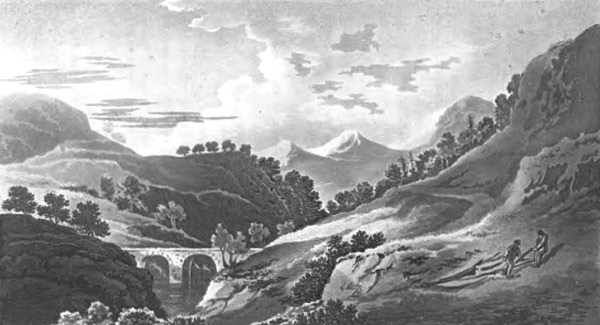
Pass of Killiecrankie
The Battle of Killiecrankie, fought on the 16th of July, 1689, was part of the Jacobite Risings trying to get James VII/II back on the throne in Scotland, England, and Ireland. It was a bloody victory for the Highland Jacobite army against the government troops (mainly comprising of lowland Scots, incorrectly referred to as ‘English’) who supported William and Mary of Orange.
There were thousands killed at Killiecrankie – mostly Government men, but also, notably, the Jacobite commander, Viscount ‘Bonnie’ Dundee – so it’s not surprising that there are a number of ghost stories surrounding the area where the battle was fought.
Here is one taken and adapted from Elliott O’Donnell’s book ‘Scottish Ghost Stories‘.
“On a cycle tour in Scotland, making Pitlochry my temporary headquarters, I rode over one evening to view the historic Pass of Killiecrankie. It was late when I arrived there, and the western sky was one great splash of crimson and gold – such vivid colouring I had never seen before and never have seen since.
I paid no heed to the time, nor did I think of stirring, until the dark shadows of the night fell across my face. I then started up in a panic, and was about to pedal off in haste, when a notion suddenly seized me: I had a latchkey, plenty of sandwiches, a warm cape, why not camp out there till early morning?
The idea was no sooner conceived than put into operation. Selecting the most comfortable-looking boulder I could see, I scrambled on to the top of it, and, with my cloak drawn tightly
over my back and shoulders, commenced my vigil. The cold mountain air, sweet with the perfume of gorse and heather, intoxicated me, and I gradually sank into a heavenly torpor, from which I was abruptly aroused by a dull boom, that I at once associated with distant
musketry. All was then still as the grave, and, on glancing at my watch, I saw it was two in the morning.
A species of nervous dread now laid hold of me which oppressed and disconcerted me. Moreover, I was impressed for the first time with the extraordinary solitude which seemed to belong to a period far other than the present. This feeling at length became so acute, that, in a panic of fear – ridiculous, puerile fear, I forcibly withdrew my gaze of the area and concentrated it abstractedly on the ground at my feet. I then listened, and in the rustling of a leaf, the humming of some night insect, the whizzing of a bat, the whispering of the wind as it moaned softly past me, I detected something that was not right. I blew my nose, and had barely ceased marvelling at the loudness of its reverberations, before the piercing, ghoulish shriek of an owl sent the blood in torrents to my heart. I then laughed, and my blood froze as I heard a chorus, of what I tried to persuade myself could only be echoes, proceed from every crag and rock in the valley. For some seconds after this I sat still, hardly daring to breathe, and acting extremely angry with myself for being such a fool. With a stupendous effort I turned my attention to the most material of things. One of the skirt buttons on my hip – they were much in vogue then – being loose, I endeavoured to occupy myself in tightening it, and when that was done, I set to work on my shoes, and tied knots in the laces. But this, too, ceasing at last to attract me, I was desperately racking my mind for some other device, when there came again the booming noise I heard before, but which I could now no longer doubt was of firearms. I looked in the direction of the sound and my heart almost stopped.
Racing towards me – as if not merely for his life, but his soul – came the figure of a Highlander, with eyes fixed ahead of him in a ghastly, agonised stare. He had not a vestige of colour, and, in the powerful glow of the moonbeams, his skin shone livid.
He ran with huge bounds, and, what added to my terror and made me double aware he was nothing mortal, was that each time his feet struck the hard, smooth road, upon which I could well see there were no stones, there came the unmistakable sound of the scattering of gravel. But on he came, with cyclonic swiftness. It was all infernally, hideously real, even to the minutest of details: the flying up and down of his kilt, sporran, and sword less scabbard; the bursting of the seam of his coat, near the shoulder. I tried hard to shut my eyes, but was compelled to keep them open, and follow his every movement as, darting past me, he left the roadway, and, leaping several of the smaller obstacles that barred his way, finally disappeared behind some large boulders.
I then heard the loud rat-tat of drums, accompanied by the shrill voices of fifes and flutes, and at the farther end of the Pass, their arms glittering in the moonlight, appeared a regiment of scarlet-clad soldiers.
At the head rode a mounted officer, after him came the band, and then, four abreast, a long line of warriors; in their centre two ensigns, and on their flanks, officers and non-commissioned officers with swords and pikes; more mounted men bringing up the rear. I could hear the ground vibrate, the gravel crunch and scatter, as enormously tall men, with set, white faces and livid eyes steadily and mechanically advanced.
Every instant I expected they would see me, and I became sick with terror. But from this I was happily saved; no one appeared to notice me, and they all passed by without as much as a turn of the head; their feet keeping time to one everlasting, monotonous tramp.
I got up and watched until the last of them had turned the bend of the Pass, and the sheen of his weapons and trappings could no longer be seen; then I remounted my boulder and wondered if anything further would happen. It was now half-past two, and blended with the moonbeams was a peculiar whiteness, which rendered the whole aspect of my surroundings indescribably dreary and ghostly.

killiecrankie
Feeling cold and hungry, I started on my beef sandwiches, when a loud rustling made me look up. Confronting me, on the opposite side of the road, was an ash tree, and to my surprise, despite the fact that the breeze had fallen and there was scarcely a breath of wind, the tree swayed violently to and fro, whilst there proceeded from it the most dreadful moanings and groanings. I was so terrified that I caught hold of my bicycle and tried to mount, but I was unable as I had not a particle of strength in my limbs. Then to assure myself the moving of the tree was not an illusion, I rubbed my eyes and called aloud; but it made no difference – the movement and noise continued. Summing up courage, I stepped into the road to get a closer view, when to my horror my feet kicked against something. Looking down, I saw the body of a Government soldier, with a ghastly wound in his chest. I gazed around, and there, on all sides of me, from one end of the valley to the other, lay dozens of bodies,–bodies of men and horses, – Highlanders and lowlanders, white-cheeked, lurid eyes, and bloody-browed, – a hotch-potch of livid, gory awfulness. Here was the writhing figure of an officer with half his face shot away; and there, a horse with no head. I cannot dwell on such horrors; the very memory makes me feel sick and faint.
The air, that beautiful, fresh mountain air, resounded with their moanings and groanings, and reeked with the smell of their blood. As I stood rooted to the ground with horror I suddenly saw drop from the ash, a Highland girl, with bold, handsome features, raven black hair, and the whitest of arms and feet. In one hand she carried a wicker basket, in the other a broad knife. A gleam of avarice and cruelty came into her large dark eyes, as, wandering around her, they rested on the rich facings of the Government officers’ uniforms. I knew what was in her mind, and – forgetting she was but a ghost – that they were all ghosts – I moved heaven and earth to stop her. I could not. Making straight for a wounded officer that lay moaning piteously on the ground, some ten feet away from me, she spurned with her slender, graceful feet, the bodies of the dead and dying Government soldiers that came in her way. Then, snatching the officer’s sword and pistol from him, she knelt down, and, with a look of devilish glee in her eyes, calmly plunged her knife into his heart, working the blade to assure herself she had made a thorough job of it. Anything more hellish I could not have imagined, and yet it fascinated me – the girl was so wickedly fair and shapely.
Her act of cruelty over, she spoiled her victim of his rings, epaulets, buttons and gold lacing, and, having placed them in her basket, proceeded elsewhere. In cases when unable to remove the rings, she chopped off the fingers, and popped them, just as they were, into her basket. Neither was her mode of dispatch always the same, for while she put some men out of their misery in the manner I have described, she cut the throats of others with as great a nonchalance as if she had been killing fowls, whilst others again she settled with the butt-ends of their guns or pistols. In all she murdered ten, and was decamping with her booty when her gloating eyes suddenly encountered mine, and with a shrill scream of rage she rushed towards me. I was an easy victim. Raising her flashing blade high over her head, an expression of fiendish glee in her staring eyes, she made ready to strike me. This was the climax, my overstrained nerves could stand no more, and ere the blow had time to descend, I pitched heavily forward and fell at her feet. When I recovered, every phantom had vanished, and the Pass glowed with all the cheerful freshness of the early morning sun. Not a whit the worse for my venture, I cycled swiftly home, and ate as only one can eat who has spent the night amid the banks and braes of bonnie Scotland.”
The post The Phantom Regiment of Killiecrankie appeared first on ScotClans | Scottish Clans.
]]>