<br />
<b>Deprecated</b>:  mysql_connect(): The mysql extension is deprecated and will be removed in the future: use mysqli or PDO instead in <b>/var/www/apps/scotclans_wp/wp-includes/wp-db.php</b> on line <b>1142</b><br />
<?xml version="1.0" encoding="UTF-8"?>
<rss version="2.0"
	xmlns:content="http://purl.org/rss/1.0/modules/content/"
	xmlns:wfw="http://wellformedweb.org/CommentAPI/"
	xmlns:dc="http://purl.org/dc/elements/1.1/"
	xmlns:atom="http://www.w3.org/2005/Atom"
	xmlns:sy="http://purl.org/rss/1.0/modules/syndication/"
	xmlns:slash="http://purl.org/rss/1.0/modules/slash/"
	>

<channel>
	<title>ScotClans &#124; Scottish Clans &#187; Irvine</title>
	<atom:link href="http://109.74.200.198/tag/irvine/feed/" rel="self" type="application/rss+xml" />
	<link>http://109.74.200.198</link>
	<description></description>
	<lastBuildDate>Fri, 20 Jan 2017 08:08:09 +0000</lastBuildDate>
	<language>en-US</language>
	<sy:updatePeriod>hourly</sy:updatePeriod>
	<sy:updateFrequency>1</sy:updateFrequency>
	<generator>http://wordpress.org/?v=3.6.1</generator>
		<item>
		<title>Conservation Work Begins on Drum Castle</title>
		<link>http://109.74.200.198/conservation-work-begins-on-drum-castle/</link>
		<comments>http://109.74.200.198/conservation-work-begins-on-drum-castle/#comments</comments>
		<pubDate>Tue, 07 May 2013 15:01:27 +0000</pubDate>
		<dc:creator>Nadine Lee</dc:creator>
				<category><![CDATA[CLANS - Big List of Scottish Clans]]></category>
		<category><![CDATA[Irvine]]></category>
		<category><![CDATA[Scottish History]]></category>
		<category><![CDATA[Scottish News]]></category>
		<category><![CDATA[Drum Castle]]></category>
		<category><![CDATA[historic scotland]]></category>

		<guid isPermaLink="false">http://www.bletherskite.net/?p=4782</guid>
		<description><![CDATA[<p>Drum Castle, ancient seat of Clan Irvine, has received a £700,000 conservation grant from Historic Scotland. The 700-year old castle boasts the oldest keep in Scotland and is the oldest intact building under the care of the trust. The castle is to undergo specialist works to remove cement pointing, replacing it with traditional, breathable lime [&#8230;]</p>
<p>The post <a rel="nofollow" href="http://109.74.200.198/conservation-work-begins-on-drum-castle/">Conservation Work Begins on Drum Castle</a> appeared first on <a rel="nofollow" href="http://109.74.200.198">ScotClans | Scottish Clans</a>.</p>
]]></description>
				<content:encoded><![CDATA[<style type="text/css"><!--
P { margin-bottom: 0.21cm; }
--></style>
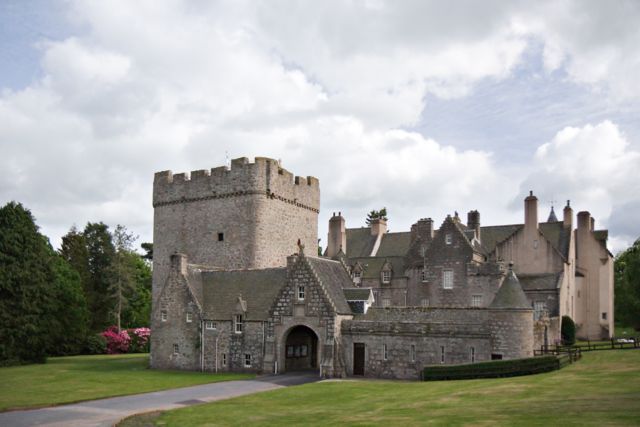
<div id="attachment_39123" class="wp-caption aligncenter" style="width: 650px"><a href="/wp-content/uploads/2013/05/Drum_Castle1.jpg" data-lightboxplus="lightbox[4782]" title="Conservation Work Begins on Drum Castle"><img class="size-full wp-image-39123" alt="Drum Castle, Aberdeenshire" src="/wp-content/uploads/2013/05/Drum_Castle1.jpg" width="640" height="427" /></a><p class="wp-caption-text">Drum Castle, Aberdeenshire</p></div>
<p>Drum Castle, ancient seat of <a href="http://www.scotclans.com/scottish_clans/clan_irvine/" target="_blank">Clan Irvine</a>, has received a £700,000 conservation grant from Historic Scotland. The 700-year old castle boasts the oldest keep in Scotland and is the oldest intact building under the care of the trust.</p>
<p>The castle is to undergo specialist works to remove cement pointing, replacing it with traditional, breathable lime mortar to aid in preservation. Scaffolding is currently being erected around the keep in order to begin the painstaking task of chipping away the cement.</p>
<p>Located near Drumoak in Aberdeenshire, the castle&#8217;s name is derived from the gaelic <em>druim</em> meaning ridge. The keep is said to be the work of medieval architect Richard Cementarius who held the title of King&#8217;s Master Mason to King Alexander III of Scotland. In a show of neighbourly love, Robert the Bruce gifted the lands and castle of Drum to his neighbour and armour bearer William de Irwyn (Irvine) in 1323. De Irwyn was appointed by Bruce as the Baron of Drum and charged with overseeing the Royal Forest, parts of which remain standing today. According to legend, the holly on the Irvine badge were awarded after de Irwyn guarded the King while he slept under a holly bush.</p>
<p>During the Covenenting Rebellion of the 17<sup>th</sup> century Drum was twice attacked and four times captured by hostile troops. Despite backing the Jacobites during the two uprisings of the 18<sup>th</sup> Century, the Irvines bounced back and we able to hold and develop Drum further throughout the 19<sup>th</sup> Century. The Castle has been in the care of Historic Scotland since 1975. In 2012 the castle played host to the first ever <a href="http://news.stv.tv/north/113721-more-than-200-redheads-descend-on-historic-castle-for-flashmob-event/" target="_blank">&#8216;Ginger Snap&#8217; – a flash mob of ginger haired folk.</a></p>
<p>The project is being funded by The National Trust for Scotland Foundation USA, Historic Scotland and an anonymous donor. Work is expected to continue until the end of the year.</p>
<p>The post <a rel="nofollow" href="http://109.74.200.198/conservation-work-begins-on-drum-castle/">Conservation Work Begins on Drum Castle</a> appeared first on <a rel="nofollow" href="http://109.74.200.198">ScotClans | Scottish Clans</a>.</p>
]]></content:encoded>
			<wfw:commentRss>http://109.74.200.198/conservation-work-begins-on-drum-castle/feed/</wfw:commentRss>
		<slash:comments>0</slash:comments>
		</item>
		<item>
		<title>The Wardens of the Marches</title>
		<link>http://109.74.200.198/the-wardens-of-the-marches/</link>
		<comments>http://109.74.200.198/the-wardens-of-the-marches/#comments</comments>
		<pubDate>Wed, 23 Sep 2009 10:26:41 +0000</pubDate>
		<dc:creator>donald</dc:creator>
				<category><![CDATA[Bell]]></category>
		<category><![CDATA[Dixon]]></category>
		<category><![CDATA[House of Stewart]]></category>
		<category><![CDATA[Hume]]></category>
		<category><![CDATA[Irvine]]></category>
		<category><![CDATA[James VI]]></category>
		<category><![CDATA[Johnstone]]></category>
		<category><![CDATA[Kerr]]></category>
		<category><![CDATA[Scott]]></category>
		<category><![CDATA[The Borders]]></category>
		<category><![CDATA[Trotter]]></category>
		<category><![CDATA[Turnbull]]></category>
		<category><![CDATA[Border Reivers]]></category>
		<category><![CDATA[Marches]]></category>
		<category><![CDATA[Scottish Borders]]></category>

		<guid isPermaLink="false">http://www.scotclans.com/bletherskite/?p=967</guid>
		<description><![CDATA[<p>The relationship between Scotland and England wasn&#8217;t always as amicable as it is today.  From the late 13th century to the 16th century, Scotland and England were constantly at war with each other.  This created a lawless environment where crime soared, people from both sides of the border would live more like outlaws, taking advantage [&#8230;]</p>
<p>The post <a rel="nofollow" href="http://109.74.200.198/the-wardens-of-the-marches/">The Wardens of the Marches</a> appeared first on <a rel="nofollow" href="http://109.74.200.198">ScotClans | Scottish Clans</a>.</p>
]]></description>
				<content:encoded><![CDATA[<p class="MsoNormal">The relationship between Scotland and England wasn&#8217;t always as amicable as it is today.  From the late 13<sup>th</sup> century to the 16<sup>th</sup> century, Scotland and England were constantly at war with each other.  This created a lawless environment where crime soared, people from both sides of the border would live more like outlaws, taking advantage of the constant fighting.</p>
<p class="MsoNormal">In 1249 in an attempt to deal with crime an agreement was signed between both nations, a system began called the &#8216;Laws of the Marches&#8217; this was to be carried out by the &#8216;Wardens of the Marches&#8217; who were appointed by their respective monarchs.</p>
<div id="attachment_982" class="wp-caption alignnone" style="width: 408px"><a href="http://www.letsbuyscottish.com/wp-content/uploads/2009/09/marches21.jpg" data-lightboxplus="lightbox[967]" title="Borders area showing the different marches"><img class="size-full wp-image-982" title="Borders area showing the different marches" alt="Borders area showing the different marches" src="http://www.letsbuyscottish.com/wp-content/uploads/2009/09/marches21.jpg" width="398" height="302" /></a><p class="wp-caption-text">Borders area showing the different marches</p></div>
<div id="attachment_984" class="wp-caption alignleft" style="width: 130px"><a href="http://www.letsbuyscottish.com/wp-content/uploads/2009/09/robert_carey1.jpg" data-lightboxplus="lightbox[967]" title="Sir Robert Carey,  Lord Warden of the Marches"><img class="size-full wp-image-984" title="Sir Robert Carey,  Lord Warden of the Marches" alt="Sir Robert Carey,  Lord Warden of the Marches, and a contemporary of Elizabeth I and James VI." src="http://www.letsbuyscottish.com/wp-content/uploads/2009/09/robert_carey1.jpg" width="120" height="185" /></a><p class="wp-caption-text">Sir Robert Carey, Lord Warden of the Marches</p></div>
<p class="MsoNormal">The border lands on each side divided into three marches: an east, middle, and west march.  Each march had its own warden, who was responsible for the security of the area and its people Each Waarden answered to the Lord Warden. The Scottish wardens were familiar with their territories, and knew the people from the marches, and this gave them the opportunity to get involved in questionable dealings in order to further their position. However, the English wardens were not as familiar with the area and the ways of the Borderers, and often went about creating more problems than they solved when trying to administer any justice.</p>
<p class="MsoNormal">Examples of some of the families you would traditionally find on the Scottish side are: <a href="http://www.scotclans.com/scottish-clans/clan-home/">Hume</a>, <a href="http://www.scotclans.com/scottish-clans/clan-trotter/">Trotter</a>, Dixon in East March; <a href="http://www.scotclans.com/scottish-clans/clan-kerr/">Kerr</a>, <a href="http://www.scotclans.com/scottish-clans/clan-scott/">Scott</a>, <a href="http://www.scotclans.com/scottish-clans/clan-turnbull/">Turnbull</a> in Middle March; and <a href="http://www.scotclans.com/scottish-clans/clan-bell/">Bell</a>, <a href="http://www.scotclans.com/scottish-clans/clan-irvine/">Irvine</a>, <a href="http://www.scotclans.com/scottish-clans/clan-johnstone/">Johnstone</a> in West March.</p>
<div id="attachment_38936" class="wp-caption aligncenter" style="width: 524px"><a href="/wp-content/uploads/2009/09/marches13.jpg" data-lightboxplus="lightbox[967]" title="The Wardens of the Marches"><img class="size-full wp-image-38936" alt="Wardens of The March" src="/wp-content/uploads/2009/09/marches13.jpg" width="514" height="334" /></a><p class="wp-caption-text">Wardens of The March</p></div>
<p class="MsoNormal">Wardens from both sides of the border would meet monthly in peace on the day of truce. They would assess the complaints from either side, and administer the appropriate justice. The Wardens had to bear in mind that both countries valued things differently, and this created many difficulties when trying to solve these grievances. Many of the crimes would range from cattle rustling to murder.</p>
<p class="MsoNormal">To explain about how the Wardens of the Marches worked; if for example you were English, and went north of the border to Scotland and stole some cattle, it used to be quite normal to get a a pat on the back back in England, because you had committed a crime in the opposite realm.  You would go unpunished.  The purpose of the Wardens was to prevent this from happening. The Wardens were expected to talk to their foreign counterpart. So if someone went across the border to steal something, then the warden whose land was plundered would tell his counterpart, and the issue would be resolved on the day of truce. The task of solving each person&#8217;s grievance was a taxing and thankless task, which usually provided solutions that left no-one happy.</p>
<p class="MsoNormal">Those who were accused of a crime were supposedly tried by six honest Scotsmen and six honest Englishmen. However it has been said that this could never have happened because you would not have been able to find any honest men from either side of the border.</p>
<p class="MsoNormal">The &#8216;Calendar of Border Papers&#8217; has recorded a large number of complaints that were made to the Wardens of the Marches. They go into some detail as how many of these people were wronged by raiders both sides of the border. The papers are still available to read to this day.</p>
<p class="MsoNormal">By 1603 the role of Warden of the Marches became unnecessary, after the <a href="http://www.scotclans.com/scotland/scottish-history/scottish-unification/1603-union/">union of the crowns</a> when <a href="/scotland/kings-queens/1567-james6/">James VI &amp; I</a>, in his attempt to permanently put an end to the Border Reiver clans, got rid of the name &#8220;Borders&#8221; to represent that area, and renamed it the &#8220;Middle Shires&#8221;. Over the following 100 years you saw a gradual change of the borderers putting down the sword and picking up the plough.</p>
<p>The post <a rel="nofollow" href="http://109.74.200.198/the-wardens-of-the-marches/">The Wardens of the Marches</a> appeared first on <a rel="nofollow" href="http://109.74.200.198">ScotClans | Scottish Clans</a>.</p>
]]></content:encoded>
			<wfw:commentRss>http://109.74.200.198/the-wardens-of-the-marches/feed/</wfw:commentRss>
		<slash:comments>4</slash:comments>
		</item>
	</channel>
</rss>