<br />
<b>Deprecated</b>:  mysql_connect(): The mysql extension is deprecated and will be removed in the future: use mysqli or PDO instead in <b>/var/www/apps/scotclans_wp/wp-includes/wp-db.php</b> on line <b>1142</b><br />
<?xml version="1.0" encoding="UTF-8"?>
<rss version="2.0"
	xmlns:content="http://purl.org/rss/1.0/modules/content/"
	xmlns:wfw="http://wellformedweb.org/CommentAPI/"
	xmlns:dc="http://purl.org/dc/elements/1.1/"
	xmlns:atom="http://www.w3.org/2005/Atom"
	xmlns:sy="http://purl.org/rss/1.0/modules/syndication/"
	xmlns:slash="http://purl.org/rss/1.0/modules/slash/"
	>

<channel>
	<title>ScotClans &#124; Scottish Clans &#187; Home</title>
	<atom:link href="http://109.74.200.198/tag/home/feed/" rel="self" type="application/rss+xml" />
	<link>http://109.74.200.198</link>
	<description></description>
	<lastBuildDate>Fri, 20 Jan 2017 08:08:09 +0000</lastBuildDate>
	<language>en-US</language>
	<sy:updatePeriod>hourly</sy:updatePeriod>
	<sy:updateFrequency>1</sy:updateFrequency>
	<generator>http://wordpress.org/?v=3.6.1</generator>
		<item>
		<title>Home to Hume</title>
		<link>http://109.74.200.198/home-to-hume/</link>
		<comments>http://109.74.200.198/home-to-hume/#comments</comments>
		<pubDate>Thu, 19 Sep 2013 13:48:10 +0000</pubDate>
		<dc:creator>Nadine Lee</dc:creator>
				<category><![CDATA[CLANS - Big List of Scottish Clans]]></category>
		<category><![CDATA[Home]]></category>
		<category><![CDATA[Hume]]></category>
		<category><![CDATA[Innes]]></category>
		<category><![CDATA[Scottish Events]]></category>
		<category><![CDATA[Scottish History]]></category>
		<category><![CDATA[Battle of Flodden]]></category>
		<category><![CDATA[Borders]]></category>
		<category><![CDATA[Canada]]></category>
		<category><![CDATA[Clan Associations]]></category>
		<category><![CDATA[David Douglas-Home CVO CBE]]></category>
		<category><![CDATA[David Hume]]></category>
		<category><![CDATA[diaspora]]></category>
		<category><![CDATA[Duke of Roxburghe]]></category>
		<category><![CDATA[Earl of Home]]></category>
		<category><![CDATA[Flodden]]></category>
		<category><![CDATA[Floors Caste]]></category>
		<category><![CDATA[Hume Castle]]></category>
		<category><![CDATA[Isla St Clair]]></category>
		<category><![CDATA[King James II of Scotland]]></category>
		<category><![CDATA[Netherlands]]></category>
		<category><![CDATA[Norway]]></category>
		<category><![CDATA[South Africa]]></category>
		<category><![CDATA[United States]]></category>

		<guid isPermaLink="false">http://www.bletherskite.net/?p=5378</guid>
		<description><![CDATA[<p>Earlier in September Amanda and I traveled to the Scottish Borders to spend an afternoon at Hume Castle, where part of this years Clan Hume/Home gathering was taking place. Held every five years, the gathering provides a way for clan members to connect in person with one another, while learning about their heritage and exploring [&#8230;]</p>
<p>The post <a rel="nofollow" href="http://109.74.200.198/home-to-hume/">Home to Hume</a> appeared first on <a rel="nofollow" href="http://109.74.200.198">ScotClans | Scottish Clans</a>.</p>
]]></description>
				<content:encoded><![CDATA[<div id="attachment_5792" class="wp-caption aligncenter" style="width: 682px"><a href="/wp-content/uploads/2013/09/gathering.jpg" data-lightboxplus="lightbox[5378]" title="Home to Hume"><img class="wp-image-5792" alt="Clan Hume Gathering at Hume Castle, 08/09/2013" src="/wp-content/uploads/2013/09/gathering.jpg" width="672" height="448" /></a><p class="wp-caption-text">Clan Hume Gathering at Hume Castle, 08/09/2013</p></div>
<p>Earlier in September Amanda and I traveled to the Scottish Borders to spend an afternoon at Hume Castle, where part of this years <a title="Clan Home" href="http://www.scotclans.com/scottish-clans/clan-home/" target="_blank">Clan Hume/Home</a> gathering was taking place. Held every five years, the gathering provides a way for clan members to connect in person with one another, while learning about their heritage and exploring the lands from which the clan once hailed. This years gathering was especially important as it coincided with the <a title="The Flodden 500 Service at St Giles, Edinburgh." href="http://www.scotclans.com/the-flodden-500-service-at-st-giles-edinburgh/" target="_blank">500th anniversary of the Battle of Flodden</a> &#8211; a 16th century battle between Scotland and England where various clans including Clan Home suffered many casualties.</p>
<p>The 2013 gathering was by far the largest international congregation of Homes on record, with almost 200 clan members attending from as far away as Australia, New Zealand, South Africa, Canada, the United States and Norway. Events at the four day meeting included genealogy workshops, ex-Home estate tours, the raising of the Home banner at Hume Castle and a visit to the Flodden memorial in Northumberland.</p>
<p>A well-known and respected Borders family, Clan Home were known as peacemakers, in contrast with another Borders family &#8211; <a title="Clan Douglas" href="http://www.scotclans.com/scottish-clans/clan-douglas/" target="_blank">Clan Douglas</a>, whose reputation for harrying the English made them well-known as warriors. The name Home comes from the old English word for a hilly outcrop (Hôm), which is what Hume Castle sits upon. The name has also been spelt in many different ways over the centuries, but is always pronounced Hume.</p>
<p>We arrived in the Borders with a bit of time to spare, so stopped off at Floors Castle before making our way to the events at Hume Castle. Floors is the seat of the Duke of Roxburghe, and lies just outside Kelso on the banks of the River Tweed. The 5th Earl of Roxburghe (1680–1741) was instrumental in securing the union of England and Scotland in 1707, and was rewarded by being named the 1st Duke of Roxburghe. Floors was also once the home to the chief of<a title="Clan Innes" href="http://www.scotclans.com/scottish-clans/clan-innes/" target="_blank"> Clan Innes</a>, however when the twenty-fifth chief and 4th Duke died without a heir in 1805, the chiefly line ended. His successor who inherited the lands and peerage through the female line was obliged to take the double barreled surname of Innes-Ker, and hence was not recognised by the Court of Lord Lyon as chief of the name Innes. To this day <a title="Clan Innes" href="http://www.scotclans.com/scottish-clans/clan-innes/" target="_blank">Clan Innes</a> is still without a chief.</p>
<div id="attachment_52905" class="wp-caption aligncenter" style="width: 610px"><img class="size-full wp-image-52905" title="Floors Castle, Scottish Borders" alt="Floors Castle, Scottish Borders" src="http://www.scotclans.com/wp-content/uploads/2013/09/floors.jpg" width="600" height="269" /><p class="wp-caption-text">Floors Castle, Scottish Borders</p></div>
<p>10 minutes down the road by car sits the remains of Hume Castle, the spiritual home of Clan Home. The lands were acquired by William de Hume in the early 13th century, who built the first stone fortifications on the site around this time. Hume was the only Borders castle not destroyed during Robert the Bruce&#8217;s scorched earth policy of 1313, and was also where King James II of Scotland was staying during the siege of Roxburgh (1460), when a canon he was firing exploded and killed him instantly. Today the preservation of the castle is maintained by the Clan Home Association, under the auspices of Historic Scotland.</p>
<div id="attachment_52907" class="wp-caption aligncenter" style="width: 610px"><img class="size-full wp-image-52907" alt="Hume Castle, Scottish Borders" src="http://www.scotclans.com/wp-content/uploads/2013/09/hume1.jpg" width="600" height="441" /><p class="wp-caption-text">Hume Castle, Scottish Borders</p></div>
<div id="attachment_52908" class="wp-caption alignleft" style="width: 210px"><img class="size-full wp-image-52908" alt="Chief of Clan Home/Hume" src="http://www.scotclans.com/wp-content/uploads/2013/09/hume2.jpg" width="200" height="321" /><p class="wp-caption-text">Chief of Clan Home/Hume</p></div>
<p>In the courtyard of the remnants of the castle, clan and association members and other special guests (including a whos-who of dignified Border families) gathered to hear stories about famous Homes including the philosopher David Hume (1711-1776). Hume started at Edinburgh University at the age of 12 and went on to become one of the leading lights of the Scottish Enlightenment. The gathering was then treated to a performance by Scottish folk singer Isla St Clair who spoke of her love for border ballads and the stories behind the songs. The afternoon was closed off by the 15th Earl of Home and current chief of Clan Home David Douglas-Home CVO CBE, who read from his father&#8217;s autobiography <em>Where the Wind Blows</em>. The chief is the only son of former Prime Minister Sir Alec Douglas-Home. Following the reading, I spoke to the chief briefly about this year&#8217;s gathering where he told me how clan members from at least 10 different countries were in attendance. He said the 2013 event was definitely the biggest gathering they&#8217;ve had, probably due to the event coinciding with the anniversary of Flodden.</p>
<p>With so many clan members hailing from overseas, I was interested in hearing how factions of Homes had ended up in each corner of the world. A South African contingent from Port Elizabeth told me how they descended from David Hume (born 1797 in Berweckshire) who arrived in South Africa in 1817. Hume was part of the settler party of 195 Scottish laborers and mechanics who bought out to South Africa by Captain Benjamin Moodie. He became and explorer and trader in South Africa, with one descendent telling me that Hume was in fact the first European to see Victoria Falls (not Scottish missionary and explorer David Livingstone). Hume&#8217;s South African descendents told me the reason they came to the gathering is because they feel their spiritual home is in Scotland. &#8220;The depth of history and heritage here is like nothing we have at home. It&#8217;s always important to know and understand your heritage and to be part of something bigger.&#8221;</p>
<p>The group from Norway traced their Home ancestry to a more recent time, when during the second World War a young Scottish woman named Frances Hume met a Norwegian man and emigrated there. This was their first time at a Home gathering, and they told me it was very important for them to know their story about where they came from, and to meet members of their Scottish family. Pam Hume and her husband were in attendance from Indiana &#8211; she said she didn&#8217;t know anything about the clans of Scotland or her Scottish ancestry until her cousin came across Hume Castle online. &#8220;I just thought the castle was four walls that happened to have our name.&#8221; Pam&#8217;s ancestry journey, as a result of her cousin&#8217;s discovery online, brought her to the gathering, where she discovered that there are a cluster of Humes living in Indiana less than 100 miles apart.</p>
<div id="attachment_52909" class="wp-caption aligncenter" style="width: 410px"><img class="size-full wp-image-52909" alt="Interviewing the Norwegian Humes" src="http://www.scotclans.com/wp-content/uploads/2013/09/hume3.jpg" width="400" height="459" /><p class="wp-caption-text">Interviewing the Norwegian Humes</p></div>
<p>William Cooley and Barbara Hume traveled from Vancouver for the gathering, and said they discovered the clan when organising a Hume family reunion in 2007. They sent a photo of the reunion to the association, who were very pleased to find out what had happened to the Canadian line of the Humes. Barbara told me the gathering was a great way to meet people and form new friendships with people across the world. The final overseas attendees I spoke to hailed from the Netherlands. Anegla Hume and her daughter Charlotte can trace their ancestry to an English faction of Clan Hume. Angela found the clan association through Wikipedia and decided to become involved as a mark of respect to her ancestors. &#8220;It&#8217;s important not to forget, as you learn more and more about the history it&#8217;s like they come back to life.&#8221;</p>
<p>With so many of the attendees using the internet to discover their roots and learn about their clan, it&#8217;s clear that this is the way forward for clans and their associated societies. The Clan Home gathering was a fantastic example of a well-organised clan who have used the internet to gather clan members from all across the world, bringing them back to their ancestral home.</p>
<p><em>You can view an album of photos from the event over at <a href="http://www.tartanfootprint.com/photo/album/1460/clan-hume-gathering-2013/" target="_blank">TartanFootprint.com</a></em></p>
<p>The post <a rel="nofollow" href="http://109.74.200.198/home-to-hume/">Home to Hume</a> appeared first on <a rel="nofollow" href="http://109.74.200.198">ScotClans | Scottish Clans</a>.</p>
]]></content:encoded>
			<wfw:commentRss>http://109.74.200.198/home-to-hume/feed/</wfw:commentRss>
		<slash:comments>0</slash:comments>
		</item>
		<item>
		<title>Flodden Battlefield Grave Search Begins</title>
		<link>http://109.74.200.198/flodden-battlefield-grave-search-begins/</link>
		<comments>http://109.74.200.198/flodden-battlefield-grave-search-begins/#comments</comments>
		<pubDate>Fri, 30 Aug 2013 15:19:42 +0000</pubDate>
		<dc:creator>Nadine Lee</dc:creator>
				<category><![CDATA[CLANS - Big List of Scottish Clans]]></category>
		<category><![CDATA[Home]]></category>
		<category><![CDATA[Hume]]></category>
		<category><![CDATA[Scottish Events]]></category>
		<category><![CDATA[Scottish History]]></category>
		<category><![CDATA[Scottish News]]></category>
		<category><![CDATA[Battle of Flodden]]></category>
		<category><![CDATA[Excavation]]></category>
		<category><![CDATA[Flodden]]></category>
		<category><![CDATA[Northumberland]]></category>
		<category><![CDATA[War Graves]]></category>

		<guid isPermaLink="false">http://www.bletherskite.net/?p=5340</guid>
		<description><![CDATA[<p>Archaeologists and volunteers are set to begin the search for body pits from Scotland&#8217;s worst ever battlefield defeat. Beginning work in early September, archaeologists hope the successful location and excavation of the mass graves of the Battle of Flodden could lead to their official designation as war graves and thus granted protection under law as [&#8230;]</p>
<p>The post <a rel="nofollow" href="http://109.74.200.198/flodden-battlefield-grave-search-begins/">Flodden Battlefield Grave Search Begins</a> appeared first on <a rel="nofollow" href="http://109.74.200.198">ScotClans | Scottish Clans</a>.</p>
]]></description>
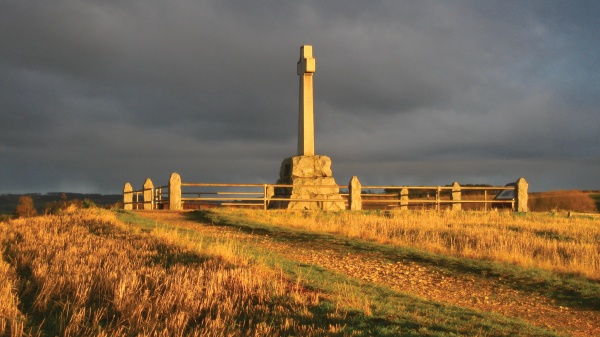
				<content:encoded><![CDATA[<div id="attachment_6216" class="wp-caption aligncenter" style="width: 610px"><a href="/wp-content/uploads/2013/08/flodden.jpg" data-lightboxplus="lightbox[5340]" title="Flodden Battlefield Grave Search Begins"><img class="size-full wp-image-6216" alt="A memorial to the fallen at Flodden" src="/wp-content/uploads/2013/08/flodden.jpg" width="600" height="337" /></a><p class="wp-caption-text">A memorial to the fallen at Flodden</p></div>
<p>Archaeologists and volunteers are set to begin the search for body pits from Scotland&#8217;s worst ever battlefield defeat. Beginning work in early September, archaeologists hope the successful location and excavation of the mass graves of the Battle of Flodden could lead to their official designation as war graves and thus granted protection under law as ancient monuments.</p>
<p>Located in Northumberland, around 10,000 Scottish troops were thought to have died in the 1513 battle, which ended a disastrous invasion of England. The Flodden 1513 Ecomuseum Project is seeking volunteers to help with the dig, saying bodies of fallen troops will be identified but not exhumed.</p>
<p>Christopher Burgess, the Flodden 1513 Project Archaeological Manger explains the background further: &#8220;We are acutely aware that these are war graves and will be treating any remains found with the utmost respect. There is an overriding aim to locate these body pits so that the last resting places of some of the dead of both nations who fell on Flodden Field 500 years ago can be protected.&#8221;</p>
<p>Alistair Bowden, a project manager at Flodden 1513, said Ordnance Survey mappers found four burial pits in the 19th century. He said: &#8220;There are four body pits in those early maps. But they&#8217;re not registered or protected.&#8221; New techniques could mean the team will unearth more body pits, and archaeologists are hopeful more resting places will be discovered.</p>
<p>The 9th of September 2013 marks the 500th anniversary of the battle, and to commemorate a large number of Clan Home/Hume members will visit the historic site on the exact day the battle was fought. The Homes fought under the then Lord Home against the English. Over 100 members are flying in from Australia, New Zealand, South Africa, the USA, Europe, Canada and the British Isles.</p>
<p>The post <a rel="nofollow" href="http://109.74.200.198/flodden-battlefield-grave-search-begins/">Flodden Battlefield Grave Search Begins</a> appeared first on <a rel="nofollow" href="http://109.74.200.198">ScotClans | Scottish Clans</a>.</p>
]]></content:encoded>
			<wfw:commentRss>http://109.74.200.198/flodden-battlefield-grave-search-begins/feed/</wfw:commentRss>
		<slash:comments>0</slash:comments>
		</item>
		<item>
		<title>The Lion and the Clans</title>
		<link>http://109.74.200.198/the-lion-and-the-clans/</link>
		<comments>http://109.74.200.198/the-lion-and-the-clans/#comments</comments>
		<pubDate>Thu, 13 Sep 2012 14:33:09 +0000</pubDate>
		<dc:creator>rodger moffet</dc:creator>
				<category><![CDATA[Bruce]]></category>
		<category><![CDATA[CLANS - Big List of Scottish Clans]]></category>
		<category><![CDATA[Cumming]]></category>
		<category><![CDATA[Farquharson]]></category>
		<category><![CDATA[Gaelic Heritage]]></category>
		<category><![CDATA[Hume]]></category>
		<category><![CDATA[MacGregor]]></category>
		<category><![CDATA[MacLaren]]></category>
		<category><![CDATA[MacPhee]]></category>
		<category><![CDATA[Middleton]]></category>
		<category><![CDATA[Scottish History]]></category>
		<category><![CDATA[Stewart]]></category>
		<category><![CDATA[Baxter]]></category>
		<category><![CDATA[Broun]]></category>
		<category><![CDATA[bruce]]></category>
		<category><![CDATA[Chalmers]]></category>
		<category><![CDATA[Dundas]]></category>
		<category><![CDATA[Fairlie]]></category>
		<category><![CDATA[Heron]]></category>
		<category><![CDATA[Home]]></category>
		<category><![CDATA[Inglis]]></category>
		<category><![CDATA[Little]]></category>
		<category><![CDATA[Lundin]]></category>
		<category><![CDATA[MacDowall]]></category>
		<category><![CDATA[MacDuff]]></category>
		<category><![CDATA[Maitland]]></category>
		<category><![CDATA[Moncrieffe]]></category>
		<category><![CDATA[Moubray]]></category>
		<category><![CDATA[Newton]]></category>
		<category><![CDATA[Nicolson]]></category>
		<category><![CDATA[Pentland]]></category>
		<category><![CDATA[Primrose]]></category>
		<category><![CDATA[Stuart of Bute]]></category>
		<category><![CDATA[Vans]]></category>
		<category><![CDATA[Young]]></category>

		<guid isPermaLink="false">http://www.bletherskite.net/?p=4055</guid>
		<description><![CDATA[<p>Why is the image of a lion so prevalent in Scottish Clan heraldry? Why would a beast that was never native to Scotland feature so heavily? The image of the lion in art and culture dates back to pre history and cave paintings. Our ancient ancestors who&#8217;s story began in Africa would have admired these [&#8230;]</p>
<p>The post <a rel="nofollow" href="http://109.74.200.198/the-lion-and-the-clans/">The Lion and the Clans</a> appeared first on <a rel="nofollow" href="http://109.74.200.198">ScotClans | Scottish Clans</a>.</p>
]]></description>
				<content:encoded><![CDATA[<p><strong><em>Why is the image of a lion so prevalent in Scottish Clan heraldry? Why would a beast that was never native to Scotland feature so heavily?</em></strong></p>
<p><a href="/wp-content/uploads/2012/09/lion1.gif" data-lightboxplus="lightbox[4055]" title="The Lion and the Clans"><img class="alignleft size-full wp-image-6220" alt="lion1" src="/wp-content/uploads/2012/09/lion1.gif" width="300" height="296" /></a>The image of the lion in art and culture dates back to pre history and cave paintings. Our ancient ancestors who&#8217;s story began in Africa would have admired these powerful beasts and they would become symbols of noble savagery. As society advanced the symbolism became stronger; In ancient Egypt the lioness was merged with the human to create the sphinx.</p>
<p>In almost every other culture the lion was also present. Hittites, Assyrians, Babylonians, Persian and many early islamic cultures. Its not hard to understand, after all the lioness is a dedicated mother and ruthless hunter, the male lion a majestic animal that defends his pride with fury. a good role model for early civilisations.</p>
<p>The lion probably entered early Christian culture via a manuscript called the &#8216;Physiologus&#8217;. This document probably dates back to around the 2nd century AD and consists of a number of descriptions of animals and birds as characters in a series of moral tales. In the opening story a lioness gives birth to stillborn cubs but the lioness brings them to life by breathing upon them, this and other similar stories are a direct reference to the idea of Christ&#8217;s resurrection and the redemption of man. The Physiologicus also gives us the story of the Pelican wounding herself to feed her young, an image that can be seen on the <a title="Clan Stewart" href="http://www.scotclans.com/scottish-clans/clan-stewart/">Stewart</a> crest.</p>
<p>In the middle ages the manuscript was translated into latin and spread through central Europe and was adapted into several &#8216;Bestiaries&#8217; With such strong links to these moral tales such animals would naturally form the cornerstone of heraldic symbolism where they would become like &#8216;moral flash cards&#8217;.</p>
<p><a href="/wp-content/uploads/2012/09/lion2.gif" data-lightboxplus="lightbox[4055]" title="The Lion and the Clans"><img class="alignleft size-full wp-image-6222" alt="lion2" src="/wp-content/uploads/2012/09/lion2.gif" width="300" height="178" /></a>Such tales established the idea of the lion as the &#8216;king of the beasts&#8217; and so its understandable that heraldic art would take on this concept of using the lion as a symbol of the ruling elite. This symbol entered Scottish heraldry with King William I. Known as William the Lion this tag did not come from his appearance of character but simply from his adoption of the lion as part of his own standard. His successor Alexander II took the same red lion rampant on a yellow ground and made this the royal symbol that would become the well known Royal Standard of Scotland.</p>
<p>I have used the phrase &#8216;rampant&#8217; above. this refers to the attitude that the animal adopts, in this case raised up on hind legs and paws raised to strike (the lion can stand on either one or two legs depending on tradition although in British heraldry it tends to be one with the other also poised to strike). There are many other attitudes that animals such as lions, wildcats etc can assume; &#8216;Passant&#8217; is walking with one fore paw raised, &#8216;Statant&#8217; is standing with all paws on the ground, &#8216;Salient&#8217; is leaping, &#8216;Sejant&#8217; means in a sitting position and so on. Other phrases you may hear are &#8216;Guardant&#8217; or &#8216;Affrontee&#8217;, where the animal faces the viewer and &#8216;Regardant&#8217; where the animal looks to its rear.</p>
<p>With such strong links to Scottish royalty its no surprise that the Scots nobility would incorporate the lion into their own arms, some such as MacGregor make no secret of this with a lions head and the motto which translates as &#8216;Regal is my Race&#8217;. Here are the clans  and Scottish armigerous families we know of that use the lion symbol in their crests.</p>
<p><a title="Clan Baxter" href="http://www.scotclans.com/scottish-clans/clan-baxter/">Baxter</a> (A Lion Passant)</p>
<p><a title="Clan Broun" href="http://www.scotclans.com/scottish-clans/clan-broun/">Broun</a> (Rampant)</p>
<p><a title="Clan Bruce" href="http://www.scotclans.com/scottish-clans/clan-bruce/">Bruce</a> (Statant)</p>
<p><a title="Clan Chalmers" href="http://www.scotclans.com/scottish-clans/clan-chalmers/">Chalmers</a> (Head and Neck)</p>
<p><a title="Clan Cumming" href="http://www.scotclans.com/scottish-clans/clan-cumming/">Cumming</a> (Rampant)</p>
<p><a title="Clan Dundas" href="http://www.scotclans.com/scottish-clans/clan-dundas/">Dundas</a> (Head, Guardant)</p>
<p><a title="Clan Fairlie" href="http://www.scotclans.com/scottish-clans/clan-fairlie/">Fairlie</a> (Head Couped)</p>
<p><a title="Clan Farquharson" href="http://www.scotclans.com/scottish-clans/clan-farquharson/">Farquharson</a> (Rampant)</p>
<p><a title="Clan Heron" href="http://www.scotclans.com/scottish-clans/clan-heron/">Heron</a> (Demi Lion Rampant)</p>
<p><a title="Clan Home" href="http://www.scotclans.com/scottish-clans/clan-home/">Home / Hume</a> (Head)</p>
<p><a title="Clan Inglis" href="http://www.scotclans.com/scottish-clans/clan-inglis/">Inglis</a> (Demi Lion Rampant)</p>
<p><a href="http://www.scotclans.com/scottish-clans/clan-little/">Little</a> (Demi Lion Rampant)</p>
<p><a title="Clan Lundin" href="http://www.scotclans.com/scottish-clans/clan-lundin/">Lundin</a> (Demi Lion Rampant)</p>
<p><a title="Clan MAcDowall" href="http://www.scotclans.com/scottish-clans/clan-macdowall/">MacDowall</a> (Lion&#8217;s Paw)</p>
<p><a title="Clan MAcDuff" href="http://www.scotclans.com/scottish-clans/clan-macduff/">MacDuff</a> (Rampant)</p>
<p><a title="Clan MacGregor" href="http://www.scotclans.com/scottish-clans/clan-macgregor/">MacGregor</a> (Head)</p>
<p><a title="Clan MacLaren" href="http://www.scotclans.com/scottish-clans/clan-maclaren/">MacLaren</a> (Head)</p>
<p><a title="Clan MAcPhee" href="http://www.scotclans.com/scottish-clans/clan-macphee/">MacPhee</a> (Demi Lion Rampant)</p>
<p><a title="Clan MAitland" href="http://www.scotclans.com/scottish-clans/clan-maitland/">Maitland</a> (Sejant, Affrontee)</p>
<p><a title="Clan Middleon" href="http://www.scotclans.com/scottish-clans/clan-middleton/">Middleton</a> (Demi Lion Rampant)</p>
<p><a title="Clan Moncrieffe" href="http://www.scotclans.com/scottish-clans/clan-moncrieffe/">Moncrieffe</a> (Demi Lion Rampant)</p>
<p><a title="Clan Moubray" href="http://www.scotclans.com/scottish-clans/clan-moubray/">Moubray</a> (Demi Lion Rampant)</p>
<p><a title="Clan Newton" href="http://www.scotclans.com/scottish-clans/clan-newton/">Newton</a> (Demi Lion Rampant)</p>
<p><a title="Clan Nicholson" href="http://www.scotclans.com/scottish-clans/clan-nicholson/">Nicolson</a> (Demi Lion Rampant)</p>
<p><a title="Clan Pentland" href="http://www.scotclans.com/scottish-clans/clan-pentland/">Pentland</a> (Head)</p>
<p><a title="Clan Primrose" href="http://www.scotclans.com/scottish-clans/clan-primrose/">Primrose</a> (Demi Lion Rampant)</p>
<p><a title="Clan Stuart of Bute" href="http://www.scotclans.com/scottish-clans/clan-stuart-of-bute/">Stuart of Bute</a> (Demi Lion Rampant)</p>
<p><a title="Clan Vans" href="http://www.scotclans.com/scottish-clans/clan-vans/">Vans</a> (Rampant)</p>
<p><a title="Clan Young" href="http://www.scotclans.com/scottish-clans/clan-young/">Young</a> (Demi Lion Rampant)</p>
<p>Its easy to be confused about how an animal native to Africa could have such a profound symbolic influence in Europe, we should also remember that lions though not native or wild would have been brought over with invading Romans who would have kept the creatures for games or even as status symbols. Personally though I prefer to believe that it was not these poor caged beasts that influence the heralds of early mediaeval Europe but the lion tales of old that were seen as symbols of the ancient code of chivalry.</p>
<p>The post <a rel="nofollow" href="http://109.74.200.198/the-lion-and-the-clans/">The Lion and the Clans</a> appeared first on <a rel="nofollow" href="http://109.74.200.198">ScotClans | Scottish Clans</a>.</p>
]]></content:encoded>
			<wfw:commentRss>http://109.74.200.198/the-lion-and-the-clans/feed/</wfw:commentRss>
		<slash:comments>2</slash:comments>
		</item>
	</channel>
</rss>