<br />
<b>Deprecated</b>:  mysql_connect(): The mysql extension is deprecated and will be removed in the future: use mysqli or PDO instead in <b>/var/www/apps/scotclans_wp/wp-includes/wp-db.php</b> on line <b>1142</b><br />
<?xml version="1.0" encoding="UTF-8"?>
<rss version="2.0"
	xmlns:content="http://purl.org/rss/1.0/modules/content/"
	xmlns:wfw="http://wellformedweb.org/CommentAPI/"
	xmlns:dc="http://purl.org/dc/elements/1.1/"
	xmlns:atom="http://www.w3.org/2005/Atom"
	xmlns:sy="http://purl.org/rss/1.0/modules/syndication/"
	xmlns:slash="http://purl.org/rss/1.0/modules/slash/"
	>

<channel>
	<title>ScotClans &#124; Scottish Clans &#187; Hadrian&#8217;s Wall</title>
	<atom:link href="http://109.74.200.198/tag/hadrians-wall/feed/" rel="self" type="application/rss+xml" />
	<link>http://109.74.200.198</link>
	<description></description>
	<lastBuildDate>Fri, 20 Jan 2017 08:08:09 +0000</lastBuildDate>
	<language>en-US</language>
	<sy:updatePeriod>hourly</sy:updatePeriod>
	<sy:updateFrequency>1</sy:updateFrequency>
	<generator>http://wordpress.org/?v=3.6.1</generator>
		<item>
		<title>St. Patrick&#8217;s Scottish Heritage</title>
		<link>http://109.74.200.198/st-patricks-scottish-heritage/</link>
		<comments>http://109.74.200.198/st-patricks-scottish-heritage/#comments</comments>
		<pubDate>Mon, 17 Mar 2014 11:57:30 +0000</pubDate>
		<dc:creator>Nadine Lee</dc:creator>
				<category><![CDATA[Gaelic Heritage]]></category>
		<category><![CDATA[Scottish History]]></category>
		<category><![CDATA[Scottish News]]></category>
		<category><![CDATA[Celts]]></category>
		<category><![CDATA[Druids]]></category>
		<category><![CDATA[Hadrian's Wall]]></category>
		<category><![CDATA[Ireland]]></category>
		<category><![CDATA[Roman Britain]]></category>
		<category><![CDATA[Saint Patrick]]></category>
		<category><![CDATA[Saint Patrick's Day]]></category>

		<guid isPermaLink="false">http://www.bletherskite.net/?p=5983</guid>
		<description><![CDATA[<p>It&#8217;s the most Irish day of the year, so what better time to brush up on the history of Ireland&#8217;s well-known patron saint. As Saint Patrick&#8217;s Day is celebrated today by Irish communities in all corners of the globe, it may come as a suprise to most to learn that Saint Patrick most likely hailed [&#8230;]</p>
<p>The post <a rel="nofollow" href="http://109.74.200.198/st-patricks-scottish-heritage/">St. Patrick&#8217;s Scottish Heritage</a> appeared first on <a rel="nofollow" href="http://109.74.200.198">ScotClans | Scottish Clans</a>.</p>
]]></description>
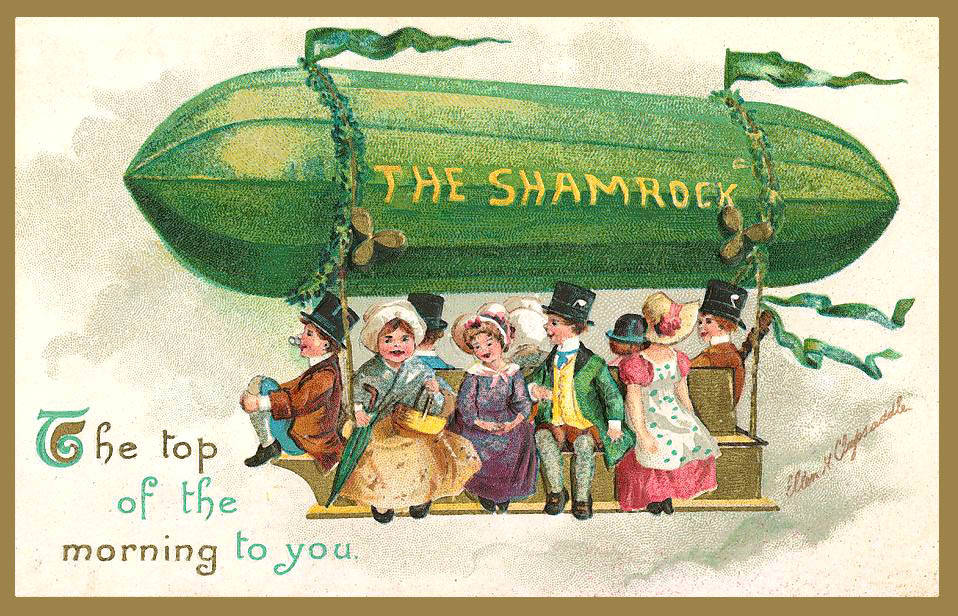
				<content:encoded><![CDATA[<p style="text-align: left;"><a href="/wp-content/uploads/2014/03/Vintage-St.-Patricks-Day-Shamrock-Card.jpg" data-lightboxplus="lightbox[5983]" title="St. Patrick's Scottish Heritage"><img class="aligncenter size-full wp-image-38978" alt="Vintage-St.-Patricks-Day-Shamrock-Card" src="/wp-content/uploads/2014/03/Vintage-St.-Patricks-Day-Shamrock-Card.jpg" width="958" height="616" /></a>It&#8217;s the most Irish day of the year, so what better time to brush up on the history of Ireland&#8217;s well-known patron saint. As Saint Patrick&#8217;s Day is celebrated today by Irish communities in all corners of the globe, it may come as a suprise to most to learn that Saint Patrick most likely hailed from none other than Scotland.</p>
<p>While March 17 is the accepted date when this famous saint died, no-one actually knows the exact date Patrick was born. Much speculation leads to the year of 387 AD,  during the reign of Roman Emperor Theodocius I (r.379 to 395), who, after his own conversion, converted the entirety of Roman Britian to Christianity in 380. The most accepted place of birth amongst historians is along the western coast of Britannia somewhere between the border of present day Scotland and Hadrian’s Wall.</p>
<div id="r1PostCPBlock">
<p>St. Patrick was born to Calpurnius and Conchessa, a Roman couple who gave their child an appropriate Roman name: “Patricius” which means “noble of the patrician class,” referring to the class that had ruled Rome since the early Republic. His father was a Decurion, or a cavalry officer, in command of Roman soldiers, who had been originally sent to the northern area of Britannia to keep order on the outskirts of a Roman Empire in decline. The Decurion’s troops would have had to deal with the Picts of Scotland and the Celts in Ireland, who had remained unconquered by the Romans.</p>
<p>At the age of 14, Patrick was captured by Celtic raiders and taken to Ireland where he spent six years in slavery as a shepherd. It&#8217;s generally believed he was located throughout this time in what is now known as County Antrim, where Belfast is located. Ireland at this time was a land of Celtics and pagans, and even though he learned the Celtic way of life, he was increasingly turning to God and prayer.</p>
<div id="attachment_38980" class="wp-caption alignleft" style="width: 310px"><a href="/wp-content/uploads/2014/03/st-patrick-icon.jpg" data-lightboxplus="lightbox[5983]" title="St. Patrick's Scottish Heritage"><img class="size-full wp-image-38980" alt="Saint Patrick" src="/wp-content/uploads/2014/03/st-patrick-icon.jpg" width="300" height="393" /></a><p class="wp-caption-text">Saint Patrick</p></div>
<p>Patrick&#8217;s captivity lasted until he was twenty, when he escaped after having a dream from God in which he was told to leave Ireland by going to the coast. There he found some sailors who took him back to Scotland, where he reunited with his family. But he had another dream in which he heard the people of Ireland calling out to him, so he commenced his studies for the Priesthood and was ordained by St. Germanus, the Bishop of Auxerre, whom he had studied under for years.</p>
<p>Later, Patrick was ordained a bishop, and was sent to take the Gospel to Ireland. He arrived in Ireland March 25, 433, at Slane. One legend says that he met a chieftain of one of the tribes, who tried to kill Patrick. Patrick converted Dichu (the chieftain) after he was unable to move his arm until he became friendly to Patrick.</p>
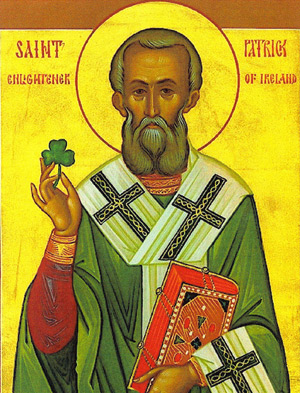
<p>Patrick preached and converted all over Ireland for 40 years. Perhaps his most well-known legacy is the shamrock which he used to explain the Holy Trinity. After years of living in poverty, traveling and enduring much suffering he died March 17, 461, at Saul where his first Church was built. Today Saint Patrick&#8217;s Day is a national holiday in Ireland, and on the island of Montserrat in the Caribbean, which was founded by Irish refugees.</p>
</div>
<p>The post <a rel="nofollow" href="http://109.74.200.198/st-patricks-scottish-heritage/">St. Patrick&#8217;s Scottish Heritage</a> appeared first on <a rel="nofollow" href="http://109.74.200.198">ScotClans | Scottish Clans</a>.</p>
]]></content:encoded>
			<wfw:commentRss>http://109.74.200.198/st-patricks-scottish-heritage/feed/</wfw:commentRss>
		<slash:comments>0</slash:comments>
		</item>
		<item>
		<title>Hands Across Hadrian&#8217;s Wall</title>
		<link>http://109.74.200.198/hands-across-hadrians-wall/</link>
		<comments>http://109.74.200.198/hands-across-hadrians-wall/#comments</comments>
		<pubDate>Wed, 12 Feb 2014 14:31:13 +0000</pubDate>
		<dc:creator>Nadine Lee</dc:creator>
				<category><![CDATA[Independence]]></category>
		<category><![CDATA[Scottish History]]></category>
		<category><![CDATA[Scottish News]]></category>
		<category><![CDATA[Emperor Hadrian]]></category>
		<category><![CDATA[Hadrian's Wall]]></category>
		<category><![CDATA[Hands Across the Border]]></category>
		<category><![CDATA[MP Angus MacNeil]]></category>
		<category><![CDATA[MP Rory Stewart]]></category>
		<category><![CDATA[Roman Empire]]></category>
		<category><![CDATA[Scottish independence]]></category>

		<guid isPermaLink="false">http://www.bletherskite.net/?p=5849</guid>
		<description><![CDATA[<p>A Tory MP has called for 100,000 Britons to hold hands across Hadrian&#8217;s Wall this summer, in order to prevent Scotland voting for independence. Once used as a defensive fortification in Roman Britain, the wall is set to be the scene of a gesture of love to Scotland in the form of a coast-to-coast human [&#8230;]</p>
<p>The post <a rel="nofollow" href="http://109.74.200.198/hands-across-hadrians-wall/">Hands Across Hadrian&#8217;s Wall</a> appeared first on <a rel="nofollow" href="http://109.74.200.198">ScotClans | Scottish Clans</a>.</p>
]]></description>
				<content:encoded><![CDATA[<div id="attachment_39030" class="wp-caption aligncenter" style="width: 610px"><a href="/wp-content/uploads/2014/02/hadrians-wall.jpg" data-lightboxplus="lightbox[38759]" title="Hands Across Hadrian's Wall"><img class="size-full wp-image-39030" alt="Hadrian's Wall" src="/wp-content/uploads/2014/02/hadrians-wall.jpg" width="600" height="345" /></a><p class="wp-caption-text">Hadrian&#8217;s Wall</p></div>
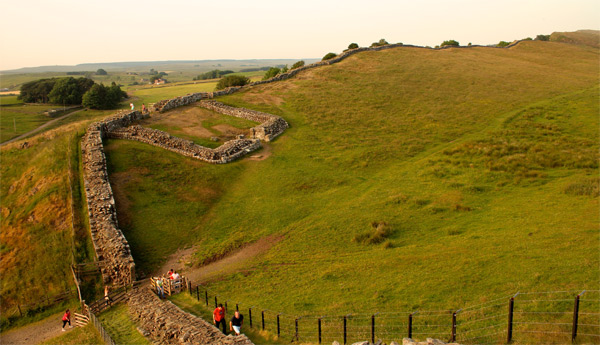
<p>A Tory MP has called for 100,000 Britons to hold hands across Hadrian&#8217;s Wall this summer, in order to prevent Scotland voting for independence. Once used as a defensive fortification in Roman Britain, the wall is set to be the scene of a gesture of love to Scotland in the form of a coast-to-coast human chain.</p>
<p>MP Rory Stewart is hoping to introduce an emotional angle to the the independence debate, which he stated has been so far focused on economic implications. In a speech given last week in the House of Commons, Mr Stewart said: “It cannot be simply economics. If a relationship is going wrong, if a marriage is going wrong, the answer cannot simply be to say &#8216;you can&#8217;t afford to break up because you are going to loose the house&#8221;.</p>
<p>”The answer has to be only one thing, which is &#8216;I love you&#8217;.&#8221;</p>
<p>The campaign which is called <a href="http://handsacrosstheborder.co.uk/" target="_blank">‘Hands Across the Border’</a> aims to gather people of all ages, from across the country, in a human chain with torches on the evening of Saturday 19th July. The hope is to demonstrate to Scotland how much English, Welsh and Irish people value Scotland’s place in the UK and how sorry they would be if Scotland separated in the Independence referendum set to be held on September 18.</p>
<p>During his speech, Mr Stewart recalled a canoeing expedition he undertook with the Scottish National Party’s Angus MacNeil. Mr MacNeil responded with a tweet saying:</p>
<blockquote class="twitter-tweet" lang="en" data-conversation="none"><p><a href="https://twitter.com/lloydak1">@lloydak1</a> happily canoe with <a href="https://twitter.com/RoryStewartUK">@rorystewartuk</a> but we dont need to share a Prime Minister to do so <img src='http://109.74.200.198/wp-includes/images/smilies/icon_smile.gif' alt=':)' class='wp-smiley' /> )</p>
<p>— AngusBMacNeilMP (@AngusMacNeilMP) <a href="https://twitter.com/AngusMacNeilMP/statuses/431418248337567744">February 6, 2014</a></p></blockquote>
<p>&nbsp;</p>
<p>In AD 122 the Emperor Hadrian visited Britannia and ordered his generals to build a wall from the Tyne to Solway in an effort to prevent Pictish raiders from the north destroying the strategic Roman base at Corbridge in Northumberland. Taking 15 years to build, Hadrian&#8217;s Wal lwas 80 Roman miles long &#8211; about 73 modern miles or 117 km. Parts of the wall still exist to this day &#8211; it is the most popular tourist attraction in Northern England and was made a UNESCO World Heritage Site in 1987.</p>
<p>The post <a rel="nofollow" href="http://109.74.200.198/hands-across-hadrians-wall/">Hands Across Hadrian&#8217;s Wall</a> appeared first on <a rel="nofollow" href="http://109.74.200.198">ScotClans | Scottish Clans</a>.</p>
]]></content:encoded>
			<wfw:commentRss>http://109.74.200.198/hands-across-hadrians-wall/feed/</wfw:commentRss>
		<slash:comments>0</slash:comments>
		</item>
		<item>
		<title>The Road to Dere Street</title>
		<link>http://109.74.200.198/the-road-to-dere-street/</link>
		<comments>http://109.74.200.198/the-road-to-dere-street/#comments</comments>
		<pubDate>Tue, 09 Jul 2013 14:12:36 +0000</pubDate>
		<dc:creator>Nadine Lee</dc:creator>
				<category><![CDATA[CLANS - Big List of Scottish Clans]]></category>
		<category><![CDATA[Pringle]]></category>
		<category><![CDATA[Scottish Adventure]]></category>
		<category><![CDATA[Scottish History]]></category>
		<category><![CDATA[A68]]></category>
		<category><![CDATA[Borders]]></category>
		<category><![CDATA[Clan Pringle]]></category>
		<category><![CDATA[Dere Street]]></category>
		<category><![CDATA[Hadrian's Wall]]></category>
		<category><![CDATA[Malcolm IV]]></category>
		<category><![CDATA[medicine]]></category>
		<category><![CDATA[Medieval Scotland]]></category>
		<category><![CDATA[Midlothian]]></category>
		<category><![CDATA[Roman Empire]]></category>
		<category><![CDATA[Romans in Scotland]]></category>
		<category><![CDATA[Soutra Aisle]]></category>
		<category><![CDATA[Via Regia]]></category>
		<category><![CDATA[Wind turbines]]></category>

		<guid isPermaLink="false">http://www.bletherskite.net/?p=5096</guid>
		<description><![CDATA[<p>Just off the A68 on the outskirts of the Scottish Borders, a small sign points towards the remnants of an ancient highway. Known as Dere Street, the road was once a bustling hive of Roman (and later Medieval) activity that connected York with the Firth of Forth. You have to use a fair amount of [&#8230;]</p>
<p>The post <a rel="nofollow" href="http://109.74.200.198/the-road-to-dere-street/">The Road to Dere Street</a> appeared first on <a rel="nofollow" href="http://109.74.200.198">ScotClans | Scottish Clans</a>.</p>
]]></description>
				<content:encoded><![CDATA[<p style="text-align: left;"><a href="http://www.bletherskite.net/wp-content/uploads/2013/07/DSC_0300.jpg" data-lightboxplus="lightbox[5096]" title="The Road to Dere Street"><img class="aligncenter  wp-image-5097" alt="Dere Street, Midlothian" src="http://www.bletherskite.net/wp-content/uploads/2013/07/DSC_0300-1024x682.jpg" width="614" height="409" /></a><a href="https://www.google.co.uk/maps?q=Soutra+Mains+Wood&amp;sll=55.815505878166476,-2.8798467064120388&amp;sspn=0.007775483326980055,0.02709867602149284&amp;t=m&amp;dg=opt&amp;hnear=Soutra+Mains+Wood&amp;z=16" target="_blank">Just off the A68 on the outskirts of the Scottish Borders</a>, a small sign points towards the remnants of an ancient highway. Known as <strong>Dere Street</strong>, the road was once a bustling hive of Roman (and later Medieval) activity that connected York with the Firth of Forth. You have to use a fair amount of imagination to picture the bustle &#8211; today the road is covered in quaint farmland, with wind turbines dotting the surrounding lowland countryside. On Saturday evening some friends and I undertook a trek to the street, following a glorious day complete with soaring temperatures in sunny Midlothian.</p>
<p style="text-align: left;">Dere Street was one of the main routes taken by the Romans on their quest to conquer present-day Scotland. Historians point towards the Flavian era of AD 77-86/90 as the road&#8217;s conception timeframe, roughly 25 years after the Romans conquered England in AD43. The extensive network of Roman roads throughout Britain at this time connected forts and garrisons across the country, with roads such as Dere venturing out into the northernmost frontier of the Roman Empire. Quarry pits alongside the remains of the road indicate that the Romans dug for gravel to use on the surface of the road.</p>
<p style="text-align: left;">Not long after the completion of the road the Romans abandoned the north of their new empire, building Hadrian&#8217;s Wall in AD 122. In her 2012 book <em>Roman Camps in Scotland</em>, historian Dr Rebecca Jones stated that Scotland hosted the largest number of Roman army camps in Europe, with many found recently <span>by use of archaeological survey flights which hunt for distinctive marks in fields from structures buried beneath crops.</span></p>
<p><span>Dr Jones said:  </span></p>
<blockquote><p><span>&#8216;For the first time we have a picture of the true extent of the Roman war machine in Scotland. </span><span>The repeated campaigns to conquer Scotland were bloody, brutal and ultimately unsuccessful for the Roman Empire. They had to deal with tribes unwilling to be conquered, and strained resources, as soldiers were always needed to fight wars elsewhere throughout their vast Empire.&#8217;</span></p></blockquote>
<p>Throughout Medieval times, the section of Dere Street between Jedburgh and Edinburgh became known as the <strong><em>Via Regia </em></strong>(royal way). The road connected the majority of Scotland with abbeys and other places of religious significance in the Borders. The section of Dere Street we visited was about 200 metres down the road from <em>Soutra Aisle </em>which hosts the remains of the <em>House of the Holy Trinity</em> church, hospital and Augustinian friary. Established in 1164 by <a href="http://www.scotclans.com/scottish_history/kings_queens/1153_malcolm4.html" target="_blank">Malcolm IV</a>, the complex provided welcome respite for weary pilgrims traveling to and fro religious sites. The remains must measure no more than a double garage, however it&#8217;s believed that in it&#8217;s time it was the largest medieval hospital in Scotland occupying a walled area of 700m squared. Archeological work in the grounds surrounding the hospital have revealed evidence of rare medicinal seeds including Henbane, Hemlock, East-African cloves and Opium Poppy.</p>
<div id="attachment_5101" class="wp-caption alignleft" style="width: 150px"><a href="http://www.bletherskite.net/wp-content/uploads/2013/07/DSCF0349.jpg" data-lightboxplus="lightbox[5096]" title="The Road to Dere Street"><img class="size-thumbnail wp-image-5101" alt="Soutra Aisle on a visit earlier in 2013." src="http://www.bletherskite.net/wp-content/uploads/2013/07/DSCF0349-150x150.jpg" width="140" height="140" /></a><p class="wp-caption-text">Soutra Aisle on a visit earlier in 2013.</p></div>
<p>Precariously positioned on the main route from Scotland to the English border, the church and road would have seen their fair share of desolation pass by during the Scottish Wars of Independence. The road became desolate and disused following The War of Rough Wooing and the Scottish Reformation, when many Borders abbeys were destroyed. It became primarily used for driving livestock, and as a passageway for the occasional traveler daring enough to venture into the lawless Border region. Soutra Aisle went on to become the burial vault of <a href="http://www.scotclans.com/scottish_clans/clan_pringle/" target="_blank">Clan Pringle of Soutra</a>, which ultimately saved it from being completely destroyed.</p>
<p>Almost 2000 years after it was built, Dere Street provides the outline for many major roads in Scotland including the A68 and A1. Today the Soutra section of Dere lies buried behind the A68 in grazing land &#8211; the pilgrims, soldiers, royals and travelers who once used the road now a mere shadow of a time long gone.</p>
<p>The post <a rel="nofollow" href="http://109.74.200.198/the-road-to-dere-street/">The Road to Dere Street</a> appeared first on <a rel="nofollow" href="http://109.74.200.198">ScotClans | Scottish Clans</a>.</p>
]]></content:encoded>
			<wfw:commentRss>http://109.74.200.198/the-road-to-dere-street/feed/</wfw:commentRss>
		<slash:comments>1</slash:comments>
		</item>
	</channel>
</rss>