The post Battlefield to Become ‘Park and Ride’ Interchange appeared first on ScotClans | Scottish Clans.
]]>
Pitreavie Battlefield, next to Rosyth Train Station
Fife Council have been given the green light to build a transport hub on the site of one of Scotland’s decisive battlefields. The Battle of Pitreavie (1651), was one of the key battles during the War of the Three Kingdoms. It marked the end of Scotland’s last hold-out against subjugation by Oliver Cromwell’s New Model Army, where Cromwell attempted to quell unrest north of the border.
It is though the bodies of 2000 soldiers are buried on the site, with one last search for human remains currently being prepared for the site at Rosyth, near Dunfermline. The council is seeking tenders for archaeological surveys which will test for the presence of human remains. It is likely there are a number of mass burial pits, although only two have ever been found, during ditch-digging in the 1850s.

Maclean Memorial Cairn near Pitreavie Battlefield
A test excavation due to take place soon will reveal if any battlefield deposits remain, with the results informing any more detailed archaeological work that may be required to preserve the site by record before development. The battlefield is largely uncommemorated although a small cairn was erected a few years ago to mark the 500 members of the Clan Maclean who perished at Cromwell’s hands.
Historic Scotland included the site on the Inventory of Historic Battlefields, which lists Scotland’s 28 most important battlefields, but have not objected to the council’s plans. A council report confirmed, “Inclusion of a site within the battlefield inventory does not confer any new legal restrictions on the area identified by the inventory maps. Instead, Historic Scotland assumes that inventory sites will be given more particular consideration in the planning process.”
On July 17, 1651, a 1600-strong Cromwellian force of cavalry and infantry began an assault on the Scottish cannon battery on the top of the Ferryhills, which had stopped Cromwell crossing the Forth.
“Cromwell had been trying to cross the Forth since his victory at Dunbar almost a year earlier but he knew that attempting a crossing in the teeth of the cannon battery would have been suicidal,” said Fife Council archaeologist, Douglas Speirs.
The English forces successfully stormed the batteries, encouraging Cromwell to quickly send over another 4000 troops. A Scottish force of some 5500 engaged them but it was quickly routed. Speirs added: “They retreated some four kilometres before regrouping on open ground just to the south of Pitreavie Castle but they were no match for Cromwell’s vastly superior professional New Model Army and in less than two hours, the Scottish army was all but annihilated.
“There is no single contemporary record that can be relied upon for an accurate body count but from piecing various bits of historical information together it appears likely that between 1500 and 2000 Scots soldiers died.
“The battle at Pitreavie, which witnessed a great loss of life, was an incredibly important national event which, although little remembered in the national consciousness, deserves to be up there with Culloden, Bannockburn and Pinkie.
“It was truly a seminal battle in defining the future and the political landscape of Scotland, defining every aspect of Scotland from 1651 until the Restoration in 1660.”
The post Battlefield to Become ‘Park and Ride’ Interchange appeared first on ScotClans | Scottish Clans.
]]>The post The Death March to Durham appeared first on ScotClans | Scottish Clans.
]]>
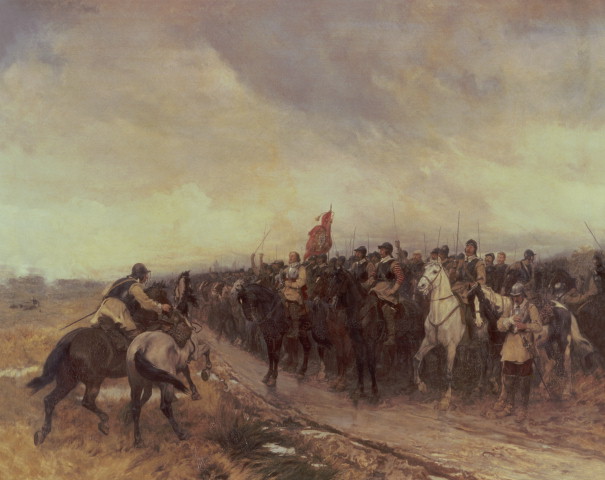
Cromwell at Dunbar
The aftermath of the 1650 Battle of Dunbar saw the grave mistreatment of 5,000 Scottish prisoners-of-war at the hands of the English Parliamentarian army. These battle-weary prisoners were starved of food and sleep, whilst at the same time force-marched over 100 miles to a makeshift prison in hellish conditions. Yet this is one of the least known stories of the civil war that raged across the whole of Britain, probably not surprising as it leaves such a black mark on England’s military history. ScotClans was contacted by a relative of one of the handful survivors of this terrible event which has led us to research the so named ‘Death March to Durham’.
One of the main outcomes of the Civil War was the execution of King Charles I by the Parliamentarian army for high treason. His exiled son, Charles II, was proclaimed King of Scotland on 5th February 1649 and this stance of support for the Royal Stewart House came as no surprise to the English parliament. However, they were concerned that the Scots may now try to force Charles II onto the throne in England, so Oliver Cromwell, not long back from fighting in Ireland, was sent by the parliament, with his 16,000 strong New Model Army to invade Scotland and head for Edinburgh. Cromwell’s army crossed the border at Berwick in the July of 1650.
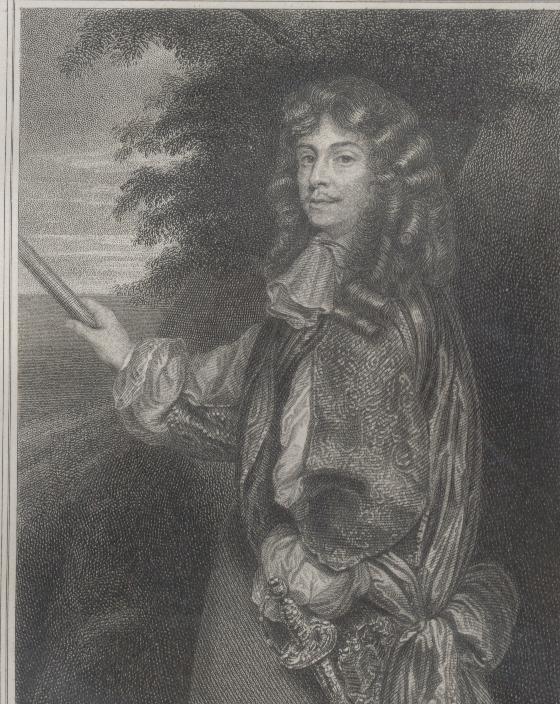
Scottish General, David Leslie
David Leslie was the general of the Scottish army in Edinburgh, he believed that it would strategically be better to not be drawn out and therefore forced into engaging the English head on. Instead he decided to keep his men within the strong fortifications of the capital whilst Cromwell’s men camped outside the walls. Leslie’s army undertook a scorched-earth approach and destroyed the lands between Edinburgh and England. This meant that the English army could not live off the border crops, and had to rely upon supplies coming from south of the border. The supplies would arrive by boats, which gained entry at the port of Dunbar, but these visits became less and less.
Cromwell’s army were suffering not just due to the lack of food but also a massive oversight which left the majority of men without tents. Only 100 tents were brought which meant only the privileged officers had shelter. The weather was relentless, soldiers had to brave the elements, attempting to sleep, they were vulnerable and exposed to the Scottish climate. On August 3rd due to these incredibly difficult conditions where his men faced inevitable death Oliver Cromwell made a plea to the Scots suggesting that it is the king who was really the enemy, rather than him and his army. Cromwell begged: ”I beseech you, in the bowels of Christ, think it possible you may be mistaken.” His plea fell on deaf ears.
The 1st of September 1650 was a wet and miserable day and Cromwell’s army had withdrawn back east along the coast past Musselburgh and to their supplies base of Dunbar. The English were ill, demoralised, and exhausted with fatigue. One English soldier wrote, that they had been reduced to “a poor, shattered, hungry, discouraged army,”.
Meanwhile the Scottish army were not without their own problems. The Covenanter ministers were causing a lot of trouble. It was the ministers who provided the funds which paid for the army. This meant the ministers had power over David Leslie’s troops. The plan had been that Leslie’s army were to attack Cromwell’s men on the 1st of September, while the English were practically defenceless, but the Covenanters would not allow them to do this simply because it was a Sunday. Many believe that had Leslie been given permission to launch an offensive on the 1st, then the outcome of the battle would have been a lot different.
The Covenanters had also strongly urged Charles II to condemn his mother’s Catholicism, and attack the counsel that his late father had kept. Charles refused to make any such extreme public statements, and this left the ministers furious. In their frustrated state they purged the Scottish army of more than 3,000 men, dismissing many of Leslie’s most experienced and professional soldiers, including many officers, for crimes such as loose morals, blasphemy, and swearing. This vindictive act left one of the Scottish colonels outraged and he stated that Leslie had been left with an army of “nothing but useless clerks and ministers’ sons, who have never seen a sword, much the less used one.”
David Leslie was under intense pressure from the Church of Scotland to end this situation as quickly as possible because the Covenanters were also funding the Scottish army. When Leslie saw Cromwell’s army retreat, it was decided that he too would move his army east. He reached Dunbar before Cromwell, and so was able to get his men to the advantageous position on the top of Doon Hill which was to the south-east of the town.
The English were in a very desperate situation. Many of the men were close to death, morale was low and it looked like defeat was imminent. Especially as the Scottish army now had 14,000 men, sitting in the superior position. History shows a very different outcome, the next 24 hours saw the fate of the doomed English receive the miracle that not only saved their lives but probably dictated the future events that shaped Scotland’s future.
David Leslie wanted to wait with his men positioned on top of the hill, and force Cromwell into the situation where to needed to either attack a stronger army up-hill, or stay put and starve to death. Unfortunately for Leslie, the rather foolish and overconfident Covenanter ministers were impatient and demanded that Leslie moved his men down Doon Hill, and prepare for battle. At 4 pm on the 2nd of September, Leslie repositioned his troops at the foot of Doon Hill. Upon seeing this Cromwell could not believe his luck, and quickly thought of a strategy to turn the tables on the Scots. Under the cover of darkness Cromwell repositioned a large proportion of his troops to face the Scottish right flank, waiting to attack just before sunrise. On the 3rd of September English forces launched a surprise attack on the left, and centre flanks of the Scottish troops. They were held by the greater numbers of the Scots; however the English on the right managed to power their way through the Scottish flank and cause significant damage. Seeing this carnage thousands of the Scottish troops fled the battlefield and the battle was effectively over. The English cavalry chased down the fleeing soldiers over an area of eight miles, killing or capturing most, in what became known sarcastically as the ‘Race of Dunbar’. It was reported, though highly doubtful, that Cromwell’s men suffered as few as 20 deaths, compared to 3,000 Scottish fatalities, not including another 10,000 captured. It is said that seeing the crumble of the Scottish army Oliver Cromwell was in fits of uncontrollable laughter.
Victory for Leslie’s men would have changed the course of British history, with this being the last realistic opportunity for Scotland to take control of its own political and religious destiny. Unfortunately the chance was ruined by, as one writer put it, “a committee of Presbyterian ministers blinkered by religious fanaticism.” Cromwell went on to capture Edinburgh relatively unopposed, though Edinburgh Castle held out until that December. When the news reached the Rump Parliament in England, they were so overjoyed with the outcome of the battle that a Dunbar medal was issued for both the officers and the men. This was the first ever military medal to be issued in Britain, and was not done again until the Battle of Waterloo in 1815.

The Dunbar Medal
With the captured soldiers, Cromwell simply could not cope with 10,000 men, so around half were let go because they were either too ill or too injured from the battle, and he really had no use for them. At dawn on the 4th of September the 5,000 soldiers considered too dangerous for release were force-marched south to Durham, an eight day, 118 mile journey under the control of Sir Arthur Haselrigge, which was to become known as the ‘Durham Death March’. For the first 28 miles the Scots were forced to walk non-stop throughout the night until they reached Berwick without having had anything to drink or eat. It was common practice for the Scottish army to fast for at least a couple of days before a battle in order to sharpen their reflexes, so for many, by the 5th of September they had probably not eaten anything since the 1st, and were starving. Some locals in towns that were passed by the marching prisoners would, at their own risk, pass the Scots bits of bread, the only drink they had was dirty rainwater from puddles at the side of the road. Some tried to escape, but most, if not all, were recaptured by the English and were killed straight away. High numbers of these men were falling very ill with dysentery spreading and many died en route to Durham. When Haselrigge reached Morpeth in Northumberland he placed the prisoners in a cabbage field where he noted that “they ate up raw cabbages, leaves and roots…They poisoned their bodies. As they were coming from thence to Newcastle, some died by the wayside.”
At Newcastle Haselrigge put the prisoners up for the night in St Nicholas’ Church, the largest that could be found, however more men died, and by the morning a further 500 were not able to walk anymore. The conditions of the journey were so horrendous that by the 11th of September when the prisoners reached Durham, of the 5,000 who started the march, only 3,000 were still alive, with most dying of illness, starvation or exhaustion. Sadly for the ones that were still alive things were not about to get any better.
Durham Cathedral, founded in 1093, was used as a makeshift prison for the Scottish soldiers. The conditions were once again awful for the Scottish prisoners. They were deprived of any food, water, fuel or adequate bedding, and were treated in a harsh and inhumane manner. It is said that the jailers at Durham Cathedral blackmailed the prisoners, only giving them food or coal in exchange for whatever valuable possessions that they had. This led to the tombs within the cathedral being opened and desecrated, with the prisoners desperately looking for anything that could be used to trade. In order to keep warm, the Scots completely stripped the cathedral of whatever woodwork they could get their hands on to burn, with the notable exception of Prior Castell’s Clock in the South Transept, which is believed to have survived only because it has a thistle carved into it. The clock is still in Durham Cathedral to this day.
Despite these appalling conditions, Sir Arthur Haselrigge wrote that the prisoners were being fed good meat; the injured and the ill being cared for; and they were treated better than any prisoner has ever been treated in England. It is generally accepted though by historians that Haselrigge, who was in Newcastle at this time and not in Durham, genuinely believed that this was the case.
With next to no food, water, or heat it is said that the Scots were dying at an average of 30-a-day, though with some days the figure was around 100. By the 31st of October of the 5,000 that had started the “death march” to Durham, over 3,500 died due to the disgusting and unimaginable way that they were treated. For the 1,600 that died in Durham Cathedral none were treated any better by the English in death than they had been in life. All were thrown into a mass grave, buried without coffins, without a Christian service, and without any form of marker to acknowledge their presence. Of those who survived 900 were sold as slaves and sent off to the colonies in the New World, primarily to Virginia, Massachusetts, or Barbados, whilst the remaining 500 were sent off the following spring to fight in the French army.
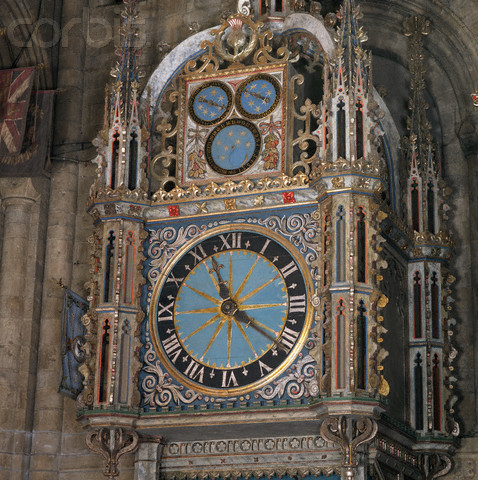
The clock in Durham Cathedral
The mass grave for the Scottish soldiers was not discovered for nearly 300 years when, in 1946, workmen installing the cathedral with a new heating system came across the bodies.
An ongoing campaign is in place to get Durham Cathedral to acknowledge the presence of the Scottish prisoners as well as the inexcusable treatment and deaths they suffered by putting up a memorial, and giving the grave a proper Christian blessing.
The post The Death March to Durham appeared first on ScotClans | Scottish Clans.
]]>