The post Drumnacoub – A Bloody Battle in the Far North appeared first on ScotClans | Scottish Clans.
]]>
The Kyle of Tongue
This battle was an internal feud among the men of Clan MacKay but also involved some Sutherland men. A disastrous battle, it led to the loss of many senior members of the clan and most of the belligerents on both sides.
The origins of the battle begin with an ongoing feud between the MacKays and their neighbours the Sutherland Clan. In 1370 the MacKay chief had been murdered by the Sutherlands in Dingwall. This had led to considerable acrimony between both clans as you can imagine and finally in 1426 Angus Du MacKay and his son Neil marched into Sutherland lands to take revenge. They met the Sutherland clan at Harpisdale.
The battle was more or less fought to a stalemate with no clear winner and considerable slaughter on either side. News of the conflict reached James I in Edinburgh. James wasn’t exactly having the easiest of times and frustrated by yet another inter-clan war he rode north to Inverness and demanded that the clan leaders submit to him. Angus duly complied and volunteered his son as a hostage to guarantee his clan’s good behaviour. Neil was taken to the Bass rock. an island prison in the outer Firth of Forth. During his imprisonment he was given the nickname ‘Vass’ a phonetic spelling of ‘Bass’
While this was going on three cousins of Angus Du: the brothers Thomas Mackay, Morgan Mackay, and Neil Neilson Mackay had a dispute with the Laird of Freswick – a man by the name of Mowat. Thomas pursued him to the chapel of St Duffus in the town of Tain. Mowat claimed sanctuary at the chapel but Thomas killed him anyway and burned down the chapel for good measure. As anyone who has followed the fortunes of Robert the Bruce will know murdering someone in a house of worship was a serious breach of etiquette and burning it down was even worse, so once again James I was forced to intervene so he denounced and outlawed Thomas, promising his land and possessions as a reward for his capture dead or alive.
Angus Moray (of Clan Sutherland) apprehended Thomas and handed him over to the law, however there was clear suspicion that Thomas’ own brothers; Morgan and Neil Neilson had assisted Angus Murray for a share of the spoils. Thomas was carted off to Inverness and executed and this apparent betrayal within the clan (made even worse by conspiring with a Sutherland) split the clan.
The Earl of Sutherland – seeing a good opportunity to break the power of the MacKay clan further supported Morgan and Neil Neilson by offering his own daughters in marriage (though they had already married Moray’s daughters). As well as helping them make a bid for the MacKay lands.
Back in Caithness Angus Du and his illegitimate son John Aberach Mackay were in a tight spot. Angus was by now an old man and had no will to fight, preferring to make some sort of settlement with his cousins. He offered all his land apart from Strathnaver but they refused the deal, intending to take all of MacKay lands for themselves. At this point Angus’ illegitimate second son John Aberach Mackay stepped in to advise the elderly chief and offered to defend the MacKay lands or die trying.
Some time between 1427 and 1433 (exact dates are unclear) the two sides met at Drumnacoub (Druim na coub, Drum-ne-coub) a few miles from the coastal village of Tongue on the North East coast.
The battle was a long and terrible one with both sides suffering heavy losses, by the end of the day Neil Mackay, Morgan Mackay and Angus Moray were all dead, John Aberach Mackay was severely wounded (possibly loosing an arm) and lay critical on the battlefield and very few from around 3,000 men (around 1,500 on either side by some estimates) were left standing.
Angus Du in despair asked to be carried to the battlefield to search for his son John but an opportunistic Sutherland archer spotted him and killed him with a well aimed arrow.
Shortly after the battle the remaining MacKay clan had to consider who would succeed as chief. Many supported John despite his illegitimacy but as fortune would have it Neil ‘Vass’ MacKay escaped from imprisonment at the Bass rock and made his way back north (it turned out the governor was married to a MacKay and she possibly helped him break out). John deferred to the legitimate heir and Neil was made chief. John was given lands around Lochnaver.
Neil pursued the Sutherlands who had supported the potential usurpers and a year later took revenge at the Battle of Sandside Chase. The widow of Neil Neilson and his son were given fairly rough treatment at the hands of those loyal to Angus Du’s side and for their own safety the moved to Olrig in Caithness. John dropped the name MacKay and became known as John Bain, progenitor of the Bain Family.
The post Drumnacoub – A Bloody Battle in the Far North appeared first on ScotClans | Scottish Clans.
]]>The post Multi-million pound makeover for Carbunkle Award winner appeared first on ScotClans | Scottish Clans.
]]>
John O’Groats
Highland Council has given the go ahead for John O’Groats to receive a £6.5 million face lift from the Manchester based Natural Retreats.
Work is expected to start sometime next year and the company are looking to remodel the Journey’s End cafe as well as transform the derelict John O’Groats hotel into a visitor centre and sixteen eco-friendly, self-catering lodges.
Back in September the most northerly town on the British mainland was given the unwanted title of most dismal town in Scotland, and it has been described as “bleak”. However, there is also a lot of optimism about the possibilities for the area, with Highlands and Islands Enterprise saying that there was potential for a “brilliant development” at the “spectacular location”.
The post Multi-million pound makeover for Carbunkle Award winner appeared first on ScotClans | Scottish Clans.
]]>The post Life On The Edge appeared first on ScotClans | Scottish Clans.
]]>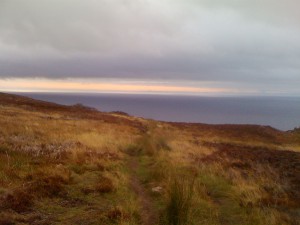
View from Badbea out to the North Sea
On the Caithness east coast, five miles north of the town of Helmsdale, you will see the ruinous remains of the once inhabited village of Badbea which saw its last resident leave at the start of the 20th century.
The Highland Clearances affected thousands of Highland families who were made to move from their homes. Some were persuaded through finacial means, such as having their fare to North America or Australia or New Zealand paid for, whilst the more unfortunate were forced out through violence and intimidation, where it wouldn’t be uncommon to see landlords have crofts burnt down. The people of the Highlands who fled ended up settling all over the place; with families moving to the lowlands or cities of Scotland and northern England looking for work in textile or shipping industries; or they emigrated to foreign countries; or some relocated to nearby coastal areas which were deemed unhabitable for the money-making sheep which replaced them.
Badbea was one of these coastal areas that some families were moved to. It was a cliff-top village established in 1793 when a number of tenant crofters were evicted from their homes to make way for the much more profitable sheep. The families were displaced on a steep, rough, small area of land. They were forced onto the tight area between the high Berriedale cliffs facing the North Sea and a large drystone wall built to protect the sheep.
Sir John Sinclair of Ulbster was the landowner who forced out many of the families from the nearby town of Ousdale, destroying their crofts to create room for the sheep. Sinclair was a politician, and also a writer on finance and agriculture who was a strong advocate for the protection and improvement of British wool.

The Badbea Monuement
Badbea was a tough place to live in; the conditions were horrendous with the land being barely fertile enough for the crofters to live on. Many of the families living there were from Ousdale, though there some from Auchencraig and Kildonan.
Each family who arrived was given their own plot of land to live on and farm. However there were no buildings actually present, and the families would have to clear their area and hack away at the difficult terrain and then build the houses from the stones they found. Each plot had enough space for a longhouse with a shed at the end, a couple of outbuildings and a kailyard. The rest of their land was then used for some cattle, a pig, and a few chickens. It was kind of primitive living for the most part as the whole village only had one horse, and so had no plough. Instead the fields were ploughed manually with the men using a spade-like instrument called a chaib. The harrow needed to be pulled by the men instead, and the manure was carried by the women on their backs in creels.
The families were industrious and frugal, with each household having a spinning wheel in the home where the young women would learn spinning and carding.
With the land provided it was impossible to be able to make a living from farming. The area wasn’t incredibly fertile, with the land being quite rocky. Also being right on the coast like they were the winds coming in from the North Sea were so violent that it would have been practically impossible to grow anything substantial there anyway. In fact, the winds were so strong that when the adults were working any children or livestock outdoors had to be tethered to rocks or posts to stop them being blown over the precipice.
Herring fishing was the the main source of income. The men would go to sea, and the women would gut what was caught. Fishing was a very dangerous occupation, especially in the North Sea. Before the Clearances most of these people lived in the sheltered inlands of the straths and the glens, and so were not accostumed to being out at the sea. However, at its height there were 13 fishing boats in use, and the herring fishing provided a lot of food for all families, including for the widows who had children to support children.
By 1814 the Laird’s Estate had been sold to James Horne. At this point the population of Badbea was 80 people within 12 different families. Though for the families in Badbea, this would turn out to have unfortunate consequences.
Donald Horne, James’ nephew, put a stop to the herring fishing, favouring to fish salmon instead. This put a stop to the community’s main form of employment, meaning that the people had to survive on much less, and the widowed families having to occasionally do without. However there were other means of income. Some of the women would weave baskets, or make flails of birch for threshing corn corps and then sell them at Dunbeath Market in November.

Inscription on Badbea Monument
On the landlord’s estate there would sometimes be some menial jobs to be done by people from Badbea, but the rate of pay would be very low, and in no way appropriate. This would encourage some of the men to look for work on other estates or elsewhere. However, if they were caught doing this by their landlord, as punishment the men and their familied could face being evicted from Badbea.
A notable resident of Badbea was John “Badbea” Sutherland. John was a very popular and respected member of the community. He lived most of his life in Badbea where he was preacher and doctor to all. John was thought of as a man of great piety and worth, and it is said that he possessed the only watch in the village. John died in his house at the age of 76 on the 31st August, 1864 and was burried in the burial ground at Berriedale.
The village of Badbea was occupied for over 100 years, with the last resident leaving in the early 1900s. In 1911 a memorial was errected in honour of the families who lived in Badbea and suffered during the Highland Clearances. The man who commissioned the monument was David Sutherland who visited Badbea in 1901 when only two tenants were left. Born in New Zealand, David was the son of Alexander Robert Sutherland who was born in Badbea and brought up by John “Badbea” Sutherland. Alexander emigrated to New Zealand in his 30s in 1839 and although he prospered in his new country, he never forgot Scotland. The memorial was built using the stones from the croft that was lived in by John “Badbea”.
The post Life On The Edge appeared first on ScotClans | Scottish Clans.
]]>The post The Battle of Altimarlach – Scotland’s last Clan Battle appeared first on ScotClans | Scottish Clans.
]]>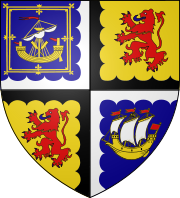
The Arms of the Earl of Caithness
The 13th of July, 1680 saw the last significant clan battle to be fought in Scotland, with the Sinclairs, under the command of George Sinclair of Keiss, taking on the Campbells led by Sir John Campbell of Glenorchy, fighting over the right to the Girnigoe Estates in Caithness.
In 1676, George Sinclair, the 6th Earl of Caithness died without an outright heir, and both Glenorchy and Keiss believed that they were entitled to inherit the estate.
During the latter half of the 17th century, economically, things were bad for many of the Highland clans, with some struggling to survive financially. The Earl of Caithness was one of those in desperate need for money with the Sinclair estate virtually bankrupt. It is alleged that he borrowed money from the Campbells for the purpose of shoring up the clan’s estates. On the death of the Earl, Sir John Campbell, being the main creditor to Sinclair, obtained the Girnigoe Estates as well as the Earldom in 1677 as repayment for his loan.
By 1678 he had married the late Earl’s widow, the Countess of Caithness. However, it is said that the only reason why Campbell married the countess was a financial one because it saved him having to pay her an annual 12,000 marks.
George Sinclair of Keiss was unhappy with Campbell’s accession to the Earldom, and disputed the claim. Keiss put forth his claim to the Earldom by stating that he was a direct relative of George Sinclair, and he went on to seize the Caithness estates, as well as occupying areas in and around the town of Wick.
The dispute continued and it saw Campbell gaining royal permission to invade Caithness and uphold his claim as the rightful Earl. Along with his own men, Campbell was provided with several companies of the king’s troops, and they marched north to Wick from Perth. They arrived on the 18th of May and camped at Braemore, near Morven. This was part of the Berriedale estate which Campbell laid claim to as Earl of Caithness.
The army, believed to be 800 strong, marched on on the 12th of July and reached the Hill of Yarrows, which was known for a long time as Torran nan Gael – the Highlanders Hill. From there Campbell and his men had a great view of the surrounding area. Whilst on the hill a thick mist descended, and Campbell decided to take this opportunity to advance on Wick. However, the mist lifted as he was heading down, and the alarm was promptly raised by the Sinclair forces in the town.
When Campbell and his men reached the bottom of the hill they headed for Stirkoke and Altimarlach where he split his army in two; deploying one lot on the haugh, and the rest were hidden in a gully. Sinclair moved his men, estimated to be around the same size as Campbells, out of the town and headed along Wick River to meet the enemy army. As they reached the haugh, just at the point where a burn met the river, the Campbells launched a surprise attack, followed shortly by an ambush by the men in the gully. The Sinclairs were in a tight position, pressed against the river bank. At this point the Wick River is rather deep, and as the Campbells pushed forward many of the Sinclairs fell into the water and drowned. For those who fell in to the flowing river, but managed to make it across to the opposite bank, on the Moss of Bronsie, awaiting for them there were reserves from Campbells army who summarily continued the fighting, killing many who made it across.
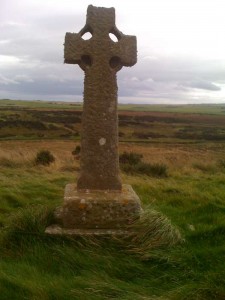
The monument to the battle of Altimarlach
The battle ended in a decisive victory for Sir John Campbell of Glenorchy, and it is generally viewed as a humiliating defeat for the Sinclairs. Legend claims that so many Sinclairs were killed or drowned in the river that the Campbells were able to cross without getting their feet wet. It is estimated that Sinclair lost around 300 men in the battle, whilst Campbell saw few from his side killed, and those that did die were buried where a commemorative cross now stands.
Peace was made however the following day when a truce was signed in the old Wick Town Hall, just east of present day Market Square.
Afterwards, Campbell split up part of his army around Caithness, where he levied the rents and taxes and ruled over the people in an oppressive manner.
It is said that on Campbell’s march to Caithness, to claim the estates, his piper, Finlay Ban MacIvor, composed two famous pipe tunes: Breadalbane Gathering and The Campbells are Coming. The former was said to have been played spontaneous in the middle of the battle, not long before the Sinclairs began to give way. Until relatively recently it was considered a gross insult to play either piece in Wick.
Campbell remained Earl of Caithness only until 1681. It is thought that George Sinclair had some influential and powerful friends, because he took his case to the Privy Council, and by act of parliament George was granted the Earldom, making him the 7th Earl, and putting the title back into the Sinclair family where it has remained ever since.
The post The Battle of Altimarlach – Scotland’s last Clan Battle appeared first on ScotClans | Scottish Clans.
]]>