The post The Battle of Prestonpans! appeared first on ScotClans | Scottish Clans.
]]> 271 years ago, a mere 12 miles from Edinburgh, one of the first and arguably one of the most important battles of the Jacobite Rising of 1745 took place. It was the first step in a campaign to place a Stuart back on the British throne.
In the early half of 1745, Charles Edward Stuart or Bonnie Prince Charlie, saw an opportunity to reclaim what he considered to be his father’s two kingdoms, Great Britain, formally united in 1707, and Ireland. George II and the British army were occupied in the War of the Austrian Succession, leaving only around 6,000 troops to defend England. Aided by the early support of Donald Cameron of Lochiel, XIX chief of Clan Cameron, he and is party of men were successful in raising a force of 2,000 Scots.
With word of this force ready to march on the Lowlands, it was up to Sir John Cope to give a response root he government. Cope was the general in command of the 4,000 government troops stationed in Scotland, but unfortunately the most of his troops were only recently raised and as a result inexperienced. Cope and his troops marched on Fort Augustus in the heart of the Highlands in an effort to awe the Highlanders into surrender and end the rebellion before it had truly begun. Upon hearing that the rebel army was looking to oppose him at Corryarrack, he instead marched to Inverness hoping to be the one to decide the battleground. Cope had underestimated the men commanding the rebel forces.
Bonnie Prince Charlie and his troops marched straight down to the Lowlands, which by now were almost undefended. A small force which held Edinburgh retreated in the face of the superior foe, leaving the city open for the taking. On 16 September, some of Prince Charles’s army captured the city with little or no fighting, though Edinburgh Castle was still defended for the government. Cope meanwhile furiously marched to Aberdeen are he had urgently ordered ships, so he and his troops could make haste o the south. On the same day the Jacobites took Edinburgh, Cope and his men disembarked in Dunbar.
Even though Cope knew his troops were far from the best, he was determined to engage the Jacobite force. His intelligence told him that the rebels only numbered around 2,000 men, and whilst they were fit and hardy, they were ill-equipped. Cope believed this would mean his force, in two regiments of dragoons and three and a half regiments of infantry, should easily overpower them. It was even said that on their march towards Edinburgh they assured the locals that there would be no battle.
It was on the 20th of September that the two forces first met, just outside Prestonpans near Preston house. The Jacobite army had secured the high ground to the south of Cope’s position, but Cope was determined to face the rebels and made the best of his situation. He drew up his force facing south using the park walls of Preston house to provide protection for the right flank and a marshy bog to the front. Although they had secured a good position the Jacobites were dismayed by the way Cope had taken advantage of the land. A traditional Highland charge would flounder in the marshes and be decimated by musket and cannon fire. The senior Jacobite officers knew they must change their plans if they were to come away victorious but could not agree on what should be done. It was Lord George Murray who pushed for them to move their force to the East so they could assault the exposed left flank of the government forces and it was Lieutenant Anderson, a local farmers son, who knew the lay of the land and knew of a way to get the force where it needed to go. At 4am on the 21st the Jacobites began to move, 3 abreast along a narrow defile, in order to reach the east flank.
 Meanwhile, Cope had noticed some movement in the opposing force juts before dark, though this move was the result of confusion in the Jacobite ranks and was abandoned. He feared that the Jacobite planned to attack both his flanks and thus redeployed in forces in a north south front, the formation that they would fight in the next day. He also ordered that 200 dragoons and 300 infantryman should take on picket duty and light fires in the front of his position in order to thwart any plans for a surprise night attack. Cope felt secure with these measures and in addition ordered 3 companies of Louden’s Highlanders to guard the baggage park in Cockenzie, as well as dismissing some 100 volunteers ordering them to report back in the morning. Cope also made a last minute attempt to gain reinforcements from Edinburgh Castle, requesting Artilleryman to attend his position. It would be for nought though, as the battle would take place a lot earlier than Cope had expected.
At the crack of dawn on the 21st September, Cope’s Dragoons beheld a spectacle that would send a shiver down any sane mans spine. Out of the early morning mist, making “wild Highland war cries and with the bloodcurdling skirl of the pipes” came 1,400 Highlanders charging straight towards Cope and his men. Cope’s inexperienced army wheeled to meet a foe they were not expecting to come from the east, and Cope even managed to scramble some artillery into position. Undaunted by the light and inaccurate fire the Highlanders continued their charge. The centre of this charge became bogged down in an are of marshland, which meant the straight line of the charge became a v formation. The wings on either side met with the dragoons on either side of the British force, which caused them to immediately flee.
This meant that Cope was left with only the centre of his force, which also happened to be the experienced Royal Infantry. Unfortunately for hem the unplanned flanking manoeuvre by the Jacobites, which happened when the wings of the v wrapped around the side of the Royal Infantry and the centre met them head on, meant the were effectively surrounded by Highlanders and they suffered for it. After sustaining heavy casualties they eventually gave way.
Around 10 minutes after the battle had begun, it was over. Hundreds of government troops were dead or injured, and thousands were taken prisoner whom Bonnie Prince Charlie himself ordered should be treated with the greatest of care. The Jacobite’s on the other hand had only suffered around 100 casualties. Cope still in charge of around 200 men, pulled them away to reorganise and rally them in an adjacent field, but they refused to engage the enemy further. Cope had no choice but to retreat and make the long journey south to the relative safety of Berwick-upon-tweed.
Cope’s baggage train in Cockenzie was seized giving the Jacobites around £5000, many muskets and plenty of ammunition but this was not all the victory gave to the cause. It signalled the true beginning of the rebellion, greatly boosting the morale of the Stuart supporters, and causing a surge in recruitment to the Jacobites in Scotland. The battle cemented the seriousness of this new Jacobite rebellion and it’s effectiveness to claim victory in the battles to come.
 A cairn was erected in 1953 to commemorate the memory of all those that fell in the battle. A coal bing was also erected, atop which flies Prince Charlie’s battle flag, using the remains of the area’s coal shale shaped into an obelisk to provide a vantage point for today’s visitors.
In 2006 the Battle of Prestonpans 1745 Heritage Trust was established with the goal to ensure much better presentation and interpretation of the battle. Plans include a visitor Centre in the grounds of Prestongrange Industrial Heritage Museum, ‘Living History’ battle re-enactments, battle-related storytelling and new novels, and a new ‘Flowering of the Arts’ including embroidery.
In 2008 the Trust commissioned Glasgow University Archaeological Research Division to undertake a comprehensive survey, followed by selective excavation, of the battlefield. Although it was thought that the location of the battlefield was known for years the team actually discovered that the true site was located some 500 yards away. Based on concentrations of musket balls and other evidence, this new site is where it is believed the Highlanders charge actually took place.
Details of all the Trust’s activities can be found at its website - www.battleofprestonpans1745.org
The post The Battle of Prestonpans! appeared first on ScotClans | Scottish Clans.
]]>The post What is a Quaich? appeared first on ScotClans | Scottish Clans.
]]>

Clan Crest Engraved Large Thistle Handle Quaich
The quaich is a traditional Scottish drinking vessel which was used to offer a guest a cup of welcome and also a farewell drink, usually a dram of whisky. The quaich has a rich heritage in Scotland. Indeed, they are a uniquely Scottish invention, having no apparent connection to any other European drinking vessel.
The word quaich comes from the Gaelic word ‘coach’, meaning cup and is pronounced ‘quake’. To be really accurate the ‘ch’ sound at the end of the word is sounded as in the word ‘loch’, which can be tricky for non Scots.
Quaichs are generally shallow, circular in shape and traditionally made from wood, with a pair of small lug handles projecting horizontally from opposite sides of the rim. The lugs, though functional, are of a unique curved style adding to the character of the quaich.
The making of these cups was an intricate art y which the quiach was either turned from a solid block or built up with tiny staves. The best quaichs, considered to be masterpieces, were built up with light and dark wood staves and bound round with withies or metal bands. The dozen or so staves of alternating woods such as plane-tree or laburnum were coopered together and also ‘feathered’ into each other; This was a technique in which small slivers of wood were split away from the sides of the staves and slotted into equivalent parings cut in the opposite direction.

Clan Crest 3in. Pewter Quaich With Gold Coloured Trim
As use of metals became more common int he late 17th century, so the quaich came to be made form brass, pewter, silver and sometimes a combination of these materials. When making a metal quaich the original design was kept but, where the originals wooden versions had solid, thick bases, metal quaichs were designed with a deeper and more bowl like inner cavity; reducing the overall weight while still retaining the outer shape. Thus the ladies of the era were saved the struggle of drinking elegantly from something that weighed the same as a large rock.
Quaich making became a highly regarded profession in 17th century Scotland. It’s likely quaichmakers made a large variety of different items, but took the name of their profession from their most accomplished and adored work.
Having originated in the Highlands, the quaich didn’t become popular throughout Scotland until around the 1740′s, when quaichs were carried from the north of Scotland with the canteens of the armies of Bonnie Prince Charlie. As a result the quaich was introduced to the Lowlands, making it as far south as Edinburgh. There are even accounts of quaichs being used as far south as Derby. The quaichs used by the Princes army are said to have glass bottoms, allowing those sipping a dram to keep an eye on what was going on around them; surely a sign of treacherous times.

Clan Crest Engraved Pewter Birthstone Quaich
Today quaichs have become a common site during Scottish wedding ceremonies. The newly married couple will each take a hold of one of the handles as they share a drink to symbolise their love, togetherness and trust. They may also pass the quaich around the guests to reinforce the trust and happiness of the couple, the families and all invited.
Many people today still offer welcome toasts to their guests using the quaich, but most give them as a gift to those they hold dear, or to celebrate a joyous occasion, such as a birth or marriage. These beautiful Scottish drinking cups are displayed in homes the world over and are, overwhelmingly, seen as a symbol of love, friendship, admiration and respect.
Take a look at our full range of quaichs HERE or take a peek at some of our favorites below….


The post What is a Quaich? appeared first on ScotClans | Scottish Clans.
]]>The post Top 5: Whisky of the Clans appeared first on ScotClans | Scottish Clans.
]]>1. Dalmore

Dalmore 12 Year Old Whisky
In 1263, an ancestor of Clan Mackenzie saved King Alexander III of Scotland from being gored by a stag whilst out hunting. The grateful King granted the Mackenzies the right to bear a stag’s head, with twelve points to its antlers, signifying a ‘Royal’ in their coat of arms. Today every bottle of the Dalmore single malt is adorned with the clan’s proud emblem. The distillery is located on the northern shores of the Firth of Cromarty overlooking the Black Isle, and was originally established in 1839 by Alexander Matheson, a trader who made his fortune in opium imports. The Mackenzie family bought the distillery in 1866 and have recently begun to use the Mackenzie motto of Luceo Non Uro (I shine, not burn) as the company’s philosophy. The Dalmore Single Highland Malt Collection is matured in a wooden casks (both sherry wood and American white oak) which, along with the years and the climate, contributes to the flavour of each malt.
2. Clan MacGregor

Clan MacGregor Blended Whisky
Clan MacGregor blended whisky takes its name from the highland clan, honouring one the descendents of ancient Celtic royalty as proclaimed in the motto ‘Royal is my Race’. The blend is made from 15 malt and grain whiskies from the heart of Scotland, blended to create a delicate, sweet aroma and smooth, mellow taste. The bottles proudly carry the Clan MacGregor badge and motto, and with his kind permission, the personal crest of the 24th Clan Chief, Sir Malcolm MacGregor of MacGregor. The Clan badge, a crowned lion’s head on a wreath encircled with a belt and buckle, signifies the unity and loyalty of the clan who suffered two centuries worth of oppression. It is enjoyed in over 60 countries around the world, from the USA to Venezuela and the Middle East to Thailand.
3. Talisker

Talisker 10 Year Old
My personal favourite, this wee gem of single malt is produced at the Talisker distillery on the shores of Loch Harport on the Isle of Skye. It’s the only distillery on the isle, with the distillery’s seaside home giving it a deep peaty character followed by a hint of sweet. The distillery was built in 1831 by brothers Hugh and Kenneth MacAskil after they acquired the lease of Talisker House from the chief of Clan MacLeod. When a new lease for the distillery was negotiated with the chief in 1892 the annual payment was to be £23.12s and a ten-gallon cask of best-quality Talisker. Today the single malt continues to be the preferred dram of clan chiefs – the MacNeil of Barra leases their seat of Kisimul Castle to Historic Scotland at a cost of £1 per annum and a bottle of Talisker. In 2007 Talisker 18 year old won ‘Best Single Malt in the World’ at the World Whiskies Awards and was one of three whiskies described by poet Robert Louis Stevenson as “The king o’ drinks, as I conceive it” in his poem The Scotsman’s Return From Abroad.
4. Clan Campbell

Clan Campbell Blended Whisky
While the link between this blended whisky and the actual clan is unclear, the whisky takes it names from the clan who have 14 million descendents around the globe. Clan Campbell is one of the largest clans in Scotland and renowned for its bravery and influence over the country’s history since the 13th century. The whisky is distilled, blended and aged in the Highlands, combining Scotch grain and malt whiskies that have aged in oak casks for at least three years. The present clan chief, Torquhil Ian, combines his duties as Duke or Argyll, chief and landowner with a consultant role with Pernod Ricard, promoting Scotch Whiskies including Chivas Regal and Glenlivet.
5. Drambuie and Glayva

Drambuie Liqueur

Glayva Liqueur
Technically not a Whisky, Drambuie is a sweet golden coloured liqueur made from malt whisky, honey, herbs and spices. Produced in Broxburn, West Lothian, Drambuie derives its name from the Gaelic phrase an dram buidheach, (the drink that satisfies). After the Battle of Culloden in 1746, Prince Charles Edward Stuart fled to the isle of Skye. There, he was given sanctuary by Captain John MacKinnon of Clan MacKinnon. According to family legend, after staying with the captain, the prince rewarded him with this prized drink recipe. This version of events is disputed by historians who believe it to be a story concocted to boost sales of the drink. The MacKinnon family produce the liqueur to this day. A similar liqueur is Glayva, produced in Leith since 1947. It made from a blend of aged Scotch whiskies, herbs, anise, cloves, almonds, heather honey, and citrus fruits. Legend has it that when Bonnie Prince Charlie was served a whisky based liqueur, he looked at his host, held up the glass and spoke the Gaelic “Gle mhath!”(very good) thus giving the drink the name it carries to this day.
The post Top 5: Whisky of the Clans appeared first on ScotClans | Scottish Clans.
]]>The post A Beginner’s Guide To The Jacobites appeared first on ScotClans | Scottish Clans.
]]>The reason I wrote this was to put together a newbies guide to what this period of history was all about, what started it and most importantly to dispel the misinformation that this was some Scotland V England struggle. Ive tried to keep it as light and simple as possible, I tested it on my 12 year old daughter last night and it made sense to her so fingers crossed here goes….

Charlie Tour T Shirt
It all started with King James the VII as we called him in Scotland or James II as he was known in England. He was the second surviving son of Charles I
First, A bit of Background…
Charles I had a pretty difficult relationship with parliament and this led to the English Civil War, which, actually started in Scotland not England when Charles managed to also get on the wrong side of the Church as well and started the bishop’s war. Incredibly the Bishops war was started by Charles attempting to introduce a new prayer book so two sides who couldn’t agree on how to give praise to the same god started a fight which spilled over into Ireland and then into England like some sort of viral cowboy bar brawl and ended up creating the biggest armed conflict on British soil. Say what you like about the Scots we are damned good at starting a fight.
Charles lost the war and his head in 1649 which in turn led to Oliver Cromwell, the Protectorate and a ban on Christmas, singing and anything else regarded as mildly fun. When Cromwell died of a mixture of malaria and kidney stones he was succeeded by his son who couldn’t get the hang of ‘protecting’ at all and the Monarchy was restored, Charles II became King with much rejoicing and Cromwell was executed, yes I know he was already dead but they hung him again anyway just to make sure.
Charles II was known as the ‘Merry Monarch’ and his reign began with one massive party although it wasn’t all fun since his reign also included the great plague and the great fire of London. Charles II had one last laugh on his people though when he converted to Catholicism on his deathbed.
Now it would take more time than I have here and more pages than I’d like to fill to explain why the Monarchy and parliament had a bit of an issue with Catholicism so trust me, from around the time of the Tudors they most definitely did, it goes without saying that the Church of England were not huge fans, after all they were the competition in the business of eternal life and The Catholic church had some pretty good moves like ‘give us lots of money and we will fast track you through purgatory’ etc.
Charles’ late entry into the world of Catholicism before his exit from the world of the living was inconvenient to say the least but with no heir the next in line was his brother James and what wasn’t so well known was that James had been a practicing Catholic for some time. Like it or not Britain was about to get a Catholic monarch.
James VII takes charge (briefly)…
This led to a number of problems for James. For starters two rebellions kicked off, one led by Duke of Monmouth and another by Campbell of Argyll in Scotland, Argyll’s rebellion came to nowt as they say and his head was soon gracing the space formerly occupied by Royalist hero and shampoo model the Marquis of Montrose. Monmouth was a tougher nut to crack and James also had another issue to deal with, literally as he had quite inexplicably allowed his daughter to marry his protestant Dutch nephew William of Orange, a bit of an own goal as this handed the protestant supporters a ready made replacement..
The protestant nobles called on William and over he came in 1688 to take the throne, James legged it and in the process chucked the Great Seal of the Realm into the River Thames. He was captured before he could leave England but William, not keen to create a Stuart martyr sort of turned his back, whistled a bit and left the cell door slightly open and allowed James to escape. After a great deal of parliamentary debate it was decided that James throwing the Great Seal in the Thames like Dirty Harry throwing away his cop badge was really an act of abdication so that was good enough for them (don’t let anyone ever tell you there aren’t any seals in the Thames). They also quickly shored up the legislation to make sure there could NEVER be another Catholic monarch, a statute that has stood to this day, albeit recently amended.
So that was it. The Stuart dynasty that had ruled Scotland for nearly 300 years and latterly the whole of the newly United Kingdom was over, or was it?
James was determined for a rematch and his campaign began and pretty much ended in Ireland with defeat at the Battle of the Boyne, an event that has been celebrated by the Orange Order to this day, mostly by people in bowler hats parading with flute bands round small towns in Northern Ireland and Lanarkshire.
If anyone wants to discover what is essentially wrong with Scotland then you have to look no further than the petty sectarian nonsense that has plagued this country since then. Where we have become a country divided by tribal lines mostly based on which Glasgow based football team you support, insular, inward looking and regressive.
But enough about that back to the Jacobites…
The Old Pretender…
James may have been done with the throne of Britain but his progeny were not. His second daughter, Anne became queen in 1702. Queen Anne gave us many things including the Act of Union and bow legged furniture (considering she had 17 pregnancies during here reign you can see where they got the idea from).
When Anne died in 1714 succession fell in a rather oblique way to George of Hannover, a German and grandson of James VI(and I) as the nearest non Catholic everyone could agree on. (there were 50 more eligible Catholics in the way which the Act of Settlement conveniently ignored).
A year later in 1715 the Whig party won a majority to become the new government defeating the Tory party. Many rebels in the Tory party were Jacobites (from ‘Jacobus’ the Latin for ‘James’) and supported the return of the Stuart Dynasty. James VII was long dead but his son James Francis Edward Stuart was very much alive and in exile in France. Although the support for his claim sprouted in the Tory rebellion in London it really took root in Scotland. There was still a strong Catholic contingent in Scotland and James was able to get support from them. He arrived in Scotland in 1715 to start his campaign to regain the throne but it didn’t go at all well. James (the Old Pretender) was timid, didn’t like crowds and couldn’t handle cold weather, not ideal traits for fighting battles in Scotland!
He abandoned the whole idea in 1716 and headed back to France where he was welcomed with… folded arms. And sent off to Italy to bother someone else.
In 1719 he married Maria Clementina Sobieska a Polish princess and they had two sons, the eldest being Charles Edward Louis John Casimir Sylvester Severino Maria Stuart (I’d hate to have been the one icing his birthday cakes), fortunately he was more commonly referred to as Charles Edward Stuart or ‘Bonnie Prince Charlie.
Charlie was a very different man to his father. Born in Italy he was determined to restore the Stuarts to the throne so his father named him regent in 1743 and his adventures began…
Bonnie Prince Charlie and the ’45…
Charlie managed to get some support in kind from France and was given a pair of well fitted out ships. His hopes of getting some well fitted out men too were less successful but nevertheless he set off for the West of Scotland, preferring his fathers recruiting ground to the North. The Jacobites still had much support from the Northern Clans mostly, but not exclusively Catholic, he also had Jacobite support from Ireland and places like Carlisle and Manchester in the North of England.
Resistance to the Jacobites came not just from England (who made up the bulk of the UK population and still do) but also from Scotland and Ireland.
As everyone probably knows by now the second Jacobite rebellion made it as far south as Derby before turning back when they picked up far less support along the way than they were expected, the additional French troops didn’t turn up and the Scots army were frustrated at the lack of square sausage and irn bru.
They headed back for Scotland, managing a last hurrah at Falkirk before the whole thing came to a sticky end on Culloden Moor in 1746. Bonny Prince Charlie fled the field and pursued by redcoats managed to hide in every cave in Scotland if tourist brochures are to be believed, disguised himself as a woman and high tailed it back to France, where after numerous affairs, not the least of which was with the bottle, he died in Italy.
The reason I was inspired to write this really is because all too often I see Culloden mentioned as some sort of romantic defeat where the dastardly English dashed Scotland’s hopes. This is sentimental rubbish. If you really want to understand Culloden and the Jacobite rising all you need to do is memorize this Sentence:
“Culloden was a battle between an army of Scots, English and Irish led by an Italian against an army of Scots, English and Irish led by an Englishmen with a German dad representing a German king over the throne of the United Kingdom.”
Simples…
The post A Beginner’s Guide To The Jacobites appeared first on ScotClans | Scottish Clans.
]]>The post The Sonny Sonny Banks of Loch Lomond appeared first on ScotClans | Scottish Clans.
]]>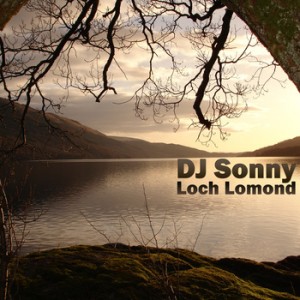
Loch Lomond by DJ Sonny
In the little community of Marchmont in Edinburgh, one of the interesting characters you’ll see about the streets is Sonny Fascia, otherwise known as DJ Sonny. I first met Sonny at the cosy pub in the heart of the area The Earl of Marchmont, where he introduced me to his unique brand of Scottish turntablism and hip-hop.
Upon further research into Sonny’s repertoire I discovered his version of the traditional Scottish tune Loch Lomond, which samples American jazz artist Maxine Sullivan’s 1955 recording. The song became a career defining hit for Maxine, and coincidentally was the first and last song she recorded over her 40 year career. Sonny’s version is a distinctly more 21st century affair – mixing jazz, beats and scratch to form an upbeat and contemporary version of the veteran Scottish classic.
Loch Lomond is one of those perennial tunes that has had the ability to stay popular over hundreds of years, through either its infectious melody or the surprisingly dark historical context behind the song. Unfortunately nothing concrete is known about Lomond’s original composer, however the tune’s conception can be traced to sometime between the Jacobite Rebellion of 1745 and the song’s earliest printed publication in 1841. In John Purser’s monumental 1992 work Scotland’s Music, Purser states that the song is usually attributed to a languishing Jacobite prisoner sentenced to death in a prison at Carlisle around the time of the Rebellion.

Early publication, circa 1880
According to legend, the Government soldiers were rather fickle in the way they decided the fate of the Jacobite prisoners. Some were picked at random to be hung, while others were simply released and told to walk home back to Scotland. The dominant theme of the song is said to refer to the ancient Celtic belief that if you die away from your home country, then your spirit returns home by an underground route called ‘the low road’. However the lack of a definitive connection with the songwriter lends the song open for a multitude of interpretations – with others believing the song was sung by the lover of a captured Jacobite soldier set to be executed in London following a show trial. The heads of the executed soldiers were then set upon pikes and exhibited in all of the towns between London and Edinburgh in a procession along the ‘high road’ (the most important road), while the relatives of the soldiers walked back along the ‘low road’ (the ordinary road traveled by peasants and commoners). In another version dated around 1880, the song’s lyrics have been altered to become a lament between Jacobite heroine Flora MacDonald and Bonnie Prince Charlie (see image).
Refrain:
O ye’ll tak’ the high road and I’ll tak’ the low road,
An’ I’ll be in Scotland afore ye;
But me and my true love will never meet again
On the bonnie, bonnie banks O’ Loch Lomond.
Verse 1:
By yon bonnie banks and by yon bonnie braes,
Where the sun shines bright on Loch Lomond.
Where me and my true love were ever wont to gae
On the bonnie, bonnie banks O’ Loch Lomond.
Verse 2:
‘Twas there that we parted in yon shady glen,
On the steep, steep side O’ Ben Lomon’,
Where in purple hue the Hieland hills we view,
An’ the moon comin’ out in the gloamin’
Sonny’s version of Lomond came about after a fruitless search on the net for hip-hop with a Scottish flavour. He made the song over two days and released it earlier this year online. A regular DJ at clubs around Edinburgh, Sonny produces music through his record label Burgh Records and forms half of the Scottish hip-hop group Perfect Practice. After DJing his way around the world, Sonny returned to Scotland and began producing his own hip-hop gaining him an international following.
The song has been appropriated by artists in many different mediums over the years including Bill Haley & His Comets, Mark Knopfler, Rod Stewart, Runrig and AC/DC. The tune is featured in a song sung by Scottish Terrier Jock in the Disney film Lady and The Tramp, and Scottish poet and folklorist Andrew Lang wrote a poem based on the song in 1876:
-
There’s an ending o’ the dance, and fair Morag’s safe in France,
And the Clans they hae paid the lawing,
And the wuddy has her ain, and we twa are left alane,
Free o’ Carlisle gaol in the dawing.(Morag meaning great one in Gaelic, referring to Bonnie Prince Charlie; and wuddy meaning a hangman’s noose).
Whatever the truth of the tune’s origins, the famous song has timeless appeal proved by it’s constant reincarnation in so many endearing ways. Sonny’s 2013 version provides a contemporary connection to Scotland’s history, using an iconic melody bound with a very 21st century way of making music.
——-
You can download Loch Lomond by DJ Sonny by clicking here, and can check out his other tunes via his Bandcamp page.
The post The Sonny Sonny Banks of Loch Lomond appeared first on ScotClans | Scottish Clans.
]]>The post An Unlikely Jacobite Hero appeared first on ScotClans | Scottish Clans.
]]> A number of molehills have sprung up across the battlefield site at Culloden, much to the delight of a Jacobite supporters group. The Circle of Gentlemen – a Highland based Jacobite supporters society – is welcoming the site’s newest residents and hoping the creatures will be kept from harm.
Said to have played a role in the death of Protestant monarch William of Orange, the humble mole is much respected in Jacobean circles. In 1702 King William III’s horse stumbled on a molehill, causing him to fall and break his collarbone, subsequently developing pneumonia which killed him. Jacobite supporters still toast “the wee gentleman in the black velvet waistcoat” at gatherings.
Alasdair MacNeill of the Circle of Gentlemen said the Culloden moles are not desecrating the historic site. “Although the molehills have been appearing around Culloden, with some extremely close to markers of where clan leaders are thought to have fallen in battle, there is no concern by the society.”
“The men buried there had no choice in their final resting places but, to the moles, it’s their natural habitat. They have no concept of history or appreciation of the bones they tunnel around. Given this, I can’t really see it as a desecration. Humans souvenir-hunting, or sitting atop a grave mound munching on a Scotch egg is desecration, but moles doing what they were designed to do is entirely different.”
Owners of the battlefield, The National Trust for Scotland, said they are aware of the molehills but are not currently concerned about the numbers – much to the relief of MacNeill. “Perhaps if bones start appearing among the molehills then something may possibly need to be done. But I’m certainly not in favour of any sort of cull.”
William III was a staunch Protestent who deposed King James II and VII of England and Scotland in 1688, during the Glorious Revolution, to prevent Catholicism in the monarchy. This sparked the Jacobite Wars and culminated in the final confrontation of the 1745 Rising at Culloden – the last civil conflict on British soil.
The Circle of Gentlemen were established in Edinburgh in 1748 and were originally a secret society who remained loyal to Bonnie Prince Charlie after the defeat at Culloden. Membership was by invitation only, however in 2011 the group began to accept membership from people anywhere in the world in order to support Jacobite heritage and archaeology projects.
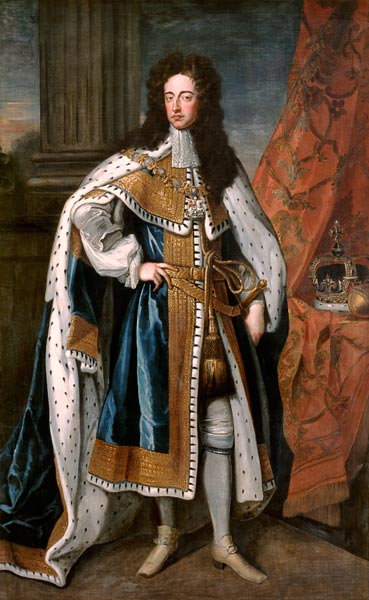
William III by Sir Godfrey Kneller
The post An Unlikely Jacobite Hero appeared first on ScotClans | Scottish Clans.
]]>The post Twilight of the Stewarts appeared first on ScotClans | Scottish Clans.
]]>The Stewarts rose from relative obscurity to a place of importance in the Scottish Court through the 13th century, and during the Wars of Independence they sided with the Bruce faction; and Walter Stewart married Robert the Bruce’s daughter Marjorie. Eventually, in 1371 after a half-century wait for his uncle to die Robert Stewart became king ofScotland. It was the beginning of a dynastic rule that would last 343 years until the death of Queen Anne in 1714. Throughout that time, the family – which employed mafia tactics – extended their control over Scotland, and finally reached the giddy heights of the throne of England.
As British kings their successes were less evident – one was executed and another deposed; and their increasing disengagement with the political momentum and religious intolerance of the times would see the great House permanently exiled. From James VII to his grandson Charles Edward the exiled Stuarts (French spelling) would set up counter-courts in France and Italy; where they’d be hocked from palace to palace maintaining a veneer of royalty and influence. It was back to this fantasy world that the L’Heureux would bring the young Pretender following the disaster of the ’45: but in reality it was to an alcohol fuelled life of obscurity.
Charles’ stay in France was short-lived, for within a couple of years of the rising the British and the French signed the Treaty of Aix-la-Chapelle’ effectively ending the War of the Austrian Succession, which the Jacobite rebellion was essentially part of; and with the deal the Pretender was expelled. He returned to Italy, where his father still held a degree of social influence. Shattered by the failure of the Cause, and haunted by ghosts of Culloden Charles began a string of affairs and sought solace in the bottom of a bottle. His principal mistress was the Scottish socialite, Clementina Walkinshaw, who in 1753 bore him a daughter, Charlotte.
Henry Stuart, Charles’ younger brother took a different route after 1746, perhaps armed with more realism, and entered the Catholic Church. His father was on good terms with the Pope, who still recognised him as the rightful king, and Henry made a meteoric rise through the ranks of the episcopacy, becoming Cardinal-Bishop of Frascati in 1761. While his brother became a Prince of the Church; Charles, drunk half the time, still entertained dreams of fantasy thrones.
In 1759, at the height of the Seven Years War, a conflict that for the first time took on a global perspective, the French drew up plans for a full-scale invasion of England. As part of the project he wanted to enlist the support of the still-loyal Jacobites; and Charles was summoned to Paris. Boorish and unrealistic, the French government were soon repelled by him, and sent him packing: he’d play no part in the operation. However, significant British victories overseas essentially put paid to the expedition and it was permanently shelved. This was Charles’ last true, albeit slim, chance to be king. His drinking worsened, his life increasingly nomadic and his treatment of Clementina increasingly abusive. In 1760 she left him, and took Charlotte with her. There is a strong suspicion that Prince James helped out, and gave her an allowance.

Prince Charles Edward Stuart in later life
As she grew up, Charlotte was bounced from convent to convent as her father refused to provide for her or her mother; and with James dead in 1766 that avenue dried up as well. James Francis Stuart, born in 1688 to James VII was the last prince of the House of Stewart to be born in Britain and to the reigning dynasty. As such the Pope and kings across Europe still either recognised his claim, or treated him on an equal footing. The world by 1766 had moved on, and neither the Papacy nor the crowned heads would give the increasingly distant, melancholic and unpopular Charles the same recognition. His downward spiral continued.
In 1772 he married Princess Louise of Stolberg-Geden; but, due to the nature of the man, now a broken alcoholic, it was doomed to failure: she left him eight years later. Now an old man in ill-health he reached out again to his family, and was reconciled with his daughter; who also engaged her uncle, the Cardinal Henry, to bring the once-Bonnie Prince back to Rome, where she would care for him until he died of a stroke in 1788. Chronically ill herself, she died three years later.
Charles Edward Stuart had lit up Scotland like a firework during the 1745 rebellion; but the rest of his life had been an unfulfilled damp-squib; and on his death the Jacobite claim fell to his brother: Cardinal Henry Stuart. As a successful and powerful clergyman (Henry was raised to the Dean of the College of Cardinals in 1803) he did not press his case. He died in 1807: last of the Royal Stewarts. Both he and Charles were buried within the Basilica of St Peter’s in the Vatican. He may have been the last of the dynasty; but not last of the bloodline.
In the years before she returned to her father, Charlotte Stuart had a long term affair with Ferdinand de Rohan, Archbishop of Bordeaux, which considering his position was a risky enterprise. She had three children by him: Marie Victoire, Charlotte and a boy, Charles Edward. Little is known about the two girls, or whether they married and had children – it is believed that Marie Victoire ended up in Poland (Charles’ mother was Polish) and that Charlotte was absorbed into polite society in England. Either way, they and any possible descendants vanished into anonymity.
The son, Charles became a distinguished soldier and something of a globetrotter; and while he never pressed his Jacobite claim, he did maintain links with leading Scots. Indeed, it was while returning from a meeting with the Duke of Atholl in 1854 he was killed in a coaching accident; and is buried in the grounds of Dunkeld Cathedral in Perthshire. With him, the last of the true direct bloodline ended. Meanwhile, fanatical Jacobites searched around for an heir to Henry Stuart; and with his death the ‘claim’ passed to King Charles Emmanuel IV of Sardinia; the senior living descendant of Charles I Stuart through his daughter Henrietta. In a parallel universe the line has passed down to Franz von Wittelsbach, Duke of Bavaria; although he declines ever to talk about his Stewart ancestry.
The bitter wars of the 17th and 18th centuries shaped the modern Britain that emerged, the nature of the monarchy, and indeed the dynastic future itself. The Royal Stewarts had their time; their crown slipped, fell and it was eventually buried in the setting sun amid the hallowed walls of Dunkeld. And few were there to mourn it.
The post Twilight of the Stewarts appeared first on ScotClans | Scottish Clans.
]]>The post Culloden battle map to go on display in Inverness appeared first on ScotClans | Scottish Clans.
]]>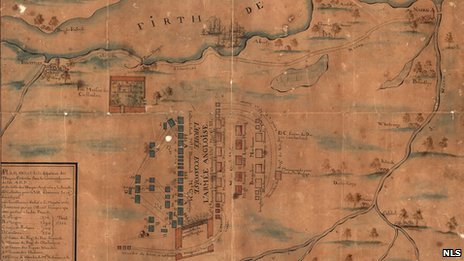
The plan drawn up by a French officer represents a Jacobite view of events
It has just been announced that a of attle of Culloden which was drawn two years after Bonnie Prince Charlie’s defeat to a government army in 1746 is to go on display in Inverness.
The National Library of Scotland will bring the 1748 map to the city’s Farraline Park as part of a road show.
As well as the battle plan, an engraving thought to date from 1797 showing a scene from the Battle of Culloden will be made available.
Martyn Wade, head of the The National Library of Scotland, said: “We always strive to be as accessible as possible and by taking a selection of our books and manuscripts on tour we hope to generate a fresh wave of excitement and remind people about the fantastic resource that is the National Library of Scotland.
“I have no doubt that the chance to see the Culloden battle plan will prove immensely popular and I expect the opportunity to see other original items, not to mention a wide range of Inverness-related items, will be a huge draw for the public.”
The Culloden battle plan was drawn up by a French officer who was present on the day and was done in pen and ink with a colour wash.
It gives a pro-Jacobite view of the battle, in contrast with a much larger number of pro-Hanoverian battle plans which exist of Culloden.
The map was handed down through family lines in French military circles, before being taken to the US and then donated to the NLS.
The NLS said the Jacobite armies are shown in a clearly ordered array, in contrast to written descriptions of the battle and other plans.
The three positions of Bonnie Prince Charlie, shown by stars, are also said to be questionable, especially one to the front of the Jacobite lines.
However, there are said to be excellent details of the armies, commanders, and various regiments and clans, all named or listed at the base of the map
The post Culloden battle map to go on display in Inverness appeared first on ScotClans | Scottish Clans.
]]>The post Bonnie Prince Henry? appeared first on ScotClans | Scottish Clans.
]]>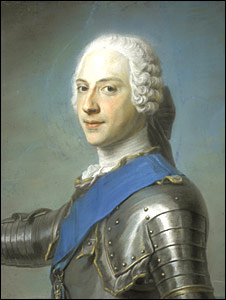
Bonnie Prince Henry?
A portrait thought to be of Bonnie Prince Charlie, purchased by the Scottish National Portrait Gallery back in 1994 for £22,000, is in actual fact ‘probably his brother’, Prince Henry, the museum has conceded.
After a two-year debate with London art dealer, Bendor Grosvenor, the National Galleries of Scotland have back down from its initial stance that the painting, by French master Maurice-Quentin La Tour, categorically was of the Young Pretender. It comes after Dr. Edward Corp of the University of Toulouse in France, an expert on Jacobite portraiture, changed his opinion who sat for the painting. Originally the Galleries based their argument on the view of expert Dr. Corp, but in an article in the latest edition of The British Art Journal he said, “The weight of evidence, perhaps regrettably, supports Bendor Grosvenor’s argument that the pastel in the Scottish National Portrait Gallery shows Prince Henry rather than Prince Charles.”
He went on to say, “Whether the portrait does or does not show Prince Charles really does matter.
“It is not merely the catalogue of the Scottish National Portrait Gallery which needs to be corrected.
“The impression which an entire nation has derived of this important historical figure should also be changed.
“The portrait is now reproduced in all biographies of the prince, and has been selected to illustrate the article about him in the Oxford Dictionary of National Biography.”
The basis for the main rejection that the portrait was of Prince Henry, rather than his elder brother, was the fact the man was depicted as wearing armuor, and as Henry was a cardinal this seemed to rule him out, as a man of the church would not have been painted in military clothing. However, it has been discovered that during the time the portrait was made, Prince Henry was leading a naval expedition in support of his brother and had not yet been made a cardinal, making it more than plausible that he could have posed in armour.
A spokesperson for the National Galleries has said, “In the light of this development, we have re-assessed our own position and, on balance, accept that it is more likely that our pastel depicts Prince Henry Benedict, and not his elder brother.
“It is not uncommon that such re-attributions are made, as research continues to fill in gaps in our knowledge, and it is always exciting to uncover new information about the works in our care.
“None of these debates detract from the greatness of the portrait.
“As an image it still projects the glamour of the Stuart cause, it is simply that we must readjust to seeing Henry, always rather in the shadow of his brother, in this role, rather than Charles.”
A explanation of the controversy surrounding the painting will be put up beside the portrait when it goes back on show in two years time following the muesums revamp.
The post Bonnie Prince Henry? appeared first on ScotClans | Scottish Clans.
]]>The post Glenfinnan Stone found at last appeared first on ScotClans | Scottish Clans.
]]>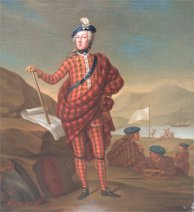
glenfinnan charlie
This week sees the return of the historically significant Glenfinnan Stone to Scotland. It is a round, weatherworn stone, about 12 inches in diameter, with a hole carved out at its centre, supposedly for the purpose of supporting the standard carried by Bonnie Prince Charlie when he arived at the shores of Loch Shiel. This event marks the beginning of the Jacobite Rebellion in 1745.
In 1988 an inscription was found on a flat rock near the original site of the stone which read “1745. In the name of the Lord the standards of Charles Edward Stuart, triumphaning at last, were set up”.
In 1989 however, the stone mysteriously vanished without a trace until recently when a local historian, Iain Thornber was contacted by a member of the public. She had watched a documentary which featured a piece on the Stone’s disappearance, and recognised it as a stone that was sitting in her garden. She had been given it as a gift many years ago and didn’t realise its significance.
As a piece of history, its return will rank alongside the Stone of Scone in terms of cultural significance, and after being displayed at the West Highland Museum in Fort William, it will be returned to its original home.
The post Glenfinnan Stone found at last appeared first on ScotClans | Scottish Clans.
]]>