The post Shining in History – Five Scottish Heroines appeared first on ScotClans | Scottish Clans.
]]>Dr. Elsie Inglis – Surgeon and Suffragette
16 August 1864 – 26 November 1917
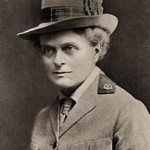
Dr Elsie Inglis
Elsie Inglis had the good fortune of having enlightened parents who considered the education of their daughter just as important as that of their sons. Upon the family’s return to Scotland from India, Elsie enrolled at the Edinburgh School of Medicine for Women in 1886 under Dr Sophia Jex-Blake. At the time women were barred from admission to Scottish universities. Upon qualification Inglis was appalled at the general standard of care and lack of specialisation in the needs of female patients. This prompted her to establish a medical practice, followed soon after by a maternity hospital in Edinburgh’s slums and a midwifery resource centre. Inglis often waived fees for patients and would also pay for her patients to recuperate by the seaside.
Inglis was an active suffrage campaigner in Scotland – by 1900 she was speaking at up to four meetings a week throughout Scotland, and in 1909 was made secretary of the Federation of Scottish Suffrage Socieites.
On the outbreak of World War One, Inglis suggested to the war office that women’s medical units be allowed to serve on the Western Front, to which the office famously replied – “My good lady, go home and sit still.” However other allies were desperate for help, with France and Serbia accepting her offer. The first unit left for France in November 1914, and by 1916 units had been stationed in Serbia, Corsica, Salonika, Romania, Russia and Malta. Inglis went with the teams sent to Serbia, where her work was instrumental in restricting the spread of typhus.
During active service in Russia in 1917, Inglis was taken ill with cancer and died a day after returning home. A memorial plaque hangs on the wall of St Gile’s Cathedral in Edinburgh, and from 2009 Elsie’s image appeared on £50 notes issued by the Clydesdale Bank.
Flora MacDonald – Jacobite Heroine
1722 – 1790
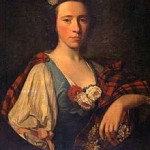
Flora MacDonald
Perhaps the most well known of Scottish Heroines, Flora MacDonald’s story has been immortalised in many Jacobite ballads and legends. Bought up under the care of the chief of the MacDonalds of Clanraid, Flora was living on the island of Benbecula in the Outer Hebrides when Prince Charlie sought refuge there following his defeat at Culloden. The island was controlled by the Hanoverian Government, but the MacDonalds were secretly sympathetic to the Jacobite cause.
After some hesitation Flora agreed to help the Prince escape the island by disguising him as the Irish spinning maid, ‘Betty Burke’. She obtained permission for her party to leave the island, and set sail to Skye on 27 June, 1746. Flora and her party hid overnight in a cottage and then traveled over the next few days overland to Portree, at one point narrowly avoiding government soldiers. Charles eventually escaped to France, however Flora was arrested after one of the boatmen had talked about the strange maid who had traveled with them to Skye. She was imprisoned, first in Dunstaffnage Castle, then in the Tower of London, where she was allowed to live nearby “on parole”. Flora was later released under the Indemnity Act of 1747.
Three years later Flora married Allan MacDonald of Kingsburgh, and in 1774 they emigrated to North Carolina. Allan was captured while fighting for the British in the American Revolutionary War. They returned to Skye following Allan’s release in 1779. It is said that Flora was buried in a bed sheet used by Prince Charlie during his stay in Benbecula.
Captain Betsy Miller – Sea Captain and Businesswoman
11 June 1792 – 12 May 1864

Captain Betsy Miller
Captain Elizabeth (Betsy) Miller achieved the distinction of being the first woman to be certified as a ships captain by the Board of Trade. Born in Saltcoats on the Ayrshire Coast, Betsy was employed in the family shipping business as an office assistant. Her brother Hugh was in line to take over the seafaring side of the business, but tragically drowned in a shipping accident. When the increasingly elderly Captain Miller succumbed to an illness that left him bedridden, the business rapidly started running up debts.
Approaching 40, Betsy stepped in to take command of the family’s brig Clytus and 14 man crew, soon gaining a reputation as a fine seawoman capable of handling the brig in the stormiest of conditions. Betsy came to be known as ‘The Queen of Saltcoats’, and was mentioned in the House of Commons during a debate on the provisions of the Merchant Shipping Act 1834.
For more than three decades Betsy sailed between Ayrshire and Ireland, also becoming well-known as a shrewd businesswoman. She expanded the cargo of goods shipped by the business to Ireland to include limestone and coal, reinstating the family name and making her fortune. She retired at the age of 70 and died two years later, leaving her younger sister Hannah to continue where she had left off.
Black Agnes Randolph – Countess of Dunbar and March
1312 – 1369
She kept a stir in tower and trench,
That brawling, boisterous Scottish wench,
Came I early, came I late,
I found Agnes at the gate.
- From a ballad attributed to the Earl of Salisbury
Named after her flowing black hair, Black Agnes was married to Patrick Dunbar, 9th Earl of Dunbar and 2nd Earl of March and keeper of Dunbar Castle. Situated near Berwick in South-East Scotland, the castle was considered the key to Scotland and was the scene of many battles during the Scottish Wars of Independence. Edward III was determined to conquer Scotland and sent the Earl of Sailsbury to take Dunbar Castle. With Patrick away on military duties, William considered the castle easy pickings with only Agnes and a handful of men keeping guard.
On 13th January 1338, Sailsbury presented himself and his army in front of the castle, demanding that Agnes surrender. To his suprise she refused and stayed in the castle, stating “Of Scotland’s King I haud my house, He pays me meat and fee, And I will keep my gude and house, While my house will keep me.” Sailsbury ordered his army to fire catapults loaded with lead and rocks at the castle walls. Lady Agnes responded by having her maids dress in their Sunday best; leading them to the outer walls, where with their handkerchiefs they nonchalantly and slightingly dusted away the damage from the bombardment.
Sailsbury’s next attempt at taking the castle was by battering ram. Agnes gave the signal to her men as the ram approached the gate, and they dropped over the castle wall a boulder captured on the earlier assault, smashing the battering ram and dispersing the English troops. Over the coming five months, Sailsbury attempted many methods to force Agnes to leave the castle, including forcing the occupants out by starvation. However, he knew nothing of the secret door, partly underwater, that lay off the unguarded rocky side of the castle. Under cover of darkness, Sir Alexander Ramsay of Dalhousie arrived with men and supplies and delivered them through the concealed entrance. Salisbury was none too pleased when a few days later, Agnes sent him down a fresh loaf of bread and some fine wine. On 10 June 1338, Sailsbury was ordered to withdraw from Dunbar, leaving Agnes in sole possession of the castle.
Anne Farquharson, Lady MacKintosh – The Beautiful Rebel
1723 – 1787
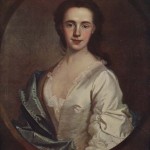
Anne Farquharson, Lady Mackintosh
Lady Anne was a Jacobite of Clan Farquharson and wife of Angus, chief of Clan MacKintosh. Despite her husband fighting for the Government during the ’45 Rising, Anne raised around 300 men from Clan MacKintosh and Clan Chattan to fight for Bonnie Prince Charlie. As women could not command in the field, the command of the regiment was given to MacGillivray of Dunmaglass. The regiment joined the Prince at Bannockburn in January 1746, twelve days before the Battle of Falkirk.
One month later, the Prince was staying at Moy Hall, Lady Anne’s home when Anne received a message from her mother-in-law that Lord Loudon’s men (including her husband’s company) were planning a night raid to steal the Prince. Anne sent five of her staff out with guns to crash about and shout clan battle cries to trick the government forces into thinking they were about to face the Jacobite army. The ploy worked and the government army fled. The event became known as ‘The Rout of Moy’.
The next month her husband and 300 of Loudon’s men were captured north of Inverness. The Prince paroled Captain MacKintosh into the custody of his wife, Lady Anne, commenting “he could not be in better security, or more honourably treated.” She famously greeted him with the words, “Your servant, captain” to which he replied, “your servant, colonel” thereby giving her the nickname “Colonel Anne”. She was also called La Belle Rebelle (the beautiful rebel) by the Prince.
After the Battle of Culloden, Lady Anne was arrested and turned over to the care of her mother-in-law for a time. She later met the Duke of Cumberland at a social event in London with her husband. He asked her to dance to a pro-Government tune and she returned the favour by asking him to dance to a Jacobite tune.
The post Shining in History – Five Scottish Heroines appeared first on ScotClans | Scottish Clans.
]]>The post Scotland’s Greatest Gift – Penicillin appeared first on ScotClans | Scottish Clans.
]]>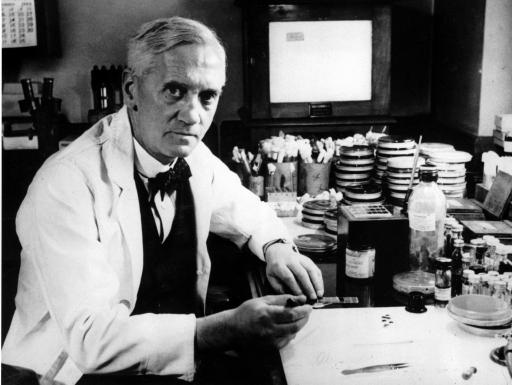
Sir Alexander Fleming, FRSE, FRS, FRCS(Eng)
6 August 1881 – 11 March 1955
important medicinal discoveries of all time. After returning from holiday with his family, he noticed that one of the cultures of bacteria he had left sitting on a bench in his laboratory had developed mould which had destroyed the bacteria colonies immediately surrounding. He found the mould released a substance that could destroy many disease-causing bacterias, paving the way for how antibiotics are used to treat infection. After some months of calling his discovery ‘mould juice’, he named the substance penicillin, which would go on to revolutionise modern medicine.
This week I got tonsillitis for the first time in my life, and never before have I felt so much pain in my throat. After nights of waking up covered in sweat with a savagely high fever, and not being able to swallow anything without an exceptional amount of pain, I decided to go to the doctor when I finally lost the ability to talk. Nearing the limits of my pain threshold, my doctor prescribed penicillin which amazingly seemed to combat the infection straight away. I’m feeling much better now, and rather indebted to this lovely Scottish biologist who provided the means to cure me of my ailment.
Born in 1881 near Davel in Ayrshire, Sir Alexander Fleming is perhaps the most notable member of Clan Fleming. Following in his brother’s footsteps he studied to be a Physician at Saint Mary’s Hospital Medical School in London. He joined a research team where he became assistant bacteriologist to Sir Almroth Wright, a pioneer in vaccine therapy and immunology. During World War One, Fleming served along the Western Front as a Captain in the Royal Army Medical Corps. Witness to hundreds of deaths from sepsis resulting from infected wounds, Fleming wrote an article for a medical journal during this time proposing that antiseptic was killing more soldiers than infection in battlefield hospitals. He explained that antiseptic worked well on the surface, but deep wounds tended to shelter anaerobic bacteria from antiseptic agents. Despite the publication of the article and strong support from Sir Almroth, many wartime medical practitioners continued to use antiseptic even when it worsened the condition of the patient.
Fleming published his discovery of penicillin in 1929, however little attention was paid as cultivation of the antibiotic was quite difficult and it was thought that it wouldn’t last long enough in the human body to cure infection. Fleming continued his research, trying to find a chemist skilled enough to refine usable penicillin, before abandonning the drug in 1940. Not long after this Howard Florey and Ernst Boris Chain undertook research into how to mass produce penicillin. Funded by the US and British Governments, the two chemists discovered how to isolate and purify the antibiotic and were able to make vast quantities just in time for it to be used in the allied invasion of Normandy and the remaining year of World War Two. However Fleming warned not to use penicillin unless there was a properly diagnosed reason, and that if it were used, never to use too little, or for too short a period, since these are the circumstances under which bacterial resistance to antibiotics develops.
In an article recently published by the BBC, Professor Dame Sally Davies explained that the rise in drug resistant infections is comparable to the threat of global warming. Bacteria evolves rapidly by finding new ways to combat antibiotics, with reports growing steadily of resistance in strains of E.Coli, tuberculosis and gonorrhea. Davies said the problem is global and needs much more attention. “It is clear that we might not ever see global warming, the apocalyptic scenario is that when I need a new hip in 20 years I’ll die from a routine infection because we’ve run out of antibiotics.”
In 2009 penicillin was named as Scotland’s greatest contribution to the world, coming ahead of Scotch, the telephone and haggis. Fleming’s discovery is accredited with saving millions of lives, and is the reason why many of us are here today. Perhaps it is time for a new generation of brilliant Scottish minds to come together to combat the rise of bacterial resistance that Fleming so cleverly foresaw all those years ago.
The post Scotland’s Greatest Gift – Penicillin appeared first on ScotClans | Scottish Clans.
]]>