The post ‘Outlander’ Set For The Small Screen appeared first on ScotClans | Scottish Clans.
]]> With over 20 million copies sold, Diana Gabaldon’s hugely successful series of novels set in the Highlands has been greenlit for televison. Outlander centres around a love story between an 18th Century Mackenzie clansman and a 20th Century WWII nurse, and has received a 16-episode order from American cable network Starz.
The Outlander series spans the genres of romance, historical fiction and sci-fi, and follows Claire Randall who is transported back to Scotland circa 1743 after she touches part of a stone circle near Inverness. While there, she meets a Clan Mackenzie warrior named Jamie Fraser and is torn between him and her husband back in 1945. Their journey leads them throughout Scotland (including the 1745 Jacobite Rising), France, the West Indies and America. The series currently spans seven books, with an eighth due for release later this year.
The television series is due to begin filming in October in the Highlands, and is slated for broadcast in April 2014. Gabaldon is expected to be a consultant and co-producer, with the entire series masterminded by Battlestar Galactica developer Ron Moore. Gabaldon was inspired to create the central character of Jamie after catching a repeat of a Dr Who episode from the 1960s, in which Frazer Hines played a kilted character of the same name from the same era.
Gabaldon previously said: “That’s where I began, knowing nothing about Scotland or the 18th century, with no plot, no outline, no characters – nothing but the rather vague images conjured up by a man in a kilt.” Meticulous background checks and fact finding missions are incredibly important to Gabaldon’s writing process, saying she feels a large amount of responsibility to her readers and the people of the past to maintain historical accuracy.
Lord Jamie Sempill said Gabaldon’s work captures the highly appealing romantic element of the history of the clans. “I believe (the) series has been instrumental in raising awareness of the clan system which has been beneficial in complementing the hard work done by the clan commissioners to increase their membership in North America”. Lord Sempill invited Gabaldon to The Gathering in 2009, where she was invested as a Lady of the Garrison of the 78th Fraser Highlanders.
Gabaldon also recently visited the Mackenzie seat of Castle Leod, where along with clan chief John Mackenzie the Earl of Cromartie planted a Rowan tree in the grounds. Gabaldon is a guardian of Castle Leod, which is said to be the inspiration for the book’s location of Castle Leoch. The books have developed a loyal fan following, with various companies running ‘Jamie and Claire’ tours of Scotland. Starz also recently announced plans for a series centered around Phillipa Gregory’s War of the Roses trilogy entitled The White Queen.

Diana Gabaldon and the Chief of Clan Mackenzie planting a tree at Castle Leod
The post ‘Outlander’ Set For The Small Screen appeared first on ScotClans | Scottish Clans.
]]>The post The Sonny Sonny Banks of Loch Lomond appeared first on ScotClans | Scottish Clans.
]]>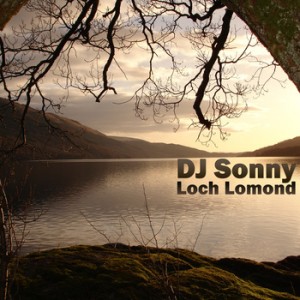
Loch Lomond by DJ Sonny
In the little community of Marchmont in Edinburgh, one of the interesting characters you’ll see about the streets is Sonny Fascia, otherwise known as DJ Sonny. I first met Sonny at the cosy pub in the heart of the area The Earl of Marchmont, where he introduced me to his unique brand of Scottish turntablism and hip-hop.
Upon further research into Sonny’s repertoire I discovered his version of the traditional Scottish tune Loch Lomond, which samples American jazz artist Maxine Sullivan’s 1955 recording. The song became a career defining hit for Maxine, and coincidentally was the first and last song she recorded over her 40 year career. Sonny’s version is a distinctly more 21st century affair – mixing jazz, beats and scratch to form an upbeat and contemporary version of the veteran Scottish classic.
Loch Lomond is one of those perennial tunes that has had the ability to stay popular over hundreds of years, through either its infectious melody or the surprisingly dark historical context behind the song. Unfortunately nothing concrete is known about Lomond’s original composer, however the tune’s conception can be traced to sometime between the Jacobite Rebellion of 1745 and the song’s earliest printed publication in 1841. In John Purser’s monumental 1992 work Scotland’s Music, Purser states that the song is usually attributed to a languishing Jacobite prisoner sentenced to death in a prison at Carlisle around the time of the Rebellion.

Early publication, circa 1880
According to legend, the Government soldiers were rather fickle in the way they decided the fate of the Jacobite prisoners. Some were picked at random to be hung, while others were simply released and told to walk home back to Scotland. The dominant theme of the song is said to refer to the ancient Celtic belief that if you die away from your home country, then your spirit returns home by an underground route called ‘the low road’. However the lack of a definitive connection with the songwriter lends the song open for a multitude of interpretations – with others believing the song was sung by the lover of a captured Jacobite soldier set to be executed in London following a show trial. The heads of the executed soldiers were then set upon pikes and exhibited in all of the towns between London and Edinburgh in a procession along the ‘high road’ (the most important road), while the relatives of the soldiers walked back along the ‘low road’ (the ordinary road traveled by peasants and commoners). In another version dated around 1880, the song’s lyrics have been altered to become a lament between Jacobite heroine Flora MacDonald and Bonnie Prince Charlie (see image).
Refrain:
O ye’ll tak’ the high road and I’ll tak’ the low road,
An’ I’ll be in Scotland afore ye;
But me and my true love will never meet again
On the bonnie, bonnie banks O’ Loch Lomond.
Verse 1:
By yon bonnie banks and by yon bonnie braes,
Where the sun shines bright on Loch Lomond.
Where me and my true love were ever wont to gae
On the bonnie, bonnie banks O’ Loch Lomond.
Verse 2:
‘Twas there that we parted in yon shady glen,
On the steep, steep side O’ Ben Lomon’,
Where in purple hue the Hieland hills we view,
An’ the moon comin’ out in the gloamin’
Sonny’s version of Lomond came about after a fruitless search on the net for hip-hop with a Scottish flavour. He made the song over two days and released it earlier this year online. A regular DJ at clubs around Edinburgh, Sonny produces music through his record label Burgh Records and forms half of the Scottish hip-hop group Perfect Practice. After DJing his way around the world, Sonny returned to Scotland and began producing his own hip-hop gaining him an international following.
The song has been appropriated by artists in many different mediums over the years including Bill Haley & His Comets, Mark Knopfler, Rod Stewart, Runrig and AC/DC. The tune is featured in a song sung by Scottish Terrier Jock in the Disney film Lady and The Tramp, and Scottish poet and folklorist Andrew Lang wrote a poem based on the song in 1876:
-
There’s an ending o’ the dance, and fair Morag’s safe in France,
And the Clans they hae paid the lawing,
And the wuddy has her ain, and we twa are left alane,
Free o’ Carlisle gaol in the dawing.(Morag meaning great one in Gaelic, referring to Bonnie Prince Charlie; and wuddy meaning a hangman’s noose).
Whatever the truth of the tune’s origins, the famous song has timeless appeal proved by it’s constant reincarnation in so many endearing ways. Sonny’s 2013 version provides a contemporary connection to Scotland’s history, using an iconic melody bound with a very 21st century way of making music.
——-
You can download Loch Lomond by DJ Sonny by clicking here, and can check out his other tunes via his Bandcamp page.
The post The Sonny Sonny Banks of Loch Lomond appeared first on ScotClans | Scottish Clans.
]]>The post An Expedition to Munro Country appeared first on ScotClans | Scottish Clans.
]]>
Hector Munro outside Foulis Castle
Following unseasonable snowy conditions a week earlier, Hector had been working around the clock to get his Spring barley crop in the ground while the weather was cooperating. “I am really just a land manager who happens for historic reasons to be the head of an enlarged family group known as a Clan. I work for my living like anyone else – that living happens to be farming.” The majority of the Munro farm at Foulis is made up of malting barley, which when harvested goes to a cooperative shared by farmers in the area. The barley is sorted, batched and sold to maltsters to the order of local whisky distilleries including Glen Ord, Glenmorangie, Highland Park and The Macallan.
Perched among the sown-fields of Foulis sits the striking Foulis Castle, seat of Clan Munro for at least 800 years. “We don’t know the very early history of the castle because there was a terrible family row in the mid-1800s and a lot of documents were burnt and destroyed. As far as we can make out a Munro chief acquired Foulis in about 1350 by swapping some land that he already had on the Black Isle. So we know the land has been in the family since then, possibly longer.” Keyhole gun ports were recently discovered in the base of what seems to have been a corner tower on a defensive outer wall of the castle. “They can be positively dated to between 1450 and 1550, so we know there’s been a castle here since at least then.”
The castle suffered a plundering by Jacobites during the 1745 Rising, as the Munros were ardent Presbyterians and Whigs by political persuasion. “One of my fore-bearers attended the Reformation Parliament in Edinburgh in 1560, voting for reformation. The last thing the Munros wanted was a Catholic King on the throne, so we were staunchly anti-Jacobite.” When the rebellion broke out, 200 Munros marched straight to Inverness to provide aid to the besieged General Sir John Cope, later escorting him to Aberdeen and acting as his scouts. The Munros attempted to hold the North for the Government, but in the end were forced to retreat into Sutherland leaving Foulis open for plundering. The chief at the time, Sir Robert Munro, died commanding an English battalion at the Battle of Falkirk, alongside his brother Dr Duncan Munro who was also killed. At the end of the Rising, Robert’s son returned to Foulis to find it a ruin. “Eventually the Government paid compensation, eight years after Culloden, which allowed him to restore the castle. And by that time I think he realised there was no longer the need for a defensive tower so he incorporated the old parts of the castle into what’s really a modern Georgian mansion. So that’s why today it looks more like a mansion then a castle. The sad thing is that no pictures of the castle (before the mid 1800s) survive, as they were destroyed during the family row over succession.”

Foulis Castle in the distance, surrounded by farmland.
Once an estate of 36,000 acres, the lands today have been reduced to 2,500 and is a mixture of let grazing, barley and forestry. “Sadly there’s very, very few clan chiefs who still are lucky enough to have their original property. And I think it’s the fact that very few areas of the highlands are actually economically viable. Tax, death duties and service to the country has bought about the demise of most of the clan seats, so yes I consider myself very lucky that we’re still at Foulis.”
Clan Munro has a very close affiliation with the Seaforth Highlanders, with ties that go back almost two hundred years. During the Second World War, Hector’s father and uncle were captured at St Valery in 1940 while providing cover for the British Expeditionary Force to escape. “I think it was probably 10,000 men from the Highlands who were captured there in one go. They spent the next four years and 11 months in a POW camp, in which time Foulis became thoroughly run down. The Highland soldiers were always considered the crack troops of the British Army, and as a result they tended to be pushed to the front lines to deal with the trouble spots. I think the Scots probably lost more per head of population than any other allied force in the Second World War.”
Hector began running Foulis in 1974, and became chief in 1995 following the death of his father, Captain Patrick Munro. “I don’t think the role of chief twigged properly until much later, I just took it for granted when I was younger. The fact that my Granny lived in a castle that leaked like a sieve; it didn’t really occur to me that there was any significance. The family have always been in the military so there were lots of swords and spears from great uncle so-and-so who brought them back from Africa. Granny used to allow us to play with these swords as kids, and how we never cut each others heads off, I don’t know, but it was great fun. When my father returned from the war first and foremost he had to work the farm, and secondly try and preserve the castle. In 1958 we got a grant from the Historic Buildings Council for Scotland (now Historic Scotland) and they helped with a grant to put a new roof on the castle.”

Foulis Castle as it stands today
Clan Munro gatherings are held at Foulis every 5-10 years, with the next happening in 2014 to coincide with the 700th anniversary of Bannockburn and Homecoming 2014. “There will be all sorts of activities going on, including some for younger people who will be able to climb Ben Wyvis which is the Munro* out the back here.” The last gathering in 2007 was attended by Munros from America, Canada, Australia, England and even a band of French descendents who came from a Munro who escaped the Battle of Worcester in 1651. “At the head of the French branch of the family is a man called Donald Munro. He can’t speak a word of English yet he’s got a Scottish name – 350 years since his fore-bearers left Scotland. The French Munros were all wearing kilts and wearing their Highland bonnets a bit like a beret – so the tradition carries on.”
Hector would like to see the clans used as a tool to promote the Highlands. “Really the clans are about the Highlands, not Edinburgh. People will go to Edinburgh anyway when they come to visit Scotland, but they won’t necessarily go to the Highlands to look for the clans.” Foulis Castle receives around 6-700 visitors per year from all over the world – appointments can be made by getting in touch through the Clan Munro website. “It’s such a unique selling point for Scotland – where else in the world, just by knowing your surname, can you go to a place and know your fore-bearers came from that spot. Clan territories are very distinct like that.”
Hector’s role as clan chief involves chairing Clan Munro Association meetings, upholding the clans history and traditions, meeting with visiting Munros and dealing with inquiries from all over the world. Outside of being a chief three grandchildren occupy his time when he’s not working on the farm (he says his wife would call him a workaholic). “I suppose the role of clan chief is secondary to being a farmer. I think people tend to have this romantic image of the clans for which Sir Walter Scott probably has much to answer for. The truth is however no less interesting and if we can educate people to take excessive tartantry and dreamt up ceremonials with a pinch of salt, and search out the actual historical facts, then that is far healthier.”
Upon leaving Foulis I walked down the hill towards the clan museum at the old Munro Storehouse. Along the way I passed many relics of the clan’s past, including an ancient burial cairn and disused bridge emblazoned with an eagle – the Munro clan badge. How amazing that for over 800 years the Munro family have worked, fought and lived on the same land, carrying on histories and traditions to this very day.

The Munro Bridge near Foulis Castle

Eagle badge on the bridge
___
* = A Munro is a mountain in Scotland with a height over 3,000 ft (914.4 m). Munros are named after Sir Hugh Munro of Clan Munro (1856–1919), who produced the first list of such hills, known as Munros Tables, in 1891.
The post An Expedition to Munro Country appeared first on ScotClans | Scottish Clans.
]]>The post Twilight of the Stewarts appeared first on ScotClans | Scottish Clans.
]]>The Stewarts rose from relative obscurity to a place of importance in the Scottish Court through the 13th century, and during the Wars of Independence they sided with the Bruce faction; and Walter Stewart married Robert the Bruce’s daughter Marjorie. Eventually, in 1371 after a half-century wait for his uncle to die Robert Stewart became king ofScotland. It was the beginning of a dynastic rule that would last 343 years until the death of Queen Anne in 1714. Throughout that time, the family – which employed mafia tactics – extended their control over Scotland, and finally reached the giddy heights of the throne of England.
As British kings their successes were less evident – one was executed and another deposed; and their increasing disengagement with the political momentum and religious intolerance of the times would see the great House permanently exiled. From James VII to his grandson Charles Edward the exiled Stuarts (French spelling) would set up counter-courts in France and Italy; where they’d be hocked from palace to palace maintaining a veneer of royalty and influence. It was back to this fantasy world that the L’Heureux would bring the young Pretender following the disaster of the ’45: but in reality it was to an alcohol fuelled life of obscurity.
Charles’ stay in France was short-lived, for within a couple of years of the rising the British and the French signed the Treaty of Aix-la-Chapelle’ effectively ending the War of the Austrian Succession, which the Jacobite rebellion was essentially part of; and with the deal the Pretender was expelled. He returned to Italy, where his father still held a degree of social influence. Shattered by the failure of the Cause, and haunted by ghosts of Culloden Charles began a string of affairs and sought solace in the bottom of a bottle. His principal mistress was the Scottish socialite, Clementina Walkinshaw, who in 1753 bore him a daughter, Charlotte.
Henry Stuart, Charles’ younger brother took a different route after 1746, perhaps armed with more realism, and entered the Catholic Church. His father was on good terms with the Pope, who still recognised him as the rightful king, and Henry made a meteoric rise through the ranks of the episcopacy, becoming Cardinal-Bishop of Frascati in 1761. While his brother became a Prince of the Church; Charles, drunk half the time, still entertained dreams of fantasy thrones.
In 1759, at the height of the Seven Years War, a conflict that for the first time took on a global perspective, the French drew up plans for a full-scale invasion of England. As part of the project he wanted to enlist the support of the still-loyal Jacobites; and Charles was summoned to Paris. Boorish and unrealistic, the French government were soon repelled by him, and sent him packing: he’d play no part in the operation. However, significant British victories overseas essentially put paid to the expedition and it was permanently shelved. This was Charles’ last true, albeit slim, chance to be king. His drinking worsened, his life increasingly nomadic and his treatment of Clementina increasingly abusive. In 1760 she left him, and took Charlotte with her. There is a strong suspicion that Prince James helped out, and gave her an allowance.

Prince Charles Edward Stuart in later life
As she grew up, Charlotte was bounced from convent to convent as her father refused to provide for her or her mother; and with James dead in 1766 that avenue dried up as well. James Francis Stuart, born in 1688 to James VII was the last prince of the House of Stewart to be born in Britain and to the reigning dynasty. As such the Pope and kings across Europe still either recognised his claim, or treated him on an equal footing. The world by 1766 had moved on, and neither the Papacy nor the crowned heads would give the increasingly distant, melancholic and unpopular Charles the same recognition. His downward spiral continued.
In 1772 he married Princess Louise of Stolberg-Geden; but, due to the nature of the man, now a broken alcoholic, it was doomed to failure: she left him eight years later. Now an old man in ill-health he reached out again to his family, and was reconciled with his daughter; who also engaged her uncle, the Cardinal Henry, to bring the once-Bonnie Prince back to Rome, where she would care for him until he died of a stroke in 1788. Chronically ill herself, she died three years later.
Charles Edward Stuart had lit up Scotland like a firework during the 1745 rebellion; but the rest of his life had been an unfulfilled damp-squib; and on his death the Jacobite claim fell to his brother: Cardinal Henry Stuart. As a successful and powerful clergyman (Henry was raised to the Dean of the College of Cardinals in 1803) he did not press his case. He died in 1807: last of the Royal Stewarts. Both he and Charles were buried within the Basilica of St Peter’s in the Vatican. He may have been the last of the dynasty; but not last of the bloodline.
In the years before she returned to her father, Charlotte Stuart had a long term affair with Ferdinand de Rohan, Archbishop of Bordeaux, which considering his position was a risky enterprise. She had three children by him: Marie Victoire, Charlotte and a boy, Charles Edward. Little is known about the two girls, or whether they married and had children – it is believed that Marie Victoire ended up in Poland (Charles’ mother was Polish) and that Charlotte was absorbed into polite society in England. Either way, they and any possible descendants vanished into anonymity.
The son, Charles became a distinguished soldier and something of a globetrotter; and while he never pressed his Jacobite claim, he did maintain links with leading Scots. Indeed, it was while returning from a meeting with the Duke of Atholl in 1854 he was killed in a coaching accident; and is buried in the grounds of Dunkeld Cathedral in Perthshire. With him, the last of the true direct bloodline ended. Meanwhile, fanatical Jacobites searched around for an heir to Henry Stuart; and with his death the ‘claim’ passed to King Charles Emmanuel IV of Sardinia; the senior living descendant of Charles I Stuart through his daughter Henrietta. In a parallel universe the line has passed down to Franz von Wittelsbach, Duke of Bavaria; although he declines ever to talk about his Stewart ancestry.
The bitter wars of the 17th and 18th centuries shaped the modern Britain that emerged, the nature of the monarchy, and indeed the dynastic future itself. The Royal Stewarts had their time; their crown slipped, fell and it was eventually buried in the setting sun amid the hallowed walls of Dunkeld. And few were there to mourn it.
The post Twilight of the Stewarts appeared first on ScotClans | Scottish Clans.
]]>