The post Saltire – The Flag of Scotland! appeared first on ScotClans | Scottish Clans.
]]> The Flag of Scotland is called the Saltire or the St Andrews Cross. It is a white diagonal cross on a blue field. The legend of it’s origins as the national flag go all the way back to 832AD.
A joint force of Picts and Scots under King Angus (or Óengus) of The Picts met a Northumbrian army under King Athelstan at a location near what would become Athelstaneford, four miles north east of Haddington, in East Lothian. The Pictish army were surrounded by superior numbers and prayed for assistance. That night Saint Andrew who was martyred on a Saltire shaped cross appeared to Angus and assured him of victory.
The following morning the two armies formed up for battle. As they did so, a strange cloud formation appeared, forming a broad diagonal white cross against the background of bright blue sky. The Picts and Scots believed this to be an omen: and so did the Angles. The battle that followed was an improbable victory for the outnumbered Picts and Scots. From then onwards the Saltire has been used as Scotland’s national flag.
Use of the familiar iconography of St Andrews martyrdom, showing the apostle bound to an X-shaped cross, first  appears in the Kingdom of Scotland in 1180 during the reign of William I. The earliest physical evidence of the Saltires use as a national symbol can be traced to 1286, were it was used on the seal of the Guardians of Scotland, and evidence of the symbol being used on a flag rather than a seal, brooch or surcoat dates to much later. The earliest reference to the Saint Andrew’s Cross as a flag is found in the Vienna Book of Hours, circa 1503, in which a white saltire is depicted with a red background. In the case of Scotland, use of a blue background for the Saint Andrew’s Cross is said to date from at least the 15th century, with the first certain illustration of a flag depicting such appearing in Sir David Lyndsay of the Mount’s Register of Scottish Arms, circa 1542, although the massive heraldic standard of the ‘Great Michael’, a great ship of the Royal Scottish Navy which was launched around 1510, had the “Sanct Androis cors” on a blue background in the Hoist.
Traditionally the Saltire is blue (some say to represent the sky in the vision) but some versions have existed which have the white cross on a black background (due to the shortage of vegetable dyes that could reproduce the colour) and even green or red.
 In modern Scotland the Scottish Government has ruled that the Saltire should, where possible, fly on all its buildings every day from 8am until sunset. Th only exception to this is during United Kingdom ‘National Days’, were the Saltire is replaced by the Union Flag if only one flag pole is present. Likewise on St Andrews Day, the Union Flag is only flown if more than one flag pole is present. In recent years, embassies of the United Kingdom have also flown the Saltire to mark St Andrew’s Day.
The seven British Army Infantry battalions of the Scottish Division, plus the Scots Guards and Royal Scots Dragoon Guards regiments, use the Saltire in a variety of forms to this day. Combat and transport vehicles of these Army units may be adorned with a small, 130mm x 80mm in size, representation of the Saltire. Such decals being displayed on the front and/or rear of the vehicle and on tanks these may also be displayed on the vehicle turret. In Iraq, during both Operation Granby and the subsequent Operation Telic, the Saltire was seen to be flown from the communications whip antenna of vehicles belonging to these units. Funerals, conducted with full military honours, of casualties of these operations in Iraq and Afghanistan, have also been seen to include the Saltire; the flag being draped over the coffin of the deceased.
There are several areas around the world that use a variation of the Saltire as their own flag, usually due to a connection  with Scotland. The Canadian province of Nova Scotia (Latin for ‘New Scotland’) uses an inverse version of the flag, with a blue cross on a field of white. Nova Scotia has more than just a name to connect it to Scotland, as it was the first colonial venture of the Kingdom of Scotland in the Americas and as such has a great number of Scottish descendants.
The Dutch area of Sint-Oedenrode, which is named after the Scottish princess Saint Oda, uses a version of the flag of Scotland, defaced with a gold castle having on both sides a battlement.
The flag of Tenerife is identical to the Scottish flag except for the shade of blue, Tenerife’s flag using a much darker colour. Although some theories claim a connection between the flags, their similarity is likely coincidental.


The post Saltire – The Flag of Scotland! appeared first on ScotClans | Scottish Clans.
]]>The post Bagpipes – A Weapon of War! appeared first on ScotClans | Scottish Clans.
]]> It’s interesting to learn that until 1996 the bagpipes were classified as a weapon of war. This does not simply mean an instrument played in battle, or a tool used to direct troops, it actually means a physical weapon, like a sword or a musket. The origins of this take us all the way back to the Battle of Culloden and a piper named James Reid.
James Reid was one of several pipers who played at the Battle of Culloden. He was captured along with 558 men by Cumberland’s troops and taken to England. There James was put on trial and accused of high treason against the English Crown. Piper Reid claimed that he was innocent because he did not have a gun or a sword. He said that the only thing he did that day on the battlefield was play the bagpipe.
After some deliberation the judges had a different opinion on the matter. They said that a highland regiment never marched to war without a piper at its head. Therefore, in the eyes of the law, the bagpipe was an instrument of war. James Reid was condemned and subsequently hanged then drawn and quartered.
The decision of those judges has echoed down through the generations. It was the first recorded occasion that a musical instrument was officially declared a weapon of war. For hundreds of years and many conflicts to come the bagpipes, when listed among the items captured in combat, was counted among rifles, sabers, and munitions. It is interesting to note that bugles and drums were recorded as musical instruments, where the bagpipe ranked among the lists of weapons. This continued through the Great War. Perhaps a fitting place for the pipes, but a tragic legacy for the piper James Reid who played at the last bloody battle of the Jacobites on Culloden Moor.
In 1996, after some disputes with authorities, a man known as Mr Brooks was taken to court for playing the pipes on Hamstead Heath, an act forbidden under a Victorian by-law stating the playing of any musical instrument is banned. Mr Brooks plead not guilty by, claiming the pipes are not a musical instrument, but instead a weapon of war , citing the case of James Reid as a precedent. The unanimous verdict was that the pipes are first and foremost musical instruments returning them from a weapon of war to their rightful place as a musical instrument.
Famous Pipers
Bill Millin
William “Bill” Millin, commonly known as Piper Bill, was the personal piper to Simon Fraser, 15th Lord Lovat, commander of 1st Special Service Brigade. Millin is best remembered for playing the pipes whilst under fire during the D-Day landing in Normandy.
Millin was born in Regina, Saskatchewan, Canada on 14 July 1922. His father, who was a native Scot, moved the family back to Glasgow when he was three. He joined the Territorial Army in Fort William and played in the pipe bands of the Highland Light Infantry and the Queen’s Own Cameron Highlanders before volunteering as a commando and training with Lovat at Achnacarry, near Fort William in Scotland. Lovat had appointed Millin as his personal piper during this commando training.
Pipers have traditionally been used in battle by Scottish and Irish soldiers. However, the use of bagpipes was restricted to rear areas by the time of the Second World War by the British Army. Lovat, nevertheless, ignored these orders when making their landing at Sword Beach on D-day and ordered Millin, then aged 21, to play. When Private Millin demurred, citing the regulations, he recalled later, Lord Lovat replied: “Ah, but that’s the English War Office. You and I are both Scottish, and that doesn’t apply.” He played “Hielan’ Laddie” and “The Road to the Isles” as his comrades fell around him on Sword Beach.
Millin was the only man during the landing who wore a kilt, the same Cameron tartan kilt his father had worn in Flanders during World War I, and he was armed only with his pipes and the sgian-dubh, sheathed inside his kilt-hose on the right side. In keeping with Scottish tradition, he wore no underwear beneath the kilt. He later told author Peter Caddick-Adams that the coldness of the water took his breath away. Millin states that he later talked to captured German snipers who claimed they did not shoot at him because they thought he was crazy.

Lovat and Millin advanced from Sword Beach to Pegasus Bridge, which had been defiantly defended by men of the 2nd Bn the Ox & Bucks Light Infantry (6th Airborne Division) who had landed in the early hours by glider. To the sound of Millin’s bagpipes, the commandos marched across Pegasus Bridge. During the march, twelve men died, most shot through their berets. Later detachments of the commandos rushed across in small groups with helmets on. Millin’s D-Day bagpipes were later donated to the now Pegasus Bridge Museum.
 Millin saw further action with the 1st SSB in the Netherlands and Germany before being demobbed (demobilised) in 1946 and going to work on Lord Lovat’s highland estate. In the 1950s he became a registered psychiatric nurse in Glasgow, moving south to a hospital in Devon in the late ’60s until he retired in the Devon town of Dawlish in 1988. He made regular trips back to Normandy for commemoration ceremonies. France awarded him a Croix d’Honneur award for gallantry in June 2009.
Millin, who suffered a stroke in 2003, died in hospital in Torbay on 17 August 2010, aged 88. His wife Margaret, from Edinburgh, died in 2000. He was survived by their son John.
With the help of son John Millin and the Dawlish Royal British Legion, a bronze life-size statue of Piper Bill Millin was unveiled on 8 June 2013 at Colleville-Montgomery, near Sword Beach, in France, which can be seen on the left.
Did you know?
Bagpipes were commonly used during World War I to lead the men ‘over the top’ of the trenches and into battle. However, unarmed and drawing attention to themselves with their playing, pipers were always an easy target for the enemy. The death rate amongst pipers was extremely high: it is estimated that around 1000 pipers died in World War One.
Piper Daniel Laidlaw 
Born at Little Swinton, Berwickshire on 26 July 1875, Laidlaw joined the Army in 1896. He served with the Durham Light Infantry in India where he received a certificate for his work during a plague outbreak in Bombay in 1898. In the latter year he was claimed out by his elder brother and transferred as a piper to the King’s Own Scottish Borderers, in 1912 he transferred to the reserve. In 1915 Laidlaw re-enlisted in The King’s Own Scottish Borderers.
On September 25th 1915 the company were preparing to ‘go over the top’. Under heavy fire and suffering from a gas attack, the company’s morale was at rock bottom. The commanding officer ordered Laidlaw to start playing, to pull the shaken men together ready for the assault.
Immediately the piper mounted the parapet and began marching up and down the length of the trench. Oblivious to the danger, he played, “All the Blue Bonnets Over the Border.” The effect on the men was almost instant and they swarmed over the top into battle. Laidlaw continued piping until he got near the German lines when he was wounded. As well as being awarded the Victoria Cross, the highest and most prestigious award for gallantry in the face of the enemy that can be awarded to British and Commonwealth forces, Laidlaw also received the French Criox de Guerre in recognition of his bravery.

Did you know?
The original purpose of the pipes in battle was to signal tactical movements to the troops, in the same way as a bugle was used in the cavalry to relay orders from officers to soldiers during battle.
Fighting Jack Churchill 
Fighting Jack Churchill or Mad Jack, was a British soldier who fought throughout the Second World War armed with a longbow, bagpipes, and a basket-hilted Scottish broadsword (sometimes incorrectly called a Claymore). He is known for the motto “any officer who goes into action without his sword is improperly dressed.”
Churchill was born in Ceylon, Sri Lanka but soon after Churchill’s birth, the family returned to Surrey, England. John ‘Jack’ Churchill was educated at King William’s College on the Isle of Man. Churchill graduated from the Royal Military College, Sandhurst, in 1926 and served in Burma with the Manchester Regiment. He left the Military in 1936 only to re-enlist when Germany invaded Poland in 1939.
Churchill had an extensive list of herioc and ‘mad’ exploits throughout his life, so let’s take a look at a few of what can be described as the most epic.
As part of the British Expeditionary Force to France, in May 1940 Churchill and his unit, the Manchester Regiment, ambushed a German patrol near L’Épinette, France. Churchill gave the signal to attack by cutting down the enemy Feldwebel (sergeant) with a barbed arrow, becoming the only British soldier known to have felled an enemy with a longbow in WWII.
Jack Churchill was second in command of No. 3 Commando in Operation Archery, a raid on the German garrison at Vågsøy, Norway on 27 December 1941. As the ramps fell on the first landing craft, Churchill leapt forward from his position playing “March of the Cameron Men” on his bagpipes, before throwing a grenade and running into battle in the bay. For his actions at Dunkirk and Vågsøy, Churchill received the Military Cross and Bar.

In 1944 he led the Commandos in Yugoslavia, where they supported Josip Broz Tito’s Partisans from the Adriatic island of Vis. In May he was ordered to raid the German held island of Brač. The landing was unopposed but on seeing the eyries from which they later encountered German fire, the Partisans decided to defer the attack until the following day. Churchill’s bagpipes signalled the remaining Commandos to battle. After being strafed by an RAF Spitfire, Churchill decided to withdraw for the night and to re-launch the attack the next day.
The following morning, one flanking attack was launched by 43 Commando with Churchill leading the elements from 40 Commando. The Partisans remained at the landing area; only Churchill and six others managed to reach the objective. A mortar shell killed or wounded everyone but Churchill, who was playing “Will Ye No Come Back Again?” on his pipes as the Germans advanced. He was knocked unconscious by grenades and captured.
He was flown to Berlin for interrogation and then transferred to Sachsenhausen concentration camp. Churchill tunnelled out of the camp with an RAF officer, but was recaptured and transferred to a PoW camp in Austria. When the floodlights failed one night he escaped and, living on stolen vegetables, walked across the Alps near the Brenner Pass. He then made contact with an American reconnaissance column in the Po Valley.
Churchill had always wanted to serve with a Scottish regiment, and so transferred to the Seaforth Highlanders, becoming a company commander where he remained until he retired in 1959.
Bagpipe Products from ScotClans…


The post Bagpipes – A Weapon of War! appeared first on ScotClans | Scottish Clans.
]]>The post The Battle of Baugé appeared first on ScotClans | Scottish Clans.
]]>
Battle of Baugé
Background:
The Battle was part of the ‘Hundred Years War’ between England and France. In 1419 King Henry V of England had turned the course of the war at Agincourt, a battle that has become synonymous with Anglo French ‘sparring’ ever since. There had been a formal alliance between France and Scotland since 1295, known as the ‘Auld Alliance’ though the ties between the two nations goes back much further, indeed the tradition of a ‘Guarde Eccosais’ goes back to the time of Charlemagne.
After Agincourt the French were in disarray. Charles VI of France was mad, and his heir, the future Charles VII, was only sixteen. Normandy was lost to the English and the Dukes of Burgundy were taking Paris. With the situation getting desperate the Dauphin appealed to Scotland for help.
King James I of Scotland was imprisoned by the English and the country was being ruled in his place by Robert Stewart, first duke of Albany. Albany decided to send a force of 6,000 volunteers to France under the command of Archibald Douglas, earl of Wigtown and Albany’s second son John Steward, third earl of Buchan. A fleet of ships from Castile reached Scotland in September 1419, and on 29 October 1419 the Scottish army reached the Dauphin’s court at Bourges.
The Scots made up by far the largest component of the Dauphin’s defensive forces in the Loire Valley. The English army still recording successes in France was commanded by Henry V’s oldest brother Thomas of Lancaster, duke of Clarence. Estimates of the strength of this force vary from between 7,000 to 12,000 men, a considerable number of which were drawn from the English nobility.
In March 1421 Clarence led a series of raids through the Anjou and Maine and by Good Friday they were camped near the little town of Vieil-Baugé where their progress was halted by the Franco-Scots army who had also arrived in the area. Clarence was keen to engage them but some of his forces were dispersed and also Easter Sunday was unthinkable as a date to start a battle. The following day a party of English who had been on a foraging mission returned to their camp with some captured Scots soldiers, The party had stumbled upon the Scot’s forces and Clarence keen to press his advantage of surprise and also to avoid a conflict on a holy day decided to engage despite his weakened force.
The Battle

Carmichael Clan Crest
Clarence made the fateful decision to attack immediately with a small force of mounted men-at-arms, leaving The earl of Salisbury to gather the other troops who were still out foraging on their return. Clarence headed for the bridge at Baugé, the only crossing available to reach the Scots. It would appear he was desperate to match the exploits of his brother at Agincourt. The Franco-Scots army were largely unprepared for the attack, many were at morning prayers or playing sports. As they attempted to cross the Bridge a small Scottish force nearby raised the alarm and the English were immediately held by a rain of arrows. It took them some time to force a crossing of the river. In his haste he had not brought his own archers and the remainder of this initial force were stretched back along the road.
Despite this Clarence still pressed forward towards the village, only to be met by the main bulk of the Scots and French who were concealed behind a ridge on the approach. The Scots came over the crest and charged headlong at the English army. Clarence was an early casualty. John Carmichael of Douglasdale unhorsed him, breaking his lance in the process – an event which is immortalised in the crest of clan Carmichael. The battle was reduced to a vicious hand to hand melee and its unclear who stuck the final blow that finished off Clarence. Alexander Makcaustelayn (a Lennox highlander), the lord of Fontaines, Charles le Bouteiller and William de Swinton have all been credited with finishing off the King’s brother.
Aftermath
The result was a crushing defeat for the English which set them back on the course of the war, Henry was forced to return to France but he contracted an illness and died during the campaign. Many of the English who had never even made it to the battle were able to escape and the war raged on for many years to come with victories and defeats on both sides.
The Scots Army in France who had been largely criticised by many French before the battle were now seen in an altogether different light and this French guard in later years formed the core of the Royal Scots – the oldest regiment in the British army, honoured for their antiquity by their nickname ‘Pontius Pilate’s Bodyguard’
The post The Battle of Baugé appeared first on ScotClans | Scottish Clans.
]]>The post You and Whose Army? The Story of the Atholl Highlanders appeared first on ScotClans | Scottish Clans.
]]>The Atholl Highlanders are Europe’s only legally recognised private army, although merely a ceremonial regiment and not officially part of the British Army they were awarded colours.

Atholl Highlanders at the 2009 Gathering
The Regiment evolved from the 77th Regiment of the Foot who were raised by the 4th Duke of Atholl in 1777 (not to be confused with an earlier 77th – Mongomeries Highlanders or a later one – the Middlesex Regiment) . This date will be familiar to any scholars of American history since this was a time when the Brits were quite busy attempting to deal with those pesky colonial types on that side of the Atlantic. They were also about to have their already full hands made even fuller by the French and Spanish jumping in too.
Enter the 77th! (sort of)
Unfortunately the regiment didn’t quite make it to the heart of the fighting. Formed as a relief regiment they spent most of their time over in Ireland waiting to be called into the fray. Under the conditions on which the men signed up they were supposed to serve for either three years or the duration of the war with America. In 1781 at the end of their term of service the men were all expecting to return home, however they were transported to England and marched down to Portsmouth ready to embark on a long sea voyage to the West Indies. This was too much for the men of the 77th who promptly mutinied and refused to go. Exasperated their commanders marched them back to Berwick and the regiment was disbanded in 1783, thus ended the less than glorious history of the 77th.
And that would have been the end of it had it not been for, of all people, the Earl of Eglington. In 1839 the Earl had been rather miffed that the year before Queen Victoria’s coronation had been a rather drab affair by normal standards and the traditional banquet had been cancelled after George IV’s coronation nosh up ended in most of the silverware going missing afterwards.
The Earl decided to put on a tournament at Elgington house in Ayrshire. This being the height of the Gothic revival the while thing was to include a medieval jousting competition. Alas this early forerunner of ‘The Gathering’ ran into several problems including the weather and the events own popularity which ended up with most of Ayrshire gridlocked.
Nevertheless one of the ideas planned for the tournament was for a ceremonial guard, The 6th Duke of Atholl, also Lord Glenlyon offered to supply this and the regiment was reborn as the Atholl Highlander’s. As a purely ceremonial guard the regiment performed several duties such as escorting Queen Victoria during her tour of Perthshire in 1844 and while a guest at Blair Castle.
In recognition of the service performed by the Highlanders, All local volunteers raised from around the estate the Queen agreed to award them with colours and this was presented by Lady Glenlyon.
The only private army in Europe have withstood the times and indeed are still there albeit 100 strong when many other famous Scottish Regiments have long since disappeared. Many of those who have volunteered with the regiment have seen active service elsewhere, for instance serving with other regiments during both world wars.
So if you ever get into a standup fight with the Duke of Atholl and feel tempted to utter the phrase ‘oh yeah, you and whose army?’ you might want to rethink that strategy.
The post You and Whose Army? The Story of the Atholl Highlanders appeared first on ScotClans | Scottish Clans.
]]>The post A Scottish Soldier’s Story From D-Day appeared first on ScotClans | Scottish Clans.
]]>
While clearing out a few things the other day I came across a very interesting scrap of paper. It was an old sheet of A4 lined paper and on it was a scribbled map and some text. It was given to me by Jeff Henderson who served beside my father in the Kings Own Scottish Borderers in 1944. Both landed on Sword beach, Normandy on D-Day.
The map detailed to the best of his knowledge his battalion movements on the first days after the landing. It’s extremely interesting as the villages mentioned still stand today so its very east to retrace the route, It is also interesting in the way it doubles back over the same ground many times as the push for the city of Caen proves more difficult than expected.
On the reverse of the map Jeff then recounted all he could remember of the movements as they prepared and then moved into Caen and then from there to recount their involvements in the massive tank led engagement of operation Goodwood.
It is a fascinating document written from the perspective of a foot soldier without the benefit of the ‘bigger picture’. I shall hand over to the late Jeff Henderson (the most Scottish Herefordian I’ve ever known) to tell his story:
From June 9th we held Cambes Wood until we were taken over by the 59th Staffordshire Div, allowing our Battalion to move from Cambes wood to an area shown on the map as Bieville Beauville, ready for the main assault on Caen, it was while we were in this area on the 7th July that Caen was so heavily bombed. On the 8th of July we moved up behind the KSLI in 185 brigade to Lebisey, where we passed through the KSLI during the hours of darkness and then dug in on the slopes leading to the bombed outskirts. Then daylight came and the order to advance into Caen, a route which took us past the Abbey Aux Dames to the fish market near the quay (where Don Mould and other KOSBS were photographed) and where the real battle started up along the quay to the rue Gilbert and along to the church of St John where 18 Platoon suffered badly. I have retraced the route many times.
ON July 11th the battalion moved out of Caen up the D7 past Mathieu to a village a short distance away called Plumetot, where we had our first rest period since we landed 5 weeks before.
After 4 days rest we marched during Saturday night through the cross roads at Hermanville and along the route we took on the 6th of June, i.e. through Colville Montgomery and St Aubin de Arquanay to Benouville over Pegasus bridge and dug in just outside Ranville. On the Monday morning was the heavy bombing of Sannerville and areas close to Troarn, we moved forward through Escoville to Touffreville and on to Sannerville, the trouble was on our left, the hills and woods of Beauvent (?) where the German guns were situated. The battle for Troarn and other areas around Caen was known as ‘Goodwood’, those who took part were the 3rd Div, 11th Armoured, the Guards Armoured, 7th Armoured. The battle lasted 3 days with the loss of over 650 tanks and 7,000 casualties. After being harassed by mosquitos and German ‘Moaning Minnies’ we moved out on foot again to Bieville Beauville for regrouping and being given our Minden Roses.31st July to 1st August. On 3rd August we moved to the bocage country via Caumont to Vire area. On the 7th I was wounded and so ended my Normandy Travels
- Jeff
The post A Scottish Soldier’s Story From D-Day appeared first on ScotClans | Scottish Clans.
]]>Following the war, Sir Douglas Haig was promoted to the peerage as the Earl Haig; he was then instrumental in setting up the British Legion and the Poppy Appeal - two institutions with the purpose of raising funds and providing help and welfare for soldiers and their families, which is very much the legacy of this most controversial of Scotsmen.
The post The Earl Haig – A Study in Controversy appeared first on ScotClans | Scottish Clans.
]]>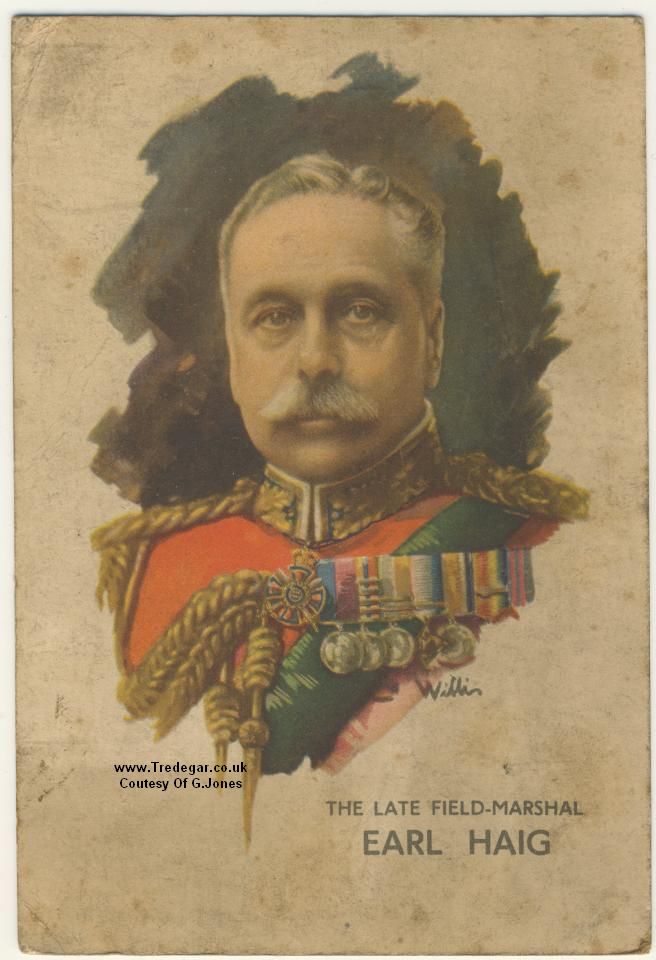
Field Marshall Haig
Charlotte Square is the jewel in Edinburgh’s New Town, a wonderful expression of Georgian architecture and understated majesty. On the north side of the square facing the statue of Prince Albert is pseudo-palatial Bute House, the official residence of the First Minister of Scotland; in the southeast corner is the birthplace of Alexander Graham Bell, the inventor of the telephone, and it was here that Joseph Lister, the pioneer in anaesthetics lived and worked. It was here too in 1861 that one of Scotland’s most controversial figures was born: Field Marshal Sir Douglas Haig.
As we approach another Remembrance Sunday, when the Queen leads the nation in commemorating those who fought and died for king and country, we look back and reflect. The bloody First World War came to an end with an armistice truce that became effective at 11.00am, on the 11th day of the 11th month in 1918 – and since then, that moment has been remembered across the nation. In the lead up to the formal ceremonies and minutes of silence, Britons proudly wear their red poppies on their lapels, as mark of their respect and gratitude. It represents the vast poppy fields that bloomed across France and Belgium over the battlefields that claimed so many.
The poppy wearing tradition raises much needed funds which support veterans and their families. It began the early 1920s following the establishment of the British Legion in 1921. For the last 90 years the Legion has helped the old soldiers, provided a social club where they can meet, and generally been at the forefront of their welfare. One of the founders of, what is now the Royal British Legion was the Earl Haig, and in the years following the First World War he was instrumental in using his influence and importance in making sure that those returning from this and every conflict would be cared for and have a support structure. It is one of the greatest legacies of a man vilified in many quarters as the Butcher of the Somme.
By 1916 the war in the Western Front had disintegrated into a bloody war of attrition. Both the British and French on one side, and the Germans on the other were ensconced in mile upon muddy mile of trenches, stretching from the Alps to the North Sea. For most of the time it was a tedious existence for the millions of mainly volunteer soldiers; occasionally punctuated by a foray into No Mans Land, where almost inevitably the men were caught up in barbed wire or cut to ribbons by machine gun fire and artillery. It was a horrible existence. That spring the Germans launched a massive attack on the French position of Verdun. There was little strategic value to the old medieval city, but it was a symbolic site for the French. A position they would defend to the last man – and that was very much the German plan.
Earlier in the year the British supreme commander, Sir John French had been replaced by Sir Douglas Haig following a series of public disasters. Haig was a golden boy in certain circles and his promotion was encouraged by The Secretary of State for War, Lord Kitchener, and the king. He did have his detractors too, including David Lloyd George, which would cause issues as the war dragged on. He brought a sort of fresh outlook to the table, but his caution was a concern for the French High Command.
The French were getting pummelled at Verdun, and insisted their British allies launch a counter offensive in the early summer to relieve the pressure. Haig felt his army of volunteers weren’t ready, and preferred to hold off until August. In no uncertain terms the French commander, General Joffre told the British that unless a major operation was carried out as soon as possible, the “French army would cease to exist”. Pressure was put on Haig by the government at home, and he and his staff began preparations for an offensive in the Somme valley.
It was to be an attack on a truly awesome scale. In the week beforehand the German lines were bombarded with shellfire, so loud that it could be heard on the outskirts of London – it was the greatest deployment of artillery in the history of warfare to that point. The British believed that the enemy trenches would be so utterly destroyed that the soldiers would simply walk over no man’s land and take them. In reality, the huge bombardment had virtually no effect at all. Also, the barbed-wire that needed to be blown away by the guns as a necessity remained in many places pretty much intact.
The Battle of Somme began on the 1st of July 1916, when hundreds of thousands of British and allied soldiers left their trenches and went ‘over the top’. They were met with a hail of bullet and mortar fire from the German positions. It was a slaughter. On that first day there were 60,000 British casualties – the worst single day in British military history. And day, after day the Generals sent the men up and over, convinced that the breakthrough would come: it didn’t. There were several phases of the battle, and it saw the first introduction of the tank, but by the end in November the allies had only advanced 7 miles. The cost in lives and injured is mind-numbing – British and Commonwealth: 420,000; French: 204,000 and German: 465,000.
Much of the blame for this loss of life to success gained was placed on the shoulders of Haig and his generals; Lloyd George did much to expound this belief. However, modern scholars have revisited the battle and realised that it would have been hard to avoid these casualties in any event, and that it did have the effect of relieving Verdun and letting the French regroup. It also dealt a huge blow to the German army, which wobbled a bit. It is now considered by some that without the Somme offensive, the war may not have been won by the allies at all.
Haig was made a Field Marshal by the king, who thanked him in a personal note. Much as Prime Minister Lloyd George loathed the commander, he simply couldn’t get rid of him. So, he spent much of his time after the war discrediting him, and many of his memoirs form the basis of the British image of Haig. In 1917 Haig launched another offensive, known as the Battle of Passchendaele. The weather conspired against him as much as German resistance and again the high casualty figures for little gain seemed to highlight the incompetence of Haig and his command.
However, Haig’s fortunes turned and in 1918 he at last broke though what by then was a thoroughly demoralised German force. The German Empire was collapsing, and with the arrival of the Americans in 1917 allied victory was assured. Haig masterminded the final assaults and in November the Germans surrendered. The ‘Butcher’ had now won the war. Many said that it came at too high a price and that the campaigns were an unacceptable waste of men. However, through the looking glass we can see that these battles took so much out of the Germans, that their demise became inevitable. The cost was high, yes – but the war was won.
Begrudgingly, and probably at the king’s insistence, Haig was raised to a peerage, and created the Earl Haig. For the rest of his life he remained hugely popular with the veterans and soldiers; and his dedication to their welfare casts a very different light on the man. He died in 1928 in London; he then lay in state in Edinburgh before being buried at Dryburgh Abbey in Borders near his family’s ancestral home.
Whatever your opinion of Field Marshal Sir Douglas Haig, whether cold-hearted butcher or the man who won the bloodiest war fought in Western Europe; there is no doubt of his influence and contribution both to our psyche; and to the nation.
For more information on the Royal British Legion Poppy appeal – www.poppy.org.uk
This article was written by David McNicoll, owner of Vacations Scotland - a travel company specialising in Scottish vacation packages, including historical, family heritage and tailor-made tours – www.vacationscotland.biz
The post The Earl Haig – A Study in Controversy appeared first on ScotClans | Scottish Clans.
]]>