


Hill and Adamson

Hill and Adamson

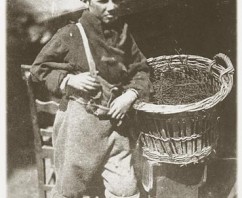
Buried in the beautiful Victorian Dean Cemetery in Edinburgh is David Octavius Hill, a painter who, along with Robert Adamson, pioneered in Scottish and aesthetic photography. They founded the Hill & Adamson Studio in 1843, Scotland’s first photographic studio, when the medium of photography was still very much in its infancy. And from this partnership, […]

Read More

The Union Jack

The Union Jack

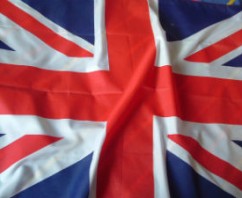
An interesting angle to the current debate on Scottish independence is what would happen to the British Flag, the Union Jack, should Scotland actually separate from the rest of the United Kingdom. It may seem a trivial point, but the flag and the union are so interwoven that it is worth looking at how it […]

Read More

Prophecy – Scottish Second Sight

Prophecy – Scottish Second Sight

The Scots are superstitious, and one of our most strongly held beliefs is that of the gift of second sight; the ability to predict events before they occur. Prophets, or seers, are well recorded in Scottish history and mythology from the Brahan Seer to Thomas the Rhymer; and this article looks at how their predictions cast a long shadow over the lives of people of Scotland

Read More

The Gaelic Calendar

The Gaelic Calendar

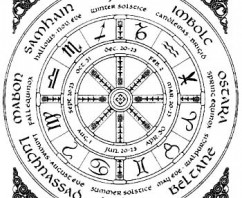
The Gaelic language, spoken still today in the Highland and Islands, has a very descriptive way of explaining the seasons and months of the year based on observations that take us back thousands of years to our ancient past. The months of the year reflect important annual milestones, natural cycles and religious ritual; and were an intregal part of farming life. The article takes you through the year, the seasons and the meaning behind the months and a chance to glimpse the world through our forefathers eyes.

Read More

The Earl Haig – A Study in Controversy

The Earl Haig – A Study in Controversy

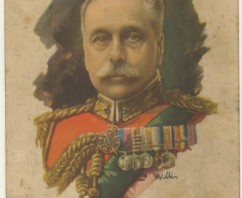
Field Marshal, the Earl Haig was born in Edinburgh’s Charlotte Square in 1861 and would gain fame and noteriety as the Supreme Commander of the British Forces during the First World War. Haig replaced Sir John French in 1916 as the conflict deteriorated into a war of attrition. At this time, the French were under severe pressure at the Battle of Verdun, so Haig launched the Somme offensive to drive back the German army. The battle lasted a little over 4 months, by which time the casualty figures had exceeded a million. Little gain was made, and Haig and his generals were blamed in many quarters for their ineptitude, and Haig himself became known as the Butcher of the Somme. A year later at the Battle of Passchendaele, huge losses for little success was repeated, but both battles had severely damaged the German army and their resilliance. In November 1918 Haig made the final breakthrough and effectively won the war.

Following the war, Sir Douglas Haig was promoted to the peerage as the Earl Haig; he was then instrumental in setting up the British Legion and the Poppy Appeal – two institutions with the purpose of raising funds and providing help and welfare for soldiers and their families, which is very much the legacy of this most controversial of Scotsmen.

Read More