The post Family Tree Relationship Chart appeared first on ScotClans | Scottish Clans.
]]>To help determine how two people are related to each other we have created what is formally known as a canon law relationship chart, but what is more commonly referred to as a Family Tree Relationship Chart. Hope this makes things a bit clearer.

The post Family Tree Relationship Chart appeared first on ScotClans | Scottish Clans.
]]>The post Getting comfortable with Gaelic’s indigenous side – a few things to consider appeared first on ScotClans | Scottish Clans.
]]> Some of the advantages that accompany engagement with one’s Gaelic heritage are the wonderful and useful bits of relevance that a Gaelic past brings to modern life. That’s right. Lessons learned from a Gaelic perspective can be productively relevant to difficult problems we face today. Consider the following:
- Gaelic tradition introduces community oriented and inclusive perspective in an increasingly exclusive and inward looking modern world.
- Study of Gaelic culture encourages appreciation of diversity and an open, curious nature in a world with growing numbers of closed minds and an intolerant outlook.
- Gaelic tradition recognizes and celebrates the fact that humans are an integral part of the “natural” world and because we depend upon it for a vast array of values, we should pay very close attention to its health.
There is little question that Scottish Gaelic identity remains distinct from other cultures existing within the UK and Scotland. Certainly it bears a distinct history and tradition. To some observers, Gaelic distinctiveness shows most clearly through Gaelic society’s indigenous characteristics and experience and its historical existence within a larger not-very-indigenous dominant culture.
From the perspective of some in the Gaelic Diaspora, these indigenous characteristics of Gaelic tradition are of great interest. They allow us to begin to place our Gaelic heritage more closely and honestly within the histories of our own nations. Approaching Gaelic history and culture from an indigenous perspective opens windows and invites wonderful discussion.
But before diving too deeply into discussion of particular aspects of indigenousness, it is worth taking a moment to understand what it is, exactly, that links indigenous peoples’ experiences across the world, today and in their respective histories. What is an indigenous culture? It does not necessarily mean the first or only humans to set foot on certain soil.
The United Nations 2007 Declaration on the Rights of Indigenous Peoples includes this description:
Peoples … are regarded as indigenous on account of their descent from the populations which inhabited the country, or a geographical region to which the country belongs, at the time of conquest or colonization, who retain some or all of their own social, economic, cultural and political institutions.
Further guidance from the United Nations:
Considering the diversity of indigenous peoples, an official definition of “indigenous” has not been adopted by any UN-system body. Instead the system has developed a modern understanding of this term based on the following:
- Self-identification as indigenous peoples at the individual level and accepted by the community as their member.
- Historical continuity with pre-colonial and/or pre-settler societies
- Strong link to territories and surrounding natural resources
- Distinct social, economic or political systems
- Distinct language, culture and beliefs
- Form non-dominant groups of society
- Resolve to maintain and reproduce their ancestral environments and systems as distinctive peoples and communities.
You can read more about what the United Nations has to say about indigenous people and characteristics here.
A Few Things To Consider. Regarding consideration of Scottish Gaelic as an indigenous culture, here are five things – from a Diaspora perspective - that might be worth keeping in mind:
1. Gaelic Culture Is Not Just About Language and DNA. Although language and DNA can be seen as the entire shelf rather than just useful bookends, Gaelic identity is about so much more than language and DNA. In the void existing between those two things one finds all the rest of culture, socio-political institutions and spiritual outlook and learning, and basic life ways. Much of that has already been swept away in prior Scottish de-Gaelicicization efforts. What remains is threatened. Ultimately, however, these kinds of cultural markers are the things that remain of interest and about which we are still learning and trying to reclaim. Language is an incredibly important and enlightening element of culture but not the only one. It is important in its own right and for what it tells us about its mother culture. Language is also the key that opens the treasure chest of Gaelic historical perspective. If you cannot understand what Gaels have said in their own language – through your own study or by accessing some other reliable study – you cannot understand all of what you need to understand. Nevertheless, although language is the key tool, the ultimate prize is deeper cultural understanding.
2. Indigenous Does Not Mean Isolated. Indigenous cultures are not necessarily genetically pure or isolated from the outside world and from the additive cultural influence that warfare, trade and social interaction bring. Gaelic culture has enjoyed immigrant and trade influence as has almost every human culture and society including many indigenous ones. Pictish and Norse and Welsh and Irish influences make Gaelic a very rich and diverse culture today – but the admixture is still called Gaelic and diverse cultural influences do not necessarily argue against indigeneity nor do they make recognition of Gaelic less important.
3. “There can be only one.” NOT. Indigenousness is not a geopolitically exclusive status. Recognition of one culture as an indigenous culture does not mean that it has claimed exclusive right to that status throughout, in this case, Scotland and the UK. The many coexistent indigenous cultures in the US provide good examples, as does the history of North Britain itself to a certain extent. Fear of wiping out recognition of, or interest in the people that pre-dated and co-existed with the Gaels is unsupported. There is nothing about the idea of a recognized indigenous Gaelic culture that should lead to such an outcome. That, however, leads to the next really important thing to remember about indigenousness.
4. It’s Alive!!!! Indigenousness is, primarily, an element of a living global cultural structure that is actively and physically present today. Discussion of indigeneity is firmly hooked to living people and their contemporary lives. As demonstrated by the UN resources quoted above, whether there exists a logical basis for a culture to self-determine its own indigenous status is typically measured by historic continuity and status of living people. Reasonable claims to real rights are involved and so the determination is an important one not made lightly.
It is certainly wonderful news that some cultures that had gone missing from contemporary Earth have been successfully revitalized in recent years and even reclaimed from “sleeping beauty” status. Check out this great article on language (cultural) revival and video about the experience of the Barngarla people in Australia. These movements are difficult and sincere and they often demonstrate best how much is lost when a culture and society are thoroughly and intentionally suppressed as well as what amazing things can be achieved by people today who work to bring them back.
5. “I’m Gaelic, We Suck” Said Nobody Ever. Erosion and Anglicization of Gaelic culture and society did not happen without the need for consistent episodes of severe repression applied by various non-Gaelic kings over the course of several centuries to force ethnically stubborn Gaels to accept Anglo/Scottish incentives – or to leave Scotland. Near loss of Scottish Gaelic culture has not been an accident of history. In the largest of all nutshells, Gaelic culture and society have been specifically targeted for eradication and if not that, then severe containment. Gaelic society has been historically perceived by most Anglo, (non-Gaelic or anti-Gaelic) Scottish, and many American observers as barbaric, savage, uncivilized, backward, etc. Thus, under the general guise of “civilizing” the uncivilized, national policies have openly attempted to rid Scotland and America of significant and meaningful Gaelic influence. Culture-killing policies and projects have been clothed as beneficent reform and improvement. Such has been the imperial pattern across the globe. Did you watch that video linked above? You should. Gaelic culture, like many others, survives today because it has proven extremely stubborn in the face of centuries of repression.
In the event. Clearly, the Scottish Gaelic indigenous experience was broadly similar to other indigenous experience, but also different in a few stand-out ways. Scottish Gaels were some of the very earliest victims of the invasive Anglo influence flowing up from the south. Gaels are also closer geographically to England than indigenous people on other continents. Perhaps more interestingly than all of this, however, is the fact that Gaels look like the Europeans that they are and that makes the Gaelic indigenous experience its own. Gaels aren’t the only white indigenous people on the planet, but there aren’t all that many left.
Light skin and European features did not automatically provide keys to Anglo respect for Scottish Gaels. Nevertheless, those European physical traits did place Scottish and Irish Gaels in a peculiar posture as far as Anglo imperial victims generally go. Anglicized Gaels could be more readily and somewhat more deeply accepted by Anglos than were Anglicized dark skinned aboriginal peoples. Yet there is no evidence that suggests that giving up an ancient culture and way of life, pulling up roots and leaving a homeland under varying levels of duress was always easier or created less loss for Gaels than for other victims of similar cultural pressure elsewhere in the British empire.
There are many great reasons why it makes sense to examine Gaelic culture with an indigenous lens. In the end, it may be impossible for some people to attach the label “indigenous” to Scotland’s last remaining distinctly pre-Anglo culture. If so, at the least take a moment to appreciate the great variety of experiences and cultural characteristics that Scottish Gaelic culture shares with those people across the globe who have chosen to join the indigenous family.
One important indigenous marker has to do with the question of how humanity understands itself relative to the non-human world and how humans interact with that world. Questions such as whether we will continue to fuel extreme climate instability and how we adapt to climate changes that we fail to avoid are perfect opportunities to consider and integrate indigenous ideas. There are a growing number of people on the planet who recognize great personal and global value and potential in indigenous ideas and approaches to the world and are therefore keen to understand them more completely. Scottish Gaelic offers opportunity in this regard.
Speaking of land, heritage and indigenous souls, a far better McIntosh than I, Alastair McIntosh, along with a handful of other scholars in Scotland and North America, have been forging new ideas on the topic of Gaelic relationships with landscape. Especially through interdisciplinary insight and understanding offered by Alastair McIntosh’s climate and human ecology perspective, exploration of traditional Gaelic relationships to land and other “indigenous” Gaelic qualities has already contributed not just to the interests of Gaelic heritage but to humanity’s better understanding of itself and the planet.
More on this topic coming. In the meanwhile, some really great reading:
Soil and Soul: People Versus Corporate Power by Alastair McIntosh (2004)
Warriors Of The Word: The World Of Scottish Highlanders by Michael Newton (2009)
On The Other Side Of Sorrow: Nature And People In The Scottish Highlands by Jim Hunter (1996)
White People, Indians And Highlanders: Tribal People and Colonial Encounters In Scotland And America by Colin Calloway (2010)
The post Getting comfortable with Gaelic’s indigenous side – a few things to consider appeared first on ScotClans | Scottish Clans.
]]>The post Scottish Heraldry 101: The Court of Lord Lyon appeared first on ScotClans | Scottish Clans.
]]>
HM New Register House, Edinburgh
Just off Edinburgh’s bustling Princes Street sits a grand old building that houses hundreds of years worth of Scotland’s records. HM New Register House is well known as home to the General Register Office for Scotland but also houses the Court of Lord Lyon – Scotland’s centuries-old heraldic authority that can be traced back to at least 1388. The court regulates and has jurisdiction over matters relating to Scottish heraldry, which includes establishing and issuing Coats of Arms and maintaining the Public Register of All Arms and Bearings and the Public Register of Genealogies and Birthbrieves in Scotland.
Inside the first-floor office, bookshelves stacked full of leather-bound publications line the corridor that is also decorated with heraldic antiquities including tabards and carved coats of arms of past knights of the Order of the Thistle. Central to the Lyon Court is the Lord Lyon King of Arms and the Lyon Clerk and Keeper of Records, the latter from whom I’ve come to receive an introduction on all things heraldry. While the Lord Lyon is the judge responsible for determining and granting new arms, the Lyon Clerk puts the Lord Lyon’s instructions into operation and makes sure they are properly adhered to. The Lyon Clerk is also specifically responsible for the maintenance of the registers and records within the office.
The position of Lyon Clerk is currently held by Elizabeth Roads LVO, whose other quite separate hats include assistant secretary to the Order of the Thistle and Snawdoun Herald of Arms. Mrs. Roads started off as the then Lord Lyon’s assistant in 1975 on return to Edinburgh from overseas travel. She came from a fine arts background, and had no particular knowledge of heraldry other than how it related to art and decoration. “I’ve been here for nearly 39 years, which the then Lord Lyon is probably laughing at, bless his heart. I told him I didn’t think it was likely I would stay here more than five years.”
In 1986 Mrs. Roads was appointed Lyon Clerk, the first woman to be so, and said that the job hadn’t changed an awful lot during her 26 year tenure in the post. “The office has existed in its current form since at least the late 17th century. So 40 years isn’t a very long time in the court’s existence. I would like to think that if Colonel Lawson (Lyon Clerk 1929-1966) walked in now, he would be able to sit down at this desk and do exactly the same job as he did in 1929.” One thing that has changed is the amount of correspondence received from all over the world, as a result of the enormous quantity of genealogical information available online. Thus a large number of the court’s records have been digitised and archived online, available to view and download at £10 per record.

Grant of Arms issued by The Lyon Court
In order to apply for a new Coat of Arms, or marticulate older arms, Lyon Clerk recommends doing as much research as possible into heraldry beforehand. “Very often [applicants will] come and have a chat with us first about the process. It’s a formal process so you have to lodge a petition and give us such documentary evidence as is necessary for your particular case.” Information about applying is available on the court’s website, with petitioners increasingly using this avenue to begin their heraldic journey. In terms of designing a Coat of Arms, very often petitioners will come with only the broadest of ideas, in which case the Lord Lyon or Lyon Clerk will work out something that is simple, clear and appropriate. “For private individuals our starting point would always be their surname. If it’s an established Scottish surname then we’ll look at what the underlying arms of the chief are and use that as the basis.”
Perhaps the most common misconception among applicants is who a Coat of Arms belongs to. “A Coat of Arms belongs to a person, not a family. It’s a piece of personal property that will pass down an individual’s senior line. A family Coat of Arms just doesn’t exist”. Lyon Clerk likens it to saying that you have a family passport, or a family driver’s licence.
The application involves fees which go to the Exchequer and the heraldic artists and calligraphers who hand-paint the arms on vellum paper. The Exchequer’s fees are paid as protection so that if somebody misuses your arms, the Crown will take action at no cost to you. “Normally it doesn’t get as far as prosecution. In fact in my time only once has someone insisted on using arms to which they were not entitled, which resulted in prosecution. If arms are being used unlawfully then the Procurator Fiscal to the Court of the Lord Lyon will write to them saying they shouldn’t be doing so. They’ll then provide advice as to what they should do if they want their own Coat of Arms.”
Along with arms enquiries, the court also receives many queries from people asking about clans, with questions ranging from what their clan or family is, who their chief is and what tartan to wear. “We get a lot of these sorts of general queries very often because they don’t know where else to go. This office is sort of thought of as being the office that knows everything. Sometimes we do know the answer and can help and sometimes we merely direct them towards the answer.” In fact, the only relationship the court has with the clans is when a chief comes to record their coat of arms. “We’re only concerned with the heraldry of the clan chief. Lyon doesn’t recognise a clan chief as such. What he does is vest that person in what are called the Undifferenced Arms of the Name, showing they are the principle person of their name and the clan chief.” The Standing Council of Scottish Chiefs, the organisation that represents chiefs of clans and families in Scotland, will only invite chiefs to be members if they have been granted the Undifferenced Arms of the Name by Lord Lyon.

Clan Gunn Badge – Aut pax aut bellum (Either peace or war)
The majority of clans have a fairly clear succession down the senior line so the question of who is the rightful chief is usually straightforward. However, when the line has been lost it presents huge problems and a large amount of research must be undertaken. In order to assign a new chief, concrete evidence must be shown by the petitioner that the line has died out completely. “A particular instance would be Clan Gunn where we know what the principle line was. What we don’t know is what happened to [the many] descendents of that line. They undoubtedly will still be there, it’s just a matter of who they are and where they are now.” When a chief is missing, a commander can be appointed. The current commander of the Clan Gunn is Iain Gunn of Banniskirk who has been the clan’s leader for a very long time. Lyon Clerk added he is an efficient and effective commander. But there are an enormous amount of Gunn descendents and the search continues in determining exactly who is the senior descendent.
Commanders can go on to become chiefs, as in the case of Clan MacArthur, where the principle line was lost around 1820. “It took a lot of research but it was possible to show that actually those people all died without issue.” The resulting research showed that the commander was in fact the senior line of the surviving genealogical descendants. The Lyon Court is a court of law, therefore they are unable to undertake the successional research which then comes before them to be examined. Clan and family societies are very often the bodies who drive chieftainship petitions, with Lyon Clerk stating that it’s not their role to decide who should become chief, but rather to present research to the court.
One of the most enjoyable parts of Lyon Clerk’s job is providing genealogical records to those who are tracing their roots. “There is absolutely no classic person you can say is going to take an interest in heraldry or genealogy. People come from all sorts of backgrounds and there’s no rhyme or reason why people take an interest in it, so I get to meet an enormously interesting cross section of people.” For budding genealogists, Lyon Clerk says it’s easy to get back to the middle of the nineteenth century with no difficulty because birth, marriage and death records were statutory. Prior to that it helps if you’re tracing an unusual surname. She also adds to remember: “if you can’t find records, it doesn’t mean they don’t exist”. Genealogical websites have different records so it’s important to check out a few. Names were also sometimes spelt phonetically, so you won’t necessarily get the spelling you’re looking for. Lyon Clerk’s own genealogical journey has revealed such esteemed ancestors as Robert the Bruce and a 17th century Lord Lyon. “As one of my predecessors said, no individual has a longer genealogy than anyone else, they just happen to know more. I warn you now, it’s a complete drug. You always think – I wonder if I can just find that little bit more.”
The post Scottish Heraldry 101: The Court of Lord Lyon appeared first on ScotClans | Scottish Clans.
]]>The post Francis Alexander Mackinnon, 35th Chief — A Hat-Trick Victim in his Only Test appeared first on ScotClans | Scottish Clans.
]]>
Caisteal Maol
THE MACKINNONS OF MACKINNON
The Caisteal Maol stands near Kyleakin, a picturesque seaside village on the east coast of the Isle of Skye in the Inner Hebrides, Scotland. Till the Battle of Largs in 1263, this quaint Scottish hamlet was ruled by the Norwegian monarchy.
Legend has it that Caisteal Maol, or the castle of Dunakin, was built by a Norwegian princess known as ‘Saucy Mary’. This Nordic lady ruthlessly collected toll from ships that had to pass through the narrow stretch between the castle and the mainland. Only Norse vessels were exempted. She married Findanus, the man who is considered the forefather of the Mackinnon clan. And Casisteal Maol became the original seat of the Mackinnons.
According to the Scottish mythology, the McKinnon clan is supposed to have defeated the Vikings at Goir a’ Bhlair, on the eastern slopes of Beinn na Cailleach, above Broadford. Down the years, in recorded history, the clan played a major role in the Wars of Scottish independence. The early Mackinnons supposedly provided shelter to Robert the Bruce during his escape to Carrick. After Bruce triumphed in the Battle of Bannockburn in 1314, the Mackinnons were rewarded with land on the Isle of Skye.
By the early 19th century, the chieftainship of the clan had passed to William Alexander Mackinnon, the 33rd Mackinnon of Mackinnon. And it was during the time of this patriarch that his grandson Francis Alexander Mackinnon was born on April 9, 1848, three months before the birth of WG Grace. And by the time Francis Alexander Mackinnon passed away on February 27, 1947, he had almost outlasted the career of Don Bradman.
At the time of his death, Francis Alexander Mackinnon, the 35th Mackinnon of Mackinnon, had lived through an eventful 98 years and 324 days, which made him the oldest Test cricketer ever till that time. The record lasted 62 years until Eric Tindill went past him by spending 99 years and 226 days on earth before passing away in 2010. Of course, both these venerable gentlemen have been left behind now by South African fast bowler Norman Gordon, who is still going strong on 102 years and 246 days as we celebrate Mackinnon’s 164th birthday.

Francis Alexander Mackinnon. Photo Courtesy of kentcricket.co.uk
MACKINNON THE CRICKETER
Mackinnon the cricketer was not quite born in the ancient islands of Scotland. He saw the light of day at Acryse Place, Kent and was schooled in Harrow.
As a Harrovian, he did not quite manage to get into the playing eleven. But, by the time he was in St John’s College, Cambridge, he was a good enough player to get his Blues.
In 1870, he was a member of the Cambridge side during their historic encounter with Oxford. That was the match at Lord’s in which Frank Cobden, the Cambridge fast bowler, claimed the last three wickets with a hat-trick to win the match by two runs.
Years later, Mackinnon recalled the game with a sense of mock-vanity, “I really won the match, for I scored two.” Yes, his score in the second innings amounted to the margin of victory. However, he always omitted to say that in the first knock he had scored a very useful unbeaten 17, the second highest score of the innings.
Later, Mackinnon’s only Test match went down to be associated with another famous hat-trick. He played for Kent for a decade from 1875, and was one of the members of the side of Lord Harris that went to Australia in the winter of 1878.
It was not a very happy tour for the batsman. The only decent runs he made were in the matches against the odds teams put together by the local sides. In the Test match at Melbourne, Mackinnon scored a duck and five and on both occasions had his stumps flattened by the demon bowler Fred Spofforth.
In the first innings, on the first day of the Test, he walked in to bat at 26 for five after Spofforth had whisked one past Reverend Vernon Royle. The ball that greeted him was too good for Mackinnon and his stumps were rearranged as well. And then Tom Emmett, one of the two professionals, came in and lofted the first ball down the throat of the long stop. It resulted in the first hat-trick in Test cricket.
Mackinnon continued to play for Kent till 1885, and in his penultimate year he enjoyed his most prolific season. When Australia played Kent that year, he opened the innings and scored 28 and 29 in a fantastic victory, earned mainly through the memorable bowling of Alec Hearne. That same summer he hit 115 against Hampshire and 102 against Yorkhsire, the only two hundreds of his career. He was second in Kent’s averages that year, his 33 following the 41 of Lord Harris.
He ended his career with 2310 runs from 88 matches with two hundreds and an average of 15.71. He never bowled.
THE LONG LIFE
After giving up cricket, Mackinnon was made the President of the Kent County Club in 1889. A Captain in the Royal Kent Yeomanry from 1871 to 1893, he was promoted to Honorary Major in 1886. He was later appointed a Justice of the Peace and Deputy Lieutenant for Kent from 1900 to 1902.
In 1903, his father William Alexander Mackinnon, the 34th head of the clan, passed away. Francis Alexander Mackinnon succeeded him to become the 35th Mackinnon of Mackinnon.
Till ripe old age, Mackinnon remained in close contact with the game. He could be seen meeting old cricketing cronies in the Kent grounds, even after his legs had long called it a day, venturing around the ground leaning on two sticks. Occasionally, he could be glimpsed at Lord’s as well. Generally the I Zingari tie would be proudly worn around his neck. From time to time, he would take peeks at his watch, dangling from a chain decorated with a gold medallion bearing the insignia of crossed bats — a memento from the Australian tour, presented by Lord Harris. He used to regale the audience with hilariously narrated reminiscences of his happy days.
During the Tunbridge Wells Cricket Week in 1946, at the age of 98, Mackinnon watched the cricket from the pavilion, as also the Band of Brothers’ tent. One afternoon during the week, he visited the Rose Hill School, with his daughter and the Marchioness of Abergavenny in tow. It was here that he had sat as a pupil 89 years ago. Now, he embarked on a search for his old desk where he used to sit. He followed it up by inspecting the Sea Scout Troop before giving a talk to the whole school.
A few days later, he presented a picture of a Kent and Sussex match at Hove to the Canterbury pavilion — the painting depicting a century-old match, with Alfred Mynn and Fuller Pilch wearing tall hats.
When a few days later he was called on telephone and asked about his health, Mackinnon cheerfully responded, “I am going into hospital tomorrow — but only for the annual meeting at which I shall preside. I am very well in health — very well indeed. I still do a lot of work in the garden: weeds don’t like me at all.”
On February 27, 1947, Francis Alexander Mackinnon passed away at his home, Drumduan, in Forres, Morayshire, Scotland.
————
Arunabha Sengupta is a cricket historian and Chief Cricket Writer at CricketCountry. He writes about the history and the romance of the game, punctuated often by opinions about modern day cricket, while his post-graduate degree in statistics peeps through in occasional analytical pieces. The author of three novels, he can be followed on Twitter at http://twitter.com/senantix
The post Francis Alexander Mackinnon, 35th Chief — A Hat-Trick Victim in his Only Test appeared first on ScotClans | Scottish Clans.
]]>The post Tartan Day Celebrated Around the World appeared first on ScotClans | Scottish Clans.
]]>As well playing a significant role in shaping Scottish history, the declaration’s confirmation of kingship, independence and the rights of the people is said to have formed the basis of the American Declaration of Independence. Today the day is celebrated with a variety of different events hosted by various clan and Scots heritage societies. Here’s a quick round up of snaps from this years celebrations:

Super Selfie from New York Tartan Day Parade
Simon Fraser University (B.C.) Pipe Band drum major Jason Paguio led the Tunes of Glory band at Saturday’s New York Tartan Day Parade and decided to snap a photo as the parade wound its way through Manhattan. “I was hoping I wouldn’t get into trouble,” Paguio said with a chuckle. You can view a news report form the New York festivities here.

McGregors, McAlisters and McIntyres in attendance in WA
About 75 people gathered on the steps of the Legislative Building in Olympia, Washington State on Sunday. The event featured bagpipe music, a reading of a National Tartan Day resolution and a group performance of “Scotland the Brave”.

Thousands celebrate Celtic heritage at Tartan Day South
The fourth annual Tartan Day South Highland Games was held at the Celtic Festival in Cayce, Columbia on Saturday. Thousands flowed in for this year’s event, part of the four-day Tartan Day festivities that also featured a movie night Thursday and concert Friday at West Columbia’s Riverwalk Amphitheater. The festivities concluded Sunday with the Kirkin of the Tartans, a worship service.

Weekend of events in Arbroath kick off Tartan Day Scotland Festival
A weekend of special events marking the heritage and culture of Angus attracted crowds of people to Arbroath. A re-enactment of the signing of the Declaration of Arbroath by the medieval nobles of Scotland took place within the walls of Arbroath Abbey for the first time in several years. You can view a video here.

Minneapolis Mayor Hodges honored for Scottish roots
Minneapolis Mayor Betsy Hodges was Guest of Honor Saturday at Saturday’s Tartan Day event, which recognizes Scottish history and culture. She wore a sash of her clan’s Modern Red Morrison tartan for the event, held at the state Capitol. In a Facebook post, Hodges said she has lots of Scottish blood:
I was so touched to be the honored guest at Minnesota Tartan Day. I have Scottish heritage from both sides of my family, Clan Morrison on my father Morrison Hodges’ side and Clan Nicholson on my mother Aj Hodges’ side. I think I first knew I was Scottish when the bagpipers played Amazing Grace at my grandfather’s funeral. The second time was when I went to Scotland and for the first time in my Minnesota-raised life I was around a bunch of people who kinda sorta looked like me.
The post Tartan Day Celebrated Around the World appeared first on ScotClans | Scottish Clans.
]]>The post Not another famous ancestor! appeared first on ScotClans | Scottish Clans.
]]>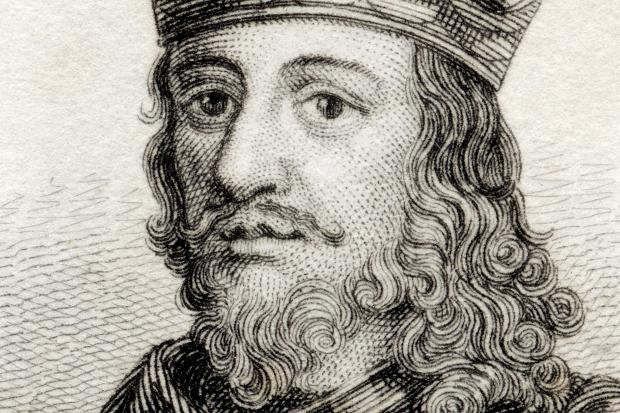
Robert the Bruce – a long distant relative? What are the chances?
Last month it seemed everyone was claiming Robert the Bruce and William Wallace as an ancestor. The month before it was King Richard I and Niall of the Nine Hostages. Who knows who will be next, we will just have to wait and see who the new flavor of the month gets to be, but this month it is Charlemagne.

Charlemagne – King of the Franks and Christian Emperor of the West.
After seeing so many people in the past couple of weeks claim Charlemagne as a ancestor, this really started getting me fired up. Why? Because it was a mathematical formula that put the idea out there that 80% of Europeans are related to Charlemagne. Joseph Chang, who came up with this formula, was not a genealogist, instead he is a statistician at Yale who likes to think of genealogy as a mathematical problem.
Well Mr Chang, I’m no mathematician, but I think that you should go find something else to count, and leave real Genealogy to real Genealogists. As you, Mr Chang, are the person who is responsible for single handly turning amateur Genealogists into fruit loops. We now have all these delusional people claiming ancestors who they believe to be related to, yet can’t provide one bit of evidence, let alone being able to say how they are related. This is all because you wrote a mathematical formula, and that formula has been shot to pieces by other experts!
When you read the report he published in 1999, Chang analyzed this tapestry mathematically. If you look at the ancestry of a living population of people, he concluded, you’ll eventually find a common ancestor of all of them. That’s not to say that a single mythical woman somehow produced every European by magically laying a clutch of eggs. All this means is that as you move back through time, sooner or later some of the lines in the genealogy will cross, meeting at a single person.
Having said that, I ask the question then, why then is it this person Charlemagne, aka… Charles I, byname Charles the Great, French Charles le Grand, Latin Carolus Magnus, German Karl der Grosse, you say Mr Chang that we are all related too. Why not somebody else?
I, for one, can honestly say I am not part of the 80% of population that can apparently claim Charlemagne as an ancestor. How am I so sure about this? Well, I decided that if we can all go around claiming whomever we like with no genealogical proof, then I may as well join what seems to be the in thing at present to do in Genealogy.
So, no, I am not related to Charlemagne. I am actually a decendant of Charlemagne’s next door neighbor, ÆThelstan, son of Ecgwynn and
lfTfled
Thelstan, unlike his pain in the arse snobby noble neighbour, was very poor, and struggled to feed his family and wife Eadflæd. ÆThelstan and Eadflæd married when she became pregnant at age 15 only because they both would of been strung up if they didn’t. Eadflæd, who on the best of days, was a real bitch to her husband, and was forever publicly bossing him around. He resented her a lot for being called, and known about town, as a mummies boy.
They had only two children, a son Otto and a daughter Eadgifu. Otto loved getting drunk, and ended up fathering no less than eight bartard children with eight different chicks of the town. Eadgifu didn’t have many prospects, as she was considered ugly, so her parents decided to sell her into prostitution and count their losses. But, as it turns out, she was actually very good at her job, and before she died at age 26 from the pox, she was actually able to pay for an actual wooden box to be buried in. However, her one son, who’s father is unknown, decided it was a waste of good wood and instead used it to fix his mates broken fence. It is through Eadgifu son that I am a decendant, however I don’t have a clue as to what his name was.
Now, I could go on and on about my wonderfully new claimed ancestors, but like everyone else, I don’t exactly know the next fifteen generations. Although, I’m sure I will find them on Ancestry.com very soon, and have my family tree finish by this time tomorrow! But, then again, if everyone else is claiming the over rated noble arse of a neighbor, I may not find it on Ancestry.com and therefore won’t be able to just copy and paste. Darn it;
better give me till the end of the weekend to find that missing fifteen generations!
So, Mr Chang, who needs Charlemagne as an ancestor when you can have his next door neighbor, or any other nobody, and all you need to do to claim them as your own is simply put it on the internet. Because everything on there has to be right. Right? WRONG!
The invention of the internet has been a blessing and a pain in the arse for Genealogy. On one hand, we can now do a lot of the research of our family’s history without ever leaving our own lounge rooms. But on the other hand, it is a trap of misleading information and is full of errors that a lot of people fail to see, with many taking everything they see and read as gospel.
We see this happening all the time in genealogy, especially with people assuming that they have famous ancestors. But start asking them, HOW they are related to this famous person, and to provide documentation for each and every generation from themself to the person they are claiming they are related to, and they simply can’t. 99% of the time these people can not back up their claims with original primary documented proof.
Now, one would think that it would be a relatively simple task explaining the basic golden rules of Genealogy to these delusional people, and that they would then snap out of it, fully seeing that their claims are simply worthless, wishful thinking. Well, think again! Most will swear, blue blind, that they are correct and believe me nothing at all will convince them other wise.
So, what are these few simple golden rules that some people think that they are exempt from following, seen they are of famous decent?
Well, the first rule has to be, don’t believe everything that is online.
Internet data, like any other published sources should be viewed with caution. All information you find may seem the perfect match to your own family tree, but don’t take anything for granted. Just because a family genealogy or a record transcription has been written down or published does not necessarily mean that it is correct. It is important to not just assume the quality of the research done by others is gospel or even correct. Everyone, from professional genealogists to your own family members, can make mistakes. The internet is full of family histories that people just copied and pasted from other people who have not listed any reference to any reliable sources that are needed to verify their research. Even if a primary or secondary source is given, you still need to verifying everything you find yourself. No proof. No famous ancestor.
2. Start at the beginning. Don’t begin your research at the wrong end of your family tree! You need to start with yourself and work your way back to that “famous” ancestor. It simply doesn’t work starting with anyone other than you.
3. Don’t assume and jump to conclusions. Genealogy is all about facts, not fiction, eg: if an ancestor all of a sudden disappears from the next census don’t just assume they died, as there may be many other reasons for this. They may of just moved into that famous ancestor’s estate they just inherited.
4. Skipping a generation or fifteen. By skipping just one generation you now can’t claim that famous ancestor. You need each generation from yourself to them with documented proof. Skipping even 20 years or 1 ancestor breaks your connection.
5. Keep track of where you find all of your information. Document and cite EVERYTHING. Write down the source for every bit of information you collect. Whether it be from a family member, Web sites, newspapers, archive records, manuscripts, book, photograph, tombstone or any other possible source. Be sure to include the location for the source so that you or other family historians can reference it again if need be. Documenting your research makes verifying your claims so much easier when people like me question your claims of being delusional.
How I’ve only listed five of the most basic, as I can obviously understand that some of you have difficulty even understanding how Genealogy works. So, if you work at mastering these first ones, I may still be able to make an amateur genealogist out of you all yet.
I would like to think, that one day we will all only claim ancestors that we can prove as ours, famous or not. As Genealogy isn’t about how many famous names you can enter or import into your family tree, or about how far back you’ve traced your family. Genealogy to me is preserving our ancestors lives and, well, their life stories. Our ancestors were real people with real lives, and if that’s not a good enough reason to bring you back to reality and stop being delusional, then I for one am so glad that I’m not a part of your family, as fruit loop I hear, is hereditary.
Leanne Ferguson
Dead Man Hunting Genealogy.
Genealogist for Clan Fergus(s)on Society
I specialise in Scottish Genealogy, Surname meanings, and Gaelic Records.
The post Not another famous ancestor! appeared first on ScotClans | Scottish Clans.
]]>The post Royal Stewart Descendents Alive and Well appeared first on ScotClans | Scottish Clans.
]]>
The Seal of Robert II, King of Scots. 1316-1390
Half of all men in the United Kingdom with the surname Stewart, or Stuart, can claim ancestry from Scotland’s Royal family. Research released by ScotlandsDNA has revealed for the first time the individual in the 13th century who founded a branch of the Royal Stewart line.
In the United Kingdom alone there are about 70,000 people with the surname, meaning that around 17,5000 men can now claim descent from the royal bloodline. The source of the line is Sir John Stewart of Bonkyll, who met his demise at the Battle of Falkirk in 1298 fighting alongside William Wallace. The Stewart family’s well-documented pedigree allowed ScotlandsDNA to carry out tests on his descendants, and those of his brother James, the 5th High Steward of Scotland and the grandfather of Robert II, the first Stewart king.
Dr Jim Wilson, the group’s chief scientist, discovered a marker that originated more than 700 years ago when ancestry tests were carried out on the descendants of James and Sir John’s sons Richard and Angus. The results show that that the modern descendants of both sons of Sir John carry a Y chromosome marker S781+ that is absent in the descendants of James.
Dr Wilson added: “By a straightforward process of deduction that means that the marker arose in Sir John Stewart of Bonkyll, and not in his father. If it had, the descendants of James would also carry it, and they do not.” Having made the discovery, ScotlandsDNA checked its database of ancestry tests for men with the Stewart surname and found that 20 per cent of them share Sir John’s lineage, while 30 per cent are descended from his brother James.
James’s son Walter, married Marjorie Bruce, the daughter of Robert I, having helped him win the great victory at Bannockburn, and their son became Robert II.
Alistair Moffat, co-founder of ScotlandsDNA, added: “In the year of the 700th anniversary of Bannockburn, thousands of Scottish men can claim to be directly descended from the Stewarts who fought alongside Bruce, and they can directly identify with generations of famous figures who shaped Scotland and Britain.” The Duke of Buccleuch, Scotland’s biggest private landowner, who is directly descended from Sir John, and a long line of Scottish and British kings, said he was fascinated by the DNA detective work.
He added: “My family’s history has always been closely involved with the history of Scotland and Britain, but the fact that the rise of a DNA marker has been identified in an individual brings the past even closer, and makes it more personal.
“I am delighted to have been a guinea pig for the sort of history it is now possible to write thanks to DNA research.” The sampling has also, for the first time, distinguished clearly between different cadet branches of the royal Stewarts.
The four branches are the Appin Stewarts who fought at Culloden, the Lennox Stewarts who were direct ancestors of James VI and I, and the Albany and Moray Stewarts who acted as regents.
The post Royal Stewart Descendents Alive and Well appeared first on ScotClans | Scottish Clans.
]]>The post Introducing the 38th Lord Lyon King of Arms appeared first on ScotClans | Scottish Clans.
]]>
Dr Joseph Morrow, 38th Lord Lyon King of Arms
Hot off the Heraldry press, we’re pleased to report that a new Lord Lyon King of Arms was appointed in Edinburgh last week. Dr Joseph Morrow, an advocate with degrees in theology law, was appointed as the 38th Lord Lyon following the resignation of David Sellar MVO, FSAScot, FRHistS late last year.
Dr Morrow has been a student of heraldry and has a special interest in ecclesiastical history and 35 years’ experience of the practical application of ceremonial within a variety of settings including State, Civil, Military and Ecclesiastical areas of Scottish life. The part-time appointment, made under section 3 of the Lyon King of Arms (Scotland) Act 1867, is based at Edinburgh’s New Register House. It was made following advertisement, interview of a short-list of candidates by a selection board followed by recommendation to the First Minister. The final decision on the appointment was made by the Queen.
The Lyon Court regulates and has jurisdiction over matters relating to Scottish heraldry, which includes establishing and issuing Coats of Arms and maintaining the Public Register of All Arms and Bearings and the Public Register of Genealogies and Birthbrieves in Scotland. Lord Lyon is the sole King of Arms in Scotland and is specifically responsible for determining and granting new arms. The Standing Council of Scottish Chiefs, the organisation that represents chiefs of clans and families in Scotland, will only invite chiefs to be members if they have been granted the Undifferenced Arms of the Name by Lord Lyon.
At present, Dr Morrow is the President of the Mental Health Tribunal for Scotland, and President of the Additional Support Needs Tribunals and a First-Tier Tribunal Judge dealing with asylum and immigration issues.
He has held a number of professional positions outwith the legal field including Convener of the Development Department of Dundee City Council, Board Member of Scottish Enterprise Tayside, Board Member of the Angus and Dundee Tourist Board, Chair of the Dundee Waterfront Development Board, Chair of the Trustees of the Tayside Superannuation Fund and Vice Chair of the Court of the University of Abertay.
In 2009 he was appointed as a Vice Lord Lieutenant for the City of Dundee and in that capacity has regularly received members of the Royal Family to the City. He is an Incumbent of the Chapel of Glamis Castle.
The post Introducing the 38th Lord Lyon King of Arms appeared first on ScotClans | Scottish Clans.
]]>The post Thousands of Scottish Records Released appeared first on ScotClans | Scottish Clans.
]]> Family history website ScotlandsPeople has uploaded a tranche of birth, marriage and death records from across the country, dating from 1913, 1938 and 1963 respectively. The records are available to view on the web for the very first time.
The documents – which consist of over 220,000 separate scans – were released on New Year’s Day as embargoes on their public access were lifted.
Although the documents date from three individual years, they join an existing collection of scans dating back to 1855, when Scotland first began systematically recording its citizens’ births, marriages and deaths – a process known as Statutory Registration.
Users can search the records by name and date, revealing a range of crucial details about the individual. In the case of the 1913 births, the scans not only show the infant’s date and place of birth, but additional clues about their parents, including the father’s occupation.
The total number of BMD (birth, marriage and death) images that were added to the website early in the morning of 1st January 2014 is 94,537 – comprising 46,109 birth images, 23,310 marriage images and 25,118 death images.
“The new images represent a new chapter of Scotland’s story now available to the public,” says Cabinet Secretary for Culture and External Affairs, Fiona Hyslop.
“I’d urge anyone who is interested in finding out more about their history, or that of their family or the place where they live, to have a look at the wealth of records now available as part of our wonderful online resources.”
A spokesperson for Scotlands People said: “We’ve been looking at some of these new BMD records and have uncovered some terrific personal stories behind the documents. In particular, we loved the story about the marriage in Glasgow on 5 January 1938 between a German poetess and a lion tamer – we do hope that she was an ailurophile and he a lover of poetry!”
The records can be viewed by visiting the Statutory Registers section on the left side of the ScotlandsPeople webpage. Choose the set of records you wish to search – i.e. Births, Marriages or Deaths – and then do a search for the record you’re looking to view.
The records can also be viewed in person by visiting the ScotlandsPeople Centre in Edinburgh, and at local family history centres in Glasgow, Kilmarnock, Hawick and Inverness.
The post Thousands of Scottish Records Released appeared first on ScotClans | Scottish Clans.
]]>The post Situation Vacant: Lord Lyon King of Arms appeared first on ScotClans | Scottish Clans.
]]>
Mr David Sellar, 37th Lord Lyon
The Lord Lyon King of Arms, Scotland’s chief heraldic officer and the most junior of Scotland’s Great Officers of State, is set to step down later this year. Mr. David Sellar was appointed to the role in 2008 and will retire in December after five years in the role.
The Lyon Court regulates and has jurisdiction over matters relating to Scottish heraldry, which includes establishing and issuing Coats of Arms and maintaining the Public Register of All Arms and Bearings and the Public Register of Genealogies and Birthbrieves in Scotland. Lord Lyon is the sole King of Arms in Scotland and is specifically responsible for determining and granting new arms.
The post is appointed on the recommendation from Scotland’s First Minister, and appointed by Her Majesty the Queen under section 3 of the Lyon Kings of Arms (Scotland) Act 1867. Applications are currently being accepted and close on the 31st of October. The vacancy listing on the Scottish Courts website states that applicants must be legally qualified.
Current and 37th Lord Lyon Mr David Sellar (1941) is a also a solicitor, herald and genealogist, with degrees from Oxford and Edinburgh in history and law respectively. He has published works on the Lordships of the Isles and the origins of many Highland families including the Campbells, MacDonalds, MacDougalls, MacLeods, Lamonts, Maclachlans and MacLeods. He is also a Fellow of the Royal Historical Society and has served as a member of the Ancient Monuments Board for Scotland and was the vice-president of the Society of Antiquities of Scotland.
The 300 year old Lyon Court, located just off Edinburgh’s Princes Street, is the oldest heraldic court in the world that is still in daily operation. It is fully integrated into the Scottish legal system and has the power to bring criminal charges against people in Scotland for the misuse of heraldry on behalf of the court’s dedicated prosecutor, the Procurator Fiscal. In 2008 Donald Trump faced prosecution by the court for using a coat of arms which had not been approved to promote his golf club.
The post Situation Vacant: Lord Lyon King of Arms appeared first on ScotClans | Scottish Clans.
]]>