The post The Mystery that Shows a Mutual Respect Between Native Americans and The Scots appeared first on ScotClans | Scottish Clans.
]]>
Daryl Black Eagle Jamieson and Rich Gunn USA Clan Gunn President
Firstly can I introduce myself I am heriditary Clan Chief of the Pocasset Wampanoag Tribe Pokanoket Nation, otherwise known as Daryl Black Eagle Jamieson Suki Wompsikuk (Black Eagle). I live in Woonsocket, Rhode Island, and have long known about my combined Native American and Scottish Ancestry. My surname is Scottish and even have red haired relatives on my Father’s side of the family. A few years ago I did a DNA test, this came back with a high percentage of Scottish, Irish and Scandinavian, this did knock me sideways – I’m a Chief from a long line of Chiefs, how is this possible?. My Mother’s side of the family were Boyds and we also have Fergussons . My Jamieson ancestor looks like it possibly goes back to the 1700s with a John Jamieson.
As well as being a police constable I am a drummer and am often on the trail, here I meet so many people who have a similar story, they too have Native American and Scottish ancestry, this has always been of interest to me. We are all living proof of how our ancestors really did unite. People can think the colonists were separate and it was a constant battle, but many were welcomed in by my people and other tribes.
The biggest war we had was King Philip’s War, sometimes called The First Indian War (1675-1676). It was a battle for survival. The war is named for the main leader of the Native American side, Metacom, who had adopted the English name “King Philip”. This in my opinion was the deadliest of wars, my ancestors were fighting for their lives. So knowing this was the climate early settlers from Scotland would have settled on this land and the many stories and mysteries we have in Scottish legend and in my Native American ancestry is of great interest.
Some mysteries go back a lot further, the most famous of which is The Westford Knight. an engraved stone of a Medieval Knight holding the shield. On the shield is engraved the Coat of Arms of the Gunn Family.

chalk outline showing The Wexford Knight – photo from1954
The legend recounts how a Scottish Chief of the Clan Gunn, Sir James Gunn visited Westford, Massachusetts accompanied by Henry Sinclair of Orkney. His expedition to the New World took him to what is now America, the land of my ancestors some ninety years before Columbus claimed to have discovered America.
The effigy of a mediaeval Knight in armour is reputed to be Sir James Gunn.
The two sailed to Massachusetts to what is Westford Massachusetts now on the highest hill by a small inland tributary. Somewhere around that Hill James Gunn died and a stone was inscribed with the Clan Gunn Coat of Arms and a knight with a broken sword. This was in the land of the Massachuset Indians bordering Pennacook Land.

As part of their travels these Scottish explorers lived with the Mic Mac Indians and built a small encampment. They then travelled through other tribal lands . The Mic Mac guide probably carried Wampum beads from his nation as an ambassador to travel to our lands. The tribespeople do not like people travelling through their territories.

The Mic Mac Indians
There is no evidence to say that Henry Sinclair did indeed go on this trip but this is a story commonly told and still celebrated to this day. Henry Sinclair was also known as ’Glooscap’ to the Native Americans. Clan Sinclair hold a yearly celebration of this. Interestingly the Sinclair flag is very similar to that of the Mic Mac Indians.
Some believe a vital piece of evidence sadly got destroyed. In the 1800s an upright buriel of an individual wearing medieval armour was discovered. Warriors in some ancient societies were buried in an upright position. It was right along the Taunton River in the town of Fall River, in Bristol County, Massachusetts. To this day no one knows who it was. After the body was recovered the story says it was burned in a fire. The only thing that remains is a diagram. Find out more >

Reports of the mystery of the upright buriel.
Another mystery is ‘The Boat Stone’ this is thought to be the marker of a medieval grave. It shows a 14th century sailing vessel.

The Boat Stone. Could this show pre-Columbus explorers?
The group later travel to Narraganset Bay what is now Newport deep in the heart of the Pokanoket Nation and built a tower. This is now called the Newport Tower which has been the subject of the Freemason History. In September 2014 the New Hampshire Highland Games in Lincoln NH has the biggest Games on East Coast. This is very close to the Westford Knight, a 5-6 hour journey.

Newport Tower 1894
How much of this story is true we’ll probably never know but it is a story that really entwines Native Indians and the Scots and in doing so shows a mutual respect.
Back in 2014 I was privileged to attend a ceremony at the Westford Knight with the now Chief of Clan Gunn, Iain Gunn, at the time he was Clan Commander and was later made Chief, the first Chief for more than 230 years.

Clan Gunn Society of North America President Rich Gunn Annual General Meeting with Commander Iain Gunn of Scotland Clan Gunn with wife Bunty Gunn 2014 with Canadian Clan Gunn Hosted By Dean Bulpett Yankee Commissioner

CABAL OF THE WESTFORD KNIGHT by David S. Brody
It was Clan Gunn North America’s Annual Meeting. Iain Gunn and his wife Bunty came to the New Hampshire Highland Games. We had a general meeting of the Clan and Sunday then traveled to Massachusett’s to see the Westford Knight inscription. Accompanying us was the author David S. Brody who wrote Cabal of the Westford Knight, a fictional story based on the historical mysteries in Westford.
As part of the ceremony I presented lain Gunn and Rick Gunn with a warriors necklace and Ian & Bunty with Traditional Necklaces from our Nation.
So mysteries from the past are still bringing us together.

Commander Ian Gunn and Wife Bunty Gunn with Clan Gunn NA President Rich Gunn with Myself and my Son Warren Ousamequin Jamieson on our way to the Westford Knight in Westford Massachusetts 2014

At Newport Tower

The post The Mystery that Shows a Mutual Respect Between Native Americans and The Scots appeared first on ScotClans | Scottish Clans.
]]>The post The Flodden 500 Service at St Giles, Edinburgh. appeared first on ScotClans | Scottish Clans.
]]>I’d like to continue by reproducing Alaistair Moffat’s reading given at St Giles. It was an excellent account of the battle and the aftermath.
—
FLODDEN ADDRESS. – ALISTAIR MOFFATWhen dawn broke on the morning of 10th September, 1513, the landscape of hell was revealed. On the gently undulating northern ridges of Branxton Hill more than 10,000 men lay dead or dying. In the midst of the carnage were the naked, plundered bodies of King James IV of Scotland, his half-brother, Alexander Stewart, Archbishop of St Andrews, George Hepburn, Bishop of the Isles, two abbots, nine great earls of Scotland, fourteen lords of parliament, innumerable knights and noblemen of lesser degree and many thousands of farmers, ploughmen, weavers and burgesses. It was the appalling aftermath of the battle of Flodden, the greatest military disaster in Scotland’s history.In the grey light of that terrible dawn, sentries posted around the captured Scottish cannon could make out where the brunt of battle had been joined. Below them, at the foot of the slope ran the trickle of a nameless burn now choked with slaughter, a wrack of mangled bodies, broken pikeshafts, shattered shields and everywhere blood and the sickening stench of death, vomit and voided bowels. Not all of the bodies were yet corpses. Through a long dark night the battlefield had not been a silent graveyard. Trapped under lifeless comrades, crippled, hamstrung or horribly mutilated, fatally wounded men still breathed. Bladed weapons rarely kill outright and they were often used to bludgeon men to their knees or into unconsciousness. In the churned mud of the battlefield some men will have lost their footing, fallen and been hacked at before they could get up. Many bled to death, maimed, lacerated by vicious cuts, screaming, fainting and screaming once more in their death agonies. Some will have been put out of their misery by parties of English soldiers scouring the field by torchlight for plunder, stripping the bodies, ransacking them for valuables. But other men will have lingered on inunspeakable pain, praying to their God, passing in and out of consciousness, slowly bleeding to death. The fury of the battle on Flodden field may have been stilled and awash with death and defeat. But all was not yet over. In an instant the plunderers and scavengers looked up and the sentries by the cannon stood to, frantically peering through the morning light. They could hear the rumbling thunder of hoofbeats – and then, suddenly, riders erupted over Barelees Rig. With 800 horsemen at his back, Lord Alexander Home galloped hard across the horrors of the battlefield and up the slopes of Branxton Hill. They had not come back to Flodden to rejoin a lost battle but to rescue their captured ordnance. And they very nearly succeeded. After a sharp skirmish, the English gunners managed to load and get off a volley at Home’s squadron, and they scattered.And so it ended. As the Border horsemen wheeled round and raced out of range, the remnants of the shattered Scottish army were limping across the Tweed at Coldstream. There was no organised pursuit. The victorious English army had taken heavy casualties and the Earl of Surrey and his captains were exhausted. In any event, their bloody work was done. The floors o’ the Forest were a’ wede awa, Flodden was a national disaster, a harbinger of lawlessness in the shape of the Border Reivers, the beginning of a long period of political uncertainty and the last medieval battle in the history of Britain. The last time a king was to die leading his army.It was also an epic. As two huge armies mustered and marched into history, extraordinary scenes had been witnessed. At Ellemford, high in the Lammermuirs above Duns, where sheep now graze on the flanks of the hills, where buzzards hang in the updrafts and an elegant bridge crosses the Whiteadder, King James IV and his army camped. Huge guns were trundled down the hill trails, dragged by oxen, and by 21st August 1513, almost 30,000 men had massed in this beautiful, now lonely valley. Two days later, the largest force ever to leave Scotland crossed the Tweed at the fords below Coldstream. They had declared war, they had entered the realm of the Tudors, of the ferociously ambitious and bull-like Henry VIII.Meanwhile Thomas Howard, Earl of Surrey, and the Bishop of Durham carried the standard of St Cuthbert before their battle-hardened troops. In front of the high altar of the great cathedral, Howard had watched the bishop bless the flag of the Haliwerfolc. The lands of Palatinate, of the Prince-Bishops of Durham, reached to the Tweed and beyond, and in an early definition of Englishness, their people were known as the Holy Man’s Folk, the Haliwerfolc. Ancient allegiances were being roused and summoned.Between 2nd and 9th September two vast armies circled each other in a small corner of North Northumberland, like heavyweight boxers looking for weaknesses or waiting for wrong moves. After the Earl of Surrey had despatched a herald, the Rouge Croix, it was finally agreed that battle would be joined on 9th September. Supplies for almost 70,000 men, horses and camp followers were running dangerously lowand neither army could remain in the field much longer.Realising the strength of the Scots’ entrenched position, Surrey led his men to the east, skirting Flodden Edge and staying out of artillery range. On the morning of the appointed day, he crossed the River Till and took up a position to the north of James IV’s army, barring any retreat to Scotland. And then, on a damp afternoon, the greatest battle ever fought between England and Scotland began.On the left wing of the Scottish host, the Highlanders led by the Earl of Huntly massed in formation with Lord Home’s Borderers, and in the moments before their chiefs roared the claideamh mor, the order to charge, the Gaelic-speaking warriors did something remarkable. They began to summon the army of the dead. They began the sloinneadh, the naming of the names of memory. To bolster his courage, each man began to recite his genealogy. Many waiting to charge could go back 20 generations. As if they were offering up the murmur of prayer, each man remembered why he had come to fight. Is mise mac Iain, mac Ruaridh, mac Domhnuill. I am the son of John, the son of Roderick, the son of Donald. And once their quiet voices stilled, the roar of the claideamh mor rent the air and they broke into the charge. With their broadswords and Lochaber axes, the Highlanders tore into the English ranks, the division led by Edmund Howard, They scattered and a rout was only prevented when Lord Dacre rode to the rescue with his English Borderers. As history rumbled across Branxton Hill, fortune appeared to be smiling on the Scots.At the same time, James IV was about to make a catastrophic decision, a crucial error of judgement. Instead of occupying an elevated position at the rear of his vast army, he chose to lead from the front. His division raced down Branxton Hill and as they reached the lower slopes and much softer ground, many men began to skid and lose their footing. This unsteadiness made it very difficult for them to control their long, 12 foot pikes. The wet ground made them charge out of formation, only engaging piecemeal with the solidly planted ranks of English billmen, With their shorter, more easily handled bills, they began to slice into James IV’s division. And as the men at the back saw the Scottish pikes go down, they hesitated and many of them ran, believing their king to be killed. By leading from the front, James was immediately submerged in the ruck of the fighting, only able to see what was directly in front of him, in no position to direct his forces. The result was disaster.The legacy of Flodden was most immediately and keenly felt in the Borders. North of the Tweed the memory of the battle is kept alive in the fabric of the midsummer common ridings. At Selkirk the ceremony of the casting of the colours is unique in Britain and it is based on the return of a soldier known as Fletcher, traditionally believed to have been the only one of sixty from the town to return. In his bloodied hand he held aloft, in a gesture of desolate defiance, a flag captured from the men of Macclesfield in Cheshire. Many Englishmen had fought and fallen at Flodden. And passions still run high. When the Mayor of Macclesfield recently wrote to the Provost of Selkirk asking for the return of the flag, he was told that he would need to come to the Borders and take it.Flodden is an immense story. Like Culloden in 1746, it signalled the end of a fading, feudal Scotland. And it also ushered in a century of lawlessness, the criminal society controlled by the appalling Border Reivers. Across Europe, renaissance, enlightenment and the reformation were changing lives, forming new ideas and creating the institutions of the modern world. In the first half of the 16th century, central authority broke down in a leaderless nation, and while swords and spears spoke in Scotland, the law was often silent.What is to be learned from all of that suffering and slaughter, from all of those ancient enmities? First that they are ancient and must remain firmly in the past. In 2014 Scotland faces a historic choice and whichever way the people of Scotland vote, it must be a signal lesson of Flodden that enmity, even ancient enmity can have no part. And it is to the credit of politicians on all sides of the argument that it has not reared an ugly head. But it might.And alongside that it mustmbe important to remember, to understand the visceral, bloody realities of whatmwent on on that terrible day 500 years ago. Lest we forget, Flodden should become a place of remembrance and of pilgrimage, a place where the uncomfortable lessons of history can be learned and never forgotten.Two weeks ago, on one of the countless beautiful evenings of this glorious summer, I drove over to Branxton. As the sun threw long shadows across the gently undulating fields, I tried to imagine the 10th of September, 1513, the distant roar of thousands of men, the screams, the fear and feral closeness of hand-to-hand fighting whenmen can smell the breath, smell the sweat of men grunting pushing, hacking, swearing at them, trying to kill them. In a Gaelic phrase, I tried to listen for the music of the thing as it happened. I tried to listen to the slow, sad music of our history. I hope that many in Scotland and England hear it too.
Prior to the sir Malcolm MacGregor (who has admitted that try as he might he can not find a single MacGregor involved in the battle) researched the casualty lists. The following names are clans and families who are known to have fought at Flodden along with notable people who fell in the battle:
From the Highland Clans:
Campbell, Erskine, Fraser, Gordon, Graham, Guthrie, Haldane, Hay, Keith, Leslie, Lindsay, Macaulay, Macfarlane, Mackay, Maclean, Macnab, Menteith, Moncreiff, Moray, Murray, Ogilvy, Oliphant, Ramsay, Rattray, Ross, Ruthven, Seton, Sinclair, Stewart, Forbes, Forsyth, Grant, MacKenzie, MacNaughton, Ross, Skene, Buchanan Of Leny, MacDonald
The Lowland and Border Clans and Families:
Adair, Abercromby, Adam, Anstruther, Baillie, Baird, Balfour, Barclay, Blackadder, Bonar, Boswell, Carnegie, Cathcart, Cleland, Cockburn, Colville, Craig, Crauford, Crichton, Cunningham, Dunbar, Dundas, Edmonstone Of Duntreath, Elphinstone, Fotheringham, Gray, Grierson, Haig, St.Clair Of Roslin, Henderson, Hepburne, Herries, Home, Hoppringle, Houston, Lauder, Liddel, Lockhart, Lumsden, Lyon, Masterson, Maitland, Maule, Maxtone, Maxwell, Melville, Muirhead, Mure, Napier, Rollo, Sempill, Somerville, Spottiswood, Stewart Of Traquair, Allardice, Ballingall, Kerr, Colville, Crammond, Eliott, Ferguson, Fleming, Foreman (Standard Bearer), Inche, Inglis, Johnstone, Kirkcaldy, Knolis, Logan, Montgomery, Morton, Muir, Nelson Of Madinpap, Otterbrun, Pitcarin, Pringle, Reid, Rorison, Savage, Scott, Seton, Tunstall, Vallanche, Wood Of Raik, Kennedy, Douglas, Hamilton, Livingstone, Wemyss, Wallace, MacLellan, MacCulloch, MacDowall
Chief Or Notable Head Of House/Family
King James IV, Archbishop Of St.Andrews (King’s Son), Earl Of Morton ( Grandson Of James 1), Earl Of Glencairn, Douglas Of Drumlanrig, Sir James Dunbar, Dundas, Lord Elphinstone, Lord Erskine, Earl Of Huntly, Earl Of Montrose, Sir Alexander Guthrie, Haig Of Bemersyde, Haldane Of Gleneagles, Earl Of Errol, Earl Of Bothwell, Sir William Keith, Earl Of Cassilis, Earl Of Rothes, Earl Of Crawford, MacDowal, Earl Of Garthland, MacFarlane Of Arrochar, Hector MacLean Of Duart, Maxwell Lord Of Carlaverock, Sir John Moncreiffe Of That Ilk, Moray Of Abercairney, Ramsay Of Dalhousie, Rattray Of That Ilk, Rollo Of Duncrub, Master Of Ruthven, Lord Sempill, Lord Seton, Earl Of Caithness, Earl Of Atholl, Earl Of Lennox, Lord Darnley, Master Of Angus, Anstruther Of That Ilk, Ballingall Of That Ilk, Master Of Eliott, Lord Forbes, Master Of Lovat, Sir Alexander Gordon Of Lochinvar, Sir Alexander Gordon Of Knockenshene, Grant Of Freuchie, John Henderson Of Fordell, Lord Alexander Home, Sir Patrick Houston Of That Ilk, William Johnstone Of That Ilk, Lord Keith, Lord Lorn, Lyon (Sons Of Lord Glamis), MacKenzie Of Kintail, Sir Alexander MacNaughton Of That Ilk, Andrew Pitcairn Of Pitcairn And 7 Sons, Lord Ross, William Ruthven Of That Ilk, Sir Walter Scott Of Buccleuch, Alexander Skene Of That Ilk, Sir David Wemyss, Earl Of Argyll, Lord Kinnaird, Master Of Cathcart, MacDonald Of Lochalsh.
—–
 The St Giles Service…
Just over 40 clan chiefs attended the St Giles service. At the end of the service they mustered for a photograph on the steps. To help you identify who was there we have been given a sketch with a key to the names:
1. Sir Walter Riddell of Riddell 2. The Hon. Elizabeth Fairbairn 3. Madam Pauline Hunter of Hunterston 4. Sir David Bannerman of Elsick 5. Lord Polwarth 6. Andrew Wallace Younger of that Ilk 7. Andrew Dewar Durie of Durie CBE 8. Michael Ancram, Marquess of Lothian 9. Andrew MacThomas of Finegand 10. Earl of Dundee 11. David Campbell of Strachur 12. Roderick Macneil of Barra 13. Sir James McGrigor 14. Earl of Eglinton and Winton 15. Professor David Hannay of Kirkdale and of that Ilk 16. Henry Trotter Younger of Charterhall 17. John MacArthur of that Ilk 18. Duncan Paisley of Westerlea 19. Richard Carmichael of Carmichael 20. Earl of Caithness21. Earl of Lauderdale 22. The Hon. Alexander Leslie 23. Earl of Erroll 24. Lord Napier and Ettrick 25. Madam Arabella Kincaid of Kincaid 26. David Cranstoun of that Ilk 27. Jamie Macnab of Macnab 28. Earl of Wemyss and March 29. Sir Crispin Agnew of Lochnaw 30. The Hon. Kate Nicolson 31. Duke of Montrose 32. The Hon. Peregrine Moncreiffe of that Ilk 33. Martin Haldane of Gleneagles 34. Lord Sempill 35. Andrew Marjoribanks of that Ilk 36. Donald MacLaren of MacLaren 37. Duke of Hamilton 38. Field Marshal the Lord Guthrie of Craigiebank 39. Isla St Clair 40. Marquess of Ailsa 41. Madam Margaret Eliott of Redheugh 42. Sir Malcolm MacGregor of MacGregor 43. Lord Macdonald of Macdonald 44. Richard Oliphant of that Ilk
This image will help you identify the chiefs:

The post The Flodden 500 Service at St Giles, Edinburgh. appeared first on ScotClans | Scottish Clans.
]]>The post That’s a Wrap! Scotland on Screen appeared first on ScotClans | Scottish Clans.
]]>
Inveraray Castle – Downton Abbey
Inveraray Castle – Downton Abbey
Featured in the nail-biting finale to the third season of Downton Abbey, the stunning Inveraray Castle in Argyll has also been home to Clan Campbell since the 17th Century. In the episode the Grantham family and staff travel north to the home of their cousins, the Marquess and Marchioness of Flintshire in their mythical Scottish home, ‘Duneagle Castle’. The Inveraray Estate boasts 16 acres of highland charm including formal gardens and woodland walks that attract thousands of visitors each year. The castle has also seen its fair share of Downton-inspired storylines over the years – it was inhabited by the eccentric 10th Duke of Argyll in the 1920s, and was home to the rather promiscuous Margaret Campbell during the 1960s.
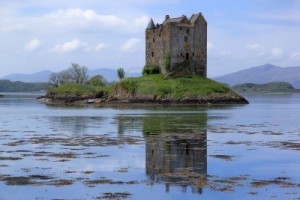
Castle Stalker – Monty Python and the Holy Grail, Highlander: Endgame
Castle Stalker - Monty Python and the Holy Grail, Highlander: Endgame
This wee gem of a castle located in Argyll is most well-known from the final scene of Monty Python and the Holy Grail. Castle Stalker is known in the film as “The Castle of Aaaaarrrrrrggghhh”, where John Cleese taunts Arthur from its battlements before launching an attack. It also appeared briefly in the film Highlander: Endgame. Castle Stalker was built as a small fort by Clan MacDougall around 1320, with it’s present form dating from around 1440. Stalker is said to have been lost by the MacDougalls to Clan Campbell in a drunken bet in 1620, with the castle changing hands between the two clans until 1820 when Clan Campbell abandoned the castle for good when it lost its roof. You can view the Python scene in all its glory by clicking here.
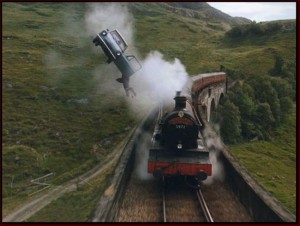
Glenfinnan Viaduct – Harry Potter Series
Glenfinnan Viaduct – Harry Potter Series
Perhaps one of the most magical landscapes featured in the Harry Potter series, the Glenfinnan Railway Viaduct is passed over by Harry and his pals en route to Hogwarts at the beginning of each school year/film. The 21-arch single track viaduct was one of the largest concrete engineering feats undertaken when construction began in 1897. Today the route acts as a part of the West Highland tourist trail, with the steam engine operating along the line called ‘The Jacobite’. The engine had a starring role in the Harry Potter films, playing the role of the Hogwart’s Express, which you can view here.
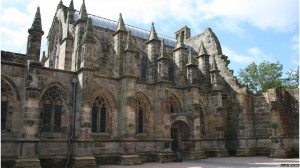
Rosslyn Chapel – The Da Vinci Code
Rosslyn Chapel - The Da Vinci Code
Rosslyn Chapel was founded as a Catholic church by William Sinclair, 1st Earl of Caithness of the Sinclair Family in the mid-15th Century. According to some accounts, the descendents of Jesus Christ and members of the Knights Templar existed within the Sinclair family. Dan Brown used this theory in his 2003 novel The Da Vinci Code, with the chapel being used as a location in the film version which was released three years later. Despite being dismissed by historians and the Catholic Church, the novel has sold over 80 million copies worldwide.
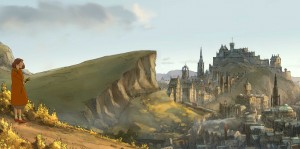
City of Edinburgh – The Illusionist
City of Edinburgh - The Illusionist
This hand-drawn animated French film is perhaps one of the most beautiful filmic depictions of Edinburgh, and one of the reasons I fell head over heels for this magnificent city. The film brings to life locations such as Arthur’s Seat, Princes Street, Jenners Department Store, The Cameo Theatre, Waverley Station and the glorious cobbled streets, presenting them as they were in the late 1950s. Jonathan Meville of The Scotsman wrote: “Edinburgh’s skyline has never looked so good, and if the city didn’t exist it would be hard to believe somewhere so beautiful was real: if locals aren’t inspired to take a walk up North Bridge or down Victoria Street after this, they never will be. You can view a clip featuring Edinburgh as depicted in the film here.
The post That’s a Wrap! Scotland on Screen appeared first on ScotClans | Scottish Clans.
]]>The post Map Reveals Scots Modern-Day Surnames appeared first on ScotClans | Scottish Clans.
]]>
The Uncertainty of Identity project maps Great Britain’s most popular surnames by area.
A map of Great Britain’s most popular surnames shows the dominance that clan areas still hold in Scotland, while other areas show the effects of modern-day immigration. Created by experts from three English Universities, Uncertainty of Identity uses surnames listed on the electoral roll to find the three most popular names in each electoral ward.
Mackay and Sutherland are the most popular names in the North Highlands, echoing the ancient territories and stronghold of the clans. Mackenzie, Fraser and Ross are the most popular in the area North of Inverness, while MacLeod and MacDonald dominate the Western Isles – data that directly corresponds with clan territory maps.
In the Northern Isles Halcrow, Drever and Flett survive as the third most common surnames, while Shetland still boasts a diverse mix of Spences, Rendalls and Sinclairs. Carole Hough, professor of onomastics – the study of name origins – at Glasgow University, said the surnames of Orkney and Shetland differ from much of mainland Scotland due to naming traditions.
“Shetland and Orkney are unique in that they have a much higher proportion of surnames from local place names, which makes them quite distinctive. Place names tend to cluster around their origin, which is surprising given how mobile people are,” she added
The English derived surname Smith is the most dominant across the whole of Great Britain with a considerable stronghold in the lowlands and east of Scotland. Modern-day immigration shows in areas such a Glasgow’s Pollokshield’s East, with Ahmed, Ali and Singh popular surnames. Jones, Davies and Williams dominate in Wales.
Looking to the future, a resurgence in the popularity of traditional Scottish forenames in recent years is likely to combat Anglicisation, said Hough.
“Far more Gaelic and Celtic-derived personal names are being chosen by parents in Scotland, which can be a way of affirming national identity,” she says. “Gaelic-derived forenames that are in the top 100 names in Scotland at the moment include Aiden, Callum and Finlay. Cameron is originally a clan name, and Lewis, Evan and Isla are all place names.”
You can view a map of Scotland’s most popular surnames at Tartan Footprint.
The post Map Reveals Scots Modern-Day Surnames appeared first on ScotClans | Scottish Clans.
]]>The post Castle Sinclair Girnigoe’s Restoration Completed appeared first on ScotClans | Scottish Clans.
]]>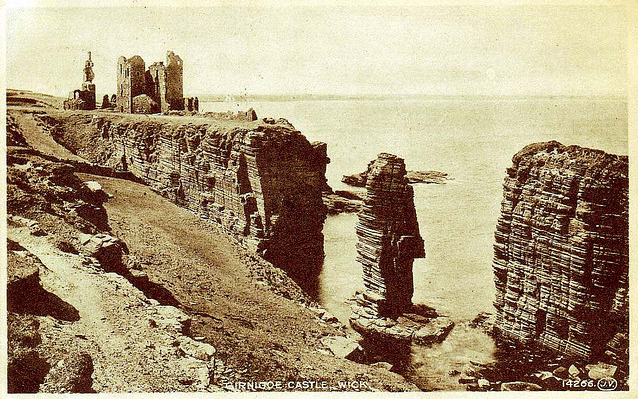 On Sunday (01/08) Castle Sinclair Girnigoe will open to the public after a ten-year long restoration. The £700,000 facelift will try to help preserve the castle’s archeological and historical importance, and there are a further two phases planned, making the restoration a multi-million pound project which intends to turn Castle Sinclair Girnigoe into a major tourist attraction.
The 15th century Caithness castle, just north of Wick, was a former stronghold for Clan Sinclair and has lain in ruin since the late 1600s. It is expected that about 100 Sinclairs from all around the world will attend the opening as well as an international Sinclair clan gathering.
The marketing manager at North Highland Tourism, Jill McNicol said, “We have such a strong sense of heritage here in the north Highlands. We aim to use Castle Sinclair Girnigoe to make our offering to visitors even stronger, boosting the economy of this beautiful area.”
The charity Clan Sinclair Trust owns Castle Sinclair Girnigoe, and even though the work on the building has been backed by the likes of Historic Scotland, and the World Monuments Fund, it still had to rely mostly upon private donations to be able to afford the necessary work. The Chief of the Clan Sinclair, and the trust’s chief executive, Malcolm Sinclair, 20th Earl of Caithness, said, “It will be a wonderful day for Clan Sinclair and for the people of Caithness. This is one of Scotland’s finest castles and an icon in the county. We have worked tirelessly to preserve it and I cannot wait to see the pleasure it brings to visitors once open.”
Once restored, it will be one of the few castles in the country open to the public which is accessible for the handicapped.
John Thurso, MP for Sutherland and Easter Ross will carry out the opening by the firing of a volley and the drinking of a dram.
The post Castle Sinclair Girnigoe’s Restoration Completed appeared first on ScotClans | Scottish Clans.
]]>The post The Westford Knight appeared first on ScotClans | Scottish Clans.
]]>
The Westford Knight engraving, with the Gunn arms on the shield
What is claimed as a carving on a glacial boulder in the town of Westford, in Massachusetts, USA, is argued to be proof that an expedition, led by Henry Sinclair, Earl of Orkney, landed on the North American continent almost 100 years before Christopher Columbus.
The ‘carving’ is subject to much speculation over its authenticity, but it is said to depict a Medieval knight with sword and shield who was a fallen member of Sinclair’s party who travelled to the ‘New World’ in 1398.
The story goes that in early April 1398 Henry Sinclair set sail, heading west with a fleet of 13 small vessels; two of which were driven by oars. They made it across to North America by the start of June; sailing into Chedabucto Bay, and dropping anchor in what is modern-day Guysborough Harbour, Nova Scotia in Canada. The explorers interacted peacefully with the natives, and with one tribe in particular, the Míkmaq (or Micmac). Sinclair managed to persuade the Míkmaqs to act as a guide so his party could travel and explore around the area safely.
They stayed in Nova Scotia until the following spring when the explorers are said to have sailed south, landing in Massachusetts, just north of where the city of Boston now sits. It has been claimed that Sinclair and his party made such a positive impression on the Míkmaq of Nova Scotia, and that after they left, the tribe chose to remember the travellers by telling stories about them, passing them down through many generations, and that the legendary figure of Glooscap is, in fact, meant to represent Henry Sinclair.
In Massachusetts the group stayed with the natives, also getting along with them peacefully, before Sinclair took 100 of his men and headed west. Among the men was a knight, and loyal friend of Henry, called Sir James Gunn. Gunn was later to become known as the Westford Knight. Unfortunately for Sir James the name came about due to his death on the expedition and he was buried, with a large rock covering his grave, where the modern-day town of Westford now is. On the stone an effigy of the Scottish knight was carved. It depicts Gunn with his sword and shield, and on the shield the Gunn family arms. After over 600 years the engraving is still said to be there on the stone, but is now very faint, and your imagination is needed to visualise it for the most part.
The tale of the Westford Knight is very much a part of Westford folklore, but the story itself is widely considered to be apocryphal. The ‘facts’ of the story are widely disputed by mainstream professional archaeologists and historians, who are under the general belief that the voyage never happened, and the carving is either much more recent than the 14th century or simply just a natural feature on the stone. Other reasons why the claim that Henry Sinclair reached the North American continent 94 years before Christopher Columbus is doubted include the lack of any physical evidence of the voyage and the new land, which Columbus did provide, plus there is no contemporary record of it at all. Also, it is stated that the rock, onto which the effigy of Sir James Gunn is carved, would most likely have been under almost a metre of earth at the time of the supposed visit, making it more than unlikely for it to have been used as a memorial.
Whatever the facts, it is not likely that anyone will know for absolute certainty whether or not Henry Sinclair made it to North America, and if the stone at Westford is actually a memorial to Sir James Gunn.
The post The Westford Knight appeared first on ScotClans | Scottish Clans.
]]>The post ScotClans Visit the South West. appeared first on ScotClans | Scottish Clans.
]]>
Bothwell Castle
When we set off from Edinburgh it was 6am; still dark and cold. Our first stop was Bothwell Castle in South Lanarkshire, which we found in under an hour, with little hassle thanks to the very useful satnav we had in the car. Bothwell is a large castle standing on a steep hill beside the River Clyde, and was built sometime during the 13th century by descendents of Clan Murray. During the Scottish Wars of Independence Bothwell was captured by Edward I’s army, taking those inside prisoner. The castle eventually went back into the hands of the Murrays. Through the marriage of Joan Moray of Bothwell, in 1362, to Archibald ‘the Grim’ Douglas, the future 3rd Earl of Douglas, the castle changed hands from the Murrays to the Douglases. Bothwell Castle now lies in a ruined state, and is in the care of Historic Scotland, and open to the public.

Strathaven Castle
After taking a few pictures of the castle we headed west, with our next stop being Strathaven Castle. Night time was well and truly gone by the time we reached the town of Strathaven where the castle sits. It was still cold, and pretty misty allowing for some atmospheric shots of the ruined structure. In fact, the mist prevented us from finding the castle straight away, meaning we had to ask a local, who promptly told us that on any other day we would be able to see it, and that it was just a minute along the road. The castle was built around the middle of the 14th century by the Bairds, and between then and 1717 when the castle was finally abandoned, it passed through the hands of the Sinclairs, the Douglases, the Stewarts, and the Hamiltons, with Anne Hamilton, 3rd Duchess of Hamilton (1632-1716), being Strathaven’s last occupant.

Dean Castle, Kilmarnock
We continued west, where the mist was starting to lift and blue skies and sunshine starting to appear. Dean Castle in Kilmarnock was our third castle of the day. Built by the Boyds, the lords of Kilmarnock for over 400 years, in the 1350. The lands Dean Castle was built on was granted to Sir Robert Boyd in 1316 by Robert I for his services at the victorious Battle of Bannockburn in 1314. In 1975 the castle was passed into public ownership by John Scott-Ellis, 9th Lord Howard de Walden, and it is now kept by East Ayrshire Coucil, and is open to the public.
It was after 10 by the time Amanda and I reached Dundonald Castle, and even though it was late morning on this spring day, it was still pretty cold, with a lot of the frost yet to lift. As we drove down the road into the village of Dundonald (situated somewhere between Troon and Kilmarnock) we could already see the castle in the distance, which sits nicely on top of a hill looking over the village, and so we decided to get out of the car, walk back up the road a wee bit, and take some pictures. After getting a few snaps, and really noticing the strong smell of fresh, country air, we headed for the castle itself.

Dundonald Castle
The name Dundonald means ‘Donald’s Fort’, however it is not known who Donald was. It has been suggested by historians that he could have been one of the kings of the Kingdom of Strathclyde, as three of this name ruled. Dundonald Castle was built on the same grounds as where a wooden hill fort is believed to have once stood. It was constructed sometime after Robert II‘s accession to the throne in 1371, after the death of his uncle David II. Dundonald was used as a royal residence by Robert II, and it was where he died in 1390. It remained as a royal residence for the Stewart kings well into the 16th century.
Our next stop was not a castle this time, but instead the birthplace of Scotland’s national bard, Robert Burns, in Alloway, South Ayrshire. The cottage was built by William Burness, Robert’s father, in 1757, and was where he was born in 1759, as well as three of his siblings.

Burns’ Cottage from the back
Amanda and I went to the front of the building and took some pictures of the cottage, deciding not to go in because of the large number of places still on our list to visit within the day. After getting some pretty generic shots we visited a nice wee cafe opposite the cottage for some coffee before hitting the road again for our next destination. However, as we headed back to the car, the very nice man at the entrace desk for the cottage ushered us over and said that we could get in for free since we were just looking to take a few pictures for our site. So we decided to go along and we were glad we did. The cottage had a beautifully, well kept garden, even growing vegetables, and inside was an interesting and informative museum to the bard, letting us see what Burns’ early environment was actually like. We would highly recommend visiting it.

Amanda getting in my shot of the view across to Arran
Dunure Castle was next on the list, but not before a brief stop at the ‘magical’ Electric Brae. The journey to Dunure was great, with some beautiful views of the snow covered hills on Arran. It was still sunny and clear, and it was really starting to get warmer.

Dunure Castle and its Dovecot
Dunure Castle is a picturesque castle, sitting on a rocky bay overlooking the sea to the west. Built sometime in the 1200s, it was a seat for Clan Kennedy, and in use up until the 17th century. A famous visitor of the castle was Mary, Queen of Scots, who, in 1563, spent a few days there.

Culzean Castle
The next castle on our list was Culzean, just a few miles down the coast from Dunure. Much to our annoyance, and reluctance, we had to pay to just get onto the grounds for a few photos, but perhaps it was worth the money to see the lovely gardens and view out to sea. There is not as much history to Culzean Castle, having been built in the late 18th century by architect Robert Adam, under the instruction of the 10th Earl of Cassilis, David Kennedy.
Sawney Bean’s Cave, at Bannane Head, was somewhere that we were really looking forward to seeing, however it took us a wee bit longer to find the place than we had hoped. But we found it eventually, and it certainly was an interesting place. Sawney Bean was said to have been the head of a family of cannibals living in this South Ayrshire cave. Bean and his wife supposedly went about murdering and travelers they saw and ate their bodies.

Inside Sawney Bean’s Cave
They incestuously built up their family over a couple of generations, and it was claimed that they killed over 1,000 people. Once caught the family were said to have been executed in Edinburgh; the men allegedly having their limbs cut off, and they would bleed to death, whilst the women were burned alive. Yet, unfortunately this story could be just a tale since there are no records to support any of it, not even for the executions in Edinburgh.
The cave itself was still used as a place to live many centuries after the Beans supposedly stayed there. Up until the late seventies, or early eighties, a vagrant known as Snib Scott lived in the cave. Henry Ewing Torbet (1912-1983), as he was originally known, was a resident of the cave for many years, and it is said that people would often leave charity for him in form of either food or clothes, however, it’s claimed that he was too proud to accept it directly from them, and would only collect it once they had left. There is a memorial cairn near the caves entrace dedicated to Snib Scott.
Time was moving on quickly, and the sun was really starting to get low, so we tried to get down to the town of Leswalt to visit the Agnew graveyard as quickly as possible. We got to Leswalt quicker than we thought, but due to some poor directing by the passanger we took a wrong turn in the village and started heading in the wrong direction. However, this proved not to be too disastrous, and it allowed us to pay a quick visit to Lochnaw Castle, which wasn’t originally going to be part of our trip. The castle is a 16th century building, and a private residence, not open to the public – which means that Amanda and I probably shouldn’t have been their in the first place. We took a few shots and left down a very bumpy track, no doubt doing some serious damage to the cars suspension at the same time.

Agnew mausoleum at Leswalt
We got back to Leswalt pretty quickly, and in no time found the grave yard, taking some pictures of the resting places of some relatively important Agnews as the sun was getting lower and lower. And thanks to a friend on Flickr for telling us about the grave yard.
We were now in a race against the setting sun to try and get as much more into our day as a we possibly could. We decided to skip a few of the castles on our itinerary, and try our best to get to St. Ninian’s Chapel at Isle of Whithorn before it was too dark; and thankfully we did.

St. Ninian’s Chapel
The chapel is now in ruins, but it is said that the remains belong to the chapel that was built sometime around 1300, and thought to have been built to replace an even earlier building.
The sun was almost gone once we had got our pictures of the building, and also admire the touching collection of stones with personal messages on them dedicated to remembering lost loved ones, and it was now time to head back to Edinburgh, but not before stopping off at a wee pub in the village of Kirkinner for some food. It was well after seven by the time we were on the road heading back to the capital, and it was a long haul, taking a good few hours before getting back to the city and ending what was a very enjoyable and productive day.
Now we are planning our next day out, and perhaps this time have a slightly more realistic target of places we want to visit. Anyone out there with good suggestions as to where we our next visit should be, feel free to leave a comment.

Map of route
The post ScotClans Visit the South West. appeared first on ScotClans | Scottish Clans.
]]>The post Life On The Edge appeared first on ScotClans | Scottish Clans.
]]>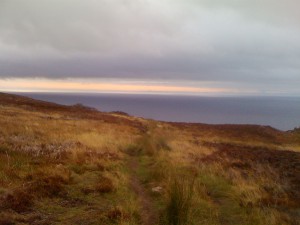
View from Badbea out to the North Sea
On the Caithness east coast, five miles north of the town of Helmsdale, you will see the ruinous remains of the once inhabited village of Badbea which saw its last resident leave at the start of the 20th century.
The Highland Clearances affected thousands of Highland families who were made to move from their homes. Some were persuaded through finacial means, such as having their fare to North America or Australia or New Zealand paid for, whilst the more unfortunate were forced out through violence and intimidation, where it wouldn’t be uncommon to see landlords have crofts burnt down. The people of the Highlands who fled ended up settling all over the place; with families moving to the lowlands or cities of Scotland and northern England looking for work in textile or shipping industries; or they emigrated to foreign countries; or some relocated to nearby coastal areas which were deemed unhabitable for the money-making sheep which replaced them.
Badbea was one of these coastal areas that some families were moved to. It was a cliff-top village established in 1793 when a number of tenant crofters were evicted from their homes to make way for the much more profitable sheep. The families were displaced on a steep, rough, small area of land. They were forced onto the tight area between the high Berriedale cliffs facing the North Sea and a large drystone wall built to protect the sheep.
Sir John Sinclair of Ulbster was the landowner who forced out many of the families from the nearby town of Ousdale, destroying their crofts to create room for the sheep. Sinclair was a politician, and also a writer on finance and agriculture who was a strong advocate for the protection and improvement of British wool.

The Badbea Monuement
Badbea was a tough place to live in; the conditions were horrendous with the land being barely fertile enough for the crofters to live on. Many of the families living there were from Ousdale, though there some from Auchencraig and Kildonan.
Each family who arrived was given their own plot of land to live on and farm. However there were no buildings actually present, and the families would have to clear their area and hack away at the difficult terrain and then build the houses from the stones they found. Each plot had enough space for a longhouse with a shed at the end, a couple of outbuildings and a kailyard. The rest of their land was then used for some cattle, a pig, and a few chickens. It was kind of primitive living for the most part as the whole village only had one horse, and so had no plough. Instead the fields were ploughed manually with the men using a spade-like instrument called a chaib. The harrow needed to be pulled by the men instead, and the manure was carried by the women on their backs in creels.
The families were industrious and frugal, with each household having a spinning wheel in the home where the young women would learn spinning and carding.
With the land provided it was impossible to be able to make a living from farming. The area wasn’t incredibly fertile, with the land being quite rocky. Also being right on the coast like they were the winds coming in from the North Sea were so violent that it would have been practically impossible to grow anything substantial there anyway. In fact, the winds were so strong that when the adults were working any children or livestock outdoors had to be tethered to rocks or posts to stop them being blown over the precipice.
Herring fishing was the the main source of income. The men would go to sea, and the women would gut what was caught. Fishing was a very dangerous occupation, especially in the North Sea. Before the Clearances most of these people lived in the sheltered inlands of the straths and the glens, and so were not accostumed to being out at the sea. However, at its height there were 13 fishing boats in use, and the herring fishing provided a lot of food for all families, including for the widows who had children to support children.
By 1814 the Laird’s Estate had been sold to James Horne. At this point the population of Badbea was 80 people within 12 different families. Though for the families in Badbea, this would turn out to have unfortunate consequences.
Donald Horne, James’ nephew, put a stop to the herring fishing, favouring to fish salmon instead. This put a stop to the community’s main form of employment, meaning that the people had to survive on much less, and the widowed families having to occasionally do without. However there were other means of income. Some of the women would weave baskets, or make flails of birch for threshing corn corps and then sell them at Dunbeath Market in November.

Inscription on Badbea Monument
On the landlord’s estate there would sometimes be some menial jobs to be done by people from Badbea, but the rate of pay would be very low, and in no way appropriate. This would encourage some of the men to look for work on other estates or elsewhere. However, if they were caught doing this by their landlord, as punishment the men and their familied could face being evicted from Badbea.
A notable resident of Badbea was John “Badbea” Sutherland. John was a very popular and respected member of the community. He lived most of his life in Badbea where he was preacher and doctor to all. John was thought of as a man of great piety and worth, and it is said that he possessed the only watch in the village. John died in his house at the age of 76 on the 31st August, 1864 and was burried in the burial ground at Berriedale.
The village of Badbea was occupied for over 100 years, with the last resident leaving in the early 1900s. In 1911 a memorial was errected in honour of the families who lived in Badbea and suffered during the Highland Clearances. The man who commissioned the monument was David Sutherland who visited Badbea in 1901 when only two tenants were left. Born in New Zealand, David was the son of Alexander Robert Sutherland who was born in Badbea and brought up by John “Badbea” Sutherland. Alexander emigrated to New Zealand in his 30s in 1839 and although he prospered in his new country, he never forgot Scotland. The memorial was built using the stones from the croft that was lived in by John “Badbea”.
The post Life On The Edge appeared first on ScotClans | Scottish Clans.
]]>The post The Battle of Altimarlach – Scotland’s last Clan Battle appeared first on ScotClans | Scottish Clans.
]]>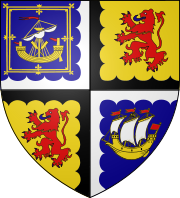
The Arms of the Earl of Caithness
The 13th of July, 1680 saw the last significant clan battle to be fought in Scotland, with the Sinclairs, under the command of George Sinclair of Keiss, taking on the Campbells led by Sir John Campbell of Glenorchy, fighting over the right to the Girnigoe Estates in Caithness.
In 1676, George Sinclair, the 6th Earl of Caithness died without an outright heir, and both Glenorchy and Keiss believed that they were entitled to inherit the estate.
During the latter half of the 17th century, economically, things were bad for many of the Highland clans, with some struggling to survive financially. The Earl of Caithness was one of those in desperate need for money with the Sinclair estate virtually bankrupt. It is alleged that he borrowed money from the Campbells for the purpose of shoring up the clan’s estates. On the death of the Earl, Sir John Campbell, being the main creditor to Sinclair, obtained the Girnigoe Estates as well as the Earldom in 1677 as repayment for his loan.
By 1678 he had married the late Earl’s widow, the Countess of Caithness. However, it is said that the only reason why Campbell married the countess was a financial one because it saved him having to pay her an annual 12,000 marks.
George Sinclair of Keiss was unhappy with Campbell’s accession to the Earldom, and disputed the claim. Keiss put forth his claim to the Earldom by stating that he was a direct relative of George Sinclair, and he went on to seize the Caithness estates, as well as occupying areas in and around the town of Wick.
The dispute continued and it saw Campbell gaining royal permission to invade Caithness and uphold his claim as the rightful Earl. Along with his own men, Campbell was provided with several companies of the king’s troops, and they marched north to Wick from Perth. They arrived on the 18th of May and camped at Braemore, near Morven. This was part of the Berriedale estate which Campbell laid claim to as Earl of Caithness.
The army, believed to be 800 strong, marched on on the 12th of July and reached the Hill of Yarrows, which was known for a long time as Torran nan Gael – the Highlanders Hill. From there Campbell and his men had a great view of the surrounding area. Whilst on the hill a thick mist descended, and Campbell decided to take this opportunity to advance on Wick. However, the mist lifted as he was heading down, and the alarm was promptly raised by the Sinclair forces in the town.
When Campbell and his men reached the bottom of the hill they headed for Stirkoke and Altimarlach where he split his army in two; deploying one lot on the haugh, and the rest were hidden in a gully. Sinclair moved his men, estimated to be around the same size as Campbells, out of the town and headed along Wick River to meet the enemy army. As they reached the haugh, just at the point where a burn met the river, the Campbells launched a surprise attack, followed shortly by an ambush by the men in the gully. The Sinclairs were in a tight position, pressed against the river bank. At this point the Wick River is rather deep, and as the Campbells pushed forward many of the Sinclairs fell into the water and drowned. For those who fell in to the flowing river, but managed to make it across to the opposite bank, on the Moss of Bronsie, awaiting for them there were reserves from Campbells army who summarily continued the fighting, killing many who made it across.
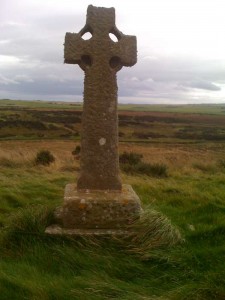
The monument to the battle of Altimarlach
The battle ended in a decisive victory for Sir John Campbell of Glenorchy, and it is generally viewed as a humiliating defeat for the Sinclairs. Legend claims that so many Sinclairs were killed or drowned in the river that the Campbells were able to cross without getting their feet wet. It is estimated that Sinclair lost around 300 men in the battle, whilst Campbell saw few from his side killed, and those that did die were buried where a commemorative cross now stands.
Peace was made however the following day when a truce was signed in the old Wick Town Hall, just east of present day Market Square.
Afterwards, Campbell split up part of his army around Caithness, where he levied the rents and taxes and ruled over the people in an oppressive manner.
It is said that on Campbell’s march to Caithness, to claim the estates, his piper, Finlay Ban MacIvor, composed two famous pipe tunes: Breadalbane Gathering and The Campbells are Coming. The former was said to have been played spontaneous in the middle of the battle, not long before the Sinclairs began to give way. Until relatively recently it was considered a gross insult to play either piece in Wick.
Campbell remained Earl of Caithness only until 1681. It is thought that George Sinclair had some influential and powerful friends, because he took his case to the Privy Council, and by act of parliament George was granted the Earldom, making him the 7th Earl, and putting the title back into the Sinclair family where it has remained ever since.
The post The Battle of Altimarlach – Scotland’s last Clan Battle appeared first on ScotClans | Scottish Clans.
]]>