The post The Scott Monument appeared first on ScotClans | Scottish Clans.
]]>
The Scott Monument, sometimes referred to as the ‘gothic rocket’, is a Victorian Gothic monument to the author Sir Walter Scott. It stands towards the east end of Princes Street in Edinburgh, and happens to be the largest monument to a writer in the world, and was completed on August 1st 1846.
Scott was a poet, novelist, ballad-collector, critic and man of letters, but is probably most renowned as the founder of the genre of the historical novel, involving tales of gallantry, romance and chivalry. Beginning with the publication of Waverley in 1814, one of the most significant books of the nineteenth-century, his anonymously published Waverley novels proved hugely popular in Europe and America, and established his reputation as a major international literary force. It is a measure of Scott’s influence that Edinburgh’s central railway station, opened in 1854, is called Waverley Station, the only station in the world to be named for a book.
By the 1820s, Scott was probably the most famous of living Scotsmen, and was consequently chosen to organise the visit to Edinburgh in 1822 of George IV. He was heavily criticised by his Scottish contemporaries for the resultant tartan pageantry, in which the King appeared in Highland dress complete with salmon-pink leggings.
In 1825, his financial state deteriorated drastically, and rather than declare bankruptcy he placed his home, Abbotsford, and income into a trust belonging to his creditors, and proceeded to write his way out of debt. He continued to live at Abbotsford near Melrose, where he died on the 21st September 1832. Among other tributes, the Scott monument was raised on Princes Street in Edinburgh…

Upon his death the great and good of Edinburgh came together to agree on a fitting monument to this outstanding Scottish man. In 1836, an architectural competition was launched, inviting designs for an appropriate memorial. One entrant went under the unlikely name of ‘John Morvo’, a name shared by the medieval architect of Melrose Abbey. Morvo was in fact George Meikle Kemp, a 45 year old joiner, draughtsman and self-taught architect. Kemp had feared his lack of architectural qualifications and reputation would influence judges against his design. In 1838 it was announced that Kemp’s design had won the competition and his monument was to be built. At the same time the result was announced, Sir John Steell was unanimously selected to undertake the sculpture of Scott at the base of the monument.
The foundation stone was laid on the 15th August 1840, the anniversary of Scott’s birthday. In the foundations were deposited a glass jar ‘time capsule’ and two bronze plaques – one from the Freemasons, the other celebrating the author.
A silver trowel with a mahogany handle was used during the ceremony for laying the foundation stone of the monument. It has an engraved border of a rolling thistle flower and leaf, and on it is written:
‘To Commemorate the Laying of the Foundation Stone of the Monument at Edinburgh in honour of the Immortal Scott.
This trowel to be used at the ceremonial was presented to the Right Honourable Sir James Forrest of Comiston Bart., Lord Provost of Edinburgh, Most Worshipful Grand Mason over all Scotland.
The Right Worshipful Master, Office Bearers and Brethren of the Grand Masters Mother Lodge, The Ancient Lodge of Edinburgh No.92. Aug 15th 1840.’
The trowel can be found on display at the Writers’ Museum, Lady Stair’s Close, Lawnmarket, Edinburgh.

Construction began in 1841 following permission by an Act of Parliament. Specifically the Monument to Sir Walter Scott Act 1841, which allowed the monument to be built on the site chosen, as there was a ban on any construction between Princes Street and the Old Town, so as not to obscure the historic view.
Tragically George Meikle Kemp died when the monument was only half completed, on the night of 6th March 1844. It is thought he was to have lost his way in very thick fog after visiting his contractor near the old Canal Basin in Fountainbridge. His body was found in the canal one week later. Over 1000 people attended his funeral. His coffin was carried to St Cuthberts graveyard by his workmen, who by all accounts, thoroughly respected his humble origins and great depth of knowledge.
After Kemp’s death, work continued under the supervision of his brother-in-law, William Bonnar. He proposed an amendment to the height from 176 feet to 200 feet and six inches. For a while there was dissent from outsiders, especially when a rise in costs from £10,000 to £12,000 was forecast. However, when workmen on the project offered two weeks labour without pay in order to support Bonnar, the money was found.

Taking nearly four years, construction ran until August of 1844 with Kemp’s son placing the finial in that month.
The actual date of the inauguration ceremony seems to have been lost to time, but most accounts give it as the 17th or 18th of August 1846, with contemporary newspapers stating that it was the 15th (Scott’s Birthday).
Thousands of people attended the inauguration ceremony, some travelling great distances to see the monument. The steamer ‘Britannia’ brought nearly 300, the evening before some 400 people came from Dundee, other ferries arrived in the morning from Fife, and a train came from Burns country with hundreds aboard.
The procession comprised the Monument Committees, the Town Council of Edinburgh, the Magistrates of Edinburgh, Canongate, Leith and Portsburgh, various Masonic Lodges and Officials, who all assembled in the Royal High School. It was described in The Scotsman newspaper as “a moving stream of umbrellas, with long lines of stationary umbrellas for its banks”, although there is not an umbrella to be seen in this image.
It was preceded by mounted military band, and a detachment of Dragoons. There was an opening address by Lord Glenlyon, Grand Master of Scotland and a reply by the Lord Provost of Edinburgh, the Right Honourable Adam Black – whose statue is 100 yards to the west of the monument.

From the ground the pinnacle of the monument rises 200ft and 6in above Princes Street and the gardens surrounding it. The foundations were sunk 52ft into the ground to support its considerable weight, and added considerably to the total cost of the structure which amounted to £16,154 which today would be around £1.5m.
The monument was constructed of Binny sandstone, from the local Ecclesmachan quarry in West Lothian, which has left it’s own unique stamp on the structure. As it is an oily stone it has prematurely aged the appearance of the structure, although the soot of Victorian times and the exhaust fumes of the modern road and rail routes close by will have contributed a great deal.
On the ground, in the centre of the monument on a platform up seven massive steps, there is a statue of Scott carved from carrara marble and scale at double life-size. This was the work of the aforementioned Sir John Steell. It features Scott in a seated position, book in hand, with one of his favourite dogs, Maida, reclining at his feet.
This statue was carved from a 30 ton block imported from Livorno in Italy, which was no easy task. The block had to be retrieved from the bottom of the city harbour, as it was so heavy it ended up crashing through the hull of the ship and when it eventually arrived in Edinburgh, at Leith docks, it took a total of 25 horses to drag the cart carrying it through the streets to Steell’s studio on Princes Street.
It is actually the first marble statue to ever be displayed in Scotland and almost glows out from under the monument and the dark stone that surrounds it.

The monument also features a total of 68 figurative statues (not including Scott and his dog), placed all over the structure. 64 are visible from the ground, but 4 are hidden away above the final viewing gallery.
Each statue represents a famous Scottish person or a character from Scott’s literary work. Just a few of the figures that can be seen are Rob Roy MacGregor, Robert Burns, Mary, Queen of Scots, Bonnie Prince Charlie, Robert the Bruce, and John Knox.
Also featured are several ‘grotesques’. The grotesque character faces are a typical stonemasons ‘joke’. Common in Gothic Architecture when medieval stonemasons carved all manner of weird and wonderful faces, gargoyles and other ‘grotesques’, on the great cathedrals of Europe.

Today the monument still stands proud in the heart of Edinburgh, instantly recognisable and loved by the cities residents. Of the visitors that flock to Edinburgh every year, thousands still visit this fantastic attraction and take on it’s 287 steps to get access to some of the best views of the city centre.
The post The Scott Monument appeared first on ScotClans | Scottish Clans.
]]>The post The Flodden 500 Service at St Giles, Edinburgh. appeared first on ScotClans | Scottish Clans.
]]>I’d like to continue by reproducing Alaistair Moffat’s reading given at St Giles. It was an excellent account of the battle and the aftermath.
—
FLODDEN ADDRESS. – ALISTAIR MOFFATWhen dawn broke on the morning of 10th September, 1513, the landscape of hell was revealed. On the gently undulating northern ridges of Branxton Hill more than 10,000 men lay dead or dying. In the midst of the carnage were the naked, plundered bodies of King James IV of Scotland, his half-brother, Alexander Stewart, Archbishop of St Andrews, George Hepburn, Bishop of the Isles, two abbots, nine great earls of Scotland, fourteen lords of parliament, innumerable knights and noblemen of lesser degree and many thousands of farmers, ploughmen, weavers and burgesses. It was the appalling aftermath of the battle of Flodden, the greatest military disaster in Scotland’s history.In the grey light of that terrible dawn, sentries posted around the captured Scottish cannon could make out where the brunt of battle had been joined. Below them, at the foot of the slope ran the trickle of a nameless burn now choked with slaughter, a wrack of mangled bodies, broken pikeshafts, shattered shields and everywhere blood and the sickening stench of death, vomit and voided bowels. Not all of the bodies were yet corpses. Through a long dark night the battlefield had not been a silent graveyard. Trapped under lifeless comrades, crippled, hamstrung or horribly mutilated, fatally wounded men still breathed. Bladed weapons rarely kill outright and they were often used to bludgeon men to their knees or into unconsciousness. In the churned mud of the battlefield some men will have lost their footing, fallen and been hacked at before they could get up. Many bled to death, maimed, lacerated by vicious cuts, screaming, fainting and screaming once more in their death agonies. Some will have been put out of their misery by parties of English soldiers scouring the field by torchlight for plunder, stripping the bodies, ransacking them for valuables. But other men will have lingered on inunspeakable pain, praying to their God, passing in and out of consciousness, slowly bleeding to death. The fury of the battle on Flodden field may have been stilled and awash with death and defeat. But all was not yet over. In an instant the plunderers and scavengers looked up and the sentries by the cannon stood to, frantically peering through the morning light. They could hear the rumbling thunder of hoofbeats – and then, suddenly, riders erupted over Barelees Rig. With 800 horsemen at his back, Lord Alexander Home galloped hard across the horrors of the battlefield and up the slopes of Branxton Hill. They had not come back to Flodden to rejoin a lost battle but to rescue their captured ordnance. And they very nearly succeeded. After a sharp skirmish, the English gunners managed to load and get off a volley at Home’s squadron, and they scattered.And so it ended. As the Border horsemen wheeled round and raced out of range, the remnants of the shattered Scottish army were limping across the Tweed at Coldstream. There was no organised pursuit. The victorious English army had taken heavy casualties and the Earl of Surrey and his captains were exhausted. In any event, their bloody work was done. The floors o’ the Forest were a’ wede awa, Flodden was a national disaster, a harbinger of lawlessness in the shape of the Border Reivers, the beginning of a long period of political uncertainty and the last medieval battle in the history of Britain. The last time a king was to die leading his army.It was also an epic. As two huge armies mustered and marched into history, extraordinary scenes had been witnessed. At Ellemford, high in the Lammermuirs above Duns, where sheep now graze on the flanks of the hills, where buzzards hang in the updrafts and an elegant bridge crosses the Whiteadder, King James IV and his army camped. Huge guns were trundled down the hill trails, dragged by oxen, and by 21st August 1513, almost 30,000 men had massed in this beautiful, now lonely valley. Two days later, the largest force ever to leave Scotland crossed the Tweed at the fords below Coldstream. They had declared war, they had entered the realm of the Tudors, of the ferociously ambitious and bull-like Henry VIII.Meanwhile Thomas Howard, Earl of Surrey, and the Bishop of Durham carried the standard of St Cuthbert before their battle-hardened troops. In front of the high altar of the great cathedral, Howard had watched the bishop bless the flag of the Haliwerfolc. The lands of Palatinate, of the Prince-Bishops of Durham, reached to the Tweed and beyond, and in an early definition of Englishness, their people were known as the Holy Man’s Folk, the Haliwerfolc. Ancient allegiances were being roused and summoned.Between 2nd and 9th September two vast armies circled each other in a small corner of North Northumberland, like heavyweight boxers looking for weaknesses or waiting for wrong moves. After the Earl of Surrey had despatched a herald, the Rouge Croix, it was finally agreed that battle would be joined on 9th September. Supplies for almost 70,000 men, horses and camp followers were running dangerously lowand neither army could remain in the field much longer.Realising the strength of the Scots’ entrenched position, Surrey led his men to the east, skirting Flodden Edge and staying out of artillery range. On the morning of the appointed day, he crossed the River Till and took up a position to the north of James IV’s army, barring any retreat to Scotland. And then, on a damp afternoon, the greatest battle ever fought between England and Scotland began.On the left wing of the Scottish host, the Highlanders led by the Earl of Huntly massed in formation with Lord Home’s Borderers, and in the moments before their chiefs roared the claideamh mor, the order to charge, the Gaelic-speaking warriors did something remarkable. They began to summon the army of the dead. They began the sloinneadh, the naming of the names of memory. To bolster his courage, each man began to recite his genealogy. Many waiting to charge could go back 20 generations. As if they were offering up the murmur of prayer, each man remembered why he had come to fight. Is mise mac Iain, mac Ruaridh, mac Domhnuill. I am the son of John, the son of Roderick, the son of Donald. And once their quiet voices stilled, the roar of the claideamh mor rent the air and they broke into the charge. With their broadswords and Lochaber axes, the Highlanders tore into the English ranks, the division led by Edmund Howard, They scattered and a rout was only prevented when Lord Dacre rode to the rescue with his English Borderers. As history rumbled across Branxton Hill, fortune appeared to be smiling on the Scots.At the same time, James IV was about to make a catastrophic decision, a crucial error of judgement. Instead of occupying an elevated position at the rear of his vast army, he chose to lead from the front. His division raced down Branxton Hill and as they reached the lower slopes and much softer ground, many men began to skid and lose their footing. This unsteadiness made it very difficult for them to control their long, 12 foot pikes. The wet ground made them charge out of formation, only engaging piecemeal with the solidly planted ranks of English billmen, With their shorter, more easily handled bills, they began to slice into James IV’s division. And as the men at the back saw the Scottish pikes go down, they hesitated and many of them ran, believing their king to be killed. By leading from the front, James was immediately submerged in the ruck of the fighting, only able to see what was directly in front of him, in no position to direct his forces. The result was disaster.The legacy of Flodden was most immediately and keenly felt in the Borders. North of the Tweed the memory of the battle is kept alive in the fabric of the midsummer common ridings. At Selkirk the ceremony of the casting of the colours is unique in Britain and it is based on the return of a soldier known as Fletcher, traditionally believed to have been the only one of sixty from the town to return. In his bloodied hand he held aloft, in a gesture of desolate defiance, a flag captured from the men of Macclesfield in Cheshire. Many Englishmen had fought and fallen at Flodden. And passions still run high. When the Mayor of Macclesfield recently wrote to the Provost of Selkirk asking for the return of the flag, he was told that he would need to come to the Borders and take it.Flodden is an immense story. Like Culloden in 1746, it signalled the end of a fading, feudal Scotland. And it also ushered in a century of lawlessness, the criminal society controlled by the appalling Border Reivers. Across Europe, renaissance, enlightenment and the reformation were changing lives, forming new ideas and creating the institutions of the modern world. In the first half of the 16th century, central authority broke down in a leaderless nation, and while swords and spears spoke in Scotland, the law was often silent.What is to be learned from all of that suffering and slaughter, from all of those ancient enmities? First that they are ancient and must remain firmly in the past. In 2014 Scotland faces a historic choice and whichever way the people of Scotland vote, it must be a signal lesson of Flodden that enmity, even ancient enmity can have no part. And it is to the credit of politicians on all sides of the argument that it has not reared an ugly head. But it might.And alongside that it mustmbe important to remember, to understand the visceral, bloody realities of whatmwent on on that terrible day 500 years ago. Lest we forget, Flodden should become a place of remembrance and of pilgrimage, a place where the uncomfortable lessons of history can be learned and never forgotten.Two weeks ago, on one of the countless beautiful evenings of this glorious summer, I drove over to Branxton. As the sun threw long shadows across the gently undulating fields, I tried to imagine the 10th of September, 1513, the distant roar of thousands of men, the screams, the fear and feral closeness of hand-to-hand fighting whenmen can smell the breath, smell the sweat of men grunting pushing, hacking, swearing at them, trying to kill them. In a Gaelic phrase, I tried to listen for the music of the thing as it happened. I tried to listen to the slow, sad music of our history. I hope that many in Scotland and England hear it too.
Prior to the sir Malcolm MacGregor (who has admitted that try as he might he can not find a single MacGregor involved in the battle) researched the casualty lists. The following names are clans and families who are known to have fought at Flodden along with notable people who fell in the battle:
From the Highland Clans:
Campbell, Erskine, Fraser, Gordon, Graham, Guthrie, Haldane, Hay, Keith, Leslie, Lindsay, Macaulay, Macfarlane, Mackay, Maclean, Macnab, Menteith, Moncreiff, Moray, Murray, Ogilvy, Oliphant, Ramsay, Rattray, Ross, Ruthven, Seton, Sinclair, Stewart, Forbes, Forsyth, Grant, MacKenzie, MacNaughton, Ross, Skene, Buchanan Of Leny, MacDonald
The Lowland and Border Clans and Families:
Adair, Abercromby, Adam, Anstruther, Baillie, Baird, Balfour, Barclay, Blackadder, Bonar, Boswell, Carnegie, Cathcart, Cleland, Cockburn, Colville, Craig, Crauford, Crichton, Cunningham, Dunbar, Dundas, Edmonstone Of Duntreath, Elphinstone, Fotheringham, Gray, Grierson, Haig, St.Clair Of Roslin, Henderson, Hepburne, Herries, Home, Hoppringle, Houston, Lauder, Liddel, Lockhart, Lumsden, Lyon, Masterson, Maitland, Maule, Maxtone, Maxwell, Melville, Muirhead, Mure, Napier, Rollo, Sempill, Somerville, Spottiswood, Stewart Of Traquair, Allardice, Ballingall, Kerr, Colville, Crammond, Eliott, Ferguson, Fleming, Foreman (Standard Bearer), Inche, Inglis, Johnstone, Kirkcaldy, Knolis, Logan, Montgomery, Morton, Muir, Nelson Of Madinpap, Otterbrun, Pitcarin, Pringle, Reid, Rorison, Savage, Scott, Seton, Tunstall, Vallanche, Wood Of Raik, Kennedy, Douglas, Hamilton, Livingstone, Wemyss, Wallace, MacLellan, MacCulloch, MacDowall
Chief Or Notable Head Of House/Family
King James IV, Archbishop Of St.Andrews (King’s Son), Earl Of Morton ( Grandson Of James 1), Earl Of Glencairn, Douglas Of Drumlanrig, Sir James Dunbar, Dundas, Lord Elphinstone, Lord Erskine, Earl Of Huntly, Earl Of Montrose, Sir Alexander Guthrie, Haig Of Bemersyde, Haldane Of Gleneagles, Earl Of Errol, Earl Of Bothwell, Sir William Keith, Earl Of Cassilis, Earl Of Rothes, Earl Of Crawford, MacDowal, Earl Of Garthland, MacFarlane Of Arrochar, Hector MacLean Of Duart, Maxwell Lord Of Carlaverock, Sir John Moncreiffe Of That Ilk, Moray Of Abercairney, Ramsay Of Dalhousie, Rattray Of That Ilk, Rollo Of Duncrub, Master Of Ruthven, Lord Sempill, Lord Seton, Earl Of Caithness, Earl Of Atholl, Earl Of Lennox, Lord Darnley, Master Of Angus, Anstruther Of That Ilk, Ballingall Of That Ilk, Master Of Eliott, Lord Forbes, Master Of Lovat, Sir Alexander Gordon Of Lochinvar, Sir Alexander Gordon Of Knockenshene, Grant Of Freuchie, John Henderson Of Fordell, Lord Alexander Home, Sir Patrick Houston Of That Ilk, William Johnstone Of That Ilk, Lord Keith, Lord Lorn, Lyon (Sons Of Lord Glamis), MacKenzie Of Kintail, Sir Alexander MacNaughton Of That Ilk, Andrew Pitcairn Of Pitcairn And 7 Sons, Lord Ross, William Ruthven Of That Ilk, Sir Walter Scott Of Buccleuch, Alexander Skene Of That Ilk, Sir David Wemyss, Earl Of Argyll, Lord Kinnaird, Master Of Cathcart, MacDonald Of Lochalsh.
—–
 The St Giles Service…
Just over 40 clan chiefs attended the St Giles service. At the end of the service they mustered for a photograph on the steps. To help you identify who was there we have been given a sketch with a key to the names:
1. Sir Walter Riddell of Riddell 2. The Hon. Elizabeth Fairbairn 3. Madam Pauline Hunter of Hunterston 4. Sir David Bannerman of Elsick 5. Lord Polwarth 6. Andrew Wallace Younger of that Ilk 7. Andrew Dewar Durie of Durie CBE 8. Michael Ancram, Marquess of Lothian 9. Andrew MacThomas of Finegand 10. Earl of Dundee 11. David Campbell of Strachur 12. Roderick Macneil of Barra 13. Sir James McGrigor 14. Earl of Eglinton and Winton 15. Professor David Hannay of Kirkdale and of that Ilk 16. Henry Trotter Younger of Charterhall 17. John MacArthur of that Ilk 18. Duncan Paisley of Westerlea 19. Richard Carmichael of Carmichael 20. Earl of Caithness21. Earl of Lauderdale 22. The Hon. Alexander Leslie 23. Earl of Erroll 24. Lord Napier and Ettrick 25. Madam Arabella Kincaid of Kincaid 26. David Cranstoun of that Ilk 27. Jamie Macnab of Macnab 28. Earl of Wemyss and March 29. Sir Crispin Agnew of Lochnaw 30. The Hon. Kate Nicolson 31. Duke of Montrose 32. The Hon. Peregrine Moncreiffe of that Ilk 33. Martin Haldane of Gleneagles 34. Lord Sempill 35. Andrew Marjoribanks of that Ilk 36. Donald MacLaren of MacLaren 37. Duke of Hamilton 38. Field Marshal the Lord Guthrie of Craigiebank 39. Isla St Clair 40. Marquess of Ailsa 41. Madam Margaret Eliott of Redheugh 42. Sir Malcolm MacGregor of MacGregor 43. Lord Macdonald of Macdonald 44. Richard Oliphant of that Ilk
This image will help you identify the chiefs:

The post The Flodden 500 Service at St Giles, Edinburgh. appeared first on ScotClans | Scottish Clans.
]]>The post James V of Scotland and a Border Widow appeared first on ScotClans | Scottish Clans.
]]>
Border Reivers following the Hue and Cry
In 1530 James V, king of Scotland, was a mere lad of seventeen. Freed at last from the clutches of those men who endeavoured to reign in his stead, in his minority, he was determined to prove that he was the real power in Scotland.
One area where allegiance to the clan and its leader came before any deference to royal power was the Scottish Border country. There the clans were a law unto themselves, particularly troublesome and unruly.
Accordingly he moved south from his seat in Edinburgh intent on doling out justice and punishment to those who were of particular notoriety. It is said he had six thousand armed followers.
The history of Johnnie Armstrong of Gilnockie, a power in the Scottish Borders, is well recorded. By subterfuge, some say as the result of a ‘loving letter’ he was encouraged to wait upon the king at Carlenrig, south of the Borders town of Hawick. There James, incensed by the apparent affluence of the fierce Border Reiver and his twenty-four followers, ordered their execution without trial. Johhnie had fallen into a trap from which there was no way out. He pleaded with the rash, impetuous youth of a king but to no avail. He resigned himself to his fate but not before saying in the Border Ballad which tells his story:-
‘To seek hot water beneath cold ice,
Surely it is a great folly-
I have asked grace at a graceless face,
But there is none for my men and me!’
He and twenty-three of his followers were strung up on the spot. The twenty-fourth was burned alive in vengeance for the burning of a poor women and her son in which he was the instigator.
In time, when maturity replaced the rashness and callowness of youth, James would regret his actions at Carlenrig. He lost any allegiance the Armstrongs of Liddesdale had for the Scottish monarchy on that fateful day in July 1530. In 1542 at the rout of the Scottish army by the English at the Battle of Solway Moss, the Armstrongs withheld their support for the Scottish cause, even harassed the losers as the terrified remnants of the Scottish army fled the field of conflict and headed back north.
James died shortly afterwards. He was about thirty years old.
Before he arrived in Carlenrig in July 1530, James V was determined to mete out the royal justice against two other Border Reivers of particular renown. One was Adam Scott of Tushielaw, known as the ‘King of Thieves’. Not only did he reive both far and wide; he was feared for the way in which he summarily despatched his adversaries. He strung them up from the trees which surrounded his tower at Tushielaw.
He was soon apprehended by the army of James V, and, it is said, hanged from the very trees from which had swung in their death throes many of the Reivers who had contested his bloody and audacious raids.
The other Border Reiver who was the subject of James’ ferocity was William Cockburne of Henderland (near St. Mary’s Loch). It is said he was hanged over the doorway of his Tower there.
Sir Walter Scott tells us in the ‘Minstrelsy of the Scottish Border’ that ‘in a deserted burial place, which once surrounded the chapel of the castle (the Tower of Henderland), the monument of Cockburne and his lady are still shown. It is a large stone broken in three parts; but some armorial bearings may yet be seen and the following inscription is still legible, though defaced:-
HERE LYES PERYS OF COKBURNE AND HIS WYFE MARJORY.

the grave of Perys and Marjorie Cockburne.
The table-topped grave can still be seen on a little knoll of a hill in what was the churchyard of the Tower.
Following the deaths of Johnnie Armstrong and his followers emotions ran high and truth ran second best to fact; an approach handed down to the writers of Scottish Border history of the nineteenth century, including the rightly well-respected Sir Walter.
Perys Cokburne was not the William Cockburne who suffered at the hands of James V.
Neither Adam Scott ‘King of Thieves’ nor William Cockburne were summarily despatched within the confines of their own Towers. Rather they were taken to Edinburgh, tried and beheaded.
Robert Pitcairn (1797 – 1855) compiled the documents which recorded the fate of the Border Reivers who were tried and executed. The compilation is known as ‘Pitcairn’s Criminal Trials’.
For 1530 he records the following:-
William Cokburne of Henderland, Convicted (in presence of the King) of High Treason committed by him, in bringing Alexander Forester and his son, Englishmen, to the plundering od Archibald Someruile: And for treasonably bringing certain Englishmen to the lands of Glenquhome: And for common Theft, common Reset of Theft, outputting and inputting thereof – SENTENCE. For which causes and crimes he has forfeited his life, lands, and goods, moveable and immoveable; which shall be escheated to the King.- BEHEADED.
ADAM SCOTT of Tuschelaw, convicted of art and part of theftuously taking blackmail from the time of his entry within the castle of Edinburgh, in ward, of John Browne in Hopprow; and of art and part of theftuously taking blackmail of Andrew Thorbrand and William his brother: and of theftuously taking blackmail from the poor tenants of Hopcailzow: and of theftuously taking blackmail from the tenants of Eschescheill: BEHEADED.
Cockburne, it would seem, was convicted for his alliance with Englishmen which, under the Border Law, was treason, Scott for blackmail which was probably the least of his crimes.
And what of the Border Widow?
One of the most evocative of the Border Ballads is that of the ‘Lament of the Border Widow’. It has always been associated with the death of William Cockeburne following his capture by James V. Although this is historically impossible, it admirably portrays the emotion, the futility, isolation and sorrow which followed many a death in the days of the Reivers.
A BORDER WIDOW’S LAMENT.
My love he built me a bonny bower,
And clad it a’ wi’ lilye flour (all) (flower)
A brawer bower ye ne’er did see,
Than my true love he built for me.
There came a man, by middle day,
He spied his sport and went away;
And brought the king that very night,
Who brake my bower, and slew my knight. (broke)
He slew my knight, to me sae dear; (so)
He slew my knight and poin’d his gear; ( escheated to the king)
My servants all did life for flee,
And left me in extremitie.
I sew’d his sheet, making my mane, (grieving and crying)
I watch’d the corpse myself alane (alone)
I watch’d his body night and day;
No living creature came that way.
I took his body on my back,
And whiles I gaed and whiles I sat; (moved, went)
I digged a grave, and laid him in,
And happ’d him with the sod sae green. (covered) (so)
But think not ye my heart was sair, (sore)
When I laid the moule on his yellow hair? (soil)
O think na ye my heart was wae (weary)
When I turn’d about, away to gae? (go)
Nae living man I’ll love again, (no)
Since that my lovely knight was slain,
Wi’ a lock of his yellow hair,
I’ll chain my heart for evermair.
In the reiving times, the 13th to the 17th centuries, the Scottish English Border was a land in turmoil. Endless confrontation and bloody feud spawned a people who were hard both mentally and physically. The ‘Lament of the Border Widow’ shows another side of the relentless strife which dominated the land of which little is said. Sadness and sorrow followed in its wake.
The post James V of Scotland and a Border Widow appeared first on ScotClans | Scottish Clans.
]]>The post Border Reivers – Jamie Telfer of the Fair Dodhead appeared first on ScotClans | Scottish Clans.
]]>Jamie Telfer lost all when raided by the English of Bewcastle. His despair would change to delight when help from the Scotts of Teviotdale brought him an unexpected gain.
English Reivers Raid
Bewcastle lies just south of the English Scottish Border; the remains of a once formidable castle still stand as a stark reminder that it had been a dangerous place to live in times gone-by. The Bewcastle Waste was a hunting ground of the Scottish Border Reivers and a direct route for them in their relentless raids into Northumberland, in particular Tynedale. The castle was well garrisoned in an effort to thwart the Scots as they headed for the Tyne valley.
Late in the sixteenth century the Captain of Bewcastle ventured forth to teach the Scots a lesson. Reprisal was on his mind as he sought to counter the many inroads into England of the Border Scots clans.

Bewcastle was strategically important. There has been a fortress there since Roman times
High in Ettrickdale, a lovely Border valley on the Scots side, once stood the home of Jamie Telfer. Here he lived with his wife and bairns in a somewhat isolated location. The family had little in the way of possessions, and as for many another Borderer of the time, life was harsh. They had only ten cattle and but a meagre smallholding of land which proved hard to tame to provide for almost all their needs. Yet they were happy in their lot; they asked for nothing but to live in peace and tranquillity in their little parcel of heaven.
The Captain of Bewcastle and his marauding band soon came upon the scene and, having gauged the lie of the land and the absence of close neighbours, laughed raucously at their good fortune. They saw only easy pickings.
The clash was but a scuffle; Much as the parents strove to combat the superior English force they were soon overcome, left face down in the mire as their children looked on in howling distress. The Bewcastle horde had soon made off with Jamie’s little herd.
Jamie Seeks Help from the Reiving Clans
After the English had left, Jamie ran the ten miles to Stobs Castle and sought the help of Gibby Elliot, a man of power in the neighbourhood. Elliot would have none of it because Jamie did not pay him blackmail. Blackmail was rent paid for protection against the more powerful reiving clans of either England or Scotland who made their living at the expense of the weak and defenceless: men who could not call on the aid and succour of a powerful overlord or clan chief. Elliot suggested that Jamie move on to Branxholme as it was to the Laird there that Jamie paid his blackmail. In despair, Jamie then ran from Stobs to Branxholme where he received a fairer reception.

This is the Nesby Tower at Branxholme south of Hawick. It was one of four towers joined by curtain walls high above the river Teviot
Scott, the Laird of Buccleuch and Branxholme had very soon called out his neighbours at Goldielands, Harden and Allanhaugh, also by the name of Scott. Together they rode hard to intercept the English before they should reach the Rutterford, a passage across the river Liddel that led into English ground.
 The English, slowed by the ponderous pace of the beasts, were eventually caught up with, still on Scottish ground.
A Border Reiver Skirmish
In the ensuing melee a Scottish reiver named Willie was felled when his head was clove in two by an English sword. Wat Scott of Harden swore revenge and roused the Scottish party by his audacity and aggression. The Captain of Bewcastle was to come off badly when his leg was broken by a massive sword swipe onto his upper thigh. This, it is said in the ballad of Jamie Telfer, rendered him ‘useless’ to a woman for the remainder of his days. The Scots soon retrieved Jamie’s cattle.
The Scottish Reivers Move into England
A Scottish Reiver by the delightful name of Watty with the Wudspurs suggested that, as they were near the very Border Line, the Scots should move on to Stanegarthside (pronounced Stingerside) on the English side and chance their luck at the Captain of Bewcastle’s home there. This they duly did. After breaking down the door of the barmkin ( a wall, high and thick, which surrounded the tower), they soon outfought the English garrisoned for its defence and made away with some of the Captain’s cattle.

Stanegarthside.
A Poor Man’s Despair Turns to Delight
After leaving Branxholme Jamie had made his way home slowly to the Fair Dodhead, lost in wretched thought. He found his wife and bairns forlorn and in despair, huddled together in a corner of the single room that once was filled with laughter but now succumbed to a cheerless state. He was taken aback by the sorrowful sight and soon joined their wailing. What would tomorrow bring, what was their future?
Imagine the relief then when the Scotts of Teviotdale soon brought home their ten beasts. The relief turned to delight when Jamie counted thirty- three kine (cows), twenty-three of which had formerly been pastured at the home of the Captain of Bewcastle.
The Captain must have rued the day he ever looked at the Fair Dodhead. Loss of cattle and manhood was a poor return for a reive which had set out with such high expectations.
An Afterword
There is more than one rendition of this story. From the ‘Minstrelsy of the Scottish Border’ by Sir Walter Scott to the Child Ballads and other versions whose sense is now lost. The location of the Fair Dodhead has never been conclusively proved. There is certainly more than one site with the name in the Scottish Borders. Different versions also cast a shadow over who aided Jamie. Was it the Scotts of Teviotdale or just maybe the Elliots of Stobs?
The original ballad, now lost, was certainly tinkered with down the years as the Scotts and Elliots endeavoured to prove their magnanimity. It matters little now. It is a stirring story of the days of the Reiver.
The post Border Reivers – Jamie Telfer of the Fair Dodhead appeared first on ScotClans | Scottish Clans.
]]>The post Border Reivers-Kinmont Willie Armstrong appeared first on ScotClans | Scottish Clans.
]]>Kinmont was well prized by the English who had no answer to his constant raids into northern England. His organised forays south of the English Scottish Border Line, coupled with his contempt for English authority and its hapless attempts to curtail his reiving, had made him enemy number one to the Lord Scropes. They were members of the English aristocracy who, father and son, were Wardens of the English West March from 1561 to 1603.
Kinmont raided Tarset in Tynedale, Northumberland on more than one occasion and was party, in these particularly vicious forays, to the murder of many men. One of these raids was carried out in daylight, unusual in itself as the reivers usually operated at night, and contained over a thousand men from the valleys of southern Scotland. They returned to the Scottish Border valleys with thousands of sheep and cattle and left homelessness and destitution in their wake.

Border Marches showing the Border Line
The ‘Day of Truce’ at the Dayholme of Kershope.
In March 1596 a ‘Day of Truce’ was held near Kershopefoot on the Border of England and Scotland. It was a day purportedly to be held at monthly intervals in each of the East, Middle and West Marches of both countries; a day when felons were brought to the very Border Line to answer for their crimes in an open-air venue. Many men, both English and Scottish, were requested to attend the court and witness that the proceedings were both honourable and fair and upheld the principle and spirit of the Border Law. All who attended were granted safe conduct whilst the Truce lasted through the medium of the ‘Assurance of the Truce’. Such a measure was necessary as both the Scots and English invited to attend as witnesses might, outside the Truce, be at Feud or deadly enemies of each other, the result of previous reiving or family disagreement. Many a man viewed his neighbour of the day with suspicion, hatred or scorn.
Theft of cattle, sheep and ‘insight’, i.e. household and farming goods and tools, were the most common reasons for trial but murder, the result of constant feud and searing animosity against neighbour or enemy from across the Border Line, was ever present. Murder was the inevitable outcome of the hatred that hardened in men’s hearts. It mattered not a whit should such enmity concern a fellow countryman. The product of the Feud often encompassed many generations.
Kinmont Willie is Present at the Truce
Kinmont Willie was called by the Keeper of Liddesdale, Walter Scott of Branxholme and Buccleuch, to attend the ‘Day of Truce’ at the Dayholme of Kershope to represent the Scots. The trials of the Border Reivers on the day went without incident and both Deputy Wardens, presidents of the proceedings, were satisfied that justice had been achieved. Just before sunset both English and Scottish parties began to make their way home. The safe conduct or ‘Assurance’ of the Truce was enshrined in Border Law and lasted until sun-up of the following day. Thereby all who had attended were confident that they could make their way home unmolested by erstwhile enemies who, on this occassion, were required to honour the Law.
Kinmont Willie is Captured by the English.
As Kinmont Willie rode down the Scottish bank of the river Liddel, he was seen by a party of English making their way home on the opposite side of the river, down the English bank. They could not resist the temptation of seeing the greatest Reiver of the age tantalisingly within their grasp. Safe conduct and ‘Assurance’ thrown to the wind, they turned and rode hard across the river Liddel and chased Kinmont down. He was bound and taken to Carlisle castle where he was imprisoned.
War of Words leads to Deadlock
When Buccleuch, Keeper of Liddesdale, learned that Kinmont Willie was in prison as a result of being taken against the honour of the ‘Assurance of the Truce’, he was incandescent with rage. He took no time in writing to the English March Warden, Thomas Lord Scrope, demanding Kinmont’s immediate release. Scrope, like his father Henry before him as Warden, so coveted the neck of the much vaunted Reiver that he refused to succumb to Buccleuch’s forthright petitions. Rather he met the fury with measured indifference and cited more than one spurious reason why he would not comply. Even James Vl of Scotland and Elizabeth l became embroiled in the acrimonious affair.
Eventually tiring of the impasse, Buccleuch resolved to breach the defences of Carlisle castle and rescue Kinmont. He was heartened by the fact that he would have inside help from members of the English garrison of the castle who had tired of Thomas Lord Scrope’s dictatorial rule as well as aid from the premier English clan, the Grahams of Netherby and Mote.

Branxholme-the Nesby Tower-Home of Walter Scott
A Small Rescue Party achieves its Aims
On 13th April 1596 the rescue party led by Buccleuch and consisting mainly of Armstrongs, moved south through English territory to Carlisle. It was a horrendous night of heavy rain and thick cloud. They were adeptly aided by members of the Grahams who had been at odds with the Scropes for years.
The rescue was achieved with an ease that defied logic. A postern gate was opened from the inside by one of the friends of the English Carletons, another family who had vowed to see the end of Thomas Lord Scrope. Having previously been told exactly where Kinmont was warded, the five of the rescue party who entered the castle lost little time in freeing the great Scottish Reiver. The remainder of the rescue band were outside the castle walls banging on drums, blowing trumpets at a strident pitch and making such a discordant noise that the English garrison, already sheltering under coverlets from the veritable downpour, refused to stir. They thought there was an army outside the walls.
Kinmont was soon across the river Eden and heading north sheltered by his comrades in arms. He was to lie low in the valley of the Ewes, north of Langholm.
The Aftermath
Elizabeth l was furious when she received the news of the rescue. How dare any Scot attack one of her premier Border fortresses when peace existed between the two countries? The diplomatic wrangle between various ambassadors and the two monarchs went on for over a year. Elizabeth demanded that Buccleuch be handed over to the English for punishment as he was the one who had orchestrated the affair. James Vl, reluctant to upset his countrymen who to a man applauded Buccleuch’s outrageous actions, refused to do so.

Tomb of Thomas Lord Scrope in the Village of Langar, Nottinghamshire
As was usual in the Borders of the times where a catalogue of crime superceded the event, the heat finally went out of the situation but not before the strained allegiance between England and Scotland was severely tested.
Kinmont Willie? He went on to reive for many another day and died in his bed about 1603.

Sark Churchyard-Burial Place of Kinmont Willie.
Sark Churchyard-Burial Place of Kinmont Willie.
Quick Links to Clan Armstrong Products from The Clan Shop
- Armstrong Tartan Tie
- Armstrong Tartan Pocket Square Handkerchief
- Armstrong Tartan Scarves
- Armstrong Tartan Kilts
- Armstrong Clan Crest Badge
- Armstrong Clan Crest Mug
- Armstrong Clan Crest T-Shirts
- Armstrong Clan Crest Belt Buckle
- Armstrong Phone Covers
- Armstrong Tartan
- Armstrong Clan Crest Crystal Glasses
- Armstrong Clan Crest Cufflinks
- Armstrong Clan Crest Sgain Dubh
- Armstrong Clan Crest Kilt Pin
- Armstrong Clan Crest Plaques
The post Border Reivers-Kinmont Willie Armstrong appeared first on ScotClans | Scottish Clans.
]]>The post Muckle Mouthed Meg finds Love among the Reivers. appeared first on ScotClans | Scottish Clans.
]]>
HARDEN GLEN
Thus young William was a member of one of the more illustrious Scottish Border clans, the Scotts. Indeed to this day they are one of the premier landowners in Great Britain. In the Border Lands of the 16th century they were a great force, their exploits many and legendary.
Auld Wat joined forces with Walter Scott of Buccleuch in the raid on Carlisle castle in 1596 to rescue William Armstrong of Kinmont who had been imprisoned illegally by the English. It was a deed of derring-do and is remembered with pride by the Border Scots to this day.
The lands of the Harden Scotts bordered and abutted those of the Murrays of Elibank. The two families were constantly at ‘feud’ whereby each took every opportunity to steal from the other. Both families suffered from the endless reprisals.
 The animosity and hatred which prevailed between the two families was to be overcome when young William was married. What began as yet another of the endless raids between the two families would have a novel outcome.
Muckle Mouthed Meg was the daughter of Sir Gideon Murray of Elibank. She was one of many daughters who blessed the union of Sir Gideon and his wife. Where some of the others were comely and attractive wenches, Meg was ugly. Her most notable feature was her mouth. Set in a face that invited derision from its angular and protruding jaw, it was wide, oh so wide; her lips were thick and full and, though conscious of the effect they had on any onlooker, Meg was a happy lass and could not refrain from smiling at any given opportunity. When she smiled or laughed her mouth seemed to cover her face from ear to ear. Embarrassed she might be but she could not refrain from giving vent to her disposition for happiness. A smile was a wonder to behold. The eligible young men of the district of Elibank were uneasy in her presence and gave its walls a wide berth.
I It seemed that Meg, or to be more exact, Lady Agnes Murray, would remain unmarried much to the concern of her parents who were proud of the endearing qualities of their unfortunate daughter. She was loving, considerate and gentle, a source of great content to her doting parents. They had, however, grown resigned that their daughter would be with them until it was time for them to die.
Elibank castle, the ruins of which can still be seen, stands on the banks of the river Tweed. Fifteen miles to the south in the Ettrick valley, at another fortified tower of the Border Reiving days, Aikwood or Oakwood, lived the Scotts of Harden. (Oakwood is still lived in to this day by the former leader of the Liberal Party, and Presiding Officer of the Scottish Parliament, Sir David Steel).

One day he his avarice overcame his common-sense and he set off with a raiding party intent on lifting Murray’s cattle. The foray went badly awry and young William soon found himself held at Sir Gideon’s pleasure. The dungeons of Elibank were dark, damp and inhospitable.
Sir Gideon was intent on making a great show of the punishment he would dole out to William and advertised to neighbours and friends far and wide that there was to be a hanging. There were all cordially invited to attend.
Lady Murray had other ideas. She was well taken by the appearance of the handsome young man and ventured the proposition to her husband that his life should be spared if he would agree to marry their daughter Meg.
Initially Sir Gideon would have none of it, but on reflection his wife’s proposal had more than one advantage. He would marry off his daughter and cement a relationship with the House of Harden. The wiles of women are sometimes hard to estimate, he thought, but this was a first-rate idea.
The handsome William knew well of Muckle Mouthed Meg. Her ugliness was renowned throughout the valley of the Ettrick water. When he was approached by Sir Gideon and offered marriage to Meg as an alternative to standing the drop that would end his life, he asked for time to consider the proposal. Eventually, though he loved life to the full, he declined the offer and resigned himself to the noose. Hanging would be quick. The thought of a life-time with Meg a far greater punishment.
On the next day he was taken up from the dungeons and out into the woods beyond Elibank. As he approached the tree from which hung the rope that would end his life he saw that Meg was standing there, tearful, ready to intercede for his life even should he spurn her. He was much taken by her solicitude and woeful appearance. As he approached the tree, the rope swinging lazily in the slight breeze, he stopped dead in his tracks. The burly men, who stood at each side of him as escorts to his death, grappled with him and tried to force him forwards. William resisted and looked at the pitiful face of the young woman, ugly as she was. She was clearly tormented by the action that was unfolding. His heart melted at the sight of her distress. He threw off his warders with a mighty and determined show of strength and ran to her open arms.
Meg and young Wat were married within a short space of time. History tells us that it was a loving union, full of happiness and respect.
Border Reivers
The Houses of Harden and Elibank , so long at each others’ throats, would be united at last… if only for a while.
The post Muckle Mouthed Meg finds Love among the Reivers. appeared first on ScotClans | Scottish Clans.
]]>The post Johnstone Legend – The Killing of Lord Maxwell appeared first on ScotClans | Scottish Clans.
]]>
Johnstone crest
One of the visitors to our site told us about this great Clan Johnstone legend:
The Battle of Dryfe Sands on the 6th of December, 1593 saw the Johnstones and the Maxwells fight it out near the town of Lockerbie.
On the day of the battle Lady Johnstone went out with her maidservant to see how it was all going. She locked up the castle and took the castle key with her (which was a huge iron number). During her walk she came across a ‘regal looking man’, badly wounded and propped up against a tree. He stretched out a hand and begged for her help. He was Lord Maxwell.
Upon recognising her husband’s enemy Lady Johnstone promptly stoved the man’s head in with the castle key.
There is another version of how Lord Maxwell died that day.
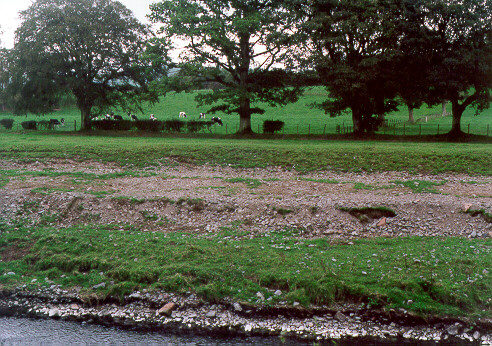
Dryfe Sands battle site
The Maxwells were desperate to rid the land of their sworn enemy the Johnstones, and so decided to launch a surprise attack. However, fortunately for Sir James Johnstone, he was somehow warned of the approaching Maxwells. He knew that this was going to be a desperate fight for their existence and so hurriedly called for some assistance from the Grahams, Scotts, Carrutherses, Irvings, Elliots and others, and managed to raise an army of, perhaps, around 800 men.
It said that Lord Maxwell offered a reward to whichever man could bring either the hand or the head of Sir James. Upon hearing this Johnstone made a similar pledge.
On the 6th of December Lord Maxwell and his army approached the Johnstone town of Lockerbie, near a place called Dryfe Sands. Johnstone came up with a plan, and, as the Maxwells marched on, he kept most of his men hidden, only sending out a small number of horsemen to attract the attention of the Maxwell vanguard, and then rout.
The plan worked and the vanguard broke its ranks chasing after the Johnstone horsemen, allowing the main body of Johnstone men to make a surprise attack on the disorganised and surprised Maxwells.
The Johnstones went on to slaughter around 700 Maxwells, and those they didn’t kill were slashed in the face with a sword, recieving horrible wounds which were to become known as ‘Lockerbie Licks’.
During the carnage, it is said that Lord Maxwell begged for his life, offering to surrender. He stretched out his hand, and instead of accepting it, Sir James Johnstone cut off the arm and then killed him.
Legend has it that Johnstone kept the arm and head of Lord Maxwell as trophies, reminding everyone of their decisive victory against the Maxwells.
Whichever way Lord Maxwell did die, whether he was bludgeoned by Lady Maxwell and her castle key, or if he was slain by the sword of Sir James Johnstone, one thing that is for sure, it probably wasn’t a pleasant death.
The post Johnstone Legend – The Killing of Lord Maxwell appeared first on ScotClans | Scottish Clans.
]]>The post The Wardens of the Marches appeared first on ScotClans | Scottish Clans.
]]>In 1249 in an attempt to deal with crime an agreement was signed between both nations, a system began called the ‘Laws of the Marches’ this was to be carried out by the ‘Wardens of the Marches’ who were appointed by their respective monarchs.

Borders area showing the different marches

Sir Robert Carey, Lord Warden of the Marches
The border lands on each side divided into three marches: an east, middle, and west march. Each march had its own warden, who was responsible for the security of the area and its people Each Waarden answered to the Lord Warden. The Scottish wardens were familiar with their territories, and knew the people from the marches, and this gave them the opportunity to get involved in questionable dealings in order to further their position. However, the English wardens were not as familiar with the area and the ways of the Borderers, and often went about creating more problems than they solved when trying to administer any justice.
Examples of some of the families you would traditionally find on the Scottish side are: Hume, Trotter, Dixon in East March; Kerr, Scott, Turnbull in Middle March; and Bell, Irvine, Johnstone in West March.

Wardens of The March
Wardens from both sides of the border would meet monthly in peace on the day of truce. They would assess the complaints from either side, and administer the appropriate justice. The Wardens had to bear in mind that both countries valued things differently, and this created many difficulties when trying to solve these grievances. Many of the crimes would range from cattle rustling to murder.
To explain about how the Wardens of the Marches worked; if for example you were English, and went north of the border to Scotland and stole some cattle, it used to be quite normal to get a a pat on the back back in England, because you had committed a crime in the opposite realm. You would go unpunished. The purpose of the Wardens was to prevent this from happening. The Wardens were expected to talk to their foreign counterpart. So if someone went across the border to steal something, then the warden whose land was plundered would tell his counterpart, and the issue would be resolved on the day of truce. The task of solving each person’s grievance was a taxing and thankless task, which usually provided solutions that left no-one happy.
Those who were accused of a crime were supposedly tried by six honest Scotsmen and six honest Englishmen. However it has been said that this could never have happened because you would not have been able to find any honest men from either side of the border.
The ‘Calendar of Border Papers’ has recorded a large number of complaints that were made to the Wardens of the Marches. They go into some detail as how many of these people were wronged by raiders both sides of the border. The papers are still available to read to this day.
By 1603 the role of Warden of the Marches became unnecessary, after the union of the crowns when James VI & I, in his attempt to permanently put an end to the Border Reiver clans, got rid of the name “Borders” to represent that area, and renamed it the “Middle Shires”. Over the following 100 years you saw a gradual change of the borderers putting down the sword and picking up the plough.
The post The Wardens of the Marches appeared first on ScotClans | Scottish Clans.
]]>