The post Hugh Munro and the Eagle appeared first on ScotClans | Scottish Clans.
]]>
The Eagle Stone
Nestling among the houses on a quiet hillside there is a small fenced off patch of grass, in the centre a modest standing stone with ancient carvings – this is the famous ‘Eagle Stone’, also known as the Clach an Tiompain or ‘Sounding Stone’
The stone is featured in one notable prophesy by the Brahan Seer – he foresaw a great tragedy that would befall the area should the stone topple over three times, over the years it has been known to have fallen twice and superstitious locals have ensured it moves no more by cementing it in place.
Local legends have claimed the stone was erected after a skirmish between the Clan Munro and the McDonalds of the Isles on the way to the battle of Harlaw in 1411 – a sort of practice friendly on the way to the knockout stages. Recent evidence has proven it to be much older though.
Although almost certainly Pictish in origin one famous folk tale links the stone again to Clan Munro, who’s crest symbol also depicts an eagle, the Eagle of Foulis.
On a high ridge on the other side of the valley lies the remains of an iron age fort known as Knockfarrel (literally ’stone fort’). The very first chief of Clan Munro lived here as the clan established its presence in the area. Around the fortification a small village or ‘clachan’ grew. The valley has lush farmland, ideal for grazing and growing all manner of crops, sheltered from the worst of the weather.
Knockfarrel is easily approached via a gently sloping trail up the side of the ridge but treacherous cliffs fall steeply away to one side – high on a rocky pinnacle in these cliffs a great eagle had made its nest. whether the Munro clan took their symbol from this eagle or it was just a remarkable coincidence we do not know but the clansmen saw the eagle as a good omen and were happy to share the valley with this magnificent creature. Even when the bird would lift a young lamb or goat kid they would take this as just an acceptable loss and the chief forbade anyone from doing harm to the eagle.
All was peaceful in the valley until one summers evening. It had been a beautiful day and the womenfolk worked preparing the evening meals and sewing. The children laughed and played between the small houses, outside one house towards the edge of the village one small boy sat, Lachlan, barely a toddler he rested on the grass and watched as his mother busied herself around him.
All at once a great dark shadow was cast across the valley and a terrible screeching was heard, In a blur of feathers and claws the huge eagle swooped down from its nest and caught the poor child in its massive talons. Before anyone could react he lifted the boy high into the air and carried him up the cliffside.
The cries of alarm went up throughout the village and the wailing of the grief stricken mother alerted young Hugh, the chieftain of the clan. When Hugh arrived at the scene he realised that he had to act and act quickly. He called for a length of rope and set off up the cliffside in pursuit. Not entirely sure what he would face when he reached the pinnacle.
Higher and higher Hugh clambered up the sheer face, as the village fell away below he heard a beating of wings and a rush of air – the great eagle was bearing down upon him. Holding onto the rope for dear life he tried to fend off the angry bird. The eagle soared away again and Hugh pressed on. In the fading light he caught a glimpse of a tangle of branches above him and with one last effort he hauled himself up and into the eagles nest.
Lying in the centre of the nest lay baby Lachlan. cooing away to himself as if nothing had happened. Hugh was relived that the boy despite his ordeal had barely a scratch on him but he realised that the hardest work lay ahead. No sooner had this thought crossed his mind than the huge eagle appeared again – even angrier than before. Hugh grabbed a large branch and swinging it like a club tried to fend it off, time and time again the eagle pecked and clawed and Hugh soon became exhausted. His clothes torn and his body bruised and bloody from the ferocious attack.
All this time little Lachlan laughed away thinking it no more than a silly game for his own amusement.

Munro Clan Crest
As the eagle made one more pass Hugh decided on an other tactic; he ducked under the thrashing wings and grabbed at the birds legs. Unsettling the creature just for a second he was able to pull it towards the nest and turn it over onto its back. With the advantage of surprise he reached up and got hold of the bird by the throat and squeezed with all his might.
Gradually the bird began to loose its grip on life, the struggle began to die and with one last effort Hugh squeezed the life from the mighty creature.
Meanwhile far below the cliff the villagers looked up, not knowing if the poor boy or Hugh for that matter were alive or dead. They had heard the terrifying shrieks of the bird and feared the worst. Then suddenly the distant figure of Hugh appeared, holding the corpse of this massive Eagle in his hand. They cheered and shouted and Hugh tossed the bird down, A gust of wind caught the feathers and the eagle’s broken body wheeled and glided down to the valley below, coming to rest at the edge of the village. Where the eagle fell the villagers placed a stone – the Eagle stone in recognition of the brave deeds of their chief and from respect to the noble creature that was such a powerful symbol of their clan.
The post Hugh Munro and the Eagle appeared first on ScotClans | Scottish Clans.
]]>The post The Preachers Footprints appeared first on ScotClans | Scottish Clans.
]]>
The footsteps can still be seen

The 180-year old footprints of preacher Finlay Munro today.

The Footprints, from GNM Collins, Principal John Macleod D.D. (1951)
In Torgyle, Glenmoriston there are a set of footprints in the clay, these have been here since the 1820s. No grass grows here and even reappearing after the ground was dug up by vandals in the 1970s.
Local legend tells that they belonged to a visiting preacher, Finlay Munro, a strange and charismatic figure born in Tain. A preacher famous for walking the highlands and islands preaching an evangelical gospel to anyone who would listen. Many places he attracted immense congregations, like on Lewis where they all gathered on the low hill of Muirneag, a common place to meet for worship. Such were the numbers that Munro addressed the hill itself:
“Muirneag, Muirneag, it is you that may feel well pleased today with your new coat on” (Meaning the covering of people).
But his visit to Glenmoriston didn’t go as well, local Ministers resented this unkempt upstart and his interpretations of the scriptures. “The clergy were mad against him,” recalled Rev Alexander MacLean of North Uist, “and the ignorant and wild people dealt-brutally with him in every place”.
The preacher gave a sermon to a small community in Glenmoriston, but was heckled by some members of the congregation. His tormentors were allegedly Roman Catholics from Glengarry.
His response to the gathered crowd was to claim that the ground on which he stood would bear witness to the truth of his words until the Day of Judgement came.
According to local legend, his footprints have remained on the same spot for 188 years.
Quick Links to Clan Munro Products from The Clan Shop
- Munro Tartan Tie
- Munro Tartan Pocket Square Handkerchief
- Munro Tartan Scarves
- Munro Tartan Kilts
- Munro Clan Crest Badge
- Munro Clan Crest Mug
- Munro Clan Crest T-Shirts
- Munro Clan Crest Belt Buckle
- Munro Phone Covers
- Munro Tartan
- Munro Clan Crest Crystal Glasses
- Munro Clan Crest Cufflinks
- Munro Clan Crest Sgain Dubh
- Munro Clan Crest Kilt Pin
- Munro Clan Crest Plaques
Visit the Munro Clan Shop where we sell the largest amount of Clan Munro products available >>
The post The Preachers Footprints appeared first on ScotClans | Scottish Clans.
]]>The post The Storehouse of Foulis appeared first on ScotClans | Scottish Clans.
]]>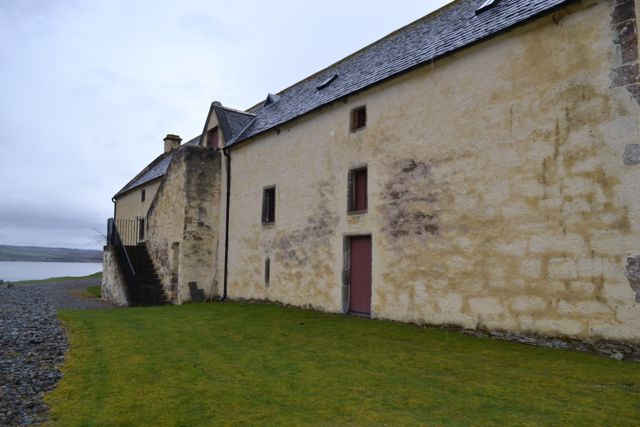
The Storehouse of Foulis on the banks of the Cromarty Firth
Sitting on the banks of the Cromarty Firth between Evanton and Dingwall, the Storehouse of Foulis is a fully restored 18th Century building that once housed the rent paid in kind from the Munro estate. Once only visited by horse and cart, the Storehouse now sits alongside the busy A9 with cars zipping past on the main road in and out of the Northern Highlands.
Thought to have been completed around 1740, the Storehouse was built for the Munros of Foulis at a time when rent on the estate was largely paid in goods. The area surrounding Foulis provided good growing and farming conditions because of the rich soil and relatively mild temperatures. Oats and barley received from the tenants were stored here before being portioned out to farm workers and household staff as wages. Surplus goods were shipped off to markets further south via ferry. The Storehouse is positioned towards the sea on the gently sloping shore just above high-tide mark so boats could be safely beached to load goods, floating away on the next incoming tide.
Surviving documents show the export of grain and foods such as salt salmon as well as timber sent by sloop to Fort George in 1753. A letter from Sir Hugh Munro to his factor in October 1795 stated that tenants should be given a receipt for grain brought to the storehouse, bringing as much as they conveniently could at one time. On February 3rd 1796 at a time when oatmeal was scarce, a group over 150 people marched on the Storehouse. They believed it to hold stores of oats but, after threatening to break in to the building, a deputation was allowed in by the storekeeper. Finding only barley and wheat they refused to buy saying that they “… lived chiefly by oatmeal and they did not mind tho’ he should send away all the wheat and barley… provided he left the oats.”
The building is constructed of lime harled sandstone rubble masonry bonded by lime mortar with dressed stone margins around the openings and a Ballachullish slate roof – a fine example of vernacular architecture. All the windows are small with those on the ground floor mere slits to provide necessary ventilation for the grain, and to provide security for the goods stored inside.
By the early 19th Century most rents were being paid in money, but the Storehouse continued to be used to store bulky goods moving in and out of the estate by sea until well into the 20th Century. Today the wooden pillars, capitals and longbeams survive whilst the joists and planking date from the refurbishment in 1998. The building is now a visitor attraction run by Clan Munro, with the store house hosting information about the building’s history, the clan and the area’s wildlife. An accompanying restaurant and farm shop have been built next door, with fresh and local produce for sale. In 2010 Prince Charles visited the Storehouse as part of his role as founder of the North Highland Initiative, which aims to bring together the farming community, local businesses and the tourism industry to promote the economic development by creating and marketing a powerful North Highland brand.
Photos taken from The Storehouse of Foulis
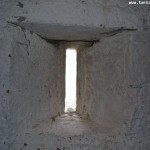
Quick Links to Clan Munro Products from The Clan Shop
- Munro Tartan Tie
- Munro Tartan Pocket Square Handkerchief
- Munro Tartan Scarves
- Munro Tartan Kilts
- Munro Clan Crest Badge
- Munro Clan Crest Mug
- Munro Clan Crest T-Shirts
- Munro Clan Crest Belt Buckle
- Munro Phone Covers
- Munro Tartan
- Munro Clan Crest Crystal Glasses
- Munro Clan Crest Cufflinks
- Munro Clan Crest Sgain Dubh
- Munro Clan Crest Kilt Pin
- Munro Clan Crest Plaques
The post The Storehouse of Foulis appeared first on ScotClans | Scottish Clans.
]]>The post Clan Event Fund Recipients Announced appeared first on ScotClans | Scottish Clans.
]]>Enterprise and Tourism Minister Fergus Ewing announced that all ten applicants to the fund have been offered grants to support the staging of clan events across the country. In October last year the £200,000 fund was put in place to provide support for activities promoting clan tourism outside of Edinburgh and Galsgow over the next three years. Such events are a major attraction to the hundreds of thousands from across the globe who visit Scotland to explore their ancestry.
The 2014 recipients are:
- Clan Munro Association – 10th International Clan Munro Gathering.
Foulis Castle, Evanton. Awarded £5000. - Clan Lachlan Gathering & Strathlachlan Community Festival.
Castle Lachlan, Strathlachlan. Awarded £5000. - MacDougall of Dunollie Preservation Trust – Clan MacDougall International Gathering 2014.
Dunollie House plus various local locations. Oban, Argyll. Awarded £5000. - Clan MacThomas Society – 2014 Diamond Jubilee Gathering.
Perth and Kinross, Pitlochry/Glenshee/Kirkmichael. Awarded £1070. - Clan Gregor Society – International Clan Gregor Gathering 2014.
Based at Stirling University then at Dalmally, Argyllshire. Awarded £1750. - Clan MacLaren – Clan MacLaren at the Lochearnhead Highland Games and Gathering.
Balquhidder and Strathyre. Awarded £1000. - Clan Hay Society – Tartan Ties 2014.
Stirling and Aberdeen. Awarded £2500. - Clan Lamont Society – Clan Lamont Family Fun Day.
Toward Castle, Dunoon. Awarded £3000. - Clan Moffat UK – Clan Moffat International Gathering.
Moffat. Awarded £1000. - Clan Donnachaidh – Society Gathering.
Killiecrankie Hall, Pitlochry, and Clan Centre at Bruar. Awarded £1000.
Mr Ewing said he was delighted to announce the initial allocation of funding, saying clan events generate income and provide a colourful spectacle in communities where they take place. He said: “This is the year that Scotland gives a warm welcome to visitors from around the world as we showcase the history and traditions of Scottish Clans during our second year of Homecoming.”
“Not only will the Scottish Clan Event Fund help support activities during this year’s celebrations, but will also provide a legacy by supporting Clan events through to our planned Year of History, Heritage and Archaeology in 2017.”
The post Clan Event Fund Recipients Announced appeared first on ScotClans | Scottish Clans.
]]>The post The Clans of Ireland appeared first on ScotClans | Scottish Clans.
]]>
Clan Map of Ireland, 1485
This time tomorrow I’ll be jet-setting across the ditch to Ireland for a quick break with my wee brother who is currently visiting me in Edinburgh. We’ll be spending some time in Dublin and Galway, before heading up to Northern Ireland, then back home to Scotland. I’m looking forward to connecting some ancestral puzzle pieces, as well as enjoying the obligatory first pint of ‘real’ Guinness in the famed stout’s homeland.
I have to admit that even though my ancestry is Irish rather than Scottish, I’m a complete newbie when it comes to Irish clans. The extent of my knowledge is that for hundreds of years there’s been an awful lot of to-ing and fro-ing between the clans, as many Scottish and Irish clans claim ancestry from each other. Clan MacLachlan, Clan Lamont, Clan Ewen of Otter and Clan MacNeil of Barra all claim descent from Ánrothán Ua Néill, an Irish prince of the O’Neill dynasty who left Ireland for Kintyre in the 11th century. Clan Munro also emigrated to Scotland from Ireland – The 11th century chief Donald Munro was granted lands in the Highlands for services rendered to Malcolm II of Scotland in defeating the Danish Viking invasion.
Similarly the Irish Clan Sweeney is Scottish in origin – in the early 14th century, Clan Sweeney were in cahoots with the MacDougalls – bitter enemies of Robert the Bruce. In 1310 when Bruce had most of Argyll and the North Channel in his favour, Clan Sweeney attempted to reclaim their lands at Knapdale. However they failed miserably, and were forced to reestablish themselves as Gallowglass mercenary soldiers in Donegal. The Gallowglass are an interesting story in themselves – following the Scottish Wars of Independence in the late 13th and early 14th century, many Scottish clans of Norse-Gaelic origin were dispossessed of their lands for choosing the wrong side in the war. These clans ended up in Ireland, settled by Irish nobles in return for providing services as a class of elite soldiers, famed as a heavily armoured, trained aristocratic infantry to be relied upon as a strong defence for holding a position.
So you see, there really is so much clan history overlapping between Scotland and Ireland. And I haven’t even mentioned the language yet – I’m told Scottish Gaelic is an older, more conservative form of Irish Gaelic (although that’s probably a topic for another day). The clan systems in both countries have their differences, however surprisingly the modern day versions of the ancient clans seem to have organised themselves in very similar ways.
The clan system formed the basis of society in Ireland up until the 17th century. From ancient times, Irish society was organised around traditional kinship or groups, which can trace their origins to larger pre-surname population groupings such as Uí Briúin in Connacht, Eóghanachta and Dál gCais in Munster, Uí Neill in Ulster, and Fir Domnann in Leinster. Underneath each larger grouping were various septs, who through war and politics became more powerful than others and were accorded the status of royalty in Gaelic Ireland. The largely symbolic role of High King of Ireland rotated amongst the leaders of these royal clans. Like the Scottish clans, the chief of each Irish clan was responsible for maintaining and protecting their clan and the property, and the clan was composed of those who were related by blood as well as those who were adopted or fostered into the clan.

Siege of Kinsale Battle Map
The early 17th century marked a huge turning point in clan history in Ireland. The Siege of Kinsale was a three month battle ending on 3rd January 1602 that is kind of like Ireland’s version of Culloden. Kinsale was the ultimate battle in Tudor England’s conquest of Ireland, campaigned by Aodh Mór Ó Néill, Aodh Rua Ó Dónaill and other Irish clan leaders against English rule. Just like the Jacobites at Culloden, the Irish were defeated, and the clan system was effectively and decisively stamped out. The Tudor re-conquest marked the destruction of Gaelic aristocracy, and when the senior Gaelic Chiefs of Ulster left Ireland in 1607 to unsuccessfully recruit support in continental Europe, the English authorities in Dublin were able to establish real control over Ireland for the first time.
Despite this almost eradication of the clans, followed by the subsequent loss of ancestral lands and forced and willing emigration, today the clans of Scotland and Ireland still employ a huge part of each countries’ culture. In the 1940s Edward MacLysaght, the first Chief Herald of Ireland, drew up a list of 243 Irish clans and began to publish a number of works on the history and background of Irish families. Modern Irish clans were reformed in the latter half of the twentieth century and in 1991 sixteen of the nineteen bloodline chiefs were received by the President of Ireland, Dr. Mary Robinson. This was the first time in modern history that the bloodline chieftains of Ireland had gathered to form a new Council of Irish chiefs, established by the President to bring together the Chiefs of the Gaelic nobility of Ireland as recognised by the Chief Herald. The only other recorded meeting of the Irish chiefs was before the Siege of Kinsale.
In January 2013 the Standing Council of Irish Chiefs and Chieftains signed a Memorandum of Understanding with Finte na hÉireann – an authentication and registration body for the Clans of Ireland. This historic event took place at a meeting of the board on 26 January 2013 at Christ Church Cathedral in Dublin. The MOU was signed for Clans of Ireland by Dr. Michael J.S. Egan, Cathaoirleach and for the Standing Council by Sir Malcolm MacGregor of MacGregor. As part of the agreement both organisations agree to recognise each other’s authority over clans and to support each other’s respective goals, working together well into the 21st century just as the clans of each country had (allbeit in a less bloody way) for hundreds of years before.
The post The Clans of Ireland appeared first on ScotClans | Scottish Clans.
]]>The post The Flodden 500 Service at St Giles, Edinburgh. appeared first on ScotClans | Scottish Clans.
]]>I’d like to continue by reproducing Alaistair Moffat’s reading given at St Giles. It was an excellent account of the battle and the aftermath.
—
FLODDEN ADDRESS. – ALISTAIR MOFFATWhen dawn broke on the morning of 10th September, 1513, the landscape of hell was revealed. On the gently undulating northern ridges of Branxton Hill more than 10,000 men lay dead or dying. In the midst of the carnage were the naked, plundered bodies of King James IV of Scotland, his half-brother, Alexander Stewart, Archbishop of St Andrews, George Hepburn, Bishop of the Isles, two abbots, nine great earls of Scotland, fourteen lords of parliament, innumerable knights and noblemen of lesser degree and many thousands of farmers, ploughmen, weavers and burgesses. It was the appalling aftermath of the battle of Flodden, the greatest military disaster in Scotland’s history.In the grey light of that terrible dawn, sentries posted around the captured Scottish cannon could make out where the brunt of battle had been joined. Below them, at the foot of the slope ran the trickle of a nameless burn now choked with slaughter, a wrack of mangled bodies, broken pikeshafts, shattered shields and everywhere blood and the sickening stench of death, vomit and voided bowels. Not all of the bodies were yet corpses. Through a long dark night the battlefield had not been a silent graveyard. Trapped under lifeless comrades, crippled, hamstrung or horribly mutilated, fatally wounded men still breathed. Bladed weapons rarely kill outright and they were often used to bludgeon men to their knees or into unconsciousness. In the churned mud of the battlefield some men will have lost their footing, fallen and been hacked at before they could get up. Many bled to death, maimed, lacerated by vicious cuts, screaming, fainting and screaming once more in their death agonies. Some will have been put out of their misery by parties of English soldiers scouring the field by torchlight for plunder, stripping the bodies, ransacking them for valuables. But other men will have lingered on inunspeakable pain, praying to their God, passing in and out of consciousness, slowly bleeding to death. The fury of the battle on Flodden field may have been stilled and awash with death and defeat. But all was not yet over. In an instant the plunderers and scavengers looked up and the sentries by the cannon stood to, frantically peering through the morning light. They could hear the rumbling thunder of hoofbeats – and then, suddenly, riders erupted over Barelees Rig. With 800 horsemen at his back, Lord Alexander Home galloped hard across the horrors of the battlefield and up the slopes of Branxton Hill. They had not come back to Flodden to rejoin a lost battle but to rescue their captured ordnance. And they very nearly succeeded. After a sharp skirmish, the English gunners managed to load and get off a volley at Home’s squadron, and they scattered.And so it ended. As the Border horsemen wheeled round and raced out of range, the remnants of the shattered Scottish army were limping across the Tweed at Coldstream. There was no organised pursuit. The victorious English army had taken heavy casualties and the Earl of Surrey and his captains were exhausted. In any event, their bloody work was done. The floors o’ the Forest were a’ wede awa, Flodden was a national disaster, a harbinger of lawlessness in the shape of the Border Reivers, the beginning of a long period of political uncertainty and the last medieval battle in the history of Britain. The last time a king was to die leading his army.It was also an epic. As two huge armies mustered and marched into history, extraordinary scenes had been witnessed. At Ellemford, high in the Lammermuirs above Duns, where sheep now graze on the flanks of the hills, where buzzards hang in the updrafts and an elegant bridge crosses the Whiteadder, King James IV and his army camped. Huge guns were trundled down the hill trails, dragged by oxen, and by 21st August 1513, almost 30,000 men had massed in this beautiful, now lonely valley. Two days later, the largest force ever to leave Scotland crossed the Tweed at the fords below Coldstream. They had declared war, they had entered the realm of the Tudors, of the ferociously ambitious and bull-like Henry VIII.Meanwhile Thomas Howard, Earl of Surrey, and the Bishop of Durham carried the standard of St Cuthbert before their battle-hardened troops. In front of the high altar of the great cathedral, Howard had watched the bishop bless the flag of the Haliwerfolc. The lands of Palatinate, of the Prince-Bishops of Durham, reached to the Tweed and beyond, and in an early definition of Englishness, their people were known as the Holy Man’s Folk, the Haliwerfolc. Ancient allegiances were being roused and summoned.Between 2nd and 9th September two vast armies circled each other in a small corner of North Northumberland, like heavyweight boxers looking for weaknesses or waiting for wrong moves. After the Earl of Surrey had despatched a herald, the Rouge Croix, it was finally agreed that battle would be joined on 9th September. Supplies for almost 70,000 men, horses and camp followers were running dangerously lowand neither army could remain in the field much longer.Realising the strength of the Scots’ entrenched position, Surrey led his men to the east, skirting Flodden Edge and staying out of artillery range. On the morning of the appointed day, he crossed the River Till and took up a position to the north of James IV’s army, barring any retreat to Scotland. And then, on a damp afternoon, the greatest battle ever fought between England and Scotland began.On the left wing of the Scottish host, the Highlanders led by the Earl of Huntly massed in formation with Lord Home’s Borderers, and in the moments before their chiefs roared the claideamh mor, the order to charge, the Gaelic-speaking warriors did something remarkable. They began to summon the army of the dead. They began the sloinneadh, the naming of the names of memory. To bolster his courage, each man began to recite his genealogy. Many waiting to charge could go back 20 generations. As if they were offering up the murmur of prayer, each man remembered why he had come to fight. Is mise mac Iain, mac Ruaridh, mac Domhnuill. I am the son of John, the son of Roderick, the son of Donald. And once their quiet voices stilled, the roar of the claideamh mor rent the air and they broke into the charge. With their broadswords and Lochaber axes, the Highlanders tore into the English ranks, the division led by Edmund Howard, They scattered and a rout was only prevented when Lord Dacre rode to the rescue with his English Borderers. As history rumbled across Branxton Hill, fortune appeared to be smiling on the Scots.At the same time, James IV was about to make a catastrophic decision, a crucial error of judgement. Instead of occupying an elevated position at the rear of his vast army, he chose to lead from the front. His division raced down Branxton Hill and as they reached the lower slopes and much softer ground, many men began to skid and lose their footing. This unsteadiness made it very difficult for them to control their long, 12 foot pikes. The wet ground made them charge out of formation, only engaging piecemeal with the solidly planted ranks of English billmen, With their shorter, more easily handled bills, they began to slice into James IV’s division. And as the men at the back saw the Scottish pikes go down, they hesitated and many of them ran, believing their king to be killed. By leading from the front, James was immediately submerged in the ruck of the fighting, only able to see what was directly in front of him, in no position to direct his forces. The result was disaster.The legacy of Flodden was most immediately and keenly felt in the Borders. North of the Tweed the memory of the battle is kept alive in the fabric of the midsummer common ridings. At Selkirk the ceremony of the casting of the colours is unique in Britain and it is based on the return of a soldier known as Fletcher, traditionally believed to have been the only one of sixty from the town to return. In his bloodied hand he held aloft, in a gesture of desolate defiance, a flag captured from the men of Macclesfield in Cheshire. Many Englishmen had fought and fallen at Flodden. And passions still run high. When the Mayor of Macclesfield recently wrote to the Provost of Selkirk asking for the return of the flag, he was told that he would need to come to the Borders and take it.Flodden is an immense story. Like Culloden in 1746, it signalled the end of a fading, feudal Scotland. And it also ushered in a century of lawlessness, the criminal society controlled by the appalling Border Reivers. Across Europe, renaissance, enlightenment and the reformation were changing lives, forming new ideas and creating the institutions of the modern world. In the first half of the 16th century, central authority broke down in a leaderless nation, and while swords and spears spoke in Scotland, the law was often silent.What is to be learned from all of that suffering and slaughter, from all of those ancient enmities? First that they are ancient and must remain firmly in the past. In 2014 Scotland faces a historic choice and whichever way the people of Scotland vote, it must be a signal lesson of Flodden that enmity, even ancient enmity can have no part. And it is to the credit of politicians on all sides of the argument that it has not reared an ugly head. But it might.And alongside that it mustmbe important to remember, to understand the visceral, bloody realities of whatmwent on on that terrible day 500 years ago. Lest we forget, Flodden should become a place of remembrance and of pilgrimage, a place where the uncomfortable lessons of history can be learned and never forgotten.Two weeks ago, on one of the countless beautiful evenings of this glorious summer, I drove over to Branxton. As the sun threw long shadows across the gently undulating fields, I tried to imagine the 10th of September, 1513, the distant roar of thousands of men, the screams, the fear and feral closeness of hand-to-hand fighting whenmen can smell the breath, smell the sweat of men grunting pushing, hacking, swearing at them, trying to kill them. In a Gaelic phrase, I tried to listen for the music of the thing as it happened. I tried to listen to the slow, sad music of our history. I hope that many in Scotland and England hear it too.
Prior to the sir Malcolm MacGregor (who has admitted that try as he might he can not find a single MacGregor involved in the battle) researched the casualty lists. The following names are clans and families who are known to have fought at Flodden along with notable people who fell in the battle:
From the Highland Clans:
Campbell, Erskine, Fraser, Gordon, Graham, Guthrie, Haldane, Hay, Keith, Leslie, Lindsay, Macaulay, Macfarlane, Mackay, Maclean, Macnab, Menteith, Moncreiff, Moray, Murray, Ogilvy, Oliphant, Ramsay, Rattray, Ross, Ruthven, Seton, Sinclair, Stewart, Forbes, Forsyth, Grant, MacKenzie, MacNaughton, Ross, Skene, Buchanan Of Leny, MacDonald
The Lowland and Border Clans and Families:
Adair, Abercromby, Adam, Anstruther, Baillie, Baird, Balfour, Barclay, Blackadder, Bonar, Boswell, Carnegie, Cathcart, Cleland, Cockburn, Colville, Craig, Crauford, Crichton, Cunningham, Dunbar, Dundas, Edmonstone Of Duntreath, Elphinstone, Fotheringham, Gray, Grierson, Haig, St.Clair Of Roslin, Henderson, Hepburne, Herries, Home, Hoppringle, Houston, Lauder, Liddel, Lockhart, Lumsden, Lyon, Masterson, Maitland, Maule, Maxtone, Maxwell, Melville, Muirhead, Mure, Napier, Rollo, Sempill, Somerville, Spottiswood, Stewart Of Traquair, Allardice, Ballingall, Kerr, Colville, Crammond, Eliott, Ferguson, Fleming, Foreman (Standard Bearer), Inche, Inglis, Johnstone, Kirkcaldy, Knolis, Logan, Montgomery, Morton, Muir, Nelson Of Madinpap, Otterbrun, Pitcarin, Pringle, Reid, Rorison, Savage, Scott, Seton, Tunstall, Vallanche, Wood Of Raik, Kennedy, Douglas, Hamilton, Livingstone, Wemyss, Wallace, MacLellan, MacCulloch, MacDowall
Chief Or Notable Head Of House/Family
King James IV, Archbishop Of St.Andrews (King’s Son), Earl Of Morton ( Grandson Of James 1), Earl Of Glencairn, Douglas Of Drumlanrig, Sir James Dunbar, Dundas, Lord Elphinstone, Lord Erskine, Earl Of Huntly, Earl Of Montrose, Sir Alexander Guthrie, Haig Of Bemersyde, Haldane Of Gleneagles, Earl Of Errol, Earl Of Bothwell, Sir William Keith, Earl Of Cassilis, Earl Of Rothes, Earl Of Crawford, MacDowal, Earl Of Garthland, MacFarlane Of Arrochar, Hector MacLean Of Duart, Maxwell Lord Of Carlaverock, Sir John Moncreiffe Of That Ilk, Moray Of Abercairney, Ramsay Of Dalhousie, Rattray Of That Ilk, Rollo Of Duncrub, Master Of Ruthven, Lord Sempill, Lord Seton, Earl Of Caithness, Earl Of Atholl, Earl Of Lennox, Lord Darnley, Master Of Angus, Anstruther Of That Ilk, Ballingall Of That Ilk, Master Of Eliott, Lord Forbes, Master Of Lovat, Sir Alexander Gordon Of Lochinvar, Sir Alexander Gordon Of Knockenshene, Grant Of Freuchie, John Henderson Of Fordell, Lord Alexander Home, Sir Patrick Houston Of That Ilk, William Johnstone Of That Ilk, Lord Keith, Lord Lorn, Lyon (Sons Of Lord Glamis), MacKenzie Of Kintail, Sir Alexander MacNaughton Of That Ilk, Andrew Pitcairn Of Pitcairn And 7 Sons, Lord Ross, William Ruthven Of That Ilk, Sir Walter Scott Of Buccleuch, Alexander Skene Of That Ilk, Sir David Wemyss, Earl Of Argyll, Lord Kinnaird, Master Of Cathcart, MacDonald Of Lochalsh.
—–
 The St Giles Service…
Just over 40 clan chiefs attended the St Giles service. At the end of the service they mustered for a photograph on the steps. To help you identify who was there we have been given a sketch with a key to the names:
1. Sir Walter Riddell of Riddell 2. The Hon. Elizabeth Fairbairn 3. Madam Pauline Hunter of Hunterston 4. Sir David Bannerman of Elsick 5. Lord Polwarth 6. Andrew Wallace Younger of that Ilk 7. Andrew Dewar Durie of Durie CBE 8. Michael Ancram, Marquess of Lothian 9. Andrew MacThomas of Finegand 10. Earl of Dundee 11. David Campbell of Strachur 12. Roderick Macneil of Barra 13. Sir James McGrigor 14. Earl of Eglinton and Winton 15. Professor David Hannay of Kirkdale and of that Ilk 16. Henry Trotter Younger of Charterhall 17. John MacArthur of that Ilk 18. Duncan Paisley of Westerlea 19. Richard Carmichael of Carmichael 20. Earl of Caithness21. Earl of Lauderdale 22. The Hon. Alexander Leslie 23. Earl of Erroll 24. Lord Napier and Ettrick 25. Madam Arabella Kincaid of Kincaid 26. David Cranstoun of that Ilk 27. Jamie Macnab of Macnab 28. Earl of Wemyss and March 29. Sir Crispin Agnew of Lochnaw 30. The Hon. Kate Nicolson 31. Duke of Montrose 32. The Hon. Peregrine Moncreiffe of that Ilk 33. Martin Haldane of Gleneagles 34. Lord Sempill 35. Andrew Marjoribanks of that Ilk 36. Donald MacLaren of MacLaren 37. Duke of Hamilton 38. Field Marshal the Lord Guthrie of Craigiebank 39. Isla St Clair 40. Marquess of Ailsa 41. Madam Margaret Eliott of Redheugh 42. Sir Malcolm MacGregor of MacGregor 43. Lord Macdonald of Macdonald 44. Richard Oliphant of that Ilk
This image will help you identify the chiefs:

The post The Flodden 500 Service at St Giles, Edinburgh. appeared first on ScotClans | Scottish Clans.
]]>The post An Expedition to Munro Country appeared first on ScotClans | Scottish Clans.
]]>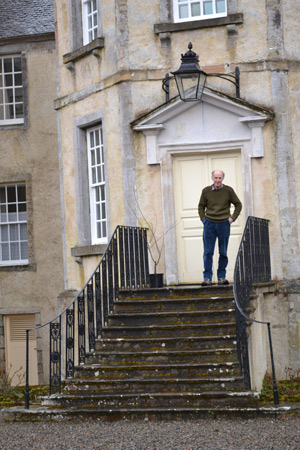
Hector Munro outside Foulis Castle
Following unseasonable snowy conditions a week earlier, Hector had been working around the clock to get his Spring barley crop in the ground while the weather was cooperating. “I am really just a land manager who happens for historic reasons to be the head of an enlarged family group known as a Clan. I work for my living like anyone else – that living happens to be farming.” The majority of the Munro farm at Foulis is made up of malting barley, which when harvested goes to a cooperative shared by farmers in the area. The barley is sorted, batched and sold to maltsters to the order of local whisky distilleries including Glen Ord, Glenmorangie, Highland Park and The Macallan.
Perched among the sown-fields of Foulis sits the striking Foulis Castle, seat of Clan Munro for at least 800 years. “We don’t know the very early history of the castle because there was a terrible family row in the mid-1800s and a lot of documents were burnt and destroyed. As far as we can make out a Munro chief acquired Foulis in about 1350 by swapping some land that he already had on the Black Isle. So we know the land has been in the family since then, possibly longer.” Keyhole gun ports were recently discovered in the base of what seems to have been a corner tower on a defensive outer wall of the castle. “They can be positively dated to between 1450 and 1550, so we know there’s been a castle here since at least then.”
The castle suffered a plundering by Jacobites during the 1745 Rising, as the Munros were ardent Presbyterians and Whigs by political persuasion. “One of my fore-bearers attended the Reformation Parliament in Edinburgh in 1560, voting for reformation. The last thing the Munros wanted was a Catholic King on the throne, so we were staunchly anti-Jacobite.” When the rebellion broke out, 200 Munros marched straight to Inverness to provide aid to the besieged General Sir John Cope, later escorting him to Aberdeen and acting as his scouts. The Munros attempted to hold the North for the Government, but in the end were forced to retreat into Sutherland leaving Foulis open for plundering. The chief at the time, Sir Robert Munro, died commanding an English battalion at the Battle of Falkirk, alongside his brother Dr Duncan Munro who was also killed. At the end of the Rising, Robert’s son returned to Foulis to find it a ruin. “Eventually the Government paid compensation, eight years after Culloden, which allowed him to restore the castle. And by that time I think he realised there was no longer the need for a defensive tower so he incorporated the old parts of the castle into what’s really a modern Georgian mansion. So that’s why today it looks more like a mansion then a castle. The sad thing is that no pictures of the castle (before the mid 1800s) survive, as they were destroyed during the family row over succession.”

Foulis Castle in the distance, surrounded by farmland.
Once an estate of 36,000 acres, the lands today have been reduced to 2,500 and is a mixture of let grazing, barley and forestry. “Sadly there’s very, very few clan chiefs who still are lucky enough to have their original property. And I think it’s the fact that very few areas of the highlands are actually economically viable. Tax, death duties and service to the country has bought about the demise of most of the clan seats, so yes I consider myself very lucky that we’re still at Foulis.”
Clan Munro has a very close affiliation with the Seaforth Highlanders, with ties that go back almost two hundred years. During the Second World War, Hector’s father and uncle were captured at St Valery in 1940 while providing cover for the British Expeditionary Force to escape. “I think it was probably 10,000 men from the Highlands who were captured there in one go. They spent the next four years and 11 months in a POW camp, in which time Foulis became thoroughly run down. The Highland soldiers were always considered the crack troops of the British Army, and as a result they tended to be pushed to the front lines to deal with the trouble spots. I think the Scots probably lost more per head of population than any other allied force in the Second World War.”
Hector began running Foulis in 1974, and became chief in 1995 following the death of his father, Captain Patrick Munro. “I don’t think the role of chief twigged properly until much later, I just took it for granted when I was younger. The fact that my Granny lived in a castle that leaked like a sieve; it didn’t really occur to me that there was any significance. The family have always been in the military so there were lots of swords and spears from great uncle so-and-so who brought them back from Africa. Granny used to allow us to play with these swords as kids, and how we never cut each others heads off, I don’t know, but it was great fun. When my father returned from the war first and foremost he had to work the farm, and secondly try and preserve the castle. In 1958 we got a grant from the Historic Buildings Council for Scotland (now Historic Scotland) and they helped with a grant to put a new roof on the castle.”

Foulis Castle as it stands today
Clan Munro gatherings are held at Foulis every 5-10 years, with the next happening in 2014 to coincide with the 700th anniversary of Bannockburn and Homecoming 2014. “There will be all sorts of activities going on, including some for younger people who will be able to climb Ben Wyvis which is the Munro* out the back here.” The last gathering in 2007 was attended by Munros from America, Canada, Australia, England and even a band of French descendents who came from a Munro who escaped the Battle of Worcester in 1651. “At the head of the French branch of the family is a man called Donald Munro. He can’t speak a word of English yet he’s got a Scottish name – 350 years since his fore-bearers left Scotland. The French Munros were all wearing kilts and wearing their Highland bonnets a bit like a beret – so the tradition carries on.”
Hector would like to see the clans used as a tool to promote the Highlands. “Really the clans are about the Highlands, not Edinburgh. People will go to Edinburgh anyway when they come to visit Scotland, but they won’t necessarily go to the Highlands to look for the clans.” Foulis Castle receives around 6-700 visitors per year from all over the world – appointments can be made by getting in touch through the Clan Munro website. “It’s such a unique selling point for Scotland – where else in the world, just by knowing your surname, can you go to a place and know your fore-bearers came from that spot. Clan territories are very distinct like that.”
Hector’s role as clan chief involves chairing Clan Munro Association meetings, upholding the clans history and traditions, meeting with visiting Munros and dealing with inquiries from all over the world. Outside of being a chief three grandchildren occupy his time when he’s not working on the farm (he says his wife would call him a workaholic). “I suppose the role of clan chief is secondary to being a farmer. I think people tend to have this romantic image of the clans for which Sir Walter Scott probably has much to answer for. The truth is however no less interesting and if we can educate people to take excessive tartantry and dreamt up ceremonials with a pinch of salt, and search out the actual historical facts, then that is far healthier.”
Upon leaving Foulis I walked down the hill towards the clan museum at the old Munro Storehouse. Along the way I passed many relics of the clan’s past, including an ancient burial cairn and disused bridge emblazoned with an eagle – the Munro clan badge. How amazing that for over 800 years the Munro family have worked, fought and lived on the same land, carrying on histories and traditions to this very day.

The Munro Bridge near Foulis Castle

Eagle badge on the bridge
___
* = A Munro is a mountain in Scotland with a height over 3,000 ft (914.4 m). Munros are named after Sir Hugh Munro of Clan Munro (1856–1919), who produced the first list of such hills, known as Munros Tables, in 1891.
The post An Expedition to Munro Country appeared first on ScotClans | Scottish Clans.
]]>The post The Battle of Clachnaharry appeared first on ScotClans | Scottish Clans.
]]>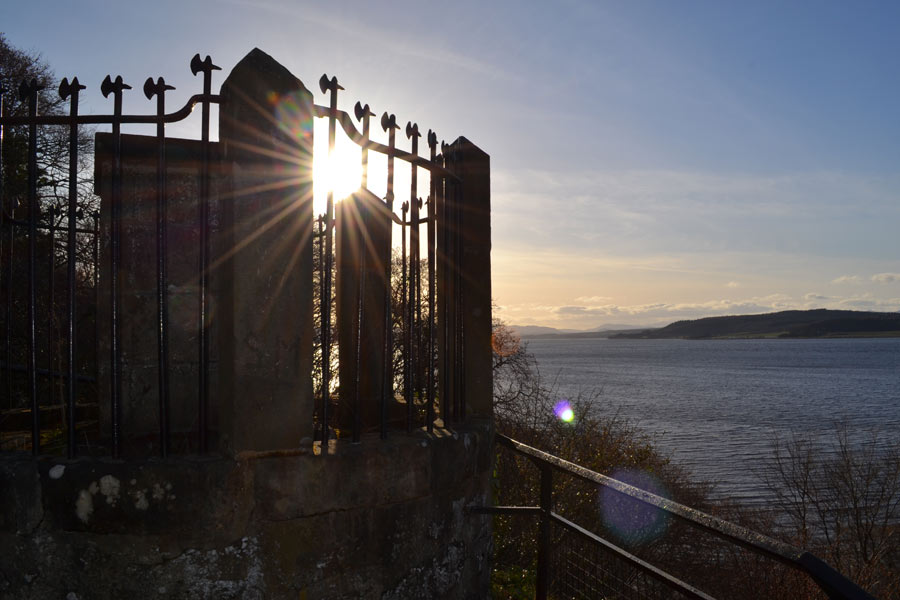
Clachnaharry Monument overlooking the Beauly Firth
Perched atop a hill overlooking the Beauly Firth in Inverness, the Clachnaharry Monument commemorates a particularly fierce battle between Clan Munro and Clan Chattan that occurred in 1454. After a day of sunbathing (in April) in the Highlands, I decided to take advantage of the unusually warm evening and take a walk out to the monument.
Clachnaharry is situated about 2 miles from Inverness and was once a bustling fishing village. The village takes its name from the Gaelic Clach na h-Aire (Stone of the Watch), referring to an irregular stone at the top of the hill used as a look out post to spot approaching unfriendly clans from the north. Just past the high street a little path leads through some woods and up a hill to where the monument is located, also providing a spectacular view of the Beauly Firth, the bottom of the Black Isle and Ben Wyvis.
Largely thought to have occurred in 1454, the battle came about when the Munros were returning home to Easter Ross through Chattan territory following a cattle raid in Perthshire. The Munros were led by John Munro Tutor of Foulis who refused to pay the customary tax on their plunder. This safe passage fee, or ‘road collop’ was often paid in the form of a number of cattle. A dispute broke out over the amount and when no agreement could be reached the Chattans gravely insulted the Munros by cutting the tails off of their horses. The Munros left to travel north, having sent their spoils ahead, but the Chattans caught up and ambushed them at Clachnaharry.
In the fight which followed many died including the chief of Clan Chattan. John Munro was left for dead on the battlefield, but was found by an old woman of the Fraser clan who nursed him back to health. Lord Lovat, chief of the Frasers, returned John to Foulis, however his hand was mutilated in the battle. He became known as Iain Bac-lambach (John the Lame-Handed). This act signaled the start of an enduring friendship between the Munro and Fraser clans.

The monument in better days
The monument was built in 1821 by Major Hugh Robert Duff of Muirtown and originally included a figure on top of a 8m column. Unfortunately the figure fell off in a gale in 1934 and the column was blown down during a severe storm in 1954, leaving only the stump that remains today. Each side of the monument reads the two clan names, facing their respective territories. The Latin inscription is thought to read “Between these high, red rocks their bones are collected”. In recent years the monument was refurbished after it was vandalised and overgrown with foliage.
The monument is also conveniently located across the road from the Clachnaharry Inn, which provided the perfect cure (in cool, refreshing pint form) to the sunburn I received earlier in the day. You can click any of the pictures below to enlarge.


The post The Battle of Clachnaharry appeared first on ScotClans | Scottish Clans.
]]>The post Clan Munro Boosts Highlanders Museum Revamp appeared first on ScotClans | Scottish Clans.
]]>
Left to right Hector Munro of Foulis, Major General Seymour Monro and Lt Col Patrick Gascoigne with two of the swords from the vast collection of artifacts.
Clan Munro has helped to bring a Highland military museum fundraising campaign one step closer to victory.
Hector Munro of Foulis, Chief of Clan Munro, has donated £15,000 on behalf of the clan and wider family to the Highlander’s Museum fundraising appeal. The Highlanders are the descendents of Scottish Regiments originally raised from the clans and communities of the Highlands and Islands in the late 1700′s.
Major General Seymour Monro, museum and appeal chairman said: “All three of our original regiments – Seaforths, Camerons and Lovat Scouts – were raised by the Clan Chief or their close relative – and there has always been a strong and natural link between the regiments and the clans which continues today.”
“This enduring link is a fundamental element of the heritage of the Highlands and Islands. We are delighted and grateful that the Clan Munro, led by its Chief, Hector Munro and his wider family, has been to the fore in contributing to this museum project. As a member of the clan, I am doubly proud!”
Hector Munro of Foulis, Clan Chief, said: “A clan was an extended family group formed into an elaborate web of relationships by intermarriage and set up for mutual protection and benefit. The destruction of the old clan system was the price of Jacobite failure but it was a simple transition for the natural warrior instinct of the clans to seamlessly reappear in the Highland regiments.
“In the last two hundred years many Munros and twenty-seven of my immediate family have served with distinction in The Seaforth Highlanders and their successor regiments. I am particularly grateful to my relatives, descended from Stirling and Gascoigne marriages for contributing so magnificently to The Highlanders’ Museum Appeal.”
The Highlander’s Museum covers three floors of Fort George’s former Lieutenant Governors’ House. The museum has roughly 20,000 artifacts and an estimated 10,000 documents and photographs. The Development Project is set to take three years to complete, transforming the museum into a facility where visitors will be inspired by the history of the Highlands and Islands of Scotland as told through the Region’s Army regiments.
The appeal has raised £2.78 million so far with £100,000 still to go. Information on how to donate can be found at www.thehighlandersmuseum.com
The post Clan Munro Boosts Highlanders Museum Revamp appeared first on ScotClans | Scottish Clans.
]]>The post The Fyrish Monument appeared first on ScotClans | Scottish Clans.
]]>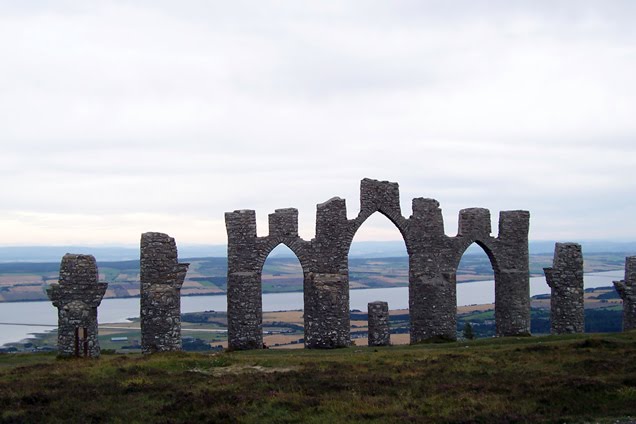
The Fyrish Monument
On a hill overlooking the Cromarty Firth is a striking, most un-highland monument. It is a replica of the gates of Negapatam, a port in Madras (now Chennai) in South East India. Negapatam was originally a Dutch colony, but it was won by the British in 1781.
Responsible for this success was Sir Hector Munro, 8th of Novar (1726 – 1805) who won fame and fortune as a British Army Officer in India. When he retired to Scotland in 1782 he found that in the midst of the Highland Clearances many Munros and others in the area were unemployed and hungry, so he paid them all to carry stones to the top of Cnoc Fyrish (land the Munros obtained from the Keiths in 1589) where the monument to celebrate his triumph was erected. There is a myth that Sir Hector, desperate to be able to provide more work for these people, that he took all the stones back down the hill in order to be able to pay the men to do the job again.
Tragically, Sir Hector’s two sons were both killed in India, one by a tiger and one by a shark in the Bay of Bengal and the estate passed to his daughter whose descendants still own it.
Sir Hector’s nephew, Hugh Anderson Johnstone Munro of Novar was one of the most notable art collectors of his day and a close friend of the English artist J. M. W. Turner. Munro eventually owned fifteen oil paintings by Turner and one hundred and nine of his water colours. One of his favourites, ‘Modern Rome – Campo Vaccino’ was sold by Munro’s heirs in 1878 to Archibald Primrose, 5th Earl of Roseberry (and future Prime Minister) for the astonishing price (at that time) of 4,450 guineas. It later went under the hammer recently for the second time in a Sotheby’s sale in London with an estimate of £12-18 million.
The post The Fyrish Monument appeared first on ScotClans | Scottish Clans.
]]>