The post The Red Wedding and the Dwarf Assassin. Not ‘Game of Thrones’ But Everyday Clan Warfare appeared first on ScotClans | Scottish Clans.
]]>
The Red Wedding in Game of Thrones
The Island of Islay is a beautiful jewel in the inner Hebrides. A gentle low lying island of pastoral lands, expansive sandy beaches and more than a few whisky distilleries. The local population are among the friendliest you will ever meet so it seems surprising that such intrigue could play out in such an idyllic place. Read on…

Finlaggan
The Island was once the power base of the MacDonald Lords of the Isles. From their castle at Finlaggan the new lords were appointed and Islay was clan Donald’s spiritual home. However clan Donald had, to put it mildly, an uneasy relationship with the crown and in 1493 after various misdemeanours their lands had become forfeit.
Such was the extent of MacDonald lands that it took the crown accountants 20 years to take stock of all their estates. The estates were distributed among those loyal to the Scottish crown; mostly clan Campbell and the MacIan’s of Ardnamurchan, a branch of Clan Donald who were related to Campbell’s through marriage.
An area of Islay known as ‘The Rinns’, the part of the island running out to the north west that includes Port Charlotte and Portnehevan was granted to the MacLeans of Duart, a powerful clan from Mull. With so many large clans sharing such a small area it was inevitable that tensions would spill over, nevertheless an uneasy peace was maintained. but it wasn’t to last long…
In 1567 Angus MacDonald succeeded as chief of the MacDonalds of Islay. Angus had a bitter rival in the young Lachlan MacLean of Duart and when Lachlan came of age the authorities realised it was just a matter of time before matters would get out of hand. In an effort to spare bloodshed the king commanded that Angus was to marry Lachlan’s sister. By all accounts the marriage went as planned, however when Angus decided to go to Mull to visit the ‘in-laws’ things took a dramatic turn for the worse.
Despite the forfeiture of the Rinns, Angus had never officially signed the papers over to the MacLeans and they were determined to get their land. When the newlyweds arrived at Duart castle Angus was taken prisoner until he signed away his rights to the Rinns. Even after signing the deeds the MacLeans rightly mistrusted Angus and so kept his brother and his son James as hostages.
So having signed away a part of his clan’s spiritual home Angus and his wife returned to Islay. Angus though was determined that the MacLeans would not be enjoying their new territory any time soon but nevertheless kept his own council playing a much longer game. Eventually Lachlan in triumphant mood arrived on Islay to look over his new possessions. he brought with him 86 of his clansmen and the young James MacDonald as a token of conciliation. Angus welcomed them with a lavish banquet but mid way though the meal the mood turned suddenly very ugly and on Angus’ cue a horde of heavily armed MacDonald’s burst into the room and took the MacLeans captive.
News of the capture of Lachlan and his MacLean kinsmen made it’s way back to Mull. Terrible news for most of the clan but not so for Alan MacLean a rival to Lachlan’s chiefship and uses Lachlan’s absence as an opportunity. Realising it would be in his best interests if Lachlan never returned he leaked out a lie that Angus’ brother, still a captive at Duart had been put to death. Alan MacLeans subterfuge almost worked and Angus began to put to death two captives a day until all 86 had been executed – all that remained was Lachlan himself and Angus was on the way to watch his rival’s demise when news reached Islay that the story was false.By all accounts Lachlan’s neck was saved with minutes to spare.
Giving new meaning to the phrase ‘thats a bit awkward’ the MacDonald’s now had a fairly angry Lachlan as a captive they would much prefer not to have. Once again the Crown intervened and sent a Campbell representative to broker a hostage exchange and some peace. Peace however was not in the vocabulary of these two clans… As soon as Lachlan returned to Duart (and dealt with his scheming kinsman). He put together a raiding party to take revenge on Islay. Angus in return laid waste to settlements on Mull and Tiree. During another raid while Angus was mustering forces on the south of Kerrera, the party were ambushed by MacLean men and MacDonald of Sleat, Macleod of Lewis and and MacFee of Colonsay were all captured.
Once again the crown intervened and while most of the hostages were returned Angus MacDonald refuse to hand over his – as a result Angus was outlawed. As it was Lachlan was not much better at keeping his word and he too refused to return some of his captives. he had also been hatching his own particularly dark revenge…
in 1588 Macian of Ardnamurchan arranged to marry Lachlan’s mother. with the MacIan being a branch of clan Donald it was hoped that this marriage bond would help force a peace between them. This wasn’t Lachlan’s plan though… as the wedding festivities progressed Lachlan’s men stormed the reception and ordered all the MacDonalds present to be massacred. Only the bridegroom was spared.
Game of Thrones fans will be able to picture this scene well since the ‘red wedding’ is a pivotal moment in the series (the same events were played out with the Douglas Clan so its clearly not an uncommon occurrence) . This was not the end of Lachlan’s bloody crusade though and he then set off on a murder tour of a number of small islands including Rhum, Eigg, Muck and Canna. With assistance from some Spanish mercenaries who had survived the disastrous wrecks of the Spanish Armada they set about all but exterminating the population of these islands.
Angus’ revenge was taken out on the settlements of Mull and in this he was in turn assisted by English mercenaries. By 1589 the King had lost all patience with his warring subjects and both parties are summoned to Edinburgh.
On arrival both were arrested and held prisoner until they finally agree to behave. As a token of his willingness to comply Angus left his son James at the Royal court, the young man proved himself to be very popular and received a knighthood. And so peace descended on Islay again, but not for long. in 1592 a revolt of Scottish Nobles threatened the position of the King.
While he was otherwise occupied the MacLeans and MacDonalds saw the distraction as an opportunity to have another go at each other and war broke out again. This time it led to charges of treason being laid against both parties and this very serious threat calmed them both down. Now during all this time the Rinns of Islay (remember the Rinns?) had still never officially been handed over by the devious Angus so he agreed to make settlement including any arrears. Still, after 6 years of making promises Angus had still not officially made settlement so his son Sir James, now very much ‘in’ with the royal court decided to bring his father to book.
On James’ invitation Angus visited Cambletown, staying at Askomel House, James was lodged nearby. Angus and his son met and dined with each other with no hint of James’ plan. After one such meeting Angus returned to Askomel and was awakened in the night by some 300 men at James’ command , armed to the teeth and demanding that Angus give himself up. Angus understandably refused and so James decided to set light to the house with his mother and father inside. In making his escape though Angus is burned quite badly and ends up fleeing in only his nightshirt. James was cunning though and had set traps of felled logs around the grounds of the house and Angus tripped and fell and so was captured. He was then taken in chains to Dumbarton.
James returned to Edinburgh expecting a heroes welcome for finally taking care of his warmongering father but his over zealous methods didn’t go down at all well and such was the outrage that Angus had to be pardoned. James was now the outlaw and Angus got his revenge on his son 5 years later when he captured him on Islay, He was promptly delivered to the Campbells and taken to Perth to answer charges of fire raising and treason. Somehow though (and this does make you wonder about the level of security in the 16th century prison system) James managed to escape and fled back to Islay.
Now while all this in fighting has been going on Lachlan had been busy… Seeing his advantage Lachlan gathered a huge force with the aim of sending the MacDonalds to the afterlife once and for all. He sailed for Islay and the two sides squared up for battle at Traigh Ghruineart (Gruinard Bay) in August 1598.
As the MacLeans were preparing for battle Lachlan was approached by a dark skinned hunchback dwarf, the ‘Dubh Sith’ was half human and half fairy; his father being a Shaw from Jura and his mother from the other realm. This deformed dwarf offered the services of himself and his no doubt enchanted crossbow to Lachlan who laughed at him and considering himself to be far superior in numbers sent him on his way.
The dwarf hobbled off to the MacDonald camp and made the same offer to Sir James who gratefully accepted. The dwarf said to James ‘you take care of the rest of the MacLeans and I’ll take care of Lachlan’ and then promptly scurried away and climbed into nearby Rowan tree. And so battle commenced on a hot August day. During a lull in the fighting Lachlan was overcome with thirst and so went to a nearby stream, he removed his helmet and knelt down to drink – right in range of the lurking dwarf who with one shot of his crossbow found his target on the back of Lachlan’s neck – the point of the crossbow bolt exiting his eye and killing him instantly.
With Lachlan dead the MacLeans lost heart and fled the field. The MacDonald’s pursued them to a church at Kilnave and with the surviving MacLeans barricaded in the church the MacDonalds set light to the thatch roof of the church killing all inside. Except one. One man; a MacMhurich (clan Currie) was able to escape from the church and fled into Loch Gruinard. As the bloodthirsty MacDonalds searched the land he hid under the waters of the bay using a hollow reed to breath through.
The story goes that after dark he made his escape and was taken in by some locals and it is said that his descendants live in the village of Bowmore on Islay to this day.
And so what became of our principal characters in this dark play? Well Lachlan was dead and buried at Kilchoman, Angus grew old and died naturally on Rothsay. Sir James had a more troubled future though; when James VI became king of a united England and Scotland he was determined to put behind him the reputation of his warring barbaric Scottish ancestry and so set about ‘cleaning up’ the Scots nobility. James was brought to justice, his possessions forfeited and charged with treason. He was condemned to death but managed to escape in 1615 (prison security had still not improved). James fled to Spain until 1620 when the King decided to offer him a royal pardon. He was forbidden from returning to Scotland though so lived out his few remaining years in London.
Apologies for anyone expecting dragons to feature at some point but you can’t have everything!
The post The Red Wedding and the Dwarf Assassin. Not ‘Game of Thrones’ But Everyday Clan Warfare appeared first on ScotClans | Scottish Clans.
]]>The post The Lion and the Clans appeared first on ScotClans | Scottish Clans.
]]> The image of the lion in art and culture dates back to pre history and cave paintings. Our ancient ancestors who’s story began in Africa would have admired these powerful beasts and they would become symbols of noble savagery. As society advanced the symbolism became stronger; In ancient Egypt the lioness was merged with the human to create the sphinx.
In almost every other culture the lion was also present. Hittites, Assyrians, Babylonians, Persian and many early islamic cultures. Its not hard to understand, after all the lioness is a dedicated mother and ruthless hunter, the male lion a majestic animal that defends his pride with fury. a good role model for early civilisations.
The lion probably entered early Christian culture via a manuscript called the ‘Physiologus’. This document probably dates back to around the 2nd century AD and consists of a number of descriptions of animals and birds as characters in a series of moral tales. In the opening story a lioness gives birth to stillborn cubs but the lioness brings them to life by breathing upon them, this and other similar stories are a direct reference to the idea of Christ’s resurrection and the redemption of man. The Physiologicus also gives us the story of the Pelican wounding herself to feed her young, an image that can be seen on the Stewart crest.
In the middle ages the manuscript was translated into latin and spread through central Europe and was adapted into several ‘Bestiaries’ With such strong links to these moral tales such animals would naturally form the cornerstone of heraldic symbolism where they would become like ‘moral flash cards’.
 Such tales established the idea of the lion as the ‘king of the beasts’ and so its understandable that heraldic art would take on this concept of using the lion as a symbol of the ruling elite. This symbol entered Scottish heraldry with King William I. Known as William the Lion this tag did not come from his appearance of character but simply from his adoption of the lion as part of his own standard. His successor Alexander II took the same red lion rampant on a yellow ground and made this the royal symbol that would become the well known Royal Standard of Scotland.
I have used the phrase ‘rampant’ above. this refers to the attitude that the animal adopts, in this case raised up on hind legs and paws raised to strike (the lion can stand on either one or two legs depending on tradition although in British heraldry it tends to be one with the other also poised to strike). There are many other attitudes that animals such as lions, wildcats etc can assume; ‘Passant’ is walking with one fore paw raised, ‘Statant’ is standing with all paws on the ground, ‘Salient’ is leaping, ‘Sejant’ means in a sitting position and so on. Other phrases you may hear are ‘Guardant’ or ‘Affrontee’, where the animal faces the viewer and ‘Regardant’ where the animal looks to its rear.
With such strong links to Scottish royalty its no surprise that the Scots nobility would incorporate the lion into their own arms, some such as MacGregor make no secret of this with a lions head and the motto which translates as ‘Regal is my Race’. Here are the clans and Scottish armigerous families we know of that use the lion symbol in their crests.
Baxter (A Lion Passant)
Broun (Rampant)
Bruce (Statant)
Chalmers (Head and Neck)
Cumming (Rampant)
Dundas (Head, Guardant)
Fairlie (Head Couped)
Farquharson (Rampant)
Heron (Demi Lion Rampant)
Home / Hume (Head)
Inglis (Demi Lion Rampant)
Little (Demi Lion Rampant)
Lundin (Demi Lion Rampant)
MacDowall (Lion’s Paw)
MacDuff (Rampant)
MacGregor (Head)
MacLaren (Head)
MacPhee (Demi Lion Rampant)
Maitland (Sejant, Affrontee)
Middleton (Demi Lion Rampant)
Moncrieffe (Demi Lion Rampant)
Moubray (Demi Lion Rampant)
Newton (Demi Lion Rampant)
Nicolson (Demi Lion Rampant)
Pentland (Head)
Primrose (Demi Lion Rampant)
Stuart of Bute (Demi Lion Rampant)
Vans (Rampant)
Young (Demi Lion Rampant)
Its easy to be confused about how an animal native to Africa could have such a profound symbolic influence in Europe, we should also remember that lions though not native or wild would have been brought over with invading Romans who would have kept the creatures for games or even as status symbols. Personally though I prefer to believe that it was not these poor caged beasts that influence the heralds of early mediaeval Europe but the lion tales of old that were seen as symbols of the ancient code of chivalry.
The post The Lion and the Clans appeared first on ScotClans | Scottish Clans.
]]>The post Mingulay: 100 years of abandonement. appeared first on ScotClans | Scottish Clans.
]]>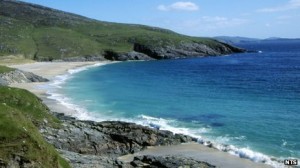 The island of Mingulay forms part of the Bishop Islands, a small collection of islands that lie off the south coast of Barra at the bottom of the Hebrides chain. Its an island of incredible drama; some of the tallest sea cliffs in Europe, sea stacks and arches, one tiny sheltered sandy bay and spectacular views across to its sister islands such as Pabbay and Berneray. Just at the end of the last ice age when the massive European ice sheets retreated from the Western Isles Mingulay would have been connected to the rest of the outer Hebrides, but as sea levels rose it was eventually cut off. There are traces of settlements dating back to the Iron Age and until that day in 1912 the island had been almost continually inhabited.
The sea around the island is dangerous and unpredictable, sailing out from Mingulay could be a one way trip and it was not uncommon for the island to be completely unreachable for months on end. One story that illustrates this concerns two friends who had left the island, one on a trip to Barra and the other who was heading to America to seek his fortune. The friends said their goodbyes at the quayside at Castlebay on Barra. Many months later the one who had made his way to America returned after deciding the new world was no for him. He was surprised to bump into his friend back in Castlebay. The poor man had been stuck on Barra all that time still unable to return home.
Up until the Mid 13th century the islands were under Norse control and indeed the name Mingulay is derived from the old Norse ‘Mikil -ay’ which means ‘big island’. When the Norse invaders finally gave up control of the western isles around 1266 the islands passed to the Lords of the Isles and then to the MacNeils of Barra, in fact it is the rocks of Builacraig on Mingulay that are featured on the crest of Clan MacNeil of Barra.
Although the islands had been long converted to christianity it was a version tempered with a mix of many other older beliefs. Islanders firmly believed in the faery folk and in many other supernatural creatures. Their belief could it times prove disastrous; one example occured during the early tenure of The MacNeils. The chief had grown concerned having not heard from the residents of Mingulay for many months. He sent a ship over to the island and one man called MacPhee was sent ashore. he searched the island and discovered all the inhabitants had died of disease. His crewmates fearing an outbreak of plague left him on the island where he was exiled for a year, climbing the hill every day to look out for rescue. When the boat finally returned to repopulate the island he was granted land there and the lookout hill was named MacPhee’s hill in his honour.
Alas MacNeil sold the island in 1840 along with the other Barra islands to Colonel John Gordon of Aberdeenshire. Gordon had little concern or charity for the islanders and proceeded to clear his new property to make way for sheep though oddly during the height of the clearances the population actually increased as many islanders from nearby Barra fled to the more remote Mingulay rather than make the perilous journey to Nova Scotia. around this time the island population peaked at around 150 inhabitants.

The Old School House on Mingulay
Gradually though the population began to decline, one theory was that it was sparked by a disaster that befell the residents of nearby Pabbay. A boat from the neighbouring island had sunk loosing all 5 hands on board. On such a small island as Pabbay this equated to half the male population. For the residents of Mingulay this brought home the fragility of their own existence and as knowledge of the world beyond their island began to improve many began to realise there were altogether safer and more prosperous ways to make a living away from this tiny outcrop.
From the start if the 1900s islanders began to abandon Migulay, some headed to nearby Vatersay and Sandray where they illegally occupied land there. in 1910 there were only six families living on the island and in 1912 the decision was reached to abandon the island for good.
Since 1912 the island has passed through a few owners who had used it for grazing land until it was finally taken over by the National Trust for Scotland in 2000. The island is now a home to an impressive seabird population.
This weekend the NTS will mark the centenary of the final abandonment of Mingulay with a series of events. A time to reflect on the fragile communities that have existed along the Hebridean chain.
The post Mingulay: 100 years of abandonement. appeared first on ScotClans | Scottish Clans.
]]>