The post Ebenezer MacIntosh and The Stamp Act Protests 1765 appeared first on ScotClans | Scottish Clans.
]]>
Bostonians Reading the Stamp Act
One of the first direct taxes levied upon the American colonies by the British crown was the Stamp Act. It was passed through Parliament on March 22nd, 1765 to take effect on November1st of that year. This act placed a fee on just about every paper transaction in every day use, such as contracts, newspapers, playing cards, bills of sale, and the list goes on.
Here are a few excerpts from the text of the Stamp Act:
For every skin or piece of vellum or parchment, or sheet or piece of paper, on which shall be engrossed, written, or printed, any donation, presentation, collation or institution, of or to any benefice, or any writ or instrument for the like purpose, or any register, entry, testimonial, or certificate of any degree taken in any university, academy, college, or seminary of learning within the said colonies and plantations, a stamp duty of two pounds.
And for and every paper called a pamphlet, and upon every newspaper, containing public news or occurrences, which shall be printed, dispersed, and made public, within any of the said colonies and plantations, and for and upon such advertisements as are hereinafter mentioned, the respective duties following (that is to say) : For every such pamphlet and paper contained in a half sheet, or any lesser piece of paper, which shall be so printed, a stamp duty of one half penny for every printed copy thereof.
This tax by the British government was for the purpose of raising funds to defray the cost of the recent French and Indian War, as well as to provide for the protection of colonists from the American Indian tribes beyond what was known as the western frontier. (In the Proclamation of 1763, King George reserved all of the territory west of the Appalachians for the Native Americans.)

The Stamp Act Riots at Boston, America, 1765
The streets of Boston became the scene of some of the earliest reaction to the Stamp Act, and it was not positive. For many years there had existed a large gap betwixt the plain Bostonian blue collar man who may have been employed at the dockyard, as a street vendor, or carpenter and the upper class citizenry. These hardworking folk had tired of hearing themselves referred to as “rabble” by those whose lives seemed to continue unfettered regardless of the economic climate. Stamp Act opponents were well aware that their “betters” depended on them to perpetuate the lives to which they had become so accustomed.

The Sons of Liberty burning the effigy of the tax collector Andrew Oliver
On August 14th, 1765 the likeness of the appointed stamp agent for Massachusetts, Andrew Oliver was hung in effigy in the city’s South End. The large elm used for this “hanging” later took on the moniker of the Liberty Tree. A local Sheriff was ordered to remove the effigy by Lt. Gov. Hutchinson, but was unsuccessful due to opposition by the large crowds of Bostonians on hand. After the fall of darkness 28 year old French and Indian War veteran and now local cobbler Ebenezer MacIntosh led a large crowd incensed by the British crown’s attempt to institute this tax upon them. The mock effigy of Oliver was cut down and brought to the Town House, where legislative meetings were held. Next stop for the mob was Oliver’s office which was summarily destroyed, and the timbers symbolically stamped. The stamp agent’s carriage house and livery was then burned along with the effigy, which was first be-headed. His main house was looted, and any symbol of affluence such as fine china, glassware, and furniture smashed. The wine cellar inventory was “relocated”.
The following day, Andrew Oliver requested and subsequently received permission from his superiors to resign his public office. This gesture proved not enough for MacIntosh, however, who forced Oliver to be paraded through the streets and publicly declare his resignation to the throngs assembled beneath the Liberty Tree.
Governor Bernard demanded that the militia be summoned to quell this growing disturbance. His plan fell through when the Governor was informed that much of the mob was comprised by members of the militia! Eventually, Ebenezer MacIntosh was arrested along with six other protest participants. Although suspected as the mob’s ring leader, MacIntosh and the rest were soon released after threats of more violence were issued. A three hundred pound bounty was offered for the identification of the mob’s leader, but as much as many people could certainly have put such a great sum to good use, it was never claimed. The Stamp Act was repealed in March of 1766. The Sons of Liberty were formed as a result of this Act, having formerly called themselves the Loyal Nine.
Ebenezer MacIntosh was truly a man willing to vocalize his views and act upon them for the good of his peers. This citizen’s response to British rule and the crown’s attempt to keep the colonists “in line” was the type of seed that would soon germinate and ultimately blossom into revolution.

Ebenezer MacKintosh Marker

American newspapers reacted to the Stamp Act with anger and predictions of the demise of journalism.
The post Ebenezer MacIntosh and The Stamp Act Protests 1765 appeared first on ScotClans | Scottish Clans.
]]>The post Flight Lieutenant Wallace McIntosh – RAF 207th Lancaster Bombers appeared first on ScotClans | Scottish Clans.
]]>Clan Mackintosh of North America
Flight Lieutenant Wallace McIntosh was considered the most successful WW2 air gunner in Bomber Command, having downed eight enemy aircraft during his career with the RAF. In a single mission the day after D-Day, he took down three German night fighters, which were radar-retrofitted, and much coveted targets.
The Early Years
McIntosh entered the world in a barn in Aberdeenshire in March of 1920. He was raised by his Grandparents, who moved from farm to farm as seasonal laborers. He left school at 13 to join the agricultural work force. In order to supplement his family’s table Wallace became an accomplished poacher, taking sheep, salmon & pheasant from neighboring estates. Ironically, he later found himself employed as a gamekeeper. I guess it takes one to know one.
WWII

Mr McIntosh flew 55 missions during WWII
At the outset of the Second World War, he rode his bicycle 30 miles to Dundee, aiming to join the RAF, but was rejected due to his poor education. At the urging of a local pastor, the RAF relented and he was recruited. Wallace’s ambition was to serve aloft, but his first assignment was as a service policeman, essentially an armed night watchman. He proved his mettle one evening as a German bomber approached very low overhead. He unleashed his Lewis gun, causing the craft to drop its payload far from the intended target. This incident led to a call to train as an air gunner with the 207th Squadron near Nottingham. On his ninth operation he shot down his first enemy fighter. He took part in major raids on Hamburg in July 1943 and a raid on the rocket research centre at Peenemunde in August.
On the night of June 7 1944 McIntosh was the rear gunner of a Lancaster, which took off from Lincolnshire to attack targets near Caen in Normandy. As the aircraft crossed the coast of France, a German Junkers 88 fighter attacked, forcing the pilot, Wing Commander John Grey, to take evasive action by “corkscrewing” under the direction of McIntosh and fellow gunner, Canadian Larry Sutherland. The combined firepower of the gunners set the Junkers ablaze, spinning earthward. A minute later a second Junkers appeared; there was an exchange of fire which ended in the explosion of the German aircraft. The Lancaster crew pressed on, scoring a successful raid on a contingent of Panzer tanks in the forest near St. Lo. On the return flight they were attacked by a Messerschmitt night fighter. Once again the two gunners opened up, and the enemy aircraft fell away burning as it crashed into the English Channel near Beachy Head. When news of this triple success reached Bomber Command, Air Marshal Arthur Harris telephoned RAF at Lincolnshire and asked: “Who the hell were those guys?” A few days later McIntosh and Sutherland were each awarded the Distinguished Flying Cross and received a hand-written note from Harris, a rare accolade.

Lancaster bomber crews suffered extremely high casualty rates
After the war he remained in the RAF, dropping supplies to feed cattle in remote areas during the severe winter of 1947. He did not enjoy serving in a peacetime air force, however and left the following year to work as a seed and grain salesman in Aberdeenshire, where he met his wife Christina, eventually having a son and two daughters.

Wallace McIntosh
Upon retiring in 1985, McIntosh spearheaded fundraising for two memorials to the men of the 207th, which lost nearly 1000 members during the war. His biography, “Gunning for the Enemy” by Mel Rolfe, was published in 2003, and two years later a painting depicting his Lancaster returning from a raid brought public attention to a modest man whose family knew little of his valor until late in his life. Wallace McIntosh passed away in June of 2007 in Aberdeen, after a battle with lung cancer.

Wallace McIntosh

The space for the rear gunner
The post Flight Lieutenant Wallace McIntosh – RAF 207th Lancaster Bombers appeared first on ScotClans | Scottish Clans.
]]>The post The Flodden 500 Service at St Giles, Edinburgh. appeared first on ScotClans | Scottish Clans.
]]>I’d like to continue by reproducing Alaistair Moffat’s reading given at St Giles. It was an excellent account of the battle and the aftermath.
—
FLODDEN ADDRESS. – ALISTAIR MOFFATWhen dawn broke on the morning of 10th September, 1513, the landscape of hell was revealed. On the gently undulating northern ridges of Branxton Hill more than 10,000 men lay dead or dying. In the midst of the carnage were the naked, plundered bodies of King James IV of Scotland, his half-brother, Alexander Stewart, Archbishop of St Andrews, George Hepburn, Bishop of the Isles, two abbots, nine great earls of Scotland, fourteen lords of parliament, innumerable knights and noblemen of lesser degree and many thousands of farmers, ploughmen, weavers and burgesses. It was the appalling aftermath of the battle of Flodden, the greatest military disaster in Scotland’s history.In the grey light of that terrible dawn, sentries posted around the captured Scottish cannon could make out where the brunt of battle had been joined. Below them, at the foot of the slope ran the trickle of a nameless burn now choked with slaughter, a wrack of mangled bodies, broken pikeshafts, shattered shields and everywhere blood and the sickening stench of death, vomit and voided bowels. Not all of the bodies were yet corpses. Through a long dark night the battlefield had not been a silent graveyard. Trapped under lifeless comrades, crippled, hamstrung or horribly mutilated, fatally wounded men still breathed. Bladed weapons rarely kill outright and they were often used to bludgeon men to their knees or into unconsciousness. In the churned mud of the battlefield some men will have lost their footing, fallen and been hacked at before they could get up. Many bled to death, maimed, lacerated by vicious cuts, screaming, fainting and screaming once more in their death agonies. Some will have been put out of their misery by parties of English soldiers scouring the field by torchlight for plunder, stripping the bodies, ransacking them for valuables. But other men will have lingered on inunspeakable pain, praying to their God, passing in and out of consciousness, slowly bleeding to death. The fury of the battle on Flodden field may have been stilled and awash with death and defeat. But all was not yet over. In an instant the plunderers and scavengers looked up and the sentries by the cannon stood to, frantically peering through the morning light. They could hear the rumbling thunder of hoofbeats – and then, suddenly, riders erupted over Barelees Rig. With 800 horsemen at his back, Lord Alexander Home galloped hard across the horrors of the battlefield and up the slopes of Branxton Hill. They had not come back to Flodden to rejoin a lost battle but to rescue their captured ordnance. And they very nearly succeeded. After a sharp skirmish, the English gunners managed to load and get off a volley at Home’s squadron, and they scattered.And so it ended. As the Border horsemen wheeled round and raced out of range, the remnants of the shattered Scottish army were limping across the Tweed at Coldstream. There was no organised pursuit. The victorious English army had taken heavy casualties and the Earl of Surrey and his captains were exhausted. In any event, their bloody work was done. The floors o’ the Forest were a’ wede awa, Flodden was a national disaster, a harbinger of lawlessness in the shape of the Border Reivers, the beginning of a long period of political uncertainty and the last medieval battle in the history of Britain. The last time a king was to die leading his army.It was also an epic. As two huge armies mustered and marched into history, extraordinary scenes had been witnessed. At Ellemford, high in the Lammermuirs above Duns, where sheep now graze on the flanks of the hills, where buzzards hang in the updrafts and an elegant bridge crosses the Whiteadder, King James IV and his army camped. Huge guns were trundled down the hill trails, dragged by oxen, and by 21st August 1513, almost 30,000 men had massed in this beautiful, now lonely valley. Two days later, the largest force ever to leave Scotland crossed the Tweed at the fords below Coldstream. They had declared war, they had entered the realm of the Tudors, of the ferociously ambitious and bull-like Henry VIII.Meanwhile Thomas Howard, Earl of Surrey, and the Bishop of Durham carried the standard of St Cuthbert before their battle-hardened troops. In front of the high altar of the great cathedral, Howard had watched the bishop bless the flag of the Haliwerfolc. The lands of Palatinate, of the Prince-Bishops of Durham, reached to the Tweed and beyond, and in an early definition of Englishness, their people were known as the Holy Man’s Folk, the Haliwerfolc. Ancient allegiances were being roused and summoned.Between 2nd and 9th September two vast armies circled each other in a small corner of North Northumberland, like heavyweight boxers looking for weaknesses or waiting for wrong moves. After the Earl of Surrey had despatched a herald, the Rouge Croix, it was finally agreed that battle would be joined on 9th September. Supplies for almost 70,000 men, horses and camp followers were running dangerously lowand neither army could remain in the field much longer.Realising the strength of the Scots’ entrenched position, Surrey led his men to the east, skirting Flodden Edge and staying out of artillery range. On the morning of the appointed day, he crossed the River Till and took up a position to the north of James IV’s army, barring any retreat to Scotland. And then, on a damp afternoon, the greatest battle ever fought between England and Scotland began.On the left wing of the Scottish host, the Highlanders led by the Earl of Huntly massed in formation with Lord Home’s Borderers, and in the moments before their chiefs roared the claideamh mor, the order to charge, the Gaelic-speaking warriors did something remarkable. They began to summon the army of the dead. They began the sloinneadh, the naming of the names of memory. To bolster his courage, each man began to recite his genealogy. Many waiting to charge could go back 20 generations. As if they were offering up the murmur of prayer, each man remembered why he had come to fight. Is mise mac Iain, mac Ruaridh, mac Domhnuill. I am the son of John, the son of Roderick, the son of Donald. And once their quiet voices stilled, the roar of the claideamh mor rent the air and they broke into the charge. With their broadswords and Lochaber axes, the Highlanders tore into the English ranks, the division led by Edmund Howard, They scattered and a rout was only prevented when Lord Dacre rode to the rescue with his English Borderers. As history rumbled across Branxton Hill, fortune appeared to be smiling on the Scots.At the same time, James IV was about to make a catastrophic decision, a crucial error of judgement. Instead of occupying an elevated position at the rear of his vast army, he chose to lead from the front. His division raced down Branxton Hill and as they reached the lower slopes and much softer ground, many men began to skid and lose their footing. This unsteadiness made it very difficult for them to control their long, 12 foot pikes. The wet ground made them charge out of formation, only engaging piecemeal with the solidly planted ranks of English billmen, With their shorter, more easily handled bills, they began to slice into James IV’s division. And as the men at the back saw the Scottish pikes go down, they hesitated and many of them ran, believing their king to be killed. By leading from the front, James was immediately submerged in the ruck of the fighting, only able to see what was directly in front of him, in no position to direct his forces. The result was disaster.The legacy of Flodden was most immediately and keenly felt in the Borders. North of the Tweed the memory of the battle is kept alive in the fabric of the midsummer common ridings. At Selkirk the ceremony of the casting of the colours is unique in Britain and it is based on the return of a soldier known as Fletcher, traditionally believed to have been the only one of sixty from the town to return. In his bloodied hand he held aloft, in a gesture of desolate defiance, a flag captured from the men of Macclesfield in Cheshire. Many Englishmen had fought and fallen at Flodden. And passions still run high. When the Mayor of Macclesfield recently wrote to the Provost of Selkirk asking for the return of the flag, he was told that he would need to come to the Borders and take it.Flodden is an immense story. Like Culloden in 1746, it signalled the end of a fading, feudal Scotland. And it also ushered in a century of lawlessness, the criminal society controlled by the appalling Border Reivers. Across Europe, renaissance, enlightenment and the reformation were changing lives, forming new ideas and creating the institutions of the modern world. In the first half of the 16th century, central authority broke down in a leaderless nation, and while swords and spears spoke in Scotland, the law was often silent.What is to be learned from all of that suffering and slaughter, from all of those ancient enmities? First that they are ancient and must remain firmly in the past. In 2014 Scotland faces a historic choice and whichever way the people of Scotland vote, it must be a signal lesson of Flodden that enmity, even ancient enmity can have no part. And it is to the credit of politicians on all sides of the argument that it has not reared an ugly head. But it might.And alongside that it mustmbe important to remember, to understand the visceral, bloody realities of whatmwent on on that terrible day 500 years ago. Lest we forget, Flodden should become a place of remembrance and of pilgrimage, a place where the uncomfortable lessons of history can be learned and never forgotten.Two weeks ago, on one of the countless beautiful evenings of this glorious summer, I drove over to Branxton. As the sun threw long shadows across the gently undulating fields, I tried to imagine the 10th of September, 1513, the distant roar of thousands of men, the screams, the fear and feral closeness of hand-to-hand fighting whenmen can smell the breath, smell the sweat of men grunting pushing, hacking, swearing at them, trying to kill them. In a Gaelic phrase, I tried to listen for the music of the thing as it happened. I tried to listen to the slow, sad music of our history. I hope that many in Scotland and England hear it too.
Prior to the sir Malcolm MacGregor (who has admitted that try as he might he can not find a single MacGregor involved in the battle) researched the casualty lists. The following names are clans and families who are known to have fought at Flodden along with notable people who fell in the battle:
From the Highland Clans:
Campbell, Erskine, Fraser, Gordon, Graham, Guthrie, Haldane, Hay, Keith, Leslie, Lindsay, Macaulay, Macfarlane, Mackay, Maclean, Macnab, Menteith, Moncreiff, Moray, Murray, Ogilvy, Oliphant, Ramsay, Rattray, Ross, Ruthven, Seton, Sinclair, Stewart, Forbes, Forsyth, Grant, MacKenzie, MacNaughton, Ross, Skene, Buchanan Of Leny, MacDonald
The Lowland and Border Clans and Families:
Adair, Abercromby, Adam, Anstruther, Baillie, Baird, Balfour, Barclay, Blackadder, Bonar, Boswell, Carnegie, Cathcart, Cleland, Cockburn, Colville, Craig, Crauford, Crichton, Cunningham, Dunbar, Dundas, Edmonstone Of Duntreath, Elphinstone, Fotheringham, Gray, Grierson, Haig, St.Clair Of Roslin, Henderson, Hepburne, Herries, Home, Hoppringle, Houston, Lauder, Liddel, Lockhart, Lumsden, Lyon, Masterson, Maitland, Maule, Maxtone, Maxwell, Melville, Muirhead, Mure, Napier, Rollo, Sempill, Somerville, Spottiswood, Stewart Of Traquair, Allardice, Ballingall, Kerr, Colville, Crammond, Eliott, Ferguson, Fleming, Foreman (Standard Bearer), Inche, Inglis, Johnstone, Kirkcaldy, Knolis, Logan, Montgomery, Morton, Muir, Nelson Of Madinpap, Otterbrun, Pitcarin, Pringle, Reid, Rorison, Savage, Scott, Seton, Tunstall, Vallanche, Wood Of Raik, Kennedy, Douglas, Hamilton, Livingstone, Wemyss, Wallace, MacLellan, MacCulloch, MacDowall
Chief Or Notable Head Of House/Family
King James IV, Archbishop Of St.Andrews (King’s Son), Earl Of Morton ( Grandson Of James 1), Earl Of Glencairn, Douglas Of Drumlanrig, Sir James Dunbar, Dundas, Lord Elphinstone, Lord Erskine, Earl Of Huntly, Earl Of Montrose, Sir Alexander Guthrie, Haig Of Bemersyde, Haldane Of Gleneagles, Earl Of Errol, Earl Of Bothwell, Sir William Keith, Earl Of Cassilis, Earl Of Rothes, Earl Of Crawford, MacDowal, Earl Of Garthland, MacFarlane Of Arrochar, Hector MacLean Of Duart, Maxwell Lord Of Carlaverock, Sir John Moncreiffe Of That Ilk, Moray Of Abercairney, Ramsay Of Dalhousie, Rattray Of That Ilk, Rollo Of Duncrub, Master Of Ruthven, Lord Sempill, Lord Seton, Earl Of Caithness, Earl Of Atholl, Earl Of Lennox, Lord Darnley, Master Of Angus, Anstruther Of That Ilk, Ballingall Of That Ilk, Master Of Eliott, Lord Forbes, Master Of Lovat, Sir Alexander Gordon Of Lochinvar, Sir Alexander Gordon Of Knockenshene, Grant Of Freuchie, John Henderson Of Fordell, Lord Alexander Home, Sir Patrick Houston Of That Ilk, William Johnstone Of That Ilk, Lord Keith, Lord Lorn, Lyon (Sons Of Lord Glamis), MacKenzie Of Kintail, Sir Alexander MacNaughton Of That Ilk, Andrew Pitcairn Of Pitcairn And 7 Sons, Lord Ross, William Ruthven Of That Ilk, Sir Walter Scott Of Buccleuch, Alexander Skene Of That Ilk, Sir David Wemyss, Earl Of Argyll, Lord Kinnaird, Master Of Cathcart, MacDonald Of Lochalsh.
—–
 The St Giles Service…
Just over 40 clan chiefs attended the St Giles service. At the end of the service they mustered for a photograph on the steps. To help you identify who was there we have been given a sketch with a key to the names:
1. Sir Walter Riddell of Riddell 2. The Hon. Elizabeth Fairbairn 3. Madam Pauline Hunter of Hunterston 4. Sir David Bannerman of Elsick 5. Lord Polwarth 6. Andrew Wallace Younger of that Ilk 7. Andrew Dewar Durie of Durie CBE 8. Michael Ancram, Marquess of Lothian 9. Andrew MacThomas of Finegand 10. Earl of Dundee 11. David Campbell of Strachur 12. Roderick Macneil of Barra 13. Sir James McGrigor 14. Earl of Eglinton and Winton 15. Professor David Hannay of Kirkdale and of that Ilk 16. Henry Trotter Younger of Charterhall 17. John MacArthur of that Ilk 18. Duncan Paisley of Westerlea 19. Richard Carmichael of Carmichael 20. Earl of Caithness21. Earl of Lauderdale 22. The Hon. Alexander Leslie 23. Earl of Erroll 24. Lord Napier and Ettrick 25. Madam Arabella Kincaid of Kincaid 26. David Cranstoun of that Ilk 27. Jamie Macnab of Macnab 28. Earl of Wemyss and March 29. Sir Crispin Agnew of Lochnaw 30. The Hon. Kate Nicolson 31. Duke of Montrose 32. The Hon. Peregrine Moncreiffe of that Ilk 33. Martin Haldane of Gleneagles 34. Lord Sempill 35. Andrew Marjoribanks of that Ilk 36. Donald MacLaren of MacLaren 37. Duke of Hamilton 38. Field Marshal the Lord Guthrie of Craigiebank 39. Isla St Clair 40. Marquess of Ailsa 41. Madam Margaret Eliott of Redheugh 42. Sir Malcolm MacGregor of MacGregor 43. Lord Macdonald of Macdonald 44. Richard Oliphant of that Ilk
This image will help you identify the chiefs:

The post The Flodden 500 Service at St Giles, Edinburgh. appeared first on ScotClans | Scottish Clans.
]]>The post MacQueen’s battle with the last Wolf appeared first on ScotClans | Scottish Clans.
]]>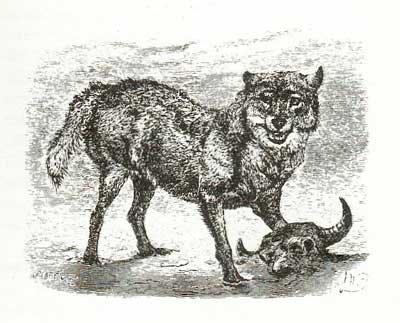
The Last Wolf?
One of the visitors to our site has told us about a MacQueen legend. She found it on a microfiche taken from a book published in the about Clan MacQueen, which is now sadly out of print. There were a couple of Clan MacQueen legends in this book. One was a love story where a MacQueen ran off with a lass from a clan that was promised to a lad of another clan.
The other was about a wolf that had been ravaging in Clan Chattan area and finally killed a young MacKintosh lass. The Chief of Clan Chattan called the clan levies out to search. First the levies were to report for a gathering then a search strategy would be made. The MacQueen was on route to the gathering coming through a gap in the mountains, when he came upon a wolf. There the wolf attacked him, he was forced to kill the wolf or be killed himself. He severed the head and took it with him to the gathering. He was many hours late when he finally entered the gathering due to his encounter with the wolf. The gathered clan levies jeered him and the Clan Chattan Chief admonished the MacQueen. The MacQueen said not one word, reached into his ruck and pulled out the wolf’s head in a flourish and tossed it at the chielf’s feet. The MacQueen turned and walked away and returned to his home.
As it happens, the book noted that this was the last recorded killing of a wolf on the Island of Alba and the MacQueen is supposedly credited with his kill. Pretty sad as the wolf’s head is on the coat of arms for the MacQueen’s.
The version I have read tells of hunter named MacQueen, of Pall-a-chrocain, on the river Findhorn, in 1743. MacQueen was a giant of a man, and renowned as a deer hunter. He died in 1797,
The land had become the hunting ground for a great black beast. The beast had already killed two children, and it was the Laird of MacIntosh who summond a meeting to discuss what was to be done. The men arrived at the meeting except MacQueen. Eventually he arrived.
“What kept you?” asked MacIntosh sarcastically.
“I brought him for you”, replied MacQueen, tossing out the severed head of the last wolf from under his plaid.
Has anyone else heard this legend?
The post MacQueen’s battle with the last Wolf appeared first on ScotClans | Scottish Clans.
]]>