The post List of Clans and Dates for Tattoo Clan Parade appeared first on ScotClans | Scottish Clans.
]]>Updated 16.1.17 1
Here is the latest list of what Clans are marching on what days for The Touch of Tartan.
There will be a series of Clan Parades that will take place each night of the Tattoo. This will be a major event within the Clan-themed events that will be happening throughout this year, backed by the Scottish Clan Event Fund.
There are 25 performances of the Edinburgh Tattoo. Tickets have been put aside for the clans to buy for each performance to make sure that as many tartan-clad clansmen, women and children attend as possible. Each Clan has seats allocated at the Tattoo.
For more information please contact info@clanchiefs.org.uk
| 1 | Thursday | 03-Aug | 9pm (Press Preview) | Macnab | Hay | |
| 2 | Friday | 04-Aug | 9pm | Arthur | Murray | |
| 3 | Saturday | 05-Aug | 7.30 pm | Gunn | Fraser | |
| 4 | Saturday | 05-Aug | 10.30 pm | Macdonald | Hunter | |
| 5 | Monday | 07-Aug | 9pm | MacMillan | Macaulay | |
| 6 | Tuesday | 08-Aug | 9pm | Macpherson | Ewing | |
| 7 | Wednesday | 09-Aug | 9pm | Wood | Broun | Maclean |
| 8 | Thursday | 10-Aug | 9pm | Henderson | Napier | |
| 9 | Friday | 11-Aug | 9pm | Moffat | Leslie | |
| 10 | Saturday | 12-Aug | 7.30 pm | Oliphant | Donnaichaidh (Robertson) | |
| 11 | Saturday | 12-Aug | 10.30 pm | Macneil | Marjoribanks | |
| 12 | Monday | 14-Aug | 9pm (BBC Filming) | Forbes | Wallace | |
| 13 | Tuesday | 15-Aug | 9pm (BBC Filming) | Mackenzie | Macleod | |
| 14 | Wednesday | 16-Aug | 9pm (BBC Filming) | Sinclair | Campbell | |
| 15 | Thursday | 17-Aug | 9pm | Borthwick | Skene | |
| 16 | Friday | 18-Aug | 9pm | Graham | Stewart | |
| 17 | Saturday | 19-Aug | 7.30 pm | Colquhoun | Matheson | |
| 18 | Saturday | 19-Aug | 10.30 pm | MacLea (Livingstone) | Currie | |
| 19 | Monday | 21-Aug | 9pm | MacGregor | Hannay | Buchanan |
| 20 | Tuesday | 22-Aug | 9pm | Kincaid | Maclaine | |
| 21 | Wednesday | 23-Aug | 9pm | Eliott | Agnew | |
| 22 | Thursday | 24-Aug | 9pm | Carmichael | MacThomas | |
| 23 | Friday | 25-Aug | 9pm | Bruce | Durie | |
| 24 | Saturday | 26-Aug | 7.30 pm | MacIntyre | Jardine | MacLennan |
| 25 | Saturday | 26-Aug | 10.30 pm | Cameron | Clan Ranald | Maclaren |
The post List of Clans and Dates for Tattoo Clan Parade appeared first on ScotClans | Scottish Clans.
]]>The post The Gallow Lee; The Monsters in the Mortar! appeared first on ScotClans | Scottish Clans.
]]> A few years ago I read James Robertson’s excellent book; ‘The Fanatic’. The book tells the story of an Edinburgh tour guide and how he becomes obsessed with the gruesome character he portrays. In one passage of the book the character mentions a place called the ‘Gallow Lee’ an area just beside Leith Walk in Edinburgh where all manner of executions were carried out. I recently came across some more information about this place and its real history was even more ghastly than the fictional account.
Leith Walk is a ribbon of Shops Café’s and bars that runs from the east end of the city centre to the historical port of Leith. The origin of this thoroughfare goes back to the time of Oliver Cromwell and his attempts to capture the city. In order to repel his attacks Sir Alexander Leslie in command of the Scottish Army created a ‘breastwork’; a chest high defensive earthwork wall as part of the city defences. This wall ran northwards from the city centre down to the shore. The defences were incredibly effective and Cromwell was held off till after his victory at Dunbar.
In time buildings began to spring up along the line of these defences, a gravel path was laid down and coaches would ferry people to and from the port. Leith Walk was born!
At around the halfway point, just where the traditional boundary where Edinburgh and Leith meet is an area called Shrubhill. This was a sandy hill on the western side of the road. Being outside the city boundaries this was where the city of Edinburgh disposed of its more troublesome problems!
In 17th century Edinburgh public executions were a common spectacle. But sometimes there was a problem where a person sentenced to execution was either too high profile or for one reason or another there was concern that the execution may cause unrest.In some cases the manner of execution was too much even by 17th century standards. Edinburgh chose the Gallow Lee in Shrubhill to deal with its dirty business. A permanent ‘gibbet’ was set up on the hill and on most days a body would be seen swinging from it. Witches were put to death, sometimes mercifully strangled before being burned and as the years progressed the ashes of the dead added to the sandy mound.
Covenanter executions were a frequent site too and there were a few high profile scandalous murderers who were put to death on the Gallow Lee: There was the ReverentJohn Kelloe for example; a respectable minister from Dunbar who had murdered his wife. Another very notable ‘customer’ was Norman Ross, a footman who had murdered his employer Lady Baillie, sister of the Laird of Wedderburn. For around two years his rotting corpse was left to swing on the gibbet being picked at by crows.
 Until halfway into the 18th century this ghastly landmark stood on the route into Edinburgh. However the draining of the Nor loch and the expansion of the city to the North led to a new period of development. Stone was quarried from nearby Craigleith quarry to build the fashionable ‘New town’ The builders looked for a source of sand to add to the lime mortar and hit upon the Gallow Lee. The owner of the land charged the builders to cart away the sand, containing the ashes and other remainsof thousands of victims. It is said that every penny he earned went straight to the local publicans – so much so that a public house (the halfway house) sprung up nearby!
Soon the sandy mound of the Gallow Lee was gone and all that remained was a hollow. As I write this the site of the Gallow Lee is once more waste ground, formerly occupied as a bus depot now awaiting redevelopment. But how many of those living in the trendy apartments in Edinburgh’s New town realise that the very fabric of their building is bound together with the remains of Witches, covenanters and criminals?
Sleep tight!
The post The Gallow Lee; The Monsters in the Mortar! appeared first on ScotClans | Scottish Clans.
]]>The post The Flodden 500 Service at St Giles, Edinburgh. appeared first on ScotClans | Scottish Clans.
]]>I’d like to continue by reproducing Alaistair Moffat’s reading given at St Giles. It was an excellent account of the battle and the aftermath.
—
FLODDEN ADDRESS. – ALISTAIR MOFFATWhen dawn broke on the morning of 10th September, 1513, the landscape of hell was revealed. On the gently undulating northern ridges of Branxton Hill more than 10,000 men lay dead or dying. In the midst of the carnage were the naked, plundered bodies of King James IV of Scotland, his half-brother, Alexander Stewart, Archbishop of St Andrews, George Hepburn, Bishop of the Isles, two abbots, nine great earls of Scotland, fourteen lords of parliament, innumerable knights and noblemen of lesser degree and many thousands of farmers, ploughmen, weavers and burgesses. It was the appalling aftermath of the battle of Flodden, the greatest military disaster in Scotland’s history.In the grey light of that terrible dawn, sentries posted around the captured Scottish cannon could make out where the brunt of battle had been joined. Below them, at the foot of the slope ran the trickle of a nameless burn now choked with slaughter, a wrack of mangled bodies, broken pikeshafts, shattered shields and everywhere blood and the sickening stench of death, vomit and voided bowels. Not all of the bodies were yet corpses. Through a long dark night the battlefield had not been a silent graveyard. Trapped under lifeless comrades, crippled, hamstrung or horribly mutilated, fatally wounded men still breathed. Bladed weapons rarely kill outright and they were often used to bludgeon men to their knees or into unconsciousness. In the churned mud of the battlefield some men will have lost their footing, fallen and been hacked at before they could get up. Many bled to death, maimed, lacerated by vicious cuts, screaming, fainting and screaming once more in their death agonies. Some will have been put out of their misery by parties of English soldiers scouring the field by torchlight for plunder, stripping the bodies, ransacking them for valuables. But other men will have lingered on inunspeakable pain, praying to their God, passing in and out of consciousness, slowly bleeding to death. The fury of the battle on Flodden field may have been stilled and awash with death and defeat. But all was not yet over. In an instant the plunderers and scavengers looked up and the sentries by the cannon stood to, frantically peering through the morning light. They could hear the rumbling thunder of hoofbeats – and then, suddenly, riders erupted over Barelees Rig. With 800 horsemen at his back, Lord Alexander Home galloped hard across the horrors of the battlefield and up the slopes of Branxton Hill. They had not come back to Flodden to rejoin a lost battle but to rescue their captured ordnance. And they very nearly succeeded. After a sharp skirmish, the English gunners managed to load and get off a volley at Home’s squadron, and they scattered.And so it ended. As the Border horsemen wheeled round and raced out of range, the remnants of the shattered Scottish army were limping across the Tweed at Coldstream. There was no organised pursuit. The victorious English army had taken heavy casualties and the Earl of Surrey and his captains were exhausted. In any event, their bloody work was done. The floors o’ the Forest were a’ wede awa, Flodden was a national disaster, a harbinger of lawlessness in the shape of the Border Reivers, the beginning of a long period of political uncertainty and the last medieval battle in the history of Britain. The last time a king was to die leading his army.It was also an epic. As two huge armies mustered and marched into history, extraordinary scenes had been witnessed. At Ellemford, high in the Lammermuirs above Duns, where sheep now graze on the flanks of the hills, where buzzards hang in the updrafts and an elegant bridge crosses the Whiteadder, King James IV and his army camped. Huge guns were trundled down the hill trails, dragged by oxen, and by 21st August 1513, almost 30,000 men had massed in this beautiful, now lonely valley. Two days later, the largest force ever to leave Scotland crossed the Tweed at the fords below Coldstream. They had declared war, they had entered the realm of the Tudors, of the ferociously ambitious and bull-like Henry VIII.Meanwhile Thomas Howard, Earl of Surrey, and the Bishop of Durham carried the standard of St Cuthbert before their battle-hardened troops. In front of the high altar of the great cathedral, Howard had watched the bishop bless the flag of the Haliwerfolc. The lands of Palatinate, of the Prince-Bishops of Durham, reached to the Tweed and beyond, and in an early definition of Englishness, their people were known as the Holy Man’s Folk, the Haliwerfolc. Ancient allegiances were being roused and summoned.Between 2nd and 9th September two vast armies circled each other in a small corner of North Northumberland, like heavyweight boxers looking for weaknesses or waiting for wrong moves. After the Earl of Surrey had despatched a herald, the Rouge Croix, it was finally agreed that battle would be joined on 9th September. Supplies for almost 70,000 men, horses and camp followers were running dangerously lowand neither army could remain in the field much longer.Realising the strength of the Scots’ entrenched position, Surrey led his men to the east, skirting Flodden Edge and staying out of artillery range. On the morning of the appointed day, he crossed the River Till and took up a position to the north of James IV’s army, barring any retreat to Scotland. And then, on a damp afternoon, the greatest battle ever fought between England and Scotland began.On the left wing of the Scottish host, the Highlanders led by the Earl of Huntly massed in formation with Lord Home’s Borderers, and in the moments before their chiefs roared the claideamh mor, the order to charge, the Gaelic-speaking warriors did something remarkable. They began to summon the army of the dead. They began the sloinneadh, the naming of the names of memory. To bolster his courage, each man began to recite his genealogy. Many waiting to charge could go back 20 generations. As if they were offering up the murmur of prayer, each man remembered why he had come to fight. Is mise mac Iain, mac Ruaridh, mac Domhnuill. I am the son of John, the son of Roderick, the son of Donald. And once their quiet voices stilled, the roar of the claideamh mor rent the air and they broke into the charge. With their broadswords and Lochaber axes, the Highlanders tore into the English ranks, the division led by Edmund Howard, They scattered and a rout was only prevented when Lord Dacre rode to the rescue with his English Borderers. As history rumbled across Branxton Hill, fortune appeared to be smiling on the Scots.At the same time, James IV was about to make a catastrophic decision, a crucial error of judgement. Instead of occupying an elevated position at the rear of his vast army, he chose to lead from the front. His division raced down Branxton Hill and as they reached the lower slopes and much softer ground, many men began to skid and lose their footing. This unsteadiness made it very difficult for them to control their long, 12 foot pikes. The wet ground made them charge out of formation, only engaging piecemeal with the solidly planted ranks of English billmen, With their shorter, more easily handled bills, they began to slice into James IV’s division. And as the men at the back saw the Scottish pikes go down, they hesitated and many of them ran, believing their king to be killed. By leading from the front, James was immediately submerged in the ruck of the fighting, only able to see what was directly in front of him, in no position to direct his forces. The result was disaster.The legacy of Flodden was most immediately and keenly felt in the Borders. North of the Tweed the memory of the battle is kept alive in the fabric of the midsummer common ridings. At Selkirk the ceremony of the casting of the colours is unique in Britain and it is based on the return of a soldier known as Fletcher, traditionally believed to have been the only one of sixty from the town to return. In his bloodied hand he held aloft, in a gesture of desolate defiance, a flag captured from the men of Macclesfield in Cheshire. Many Englishmen had fought and fallen at Flodden. And passions still run high. When the Mayor of Macclesfield recently wrote to the Provost of Selkirk asking for the return of the flag, he was told that he would need to come to the Borders and take it.Flodden is an immense story. Like Culloden in 1746, it signalled the end of a fading, feudal Scotland. And it also ushered in a century of lawlessness, the criminal society controlled by the appalling Border Reivers. Across Europe, renaissance, enlightenment and the reformation were changing lives, forming new ideas and creating the institutions of the modern world. In the first half of the 16th century, central authority broke down in a leaderless nation, and while swords and spears spoke in Scotland, the law was often silent.What is to be learned from all of that suffering and slaughter, from all of those ancient enmities? First that they are ancient and must remain firmly in the past. In 2014 Scotland faces a historic choice and whichever way the people of Scotland vote, it must be a signal lesson of Flodden that enmity, even ancient enmity can have no part. And it is to the credit of politicians on all sides of the argument that it has not reared an ugly head. But it might.And alongside that it mustmbe important to remember, to understand the visceral, bloody realities of whatmwent on on that terrible day 500 years ago. Lest we forget, Flodden should become a place of remembrance and of pilgrimage, a place where the uncomfortable lessons of history can be learned and never forgotten.Two weeks ago, on one of the countless beautiful evenings of this glorious summer, I drove over to Branxton. As the sun threw long shadows across the gently undulating fields, I tried to imagine the 10th of September, 1513, the distant roar of thousands of men, the screams, the fear and feral closeness of hand-to-hand fighting whenmen can smell the breath, smell the sweat of men grunting pushing, hacking, swearing at them, trying to kill them. In a Gaelic phrase, I tried to listen for the music of the thing as it happened. I tried to listen to the slow, sad music of our history. I hope that many in Scotland and England hear it too.
Prior to the sir Malcolm MacGregor (who has admitted that try as he might he can not find a single MacGregor involved in the battle) researched the casualty lists. The following names are clans and families who are known to have fought at Flodden along with notable people who fell in the battle:
From the Highland Clans:
Campbell, Erskine, Fraser, Gordon, Graham, Guthrie, Haldane, Hay, Keith, Leslie, Lindsay, Macaulay, Macfarlane, Mackay, Maclean, Macnab, Menteith, Moncreiff, Moray, Murray, Ogilvy, Oliphant, Ramsay, Rattray, Ross, Ruthven, Seton, Sinclair, Stewart, Forbes, Forsyth, Grant, MacKenzie, MacNaughton, Ross, Skene, Buchanan Of Leny, MacDonald
The Lowland and Border Clans and Families:
Adair, Abercromby, Adam, Anstruther, Baillie, Baird, Balfour, Barclay, Blackadder, Bonar, Boswell, Carnegie, Cathcart, Cleland, Cockburn, Colville, Craig, Crauford, Crichton, Cunningham, Dunbar, Dundas, Edmonstone Of Duntreath, Elphinstone, Fotheringham, Gray, Grierson, Haig, St.Clair Of Roslin, Henderson, Hepburne, Herries, Home, Hoppringle, Houston, Lauder, Liddel, Lockhart, Lumsden, Lyon, Masterson, Maitland, Maule, Maxtone, Maxwell, Melville, Muirhead, Mure, Napier, Rollo, Sempill, Somerville, Spottiswood, Stewart Of Traquair, Allardice, Ballingall, Kerr, Colville, Crammond, Eliott, Ferguson, Fleming, Foreman (Standard Bearer), Inche, Inglis, Johnstone, Kirkcaldy, Knolis, Logan, Montgomery, Morton, Muir, Nelson Of Madinpap, Otterbrun, Pitcarin, Pringle, Reid, Rorison, Savage, Scott, Seton, Tunstall, Vallanche, Wood Of Raik, Kennedy, Douglas, Hamilton, Livingstone, Wemyss, Wallace, MacLellan, MacCulloch, MacDowall
Chief Or Notable Head Of House/Family
King James IV, Archbishop Of St.Andrews (King’s Son), Earl Of Morton ( Grandson Of James 1), Earl Of Glencairn, Douglas Of Drumlanrig, Sir James Dunbar, Dundas, Lord Elphinstone, Lord Erskine, Earl Of Huntly, Earl Of Montrose, Sir Alexander Guthrie, Haig Of Bemersyde, Haldane Of Gleneagles, Earl Of Errol, Earl Of Bothwell, Sir William Keith, Earl Of Cassilis, Earl Of Rothes, Earl Of Crawford, MacDowal, Earl Of Garthland, MacFarlane Of Arrochar, Hector MacLean Of Duart, Maxwell Lord Of Carlaverock, Sir John Moncreiffe Of That Ilk, Moray Of Abercairney, Ramsay Of Dalhousie, Rattray Of That Ilk, Rollo Of Duncrub, Master Of Ruthven, Lord Sempill, Lord Seton, Earl Of Caithness, Earl Of Atholl, Earl Of Lennox, Lord Darnley, Master Of Angus, Anstruther Of That Ilk, Ballingall Of That Ilk, Master Of Eliott, Lord Forbes, Master Of Lovat, Sir Alexander Gordon Of Lochinvar, Sir Alexander Gordon Of Knockenshene, Grant Of Freuchie, John Henderson Of Fordell, Lord Alexander Home, Sir Patrick Houston Of That Ilk, William Johnstone Of That Ilk, Lord Keith, Lord Lorn, Lyon (Sons Of Lord Glamis), MacKenzie Of Kintail, Sir Alexander MacNaughton Of That Ilk, Andrew Pitcairn Of Pitcairn And 7 Sons, Lord Ross, William Ruthven Of That Ilk, Sir Walter Scott Of Buccleuch, Alexander Skene Of That Ilk, Sir David Wemyss, Earl Of Argyll, Lord Kinnaird, Master Of Cathcart, MacDonald Of Lochalsh.
—–
 The St Giles Service…
Just over 40 clan chiefs attended the St Giles service. At the end of the service they mustered for a photograph on the steps. To help you identify who was there we have been given a sketch with a key to the names:
1. Sir Walter Riddell of Riddell 2. The Hon. Elizabeth Fairbairn 3. Madam Pauline Hunter of Hunterston 4. Sir David Bannerman of Elsick 5. Lord Polwarth 6. Andrew Wallace Younger of that Ilk 7. Andrew Dewar Durie of Durie CBE 8. Michael Ancram, Marquess of Lothian 9. Andrew MacThomas of Finegand 10. Earl of Dundee 11. David Campbell of Strachur 12. Roderick Macneil of Barra 13. Sir James McGrigor 14. Earl of Eglinton and Winton 15. Professor David Hannay of Kirkdale and of that Ilk 16. Henry Trotter Younger of Charterhall 17. John MacArthur of that Ilk 18. Duncan Paisley of Westerlea 19. Richard Carmichael of Carmichael 20. Earl of Caithness21. Earl of Lauderdale 22. The Hon. Alexander Leslie 23. Earl of Erroll 24. Lord Napier and Ettrick 25. Madam Arabella Kincaid of Kincaid 26. David Cranstoun of that Ilk 27. Jamie Macnab of Macnab 28. Earl of Wemyss and March 29. Sir Crispin Agnew of Lochnaw 30. The Hon. Kate Nicolson 31. Duke of Montrose 32. The Hon. Peregrine Moncreiffe of that Ilk 33. Martin Haldane of Gleneagles 34. Lord Sempill 35. Andrew Marjoribanks of that Ilk 36. Donald MacLaren of MacLaren 37. Duke of Hamilton 38. Field Marshal the Lord Guthrie of Craigiebank 39. Isla St Clair 40. Marquess of Ailsa 41. Madam Margaret Eliott of Redheugh 42. Sir Malcolm MacGregor of MacGregor 43. Lord Macdonald of Macdonald 44. Richard Oliphant of that Ilk
This image will help you identify the chiefs:

The post The Flodden 500 Service at St Giles, Edinburgh. appeared first on ScotClans | Scottish Clans.
]]>The post The Death March to Durham appeared first on ScotClans | Scottish Clans.
]]>
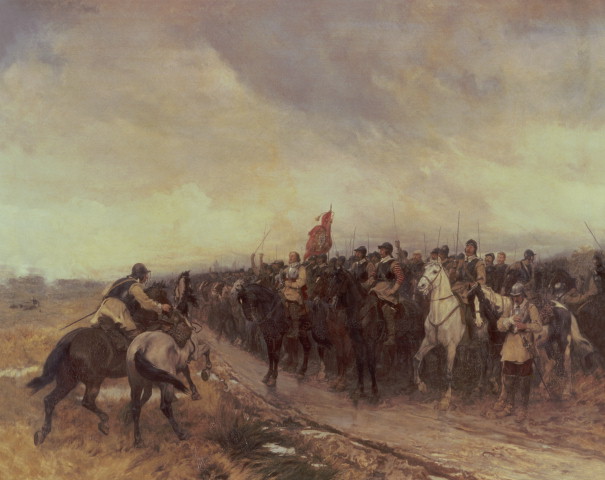
Cromwell at Dunbar
The aftermath of the 1650 Battle of Dunbar saw the grave mistreatment of 5,000 Scottish prisoners-of-war at the hands of the English Parliamentarian army. These battle-weary prisoners were starved of food and sleep, whilst at the same time force-marched over 100 miles to a makeshift prison in hellish conditions. Yet this is one of the least known stories of the civil war that raged across the whole of Britain, probably not surprising as it leaves such a black mark on England’s military history. ScotClans was contacted by a relative of one of the handful survivors of this terrible event which has led us to research the so named ‘Death March to Durham’.
One of the main outcomes of the Civil War was the execution of King Charles I by the Parliamentarian army for high treason. His exiled son, Charles II, was proclaimed King of Scotland on 5th February 1649 and this stance of support for the Royal Stewart House came as no surprise to the English parliament. However, they were concerned that the Scots may now try to force Charles II onto the throne in England, so Oliver Cromwell, not long back from fighting in Ireland, was sent by the parliament, with his 16,000 strong New Model Army to invade Scotland and head for Edinburgh. Cromwell’s army crossed the border at Berwick in the July of 1650.
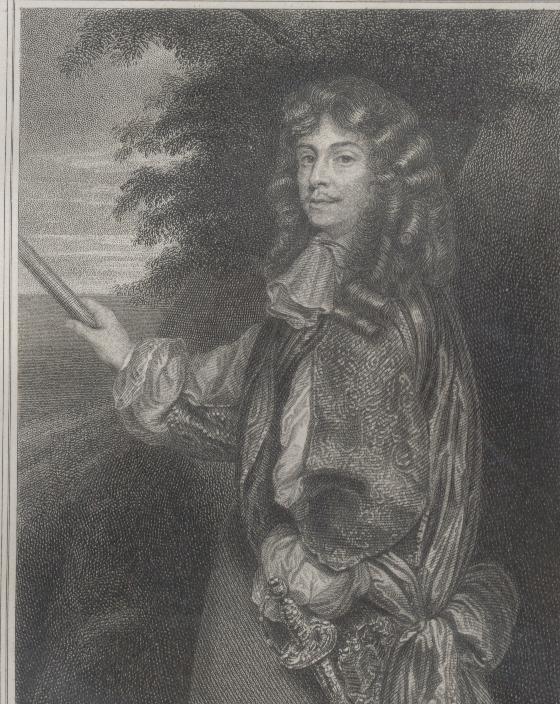
Scottish General, David Leslie
David Leslie was the general of the Scottish army in Edinburgh, he believed that it would strategically be better to not be drawn out and therefore forced into engaging the English head on. Instead he decided to keep his men within the strong fortifications of the capital whilst Cromwell’s men camped outside the walls. Leslie’s army undertook a scorched-earth approach and destroyed the lands between Edinburgh and England. This meant that the English army could not live off the border crops, and had to rely upon supplies coming from south of the border. The supplies would arrive by boats, which gained entry at the port of Dunbar, but these visits became less and less.
Cromwell’s army were suffering not just due to the lack of food but also a massive oversight which left the majority of men without tents. Only 100 tents were brought which meant only the privileged officers had shelter. The weather was relentless, soldiers had to brave the elements, attempting to sleep, they were vulnerable and exposed to the Scottish climate. On August 3rd due to these incredibly difficult conditions where his men faced inevitable death Oliver Cromwell made a plea to the Scots suggesting that it is the king who was really the enemy, rather than him and his army. Cromwell begged: ”I beseech you, in the bowels of Christ, think it possible you may be mistaken.” His plea fell on deaf ears.
The 1st of September 1650 was a wet and miserable day and Cromwell’s army had withdrawn back east along the coast past Musselburgh and to their supplies base of Dunbar. The English were ill, demoralised, and exhausted with fatigue. One English soldier wrote, that they had been reduced to “a poor, shattered, hungry, discouraged army,”.
Meanwhile the Scottish army were not without their own problems. The Covenanter ministers were causing a lot of trouble. It was the ministers who provided the funds which paid for the army. This meant the ministers had power over David Leslie’s troops. The plan had been that Leslie’s army were to attack Cromwell’s men on the 1st of September, while the English were practically defenceless, but the Covenanters would not allow them to do this simply because it was a Sunday. Many believe that had Leslie been given permission to launch an offensive on the 1st, then the outcome of the battle would have been a lot different.
The Covenanters had also strongly urged Charles II to condemn his mother’s Catholicism, and attack the counsel that his late father had kept. Charles refused to make any such extreme public statements, and this left the ministers furious. In their frustrated state they purged the Scottish army of more than 3,000 men, dismissing many of Leslie’s most experienced and professional soldiers, including many officers, for crimes such as loose morals, blasphemy, and swearing. This vindictive act left one of the Scottish colonels outraged and he stated that Leslie had been left with an army of “nothing but useless clerks and ministers’ sons, who have never seen a sword, much the less used one.”
David Leslie was under intense pressure from the Church of Scotland to end this situation as quickly as possible because the Covenanters were also funding the Scottish army. When Leslie saw Cromwell’s army retreat, it was decided that he too would move his army east. He reached Dunbar before Cromwell, and so was able to get his men to the advantageous position on the top of Doon Hill which was to the south-east of the town.
The English were in a very desperate situation. Many of the men were close to death, morale was low and it looked like defeat was imminent. Especially as the Scottish army now had 14,000 men, sitting in the superior position. History shows a very different outcome, the next 24 hours saw the fate of the doomed English receive the miracle that not only saved their lives but probably dictated the future events that shaped Scotland’s future.
David Leslie wanted to wait with his men positioned on top of the hill, and force Cromwell into the situation where to needed to either attack a stronger army up-hill, or stay put and starve to death. Unfortunately for Leslie, the rather foolish and overconfident Covenanter ministers were impatient and demanded that Leslie moved his men down Doon Hill, and prepare for battle. At 4 pm on the 2nd of September, Leslie repositioned his troops at the foot of Doon Hill. Upon seeing this Cromwell could not believe his luck, and quickly thought of a strategy to turn the tables on the Scots. Under the cover of darkness Cromwell repositioned a large proportion of his troops to face the Scottish right flank, waiting to attack just before sunrise. On the 3rd of September English forces launched a surprise attack on the left, and centre flanks of the Scottish troops. They were held by the greater numbers of the Scots; however the English on the right managed to power their way through the Scottish flank and cause significant damage. Seeing this carnage thousands of the Scottish troops fled the battlefield and the battle was effectively over. The English cavalry chased down the fleeing soldiers over an area of eight miles, killing or capturing most, in what became known sarcastically as the ‘Race of Dunbar’. It was reported, though highly doubtful, that Cromwell’s men suffered as few as 20 deaths, compared to 3,000 Scottish fatalities, not including another 10,000 captured. It is said that seeing the crumble of the Scottish army Oliver Cromwell was in fits of uncontrollable laughter.
Victory for Leslie’s men would have changed the course of British history, with this being the last realistic opportunity for Scotland to take control of its own political and religious destiny. Unfortunately the chance was ruined by, as one writer put it, “a committee of Presbyterian ministers blinkered by religious fanaticism.” Cromwell went on to capture Edinburgh relatively unopposed, though Edinburgh Castle held out until that December. When the news reached the Rump Parliament in England, they were so overjoyed with the outcome of the battle that a Dunbar medal was issued for both the officers and the men. This was the first ever military medal to be issued in Britain, and was not done again until the Battle of Waterloo in 1815.

The Dunbar Medal
With the captured soldiers, Cromwell simply could not cope with 10,000 men, so around half were let go because they were either too ill or too injured from the battle, and he really had no use for them. At dawn on the 4th of September the 5,000 soldiers considered too dangerous for release were force-marched south to Durham, an eight day, 118 mile journey under the control of Sir Arthur Haselrigge, which was to become known as the ‘Durham Death March’. For the first 28 miles the Scots were forced to walk non-stop throughout the night until they reached Berwick without having had anything to drink or eat. It was common practice for the Scottish army to fast for at least a couple of days before a battle in order to sharpen their reflexes, so for many, by the 5th of September they had probably not eaten anything since the 1st, and were starving. Some locals in towns that were passed by the marching prisoners would, at their own risk, pass the Scots bits of bread, the only drink they had was dirty rainwater from puddles at the side of the road. Some tried to escape, but most, if not all, were recaptured by the English and were killed straight away. High numbers of these men were falling very ill with dysentery spreading and many died en route to Durham. When Haselrigge reached Morpeth in Northumberland he placed the prisoners in a cabbage field where he noted that “they ate up raw cabbages, leaves and roots…They poisoned their bodies. As they were coming from thence to Newcastle, some died by the wayside.”
At Newcastle Haselrigge put the prisoners up for the night in St Nicholas’ Church, the largest that could be found, however more men died, and by the morning a further 500 were not able to walk anymore. The conditions of the journey were so horrendous that by the 11th of September when the prisoners reached Durham, of the 5,000 who started the march, only 3,000 were still alive, with most dying of illness, starvation or exhaustion. Sadly for the ones that were still alive things were not about to get any better.
Durham Cathedral, founded in 1093, was used as a makeshift prison for the Scottish soldiers. The conditions were once again awful for the Scottish prisoners. They were deprived of any food, water, fuel or adequate bedding, and were treated in a harsh and inhumane manner. It is said that the jailers at Durham Cathedral blackmailed the prisoners, only giving them food or coal in exchange for whatever valuable possessions that they had. This led to the tombs within the cathedral being opened and desecrated, with the prisoners desperately looking for anything that could be used to trade. In order to keep warm, the Scots completely stripped the cathedral of whatever woodwork they could get their hands on to burn, with the notable exception of Prior Castell’s Clock in the South Transept, which is believed to have survived only because it has a thistle carved into it. The clock is still in Durham Cathedral to this day.
Despite these appalling conditions, Sir Arthur Haselrigge wrote that the prisoners were being fed good meat; the injured and the ill being cared for; and they were treated better than any prisoner has ever been treated in England. It is generally accepted though by historians that Haselrigge, who was in Newcastle at this time and not in Durham, genuinely believed that this was the case.
With next to no food, water, or heat it is said that the Scots were dying at an average of 30-a-day, though with some days the figure was around 100. By the 31st of October of the 5,000 that had started the “death march” to Durham, over 3,500 died due to the disgusting and unimaginable way that they were treated. For the 1,600 that died in Durham Cathedral none were treated any better by the English in death than they had been in life. All were thrown into a mass grave, buried without coffins, without a Christian service, and without any form of marker to acknowledge their presence. Of those who survived 900 were sold as slaves and sent off to the colonies in the New World, primarily to Virginia, Massachusetts, or Barbados, whilst the remaining 500 were sent off the following spring to fight in the French army.
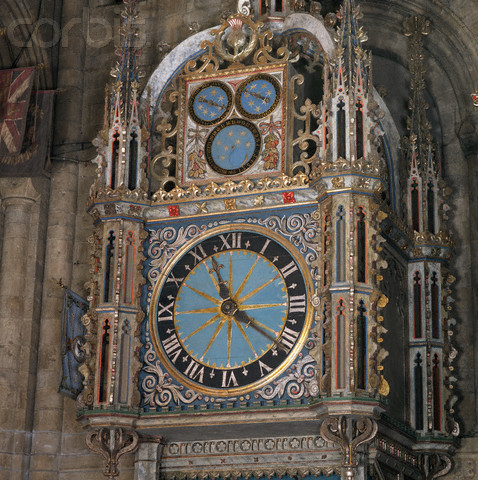
The clock in Durham Cathedral
The mass grave for the Scottish soldiers was not discovered for nearly 300 years when, in 1946, workmen installing the cathedral with a new heating system came across the bodies.
An ongoing campaign is in place to get Durham Cathedral to acknowledge the presence of the Scottish prisoners as well as the inexcusable treatment and deaths they suffered by putting up a memorial, and giving the grave a proper Christian blessing.
The post The Death March to Durham appeared first on ScotClans | Scottish Clans.
]]>