The post The Flodden 500 Service at St Giles, Edinburgh. appeared first on ScotClans | Scottish Clans.
]]>I’d like to continue by reproducing Alaistair Moffat’s reading given at St Giles. It was an excellent account of the battle and the aftermath.
—
FLODDEN ADDRESS. – ALISTAIR MOFFATWhen dawn broke on the morning of 10th September, 1513, the landscape of hell was revealed. On the gently undulating northern ridges of Branxton Hill more than 10,000 men lay dead or dying. In the midst of the carnage were the naked, plundered bodies of King James IV of Scotland, his half-brother, Alexander Stewart, Archbishop of St Andrews, George Hepburn, Bishop of the Isles, two abbots, nine great earls of Scotland, fourteen lords of parliament, innumerable knights and noblemen of lesser degree and many thousands of farmers, ploughmen, weavers and burgesses. It was the appalling aftermath of the battle of Flodden, the greatest military disaster in Scotland’s history.In the grey light of that terrible dawn, sentries posted around the captured Scottish cannon could make out where the brunt of battle had been joined. Below them, at the foot of the slope ran the trickle of a nameless burn now choked with slaughter, a wrack of mangled bodies, broken pikeshafts, shattered shields and everywhere blood and the sickening stench of death, vomit and voided bowels. Not all of the bodies were yet corpses. Through a long dark night the battlefield had not been a silent graveyard. Trapped under lifeless comrades, crippled, hamstrung or horribly mutilated, fatally wounded men still breathed. Bladed weapons rarely kill outright and they were often used to bludgeon men to their knees or into unconsciousness. In the churned mud of the battlefield some men will have lost their footing, fallen and been hacked at before they could get up. Many bled to death, maimed, lacerated by vicious cuts, screaming, fainting and screaming once more in their death agonies. Some will have been put out of their misery by parties of English soldiers scouring the field by torchlight for plunder, stripping the bodies, ransacking them for valuables. But other men will have lingered on inunspeakable pain, praying to their God, passing in and out of consciousness, slowly bleeding to death. The fury of the battle on Flodden field may have been stilled and awash with death and defeat. But all was not yet over. In an instant the plunderers and scavengers looked up and the sentries by the cannon stood to, frantically peering through the morning light. They could hear the rumbling thunder of hoofbeats – and then, suddenly, riders erupted over Barelees Rig. With 800 horsemen at his back, Lord Alexander Home galloped hard across the horrors of the battlefield and up the slopes of Branxton Hill. They had not come back to Flodden to rejoin a lost battle but to rescue their captured ordnance. And they very nearly succeeded. After a sharp skirmish, the English gunners managed to load and get off a volley at Home’s squadron, and they scattered.And so it ended. As the Border horsemen wheeled round and raced out of range, the remnants of the shattered Scottish army were limping across the Tweed at Coldstream. There was no organised pursuit. The victorious English army had taken heavy casualties and the Earl of Surrey and his captains were exhausted. In any event, their bloody work was done. The floors o’ the Forest were a’ wede awa, Flodden was a national disaster, a harbinger of lawlessness in the shape of the Border Reivers, the beginning of a long period of political uncertainty and the last medieval battle in the history of Britain. The last time a king was to die leading his army.It was also an epic. As two huge armies mustered and marched into history, extraordinary scenes had been witnessed. At Ellemford, high in the Lammermuirs above Duns, where sheep now graze on the flanks of the hills, where buzzards hang in the updrafts and an elegant bridge crosses the Whiteadder, King James IV and his army camped. Huge guns were trundled down the hill trails, dragged by oxen, and by 21st August 1513, almost 30,000 men had massed in this beautiful, now lonely valley. Two days later, the largest force ever to leave Scotland crossed the Tweed at the fords below Coldstream. They had declared war, they had entered the realm of the Tudors, of the ferociously ambitious and bull-like Henry VIII.Meanwhile Thomas Howard, Earl of Surrey, and the Bishop of Durham carried the standard of St Cuthbert before their battle-hardened troops. In front of the high altar of the great cathedral, Howard had watched the bishop bless the flag of the Haliwerfolc. The lands of Palatinate, of the Prince-Bishops of Durham, reached to the Tweed and beyond, and in an early definition of Englishness, their people were known as the Holy Man’s Folk, the Haliwerfolc. Ancient allegiances were being roused and summoned.Between 2nd and 9th September two vast armies circled each other in a small corner of North Northumberland, like heavyweight boxers looking for weaknesses or waiting for wrong moves. After the Earl of Surrey had despatched a herald, the Rouge Croix, it was finally agreed that battle would be joined on 9th September. Supplies for almost 70,000 men, horses and camp followers were running dangerously lowand neither army could remain in the field much longer.Realising the strength of the Scots’ entrenched position, Surrey led his men to the east, skirting Flodden Edge and staying out of artillery range. On the morning of the appointed day, he crossed the River Till and took up a position to the north of James IV’s army, barring any retreat to Scotland. And then, on a damp afternoon, the greatest battle ever fought between England and Scotland began.On the left wing of the Scottish host, the Highlanders led by the Earl of Huntly massed in formation with Lord Home’s Borderers, and in the moments before their chiefs roared the claideamh mor, the order to charge, the Gaelic-speaking warriors did something remarkable. They began to summon the army of the dead. They began the sloinneadh, the naming of the names of memory. To bolster his courage, each man began to recite his genealogy. Many waiting to charge could go back 20 generations. As if they were offering up the murmur of prayer, each man remembered why he had come to fight. Is mise mac Iain, mac Ruaridh, mac Domhnuill. I am the son of John, the son of Roderick, the son of Donald. And once their quiet voices stilled, the roar of the claideamh mor rent the air and they broke into the charge. With their broadswords and Lochaber axes, the Highlanders tore into the English ranks, the division led by Edmund Howard, They scattered and a rout was only prevented when Lord Dacre rode to the rescue with his English Borderers. As history rumbled across Branxton Hill, fortune appeared to be smiling on the Scots.At the same time, James IV was about to make a catastrophic decision, a crucial error of judgement. Instead of occupying an elevated position at the rear of his vast army, he chose to lead from the front. His division raced down Branxton Hill and as they reached the lower slopes and much softer ground, many men began to skid and lose their footing. This unsteadiness made it very difficult for them to control their long, 12 foot pikes. The wet ground made them charge out of formation, only engaging piecemeal with the solidly planted ranks of English billmen, With their shorter, more easily handled bills, they began to slice into James IV’s division. And as the men at the back saw the Scottish pikes go down, they hesitated and many of them ran, believing their king to be killed. By leading from the front, James was immediately submerged in the ruck of the fighting, only able to see what was directly in front of him, in no position to direct his forces. The result was disaster.The legacy of Flodden was most immediately and keenly felt in the Borders. North of the Tweed the memory of the battle is kept alive in the fabric of the midsummer common ridings. At Selkirk the ceremony of the casting of the colours is unique in Britain and it is based on the return of a soldier known as Fletcher, traditionally believed to have been the only one of sixty from the town to return. In his bloodied hand he held aloft, in a gesture of desolate defiance, a flag captured from the men of Macclesfield in Cheshire. Many Englishmen had fought and fallen at Flodden. And passions still run high. When the Mayor of Macclesfield recently wrote to the Provost of Selkirk asking for the return of the flag, he was told that he would need to come to the Borders and take it.Flodden is an immense story. Like Culloden in 1746, it signalled the end of a fading, feudal Scotland. And it also ushered in a century of lawlessness, the criminal society controlled by the appalling Border Reivers. Across Europe, renaissance, enlightenment and the reformation were changing lives, forming new ideas and creating the institutions of the modern world. In the first half of the 16th century, central authority broke down in a leaderless nation, and while swords and spears spoke in Scotland, the law was often silent.What is to be learned from all of that suffering and slaughter, from all of those ancient enmities? First that they are ancient and must remain firmly in the past. In 2014 Scotland faces a historic choice and whichever way the people of Scotland vote, it must be a signal lesson of Flodden that enmity, even ancient enmity can have no part. And it is to the credit of politicians on all sides of the argument that it has not reared an ugly head. But it might.And alongside that it mustmbe important to remember, to understand the visceral, bloody realities of whatmwent on on that terrible day 500 years ago. Lest we forget, Flodden should become a place of remembrance and of pilgrimage, a place where the uncomfortable lessons of history can be learned and never forgotten.Two weeks ago, on one of the countless beautiful evenings of this glorious summer, I drove over to Branxton. As the sun threw long shadows across the gently undulating fields, I tried to imagine the 10th of September, 1513, the distant roar of thousands of men, the screams, the fear and feral closeness of hand-to-hand fighting whenmen can smell the breath, smell the sweat of men grunting pushing, hacking, swearing at them, trying to kill them. In a Gaelic phrase, I tried to listen for the music of the thing as it happened. I tried to listen to the slow, sad music of our history. I hope that many in Scotland and England hear it too.
Prior to the sir Malcolm MacGregor (who has admitted that try as he might he can not find a single MacGregor involved in the battle) researched the casualty lists. The following names are clans and families who are known to have fought at Flodden along with notable people who fell in the battle:
From the Highland Clans:
Campbell, Erskine, Fraser, Gordon, Graham, Guthrie, Haldane, Hay, Keith, Leslie, Lindsay, Macaulay, Macfarlane, Mackay, Maclean, Macnab, Menteith, Moncreiff, Moray, Murray, Ogilvy, Oliphant, Ramsay, Rattray, Ross, Ruthven, Seton, Sinclair, Stewart, Forbes, Forsyth, Grant, MacKenzie, MacNaughton, Ross, Skene, Buchanan Of Leny, MacDonald
The Lowland and Border Clans and Families:
Adair, Abercromby, Adam, Anstruther, Baillie, Baird, Balfour, Barclay, Blackadder, Bonar, Boswell, Carnegie, Cathcart, Cleland, Cockburn, Colville, Craig, Crauford, Crichton, Cunningham, Dunbar, Dundas, Edmonstone Of Duntreath, Elphinstone, Fotheringham, Gray, Grierson, Haig, St.Clair Of Roslin, Henderson, Hepburne, Herries, Home, Hoppringle, Houston, Lauder, Liddel, Lockhart, Lumsden, Lyon, Masterson, Maitland, Maule, Maxtone, Maxwell, Melville, Muirhead, Mure, Napier, Rollo, Sempill, Somerville, Spottiswood, Stewart Of Traquair, Allardice, Ballingall, Kerr, Colville, Crammond, Eliott, Ferguson, Fleming, Foreman (Standard Bearer), Inche, Inglis, Johnstone, Kirkcaldy, Knolis, Logan, Montgomery, Morton, Muir, Nelson Of Madinpap, Otterbrun, Pitcarin, Pringle, Reid, Rorison, Savage, Scott, Seton, Tunstall, Vallanche, Wood Of Raik, Kennedy, Douglas, Hamilton, Livingstone, Wemyss, Wallace, MacLellan, MacCulloch, MacDowall
Chief Or Notable Head Of House/Family
King James IV, Archbishop Of St.Andrews (King’s Son), Earl Of Morton ( Grandson Of James 1), Earl Of Glencairn, Douglas Of Drumlanrig, Sir James Dunbar, Dundas, Lord Elphinstone, Lord Erskine, Earl Of Huntly, Earl Of Montrose, Sir Alexander Guthrie, Haig Of Bemersyde, Haldane Of Gleneagles, Earl Of Errol, Earl Of Bothwell, Sir William Keith, Earl Of Cassilis, Earl Of Rothes, Earl Of Crawford, MacDowal, Earl Of Garthland, MacFarlane Of Arrochar, Hector MacLean Of Duart, Maxwell Lord Of Carlaverock, Sir John Moncreiffe Of That Ilk, Moray Of Abercairney, Ramsay Of Dalhousie, Rattray Of That Ilk, Rollo Of Duncrub, Master Of Ruthven, Lord Sempill, Lord Seton, Earl Of Caithness, Earl Of Atholl, Earl Of Lennox, Lord Darnley, Master Of Angus, Anstruther Of That Ilk, Ballingall Of That Ilk, Master Of Eliott, Lord Forbes, Master Of Lovat, Sir Alexander Gordon Of Lochinvar, Sir Alexander Gordon Of Knockenshene, Grant Of Freuchie, John Henderson Of Fordell, Lord Alexander Home, Sir Patrick Houston Of That Ilk, William Johnstone Of That Ilk, Lord Keith, Lord Lorn, Lyon (Sons Of Lord Glamis), MacKenzie Of Kintail, Sir Alexander MacNaughton Of That Ilk, Andrew Pitcairn Of Pitcairn And 7 Sons, Lord Ross, William Ruthven Of That Ilk, Sir Walter Scott Of Buccleuch, Alexander Skene Of That Ilk, Sir David Wemyss, Earl Of Argyll, Lord Kinnaird, Master Of Cathcart, MacDonald Of Lochalsh.
—–
 The St Giles Service…
Just over 40 clan chiefs attended the St Giles service. At the end of the service they mustered for a photograph on the steps. To help you identify who was there we have been given a sketch with a key to the names:
1. Sir Walter Riddell of Riddell 2. The Hon. Elizabeth Fairbairn 3. Madam Pauline Hunter of Hunterston 4. Sir David Bannerman of Elsick 5. Lord Polwarth 6. Andrew Wallace Younger of that Ilk 7. Andrew Dewar Durie of Durie CBE 8. Michael Ancram, Marquess of Lothian 9. Andrew MacThomas of Finegand 10. Earl of Dundee 11. David Campbell of Strachur 12. Roderick Macneil of Barra 13. Sir James McGrigor 14. Earl of Eglinton and Winton 15. Professor David Hannay of Kirkdale and of that Ilk 16. Henry Trotter Younger of Charterhall 17. John MacArthur of that Ilk 18. Duncan Paisley of Westerlea 19. Richard Carmichael of Carmichael 20. Earl of Caithness21. Earl of Lauderdale 22. The Hon. Alexander Leslie 23. Earl of Erroll 24. Lord Napier and Ettrick 25. Madam Arabella Kincaid of Kincaid 26. David Cranstoun of that Ilk 27. Jamie Macnab of Macnab 28. Earl of Wemyss and March 29. Sir Crispin Agnew of Lochnaw 30. The Hon. Kate Nicolson 31. Duke of Montrose 32. The Hon. Peregrine Moncreiffe of that Ilk 33. Martin Haldane of Gleneagles 34. Lord Sempill 35. Andrew Marjoribanks of that Ilk 36. Donald MacLaren of MacLaren 37. Duke of Hamilton 38. Field Marshal the Lord Guthrie of Craigiebank 39. Isla St Clair 40. Marquess of Ailsa 41. Madam Margaret Eliott of Redheugh 42. Sir Malcolm MacGregor of MacGregor 43. Lord Macdonald of Macdonald 44. Richard Oliphant of that Ilk
This image will help you identify the chiefs:

The post The Flodden 500 Service at St Giles, Edinburgh. appeared first on ScotClans | Scottish Clans.
]]>The post Clan Douglas and The Battle of Ancrum Moor appeared first on ScotClans | Scottish Clans.
]]>
Archibald Douglas, 6th Earl of Angus
In 1545 the aptly titled War of Rough Wooing was in full, ruthless swing. In order to gain Scotland’s allegiance to England, King Henry VIII employed the curious tactic of scorching and pillaging Scotland into submission. In retaliation, approximately 2,500 Scottish soldiers were raised by the Chief of Clan Douglas, Archibald Douglas 6th Earl of Angus, with help from James Hamilton, 2nd Earl of Arran. They gathered just a few miles from the Scottish border town of Jedburgh, confronting 5,200 English soldiers on 27 February 1545 at the Battle of Ancrum Moor.
Towards the end of Henry VIII’s reign, the King sought to unify the Kingdoms of England and Scotland through the arranged marriage of his son Edward, and Mary, Queen of Scots (aged one at the time). After much discussion and dissension, the Scottish Parliament under the Earl of Arran (Queen Mary’s regent) rejected Henry’s proposal, and instead offered the infant’s hand to the French, thus renewing the ‘Auld Alliance’.
Henry reacted rather badly to the news, and declared war against Scotland. Major hostilities broke out in Edinburgh in 1544, where Henry ordered the Earl of Hertford to burn Edinburgh, Leith and much of the border towns to the ground. The burning and pillaging of the borders continued into 1545, led by Sir Ralph Eure. Douglas’s estate had suffered heavily during the attacks – his family tombs at Melrose Abbey were vandalised by Eure, and Henry VIII had even given Eure some of Douglas’s land in the borders. The attacks forged an unlikely alliance between Douglas and Arran who had been bitter rivals for many years, even fighting a pitched battle in the streets of Edinburgh in 1520. Douglas was also joined at the battlefield by Scott of Buccleuch, whose lands had also been destroyed in the attacks.
The English command numbered approximately 5,200 and was made up of 3000 German and Spanish mercenaries, 1,500 English borderers and 700 disaffected Scots. As they settled into their encampment under Gersit Law, a small Scottish force made an attack then retreated. The English gave chase over the hill, where they met the entirety of the Scots force made up of predominantly Douglas men. Gleefully hidden on the far side of the hill, the Scots, although largely outnumbered, had the advantage of surprise and of the setting sun which was behind them. The English front line cracked under the might of the Scots pikemen, never being able to secure enough solid ground on the hill to launch a substantial attack. This sent the army into disarray, scattering the troops into the hostile countryside.
The English lost 800 men, including Eure, to the Scots two casualties. 1000 English men were also taken prisoner. Scotland’s incredibly decisive victory was enough to cool Henry VIII’s wrath for the meantime, however the war waged on until shortly after the death of the King in 1547. Local lore also says that a Lady Lilliard took part in the battle to avenge the death of her lover who was killed by English troops. Lilliard fought until dying of her wounds on the battle field, where an inscribed stone now lies in memory of her.
Fair maiden Lilliard
lies under this stane
little was her stature
but muckle was her fame
upon the English loons
she laid monie thumps
and when her legs were cuttit off
she fought upon her stumps.
In 2012 the Scottish Government announced the battle site at Ancrum Moor was to be protected under the Scottish Historic Environment Policy 2009.
Quick Links to Clan Douglas Products from The Clan Shop
- Douglas Tartan Tie
- Douglas Tartan Pocket Square Handkerchief
- Douglas Tartan Scarves
- Douglas Tartan Kilts
- Douglas Clan Crest Badge
- Douglas Clan Crest Mug
- Douglas Clan Crest T-Shirts
- Douglas Clan Crest Belt Buckle
- Douglas Phone Covers
- Douglas Tartan
- Douglas Clan Crest Crystal Glasses
- Douglas Clan Crest Cufflinks
- Douglas Clan Crest Sgain Dubh
- Douglas Clan Crest Kilt Pin
- Douglas Clan Crest Plaques
The post Clan Douglas and The Battle of Ancrum Moor appeared first on ScotClans | Scottish Clans.
]]>The post Lady Malcolm Douglas-Hamilton, 1909-2013 appeared first on ScotClans | Scottish Clans.
]]>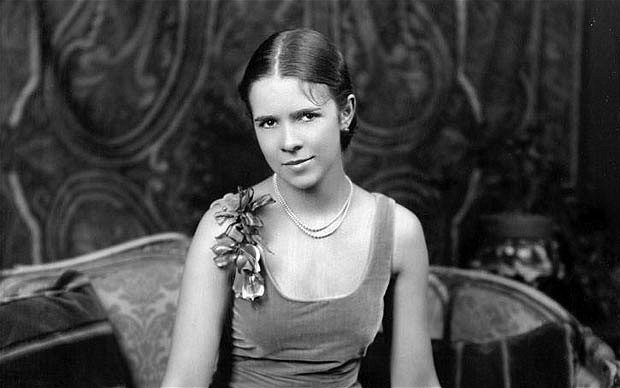
Lady Malcolm Douglas Hamilton
On January 14th of this year Lady Malcolm Douglas Hamilton died at the incredible age of 103.
Along with her husband, Lord Hamilton she helped set up the American Scottish Foundation which has over the years been a cornerstone in building relationships between Scotland and America.
Born in Cohasset, Massachusetts, to Major Nathaniel B Wales and his wife Enid Scarritt, Natalie Scarritt Wales was a quite remarkable woman; A New York socialite, more often that not seen in the pages of Vogue or society magazines. When war broke out she learned of the hardships of people in Britain during the blitz and called Winston Churchill to ask how she could help. His typically dry response was that the sailors on the Atlantic convoys could do with some warm balaclavas! In response to this she set up the ‘Bundles for Britain’ campaign. collecting warm woollens not only for the sailors but for victims of the Luftwaffe bombings of London and Coventry. The response to her campaign was huge and she was deluged by offers of support including armies of American ladies knitting for the British! As a result of this she was awarded an honorary CBE.
In 1951 she met Lord Douglas-Hamilton, son of the 13th Duke of Hamilton and a former Second World War Mosquito fighter pilot. He was already married to Pamela Bowes Lyon, a cousin of Queen Elizabeth, the Queen Mother but was divorced not long after meeting Natalie, she was clearly a very persuasive woman!
Initially the pair lived in London and Scotland and it was during this time they set up the ‘Highland Fund’ a philanthropic enterprise designed to offer loans to crofters, fisherman and other small highland based businesses. It is a testament to the Highland Fund that many small highland enterprises still going today were set up with loans from The Highland Fund.
In 1956 they moved to New York and set up The American Scottish Foundation. The aim of the foundation was to strengthen the historic ties between Scotland and the United States in all areas — educational, cultural, social, genealogical, philanthropic, scientific and economic. Over the years the foundation grew strong. Sadly Lord Malcolm was killed in a plane crash in 1964 but Lady Malcolm carried on the work of the foundation and was able to initiate Tartan Week and the New York Tartan Day parade.
Lady Malcolm was particularly enthusiastic about creating Scotland House, a special dream of Lord Malcolm’s, to be a central gathering place for American Scots, visiting Scots, students, people seeking their Scottish roots–a place for all. The first Scotland House was opened in the mid-70s at 124 East 39th Street by New York City Mayor Abraham Beame, and was an instant success. Lectures, movies, seminars, ceilidhs, dances and teas were held in a comfortable atmosphere with a large Scottish-American library, and Scottish products such as sweaters, tweeds, jewelry and china were for sale. A later Scotland House was on Fifth Avenue in the 80s and of course the present Scotland House at 575 Madison Avenue.
She is survived by her daughter Mimi, six grandchildren and 11 great grandchildren. Her other daughter, Natalie “Bubbles” Wales, who was wife of Lieutenant-Colonel George P Burnett of the Scots Guards, died in 1988.
The post Lady Malcolm Douglas-Hamilton, 1909-2013 appeared first on ScotClans | Scottish Clans.
]]>The post The man who escaped a hanging, a tale from Arran appeared first on ScotClans | Scottish Clans.
]]>A local craftsman built the ‘Heather House’ in 1984-85. It sits on the probable site of the Hanging Tree, where tradition tells us the castle stocks were set.
One story goes that a man with a deformed foot and using a crutch was to be hanged for stealing sheep. When the time came, time came, the man pleaded to be allowed to take three strides before entering the spirit world – one for the Father, the Son and the Holy Ghost. On being granted the request he took three long strides, threw away the crutch and kept going …

The post The man who escaped a hanging, a tale from Arran appeared first on ScotClans | Scottish Clans.
]]>The post The Tragedy of Mary Hamilton appeared first on ScotClans | Scottish Clans.
]]>“Yestre’en the Queen had fower Maries
The nicht she’ll hae but three
There was Mary Seton and Mary Beaton,
And Mary Car-Michael and me.”
It is believed that the ballad is fictional, and the four Marys come from the four ladies-in-waiting chosen by James V’s Queen, Mary of Guise, to be companions to Mary, Queen of Scots who succeeded her father at the age of just 6 days old. However, none of these woman were called Mary Hamilton; they were in fact Mary Beaton, Mary Fleming, Mary Livingston, and Mary Seton.

Mary Hamilton awaiting execution
Yet, there was a real Mary Hamilton, whose story and downfall is rather similar to that of the Mary Hamilton in the ballad.
Mary Hamilton was a Scottish lady-in-waiting to the Russian Empress Catherine I. She was a member of a Scottish Hamilton family who emigrated to Russia sometime in the sixteenth century, during the reign of Ivan the Terrible. It is believed that she was the daughter of a William Hamilton. Mary became a lady-in-waiting to Catherine I in 1713, and she attracted a lot of attention around the royal Russian court due to her beauty and love life, and it wasn’t long before she became the mistress of Peter the Great. But the Tsar wasn’t her only lover, she was also having an affair with Ivan Mikhailovich Orlov, an aide-de-camp to Tsar Peter. However, Orlov had another mistress, and when Mary found out, she tried to win him back by giving Orlov gifts which she had stolen from Catherine.
Over the years Mary became pregnant on at least three occasions, and had two abortions – one in 1715, apparently by consuming constipation medicine. However, she did have a secret birth two years later in 1717, but afterwards killed the baby by drowning it. That same year her lover Orlov was questioned over some missing documents, and during the interrogation he confessed to having had an affair with Mary, and claimed that she had an abortion.
A rumor was spread that the Empress, Catherine, had a slightly unorthodox skin care method: it was alleged that she would eat wax to make her skin pale. And Mary Hamilton was accused of starting this rumor by Avdotya Chernysheva; Ivan Orlov’s other lover. This, unsurprisingly, annoyed Catherine, and she demanded that Mary’s room was to be searched. Unfortunately for Mary, her room was where she kept several of the items she stole from the Empress, and when they were discovered Mary and Orlov were both arrested and imprisoned in the Fortress of Saint Petersburg. Whilst in prison Mary not only confessed to the theft, but she also admitted that she murdered her new born child, however, even under torture, she refused to testify against Orlov, despite the fact he had been quick to point fingers at her.
In the November of 1718, Mary Hamilton was sentenced to death for abortion, infanticide, and theft and slander of Empress Catherine. Catherine asked Peter to overrule the death sentence, but he refused. The Tsar did, however, promise Mary that the executioner would not touch her at all, meaning that she would be beheaded with a sword instead of an axe. Mary was executed on the 14th of March, 1719, dressed all in white.
Unfortunately for Mary Hamilton, her execution was not the last indignity that she would suffer. After the decapitation the Emperor went over and picked up Mary’s head and gave the gathered crowd a lecture about its anatomy before kissing it and then throwing it down. The Russian Academy of Science were given her head and they preserved it for at least the next 50 years.
The post The Tragedy of Mary Hamilton appeared first on ScotClans | Scottish Clans.
]]>The post Four Tales from Dalzell House appeared first on ScotClans | Scottish Clans.
]]>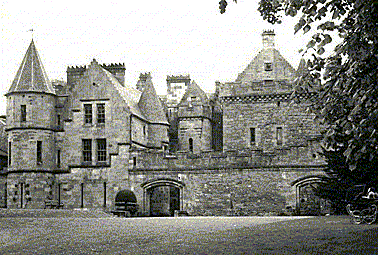
Dalzell House
The Green Lady
”A long time ago, a lonely lady lived in luxurious seclusion pining for a lost love. She spent her days among silks and satins, sighing softly as she sat before her mirror, her pale sad face gazing into its glassy depths. One day, as she stared unseeing, a cool breeze from the open window made her shiver. She pulled her robe closer around her shoulders, the pale green Chinese silk rustling and shimmering in the wan sunlight. Desolation swept over her and she glanced yet again at the small dark bottle that nestled innocently among the elegant perfume flasks on her dresser. She reached out with trembling fingers, the sleeve of her robe brushing against one of the tall flasks. It fell unnoticed to the floor, the heady scent of oriental perfume filling the air as she raised the tiny bottle to her lips…”
This could be the story behind the mystery of the Green Lady of Dalzell House? Could she have commited suicide? Perhaps she was murdered? Those who have encountered her have yet to discover her secret. And there have been many, among them a terrified schoolboy who babbled about ‘a green lady with bloodshot eyes’ floating towards him out of the paneling in the Pipers’ Gallery. Then there were the security guards who saw flashing lights, and heard the floorboards creak and the sound of footsteps. Their dogs barked into seemingly empty rooms and refused to cross the threshold. But one thing is sure… the Green Lady’s bedroom fills with the scent of a heady oriental perfume.
Dalzell House and the Covenanters’ Oak
The very sight of Dalzell House, now within the grounds of Dalzell Country Park, Motherwell, almost guarantees at least one ghostly inhabitant. The oldest part, the central peel tower, was built in the 15th century and it has 17th and 19th century additions. Until 1952, it was the seat of the Hamiltons of Dalzell, and as such had a turbulent and colourful history. During the persecution of Scottish Presbyterians – the Covenanters – in the 17th century, the grounds of Dalzell House provided a safe shelter for ‘conventicles’, open-air religious services. The Hamiltons were sympathetic to the Covenanters’ cause, and a huge oak about 50 metres from the house (see photo) is known as the Covenanters’ Oak. It is thought that, even at the time when it was spreading its protective branches over the Covenanting minister and his flock, it was already over 500 years old. Less than a century later it was to witness Bonnie Prince Charlie’s army in retreat from Derby in 1745, looting the parish as it passed through.
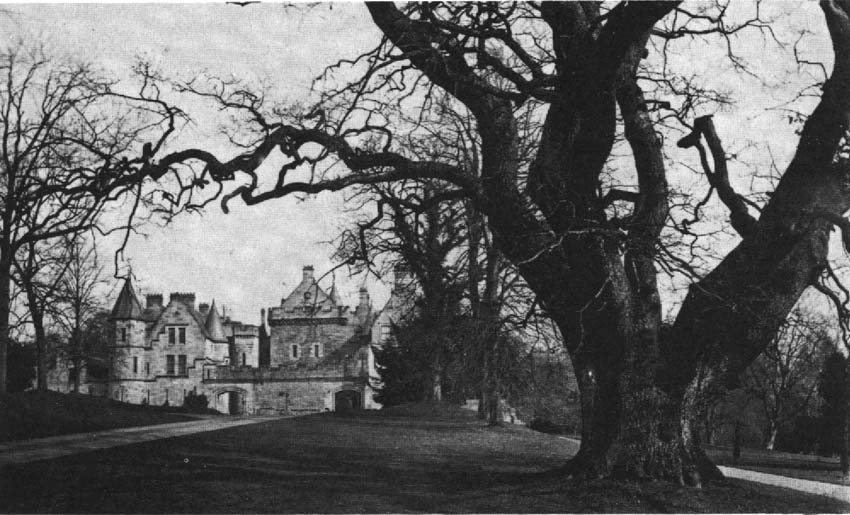
Dalzell House with Oak Tree
The White Lady
It was during the 19th century that Dalzell House became a truly stately home, in keeping with the social status of the Hamilton family at that time. Royal visits were frequent, and shooting and fishing parties were the order of the day. This is the period that the White Lady is thought to come from – a serving girl or housemaid who, abandonned by her lover, and finding herself ‘in the family way’, threw herself off the battlements into the rocky gorge of the Whinney Burn. Perhaps some aristocratic conscience was pricked by her desperate act.
The Grey Lady
The Great War of 1914-18 brought a change to the house. The North wing was converted into a military hospital and was soon filled with convalescing soldiers. The House’s third ghost, ‘The Grey Lady of the Dalzells’, haunts this wing, her grey appearance being the grey uniform of the army nurses of the time.
So the three ladies of Dalzell retain their secrets and, now that the hosue is now longer open to the public, they will probably continue to do so. But, if you should be in the grounds, listen for the sound of mocking ghostly laughter.
The post Four Tales from Dalzell House appeared first on ScotClans | Scottish Clans.
]]>The post ScotClans Visit the South West. appeared first on ScotClans | Scottish Clans.
]]>
Bothwell Castle
When we set off from Edinburgh it was 6am; still dark and cold. Our first stop was Bothwell Castle in South Lanarkshire, which we found in under an hour, with little hassle thanks to the very useful satnav we had in the car. Bothwell is a large castle standing on a steep hill beside the River Clyde, and was built sometime during the 13th century by descendents of Clan Murray. During the Scottish Wars of Independence Bothwell was captured by Edward I’s army, taking those inside prisoner. The castle eventually went back into the hands of the Murrays. Through the marriage of Joan Moray of Bothwell, in 1362, to Archibald ‘the Grim’ Douglas, the future 3rd Earl of Douglas, the castle changed hands from the Murrays to the Douglases. Bothwell Castle now lies in a ruined state, and is in the care of Historic Scotland, and open to the public.

Strathaven Castle
After taking a few pictures of the castle we headed west, with our next stop being Strathaven Castle. Night time was well and truly gone by the time we reached the town of Strathaven where the castle sits. It was still cold, and pretty misty allowing for some atmospheric shots of the ruined structure. In fact, the mist prevented us from finding the castle straight away, meaning we had to ask a local, who promptly told us that on any other day we would be able to see it, and that it was just a minute along the road. The castle was built around the middle of the 14th century by the Bairds, and between then and 1717 when the castle was finally abandoned, it passed through the hands of the Sinclairs, the Douglases, the Stewarts, and the Hamiltons, with Anne Hamilton, 3rd Duchess of Hamilton (1632-1716), being Strathaven’s last occupant.

Dean Castle, Kilmarnock
We continued west, where the mist was starting to lift and blue skies and sunshine starting to appear. Dean Castle in Kilmarnock was our third castle of the day. Built by the Boyds, the lords of Kilmarnock for over 400 years, in the 1350. The lands Dean Castle was built on was granted to Sir Robert Boyd in 1316 by Robert I for his services at the victorious Battle of Bannockburn in 1314. In 1975 the castle was passed into public ownership by John Scott-Ellis, 9th Lord Howard de Walden, and it is now kept by East Ayrshire Coucil, and is open to the public.
It was after 10 by the time Amanda and I reached Dundonald Castle, and even though it was late morning on this spring day, it was still pretty cold, with a lot of the frost yet to lift. As we drove down the road into the village of Dundonald (situated somewhere between Troon and Kilmarnock) we could already see the castle in the distance, which sits nicely on top of a hill looking over the village, and so we decided to get out of the car, walk back up the road a wee bit, and take some pictures. After getting a few snaps, and really noticing the strong smell of fresh, country air, we headed for the castle itself.

Dundonald Castle
The name Dundonald means ‘Donald’s Fort’, however it is not known who Donald was. It has been suggested by historians that he could have been one of the kings of the Kingdom of Strathclyde, as three of this name ruled. Dundonald Castle was built on the same grounds as where a wooden hill fort is believed to have once stood. It was constructed sometime after Robert II‘s accession to the throne in 1371, after the death of his uncle David II. Dundonald was used as a royal residence by Robert II, and it was where he died in 1390. It remained as a royal residence for the Stewart kings well into the 16th century.
Our next stop was not a castle this time, but instead the birthplace of Scotland’s national bard, Robert Burns, in Alloway, South Ayrshire. The cottage was built by William Burness, Robert’s father, in 1757, and was where he was born in 1759, as well as three of his siblings.

Burns’ Cottage from the back
Amanda and I went to the front of the building and took some pictures of the cottage, deciding not to go in because of the large number of places still on our list to visit within the day. After getting some pretty generic shots we visited a nice wee cafe opposite the cottage for some coffee before hitting the road again for our next destination. However, as we headed back to the car, the very nice man at the entrace desk for the cottage ushered us over and said that we could get in for free since we were just looking to take a few pictures for our site. So we decided to go along and we were glad we did. The cottage had a beautifully, well kept garden, even growing vegetables, and inside was an interesting and informative museum to the bard, letting us see what Burns’ early environment was actually like. We would highly recommend visiting it.

Amanda getting in my shot of the view across to Arran
Dunure Castle was next on the list, but not before a brief stop at the ‘magical’ Electric Brae. The journey to Dunure was great, with some beautiful views of the snow covered hills on Arran. It was still sunny and clear, and it was really starting to get warmer.

Dunure Castle and its Dovecot
Dunure Castle is a picturesque castle, sitting on a rocky bay overlooking the sea to the west. Built sometime in the 1200s, it was a seat for Clan Kennedy, and in use up until the 17th century. A famous visitor of the castle was Mary, Queen of Scots, who, in 1563, spent a few days there.

Culzean Castle
The next castle on our list was Culzean, just a few miles down the coast from Dunure. Much to our annoyance, and reluctance, we had to pay to just get onto the grounds for a few photos, but perhaps it was worth the money to see the lovely gardens and view out to sea. There is not as much history to Culzean Castle, having been built in the late 18th century by architect Robert Adam, under the instruction of the 10th Earl of Cassilis, David Kennedy.
Sawney Bean’s Cave, at Bannane Head, was somewhere that we were really looking forward to seeing, however it took us a wee bit longer to find the place than we had hoped. But we found it eventually, and it certainly was an interesting place. Sawney Bean was said to have been the head of a family of cannibals living in this South Ayrshire cave. Bean and his wife supposedly went about murdering and travelers they saw and ate their bodies.

Inside Sawney Bean’s Cave
They incestuously built up their family over a couple of generations, and it was claimed that they killed over 1,000 people. Once caught the family were said to have been executed in Edinburgh; the men allegedly having their limbs cut off, and they would bleed to death, whilst the women were burned alive. Yet, unfortunately this story could be just a tale since there are no records to support any of it, not even for the executions in Edinburgh.
The cave itself was still used as a place to live many centuries after the Beans supposedly stayed there. Up until the late seventies, or early eighties, a vagrant known as Snib Scott lived in the cave. Henry Ewing Torbet (1912-1983), as he was originally known, was a resident of the cave for many years, and it is said that people would often leave charity for him in form of either food or clothes, however, it’s claimed that he was too proud to accept it directly from them, and would only collect it once they had left. There is a memorial cairn near the caves entrace dedicated to Snib Scott.
Time was moving on quickly, and the sun was really starting to get low, so we tried to get down to the town of Leswalt to visit the Agnew graveyard as quickly as possible. We got to Leswalt quicker than we thought, but due to some poor directing by the passanger we took a wrong turn in the village and started heading in the wrong direction. However, this proved not to be too disastrous, and it allowed us to pay a quick visit to Lochnaw Castle, which wasn’t originally going to be part of our trip. The castle is a 16th century building, and a private residence, not open to the public – which means that Amanda and I probably shouldn’t have been their in the first place. We took a few shots and left down a very bumpy track, no doubt doing some serious damage to the cars suspension at the same time.

Agnew mausoleum at Leswalt
We got back to Leswalt pretty quickly, and in no time found the grave yard, taking some pictures of the resting places of some relatively important Agnews as the sun was getting lower and lower. And thanks to a friend on Flickr for telling us about the grave yard.
We were now in a race against the setting sun to try and get as much more into our day as a we possibly could. We decided to skip a few of the castles on our itinerary, and try our best to get to St. Ninian’s Chapel at Isle of Whithorn before it was too dark; and thankfully we did.

St. Ninian’s Chapel
The chapel is now in ruins, but it is said that the remains belong to the chapel that was built sometime around 1300, and thought to have been built to replace an even earlier building.
The sun was almost gone once we had got our pictures of the building, and also admire the touching collection of stones with personal messages on them dedicated to remembering lost loved ones, and it was now time to head back to Edinburgh, but not before stopping off at a wee pub in the village of Kirkinner for some food. It was well after seven by the time we were on the road heading back to the capital, and it was a long haul, taking a good few hours before getting back to the city and ending what was a very enjoyable and productive day.
Now we are planning our next day out, and perhaps this time have a slightly more realistic target of places we want to visit. Anyone out there with good suggestions as to where we our next visit should be, feel free to leave a comment.

Map of route
The post ScotClans Visit the South West. appeared first on ScotClans | Scottish Clans.
]]>