The post The Gordons at Otterburn appeared first on ScotClans | Scottish Clans.
]]>
Otterburn Battle
On the 5th of August, 1388, the Battle of Otterburn took place. This was a skirmish between Scotland’s James, 2nd Earl of Douglas, and England’s Henry “Hotspur” Percy, the son of the Earl of Northumberland. This battle was part of continuous Anglo-Scottish border conflicts that were quite common at the time. It was a decisive Scottish victory, but was also a relatively bloody affair, with thousands of casualties, mainly on the English side.
Since it was a border fight, many of the lowland clans fought along with the Earl of Douglas. Some of these families included Clan Lindsay, Clan Johnstone, Clan Montgomery, Clan Graham, and Clan Gordon. Since it was such a decisive and famous victory several ballads were written about it, including a ballad called The Battle of Otterburn.
In the ballad a number of the families get mention, including the Gordons on a couple of occasions.
The ballad begins:
It fell about the Lammas tide
When the muir men win their hay,
The doughty Earl of Douglas rode
Into England to catch a prey.
It then continues to mention some of the clans there:
He chose the Gordons and the Graemes,
With them the Lindsays light and gay -
Later on in the ballad it goes on to claim that the Scots proved to have been quite blood thirsty, particularly the Gordons, and slayed a lot of their enemy.
The moon was clear, the day drew near,
The spears in flinders flew,
But mony a gallant Englishman
Ere day the Scotsmen slew.
The Gordons good in English blood
They steeped their hose and shoon.
There were also a number of Scottish casualties too, including, unfortunately for the Gordons, their leader, and father of Sir Adam Gordon, who also went on to give his life for his country.
The post The Gordons at Otterburn appeared first on ScotClans | Scottish Clans.
]]>The post A Northward Meandering – Walking the West Highland Way – Part One. appeared first on ScotClans | Scottish Clans.
]]>
Making Plans
For several years I’ve been planning to walk the West Highland Way, one of Scotland’s best known long distance walks that runs for 96 miles from Milgavie just north of Glasgow all the way to Fort William in the North West Highlands. I have just returned from finally managing to complete this incredible and iconic route, a little bruised a little worn but a lot richer for the experience. During my travels I kept a journal of each day, here along with some of the photos taken along the route is my account of ‘walking the way’.
Prologue: Getting to the starting line.

All packed and ready to go
For most people the start of the West Highland Way starts with a train journey. for me it was boarding a train from Edinburgh to Milngavie. For what should be a short hop from east to west central Scotland this is one of those surprisingly long journeys on a train that stops at places even I’m not familiar with despite spending most of my life in the central belt. As the train trundled through Scotland’s former industrial centres I sat with my outrageously large holdall and rucksack and wondered how this week was going to go. Finally as we got into the late afternoon the train came to a halt at the and of the line – Milngavie.

Milngavie
Milngavie (pronounced ‘Mull Guy’) was a once small village that grew rapidly in the industrial revolution, being close to a good water supply this allowed the development of paper mills etc, now it has more or less been swallowed up by the expansion of Greater Glasgow and these days serves as a commuter town. Since the first day was going to be a long one I had decided to get through the day before and stay overnight giving me a chance for an early start the next day. Having hauled my huge bag and myself off the train I afforded myself the luxury of a taxi to the hotel.
My home for the night was a local branch of a budget hotel chain, the size of the hotel in such a small town is testament to just how popular this walk is. In fact its hard to go anywhere in Milngavie without being reminded of it, certainly a boost for the local economy. A small industry has indeed grown up around servicing the 85,000 people who use this route every year (though just a little over 1 in 3 walk the whole way). One of the most welcome of these is the baggage transfer companies who for a modest fee will take your bags to the end of each stage and pick them up the next day allowing you to walk with just what you need for the journey. One of these called ‘ Travel Lite would be custodian if my very large holdall for the week (lucky them).
Unfortunately my last night of luxury was not the best, my excitement about the day ahead leaving me a bit like a kid at Christmas, unable to sleep properly. I found myself up and about at a fairly crazy hour (for me) so ventured down for an early breakfast. once filled with the standard Scots fair of cholesterol I did my final packing, dropped my bag at reception and began the walk to the town centre and beyond…
Day One: Milngavie to Drymen

The start of the way
A modest stone obelisk in the town centre marks the start of the way, this is conveniently beside an arch which walkers pass through, leading down to the path by the river and some convenient signs. It was a beautiful spring morning with puffy clouds and little but the sound of birdsong and the hoof beats of joggers out for an early sunday morning workout. The early stages of the way are surprisingly pleasant as it meanders along the Allander water, very quickly you feel that you are leaving the town behind and the adventure is beginning.

The West Highland Way arch
After a short stroll up river I came to a large ‘diversion’ sign, accompanied with other signs, maps etc explaining that a large section of the way was temporarily closed for work on power lines and a diversion was in place. This diversion sign pointed up what looked like a rather steep hill. Fortunately it was still early and this didn’t feel like too much of an inconvenience. A few minutes later I was beginning to question this decision as I puffed up a relentless incline through the forest. My efforts were rewarded though since this diversion came out right next to Mugdock Castle.
This small but impressive Castle was a Graham stronghold from the mid 13th Century. Mugdock is possibly the birthplace of the most famous of the Grahams – the Marquis of Montrose. The castle has had mixed fortunes (partly down the association with Montrose and partly down to the clans eventual abandonment for the larger Buchanan Old House. The ruin has since been stabilised and now makes a very attractive landmark.

Mugdock Castle
From Mugdock the diversion took me rather appropriately along a fairly well rutted bridle path and an early test for the footwear. This muddy track finally found its way downhill at a place called Carbeth with views across to the famous Carbeth Huts. It would be easy to wander past this little area of painted wooden lodges without giving them a second thought but the Carbeth Huts (and the Hutters who own them) are part of local lore. This area near to the Campsie fells has often been a popular spot for people looking to escape the pollution of the big city (in this case Glasgow) Scout groups, climbers and walkers would all use this area to camp. After the First World War the landowner allowed ex servicemen to build small wooden huts on the land and a community grew up around them. The huts were used as shelters during the great depression and also from the bombs during the Clydebank Blitz. Still the existence of the huts were dependant on the whim of the landowner but in 2010 an agreement was reached and the hutters bought the land in a community buy out.

The Carbeth Huts
Onwards and more or less northwards I went, the small path crossed a minor road and up a little hill. Cresting the hill is quite a surprise as its your first glimpse of what really lies ahead. far in the distance the mountains around loch Lomond form a backdrop to rolling moorland with the Campsie fells flanking to the East. This is the first of many changes of landscape you experience on the way. From here a disused railway line is your guide for a large part of your remaining day. The railway though disused for carrying passengers does have another cargo however; water. Beside the line and partially buried a massive pipe carries the water supply from Loch Lomond all the way to the homes of the people of Glasgow.

The Highlands ahead!
The monotony of this stage was broken by the view of the Glengoyne Distillery. This pretty distillery sits directly on the ‘highland Line’ and so is unique in that the whisky there is officially distilled in the highlands but matured in sheds on the other side of the road which are classified as being in the lowlands. Glengoyne may look small but produces a million litres of spirit a year, an impressive figure. Tempting though a visit to the distillery was the sight of the Beech Tree Inn right next to the road a few yards further on drew me in. This lovely little pub with an impressive beer garden was the first chance to take the pack off and sit down with a soft drink (it was still Sunday morning after all) and chat to other walkers who had started the journey that day. This is the great thing about the West Highland Way, the camaraderie that builds up as the week progresses, the same familiar faces that pop up as you complete each stage or take a break can sometimes lead to great friendships. Much of the early chat of course is all about how far are you going and what stops you are doing, there is an air of excitement and expectation.

Glengoyne Distillery
From here it was just a few miles to the end of the road for day one. The small town of Drymen and for me the campsite of Easter Drumquassle Farm a mile or so to the south of the town. It was at this point I discovered a phenomena of long distance walking; the attack of the ‘Nearly Theres’. this is a peculiar malaise that effects the feet and leg joints and sometimes the entire body which appears to have made up its mind that the journey is over despite the fact that there are miles to go. the last hour or so then became a slow trudge along country lanes till eventually the campsite came into view.
This farm is a popular first stage for those wishing to camp on the route. Having poured over any research available beforehand I was somewhat concerned as the online reports for this place were not great. Reports of badly sloping pitches and temperamental owners were playing on my mind but all seem to be unfounded. The site was damp but understandable considering the rain we had previously, however the spot I found up by the fence was quite level and the young owner who bounced over to me as I was picking up my bag from the shed acting as a drop off point for the baggage service was charming. Having hauled my pack up to my chosen spot I then began to erect my tent. The tent we have was one Amanda bought for her trip to St Kilda a few years ago, its quite large for hiking and at first is rather complicated to put up. Fortunately despite my slow pace I was the first to arrive so could get on with it in peace. To my surprise the tent went up with very little stress to me or the aluminium poles and was soon sorting out my little home for the night. Fortunate timing too as the rain came thundering down moments later so I amused myself listening to the pounding of the rain and peering from the small flap I’d allowed to stay open with a view over to the Horses in the next paddock. Eventually the rain eased off and boredom set in so despite the miles undertaken I decided to take a walk into the town of Drymen.

Watching the rain
Drymen is a quaint little village, the name comes from the Gaelic word Druiminn which also happens to be where the family name Drummond comes from. Not only the West Highland Way but the Rob Roy Way passes through here and the village pub the Clachan (which claims to be the oldest in Scotland) was reputed to have connections with the family of the famous outlaw. I decided to pay a visit to the famous Clachan pub, purely for research you understand. and after a short rest stop hobbled back to camp for the night. Tomorrow was going to be a long day with Rowardrennan by Loch Lomondside as my destination…
The post A Northward Meandering – Walking the West Highland Way – Part One. appeared first on ScotClans | Scottish Clans.
]]>The post The Flodden 500 Service at St Giles, Edinburgh. appeared first on ScotClans | Scottish Clans.
]]>I’d like to continue by reproducing Alaistair Moffat’s reading given at St Giles. It was an excellent account of the battle and the aftermath.
—
FLODDEN ADDRESS. – ALISTAIR MOFFATWhen dawn broke on the morning of 10th September, 1513, the landscape of hell was revealed. On the gently undulating northern ridges of Branxton Hill more than 10,000 men lay dead or dying. In the midst of the carnage were the naked, plundered bodies of King James IV of Scotland, his half-brother, Alexander Stewart, Archbishop of St Andrews, George Hepburn, Bishop of the Isles, two abbots, nine great earls of Scotland, fourteen lords of parliament, innumerable knights and noblemen of lesser degree and many thousands of farmers, ploughmen, weavers and burgesses. It was the appalling aftermath of the battle of Flodden, the greatest military disaster in Scotland’s history.In the grey light of that terrible dawn, sentries posted around the captured Scottish cannon could make out where the brunt of battle had been joined. Below them, at the foot of the slope ran the trickle of a nameless burn now choked with slaughter, a wrack of mangled bodies, broken pikeshafts, shattered shields and everywhere blood and the sickening stench of death, vomit and voided bowels. Not all of the bodies were yet corpses. Through a long dark night the battlefield had not been a silent graveyard. Trapped under lifeless comrades, crippled, hamstrung or horribly mutilated, fatally wounded men still breathed. Bladed weapons rarely kill outright and they were often used to bludgeon men to their knees or into unconsciousness. In the churned mud of the battlefield some men will have lost their footing, fallen and been hacked at before they could get up. Many bled to death, maimed, lacerated by vicious cuts, screaming, fainting and screaming once more in their death agonies. Some will have been put out of their misery by parties of English soldiers scouring the field by torchlight for plunder, stripping the bodies, ransacking them for valuables. But other men will have lingered on inunspeakable pain, praying to their God, passing in and out of consciousness, slowly bleeding to death. The fury of the battle on Flodden field may have been stilled and awash with death and defeat. But all was not yet over. In an instant the plunderers and scavengers looked up and the sentries by the cannon stood to, frantically peering through the morning light. They could hear the rumbling thunder of hoofbeats – and then, suddenly, riders erupted over Barelees Rig. With 800 horsemen at his back, Lord Alexander Home galloped hard across the horrors of the battlefield and up the slopes of Branxton Hill. They had not come back to Flodden to rejoin a lost battle but to rescue their captured ordnance. And they very nearly succeeded. After a sharp skirmish, the English gunners managed to load and get off a volley at Home’s squadron, and they scattered.And so it ended. As the Border horsemen wheeled round and raced out of range, the remnants of the shattered Scottish army were limping across the Tweed at Coldstream. There was no organised pursuit. The victorious English army had taken heavy casualties and the Earl of Surrey and his captains were exhausted. In any event, their bloody work was done. The floors o’ the Forest were a’ wede awa, Flodden was a national disaster, a harbinger of lawlessness in the shape of the Border Reivers, the beginning of a long period of political uncertainty and the last medieval battle in the history of Britain. The last time a king was to die leading his army.It was also an epic. As two huge armies mustered and marched into history, extraordinary scenes had been witnessed. At Ellemford, high in the Lammermuirs above Duns, where sheep now graze on the flanks of the hills, where buzzards hang in the updrafts and an elegant bridge crosses the Whiteadder, King James IV and his army camped. Huge guns were trundled down the hill trails, dragged by oxen, and by 21st August 1513, almost 30,000 men had massed in this beautiful, now lonely valley. Two days later, the largest force ever to leave Scotland crossed the Tweed at the fords below Coldstream. They had declared war, they had entered the realm of the Tudors, of the ferociously ambitious and bull-like Henry VIII.Meanwhile Thomas Howard, Earl of Surrey, and the Bishop of Durham carried the standard of St Cuthbert before their battle-hardened troops. In front of the high altar of the great cathedral, Howard had watched the bishop bless the flag of the Haliwerfolc. The lands of Palatinate, of the Prince-Bishops of Durham, reached to the Tweed and beyond, and in an early definition of Englishness, their people were known as the Holy Man’s Folk, the Haliwerfolc. Ancient allegiances were being roused and summoned.Between 2nd and 9th September two vast armies circled each other in a small corner of North Northumberland, like heavyweight boxers looking for weaknesses or waiting for wrong moves. After the Earl of Surrey had despatched a herald, the Rouge Croix, it was finally agreed that battle would be joined on 9th September. Supplies for almost 70,000 men, horses and camp followers were running dangerously lowand neither army could remain in the field much longer.Realising the strength of the Scots’ entrenched position, Surrey led his men to the east, skirting Flodden Edge and staying out of artillery range. On the morning of the appointed day, he crossed the River Till and took up a position to the north of James IV’s army, barring any retreat to Scotland. And then, on a damp afternoon, the greatest battle ever fought between England and Scotland began.On the left wing of the Scottish host, the Highlanders led by the Earl of Huntly massed in formation with Lord Home’s Borderers, and in the moments before their chiefs roared the claideamh mor, the order to charge, the Gaelic-speaking warriors did something remarkable. They began to summon the army of the dead. They began the sloinneadh, the naming of the names of memory. To bolster his courage, each man began to recite his genealogy. Many waiting to charge could go back 20 generations. As if they were offering up the murmur of prayer, each man remembered why he had come to fight. Is mise mac Iain, mac Ruaridh, mac Domhnuill. I am the son of John, the son of Roderick, the son of Donald. And once their quiet voices stilled, the roar of the claideamh mor rent the air and they broke into the charge. With their broadswords and Lochaber axes, the Highlanders tore into the English ranks, the division led by Edmund Howard, They scattered and a rout was only prevented when Lord Dacre rode to the rescue with his English Borderers. As history rumbled across Branxton Hill, fortune appeared to be smiling on the Scots.At the same time, James IV was about to make a catastrophic decision, a crucial error of judgement. Instead of occupying an elevated position at the rear of his vast army, he chose to lead from the front. His division raced down Branxton Hill and as they reached the lower slopes and much softer ground, many men began to skid and lose their footing. This unsteadiness made it very difficult for them to control their long, 12 foot pikes. The wet ground made them charge out of formation, only engaging piecemeal with the solidly planted ranks of English billmen, With their shorter, more easily handled bills, they began to slice into James IV’s division. And as the men at the back saw the Scottish pikes go down, they hesitated and many of them ran, believing their king to be killed. By leading from the front, James was immediately submerged in the ruck of the fighting, only able to see what was directly in front of him, in no position to direct his forces. The result was disaster.The legacy of Flodden was most immediately and keenly felt in the Borders. North of the Tweed the memory of the battle is kept alive in the fabric of the midsummer common ridings. At Selkirk the ceremony of the casting of the colours is unique in Britain and it is based on the return of a soldier known as Fletcher, traditionally believed to have been the only one of sixty from the town to return. In his bloodied hand he held aloft, in a gesture of desolate defiance, a flag captured from the men of Macclesfield in Cheshire. Many Englishmen had fought and fallen at Flodden. And passions still run high. When the Mayor of Macclesfield recently wrote to the Provost of Selkirk asking for the return of the flag, he was told that he would need to come to the Borders and take it.Flodden is an immense story. Like Culloden in 1746, it signalled the end of a fading, feudal Scotland. And it also ushered in a century of lawlessness, the criminal society controlled by the appalling Border Reivers. Across Europe, renaissance, enlightenment and the reformation were changing lives, forming new ideas and creating the institutions of the modern world. In the first half of the 16th century, central authority broke down in a leaderless nation, and while swords and spears spoke in Scotland, the law was often silent.What is to be learned from all of that suffering and slaughter, from all of those ancient enmities? First that they are ancient and must remain firmly in the past. In 2014 Scotland faces a historic choice and whichever way the people of Scotland vote, it must be a signal lesson of Flodden that enmity, even ancient enmity can have no part. And it is to the credit of politicians on all sides of the argument that it has not reared an ugly head. But it might.And alongside that it mustmbe important to remember, to understand the visceral, bloody realities of whatmwent on on that terrible day 500 years ago. Lest we forget, Flodden should become a place of remembrance and of pilgrimage, a place where the uncomfortable lessons of history can be learned and never forgotten.Two weeks ago, on one of the countless beautiful evenings of this glorious summer, I drove over to Branxton. As the sun threw long shadows across the gently undulating fields, I tried to imagine the 10th of September, 1513, the distant roar of thousands of men, the screams, the fear and feral closeness of hand-to-hand fighting whenmen can smell the breath, smell the sweat of men grunting pushing, hacking, swearing at them, trying to kill them. In a Gaelic phrase, I tried to listen for the music of the thing as it happened. I tried to listen to the slow, sad music of our history. I hope that many in Scotland and England hear it too.
Prior to the sir Malcolm MacGregor (who has admitted that try as he might he can not find a single MacGregor involved in the battle) researched the casualty lists. The following names are clans and families who are known to have fought at Flodden along with notable people who fell in the battle:
From the Highland Clans:
Campbell, Erskine, Fraser, Gordon, Graham, Guthrie, Haldane, Hay, Keith, Leslie, Lindsay, Macaulay, Macfarlane, Mackay, Maclean, Macnab, Menteith, Moncreiff, Moray, Murray, Ogilvy, Oliphant, Ramsay, Rattray, Ross, Ruthven, Seton, Sinclair, Stewart, Forbes, Forsyth, Grant, MacKenzie, MacNaughton, Ross, Skene, Buchanan Of Leny, MacDonald
The Lowland and Border Clans and Families:
Adair, Abercromby, Adam, Anstruther, Baillie, Baird, Balfour, Barclay, Blackadder, Bonar, Boswell, Carnegie, Cathcart, Cleland, Cockburn, Colville, Craig, Crauford, Crichton, Cunningham, Dunbar, Dundas, Edmonstone Of Duntreath, Elphinstone, Fotheringham, Gray, Grierson, Haig, St.Clair Of Roslin, Henderson, Hepburne, Herries, Home, Hoppringle, Houston, Lauder, Liddel, Lockhart, Lumsden, Lyon, Masterson, Maitland, Maule, Maxtone, Maxwell, Melville, Muirhead, Mure, Napier, Rollo, Sempill, Somerville, Spottiswood, Stewart Of Traquair, Allardice, Ballingall, Kerr, Colville, Crammond, Eliott, Ferguson, Fleming, Foreman (Standard Bearer), Inche, Inglis, Johnstone, Kirkcaldy, Knolis, Logan, Montgomery, Morton, Muir, Nelson Of Madinpap, Otterbrun, Pitcarin, Pringle, Reid, Rorison, Savage, Scott, Seton, Tunstall, Vallanche, Wood Of Raik, Kennedy, Douglas, Hamilton, Livingstone, Wemyss, Wallace, MacLellan, MacCulloch, MacDowall
Chief Or Notable Head Of House/Family
King James IV, Archbishop Of St.Andrews (King’s Son), Earl Of Morton ( Grandson Of James 1), Earl Of Glencairn, Douglas Of Drumlanrig, Sir James Dunbar, Dundas, Lord Elphinstone, Lord Erskine, Earl Of Huntly, Earl Of Montrose, Sir Alexander Guthrie, Haig Of Bemersyde, Haldane Of Gleneagles, Earl Of Errol, Earl Of Bothwell, Sir William Keith, Earl Of Cassilis, Earl Of Rothes, Earl Of Crawford, MacDowal, Earl Of Garthland, MacFarlane Of Arrochar, Hector MacLean Of Duart, Maxwell Lord Of Carlaverock, Sir John Moncreiffe Of That Ilk, Moray Of Abercairney, Ramsay Of Dalhousie, Rattray Of That Ilk, Rollo Of Duncrub, Master Of Ruthven, Lord Sempill, Lord Seton, Earl Of Caithness, Earl Of Atholl, Earl Of Lennox, Lord Darnley, Master Of Angus, Anstruther Of That Ilk, Ballingall Of That Ilk, Master Of Eliott, Lord Forbes, Master Of Lovat, Sir Alexander Gordon Of Lochinvar, Sir Alexander Gordon Of Knockenshene, Grant Of Freuchie, John Henderson Of Fordell, Lord Alexander Home, Sir Patrick Houston Of That Ilk, William Johnstone Of That Ilk, Lord Keith, Lord Lorn, Lyon (Sons Of Lord Glamis), MacKenzie Of Kintail, Sir Alexander MacNaughton Of That Ilk, Andrew Pitcairn Of Pitcairn And 7 Sons, Lord Ross, William Ruthven Of That Ilk, Sir Walter Scott Of Buccleuch, Alexander Skene Of That Ilk, Sir David Wemyss, Earl Of Argyll, Lord Kinnaird, Master Of Cathcart, MacDonald Of Lochalsh.
—–
 The St Giles Service…
Just over 40 clan chiefs attended the St Giles service. At the end of the service they mustered for a photograph on the steps. To help you identify who was there we have been given a sketch with a key to the names:
1. Sir Walter Riddell of Riddell 2. The Hon. Elizabeth Fairbairn 3. Madam Pauline Hunter of Hunterston 4. Sir David Bannerman of Elsick 5. Lord Polwarth 6. Andrew Wallace Younger of that Ilk 7. Andrew Dewar Durie of Durie CBE 8. Michael Ancram, Marquess of Lothian 9. Andrew MacThomas of Finegand 10. Earl of Dundee 11. David Campbell of Strachur 12. Roderick Macneil of Barra 13. Sir James McGrigor 14. Earl of Eglinton and Winton 15. Professor David Hannay of Kirkdale and of that Ilk 16. Henry Trotter Younger of Charterhall 17. John MacArthur of that Ilk 18. Duncan Paisley of Westerlea 19. Richard Carmichael of Carmichael 20. Earl of Caithness21. Earl of Lauderdale 22. The Hon. Alexander Leslie 23. Earl of Erroll 24. Lord Napier and Ettrick 25. Madam Arabella Kincaid of Kincaid 26. David Cranstoun of that Ilk 27. Jamie Macnab of Macnab 28. Earl of Wemyss and March 29. Sir Crispin Agnew of Lochnaw 30. The Hon. Kate Nicolson 31. Duke of Montrose 32. The Hon. Peregrine Moncreiffe of that Ilk 33. Martin Haldane of Gleneagles 34. Lord Sempill 35. Andrew Marjoribanks of that Ilk 36. Donald MacLaren of MacLaren 37. Duke of Hamilton 38. Field Marshal the Lord Guthrie of Craigiebank 39. Isla St Clair 40. Marquess of Ailsa 41. Madam Margaret Eliott of Redheugh 42. Sir Malcolm MacGregor of MacGregor 43. Lord Macdonald of Macdonald 44. Richard Oliphant of that Ilk
This image will help you identify the chiefs:

The post The Flodden 500 Service at St Giles, Edinburgh. appeared first on ScotClans | Scottish Clans.
]]>The post The Witches of Logie appeared first on ScotClans | Scottish Clans.
]]>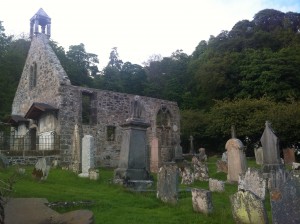
The Ruins of Old Logie Church
A church was first dedicated in this ancient parish around 1173 and the ruins on old Logie Church date back to around 1592.
In 1720 the infamous Witches of Logie were said to use the area for their own rituals, behind the church stands ‘Carly Crag’ or The Witches Crag. It was here that they were supposed to meet with the devil himself who took the form of a black dog with burning eyes. He would cavort among the witches with a blue torch attached to his hind quarters.
Its getting dark now – time to look out for mysterious blue lights in the distance!
The post The Witches of Logie appeared first on ScotClans | Scottish Clans.
]]>The post Johnstone Legend – The Killing of Lord Maxwell appeared first on ScotClans | Scottish Clans.
]]>
Johnstone crest
One of the visitors to our site told us about this great Clan Johnstone legend:
The Battle of Dryfe Sands on the 6th of December, 1593 saw the Johnstones and the Maxwells fight it out near the town of Lockerbie.
On the day of the battle Lady Johnstone went out with her maidservant to see how it was all going. She locked up the castle and took the castle key with her (which was a huge iron number). During her walk she came across a ‘regal looking man’, badly wounded and propped up against a tree. He stretched out a hand and begged for her help. He was Lord Maxwell.
Upon recognising her husband’s enemy Lady Johnstone promptly stoved the man’s head in with the castle key.
There is another version of how Lord Maxwell died that day.
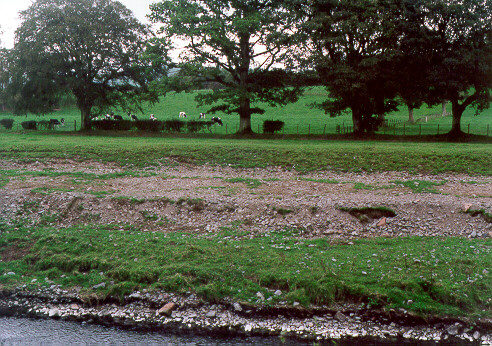
Dryfe Sands battle site
The Maxwells were desperate to rid the land of their sworn enemy the Johnstones, and so decided to launch a surprise attack. However, fortunately for Sir James Johnstone, he was somehow warned of the approaching Maxwells. He knew that this was going to be a desperate fight for their existence and so hurriedly called for some assistance from the Grahams, Scotts, Carrutherses, Irvings, Elliots and others, and managed to raise an army of, perhaps, around 800 men.
It said that Lord Maxwell offered a reward to whichever man could bring either the hand or the head of Sir James. Upon hearing this Johnstone made a similar pledge.
On the 6th of December Lord Maxwell and his army approached the Johnstone town of Lockerbie, near a place called Dryfe Sands. Johnstone came up with a plan, and, as the Maxwells marched on, he kept most of his men hidden, only sending out a small number of horsemen to attract the attention of the Maxwell vanguard, and then rout.
The plan worked and the vanguard broke its ranks chasing after the Johnstone horsemen, allowing the main body of Johnstone men to make a surprise attack on the disorganised and surprised Maxwells.
The Johnstones went on to slaughter around 700 Maxwells, and those they didn’t kill were slashed in the face with a sword, recieving horrible wounds which were to become known as ‘Lockerbie Licks’.
During the carnage, it is said that Lord Maxwell begged for his life, offering to surrender. He stretched out his hand, and instead of accepting it, Sir James Johnstone cut off the arm and then killed him.
Legend has it that Johnstone kept the arm and head of Lord Maxwell as trophies, reminding everyone of their decisive victory against the Maxwells.
Whichever way Lord Maxwell did die, whether he was bludgeoned by Lady Maxwell and her castle key, or if he was slain by the sword of Sir James Johnstone, one thing that is for sure, it probably wasn’t a pleasant death.
The post Johnstone Legend – The Killing of Lord Maxwell appeared first on ScotClans | Scottish Clans.
]]>