The post Best Scottish Discovery – As Voted for by You! appeared first on ScotClans | Scottish Clans.
]]>What do you think is the most valuable invention/discovery/creation to come from a Scot?
You all replied with some amazing answers, so first of all I would like to say thank you. ScotClans really does love having such a positive and knowledgeable fan base out there. Out of all the submissions there was a clear winner and this week we will be taking a look at what you think is the best Scottish discovery…

Sir Alexander Fleming
Alexander Fleming was born in Ayrshire on 6 August 1881, on Lochfield farm near Darvel, to farmer Hugh Fleming from and his wife Grace Stirling Morton, the daughter of a neighbouring farmer.
Fleming went to Loudoun Moor School and Darvel School, and earned a two-year scholarship to Kilmarnock Academy before moving to London at the age of 13, where he attended the Royal Polytechnic Institution. Whilst working in a shipping office like ha had for four years, the twenty-year-old Fleming inherited some money from an uncle, John Fleming. Tom, his elder brother, was already a physician and urged his younger sibling to follow the same career, and so in 1903, the younger Alexander enrolled at St Mary’s Hospital Medical School in Paddington. He qualified with distinction in 1906 and began research at St. Mary’s under Sir Almroth Wright, a pioneer in vaccine therapy. He gained M.B., B.S., (London), with Gold Medal in 1908, and became a lecturer at St. Mary’s until 1914.
During World War I Fleming served as a captain in the Royal Army Medical Corps for the duration of the war, being mentioned in dispatches. He and many of his colleagues primarily worked in battlefield hospitals at the Western Front in France. In 1918 he returned to St Mary’s Hospital, where he was elected Professor of Bacteriology of the University of London in 1928.
Working through the war had a significant effect on Fleming, having seen many soldiers succumb not to the wounds inflicted in the conflict but the infection that set in due to the poor conditions and treatments being utilised. Antiseptics of the time killed the patients’ immunological defences more effectively than they killed the invading bacteria. Fleming devised an experiment, of which he wrote about in an article he submitted for the medical journal ,The Lancet, during World War I, in which he explained why antiseptics were killing more soldiers than infection itself during World War I. On the surface antiseptics worked as they were expected to, but deep wounds tended to shelter anaerobic bacteria from the antiseptic agent, and antiseptics seemed to remove beneficial agents produced that protected the patients in these cases at least as well as they removed bacteria, and did nothing to remove the bacteria that were out of reach. Fleming’s findings were strongly supported by Sir Almroth Wright, but even so most army physicians over the course of the war continued to use antiseptics even in cases where this worsened the condition of the patients.
Penicillin

“When I woke up just after dawn on September 28, 1928, I certainly didn’t plan to revolutionise all medicine by discovering the world’s first antibiotic, or bacteria killer, But I suppose that was exactly what I did.”
By 1927, Fleming had been investigating the properties of staphylococci. Already well-known from his earlier work Fleming had developed a reputation as a brilliant researcher, but also a reputation for the untidiness of his laboratory. Returning to the lab on 3 September 1928 from a holiday with his family, Fleming returned to his laboratory having spent August on holiday with his family, he made an unusual discovery. Before leaving, he had stacked all his cultures of staphylococci on a bench in a corner of his laboratory. On his return Fleming noticed that one culture was contaminated with a fungus, and that the colonies of staphylococci immediately surrounding the fungus had been destroyed, whereas other staphylococci colonies farther away were normal. He famously and casually remarked “That’s funny”. Fleming, intrigued by this odd discovery, grew the mould in a pure culture and found that it produced a substance that killed a number of disease-causing bacteria. For months the substance had just been referred to as ‘mould juice’ by Fleming, but on 7th March 1929 he officially named the substance penicillin.
In 1929, Fleming published his discovery in the British Journal of Experimental Pathology, but unfortunately little attention was paid to his article. Fleming discovered that cultivating penicillium was quite difficult, and that after having grown the mould, it was even more difficult to isolate the antibiotic agent. This meant that producing penicillin in any significant quantity was fairly difficult. Fleming also became convinced that penicillin would not last long enough in the human body to kill bacteria effectively. Many of his clinical tests were inconclusive, probably because it had been used as a surface antiseptic. In the 1930s, Fleming’s trials occasionally showed more promise,and he continued, until 1940, to try to interest a chemist skilled enough to further refine usable penicillin and not long after Fleming abandoned his work with penicillin.

Howard Florey
It was two other scientists however, Australian Howard Florey and Ernst Chain, a refugee from Nazi Germany, who developed penicillin further so that it could be properly produced as a drug. It was Norman Heatley who made the last contribution towards the goal of mass production. He suggested transferring the active ingredient of penicillin back into water by changing its acidity. This produced enough of the drug to begin testing on animals. There were many more people involved in the Oxford team, and at one point the entire Dunn School was involved in its production.

Norman Heatley
After the team had developed a method of purifying penicillin to an effective first stable form in 1940, several clinical trials ensued, and their amazing success inspired the team to develop methods for mass production. This mass production started, with funds from the U.S. and British governments, after the bombing of Pearl Harbor. By D-Day in 1944, enough penicillin had been produced to treat all the wounded with the Allied forces.
Fleming was modest about his part in the development of penicillin, describing his fame as the “Fleming Myth” and he praised Florey and Chain for transforming the laboratory curiosity into a practical drug. Fleming was the first to discover the properties of the active substance, giving him the privilege of naming it: penicillin. He also kept, grew, and distributed the original mould for twelve years, and continued until 1940 to try to get help from any chemist who had enough skill to make penicillin. But Sir Henry Harris said in 1998: “Without Fleming, no Chain; without Chain, no Florey; without Florey, no Heatley; without Heatley, no penicillin.”

Display of Fleming’s awards, including his Nobel Prize.
Fleming received much recognition for the eventual drug, as did the others that worked towards the goal of a life changing substance. In 1944 Florey and Fleming were knighted. In 1945 Fleming, Florey and Chain were all awarded the Nobel prize for medicine, in acknowledgement of their work on penicillin.
Fleming became something of a celebrity, giving lectures all over the world and receiving many honours. However he always acknowledged that it was Florey and Chain who had turned penicillin into a practical drug.
We may have a Scot to thank for the initial discovery but it is important to remember it was a collaborative effort of many nationalities that went into creating the drug that changed the face of the world and has saved, and is continuing to save, countless lives, and as Fleming was always careful to say ’Nature makes penicillin; I just found it’.
The post Best Scottish Discovery – As Voted for by You! appeared first on ScotClans | Scottish Clans.
]]>The post Scotland’s Greatest Gift – Penicillin appeared first on ScotClans | Scottish Clans.
]]>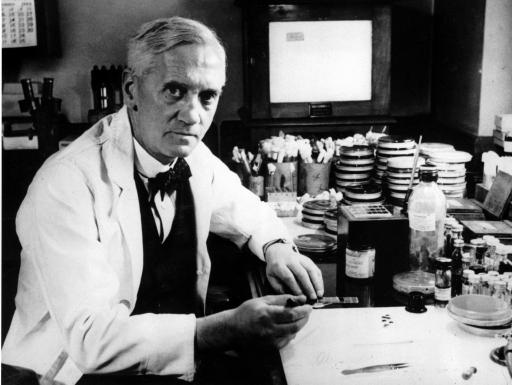
Sir Alexander Fleming, FRSE, FRS, FRCS(Eng)
6 August 1881 – 11 March 1955
important medicinal discoveries of all time. After returning from holiday with his family, he noticed that one of the cultures of bacteria he had left sitting on a bench in his laboratory had developed mould which had destroyed the bacteria colonies immediately surrounding. He found the mould released a substance that could destroy many disease-causing bacterias, paving the way for how antibiotics are used to treat infection. After some months of calling his discovery ‘mould juice’, he named the substance penicillin, which would go on to revolutionise modern medicine.
This week I got tonsillitis for the first time in my life, and never before have I felt so much pain in my throat. After nights of waking up covered in sweat with a savagely high fever, and not being able to swallow anything without an exceptional amount of pain, I decided to go to the doctor when I finally lost the ability to talk. Nearing the limits of my pain threshold, my doctor prescribed penicillin which amazingly seemed to combat the infection straight away. I’m feeling much better now, and rather indebted to this lovely Scottish biologist who provided the means to cure me of my ailment.
Born in 1881 near Davel in Ayrshire, Sir Alexander Fleming is perhaps the most notable member of Clan Fleming. Following in his brother’s footsteps he studied to be a Physician at Saint Mary’s Hospital Medical School in London. He joined a research team where he became assistant bacteriologist to Sir Almroth Wright, a pioneer in vaccine therapy and immunology. During World War One, Fleming served along the Western Front as a Captain in the Royal Army Medical Corps. Witness to hundreds of deaths from sepsis resulting from infected wounds, Fleming wrote an article for a medical journal during this time proposing that antiseptic was killing more soldiers than infection in battlefield hospitals. He explained that antiseptic worked well on the surface, but deep wounds tended to shelter anaerobic bacteria from antiseptic agents. Despite the publication of the article and strong support from Sir Almroth, many wartime medical practitioners continued to use antiseptic even when it worsened the condition of the patient.
Fleming published his discovery of penicillin in 1929, however little attention was paid as cultivation of the antibiotic was quite difficult and it was thought that it wouldn’t last long enough in the human body to cure infection. Fleming continued his research, trying to find a chemist skilled enough to refine usable penicillin, before abandonning the drug in 1940. Not long after this Howard Florey and Ernst Boris Chain undertook research into how to mass produce penicillin. Funded by the US and British Governments, the two chemists discovered how to isolate and purify the antibiotic and were able to make vast quantities just in time for it to be used in the allied invasion of Normandy and the remaining year of World War Two. However Fleming warned not to use penicillin unless there was a properly diagnosed reason, and that if it were used, never to use too little, or for too short a period, since these are the circumstances under which bacterial resistance to antibiotics develops.
In an article recently published by the BBC, Professor Dame Sally Davies explained that the rise in drug resistant infections is comparable to the threat of global warming. Bacteria evolves rapidly by finding new ways to combat antibiotics, with reports growing steadily of resistance in strains of E.Coli, tuberculosis and gonorrhea. Davies said the problem is global and needs much more attention. “It is clear that we might not ever see global warming, the apocalyptic scenario is that when I need a new hip in 20 years I’ll die from a routine infection because we’ve run out of antibiotics.”
In 2009 penicillin was named as Scotland’s greatest contribution to the world, coming ahead of Scotch, the telephone and haggis. Fleming’s discovery is accredited with saving millions of lives, and is the reason why many of us are here today. Perhaps it is time for a new generation of brilliant Scottish minds to come together to combat the rise of bacterial resistance that Fleming so cleverly foresaw all those years ago.
The post Scotland’s Greatest Gift – Penicillin appeared first on ScotClans | Scottish Clans.
]]>The post The Tragedy of Mary Hamilton appeared first on ScotClans | Scottish Clans.
]]>“Yestre’en the Queen had fower Maries
The nicht she’ll hae but three
There was Mary Seton and Mary Beaton,
And Mary Car-Michael and me.”
It is believed that the ballad is fictional, and the four Marys come from the four ladies-in-waiting chosen by James V’s Queen, Mary of Guise, to be companions to Mary, Queen of Scots who succeeded her father at the age of just 6 days old. However, none of these woman were called Mary Hamilton; they were in fact Mary Beaton, Mary Fleming, Mary Livingston, and Mary Seton.

Mary Hamilton awaiting execution
Yet, there was a real Mary Hamilton, whose story and downfall is rather similar to that of the Mary Hamilton in the ballad.
Mary Hamilton was a Scottish lady-in-waiting to the Russian Empress Catherine I. She was a member of a Scottish Hamilton family who emigrated to Russia sometime in the sixteenth century, during the reign of Ivan the Terrible. It is believed that she was the daughter of a William Hamilton. Mary became a lady-in-waiting to Catherine I in 1713, and she attracted a lot of attention around the royal Russian court due to her beauty and love life, and it wasn’t long before she became the mistress of Peter the Great. But the Tsar wasn’t her only lover, she was also having an affair with Ivan Mikhailovich Orlov, an aide-de-camp to Tsar Peter. However, Orlov had another mistress, and when Mary found out, she tried to win him back by giving Orlov gifts which she had stolen from Catherine.
Over the years Mary became pregnant on at least three occasions, and had two abortions – one in 1715, apparently by consuming constipation medicine. However, she did have a secret birth two years later in 1717, but afterwards killed the baby by drowning it. That same year her lover Orlov was questioned over some missing documents, and during the interrogation he confessed to having had an affair with Mary, and claimed that she had an abortion.
A rumor was spread that the Empress, Catherine, had a slightly unorthodox skin care method: it was alleged that she would eat wax to make her skin pale. And Mary Hamilton was accused of starting this rumor by Avdotya Chernysheva; Ivan Orlov’s other lover. This, unsurprisingly, annoyed Catherine, and she demanded that Mary’s room was to be searched. Unfortunately for Mary, her room was where she kept several of the items she stole from the Empress, and when they were discovered Mary and Orlov were both arrested and imprisoned in the Fortress of Saint Petersburg. Whilst in prison Mary not only confessed to the theft, but she also admitted that she murdered her new born child, however, even under torture, she refused to testify against Orlov, despite the fact he had been quick to point fingers at her.
In the November of 1718, Mary Hamilton was sentenced to death for abortion, infanticide, and theft and slander of Empress Catherine. Catherine asked Peter to overrule the death sentence, but he refused. The Tsar did, however, promise Mary that the executioner would not touch her at all, meaning that she would be beheaded with a sword instead of an axe. Mary was executed on the 14th of March, 1719, dressed all in white.
Unfortunately for Mary Hamilton, her execution was not the last indignity that she would suffer. After the decapitation the Emperor went over and picked up Mary’s head and gave the gathered crowd a lecture about its anatomy before kissing it and then throwing it down. The Russian Academy of Science were given her head and they preserved it for at least the next 50 years.
The post The Tragedy of Mary Hamilton appeared first on ScotClans | Scottish Clans.
]]>The post Border Ballads – Fair Helen of Kirkconnel appeared first on ScotClans | Scottish Clans.
]]>
Kirkconnel Church
In the 16th century a tragedy of particular poignancy is said to have taken place very near to the churchyard.

Kirkconnel Church Graves
On the hill to the east of the churchyard once stood a fine example of the Border Keep or Pele Tower which, in the days of the Border Reiver, dominated the landscape of the lands to north and south of the English Scottish Border. Here stood Bell Tower, alas no longer to be seen as its stone has followed that of the church and its wall to a more prosaic use .
Here lived Helen Irving. By all accounts she was a beautiful girl, much admired by the local lads. There were many suitors for her hand yet she loved but one by the name of Adam Fleming. All who loved her reluctantly accepted that her heart belonged elsewhere – all but one. Robert Bell of Blacket House felt spurned by Helen’s rejections, especially as he was favoured by her family. They were hopeful that she would marry within her station: Robert Bell, from a family of prominence, heritage and financial security, fitted their aspirations of a worthy suitor for Helen’s hand.
But Helen loved another.
She would meet the man she loved, Adam Fleming, in the twilight on Kirkconnel Lea or in the churchyard. Their meetings were brief, infrequent and full of the pledge of undying love. Helen was torn between love of her parents and their desires for her future, and the love she could not restrain for her manly and beautiful Adam. Love supersedes all bounds and though Helen was heart sore at the subterfuge which she employed to meet with her heart’s desire, she knew that Adam was the only man she would ever love. Many were the times she headed home after the brief passionate encounters with Adam, dull of pace in her walk to the Bell Tower, sorry that she deceived her parents, yet dreaming of a future where their happiness would reign.
Unbeknown to the two young lovers, they were watched. Robert Bell of Blacket House was insane with jealousy and determined to rid the world of his competitor for Helen’s hand.
Accordingly one night he followed the two lovers to their secret assignation and waited, watched, profuse with an insane desire to confront his rival. He was armed with a gun which made his intentions clear. When he saw the young lovers embrace any caution he might have felt was thrown to the wind. He lost any reason and waited for the lovers to part so he could get a clear shot at Fleming. The opportunity eventually presented itself and he fired off the gun at his adversary.
The two lovers, Helen and Adam, instinct and that inherent make-up which warns of danger, were instantly aware of the ferocity of ill-feeling which confronted them. Helen threw herself in front of her lover and took the full volley of shot in her breast. She fell dead on the spot. The shot was meant for Adam.

Site where Fair Helen was murdered
Adam, riled beyond any reason, knowing that his dear Helen was dead, launched himself down the banks of the Kirtle Water where the murderer Bell was frantically trying to reload his gun. Before he had achieved this Adam was upon him, sword drawn. In his rage he cut Bell to pieces, hacked him to death. There was no sweetness in the insane revenge. All thoughts of Bell immediately dropped from his mind, the sight of his headless body meaningless in his grief, Adam ran back up the slope of the Kirtle’s bank, cradled the head of his loved one in his arms, and sobbed until it felt as if his heart would break. He nursed his dead lover throughout the hours of darkness.
With the light there came some reason. Adam knew he would hang for the murder, that he had little alternative but to leave his home before he was apprehended. The deaths of Helen and Bell would not be easy to explain should he stay and confront her parents. They were aware that Helen had feelings for Adam which superseded friendship. They had tried to discourage them, hoping their daughter would marry a man of better means to support her through life. Robert Bell was such a man, or so they thought. It would not take them long to reach the conclusion that Adam was responsible for such a heinous crime. The discovery of the corpse of their daughter and the mutilated body of Bell which had all the hall-marks of a fierce encounter with a man of strength and resolution born out of intense hatred, would immediately point to Adam Fleming, thought of initially as the spurned lover. Adam Fleming fled the spot, left the country and was not heard of again.
Initially accused of a double murder in his absence, the truth finally came out. Friends of Helen vouchsafed for the integrity of Adam, for his love for Helen. They told of the meetings in the churchyard and the jealousy of Bell.
A few years later a servant of the Bell Tower, visiting the churchyard, was shocked to find the prostrate body of a man lying atop Helen’s simple grave stone. A quick inspection verified what he had thought as he approached the grave. The man was dead; he recognised the still handsome features of Adam Fleming who had lived at the Bell Tower some years before. He ran as swiftly as his old legs would carry him and informed the aged parents of Helen.
In due course Adam was buried next to Helen, a sign that her parents had forgiven the girl for her love of a man who had never forgotten her; a man who had proved after years on the Continent of Europe he had not forgotten his first and only love.

The Graves of Helen and Adam in Kirkconnel-Churchyard.
Afterword.
There is more than one version of the tragedy that led to the death of Fair Helen. In one Robert Bell escaped after he had murdered Helen and was pursued across Europe by Adam Fleming. He eventually caught up with Bell in the streets of Madrid and shot him dead. It was only then that he returned to Kirkconnel, and on seeing the grave of his lover, succumbed to grief at his loss, and died.
Sir Walter Scott, writing at the beginning of the nineteenth century, recorded the Ballad of Fair Helen in his ‘Minstrelsy of the Scottish Border’.
It is a poignant reminder that the aggression and confrontation which was rife for centuries along the English Scottish Border did not erase the finer feelings of all who were trapped in its maelstrom of death and butchery.
I wish I were where Helen lies,
Night and day on me she cries;
O that I were where Helen lies,
On fair Kirconnell Lee.
Curst be the heart that thought the thought,
And curst the hand that fired the shot,
When in my arms burd Helen dropt, (maid)
And died to succour me!
O think na ye my heart was sair (sore)
When my love dropt down and spak nae mair! (spoke no more)
There did she swoon wi’ meikle care, (with great care)
On fair Kirconnell Lee.
As I went down the water-side,
None but my foe to be my guide,
None but my foe to be my guide,
On fair Kirconnell Lee;
I lighted down my sword to draw,
I hacked him in pieces sma’ (small)
I hacked him in pieces sma’,
For her sake that died for me.
O Helen fair, beyond compare!
I’ll make a garland of thy hair,
Shall bind my heart for evermair (evermore)
Until the day I die.
O that I were where Helen lies!
Night and day on me she cries;
Out of my bed she bids me rise,
Says ‘Haste and come to me!’ –
O Helen fair! O Helen chaste!
If I were with thee, I were blest,
Where thou lies low, and takes thy rest,
On fair Kirconnell Lee.
I wish my grave were growing green,
A winding-sheet drawn ower my e’en (eyes),
And I in Helen’s arms lying,
On fair Kirconnell Lee.
I wish I were where Helen lies!
Night and day on me she cries;
And I am weary of the skies,
For her sake that died for me.
A Personal Thought.
Until last weekend, it has been some years since I last visited Kirkconnel church yard. It is a wonderful place, replete with an ambience of former times, of centuries long past. To the romantic, with a knowledge of the story of Fair Helen, it is a place to stand, think and consider her fate and that of her lover, Adam Fleming, their love, and the rash impetuousness of a spurned lover.
Such feelings are naturally tempered with thoughts that the story, though based on fact, has clearly been embellished down the years. The romantic in me, whilst succumbing to the sadness of the story, still readily accepts that parts of it cannot be true.
Imagine my surprise then when I viewed the story board set in front of the graves that are the supposed resting places of Helen and Adam.

Story Board in Front of the Graves of Fair Helen and Adam.
The last sentence runs as follows:-
‘The romantic story of the Ballad might be an 18th century invention, and the association of the monuments in the churchyard is questionable’.
Britain is awash with political correctness. Do we really need to take it to the realms of romance, poetry, folk-lore and legend?
Please think about it!
The post Border Ballads – Fair Helen of Kirkconnel appeared first on ScotClans | Scottish Clans.
]]>