The post The Battle of Baugé appeared first on ScotClans | Scottish Clans.
]]>
Battle of Baugé
Background:
The Battle was part of the ‘Hundred Years War’ between England and France. In 1419 King Henry V of England had turned the course of the war at Agincourt, a battle that has become synonymous with Anglo French ‘sparring’ ever since. There had been a formal alliance between France and Scotland since 1295, known as the ‘Auld Alliance’ though the ties between the two nations goes back much further, indeed the tradition of a ‘Guarde Eccosais’ goes back to the time of Charlemagne.
After Agincourt the French were in disarray. Charles VI of France was mad, and his heir, the future Charles VII, was only sixteen. Normandy was lost to the English and the Dukes of Burgundy were taking Paris. With the situation getting desperate the Dauphin appealed to Scotland for help.
King James I of Scotland was imprisoned by the English and the country was being ruled in his place by Robert Stewart, first duke of Albany. Albany decided to send a force of 6,000 volunteers to France under the command of Archibald Douglas, earl of Wigtown and Albany’s second son John Steward, third earl of Buchan. A fleet of ships from Castile reached Scotland in September 1419, and on 29 October 1419 the Scottish army reached the Dauphin’s court at Bourges.
The Scots made up by far the largest component of the Dauphin’s defensive forces in the Loire Valley. The English army still recording successes in France was commanded by Henry V’s oldest brother Thomas of Lancaster, duke of Clarence. Estimates of the strength of this force vary from between 7,000 to 12,000 men, a considerable number of which were drawn from the English nobility.
In March 1421 Clarence led a series of raids through the Anjou and Maine and by Good Friday they were camped near the little town of Vieil-Baugé where their progress was halted by the Franco-Scots army who had also arrived in the area. Clarence was keen to engage them but some of his forces were dispersed and also Easter Sunday was unthinkable as a date to start a battle. The following day a party of English who had been on a foraging mission returned to their camp with some captured Scots soldiers, The party had stumbled upon the Scot’s forces and Clarence keen to press his advantage of surprise and also to avoid a conflict on a holy day decided to engage despite his weakened force.
The Battle

Carmichael Clan Crest
Clarence made the fateful decision to attack immediately with a small force of mounted men-at-arms, leaving The earl of Salisbury to gather the other troops who were still out foraging on their return. Clarence headed for the bridge at Baugé, the only crossing available to reach the Scots. It would appear he was desperate to match the exploits of his brother at Agincourt. The Franco-Scots army were largely unprepared for the attack, many were at morning prayers or playing sports. As they attempted to cross the Bridge a small Scottish force nearby raised the alarm and the English were immediately held by a rain of arrows. It took them some time to force a crossing of the river. In his haste he had not brought his own archers and the remainder of this initial force were stretched back along the road.
Despite this Clarence still pressed forward towards the village, only to be met by the main bulk of the Scots and French who were concealed behind a ridge on the approach. The Scots came over the crest and charged headlong at the English army. Clarence was an early casualty. John Carmichael of Douglasdale unhorsed him, breaking his lance in the process – an event which is immortalised in the crest of clan Carmichael. The battle was reduced to a vicious hand to hand melee and its unclear who stuck the final blow that finished off Clarence. Alexander Makcaustelayn (a Lennox highlander), the lord of Fontaines, Charles le Bouteiller and William de Swinton have all been credited with finishing off the King’s brother.
Aftermath
The result was a crushing defeat for the English which set them back on the course of the war, Henry was forced to return to France but he contracted an illness and died during the campaign. Many of the English who had never even made it to the battle were able to escape and the war raged on for many years to come with victories and defeats on both sides.
The Scots Army in France who had been largely criticised by many French before the battle were now seen in an altogether different light and this French guard in later years formed the core of the Royal Scots – the oldest regiment in the British army, honoured for their antiquity by their nickname ‘Pontius Pilate’s Bodyguard’
The post The Battle of Baugé appeared first on ScotClans | Scottish Clans.
]]>The post Spooky Glamis Castle appeared first on ScotClans | Scottish Clans.
]]>The original tower keep of the castle, which still remains at the centre of the building, was built in the 14th century. The additional wings, towers and turrets were added over the centuries to make the castle into the majestic building it is today, a place with more in common with a French Chateau than a medieval fortress.
It also has a rather sinister reputation as one of the most haunted places in Scotland, if not the British Isles, which is what we will be exploring in this weeks Friday Facts…

One of the most notorious characters in the castle’s history was Earl Beardie, the most famous tale of him involves cards, the Devil, and a soul damned to hell.
One Sunday, Earl Beardie was guesting at the castle. After a heavy drinking session with the Earl of Glamis, on his way back to his room the Earl was said to have been shouting and screaming for a partner to play him at cards and wager some coin. Being the Sabbath no one was willing to play with the Earl, let alone gamble. The Earl raged on, going so far as to say he would play the Devil himself. Inevitably there came a knock at the door, and stood in the entrance was a tall man, dressed head to toe in the finest black clothes. The man claimed to have heard the Earls shouts for a partner on his way passed the castle, and enquired as to whether he still required a partner. The drunken Earl was blind to the sinister nature of this stranger and agreed to a game. The two men retired to a room in the castle, slamming the door shut and locking the castle staff and anyone else out.
All was quiet for a spell, not a sound coming from the room, when out of nowhere the door swung open and out strode the Earl. Screaming and swearing the Earl made his way back to his room, complaining at his luck and the loss in the game. Of the dark man there was no sign, he had seemingly vanished from the castle.
What went on in the room nobody will ever know, but it is believed the dark man was the Devil himself and he offered Earl Beardie an interesting wager that he could not refuse. A bag of the finest rubies was offered up if the Earl should win, but if he should lose it was his eternal soul that must be given over.
The ghost of Earl Beardie is said to now haunt the castle and has been heard on numerous occasions, stamping has feet and swearing at “something” in the room in which he is said to have gambled at Glamis.
The ghost of a woman with no tongue is said to roam the castle grounds, gesturing wildly towards her mutilated face. Unfortunately there is no information that might lead to finding out who this woman was and what her story might be.

Another famous story about the castle that has intrigued many is that of the monster of Glamis. Legend has it that in 1821 Thomas, a son and heir to the Bowes-Lyon family name and fortune, was born in Glamis. However he was so horribly deformed that the family announced that the baby had been lost. Still loving the child that had come to them but fearing what people may think of the ‘monster’, they hid him away from the world in a secret chamber somewhere within the castle.
It is claimed only a select few of the most trusted servants were made aware of this secret so the monster could be taken care of. The creature was said to be taken out late in the night to be given some form of exercise in the form of a walk along the battlements, earning a section the name ‘Mad Earls Walk’, and that he was fed through a grill in his door by these trusted servants.

The monster is believed to have lived much longer than any normal person, living on until the early 1920′s and meaning the family ‘secret’ had to be kept secret for several generations. The tale goes that the truth about the creature is revealed to the next heir of the Bowes-Lyon family when they come of age at 21. Observations of the 13th Earl of Strathmore are supposed to support this theory. He was said to be a kind, conscientious man of a generally sunny disposition, but this all changed with the passing of his brother. Without an heir he became the next in line and the secret would have been revealed to him. From then on he was noted to have become a very serious man, who always seemed to have a great sadness hanging over him. Although this could have been from the burden of the secret it is far more likely to have been due to the loss of his brother and the hardships of becoming the head of the family.
An alternative version of the legend is that to every generation of the family a vampire child is born and is walled up in that room.
There is an old story that guests staying at Glamis once hung towels from the windows of every room in a bid to find the bricked-up suite of the monster. When they looked at it from outside, several windows were apparently towel-less, leading people to believe there was more than one secret room within the castle.
The legend of the monster may have been inspired by the true story of the Ogilvies. Somewhere in the 16-foot-thick walls is the famous room of skulls, where the Ogilvie family, who sought protection from their enemies the Lindsays, were walled up to die of starvation.
Another legend has it that the late Sir David Bowes-Lyon, uncle of Queen Elizabeth II, took a late stroll on the lawn after dinner, and reportedly saw a girl gripping the bars of a castle window and staring distractedly into the night. He was about to speak to her when she abruptly disappeared, as if someone had torn her away from the window.

The family chapel is said to be haunted by the Grey Lady, believed to have been Lady Janet Douglas, burned at the stake on charges of witchcraft and plotting to poison the King.
King James V had Janet accused of witchcraft against him, although it was clear that the accusations were false. She was imprisoned with her husband (who escaped but was later killed) in a dungeon of Edinburgh Castle. It was easy for James to imprison Janet, but actually convicting her was more difficult. Her character was impeccable, without blemish, and she was very much respected by everyone who knew her. In order to get the testimony he needed to convict her, the King resorted to torture. Her clansmen and servants were put on the rack and stretched to the point of agony. They finally gave false evidence against her. Janet was convicted and burned at the stake on 17 July 1537 on the esplanade of Edinburgh Castle, which her young son was forced to watch alongside a silent and morose crowd, very likely aware of the innocent women being burned before them.
Sightings have been made in recent times within the chapel and above the clock tower.
The post Spooky Glamis Castle appeared first on ScotClans | Scottish Clans.
]]>The post Bannockburn Visitor Centre Ready for Battle appeared first on ScotClans | Scottish Clans.
]]>
A 3D Robert the Bruce visits his troops at the new Bannockburn Visitor Centre
We’re just back from a quick trip up the road to just outside Stirling to check out the new Bannockburn Visitor Centre, set to open to the public next weekend. Coming in (on time, and on budget) with a price tag of £9.1 million, the centre uses state-of-the-art motion capture techniques and fight choreography to immerse visitors in a realistic and historically accurate 3D Battle of Bannockburn. (View a gallery from our visit here.)
A thoroughly impressive experience, the visitors centre is the first tourist attraction in the world to use this kind of technology, providing a very 21st century view of the battle in this the year of its 700th anniversary. You’ll find no objects in glass boxes here – there are no surviving artefacts from the battle anyway. The centre appeals to the ‘modernologist’, moving away from passive ‘museum’ viewing, and instead offering visitors the chance to interact with history.
Interpretation designers Bright White Ltd worked with an Academic Advisory Panel of some of the UK’s top historians and leading 3D modellers at the Centre for Digital Documentation and Visualisation (a partnership between the Digital Design Studio of the Glasgow School of Art and Historic Scotland) to bring the battle to life for 21st century audiences.
Revered as the most famous Scots victory – the Battle of Bannockburn marked a pivotal moment in Scotland’s history, paving the way for the signing of the momentous Declaration of Arbroath. Our tour began with a 3D puppet-show prologue by two of the battle’s well-known figures – Sir James Douglas representing the Scots, and Isabella of France, wife of Edward II of England.
We then moved through to the next room to ‘Prepare for Battle’. Robert the Bruce and King Edward II feature as life-size 3D projections, witnessing the two sides preparing for battle. If you’ve ever wondered what it feels like to be a fly on the wall in the Scots or English camp the night before Bannockburn, this is about as close as you’re going to get. Eerily lifelike (and lifesize) Scots soldiers were practicing hand-to-hand combat metres from where I stood, while English soldiers fired arrows at targets on the other side of the room.
Iconic moments from the battle also dramatically play out, including when Bruce encounters Sir Henry De Bohun with his axe on the first day of the battle. I also had a very interesting briefing from Sir James Douglas in the digital character section, who presented me with his reasons for supporting the Bruce.

Let the battle begin!
From there we moved through to the jewel in the centre’s crown, the battle simulation room. Upon entry you are given a number from a battlemaster which determines where abouts around the interactive battle map you stand, and more importantly, which side you’re on. I was placed on the English side, and given control of a division of longbows and heavy infantry.
During the first day of battle my divisions moved about near the rear of the action, warily trying to get into a good strategic position. But once I sent forward my first longbow attack, I’m rather ashamed to admit I had the taste for it, and went on a little bit of a rampage, sending cavalry and longbows hurtling after Robert the Bruce (who was cowering somewhere behind Stirling Castle). By the end of the second day it looked as though we were going to take the castle, but just at the last minute we were foiled by traps set by the Scots.

Tense times! The final moments of the battle
Our battlemaster David Weinczok, 24 from Nova Scotia, controlled the game and was on hand to flesh out historical details, and throw in tips and advice before declaring the successful side, summarising the results of the action with an overview of how the battle played out in 1314, and revealing the 21st-century version of the landscape and locations of conflict. The only thing I’m a bit confused by was his costume – looking more like a sci-fi knight sent from the future than a 14th century soldier.

Battlemaster David Weinczok provides an overview of the real 1314 battle.
After the battle we entered the epilogue room, where another 3D puppetry styled video was shown in which Sir James presented the aftermath and consequences from the battle, most importantly Scotland’s assertion as an independent kingdom. Topical stuff, in this the year of the referendum. We finished our visit outside the centre at the recently restored Bruce monument and flagpole. After being immersed in so much state of the art technology, we finished our day by walking twenty metres through a field to stand in the place where these events of Bannockburn exactly 700 years ago.
View our gallery from this mornings event here! The centre is open from 1/3/2014.
The post Bannockburn Visitor Centre Ready for Battle appeared first on ScotClans | Scottish Clans.
]]>The post The Flodden 500 Service at St Giles, Edinburgh. appeared first on ScotClans | Scottish Clans.
]]>I’d like to continue by reproducing Alaistair Moffat’s reading given at St Giles. It was an excellent account of the battle and the aftermath.
—
FLODDEN ADDRESS. – ALISTAIR MOFFATWhen dawn broke on the morning of 10th September, 1513, the landscape of hell was revealed. On the gently undulating northern ridges of Branxton Hill more than 10,000 men lay dead or dying. In the midst of the carnage were the naked, plundered bodies of King James IV of Scotland, his half-brother, Alexander Stewart, Archbishop of St Andrews, George Hepburn, Bishop of the Isles, two abbots, nine great earls of Scotland, fourteen lords of parliament, innumerable knights and noblemen of lesser degree and many thousands of farmers, ploughmen, weavers and burgesses. It was the appalling aftermath of the battle of Flodden, the greatest military disaster in Scotland’s history.In the grey light of that terrible dawn, sentries posted around the captured Scottish cannon could make out where the brunt of battle had been joined. Below them, at the foot of the slope ran the trickle of a nameless burn now choked with slaughter, a wrack of mangled bodies, broken pikeshafts, shattered shields and everywhere blood and the sickening stench of death, vomit and voided bowels. Not all of the bodies were yet corpses. Through a long dark night the battlefield had not been a silent graveyard. Trapped under lifeless comrades, crippled, hamstrung or horribly mutilated, fatally wounded men still breathed. Bladed weapons rarely kill outright and they were often used to bludgeon men to their knees or into unconsciousness. In the churned mud of the battlefield some men will have lost their footing, fallen and been hacked at before they could get up. Many bled to death, maimed, lacerated by vicious cuts, screaming, fainting and screaming once more in their death agonies. Some will have been put out of their misery by parties of English soldiers scouring the field by torchlight for plunder, stripping the bodies, ransacking them for valuables. But other men will have lingered on inunspeakable pain, praying to their God, passing in and out of consciousness, slowly bleeding to death. The fury of the battle on Flodden field may have been stilled and awash with death and defeat. But all was not yet over. In an instant the plunderers and scavengers looked up and the sentries by the cannon stood to, frantically peering through the morning light. They could hear the rumbling thunder of hoofbeats – and then, suddenly, riders erupted over Barelees Rig. With 800 horsemen at his back, Lord Alexander Home galloped hard across the horrors of the battlefield and up the slopes of Branxton Hill. They had not come back to Flodden to rejoin a lost battle but to rescue their captured ordnance. And they very nearly succeeded. After a sharp skirmish, the English gunners managed to load and get off a volley at Home’s squadron, and they scattered.And so it ended. As the Border horsemen wheeled round and raced out of range, the remnants of the shattered Scottish army were limping across the Tweed at Coldstream. There was no organised pursuit. The victorious English army had taken heavy casualties and the Earl of Surrey and his captains were exhausted. In any event, their bloody work was done. The floors o’ the Forest were a’ wede awa, Flodden was a national disaster, a harbinger of lawlessness in the shape of the Border Reivers, the beginning of a long period of political uncertainty and the last medieval battle in the history of Britain. The last time a king was to die leading his army.It was also an epic. As two huge armies mustered and marched into history, extraordinary scenes had been witnessed. At Ellemford, high in the Lammermuirs above Duns, where sheep now graze on the flanks of the hills, where buzzards hang in the updrafts and an elegant bridge crosses the Whiteadder, King James IV and his army camped. Huge guns were trundled down the hill trails, dragged by oxen, and by 21st August 1513, almost 30,000 men had massed in this beautiful, now lonely valley. Two days later, the largest force ever to leave Scotland crossed the Tweed at the fords below Coldstream. They had declared war, they had entered the realm of the Tudors, of the ferociously ambitious and bull-like Henry VIII.Meanwhile Thomas Howard, Earl of Surrey, and the Bishop of Durham carried the standard of St Cuthbert before their battle-hardened troops. In front of the high altar of the great cathedral, Howard had watched the bishop bless the flag of the Haliwerfolc. The lands of Palatinate, of the Prince-Bishops of Durham, reached to the Tweed and beyond, and in an early definition of Englishness, their people were known as the Holy Man’s Folk, the Haliwerfolc. Ancient allegiances were being roused and summoned.Between 2nd and 9th September two vast armies circled each other in a small corner of North Northumberland, like heavyweight boxers looking for weaknesses or waiting for wrong moves. After the Earl of Surrey had despatched a herald, the Rouge Croix, it was finally agreed that battle would be joined on 9th September. Supplies for almost 70,000 men, horses and camp followers were running dangerously lowand neither army could remain in the field much longer.Realising the strength of the Scots’ entrenched position, Surrey led his men to the east, skirting Flodden Edge and staying out of artillery range. On the morning of the appointed day, he crossed the River Till and took up a position to the north of James IV’s army, barring any retreat to Scotland. And then, on a damp afternoon, the greatest battle ever fought between England and Scotland began.On the left wing of the Scottish host, the Highlanders led by the Earl of Huntly massed in formation with Lord Home’s Borderers, and in the moments before their chiefs roared the claideamh mor, the order to charge, the Gaelic-speaking warriors did something remarkable. They began to summon the army of the dead. They began the sloinneadh, the naming of the names of memory. To bolster his courage, each man began to recite his genealogy. Many waiting to charge could go back 20 generations. As if they were offering up the murmur of prayer, each man remembered why he had come to fight. Is mise mac Iain, mac Ruaridh, mac Domhnuill. I am the son of John, the son of Roderick, the son of Donald. And once their quiet voices stilled, the roar of the claideamh mor rent the air and they broke into the charge. With their broadswords and Lochaber axes, the Highlanders tore into the English ranks, the division led by Edmund Howard, They scattered and a rout was only prevented when Lord Dacre rode to the rescue with his English Borderers. As history rumbled across Branxton Hill, fortune appeared to be smiling on the Scots.At the same time, James IV was about to make a catastrophic decision, a crucial error of judgement. Instead of occupying an elevated position at the rear of his vast army, he chose to lead from the front. His division raced down Branxton Hill and as they reached the lower slopes and much softer ground, many men began to skid and lose their footing. This unsteadiness made it very difficult for them to control their long, 12 foot pikes. The wet ground made them charge out of formation, only engaging piecemeal with the solidly planted ranks of English billmen, With their shorter, more easily handled bills, they began to slice into James IV’s division. And as the men at the back saw the Scottish pikes go down, they hesitated and many of them ran, believing their king to be killed. By leading from the front, James was immediately submerged in the ruck of the fighting, only able to see what was directly in front of him, in no position to direct his forces. The result was disaster.The legacy of Flodden was most immediately and keenly felt in the Borders. North of the Tweed the memory of the battle is kept alive in the fabric of the midsummer common ridings. At Selkirk the ceremony of the casting of the colours is unique in Britain and it is based on the return of a soldier known as Fletcher, traditionally believed to have been the only one of sixty from the town to return. In his bloodied hand he held aloft, in a gesture of desolate defiance, a flag captured from the men of Macclesfield in Cheshire. Many Englishmen had fought and fallen at Flodden. And passions still run high. When the Mayor of Macclesfield recently wrote to the Provost of Selkirk asking for the return of the flag, he was told that he would need to come to the Borders and take it.Flodden is an immense story. Like Culloden in 1746, it signalled the end of a fading, feudal Scotland. And it also ushered in a century of lawlessness, the criminal society controlled by the appalling Border Reivers. Across Europe, renaissance, enlightenment and the reformation were changing lives, forming new ideas and creating the institutions of the modern world. In the first half of the 16th century, central authority broke down in a leaderless nation, and while swords and spears spoke in Scotland, the law was often silent.What is to be learned from all of that suffering and slaughter, from all of those ancient enmities? First that they are ancient and must remain firmly in the past. In 2014 Scotland faces a historic choice and whichever way the people of Scotland vote, it must be a signal lesson of Flodden that enmity, even ancient enmity can have no part. And it is to the credit of politicians on all sides of the argument that it has not reared an ugly head. But it might.And alongside that it mustmbe important to remember, to understand the visceral, bloody realities of whatmwent on on that terrible day 500 years ago. Lest we forget, Flodden should become a place of remembrance and of pilgrimage, a place where the uncomfortable lessons of history can be learned and never forgotten.Two weeks ago, on one of the countless beautiful evenings of this glorious summer, I drove over to Branxton. As the sun threw long shadows across the gently undulating fields, I tried to imagine the 10th of September, 1513, the distant roar of thousands of men, the screams, the fear and feral closeness of hand-to-hand fighting whenmen can smell the breath, smell the sweat of men grunting pushing, hacking, swearing at them, trying to kill them. In a Gaelic phrase, I tried to listen for the music of the thing as it happened. I tried to listen to the slow, sad music of our history. I hope that many in Scotland and England hear it too.
Prior to the sir Malcolm MacGregor (who has admitted that try as he might he can not find a single MacGregor involved in the battle) researched the casualty lists. The following names are clans and families who are known to have fought at Flodden along with notable people who fell in the battle:
From the Highland Clans:
Campbell, Erskine, Fraser, Gordon, Graham, Guthrie, Haldane, Hay, Keith, Leslie, Lindsay, Macaulay, Macfarlane, Mackay, Maclean, Macnab, Menteith, Moncreiff, Moray, Murray, Ogilvy, Oliphant, Ramsay, Rattray, Ross, Ruthven, Seton, Sinclair, Stewart, Forbes, Forsyth, Grant, MacKenzie, MacNaughton, Ross, Skene, Buchanan Of Leny, MacDonald
The Lowland and Border Clans and Families:
Adair, Abercromby, Adam, Anstruther, Baillie, Baird, Balfour, Barclay, Blackadder, Bonar, Boswell, Carnegie, Cathcart, Cleland, Cockburn, Colville, Craig, Crauford, Crichton, Cunningham, Dunbar, Dundas, Edmonstone Of Duntreath, Elphinstone, Fotheringham, Gray, Grierson, Haig, St.Clair Of Roslin, Henderson, Hepburne, Herries, Home, Hoppringle, Houston, Lauder, Liddel, Lockhart, Lumsden, Lyon, Masterson, Maitland, Maule, Maxtone, Maxwell, Melville, Muirhead, Mure, Napier, Rollo, Sempill, Somerville, Spottiswood, Stewart Of Traquair, Allardice, Ballingall, Kerr, Colville, Crammond, Eliott, Ferguson, Fleming, Foreman (Standard Bearer), Inche, Inglis, Johnstone, Kirkcaldy, Knolis, Logan, Montgomery, Morton, Muir, Nelson Of Madinpap, Otterbrun, Pitcarin, Pringle, Reid, Rorison, Savage, Scott, Seton, Tunstall, Vallanche, Wood Of Raik, Kennedy, Douglas, Hamilton, Livingstone, Wemyss, Wallace, MacLellan, MacCulloch, MacDowall
Chief Or Notable Head Of House/Family
King James IV, Archbishop Of St.Andrews (King’s Son), Earl Of Morton ( Grandson Of James 1), Earl Of Glencairn, Douglas Of Drumlanrig, Sir James Dunbar, Dundas, Lord Elphinstone, Lord Erskine, Earl Of Huntly, Earl Of Montrose, Sir Alexander Guthrie, Haig Of Bemersyde, Haldane Of Gleneagles, Earl Of Errol, Earl Of Bothwell, Sir William Keith, Earl Of Cassilis, Earl Of Rothes, Earl Of Crawford, MacDowal, Earl Of Garthland, MacFarlane Of Arrochar, Hector MacLean Of Duart, Maxwell Lord Of Carlaverock, Sir John Moncreiffe Of That Ilk, Moray Of Abercairney, Ramsay Of Dalhousie, Rattray Of That Ilk, Rollo Of Duncrub, Master Of Ruthven, Lord Sempill, Lord Seton, Earl Of Caithness, Earl Of Atholl, Earl Of Lennox, Lord Darnley, Master Of Angus, Anstruther Of That Ilk, Ballingall Of That Ilk, Master Of Eliott, Lord Forbes, Master Of Lovat, Sir Alexander Gordon Of Lochinvar, Sir Alexander Gordon Of Knockenshene, Grant Of Freuchie, John Henderson Of Fordell, Lord Alexander Home, Sir Patrick Houston Of That Ilk, William Johnstone Of That Ilk, Lord Keith, Lord Lorn, Lyon (Sons Of Lord Glamis), MacKenzie Of Kintail, Sir Alexander MacNaughton Of That Ilk, Andrew Pitcairn Of Pitcairn And 7 Sons, Lord Ross, William Ruthven Of That Ilk, Sir Walter Scott Of Buccleuch, Alexander Skene Of That Ilk, Sir David Wemyss, Earl Of Argyll, Lord Kinnaird, Master Of Cathcart, MacDonald Of Lochalsh.
—–
 The St Giles Service…
Just over 40 clan chiefs attended the St Giles service. At the end of the service they mustered for a photograph on the steps. To help you identify who was there we have been given a sketch with a key to the names:
1. Sir Walter Riddell of Riddell 2. The Hon. Elizabeth Fairbairn 3. Madam Pauline Hunter of Hunterston 4. Sir David Bannerman of Elsick 5. Lord Polwarth 6. Andrew Wallace Younger of that Ilk 7. Andrew Dewar Durie of Durie CBE 8. Michael Ancram, Marquess of Lothian 9. Andrew MacThomas of Finegand 10. Earl of Dundee 11. David Campbell of Strachur 12. Roderick Macneil of Barra 13. Sir James McGrigor 14. Earl of Eglinton and Winton 15. Professor David Hannay of Kirkdale and of that Ilk 16. Henry Trotter Younger of Charterhall 17. John MacArthur of that Ilk 18. Duncan Paisley of Westerlea 19. Richard Carmichael of Carmichael 20. Earl of Caithness21. Earl of Lauderdale 22. The Hon. Alexander Leslie 23. Earl of Erroll 24. Lord Napier and Ettrick 25. Madam Arabella Kincaid of Kincaid 26. David Cranstoun of that Ilk 27. Jamie Macnab of Macnab 28. Earl of Wemyss and March 29. Sir Crispin Agnew of Lochnaw 30. The Hon. Kate Nicolson 31. Duke of Montrose 32. The Hon. Peregrine Moncreiffe of that Ilk 33. Martin Haldane of Gleneagles 34. Lord Sempill 35. Andrew Marjoribanks of that Ilk 36. Donald MacLaren of MacLaren 37. Duke of Hamilton 38. Field Marshal the Lord Guthrie of Craigiebank 39. Isla St Clair 40. Marquess of Ailsa 41. Madam Margaret Eliott of Redheugh 42. Sir Malcolm MacGregor of MacGregor 43. Lord Macdonald of Macdonald 44. Richard Oliphant of that Ilk
This image will help you identify the chiefs:

The post The Flodden 500 Service at St Giles, Edinburgh. appeared first on ScotClans | Scottish Clans.
]]>The post How the Clans Inspired Game of Thrones appeared first on ScotClans | Scottish Clans.
]]> It’s a well-known and begrudgingly accepted fact that Game of Thrones author George R.R. Martin loves to kill off central characters. In episode nine of the third season of the television series based on the books, three deaths in the space of mere minutes provoked an excessive amount of mortified outcry in almost every media outlet imaginable a few weeks ago. Such shocked reactions are nothing new to Martin – ever since the third book was published a decade ago, he’s been receiving exclamatory emails and letters from heartbroken readers about the disastrous Stark-Tully-Frey union. In a nutshell, three members of the much-loved but ill-fated Stark family and hundreds of Stark bannermen were slaughtered at a wedding, decisively snuffing out the King of the North’s claim to the throne of Westeros.
After heartbreakingly accidentally reading a tiny spoiler via a newspaper, I finally watched the final two episodes of season three a week after the episodes were released. Once the shock subsided and I finally stopped weeping, I was very intrigued to discover that Martin based the fateful ‘Red Wedding’ on two specific events from Scottish clan history. In an interview with EW, Martin said: “No matter how much I make up, there’s stuff in history that’s just as bad, or worse.”
The first event dates back to the fifteenth century, when Clan Douglas were one of the most powerful families in lowland Scotland. Rival families including Clan Crichton felt the Douglases were far too strong and capable of upsetting the delicate power-balance in Scotland at that point. In 1440 King James II was only ten years of age, and the ambitious and influential clan chief William Douglas could have easily gained control of the throne. So Clan Crichton, with the help of Alexander Livingston of Callendar, set out to extinguish the Douglas threat.
In 1440 Sir William Crichton, custodian of Edinburgh Castle, invited William Douglas and his younger brother David to dine with the young king; with the siblings suspecting nothing as the evening proceeded. Near the end of the dinner, a black bull’s head (the symbol of death) was placed on the table by a servant. The two brothers were then seized and dragged out to Castle Hill at the top of the Royal Mile. They were given a mock-trial and accused of various crimes including high treason, before being lead to the headman’s block where they both met a grisly demise with the swing of the executioners axe.

A depiction of the Black Dinner, an inspiration for the Red Wedding
This event came to be known as the ‘Black Dinner’, and just as in Thrones, a family were murdered after the unspoken laws and customs of hospitality were breached. Unsurprisingly the rest of Clan Douglas were quick to retaliate, laying siege to Edinburgh Castle and causing considerable damage. Perceiving the danger, Crichton surrendered the castle to King James who was then given the title of Lord Crichton. This was a politically astute move as challenging the decision would have meant challenging the king himself and left them fighting an unwinnable war against much of Scotland.
The discussion on the laws of hospitality that frequent the final two episodes also eerily draw from the events of the Massacre of Glencoe, which I blogged about earlier this year. In the final episode of the series, Bran speaks of a Lord who killed guests beneath his roof, saying “it’s something the Gods cannot forgive“. In 1692 32 Clan MacDonald members were murdered by Clan Campbell on direct orders from the crown, after providing accommodation to Campbell clansmen for the previous two weeks. The massacre was considered especially awful as it was considered ‘slaughter under trust’, and is still commemorated to this day.
I’m also convinced that Martin based his family/house structures in the series on the Scottish clan system. Every Thrones house has a coat of arms, words, leader, seat and region; just as each clan has their own crest, motto, chief, seat and region. I’ve made a comparison below between House Lannister from the series, and Clan MacGregor:
 House Lannister
Words - Hear Me Roar!
Current Leader - Joffrey Baratheon
King of the Seven Kingdoms
Seat - Casterley Rock
Region - The Westerlands
 Clan MacGregor
Motto – ‘S rioghal mo dhream (My race is royal)
Current Chief - Sir Malcolm MacGregor of MacGregor
The 7th baronet of Lanrick and Balquhidder
Seat - Bannatyne
Region - Argyll and Perthshire

The clans of Scotland have certainly captured the imagination of Martin, hundreds of years after these fateful events occurred. Like millions of others around the world, I sit with bated breath awaiting the next installment in the Game of Thrones series. Just in case you’re wondering, you can check here how many weeks and days are remaining by clicking here!
The post How the Clans Inspired Game of Thrones appeared first on ScotClans | Scottish Clans.
]]>The post For Sale: Two Castles, TLC Required appeared first on ScotClans | Scottish Clans.
]]>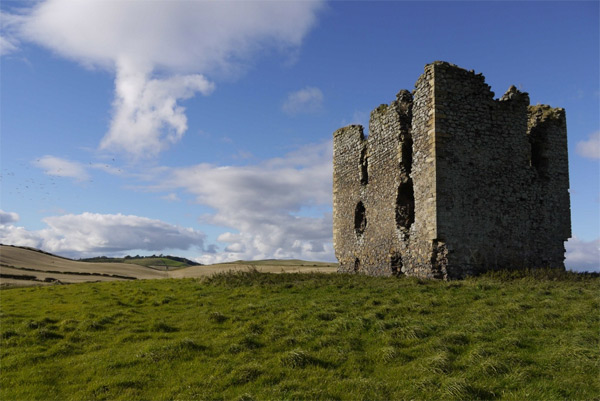
Lordscairnie Castle
Lordscairnie Castle – situated on the outskirts of Fife near Moonzie – was built between 1493 and 1498 by Sir Alexander Lindsay, seventh Earl of Crawford. The forlorn ruins are being sold for around £200,000, with selling agent Smiths Gore hoping to find an ‘emotional purchaser’ ready to take on the castle’s challenges.
At the time the castle was built, Sir Lindsay was one of the most powerful noblemen in Scotland, with the castle acting as an important centre for Clan Lindsay’s operations and aspirations in central Scotland. Its colourful history includes castle raids, house arrests, conflicts with the Bishop of St Andrews and a visit by James V of Scotland just before his death in 1542.
The castle was abandoned in the mid 17th Century and was utilised by the local congregation as a church until the end of the 17th Century. Unoccupied since then, ownership was transferred to the Earl of Glasgow in the 1840s, then by a succession of local farmers before it became the property of the existing owner.
According to local lore, treasure was hidden in the castle, but to date nothing of significant value has come to light. The ghost of Sir Lindsay is also said to haunt the castle on New Years Eve. His ghost can be seen playing cards with the devil at midnight on December 31, though anyone watching it will travel to hell with them at the end of the match.
The B listed castle sits in 30 acres of open countryside at the foot of Colluthie Valley. The grounds also include a large pond, said to be home to about 50 different species of birds. The castle walls are 6 feet thick in many places and when restored the castle could be up to five stories tall, rising to a level of 65 feet. Smiths Gore has estimated that restoration would cost £600,000 to £1 million on top of the purchase price.
Lordscairnie Castle Property Listing
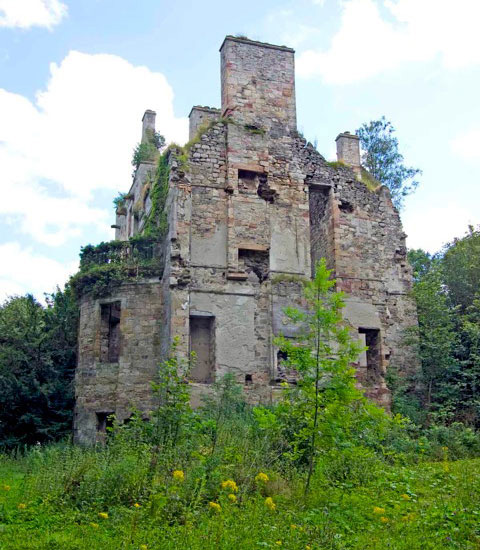
Cavers Castle
A slightly more ambitious restoration project is also available for purchase near the Borders. Cavers Castle, once a 64-room 100,000 acre residence, was the seat of Clan Douglas for more than 300 years. Today much of the land has been sold – 11 acres remain – and all that remains of the castle is the east wing, but only as an empty shell.
The castle was constructed around 1200 and first inhabited by the Balliols. Clan Douglas, instrumental in banishing the Balliols from Scotland, were granted the lands by David II of Scotland in 1352. Sir Archibald Douglas, 3rd Earl of Douglas was responsible for the construction of Cavers Tower, a traditional fortified Scottish tower, on the site of the original castle after he succeeded to the earldom when James Douglas fell at the Battle of Otterburn in 1388.
In 1542 Cavers was burnt by Dacre with the help of Sir Walter Scott of Branxholm, and in 1545 it figures in a list of places “brent, raced, and cast doune” during the War of Rough Wooing. Cavers House was inhabited by a branch of the black Douglas family until the twentieth descendent, James Douglas died in 1878 leaving no male heir. The property passed to his niece Mary Malcolm who married Captain Edward Palmer in 1879 and the property was substantially re-modelled as Cavers House between 1881 and 1887.
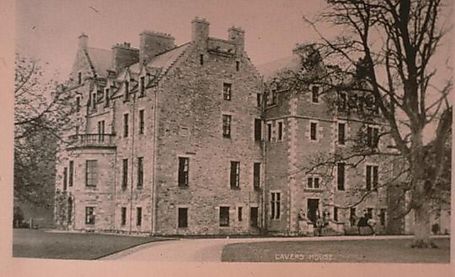
Cavers House in better days, circa 1887
The house eventually became disused and was made available to the army for use in a demolition by explosives exercise in 1953. The army were partially successful in destroying the Victorian section but made little impact on the thick 11-feet thick walls of the older medieval section.
Cavers Castle Property Listing
Cavers Castle on Google Maps – You can see the castle in the woods near Cavers Auld Kirk.
Cavers Tower Flickr Set - Contains fascinating photographs of the castle as it was in 2009. Also contains an interesting story about a witch who cursed the 17th Century Douglases.
The post For Sale: Two Castles, TLC Required appeared first on ScotClans | Scottish Clans.
]]>The post Clan Douglas and The Battle of Ancrum Moor appeared first on ScotClans | Scottish Clans.
]]>
Archibald Douglas, 6th Earl of Angus
In 1545 the aptly titled War of Rough Wooing was in full, ruthless swing. In order to gain Scotland’s allegiance to England, King Henry VIII employed the curious tactic of scorching and pillaging Scotland into submission. In retaliation, approximately 2,500 Scottish soldiers were raised by the Chief of Clan Douglas, Archibald Douglas 6th Earl of Angus, with help from James Hamilton, 2nd Earl of Arran. They gathered just a few miles from the Scottish border town of Jedburgh, confronting 5,200 English soldiers on 27 February 1545 at the Battle of Ancrum Moor.
Towards the end of Henry VIII’s reign, the King sought to unify the Kingdoms of England and Scotland through the arranged marriage of his son Edward, and Mary, Queen of Scots (aged one at the time). After much discussion and dissension, the Scottish Parliament under the Earl of Arran (Queen Mary’s regent) rejected Henry’s proposal, and instead offered the infant’s hand to the French, thus renewing the ‘Auld Alliance’.
Henry reacted rather badly to the news, and declared war against Scotland. Major hostilities broke out in Edinburgh in 1544, where Henry ordered the Earl of Hertford to burn Edinburgh, Leith and much of the border towns to the ground. The burning and pillaging of the borders continued into 1545, led by Sir Ralph Eure. Douglas’s estate had suffered heavily during the attacks – his family tombs at Melrose Abbey were vandalised by Eure, and Henry VIII had even given Eure some of Douglas’s land in the borders. The attacks forged an unlikely alliance between Douglas and Arran who had been bitter rivals for many years, even fighting a pitched battle in the streets of Edinburgh in 1520. Douglas was also joined at the battlefield by Scott of Buccleuch, whose lands had also been destroyed in the attacks.
The English command numbered approximately 5,200 and was made up of 3000 German and Spanish mercenaries, 1,500 English borderers and 700 disaffected Scots. As they settled into their encampment under Gersit Law, a small Scottish force made an attack then retreated. The English gave chase over the hill, where they met the entirety of the Scots force made up of predominantly Douglas men. Gleefully hidden on the far side of the hill, the Scots, although largely outnumbered, had the advantage of surprise and of the setting sun which was behind them. The English front line cracked under the might of the Scots pikemen, never being able to secure enough solid ground on the hill to launch a substantial attack. This sent the army into disarray, scattering the troops into the hostile countryside.
The English lost 800 men, including Eure, to the Scots two casualties. 1000 English men were also taken prisoner. Scotland’s incredibly decisive victory was enough to cool Henry VIII’s wrath for the meantime, however the war waged on until shortly after the death of the King in 1547. Local lore also says that a Lady Lilliard took part in the battle to avenge the death of her lover who was killed by English troops. Lilliard fought until dying of her wounds on the battle field, where an inscribed stone now lies in memory of her.
Fair maiden Lilliard
lies under this stane
little was her stature
but muckle was her fame
upon the English loons
she laid monie thumps
and when her legs were cuttit off
she fought upon her stumps.
In 2012 the Scottish Government announced the battle site at Ancrum Moor was to be protected under the Scottish Historic Environment Policy 2009.
Quick Links to Clan Douglas Products from The Clan Shop
- Douglas Tartan Tie
- Douglas Tartan Pocket Square Handkerchief
- Douglas Tartan Scarves
- Douglas Tartan Kilts
- Douglas Clan Crest Badge
- Douglas Clan Crest Mug
- Douglas Clan Crest T-Shirts
- Douglas Clan Crest Belt Buckle
- Douglas Phone Covers
- Douglas Tartan
- Douglas Clan Crest Crystal Glasses
- Douglas Clan Crest Cufflinks
- Douglas Clan Crest Sgain Dubh
- Douglas Clan Crest Kilt Pin
- Douglas Clan Crest Plaques
The post Clan Douglas and The Battle of Ancrum Moor appeared first on ScotClans | Scottish Clans.
]]>The post Lady Malcolm Douglas-Hamilton, 1909-2013 appeared first on ScotClans | Scottish Clans.
]]>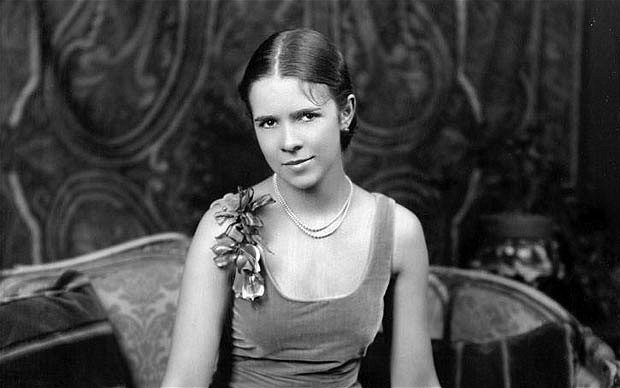
Lady Malcolm Douglas Hamilton
On January 14th of this year Lady Malcolm Douglas Hamilton died at the incredible age of 103.
Along with her husband, Lord Hamilton she helped set up the American Scottish Foundation which has over the years been a cornerstone in building relationships between Scotland and America.
Born in Cohasset, Massachusetts, to Major Nathaniel B Wales and his wife Enid Scarritt, Natalie Scarritt Wales was a quite remarkable woman; A New York socialite, more often that not seen in the pages of Vogue or society magazines. When war broke out she learned of the hardships of people in Britain during the blitz and called Winston Churchill to ask how she could help. His typically dry response was that the sailors on the Atlantic convoys could do with some warm balaclavas! In response to this she set up the ‘Bundles for Britain’ campaign. collecting warm woollens not only for the sailors but for victims of the Luftwaffe bombings of London and Coventry. The response to her campaign was huge and she was deluged by offers of support including armies of American ladies knitting for the British! As a result of this she was awarded an honorary CBE.
In 1951 she met Lord Douglas-Hamilton, son of the 13th Duke of Hamilton and a former Second World War Mosquito fighter pilot. He was already married to Pamela Bowes Lyon, a cousin of Queen Elizabeth, the Queen Mother but was divorced not long after meeting Natalie, she was clearly a very persuasive woman!
Initially the pair lived in London and Scotland and it was during this time they set up the ‘Highland Fund’ a philanthropic enterprise designed to offer loans to crofters, fisherman and other small highland based businesses. It is a testament to the Highland Fund that many small highland enterprises still going today were set up with loans from The Highland Fund.
In 1956 they moved to New York and set up The American Scottish Foundation. The aim of the foundation was to strengthen the historic ties between Scotland and the United States in all areas — educational, cultural, social, genealogical, philanthropic, scientific and economic. Over the years the foundation grew strong. Sadly Lord Malcolm was killed in a plane crash in 1964 but Lady Malcolm carried on the work of the foundation and was able to initiate Tartan Week and the New York Tartan Day parade.
Lady Malcolm was particularly enthusiastic about creating Scotland House, a special dream of Lord Malcolm’s, to be a central gathering place for American Scots, visiting Scots, students, people seeking their Scottish roots–a place for all. The first Scotland House was opened in the mid-70s at 124 East 39th Street by New York City Mayor Abraham Beame, and was an instant success. Lectures, movies, seminars, ceilidhs, dances and teas were held in a comfortable atmosphere with a large Scottish-American library, and Scottish products such as sweaters, tweeds, jewelry and china were for sale. A later Scotland House was on Fifth Avenue in the 80s and of course the present Scotland House at 575 Madison Avenue.
She is survived by her daughter Mimi, six grandchildren and 11 great grandchildren. Her other daughter, Natalie “Bubbles” Wales, who was wife of Lieutenant-Colonel George P Burnett of the Scots Guards, died in 1988.
The post Lady Malcolm Douglas-Hamilton, 1909-2013 appeared first on ScotClans | Scottish Clans.
]]>The post The Battle of Dalrigh and the Lost Sword of Robert the Bruce. appeared first on ScotClans | Scottish Clans.
]]>
Robert the Bruce
One famous battle immediately springs to mind when you think about Robert the Bruce; The Battle of Bannockburn. A great victory for the Scots led by Bruce over the English foe. But before this Bruce’s path had been a hard one and he suffered many humiliations on the route to victory.
It all started with a bitter rivalry. While Edward I of England strutted around north of the border, demanding that nobles swear allegiance to him two men came before him who hated each other far more than Edward. Robert the Bruce and John Comyn, The ‘Red Comyn’.
Comyn and Bruce were supposed to be working together as guardians of Scotland under the watchful eye of Edward but this was an impossible situation and it came to a head in 1306 when Bruce stabbed Comyn to death at the altar of Greyfriars church in Dumfries. This event and Bruce’s subsequent crowning at Scone palace was a signal of intent to Edward, ‘come and have a go if you think you’re hard enough’!
Edward responded with fury, he authorised the raising of the ‘Dragon Banner’ a sign that no quarter would be given to Bruce or his followers. Back in Scotland Bruce was still trying to convince his fellow Scots that he was the man for the job. Many still supported Comyn and he would have a hard time uniting Scotland. With Edward’s knights marching north this was not a good time for the newly crowned king.
By the summer of 1306 Edwards army had made camp in Perthshire and had linked up with Comyn’s supporters north of the border, it was a formidable force and not one to be taken on lightly. Nevertheless Bruce set off to engage them and suffered a great defeat at the Battle of Methven. The English army was led by Aymer de Valence, Comyn’s brother-in-law. According to accounts of the battle Bruce arrived at the appointed place but then retired with his army to camp for the night. Under the feudal rules of engagement Valence would not attack however under cover of darkness he did just that and routed Bruce and his forces.
This was a sign for Bruce that his enemies were not intending to ‘play fair’ remembering the campaign of his predecessor Wallace he resorted to more guerilla tactics.
As we already know Bruce had made a few enemies when he stabbed Comyn. By far the biggest of these north of the Border were the MacDougalls a powerful clan who held the lands around Argyll. This clan was descended from Somerled a great Hebridean king and it’s testament to their power that they had inflicted heavy defeats on both the MacDonald and Campbell clans. They had been great Scottish patriots, unfortunately for Bruce though Comyn was related to the MacDougalls and so they had come out in support of Balliol and the English. With Bruce and his surviving army fleeing westward they ran out of the frying pan and smack into the fire where a large force of MacDougalls were sharpening their swords in anticipation.
When Bruce reached Strathfillan, just to the south of Tyndrum around a thousand MacDougalls were there to meet him, led by the son of Alexander the chief John of Lorne (also known as ‘John the Lame). Bruce was trapped! With Valence pursuing him and the MacDougalls blocking his path he was forced to fight. Bruce and his men were not prepared for battle and the result was a foregone conclusion. What few horses Bruce still had were cut down by the MacDougall axemen and many of his most valued allies such as Sir James Douglas and Gilbert Hey were wounded during the engagement. This rather fanciful poem gives account of the battle:
They thereupon withdrew. In this
There was no mark of cowardice.
They kept together; and the king
Was ever busy rescuing
The rearmost of his company.
With skill and valour there wrought he,
And safely all his men withdrew.
He daunted those that would pursue
So none durst leave their cloe array,
For he was never far away.
The fighting was desperate for Bruce, at one point cut off from his allies he was fighting alone against a small lochan. A MacDougall man attempted to pull Bruce from his horse by grabbing his cloak. Bruce killed him but lost his cloak in so doing. The dead MacDougall was found later still grasping the cloak with Bruce’s brooch still attached. This brooch is still in the possession of the clan to his day.
Bruce and a handful of men escaped with their lives. His army was now non-existent and he fled to the caves and into the history books!
He hadn’t finished with the MacDougalls though and in 1308 at the Pass of Brander Bruce took bloody revenge against the MacDougalls. Once again with the Black Douglas by his side he completely destroyed the MacDougall’s and finally put an end to Scottish resistance to his claim to the throne.

The Lochan of the Lost Sword
The place where Bruce’s darkest moment had come was named ‘Dail Righ’ or ‘The Kings Field’. Bruce had escaped by a hairs breadth (of maybe a brooch pin’s width). As Bruce had escaped he and many of his men threw any unwieldy heavy arms they had into a small lochan. Local legend has it that the king’s sword still lies beneath the surface. Whether its guarded by a ‘lady of the lake’ would be mere speculation.
The post The Battle of Dalrigh and the Lost Sword of Robert the Bruce. appeared first on ScotClans | Scottish Clans.
]]>The post The Cannibal Earl of Drumlanrig appeared first on ScotClans | Scottish Clans.
]]>
While sitting on the steps outside Edinburgh’s ‘Dynamic Earth’ visitor attraction the other day our family were admiring the view over to the Scottish Parliament building. My wife pointed to the older whitewashed building that nestles in the heart of the new parliament complex and asked me if that was part of the parliament too. The building in question was Queensberry House. Not knowing a great deal about it I called up the internet on my phone to find out more. Little did I realise that this innocent looking building would hold such dark secrets!
Queensberry House was built in 1667 for Dame Margaret Douglas of Balmakellie. It was bought a few years later to Charles Maitland, Lord Hatton and then sold again in 1689 William Douglas, the 1st Duke of Queensberry. The first Dukes daughter died in the house under horrific circumstances; her apron caught fire, causing her terrible facial injuries from which she died.
When William died in 1695 the estates passed to his eldest son James Douglas who became the 2nd Duke of Queensberry. James was either an incredible shrewd political operator or was incredibly naïve, As Lord High Commissioner for Scotland between 1700 and 1703 he sided with the Jacobites, leading to his resignation. But then in 1705 he pops back into political life, reinvented as Keeper of the Privy Seal. In 1707 he orchestrates the Act of Union and Scotland’s days as an independent nation are ended.
But James had a dark secret and on the very night the act was signed a terrible and ghastly crime would shock the nation and shame the name of Douglas.
The Duke’s eldest son James was referred to in many peerage records to have ‘died young’ there is very little mention of him at all and with good reason. James Douglas, Earl of Drumlanrig was completely insane! From childhood he was kept under lock and key in a ground floor room in Queensberry House, the room with windows boarded up and kept in permanent darkness. He was a large brutish boy of great strength and incredibly dangerous.
On the night the Treaty of Union was being signed the city was in uproar! Some were celebrating but many more were rioting! The Duke, perhaps he was celebrating the vast sum that was going to come his way for his involvement in the negotiation of the act or perhaps he was trying to escape the mob, either way he was well away from Queensberry house that night. Fatefully so were most of the staff and most importantly so was the valet charged with the responsibility of watching after the young Earl.
The Earl managed to break out of his room and began to wander the empty house in a lust of hunger and rage. He stalked around the huge mansion for some time until the smell of cooking drew him to one of the many kitchens. There he fell upon a young kitchen boy, quickly overpowering him he proceeded to take the poor child and attach him (by means we will not go into here) to a spit and roast the body over the fire!
It was some time before his escape was discovered and by the time he was tracked down to the kitchen the mad Earl had already devoured parts of the body of the servant boy.
Despite the Duke’s best efforts the story leaked out, a nation already shocked at its betrayal but these so called Nobles was dumbstruck by such an act barbarism and the ‘Cannibal Earl’ was never seen in public again. He was spirited off to England and died there a few years later. The Duke had another problem though, James was the eldest son and as such was the rightful heir to the Dukedom, more swift political and constitutional engineering contrived that this passed to his second son, Charles on his death.
But the story didn’t end there – was there a curse on the name of Douglas? Charles married Catherine Hyde who was also prone to acts of eccentricity bordering on insanity too. She had a vile temper and hated Scotland and the Scots, when in residence in Queensberry House she would deliberately dress like a peasant girl to ridicule her Scottish guests. Their son was also afflicted by the family madness and one day in 1754 while on a journey to London he rode in front of the coach carrying his mother, produced a pistol and shot himself dead.
The fortunes of the house fared little better: in 1801 the house was sold by the inheritors of the Queensberry title. Stripped of all its decoration it was given away for the meagre sum of £900 and turned into government barracks, by 1853 it had become a refuge for the destitute and the adjoining lodge was used for ‘the reception and treatment of female inebriates’.
So was there a curse on the Queensberry’s? Many say the terrible act’s of the ‘cannibal Earl’ were a judgement for his betrayal of the Scottish People for his parcel of English gold. There is one older legend however that suggests a much older curse upon the family. On the day and hour of the death of the first Duke in 1695 a Scottish skipper who was at that time in Sicily swears to have witnessed the sight of a flaming coach and 6 horses driving up the side of Mount Etna and disappearing into its fiery culdera. As it passed he heard a diabolical voice cry out:
‘Make way for the Duke of Drumlanrig!”
The post The Cannibal Earl of Drumlanrig appeared first on ScotClans | Scottish Clans.
]]>