The post The Battle of Prestonpans! appeared first on ScotClans | Scottish Clans.
]]> 271 years ago, a mere 12 miles from Edinburgh, one of the first and arguably one of the most important battles of the Jacobite Rising of 1745 took place. It was the first step in a campaign to place a Stuart back on the British throne.
In the early half of 1745, Charles Edward Stuart or Bonnie Prince Charlie, saw an opportunity to reclaim what he considered to be his father’s two kingdoms, Great Britain, formally united in 1707, and Ireland. George II and the British army were occupied in the War of the Austrian Succession, leaving only around 6,000 troops to defend England. Aided by the early support of Donald Cameron of Lochiel, XIX chief of Clan Cameron, he and is party of men were successful in raising a force of 2,000 Scots.
With word of this force ready to march on the Lowlands, it was up to Sir John Cope to give a response root he government. Cope was the general in command of the 4,000 government troops stationed in Scotland, but unfortunately the most of his troops were only recently raised and as a result inexperienced. Cope and his troops marched on Fort Augustus in the heart of the Highlands in an effort to awe the Highlanders into surrender and end the rebellion before it had truly begun. Upon hearing that the rebel army was looking to oppose him at Corryarrack, he instead marched to Inverness hoping to be the one to decide the battleground. Cope had underestimated the men commanding the rebel forces.
Bonnie Prince Charlie and his troops marched straight down to the Lowlands, which by now were almost undefended. A small force which held Edinburgh retreated in the face of the superior foe, leaving the city open for the taking. On 16 September, some of Prince Charles’s army captured the city with little or no fighting, though Edinburgh Castle was still defended for the government. Cope meanwhile furiously marched to Aberdeen are he had urgently ordered ships, so he and his troops could make haste o the south. On the same day the Jacobites took Edinburgh, Cope and his men disembarked in Dunbar.
Even though Cope knew his troops were far from the best, he was determined to engage the Jacobite force. His intelligence told him that the rebels only numbered around 2,000 men, and whilst they were fit and hardy, they were ill-equipped. Cope believed this would mean his force, in two regiments of dragoons and three and a half regiments of infantry, should easily overpower them. It was even said that on their march towards Edinburgh they assured the locals that there would be no battle.
It was on the 20th of September that the two forces first met, just outside Prestonpans near Preston house. The Jacobite army had secured the high ground to the south of Cope’s position, but Cope was determined to face the rebels and made the best of his situation. He drew up his force facing south using the park walls of Preston house to provide protection for the right flank and a marshy bog to the front. Although they had secured a good position the Jacobites were dismayed by the way Cope had taken advantage of the land. A traditional Highland charge would flounder in the marshes and be decimated by musket and cannon fire. The senior Jacobite officers knew they must change their plans if they were to come away victorious but could not agree on what should be done. It was Lord George Murray who pushed for them to move their force to the East so they could assault the exposed left flank of the government forces and it was Lieutenant Anderson, a local farmers son, who knew the lay of the land and knew of a way to get the force where it needed to go. At 4am on the 21st the Jacobites began to move, 3 abreast along a narrow defile, in order to reach the east flank.
 Meanwhile, Cope had noticed some movement in the opposing force juts before dark, though this move was the result of confusion in the Jacobite ranks and was abandoned. He feared that the Jacobite planned to attack both his flanks and thus redeployed in forces in a north south front, the formation that they would fight in the next day. He also ordered that 200 dragoons and 300 infantryman should take on picket duty and light fires in the front of his position in order to thwart any plans for a surprise night attack. Cope felt secure with these measures and in addition ordered 3 companies of Louden’s Highlanders to guard the baggage park in Cockenzie, as well as dismissing some 100 volunteers ordering them to report back in the morning. Cope also made a last minute attempt to gain reinforcements from Edinburgh Castle, requesting Artilleryman to attend his position. It would be for nought though, as the battle would take place a lot earlier than Cope had expected.
At the crack of dawn on the 21st September, Cope’s Dragoons beheld a spectacle that would send a shiver down any sane mans spine. Out of the early morning mist, making “wild Highland war cries and with the bloodcurdling skirl of the pipes” came 1,400 Highlanders charging straight towards Cope and his men. Cope’s inexperienced army wheeled to meet a foe they were not expecting to come from the east, and Cope even managed to scramble some artillery into position. Undaunted by the light and inaccurate fire the Highlanders continued their charge. The centre of this charge became bogged down in an are of marshland, which meant the straight line of the charge became a v formation. The wings on either side met with the dragoons on either side of the British force, which caused them to immediately flee.
This meant that Cope was left with only the centre of his force, which also happened to be the experienced Royal Infantry. Unfortunately for hem the unplanned flanking manoeuvre by the Jacobites, which happened when the wings of the v wrapped around the side of the Royal Infantry and the centre met them head on, meant the were effectively surrounded by Highlanders and they suffered for it. After sustaining heavy casualties they eventually gave way.
Around 10 minutes after the battle had begun, it was over. Hundreds of government troops were dead or injured, and thousands were taken prisoner whom Bonnie Prince Charlie himself ordered should be treated with the greatest of care. The Jacobite’s on the other hand had only suffered around 100 casualties. Cope still in charge of around 200 men, pulled them away to reorganise and rally them in an adjacent field, but they refused to engage the enemy further. Cope had no choice but to retreat and make the long journey south to the relative safety of Berwick-upon-tweed.
Cope’s baggage train in Cockenzie was seized giving the Jacobites around £5000, many muskets and plenty of ammunition but this was not all the victory gave to the cause. It signalled the true beginning of the rebellion, greatly boosting the morale of the Stuart supporters, and causing a surge in recruitment to the Jacobites in Scotland. The battle cemented the seriousness of this new Jacobite rebellion and it’s effectiveness to claim victory in the battles to come.
 A cairn was erected in 1953 to commemorate the memory of all those that fell in the battle. A coal bing was also erected, atop which flies Prince Charlie’s battle flag, using the remains of the area’s coal shale shaped into an obelisk to provide a vantage point for today’s visitors.
In 2006 the Battle of Prestonpans 1745 Heritage Trust was established with the goal to ensure much better presentation and interpretation of the battle. Plans include a visitor Centre in the grounds of Prestongrange Industrial Heritage Museum, ‘Living History’ battle re-enactments, battle-related storytelling and new novels, and a new ‘Flowering of the Arts’ including embroidery.
In 2008 the Trust commissioned Glasgow University Archaeological Research Division to undertake a comprehensive survey, followed by selective excavation, of the battlefield. Although it was thought that the location of the battlefield was known for years the team actually discovered that the true site was located some 500 yards away. Based on concentrations of musket balls and other evidence, this new site is where it is believed the Highlanders charge actually took place.
Details of all the Trust’s activities can be found at its website - www.battleofprestonpans1745.org
The post The Battle of Prestonpans! appeared first on ScotClans | Scottish Clans.
]]>The post Meet The Chalmers: Lady Isabella Bird finds Scottish Covenanters in the 1873 Colorado Territory appeared first on ScotClans | Scottish Clans.
]]> In 1873, an astoundingly plucky young woman made it her strong desire to visit a primitive Rocky Mountain supply outpost in the valley of the Big Thompson river. The place was called Estes Park and it had only recently sprouted up from pure wilderness in Colorado Territory’s northern mountains (Colorado would not enter the union as a state for another three years). Constantly on the hunt for grand adventure, Lady Isabella had heard stories of amazing Rocky Mountain grandeur and the lingering wildness of Estes Park and had determined to get herself, traveling alone, from Cheyenne in Wyoming Territory, south to the wild Colorado Rocky Mountains to see what she would see.
Lady Isabella Bird was an Englishwoman who spent summers in Scotland as a child and who would eventually marry an Edinburgh doctor and settle down in Edinburgh as a base when she was not traveling. Prior to marriage, in 1854, at the age of twenty-two, she left England and began traveling as a hopeful cure for her vaguely ill health.
As we find her in 1873, she is a strong-willed, opinionated, completely independent, remarkably level headed and extraordinarily determined young woman focused on seeing the most fascinating things about the world first hand. This particular 1873 sojourn to the western U.S. was only a part of Isabella Bird’s grand tour of that year, having opened in Hawaii, continuing to the California Sierra and eventually enduring a winter spent in the log and chink settler’s camp at about 7,500 feet at the foot of the final 6,750 or so feet of the mightily impressive Longs Peak (14,256′).
Our window into Lady Isabella’s frontier frolic is given through the wonderful collection of letters that she wrote to her sister back home in England, crafted absolutely contemporaneously with the adventures themselves. The collection has been published as a little book titled A Lady’s Life In The Rocky Mountains and it is wonderful holiday or anytime reading. [NOTE: $2.99 on Kindle now!]
Through parts of the third to sixth letters, we are in the company of the Chalmers family, a Scottish American frontier family with a rather pronounced Scottish identity and somewhat of a special story. Lady Isabella spends a few days with this distinctive family, and it is the Chalmers family that forms the focus of this post.
Meet the Chalmers: Proud descendants of Scottish Covenanters in the middle of nowhere.
Many readers will have visited the quaint mountain village that today hosts the popular Longs Peak Scottish Festival but no state highways led the way to Estes Park in 1873. Indeed, the best indication that a pilgrim might find would be a single track game trail, if that pilgrim knew where to look or was able to scare up a competent guide, of which there were precious few. Lady Isabella set out from Fort Collins, Colorado Territory in September to attain the mouth of a canyon, that she had been locally advised contained a boarding house and a sawmill and some of the most magnificent Rocky Mountain country to be seen. The canyon was also a few miles closer to Estes Park so it seemed a step in the right direction and Lady Isabella took it.
 There was no boarding house in the canyon and the sawmill was in very poor repair. Isabella did find, in the mouth of the canyon, the Chalmers family. The Chalmers owned 160 acres of land there and had built the rudimentary sawmill nine years ago. They currently sold milk and butter to an assortment of people who had come to the canyon to enjoy the dry Colorado climate as a recommended cure for Tuberculosis. The current Chalmers patriarch brought his family from Illinois to the place in 1864 for that very purpose. The remedy worked and within two years, Chalmers was healthy and the owner of a 160 acre plot of land acquired under the Homesteading Act passed by the U.S. Congress in 1862. (More about the Homestead Act below.)
Here is some of what Lady Isabella Bird relates to her sister about these lightly peculiar early members of the Scottish American diaspora – and our focus - the Chalmers:
Chalmers Homestead:
A rough and shaky bridge, made of the outsides of pines laid upon some unsecured logs crossed the river. … On the other side was a log cabin partially ruinous and the very rudest I ever saw. It’s roof being of plastered mud being broken into large holes. It stood close to the water among some cottonwood trees. A little higher there was a very primitive sawmill, also out of repair, with some logs lying about. An emigrant wagon and a forlorn tent with a campfire and a pot were in the foreground.
Chalmers Cabin:
… I got down and found a single room of the rudest kind with a wall at one end partially broken down. Holes in the roof. Holes for windows. And no furniture but two chairs and two unplanned wooden shelves with some sacks of straw upon them for beds. There was an adjacent cabin room with a stove, benches and table, where they cooked and ate, but this was all.
 “Life,” said Isabella, “was reduced to its simplest elements.” As for the Chalmers family members themselves? Lady Bird tells us that they “repelled [her] by their faces and manners.” Mrs. Chalmers was a “hard, sad looking woman” “lean, clean, toothless.” There was a daughter, an “awkward girl of sixteen with uncombed hair and a painful repulsiveness of face” and “a sour repellant looking creature with as much manners as a pig.” A grown son (“a shiftless melancholy looking youth’) and three “hard unchild-like” small children. “They wear boots, but never two of one pair and never blacked of course, but no stockings.”
They are a queer family. Somewhere in the remote highlands I have seen such another. It’s head is tall, gaunt, lean and ragged and has lost one eye. On an English road, one would think him a starving or a dangerous beggar. He is slightly intelligent, very opinionated and wishes to be thought well informed, which he is not.
Chalmers’ religion:
He belongs to the straightest sect of reformed Presbyterians, psalm singers, but exaggerates anything of bigotry or intolerance which characterizes them. … His great boast is that his ancestors were Scottish Covenanters.
And finally, England:
He hates England with a bitter personal hatred and regards any allusions to the progress of Victoria as a personal insult. He trusts to live to see the down fall of the British monarchy the disintegration of the Empire.
In all, Isabella Bird did not say all that much about the Chalmers family but she certainly said enough to paint a picture of them and their frontier life as she met them in early fall of 1873. What she does not address is the Scottish American background story. What particular set of facts – in Scotland and America - gave birth to this family and brought them to their hard scrabble life?
Lady Isabella’s Colorado Chalmers are likely second or possibly third generation Scottish immigrants that were still defined by their Scottish story and clinging to their Scottish ancestral identity, prejudices and spirituality. We are not told which Chalmers’ Covenanting ancestors came to America or when. We do not even know for certain that Chalmers himself is not the immigrant, however a close reading of Isabella’s letters advises against that. The letters do give us some very juicy clues that allow us to fill out the Chalmers’ likely story, Sherlock Holmes style.
Chalmers: Frenchified Gaels Return as Lowlanders.
The name “Chalmers” itself carries an interesting history. Present understanding is that the name derived from a Scot carrying the surname “Cameron” who entered the French military service and assumed the name of Camerarius/Camerario (in French: De La Chambre), or Chalmers, as to be more ‘agreeable to the language of that country.’ At least one of this fellow’s progeny returned to Scotland and became the ancestor of Chalmers of Aberdeen-shire and other parts of Scotland. Chalmers today is considered a sept of Clan Cameron and the name itself was used as a code name for various Camerons during the 1745 Jacobite Rising. Interestingly then, the Scottish name “Chalmers” carries a Gaelic highland heritage filtered through France and reintroduced to Scottish lowlands as protestant, civilized and very zealous Scots. A double helping of Scottishness.
 Scottish Covenanters – You don’t see those everyday.
While somewhat known in America, the story of the Scottish Covenanters who were forced out of Scotland at various times between the 16th – 18th centuries is typically overshadowed by the more popularly understood immigration episodes such as the Highland Clearances and the general long term aftermath of the battle of Culloden. Yet our early Colorado Chalmers’ are of a different migration. Their greatest claim to fame, as they inform Lady Isabella, is that their ancestors were Scottish Covenanters and that they, centuries on and a continent away, steadfastly remained psalm singing reformed Presbyterians with a deep hatred of all things English and imperial.
Scottish Covenanters were 17th century protestants who refused the Stuart kings’ claim to Divine Right and instead believed that the spiritual head of the Scottish Church was religious and not the king. Many of these strong willed dissenters signed the National Covenant to that effect in 1638 and from then until the Glorious Revolution in 1688 they suffered a range of punitive persecution from the Stuarts as well as Cromwell, including transportation as indentured servants to British North America. Others made their way to Ulster in Ireland only to become part of the early 18th century tsunami of Scots-Irish immigration to the American colonies. Provinces such as East New Jersey accepted hundreds of Covenanter refugees during the 1680s who came to the New World initially under the burden of indenture and who worked, eventually, to gain freedom once again.
Although the Glorious Revolution and actions of King William essentially obviated the context for Convenanting Prebyterianism in Scotland, the zealous fervor and prejudices followed immigrants to America and Mr. Chalmers appears to be everything that might be expected of their progeny – even after the intervention of two centuries.
 Scottish American Homesteaders.
Lady Isabella describes the Chalmers operation in fairly unflattering terms and in particular she highlights the abysmal failure of their life as Colorado homesteaders.
They have 160 acres of land. A squatters claim and an invaluable water power. He is a lumberer and has a sawmill of a very primitive kind. I notice that everyday something goes wrong with it and this is the case throughout. If he wants to haul timber down one or other of the oxen cannot be found. Or if the timber is actually underway, a wheel or part of the harness gives way and the whole affair is at a standstill for days.
The cabin is hardly a shelter but is allowed to remain in ruins because the foundation of a frame house was once ‘a-dug’. A horse is always sure to be lame from want of a shoe nail or a saddle to be useless from a broken buckle and the wagon and harness are a marvel of temporary shifts, patchings and insecure linkings with strands of rope. Nothing is ever ready or whole when it is wanted.
Yet Chalmers is a frugal, sober hardworking man and he, his eldest son and a hired man rise early, going forth to their work and labor till the evening.
The Chalmers’ homesteading failure is certainly not due to the strict and deep Presbyterian faith and dogma that Mr. Chalmers imported from Scotland. Indeed, Lady Isabella describes the Chalmers as the frontier equivalent of the modern workaholic, sparing little time for anything other than work and religious devotion. Yet they seem never to get anywhere.
The Chalmers sawmill is described as having become decrepit after only nine years of operation and as soon as one thing is fixed another two are broken at the homestead. We are not told what line of work Mr. Chalmers was in while in Illinois. He may have been, like so many others, unprepared by background, skill and knowledge to succeed on the Colorado frontier, even though the United States Government and various private interests aggressively solicited men like Chalmers to give the frontier a try. If so, he would not be the only Scottish American and Scottish immigrant lured west by the offer of “free land.”
In the late 1850s and early 1860s the United States was engulfed in issues surrounding slavery, free labor, small versus large landholders and civil war. In 1862 the U.S. Congress passed the Homestead Act as part of that conflict.
 The Homestead Act of 1862 provided that any adult citizen (or person intending to become a citizen), including free slaves, who headed a family could qualify for a grant of 160 acres of public land by paying a small registration fee and living on the land continuously for five years and by making necessary improvements to “prove up” a homestead clam. If the settler was willing to pay $1.25 an acre, he could obtain the land after only six months’ residence. Families picked up what they had and gambled it on free land in the west.
Despite an aggressive campaign to draw Americans and fresh immigrants to the western frontier, the law ultimately did not provide the catalyst to create a new class of small landholding farmers and such from the stock of eastern and Midwestern urban dwellers. While an enormous amount of land was transferred from First Nations, to the U.S. Government and into white private landholders, much of the land granted under the 1862 Homestead Act fell quickly into the hands of speculators. Some land was hoarded into huge land owning conglomerates and much was resold at great profit while new immigrants were left wondering how to make it in the New World.
The Chalmers sawmill story smacks a little of all too this common homesteading story. The mill itself was likely constructed as a necessary improvement to prove up a homestead claim. Following issuance of the homestead “patent” that granted private title to the land, Chalmers seems to have dropped the ball and allowed the mill and homestead to fall into serious disrepair. While he got his mill built, no one, it seems, told Mr. Chalmers how to run it.
These were the Chalmers, one of so many Scottish American families who brought their ancestry and added what they were able to a new nation. They may not have succeeded at the sawmill business but perhaps that “invaluable water power” ultimately brought prosperity to a deserving psalm singing Presbyterian Covenanting family carrying on Scottish traditions in America.
The post Meet The Chalmers: Lady Isabella Bird finds Scottish Covenanters in the 1873 Colorado Territory appeared first on ScotClans | Scottish Clans.
]]>The post PM Cites Clan Cameron Heritage in Referendum Speech appeared first on ScotClans | Scottish Clans.
]]>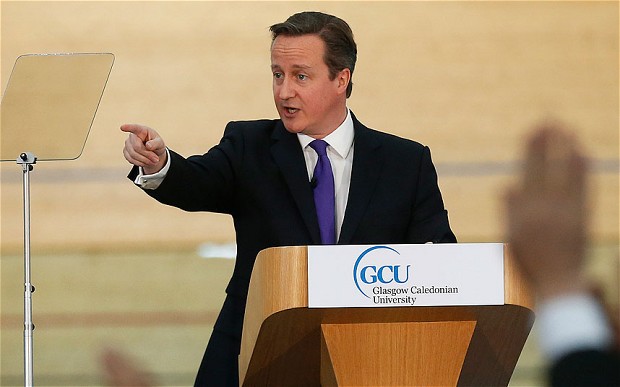
David Cameron answers questions from the media in East London after his speech on the importance of Scotland to the UK.
UK Prime Minister David Cameron has referenced his clan heritage in an appeal to keep Scotland part of the United Kingdom. In a speech given in East London last Friday, Cameron urged Scots and Britons to defend their shared history and heritage by voting against the upcoming referendum on Scottish Independence.
With only seven months to go before the big vote, Cameron spoke of his pride in his own Scottish roots in a major speech on the issue. Referencing his West Highland ancestry, Cameron said: “The name Cameron might mean ‘crooked nose’ but the clan motto is “Let us unite” – and that’s exactly what we in these islands have done.”
Cameron’s emotional defence of the Union also praised Scotland’s role in Britain’s military achievements, from the rich history of ship building on the Clyde to the bagpipes of Lord Lovat’s regiment which roused troops during the D-Day landings. He also stated Scotland had helped to make Britain “the most extraordinary country in history”, then used the success of Team GB at the 2012 Olympic Games to urge voters to keep together “the winning team in world history.”
While the speech made a great deal of importance of Cameron’s clan heritage, it conveniently left out Clan Cameron of Lochiel’s long history of battling the English. Described as ‘fiercer than fierceness itself’, Clan Cameron’s reputation can be summed up with their war cry: “Chlanna nan con thigibh a so’s gheibh sibh feoil!” (Sons of the hound come here and get flesh!).
Legend states that a Cameron contingent fought alongside Robert the Bruce against the English king Edward II at the Battle of Bannockburn in 1314, the decisive clash of the Wars of Scottish Independence. Members of the clan also fought in the front line of the Jacobite Army during the disastrous battle of Culloden in 1745. Following the defeat of Bonnie Prince Charlie, the Cameron estates were forfeited by the Government because of the support the chief had given to the Jacobite cause.
Cameron’s speech also did not mention that he has for many years enjoyed family holidays on the Tarbert estate on the Scottish island of Jura. The estate, owned by his wife Samantha’s stepfather, Viscount Astor, has 6,000 deer, which the Prime Minister has joined stag shooting parties to hunt.
Responding to the Speech, Scotland’s First Minister Alex Salmond called it “flimsy” and attacked Cameron as a member of the “out–of–touch Westminster elite”, stating: “This speech was a threadbare defence of the case for Westminster Tories retaining their undemocratic control over Scotland, which betrays the utter weakness of the Prime Minister’s case.”
Mr Cameron admitted people had advised him to stay quiet on independence – previously he has admitted his “Tory toff” image is an impediment – but on Friday he said “frankly, I care far too much to stay out”.
The post PM Cites Clan Cameron Heritage in Referendum Speech appeared first on ScotClans | Scottish Clans.
]]>The post The Flodden 500 Service at St Giles, Edinburgh. appeared first on ScotClans | Scottish Clans.
]]>I’d like to continue by reproducing Alaistair Moffat’s reading given at St Giles. It was an excellent account of the battle and the aftermath.
—
FLODDEN ADDRESS. – ALISTAIR MOFFATWhen dawn broke on the morning of 10th September, 1513, the landscape of hell was revealed. On the gently undulating northern ridges of Branxton Hill more than 10,000 men lay dead or dying. In the midst of the carnage were the naked, plundered bodies of King James IV of Scotland, his half-brother, Alexander Stewart, Archbishop of St Andrews, George Hepburn, Bishop of the Isles, two abbots, nine great earls of Scotland, fourteen lords of parliament, innumerable knights and noblemen of lesser degree and many thousands of farmers, ploughmen, weavers and burgesses. It was the appalling aftermath of the battle of Flodden, the greatest military disaster in Scotland’s history.In the grey light of that terrible dawn, sentries posted around the captured Scottish cannon could make out where the brunt of battle had been joined. Below them, at the foot of the slope ran the trickle of a nameless burn now choked with slaughter, a wrack of mangled bodies, broken pikeshafts, shattered shields and everywhere blood and the sickening stench of death, vomit and voided bowels. Not all of the bodies were yet corpses. Through a long dark night the battlefield had not been a silent graveyard. Trapped under lifeless comrades, crippled, hamstrung or horribly mutilated, fatally wounded men still breathed. Bladed weapons rarely kill outright and they were often used to bludgeon men to their knees or into unconsciousness. In the churned mud of the battlefield some men will have lost their footing, fallen and been hacked at before they could get up. Many bled to death, maimed, lacerated by vicious cuts, screaming, fainting and screaming once more in their death agonies. Some will have been put out of their misery by parties of English soldiers scouring the field by torchlight for plunder, stripping the bodies, ransacking them for valuables. But other men will have lingered on inunspeakable pain, praying to their God, passing in and out of consciousness, slowly bleeding to death. The fury of the battle on Flodden field may have been stilled and awash with death and defeat. But all was not yet over. In an instant the plunderers and scavengers looked up and the sentries by the cannon stood to, frantically peering through the morning light. They could hear the rumbling thunder of hoofbeats – and then, suddenly, riders erupted over Barelees Rig. With 800 horsemen at his back, Lord Alexander Home galloped hard across the horrors of the battlefield and up the slopes of Branxton Hill. They had not come back to Flodden to rejoin a lost battle but to rescue their captured ordnance. And they very nearly succeeded. After a sharp skirmish, the English gunners managed to load and get off a volley at Home’s squadron, and they scattered.And so it ended. As the Border horsemen wheeled round and raced out of range, the remnants of the shattered Scottish army were limping across the Tweed at Coldstream. There was no organised pursuit. The victorious English army had taken heavy casualties and the Earl of Surrey and his captains were exhausted. In any event, their bloody work was done. The floors o’ the Forest were a’ wede awa, Flodden was a national disaster, a harbinger of lawlessness in the shape of the Border Reivers, the beginning of a long period of political uncertainty and the last medieval battle in the history of Britain. The last time a king was to die leading his army.It was also an epic. As two huge armies mustered and marched into history, extraordinary scenes had been witnessed. At Ellemford, high in the Lammermuirs above Duns, where sheep now graze on the flanks of the hills, where buzzards hang in the updrafts and an elegant bridge crosses the Whiteadder, King James IV and his army camped. Huge guns were trundled down the hill trails, dragged by oxen, and by 21st August 1513, almost 30,000 men had massed in this beautiful, now lonely valley. Two days later, the largest force ever to leave Scotland crossed the Tweed at the fords below Coldstream. They had declared war, they had entered the realm of the Tudors, of the ferociously ambitious and bull-like Henry VIII.Meanwhile Thomas Howard, Earl of Surrey, and the Bishop of Durham carried the standard of St Cuthbert before their battle-hardened troops. In front of the high altar of the great cathedral, Howard had watched the bishop bless the flag of the Haliwerfolc. The lands of Palatinate, of the Prince-Bishops of Durham, reached to the Tweed and beyond, and in an early definition of Englishness, their people were known as the Holy Man’s Folk, the Haliwerfolc. Ancient allegiances were being roused and summoned.Between 2nd and 9th September two vast armies circled each other in a small corner of North Northumberland, like heavyweight boxers looking for weaknesses or waiting for wrong moves. After the Earl of Surrey had despatched a herald, the Rouge Croix, it was finally agreed that battle would be joined on 9th September. Supplies for almost 70,000 men, horses and camp followers were running dangerously lowand neither army could remain in the field much longer.Realising the strength of the Scots’ entrenched position, Surrey led his men to the east, skirting Flodden Edge and staying out of artillery range. On the morning of the appointed day, he crossed the River Till and took up a position to the north of James IV’s army, barring any retreat to Scotland. And then, on a damp afternoon, the greatest battle ever fought between England and Scotland began.On the left wing of the Scottish host, the Highlanders led by the Earl of Huntly massed in formation with Lord Home’s Borderers, and in the moments before their chiefs roared the claideamh mor, the order to charge, the Gaelic-speaking warriors did something remarkable. They began to summon the army of the dead. They began the sloinneadh, the naming of the names of memory. To bolster his courage, each man began to recite his genealogy. Many waiting to charge could go back 20 generations. As if they were offering up the murmur of prayer, each man remembered why he had come to fight. Is mise mac Iain, mac Ruaridh, mac Domhnuill. I am the son of John, the son of Roderick, the son of Donald. And once their quiet voices stilled, the roar of the claideamh mor rent the air and they broke into the charge. With their broadswords and Lochaber axes, the Highlanders tore into the English ranks, the division led by Edmund Howard, They scattered and a rout was only prevented when Lord Dacre rode to the rescue with his English Borderers. As history rumbled across Branxton Hill, fortune appeared to be smiling on the Scots.At the same time, James IV was about to make a catastrophic decision, a crucial error of judgement. Instead of occupying an elevated position at the rear of his vast army, he chose to lead from the front. His division raced down Branxton Hill and as they reached the lower slopes and much softer ground, many men began to skid and lose their footing. This unsteadiness made it very difficult for them to control their long, 12 foot pikes. The wet ground made them charge out of formation, only engaging piecemeal with the solidly planted ranks of English billmen, With their shorter, more easily handled bills, they began to slice into James IV’s division. And as the men at the back saw the Scottish pikes go down, they hesitated and many of them ran, believing their king to be killed. By leading from the front, James was immediately submerged in the ruck of the fighting, only able to see what was directly in front of him, in no position to direct his forces. The result was disaster.The legacy of Flodden was most immediately and keenly felt in the Borders. North of the Tweed the memory of the battle is kept alive in the fabric of the midsummer common ridings. At Selkirk the ceremony of the casting of the colours is unique in Britain and it is based on the return of a soldier known as Fletcher, traditionally believed to have been the only one of sixty from the town to return. In his bloodied hand he held aloft, in a gesture of desolate defiance, a flag captured from the men of Macclesfield in Cheshire. Many Englishmen had fought and fallen at Flodden. And passions still run high. When the Mayor of Macclesfield recently wrote to the Provost of Selkirk asking for the return of the flag, he was told that he would need to come to the Borders and take it.Flodden is an immense story. Like Culloden in 1746, it signalled the end of a fading, feudal Scotland. And it also ushered in a century of lawlessness, the criminal society controlled by the appalling Border Reivers. Across Europe, renaissance, enlightenment and the reformation were changing lives, forming new ideas and creating the institutions of the modern world. In the first half of the 16th century, central authority broke down in a leaderless nation, and while swords and spears spoke in Scotland, the law was often silent.What is to be learned from all of that suffering and slaughter, from all of those ancient enmities? First that they are ancient and must remain firmly in the past. In 2014 Scotland faces a historic choice and whichever way the people of Scotland vote, it must be a signal lesson of Flodden that enmity, even ancient enmity can have no part. And it is to the credit of politicians on all sides of the argument that it has not reared an ugly head. But it might.And alongside that it mustmbe important to remember, to understand the visceral, bloody realities of whatmwent on on that terrible day 500 years ago. Lest we forget, Flodden should become a place of remembrance and of pilgrimage, a place where the uncomfortable lessons of history can be learned and never forgotten.Two weeks ago, on one of the countless beautiful evenings of this glorious summer, I drove over to Branxton. As the sun threw long shadows across the gently undulating fields, I tried to imagine the 10th of September, 1513, the distant roar of thousands of men, the screams, the fear and feral closeness of hand-to-hand fighting whenmen can smell the breath, smell the sweat of men grunting pushing, hacking, swearing at them, trying to kill them. In a Gaelic phrase, I tried to listen for the music of the thing as it happened. I tried to listen to the slow, sad music of our history. I hope that many in Scotland and England hear it too.
Prior to the sir Malcolm MacGregor (who has admitted that try as he might he can not find a single MacGregor involved in the battle) researched the casualty lists. The following names are clans and families who are known to have fought at Flodden along with notable people who fell in the battle:
From the Highland Clans:
Campbell, Erskine, Fraser, Gordon, Graham, Guthrie, Haldane, Hay, Keith, Leslie, Lindsay, Macaulay, Macfarlane, Mackay, Maclean, Macnab, Menteith, Moncreiff, Moray, Murray, Ogilvy, Oliphant, Ramsay, Rattray, Ross, Ruthven, Seton, Sinclair, Stewart, Forbes, Forsyth, Grant, MacKenzie, MacNaughton, Ross, Skene, Buchanan Of Leny, MacDonald
The Lowland and Border Clans and Families:
Adair, Abercromby, Adam, Anstruther, Baillie, Baird, Balfour, Barclay, Blackadder, Bonar, Boswell, Carnegie, Cathcart, Cleland, Cockburn, Colville, Craig, Crauford, Crichton, Cunningham, Dunbar, Dundas, Edmonstone Of Duntreath, Elphinstone, Fotheringham, Gray, Grierson, Haig, St.Clair Of Roslin, Henderson, Hepburne, Herries, Home, Hoppringle, Houston, Lauder, Liddel, Lockhart, Lumsden, Lyon, Masterson, Maitland, Maule, Maxtone, Maxwell, Melville, Muirhead, Mure, Napier, Rollo, Sempill, Somerville, Spottiswood, Stewart Of Traquair, Allardice, Ballingall, Kerr, Colville, Crammond, Eliott, Ferguson, Fleming, Foreman (Standard Bearer), Inche, Inglis, Johnstone, Kirkcaldy, Knolis, Logan, Montgomery, Morton, Muir, Nelson Of Madinpap, Otterbrun, Pitcarin, Pringle, Reid, Rorison, Savage, Scott, Seton, Tunstall, Vallanche, Wood Of Raik, Kennedy, Douglas, Hamilton, Livingstone, Wemyss, Wallace, MacLellan, MacCulloch, MacDowall
Chief Or Notable Head Of House/Family
King James IV, Archbishop Of St.Andrews (King’s Son), Earl Of Morton ( Grandson Of James 1), Earl Of Glencairn, Douglas Of Drumlanrig, Sir James Dunbar, Dundas, Lord Elphinstone, Lord Erskine, Earl Of Huntly, Earl Of Montrose, Sir Alexander Guthrie, Haig Of Bemersyde, Haldane Of Gleneagles, Earl Of Errol, Earl Of Bothwell, Sir William Keith, Earl Of Cassilis, Earl Of Rothes, Earl Of Crawford, MacDowal, Earl Of Garthland, MacFarlane Of Arrochar, Hector MacLean Of Duart, Maxwell Lord Of Carlaverock, Sir John Moncreiffe Of That Ilk, Moray Of Abercairney, Ramsay Of Dalhousie, Rattray Of That Ilk, Rollo Of Duncrub, Master Of Ruthven, Lord Sempill, Lord Seton, Earl Of Caithness, Earl Of Atholl, Earl Of Lennox, Lord Darnley, Master Of Angus, Anstruther Of That Ilk, Ballingall Of That Ilk, Master Of Eliott, Lord Forbes, Master Of Lovat, Sir Alexander Gordon Of Lochinvar, Sir Alexander Gordon Of Knockenshene, Grant Of Freuchie, John Henderson Of Fordell, Lord Alexander Home, Sir Patrick Houston Of That Ilk, William Johnstone Of That Ilk, Lord Keith, Lord Lorn, Lyon (Sons Of Lord Glamis), MacKenzie Of Kintail, Sir Alexander MacNaughton Of That Ilk, Andrew Pitcairn Of Pitcairn And 7 Sons, Lord Ross, William Ruthven Of That Ilk, Sir Walter Scott Of Buccleuch, Alexander Skene Of That Ilk, Sir David Wemyss, Earl Of Argyll, Lord Kinnaird, Master Of Cathcart, MacDonald Of Lochalsh.
—–
 The St Giles Service…
Just over 40 clan chiefs attended the St Giles service. At the end of the service they mustered for a photograph on the steps. To help you identify who was there we have been given a sketch with a key to the names:
1. Sir Walter Riddell of Riddell 2. The Hon. Elizabeth Fairbairn 3. Madam Pauline Hunter of Hunterston 4. Sir David Bannerman of Elsick 5. Lord Polwarth 6. Andrew Wallace Younger of that Ilk 7. Andrew Dewar Durie of Durie CBE 8. Michael Ancram, Marquess of Lothian 9. Andrew MacThomas of Finegand 10. Earl of Dundee 11. David Campbell of Strachur 12. Roderick Macneil of Barra 13. Sir James McGrigor 14. Earl of Eglinton and Winton 15. Professor David Hannay of Kirkdale and of that Ilk 16. Henry Trotter Younger of Charterhall 17. John MacArthur of that Ilk 18. Duncan Paisley of Westerlea 19. Richard Carmichael of Carmichael 20. Earl of Caithness21. Earl of Lauderdale 22. The Hon. Alexander Leslie 23. Earl of Erroll 24. Lord Napier and Ettrick 25. Madam Arabella Kincaid of Kincaid 26. David Cranstoun of that Ilk 27. Jamie Macnab of Macnab 28. Earl of Wemyss and March 29. Sir Crispin Agnew of Lochnaw 30. The Hon. Kate Nicolson 31. Duke of Montrose 32. The Hon. Peregrine Moncreiffe of that Ilk 33. Martin Haldane of Gleneagles 34. Lord Sempill 35. Andrew Marjoribanks of that Ilk 36. Donald MacLaren of MacLaren 37. Duke of Hamilton 38. Field Marshal the Lord Guthrie of Craigiebank 39. Isla St Clair 40. Marquess of Ailsa 41. Madam Margaret Eliott of Redheugh 42. Sir Malcolm MacGregor of MacGregor 43. Lord Macdonald of Macdonald 44. Richard Oliphant of that Ilk
This image will help you identify the chiefs:

The post The Flodden 500 Service at St Giles, Edinburgh. appeared first on ScotClans | Scottish Clans.
]]>The post The Cameron Men appeared first on ScotClans | Scottish Clans.
]]>
Cameron of Lochiel Clan Crest
The name Cameron originates from the Gaelic words ‘cam’, meaning wry or crooked, and ‘sron’ meaning nose, suggesting that the progenitor of the Clan Cameron had a crooked nose!
Cameron is one of the most popular in the Highlands, and the name of Lochiel, the Chief of the Clan, has always stood for everything that is honourable and good.
The home of clan Cameron is in Lochaber, in Inverness-shire, and is part of the beautiful, rugged, and wild region of Scotland which is littered with glens, and mountains, and lochs.
It is very common in the Highlands to connect a family name with the places they are from: for example the MacDonalds with Glencoe; the Stewarts and Appin; and the MacGregors, MacNabs, and the MacLarens with Balquhidder. It’s no different with the Camerons and Lochaber.
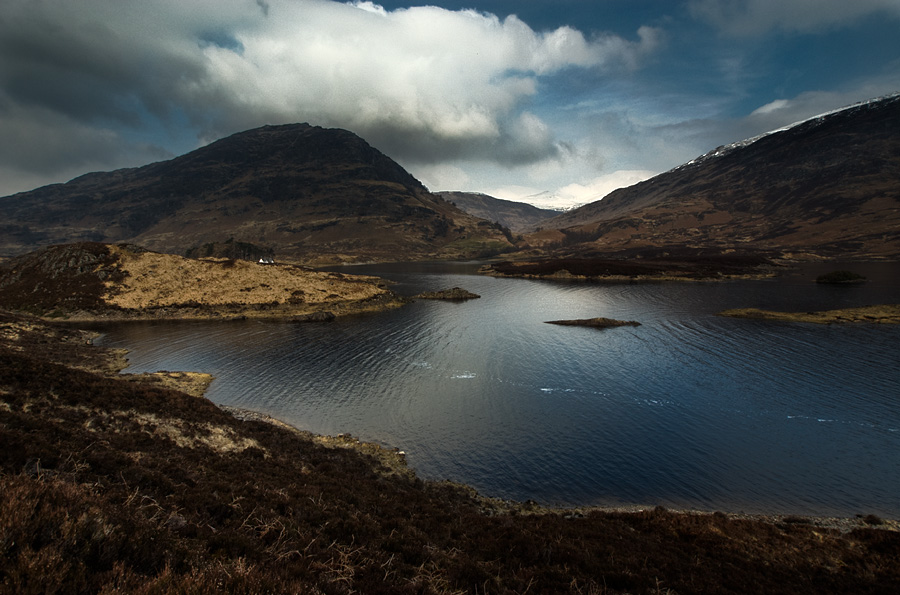
Loch Treig – Land of Clan Cameron
There are many great lochs in Lochaber, including the isolated Loch Treig which has a small islet in it which is called Council Island. It was on this island where the Chief of the Camerons would meet other chiefs, in particular with the MacKintoshes, to settle any dispute. Council Island was an ideal meeting place because the two chiefs could meet without risk of one setting an ambush for the other. The Cameron Chief would be escorted by his men to the meeting, and then on a hillside, overlooking the loch, is the Watch Rock, a large boulder where the Cameron sentinels would keep an eye on the meeting and their Chief.
Fort William was a fort built during the times of Oliver Cromwell, and was used as headquarters for the English troops who had been sent north to keep the Camerons in order. It is said that even long after the other local clans had submitted to the English forces, the Camerons held strong, resulting in many a fierce skirmish between to them and the invaders. On one particular occasion Lochiel and his men found themselves in a tight spot when defending one end of a mountain pass, another band of English soldiers started to advance on them from the other end. To most it would have seemed that capture was inevitable, but not to these Camerons. They carefully, and in formation, retreated, walking backwards to remain facing their enemy, up the steep, snow covered hillside, leaving the English looking on in amazement, unwilling to follow.
Highland soldiers were very much accustomed to many hardships, particularly when at war. One story tells of a Cameron fighter who felt disgraced by the actions of one of his sons one night when sleeping outdoors during the campaign against Cromwell’s men. It was wintertime, and snow covered ground. The Cameron son decided to make a pillow out of a large snowball. On seeing this, the Cameron father flew into a rage, kicking the snowball from under the sons head, saying, “Are you become so like a woman that you cannot sleep without such luxury?”
The Camerons were devoted followers of the Stewarts. They fought at the 1689 Battle of Killiecrankie in support of James VII against the government troops supporting William of Orange. At the battle, which saw victory for the Jacobeans, it was Lochiel’s tactics to “fight immediately while the men were in good heart” which proved to have been successful.
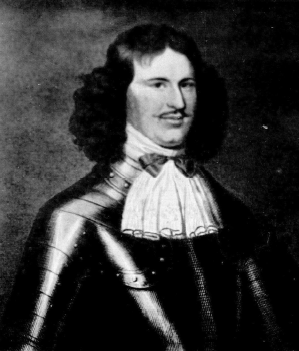
Ewen Cameron
They also supported the 1715 Jacobite rebellion. By this point the Cameron chief, Sir Ewen of Lochiel was an old man of 86, but his son Allan accompanied the Old Pretender, James Francis Edward Stuart, when he landed in Scotland from France. It is claimed that on the morning that the Old Pretender landed in Peterhead, Sir Ewen Cameron awoke from his sleep at his home in Lochaber, and shouted to his wife, Jean Barclay, Lady Cameron, “Wife, wife! The King has landed! The King has landed – and our son Allan is with him!”
Lady Cameron told him that it was just a dream, but Sir Ewen repeated what he said, and insisted that a large bonfire was built. Then the best alcohol in the house was brought out so that all his ‘lads’ – his affectionate term for his clansmen – and friends could drink to the King’s health.
Despite thinking that he was foolish acting so rashly because of a dream, Lady Cameron followed her husbands instructions in helping to organise festivities to celebrate the landing of the James Stuart. And so everyone in the area was invited to celebration, which, in true Highland fashion, last for a number of days.
After a few days had passed, news finally began to filter through to Lochaber that Prince James had in fact landed in Scotland, along with Allan Cameron, at around the exact same time that Sir Ewen Cameron awoke and made the announcement to his wife.
Donald Cameron, known as the ‘Gentle Lochiel’, was grandson of Sir Ewen and he was one of the first nobles to called

Donald Cameron: ‘Gentle Lochiel’
upon when Bonnie Prince Charlie arrived in Scotland. Cameron could see that the Prince’s campaign was essentially futile, as he had neither the money nor the resources that would be needed, and pleaded with Charles to wait until he had some more definite support. However, the Young Pretender was impatient, and angrily said, ‘In a few days, with the few friends that I have, I will erect the Royal Standard and proclaim to the people of Britain that Charles Stuart has come over to claim the crown of his ancestors. And Lochiel may stay at home and from the newspapers learn the fate of his Prince!’
However, Lochiel responded, ‘No! I’ll share the fate of my Prince, and so shall every man over whom Nature and Fortune has given me power!’
So, in 1745, when Charles, and his 150 followers, went to erect his standard at Loch Shiel in Glenfinnan he was devastated to see the place deserted. But then the distant sound of pipes could be heard, and they were getting nearer and nearer, and soon the notes of a Cameron pibroch could be clearly heard, along with the regular tramp of feet, and a line of tartan could be seen coming down the hill. Before too long the line of men, which was eight hundred strong, arranged into regular formation. It was the Cameron men, much to the relief of the Prince. Then, and only then did he give the Marquis of Tullibardine his banner to unfurl, and so began the great ‘Rising of the Forty-Five’.
Lochiel kept his promise to Bonnie Prince Charlie, giving his all in service to his Prince and to the cause; even getting wounded at the battle of Culloden in 1746. Sir Donald Cameron accompanied Charles back to France, where they failed in persuading King Louis XV to attempt another rebellion. Donald never returned to Scotland. He later took charge of a French regiment in 1747, and died in Flanders the following year.
Quick Links to Clan Cameron Products from The Clan Shop
- Cameron Tartan Tie
- Cameron Tartan Pocket Square Handkerchief
- Cameron Tartan Scarves
- Cameron Tartan Kilts
- Cameron Clan Crest Badge
- Cameron Clan Crest Mug
- Cameron Clan Crest T-Shirts
- Cameron Clan Crest Belt Buckle
- Cameron Phone Covers
- Cameron Tartan
- Cameron Clan Crest Crystal Glasses
- Cameron Clan Crest Cufflinks
- Cameron Clan Crest Sgain Dubh
- Cameron Clan Crest Kilt Pin
- Cameron Clan Crest Plaques
The post The Cameron Men appeared first on ScotClans | Scottish Clans.
]]>The post Clan Cameron Get Interactive appeared first on ScotClans | Scottish Clans.
]]>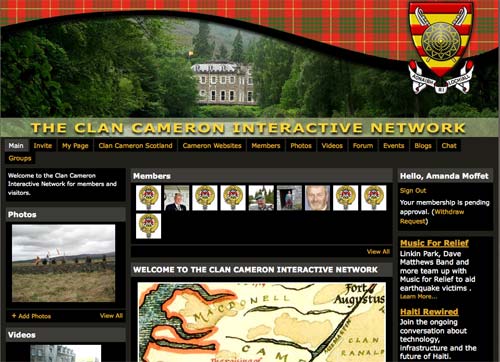
Clan Cameron Interactive Network
The Clan Cameron Assocation Scotland have just launched a new website: The Clan Cameron Interactive Network (http://clancameron.ning.com).
The site is for all Camerons and associated septs to participate in. They are hoping Clan Cameron Association Members from around the globe and visitors interested in their Clan will participate in the New Interactive Network.
Quick Links to Clan Cameron Products from The Clan Shop
- Cameron Tartan Tie
- Cameron Tartan Pocket Square Handkerchief
- Cameron Tartan Scarves
- Cameron Tartan Kilts
- Cameron Clan Crest Badge
- Cameron Clan Crest Mug
- Cameron Clan Crest T-Shirts
- Cameron Clan Crest Belt Buckle
- Cameron Phone Covers
- Cameron Tartan
- Cameron Clan Crest Crystal Glasses
- Cameron Clan Crest Cufflinks
- Cameron Clan Crest Sgain Dubh
- Cameron Clan Crest Kilt Pin
- Cameron Clan Crest Plaques
The post Clan Cameron Get Interactive appeared first on ScotClans | Scottish Clans.
]]>The post Armstrongs on TV appeared first on ScotClans | Scottish Clans.
]]>
Armstrong Clan Crest
The BBC has begun the re-broadcast of the series ‘Scotland’s Clans’ with the story of Clan Armstrong. This was broadcast here in the UK on Monday night and is available online on the BBCi Player. I have to say that the presentation was first rate and whilst there will no doubt be a few that will not be pleased that the program is not stuffed with ‘facts’ (spurious names, dates, and references to this or that charter of 14 somethingorother) The program did give a very well balanced view of the position of the clan in Scotland’s history. Obviously the program centred on the Armstrong’s Riever past and the clan’s betrayal by the Stuart monarchs. I’d hate to have to sift through all the emails and letter that the BBC will no doubt get at the end of this series from all of those ‘outraged’ that their clan are not included (‘dear sir, why has the Bellshill branch of the clan MacShuggle not been included given our contribution to the world of steam driven lawnmower production in the late 19th century? Our clan chief lives at 19 shaleheap view rise, auchenmurtle etc etc’) but even the BBC don’t have the resources to cover all but the most significant. Still to come are: Cameron, Campbell, Fraser, Mackenzie, MacLeod, MacDonald, MacGregor
Quick Links to Clan Armstrong Products from The Clan Shop
- Armstrong Tartan Tie
- Armstrong Tartan Pocket Square Handkerchief
- Armstrong Tartan Scarves
- Armstrong Tartan Kilts
- Armstrong Clan Crest Badge
- Armstrong Clan Crest Mug
- Armstrong Clan Crest T-Shirts
- Armstrong Clan Crest Belt Buckle
- Armstrong Phone Covers
- Armstrong Tartan
- Armstrong Clan Crest Crystal Glasses
- Armstrong Clan Crest Cufflinks
- Armstrong Clan Crest Sgain Dubh
- Armstrong Clan Crest Kilt Pin
- Armstrong Clan Crest Plaques
The post Armstrongs on TV appeared first on ScotClans | Scottish Clans.
]]>