The post Earliest Evidence shows that Scotland was inhabited 14,000 years ago appeared first on ScotClans | Scottish Clans.
]]>
At Howburn Farm in South Lanarkshire, a scattering of flints, discovered by the Biggar Archaeology Group, turned out to be the earliest evidence found of human habitation in Scotland. The flints have been dated between 12,000 and 14,000 B.C. The implements are about 4cm in length, and as many as 40,000 fragments have been uncovered so far.
This discovery has changed the previous belief that Palaeolithic man had’t travelled further north than the Midlands, with Creswell Crags often considered the northern limit of Palaeolithic settlement.

Lowborn Farm by Bigger in the Scottish Borders
Much of Scotland would have been under ice. This was the time of the last Ice Age which was followed by temperatures rising around 13,000 BC. People were able to move to new lands now freed from the Ice. The temperatures for the next 3,000 years changed dramatically, going through phases of extreme cold to warm periods. It was in this warm phase probably around 12,000 BC, that the remarkable new finds at Howburn Farm belong.

Lowborn Farm Excavations
The flints were probably used by hunters to kill reindeer, mammoth and giant elk and to cut up prey and prepare their skins.
To put this in perspective. The size of these prehistoric animals next to a person, armed only with a flint.

Size of an Elk

Size of a Mammoth

Initial estimates suggested stone tools at the scene were made in around 2000 BCE, but in 2009 they were shown to be more than four times as old, making them the earliest signs of humanity so far discovered in Scotland. The flints were described as “strikingly similar” to tools produced in continental Europe during the same period.
“These tools represent a real connection with archaeological finds in north-west Germany, southern Denmark and north-west Holland – a connection not seen elsewhere in Britain at this time,’ says Alan Saville, a Senior Curator in Earliest Prehistory at the National Museums of Scotland who is also the President of the Society of Antiquaries of Scotland and a specialist in the study of flaked flint and stone tools.
“This discovery is both intriguing and revolutionises our ideas about where humans came from in this very early period.
“In southern Britain, early links are with northern France and Belgium. Howburn is just one chance discovery and further such discoveries will no doubt emerge.”
“The climate had improved when the game hunters arrived, but the return of glacial weather is thought to have driven humans away until around 1,000 years later. A now-destroyed cave in Argyll had previously provided the earliest evidence of humans in Scotland.”
Howburn Farm is thought to have been an ancient camp where the hunters would make their flint tools. It is thought that these early people were hunting parties and not the ancestors of future Scots, that they took their hunt back across the North Sea basin towards Denmark and Germany. This was a nomadic life which persisted for thousands of years, until the neolithic age saw the advent of farming.
The post Earliest Evidence shows that Scotland was inhabited 14,000 years ago appeared first on ScotClans | Scottish Clans.
]]>The post Lang Sandy Armstrong of Rowenburn appeared first on ScotClans | Scottish Clans.
]]>
Lang Sandy Armstrong of Rowanburn was a 16th century leader with a large family who were all hanged by the English warden at Carlisle castle
To get the title of ‘The Worst Reiver Ever’ you must have been really bad, the worst of the worst. Lang Sandy Armstrong of Rowanburn is known as ‘The Worst Reiver Ever’. He gained this nickname mostly because of his height he was well over six foot tall which was a giant 400 years ago. He also was one of the most successful and daring freebooters of his clan – Clan Armstrong.
Clan Armstrong were the most dangerous and feared riding clan on the whole Scottish Borders. They could put 3,000 men into the saddle and are reputed to have done more damage by foray than any other border clan. Clan Armstrong were now broken and without a leader. Their last chief, Alexander Armstrong of Mangerton, died about 1610.
Alexander Armstrong was known as ’Lang (Long) Sandy’. He and his family lived in a tower house in the nearby fields at Cleughfoot. It was generally known by the name of “Lang Sandy’s Keep,” and was situated on the side of the Tarras, about ten miles from Langholm.
The village of Rowenburn and Cleughfoot in the borders was part of the notorious Debateable Land, one of the most dangerous places in Europe.
Sir John Carmichael (1542-1600) was described by the Bishop of Durham as “the most expert borderer.” Known as an honest official. But to the reiver he was a thorn in their side, he was made Warden of the Scottish West March in 1598. It was his job to police the area – to bring law especially to the Armstrong Clan. In 1600 Carmichael tried meeting with The Armstrong Clan sent one of Kinmont Willie Armstrong’s brothers. Alexander Armstrong was known as Sandeis Ringan. Some of Carmichael’s men set about humiliating Ringan. At some point in proceedings for a jest Ringan’s sword was removed from its scabbard and egg yolks put in. The sword was returned and became stuck. Not surprisingly Sandeis Ringane was furious and swore vengeance. The meeting did not finish on a positive note. In June that same year Carmichael was ambushed by a party of Armstrongs including Thomas Armstrong and his father along with a Taylor, a Forrester, a Scott and a Graham at Raesknowes, on the way to Lochmaben. Richard Lowther commented that it was the third warden that had been killed in Scotland.
The Armstrongs then proceeded to raid Stanwix, just across the river and up the hill from Carlisle Castle. As the bishop preached his sermon – the Armstrongs were helping themselves to the available horses. They then moved on to Linstock for some cattle. In 1601 Thomas Armstrong, son to Sandies Ringane, was tried for his part in the murder, had his right hand cut off and was then hanged at the Mercat Cross at Edinburgh. His body was left to hang in chains. In 1606 Lang Sandy Armstrong of Rowanburn.
evaded capture for his part in Carmichael’s murder until 1606. He was hung together with all eleven of his sons and Willie Kang was indicted. Lang Sandy agreed that he’d taken part in the murder but added that he felt forced to the act of violence.
“To the men that hangit the theves in Canonbie, be the king’s command, 13 shillings.
The following verses are said to have been composed by one of the Armstrongs, probably Thomas, executed for the murder of Sir John Carmichael, of Edrom, Warden of the Middle Marches.
ARMSTRONG’S GOODNIGHT
This night is my departing night,
For here nae langer must I stay;
There’s neither friend nor foe o’ mine,
But wishes me away.
What I have done thro’ lack of wit,
I never, never can recall;
I hope ye’re a’ my friends as yet;
Goodnight, and joy be with you all!
In 1603, Scotland’s King, James VI, travelled south to be crowned King James I of England, and that coronation was the beginning of the end of reiving as it had been known. What had once been to some extent tolerated on James V’s southern boundaries of his Scottish kingdom was no longer acceptable during the reign of James I of England, with the Anglo-Scottish Border an important hub in his new kingdom.
In the purported ‘pacification’ of the Anglo-Scottish Borders, Reivers were rounded up so that James could return this particular part of his kingdom to a state of peace. Armstrongs, Elliots, Grahams, Little’s and many other border families were either eradicated in a variety of disposal procedures of the time, shipped to Northern Ireland, or sent to fight in Europe.
A life sized red sandstone figurine of Lang Sandy can be seen during your tour in the village of Rowanburn. The original wooden statue stands guard at the entrance of the Armstrong Museum in Langholm.
The post Lang Sandy Armstrong of Rowenburn appeared first on ScotClans | Scottish Clans.
]]>The post Brown Man of the Muirs appeared first on ScotClans | Scottish Clans.
]]> According to Legend, in the moors surrounding the village of Elsdon, lives the Brown Man of the Muirs. A man of dwarven statue dressed in brown, with bright red hair, and a ferocious glare. He is said to be a guardian of the moors and protector of the wild beasties who live there, punishing those who hunt or harm them.

The village of Elsdon today
Walsingham mentions a story of an unfortunate youth, whose brains were extracted from his skull during his sleep by this malicious being. Owing to this operation he remained insane for many years till the Virgin Mary courteously restored his brains in his head.
Another tale of the Brown Man of the Muirs comes from a lady named Elizabeth Cockburn of Offerton who told a tale to Robert Surtees, who then shared the story with Walter Scott in about 1809.
“In the year before the great Rebellion, two young men from Newcastle were sporting on the High Moors above Elsdon, and, after pursuing their game several hours, sat down to dine in a green glen, near one of the mountain streams.
After their repast, the younger lad ran to the brook for water; and after stooping to drink, was surprised, on lifting his head again, by the appearance of a brown dwarf, who stood on a crag covered with brackens across the burn. This extraordinary personage did not appear to be above half the stature of a common man; but was uncommonly stout and broad-built, having the appearance of vast strength; his dress was entirely brown, the colour of the brackens, and his head covered with frizzled red hair; his countenance was expressive of the most savage ferocity, and his eyes glared like a bull. It seems he addressed the young man: first threatening him with his vengeance for having trespassed on his demesnes, and asking him if he knew in whose presence he stood?
The youth replied that he supposed him to be the Lord of the Moors; that he had offended through ignorance, and offered to bring him the game he had killed. The dwarf was a little mollified by this submission; but remarked that nothing coul,d be more offensive to him than such an offer; as he considered the wild animals as his subjects, and never failed to avenge their destruction. He condescended further to inform him, that he was, like himself, mortal, though of years far exceeding the lot of common humanity, and (what I should not have an idea of) that he hoped for salvation. He never, he added, fed on any thing that had life, but lived in the summer on whortle-berries, and in winter on nuts and applies, of which he had great store in the woods. Finally, he invited his new acquaintance to accompany him home, and partake his hospitality: an offer which the young was on the point of accepting, and was just going to spring across the brook (which if he had done, says Elizabeth, the dwarf would certainly have torn him in pieces) when his foot was arrested by the voice of his companion, who thought he tarried long, and on looking around again, ‘the wee Brown Man was fled’.
The story adds, that he was imprudent enough to slight the admonition, and to sport over the moors on his way homewards; but soon after his return, he fell into a lingering disorder, and died within the year.”
Another version of this story goes:
Two friends went hunting on the moors for wildfowl. One of them strayed into some woodland where he had seen some birds descending. He thought he saw a movement in the distance, certainly not a bird but possibly a deer, and he walked towards it through the trees. Pausing at the bank of a stream, he saw a figure emerge from the trees on the other side of the stream. A man it was, and yet like a wild animal. He seemed to be composed of the very things of the woodland itself, of moss and bark and leaf-mould. He was not so much seen as experienced by other senses than sight, sound and smell, although all of these senses were stimulated by him. So his voice, when he spoke, was harsh and strong:
“What do yer mean by coming here after the animals I have care of?”
His voice was terrible and yet it was enticing.
”Come over here and I’ll tell yer how to behave in my woodland.”
It was as if the hunter had no choice but to put down his gun and cross the stream. Just then he heard his friend’s voice behind him and turned around. When he looked back the figure across the stream could not be seen.
“Did you see that?” he asked. But his friend had seen nothing. When he told him what had happened, his friend was fearful.
“Oh, it’s lucky I came, if you’d crossed the stream he would have torn you apart! It’s only that water that saved you. We’d better go and forget hunting for today.”
But as they were leaving a bird flew up from the undergrowth. The hunter lifted his gun and fired, bringing down the bird. But as he did so his arm froze and the chill never left it. It was said that he was cursed by the ‘Brown Man of the Muirs’ and he pined away and died soon after.
The post Brown Man of the Muirs appeared first on ScotClans | Scottish Clans.
]]>The post The Waters of Life – A tale from The Scottish Borders appeared first on ScotClans | Scottish Clans.
]]>
Once upon a time there was a King who was so ill that he believed he was nearing death, a wise woman was called for, she said the only thing that would cure him was to drink from the Waters of Life.
Questioning the wise woman the King learned that the Waters of Life could only be found in a well within a courtyard of an enchanted castle that lay in the middle of a dark stretch of water. On pressing her further she said that such a place lay in the far off ’an chancie hills o the Scottish Borderlands’.
‘It is a sad an barren land scoured by incessant winds that at the same time whisper o aw that yince was there.’ She then disappeared before the King could ask any more of her.
The King immediately sent for his 3 sons. He told each of them that they must fix a flask to their belts and go off to find the Water of Life that only this would save their Father. At a crossroads by a burn they all took off in different directions. The two oldest boys chose a broad easy going path that were strewn with daisy. The youngest took a narrow twisted path that was overgrown with thorny bushes.
The two older Princes on their pleasant path were soon enjoying their easy journey so much and having a braw time with each other that they forgot all about the ills of their father and the water of life.
As for the youngest son, he made his way around the brambles and bushes through bogs ‘like a needle through the coarsest cloot, through bramble bushes, under whin bushes, through bogs an the thickest o woods’. It was a journey that tested him, and he constantly struggled, so much so that he hardly remembered his name let alone know how far he had travelled. Finally he came to a wee cottage with an old man who was sitting by the door as if he were expecting him. ‘Here now, ye’ve come at last. I thought ye might never get here. Ye have a long way tae go yet afore ye find the Waters o Life, so put yer horse in the stable an then come away an share ma supper.’
After being well fed the young Prince was offered a warm bed for the night but this offer came with a warning as the old man said, ‘There is a bed for ye through the wall, but whatever ye dae keep still, dinnae move an dinnae utter a sound nae matter what wee critters get in beside ye tae keep warm.’
The young lad was so tired he agreed and went straight to bed. He had no sooner got himself all cosy and tucked in when a throng of frogs and snails got in beside him. As they slithered around him in the bed he couldn’t help but tense up and was just about to cry out when he remembered the old man’s warning. That night he barely slept, as the cock crowed all the critters slithered away and there was a knock on the door.
‘Did ye sleep weel? asked the old man as they sat down for breakfast. The young prince replied that he had had better sleeps but it could have been worst.
‘so it was meant tae be,’ nodded the old man. He then told the young lad that outside there was a new horse for him who would take him to the old man’s older brother who would help him on the next stage of his journey.
When the young prince mounted the horse the old man handed him a ball of yarn and instructed the prince to throw it between the horses ears and this will make the horse go faster than the wind. The horse started to head north, with a clear road in front of him the prince threw the ball of wool between the horses ears and the horse took off like a hare. After some time and quite a distance covered he could see ‘North Countree’ on the horizon. Soon afterwards they came to a door of a tumble-doon house and neglected garden. Sitting outside the front door was an even older and uglier man than the first.
‘So ye got here at last. I suppose ma younger brother sent ye here?’
The prince told him he had and was pointed to a stable to put his horse. He was then invited to supper with this ancient man, to share his oatmeal scones and brambles with relish. After supper the old man said ‘There’s a bed upstairs for ye, but whatever ye dae, an matter what critters come tae share yer be dinnae move or make a sound, or yer father will have yin less son aboot him.’
Completely exhausted, even more tired than the night before the prince went to bed. This time a throng of toads and slow worms joined him and wriggled around the whole night. The lad managed to hold tight and not move or scream out. As the cock crowed twice the critters scattered and there was a knock at the door. As before the old man asked if he has slept well and the boy answered the same. The old man returned the same reply ‘Aye, that is how it was meant ta be,’ and said there was a new horse outside that would take him to the oldest brother who would help him on his way.
When the prince mounted this new horse he was given another ball of yarn with the same instructions. So again off they went and left a driech North Countree. Soon the ominous Chancie Hills of the Scottish Borders lay in front of them. In a large patch of waste ground was a ruined house at it’s door sat the oldest and ugliest man the prince had ever seen.
Just as before he was invited inside, given food and offered a bed for the night with the same warning. The lack of sleep from the previous two night again meant that the lad accepted, but this time no creatures crawled into bed with him and he slept soundly till morning. Until the cock crowed three times.
‘Did ye sleep wee?’ The old man asked
‘I have never slept so well.’ the prince replied brightly.
‘So it was meant tae be,’ nodded the old man. ‘Now listen very carefully tae what I have tae say, because if ye make a mistake yer father will have about him yin less son, whilst ye will live lot the rest o yer days in the driech withered lands o the North Countree as a frog, or a snall, a toad or a slow-worm.
‘Take intae yer hand this ball o yarn an throw it atween the lugs o yer horse an then ride that fast that the wind cannie catch sight o ye, till ye come tae the furthest away o the Scottish Borderland hills. There ye will come across the enchanted castle that sits in the midst o a dark sheet o water.
‘Tie yer horse tae a tree, an then when it is time, caw oot that ye want tae be lifted across the water. Three swans will come an cart ye across the water, but watch that ye dinnae slip an faw, because yer father will have yin less son.
‘On reaching the shore ye will have three gates tae go through, each guarded by terrible beasts. They are always sound asleep in the middle o the day atween yin an twae o’clock, so ye must use that time wheel.
‘Heid straight for the castle. Inside ye’ll pass by many grand rooms that could turn the head o a lesser man. Nae matter what ye see in there dinnae tarry, for it is only that short hour that will keep ye safe. Make yer way tae the kitchen an oot intae the garden where ye will come across the well. Fill yer flask with the Waters o Life, an then come back here tae me the same way ye travelled there. But mind this, yer success will affect mair than you an yer father’.
After thanking this old man for his kindness the prince set off. All morning her rode till they reached the furthest back of the Scottish Borderland Hills. True to his word the castle stood there before him surrounded by dark water. At the water’s edge the prince tied his horse and called out to be carried over the water.
Three swans came to his side and carried him safely over the water to the castle. It was precisely 1 o’clock when he stepped onto the shore.
At the first gate were two giants holding spiked clubs, they were sound asleep. The prince passed safely between them. At the second gate were two ferocious lions with teeth as long as daggers, again they were asleep and the prince walked on unharmed. At the third gate there were two dragons sleeping, again the prince past between them.
The prince then past many grand rooms in the castle, but didn’t give them a second glance, but in the last room was the grandest chamber, in it was a gold four poster bed and lying on the bed was the bonniest girl the prince had ever seen. He could not help but go over to her, as he approached he felt such deep feelings of love for her, feelings he had never felt before. He went closer and kissed her on her cheek. The girl didn’t wake from her sleep, remembering his mission the boy turned to go, but as he did he dropped his frilly handkerchief on the floor, picking it up he placed it on the beautiful girl as a gift. Three crowns were embroidered in it’s corner. The prince then left the room and onto the well.
At the well he removed the cap from his flask and filled it with water from the well. Then the prince took to his heels and sprinted back past all the grand rooms, sneaking a look at the beautiful sleeping girl. Then scurried through the gates with their sleeping guards. At the waters edge the swans were waiting for him. Across the water they took him, no sooner had he set foot on the other side did he hear the most hideous roar as the monsters all waked from their slumber. The boy leapt onto his horse and rode swiftly back to the old man. At nightfall he arrived at the ruined house.
‘Now it is yer turn tae help me, for I have helped you,’ said the old man. ‘Take this sword an come with me tae the well at the back o the hoose.’ When they got to the well the old man told the prince ‘Now, ye must cut off ma heid’.
The prince argued with him but ended up following hi orders and cut the old man’s head off. As the head hit the water at the bottom of the well a handsome young man showed up and stood beside the prince. As the prince turned around the old ruined house had transformed into a magnificent house, how it would have once been, the gardens were all flourishing with neat lawns and trimmed hedges.
The handsome young man thanked the young prince for releasing him from the spell and hoped that he would do the same for his two brothers. The prince was delighted to cut of the heads of the other two. Just as he cut off the head of the youngest brother the beautiful girl in the enchanted castle stirred, stretched and opened her eyes, the spell was broken. Unbeknownst to the prince she was a princess. The giants, lions and dragons all vanished. The swans turned back into armoured knights.
The next morning the prince rode back to the cross roads where he had previously left his brothers. His brothers were still there enjoying themselves and only remembered their plight when they saw him. The youngest brother didn’t see them and exhausted fell asleep.
While the youngest brother slept the eldest brother whispered ‘I wonder if hae was successful,’ and took the boys flask and unscrewed the top and took a sip. He could tell straight away that this was no ordinary water. The two older brothers agreed that their younger brother was too young to take responsibility for such a find and curing their father. The oldest brother filled his flask half full with the magic water and the middle brother took the other half, then they filled the youngest brother’s flask with water from the burn.
When the young prince awoke, he had the weirdest felling that a strange presence was about him, he saw the tracks of the horses which went in the direction of his father’s castle. Believing this was a sign that his brothers had returned he rode back to the castle.
The youngest son was delighted to see his father. He quickly handed him the flask but as the King took a sip he screwed up his face and spat the water out. ‘Son, are ye trying tae poison me? This is nae Water o Life ye have in this flask. Were ye trying tae trick yer auld father?’ The king called for the guards and demanded they cut off his son’s head in the morning saying this boy was no son of his.
The executioner on hearing that he had to cut of the young princes head was sorely vexed, he’d always liked the boy. So he disguised him in some ragged clothes clothes and dirtied his face and under the cover of night helped him escape and to the home of a poor family of charcoal burners. Here the boy lived.
Meanwhile the beautiful princess had been searching the whole land for the owner of the handkerchief with the three crowns. When at last she came to the King’s palace where she insisted on seeing the King and his three sons. She said she will marry the son who filled his flask from the Waters of Life she cast the handkerchief on the floor and said that only the owner would be able to stand onto of it without loosing their balance.
The eldest son stepped boldly onto the handkerchief, toppled over and broke his arm. The second prince fared even worst and overbalanced and broke his leg. The Princess furious, turned to the King and asked if he had no other son. The King shook with fear and went pale. He sent for the executioner to find out what had happened to his son. A messenger was sent to tell the youngest prince to return to the castle. But the messenger returned and informed the King that the prince would not return and prefers to live in the woods than die in the castle. The messenger was sent again with the message that he would be safe coming back to the castle. Once more the messenger returned unaccompanied. The Princess told the messenger to ask the youngest prince if he would like to swap a handkerchief for the one he left at the enchanted castle. This time the Prince came straight back. The Princess asked him to step onto the handkerchief, which indeed he did. Then she faced the King and his two oldest sons and said ‘Ye can keep yer other twae sons. They’ve tricked ye yince, an they’ll dae it again nae doot.’
Then she invited the young prince back to her castle to marry her and rule all of her lands. Which of course he did. They made a point of stopping by the poor charcoal burners house and gifted the family with more money than they could imagine to thank them for their kindness. From the time they reached the enchanted castle till today their laughter and happiness was carried far and wide on gusting winds.
Resource: Scottish Borders Folk Tales by James P. Spence
The post The Waters of Life – A tale from The Scottish Borders appeared first on ScotClans | Scottish Clans.
]]>The post Border Reivers-West March Warden is Murdered by the Armstrongs. appeared first on ScotClans | Scottish Clans.
]]>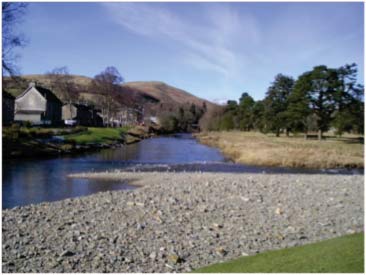
THE RIVERS ESK AND EWES AT LANGHOLM.
Sir John was born in 1542, son to an illustrious family which hailed from Lanarkshire. He was a direct ancestor of the Earls of Hindford.
He was Scottish Deputy March Warden at the ‘Day of Truce’ which was held on the Border in the hills aside present day Carter Bar in July 1575. The Day of Truce, a meeting to try the perpetrators of crime, both English and Scottish, was enshrined in Border Law. March Wardens from each side of the Border presided over the affairs and were charged with bringing the criminals for trial; juries were a mix of both Scots and English. Yet the ‘Day’ was a time when many men attended from both England and Scotland to witness that fair play presided throughout.
In 1575 numbers who attended were limitless; it was not unusual for a thousand men from each country to witness the events. Thus it was nigh on impossible to bring Scots and English together without inviting many who were at feud. Such was the turmoil that reigned in the Border country that even blood-feud prevailed as men from the same clans and same side of the Border rubbed shoulders at the Truce but smarted for revenge at the sight of an adversary with whom they were at odds. The atmosphere was charged with belligerence and aggression, yet there was little alternative. All invited might ostensibly be there to see fair play but there was another reason, unspoken yet acknowledged by all. Their presence was some insurance that neither side would take advantage of the other, nor resort to violence should any judgement be deemed unfair by family or friend of the accused. All who attended the Truce were to arrive unarmed but the reality was so different. No man would have been so foolish as to adhere to this code in the cauldron of ill feeling which prevailed. The Wardens turned a blind eye to the steel which swung at each man’s belt.
All took an oath to honour the precept of the Truce. They swore that they would not offend ‘by word, deed or countenance’.
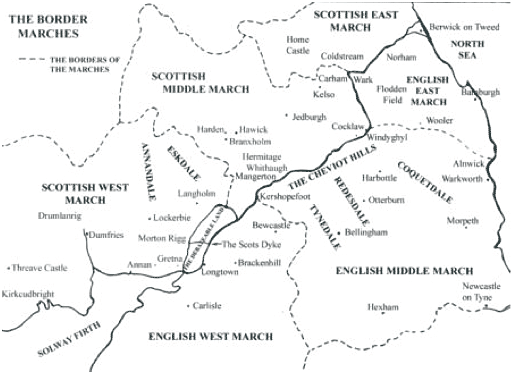
THE BORDER MARCHES
At the Raid of the Redeswire Carmichael fell victim to the invective and guile of Sir John Forster, seventy-five years old, and English Middle March Warden. Reaction to the aggressive exchanges of the two Wardens soon spilled over to the men of both sides who attended and all hell let loose.
The Redeswire affair was the last battle between English and Scottish Border Reivers and the last time that the English used the longbow in warfare. The English came off the worse in this encounter and Carmichael was warded in York in an effort to appease the wrath of Elizabeth l of England. Sir George Heron of Chipchase in Tynedale, Northumberland was murdered in the affray.
There was at least one other occasion where Sir John Carmichael played a prominent part. In the Raid of Ruthven in 1582 the sixteen year old king of Scotland, James Vl, was captured by William Ruthven, 1st Earl of Gowrie, and confined for ten months. Gowrie was unhappy at the influence of Catholicism and the effect this might have on the young king. Carmichael held the same views and readily espoused the cause of ridding the nation of the pro-catholic and pro-French influences epitomised in the young king’s cousin, Esme Stuart.
Carmichael was soon pardoned for his part in the affair. In 1588 he was one of the ambassadors sent to Denmark to negotiate the marriage between James Vl and Anne, daughter of the king of Denmark.
When Carmichael was made Warden of the Scottish West March in 1598 he had come of age. For all his turbulent past he was respected as a Warden who would see fair play between the English and Scots. There were many in the Scottish Border Lands who resented his impartial approach; none more so than the Armstrongs of Liddesdale.

LIDDESDALE
In 1600 Carmichael made it plain that he would use his power as March Warden even against his own people and especially the Armstrongs whose raids south of the Border were a particular embarrassment to a man dedicated to bringing peace to the Borders. The Armstrongs decided to plead for leniency on the promise of amendment to their nefarious ways and sought an audience with Sir John. They sent a brother of William Armstrong of Kinmont to parley with Carmichael, one Alexander Armstrong, known as Sandeis Ringane. Carmichael had heard the promises too many times before and would have no truck with the Armstrong clan. Their past outrages deserved the punishments he held in store.
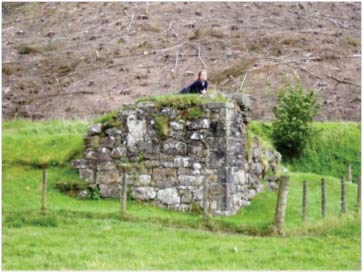
THE RUINS OF MANGERTON TOWER; THE MAIN ARMSTRONG STRONGHOLD
At the meeting with Carmichael were a few of his young followers. They began to taunt the elderly Armstrong and endeavoured to humiliate him at every opportunity. It would seem that Carmichael did little to curb their youthful pranks and overt hostility to the once powerful warlord. At one stage they removed his sword and filled his scabbard with egg yolks. Having replaced the sword it was now impossible to remove it from the scabbard.
Sandeis Ringane was besides himself with fury and swore that should any of the present company of Carmichael ever stray on Armstrong land he would have no compunction in pulling his sword and ridding the world of their odious presence. The meeting broke up with acrimony.
On his return home Sandeis Ringane told his sons of his mistreatment. His eldest son, Thomas Armstrong, said little in the way of comfort to calm the distress and shame of his unfortunate father but the thought of revenge was soon at the forefront of his mind.
He knew that next morning Sir John Carmichael was to leave Langholm and ride for Lochmaben where he was to preside over a Warden Court. The journey, through hilly woodland, would surely present the perfect opportunity to confront the illustrious March Warden.
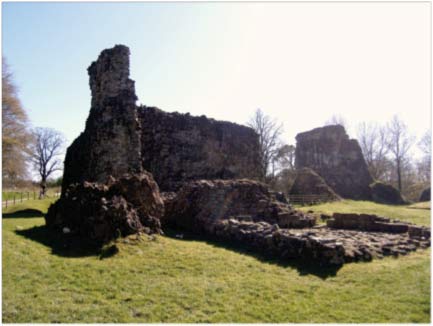
THE RUINS OF LOCHMABEN CASTLE
Accordingly next morning a party of Armstrongs including Thomas Armstrong and his father along with a Taylor, a Forrester, a Scott and a Graham lay in wait for Carmichael at a place still known to this day as the Raesknowes, on the way to Lochmaben. As the March Warden passed the ambush party a number of hagbutts rang out and Carmichael fell dead.
The ambush party scattered and sought refuge at the homes of friends who had been apprised of the intention to kill Carmichael but they were relentlessly pursued on the orders of King James.
Carmichael was a king’s Warden of the Marches and the perpetrators of the murder were therefore considered as traitors. Murder in the Border lands was pretty commonplace in the 16th century but this one was different. Murder of a man appointed by the King himself was not to be tolerated. The wrongdoers would pay the ultimate price for their rash and impetuous crime against a King’s man.
In 1601 Thomas Armstrong, son to Sandies Ringane, was apprehended, taken to the Mercat Cross at Edinburgh and hanged. Before he stood the drop that ended his life his right hand was cut off. Subsequently his body was wrapped in chains, the lifeless corpse hung up at the Borroughmuir.
‘And Thomas Armstrang, “sone to Sandeis Ringane” was condemned to be “tane to the mercat croce of Edinburgh, and thair his richt hand to be stricken fra his arme; and thaireeftir, to be hanget upoune ane gibbet, quhill he be deid; and thaireefter, to be tane to the Gallows on the Burrowmure, and thair his body to be hangit in irn chains…
Thomas Armstrong was the first man ever to be hanged in chains after death; at least he is the first recorded as such in the Scottish records. Even in death he was to suffer for his crime, his body subject to the butt of endless atrocity by the Edinburgh populace.
One man evaded capture until 1606.
Should you ever find yourself taking the road from Canonbie to Newcastleton in the Scottish Borders, you will come across a statue to Lang Sandy as you pass through the village of Rowanburn. It is on your right as you pass through the village.
Lang Sandy, as his name implies, was a huge man. His real name was Alexander Armstrong, the board at his feet simply declaring that he was hanged in 1606.
He took part in the ambush and murder of Sir John Carmichael in June 1600 but was not caught until six years later.
At his trial he admitted the murder but not before saying that the crime was brought on against his will.
The murder of Sir John Carmichael would herald the end of the Armstrongs as the superior force in the Scottish Border Lands. Within three years of the murder, James Vl of Scotland would also rule in England on the death of Elizabeth l. He would not forget the atrocity committed by a clan that had often been the bane of his endeavours to cement a lasting and firm relationship with the English queen before her death. Many of the Armstrongs would be unjustly hounded and persecuted, evicted from their lands, deported and executed without trial.
Carmichael‘s death would signal their demise.

LANG SANDY OF ROWANBURN

Border Reivers
Quick Links to Clan Armstrong Products from The Clan Shop
- Armstrong Tartan Tie
- Armstrong Tartan Pocket Square Handkerchief
- Armstrong Tartan Scarves
- Armstrong Tartan Kilts
- Armstrong Clan Crest Badge
- Armstrong Clan Crest Mug
- Armstrong Clan Crest T-Shirts
- Armstrong Clan Crest Belt Buckle
- Armstrong Phone Covers
- Armstrong Tartan
- Armstrong Clan Crest Crystal Glasses
- Armstrong Clan Crest Cufflinks
- Armstrong Clan Crest Sgain Dubh
- Armstrong Clan Crest Kilt Pin
- Armstrong Clan Crest Plaques
The post Border Reivers-West March Warden is Murdered by the Armstrongs. appeared first on ScotClans | Scottish Clans.
]]>The post The Wardens of the Marches appeared first on ScotClans | Scottish Clans.
]]>In 1249 in an attempt to deal with crime an agreement was signed between both nations, a system began called the ‘Laws of the Marches’ this was to be carried out by the ‘Wardens of the Marches’ who were appointed by their respective monarchs.

Borders area showing the different marches

Sir Robert Carey, Lord Warden of the Marches
The border lands on each side divided into three marches: an east, middle, and west march. Each march had its own warden, who was responsible for the security of the area and its people Each Waarden answered to the Lord Warden. The Scottish wardens were familiar with their territories, and knew the people from the marches, and this gave them the opportunity to get involved in questionable dealings in order to further their position. However, the English wardens were not as familiar with the area and the ways of the Borderers, and often went about creating more problems than they solved when trying to administer any justice.
Examples of some of the families you would traditionally find on the Scottish side are: Hume, Trotter, Dixon in East March; Kerr, Scott, Turnbull in Middle March; and Bell, Irvine, Johnstone in West March.
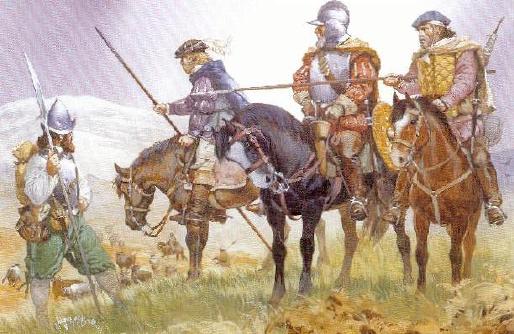
Wardens of The March
Wardens from both sides of the border would meet monthly in peace on the day of truce. They would assess the complaints from either side, and administer the appropriate justice. The Wardens had to bear in mind that both countries valued things differently, and this created many difficulties when trying to solve these grievances. Many of the crimes would range from cattle rustling to murder.
To explain about how the Wardens of the Marches worked; if for example you were English, and went north of the border to Scotland and stole some cattle, it used to be quite normal to get a a pat on the back back in England, because you had committed a crime in the opposite realm. You would go unpunished. The purpose of the Wardens was to prevent this from happening. The Wardens were expected to talk to their foreign counterpart. So if someone went across the border to steal something, then the warden whose land was plundered would tell his counterpart, and the issue would be resolved on the day of truce. The task of solving each person’s grievance was a taxing and thankless task, which usually provided solutions that left no-one happy.
Those who were accused of a crime were supposedly tried by six honest Scotsmen and six honest Englishmen. However it has been said that this could never have happened because you would not have been able to find any honest men from either side of the border.
The ‘Calendar of Border Papers’ has recorded a large number of complaints that were made to the Wardens of the Marches. They go into some detail as how many of these people were wronged by raiders both sides of the border. The papers are still available to read to this day.
By 1603 the role of Warden of the Marches became unnecessary, after the union of the crowns when James VI & I, in his attempt to permanently put an end to the Border Reiver clans, got rid of the name “Borders” to represent that area, and renamed it the “Middle Shires”. Over the following 100 years you saw a gradual change of the borderers putting down the sword and picking up the plough.
The post The Wardens of the Marches appeared first on ScotClans | Scottish Clans.
]]>