The post The Vision of Dark Finlay and the Boy in the Snow appeared first on ScotClans | Scottish Clans.
]]>
The Valtos Peninsula, Isle of Lewis
The MacLeods of Pabbay kept some of their livestock on the fertile lands of the Valtos Peninsula on the Isle of Lewis. The animals would roam graze on the rich grass by the sandy shore. But this was the territory of the MacAulays, another powerful clan at the time.

Old Norman MacLeod, of Pabbay was a brother of the MacLeod clan chief, so carried some weight. Once Old Norman was looking upon his herdsmen as they drove a beast or two onto the boat they used to take livestock to and from the island. A large bull would sometimes be towed along to swim behind, on a calm day. At this time the herdsmen of the MacAulays were also on the shore. One of the MacAulay herdsmen noticed that one of their animals was being herded along with the MacLeod stock. At first he politely asked to see the earmarks, just to make sure. But Old Norman’s eyesight and hearing were not the best and he immediately grew defensive and then aggressive. The MacAulay herdsman had a hand on one horn of the beast and Old Norman MacLeod had his hand on the other. The MacAulay man gave the beast a yank and Old Norman got pulled over and fell to the ground. He arose howling in pain, his mouth full of blood. Two of his teeth had been knocked out.
Old Norman went home to bed, probably after a dram or two. His wife, a strong willed woman was furious, how dare someone accuse her family of being common cattle thieves. After her five sons returned home she demanded that they take revenge for this insult to their father. The strong young men took their longswords and their daggers and crossed the mainland while their father slept. The only light was that of the moon, the men divided themselves as they approached the MacAulay houses. Each house was struck, they targeted the young able men of the clan and slaughtered them as they awoke. The MacAulays were caught completely by surprise and were defenceless. When the light of the new day came up the extent of the massacre was discovered and the MacAulays had no idea why they had been attacked in such brutal way. There was not one able bodied young man of that extended family left alive, in Valtos.
But the brothers had not managed to slay every single MacAulay who could avenge their act. There was one of that family who had been taken away from Valtos, an orphan fostered out to a childless couple at Mealasta, further down the coast.
When Old Norman realised what his son’s had done, he was furious. Norman met with his brother, the chief, fearful that a never ending feud had begun, that would claim more and more lives. They agreed that his murderous sons had forfeited their rights to land and stock. The chief suggested one more thing, the MacAulay lad who had been fostered out to these poor people should be given a proper education. This would be a sign that the elder clan members were not implicated in the deed. The young MacAulay boy would also be taken into their own family and treated with respect. The chief decided that this was the only way to break the cycle of revenge and atone for what had happened.
The fostered boy was called John Roy MacAulay, he was taken into the MacLeod household and cared for while the murderous MacLeod sons had to make their own way in the world. John’s foster father at Mealasta was a man known as Dark Finlay, he truly loved John Roy like a son and was heartbroken at the parting. But he knew that the boy would have far more advantages in life going with the MacLeods, so let him go.
Old Norman doted on the growing lad. John Roy was taught to fish and to herd deer. Old Norman’s wife was bitter and resented the boy who seemed to her to be taking the place of their own sons. When the sons visited they took every chance to mock John Roy and were constantly playing cruel tricks on him. Meanwhile Dark Finlay would lie awake wondering how his foster-son was faring at the hands of the MacLeods.
Old Norman did his best and tried his hardest to make his sons see that the only way they could make amends for their hasty action was to show kindness to young John Roy but his sons weren’t listening. He urged them to take the lad along the next time they went hunting deer. The boy was already strong enough to run with them and could ride a horse and control hunting dogs with the best of them. He also had a keen eye and could use a bow and arrow.
So the brothers took him with them up over the hills beyond Mealasta to hunt deer. There was a small bothy they would usually use at shelter on these hunts. The young boy knew nothing of the history and was happy to be initiated, this hunt would be like a coming of age. Old Norman had them swear to look after him and not place him at risk.
They left with excited dogs and plenty of provisions. The route they took went by the home of Dark Finlay, the previous home of young John Roy. The day was bright but the wind had a chill which promised a flurry of snow. They stayed over night in the bothy with a peat fire to keep them warm, but the murderous sons hatched a plan to rid themselves of this boy who had replaced them. Snow as the wind had predicted fell during the night.
Dark Finlay at his simple house in Mealasta woke from his sleep. Looking out to see the snowfall, he had the strongest feeling that his foster son, John Roy was in danger. His wife urged him to return to the warmth of the bed but he couldn’t shake the feeling. He had the image of the young boy bound outside somewhere, freezing and alone. So strong was this vision that he got up and found warm clothes and skins then milked the cow for fresh, warm milk, then he set off into the frozen night. He was still a fit man for his age. When he came to the snow covered track he walked backwards to suggest to those seeing the footprints that they were coming from the other direction. At last, striding backwards, he came to the bothy. It was there he heard a faint cry. He found the pitiful scene, John Roy had been taken out and bound to a rock, with hardly any clothes on, the by was near death. No doubt the five brothers had planned to return with the story that the young lad had got separated in a blizzard.
Dark Finlay warmed the boy in the skins, the warm milk was placed to his lips to revive him. The the foster-father carried the boy over his shoulder and walked home, retracing the footsteps he had already made. He knew that these murderous young men would stop at nothing. It would seem from the footsteps that the young John Roy had escaped and fled, there would be no clue to where he had gone once the tracks faded under fresh snow fall.

Dark Finlay sought out Old Norman MacLeod. The old man was heart broken at the actions of his sons. They were cast out from MacLeod lands there and then, but both men knew that John Roy would not be safe. Together they arranged for him to be taken by sea to relations on the island of Mull. Here he would receive the best education and learn to speak other languages and to read and write.
John Roy did flourish on Mull, returning from time to time to visit Dark Finlay and his wife. The man who’s dreams and love had saved his life.
This epic tale of revenge is told across The Western Isles, passed on from generation to generation, by word of mouth. How much if anything is true, we will never know. There is a version of it in the Morrison manuscript which says that it was August 1460 when the MacLeod sons committed the massacre.
The post The Vision of Dark Finlay and the Boy in the Snow appeared first on ScotClans | Scottish Clans.
]]>The post BBC on the lookout for Canadian/American descendants of the Marloch & Metagama appeared first on ScotClans | Scottish Clans.
]]>Within two weeks in 1923, two ships carried approximately 600 people from the Outer Hebrides of Scotland to their new home in Canada.
At the time most Scottish emigrant ships were leaving from Glasgow, however the April 1923 voyages of the SS Marloch and SS Metagama embarked first from Glasgow, then stopped en-route to pick up passengers in Lochboisdale and Stornoway respectively.
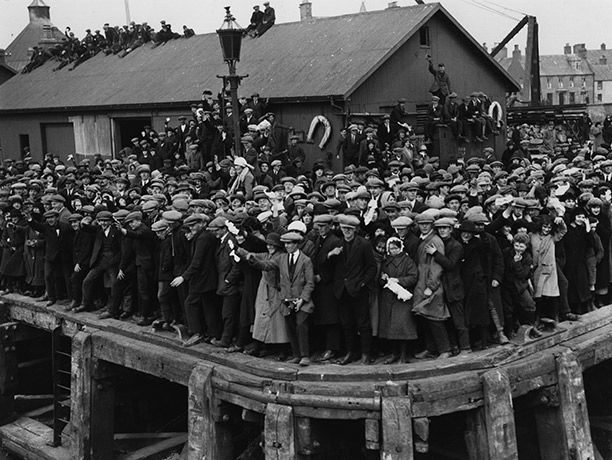
The Marloch set sail for St John, New Brunswick from Lochboisdale on the 15th of April 1923. On board were at least 50 families from the southern outer islands of the Outer Hebrides, including Barra, Eriskay and North and South Uist. Over 300 men, women and children were on their way to the Clandonald colony in the Red Deer area of Alberta.
When the Metagama sailed for from Stornoway on the 23rd of April 1923, the ship contained 300 people mostly from Lewis with an average age of twenty two – all but twenty were young men. They were on their way to Montreal, Quebec.
The BBC is keen to hear any personal stories from any Canadians or Americans descendant from those who boarded either ship in Lochboisdale or Stornoway in 1923. Similarly, any stories from people descendant from those who stayed behind in the Scotland will be gratefully received.
You can contact researcher Nadine Lee by e-mail nadine.lee02@bbc.co.uk or by phone +44 1224 384 816.
The post BBC on the lookout for Canadian/American descendants of the Marloch & Metagama appeared first on ScotClans | Scottish Clans.
]]>The post The Blue Men from The Sound of Shiants appeared first on ScotClans | Scottish Clans.
]]>
The Sound of Shiants
I have just returned from a trip to Lewis and came across this wonderful story. It is from the Shiant islands (meaning the holy or enchanted islands). The Shiant Islands lie four miles or so off the coast of Lewis and 12 from the northern tip of Skye. The Shiants are a wild and dramatic place, with 500 foot high cliffs of black columnar basalt, surrounded by tide rips, filled in the summer with hundreds of thousands of seabirds and with a long and haunting history of hermits, shipwreckers, famine and eviction.

Location of the Shiant Islands

map

The south end of Garbh Eilean (Rough Island)
But this story is not set on the land but in the angry waters that surround them called ‘The Sound of Shiants’. These waters are infamous for tide-rips and overfalls that have caught many a ship out and smashed it to pieces on the rocky shores of the islands. It is in these waters that ‘The Blue Men’ are supposed to live. Some people say they are descended from the ghosts of sad Moorish people, taken by the Vikings in the ninth century and lost at sea, on their route north. Others say they are, like selkies, the souls of dead mariners. The origins of ‘The Blue Men’ cannot be agreed on, but what everyone does agree on is their appearance and behaviour.
A ship travelling though these waters will begin to slow down, this is due to The Blue Men taking hold of the vessel, holding it back. Sailors have witnessed eerie long thin blue hands coming over their boat’s gunnel. Your boat could be caught forever in this icy grip, at the mercy of the weather and the will of the waters, but The Blue Men give you a chance.
It has always been known in these parts that it is eloquence and a sharp wit that can save you more than the sword. The challenges of The Blue Men are, of course, cried out in Gaelic. One after another, from the lowest to the chief, each will pose a riddle or offer a line of verse. One after another, from the ship’s boy to the skipper, the crew must respond, matching rhythm as well as wit.

Who are The Blue Men

Once a fishing boat was trying to work it’s way through The Sound of Shiant to Loch Erisort. She was suddenly gripped by the arms of The Blue Men. The skipper hushed his crew, he knew to wait for the questions. Knowing this is the only way any of them would survive.
The first question came, like a whine above the cold wind. ‘How many cables would you need, to reach from the keel of your ship to the bottom under you now?”
The crew are not allowed to discuss the answer and do not get much time to respond. They all looked at the youngest lad, this was his first trip aboard, he spoke out:
‘One,’ he said. ‘One is long enough.’
This was correct and the Blue Men conceded this one to the crews relief. Then came the next one:
‘And what’s the sharpest thing in all the worlds?’
It was the man at the halyard that took this challenge. ‘The sharpest thing in the world I know, and maybe in your one too, is hunger.’
There was a gasp from the crew as they realised they had come through this one as well. But now the chief of The Blue Men put his head above the surface of the water. He smiled at the man who had spoken in the knowledge that their next question should win them their catch.
‘What am I thinking?’
The man at the halyard who had previously answered said: ‘You’re thinking you’re talking to the skipper but you’ve only just reached me, the mate. And we’ve matched you on every point so far.’
The chief of The Blue Men was not yet willing to release his grip and said: ‘You’d better put forward the man in command’.
The skipper of the vessel looked over the gunnel. He was bald with a ruddy face, he looked into the eyes (or what he though were the eyes) of the chief of The Blue Men. The chief then asked:
‘The loudest noise you’ll ever hear.
The swiftest thing in all the worlds
The tightest course you’ll ever steer?’
The skipper thought for a minute, then answered:
‘After the sheets of light appear
the hammer of Thor will part the skies
and tear the skin of the drum of your ear.’
The chief seemed to accept this and the crew egged their skipper on to give an answer to the other questions:
‘Fire is a very swift thing
but the north wind itself
is that bit more keen.’
Every man and boy abroad knew the answer to the last one, the skipper spoke for all of them:
‘If the course can’t vary one degree
that will take more than a hand that’s true
that will require honesty.’
The skipper’s mate then spoke out, ‘and if you know anything of honesty, you and your clan will release us now.’
The ship was set free and set back on his journey and the crew survived to tell the tale.
It is interesting to compare this legend with the tradition of the MacVurichs (spelling variant of MacMhuirich later known as Clan Currie) the bards from the Uists. If the crew are sufficiently eloquent they can conjure up the wind if they want.
References
Western Isles Folk Tales by Ian Stephen
Scottish Fairy and Folk Tales by George Douglas (1856 – 1935)
Scottish Fairy and Folk Tales by A.L. Burt, 1901).
The post The Blue Men from The Sound of Shiants appeared first on ScotClans | Scottish Clans.
]]>The post The Icelandic Woman Behind the Lewis Chessman appeared first on ScotClans | Scottish Clans.
]]>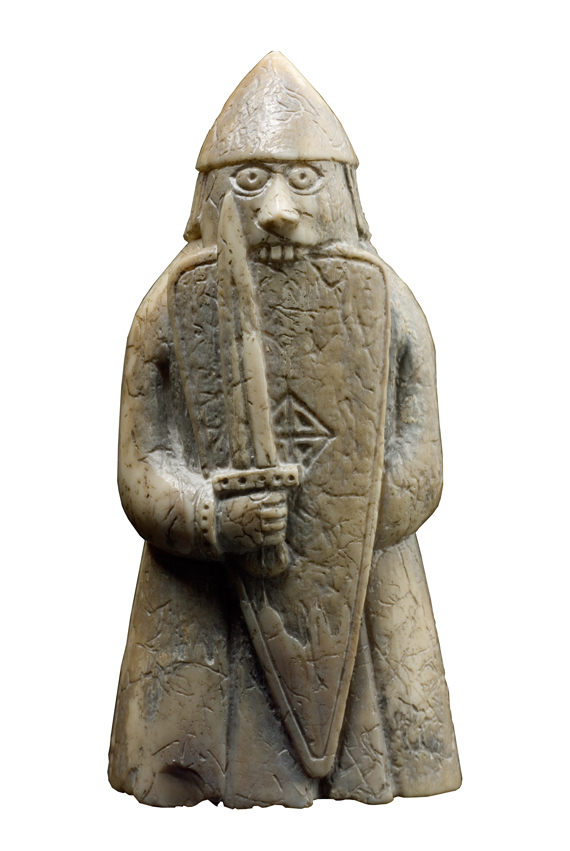
The Lewis Chessmen, carved about 800 years ago mostly from walrus tusks, had previously been considered of Norwegian origin Picture
During a seminar at the National Museum of Scotland claims were made that the iconic Lewis Chessmen could have been made in Iceland by a priest’s wife.
These chessmen have fascinated historians and scholars since they were found in Uig in Lewis in 1831. But fresh claims challenge some long-held beliefs about the pieces.
The most commonly held view on the origin of the 93 pieces, primarily made from walrus tusks, is that they were made in Norway in the 12th or 13th century and were buried for safe keeping on route to be traded in Ireland.
The new theory has been put forward by Icelandic chess fans Einar Einarsson and Gudmundur Thórarinsson, who was the chairman of the organising committee of the famous world championship match between Bobby Fischer and Boris Spassky in Reykavik 1972.
They argue that at the time of the creation of the Lewis Chessmen – around 1150-1200 – it is likely that no nation except Iceland had connected chess with bishops or the church.
They say the word “bishop” for a chess piece is used in only two languages, Icelandic and English. In most other languages, including Norwegian, this piece is known as a “runner”.
Other pieces of evidence include the chess knights being mounted on horses that seem Icelandic in both size and head shape and the rooks resembling berserkers (an Icelandic word for a soldier wearing a shirt made of bearskin) who figure prominently in contemporary Icelandic writings but not in written works in Norway at the time.
Mr Thórarinsson says historic writings refer to Bishop Páll in Iceland sending carved gifts made from tusks. These were made by Margrét the Adroit, his wife, so called because of her prodigious skill at carving walrus tusks.
He added: “One might even entertain the notion that the Lewis chessmen were made at the request of Bishop Páll of Skálholt and carved by Margrét the Adroit whose carving skills were the stuff of legend.
“The pieces were then sent abroad for sale or as a gift, but the ship was then lost”.
The British Museum presently holds 82 of the chess pieces and the National Museum of Scotland in Edinburgh has the other 11.
Yesterday the Icelandic theory was not ruled out by experts.
A spokeswoman for the British Museum said: “The British Museum states that the Lewis Chessmen were probably made in Norway, but the theory that they were produced in Iceland is certainly a possibility.
“The background of the Lewis Chessmen is open to debate and the British Museum is pleased that they still generate such interest.”
Dr David Caldwell from the National Museums Scotland, added: “As the Lewis Chessmen are such remarkable and fascinating objects, there are naturally a lot of theories surrounding them.
“I am pleased that our own research and our extremely popular exhibition ‘The Lewis Chessmen: Unmasked’ is reigniting debate and discussion.
“Although the origin of the chessmen can never be certain, we would support the present evidence and research that they came from Norway, as there is less evidence for an Icelandic connection.’
The post The Icelandic Woman Behind the Lewis Chessman appeared first on ScotClans | Scottish Clans.
]]>