The post Hugh Munro and the Eagle appeared first on ScotClans | Scottish Clans.
]]>
The Eagle Stone
Nestling among the houses on a quiet hillside there is a small fenced off patch of grass, in the centre a modest standing stone with ancient carvings – this is the famous ‘Eagle Stone’, also known as the Clach an Tiompain or ‘Sounding Stone’
The stone is featured in one notable prophesy by the Brahan Seer – he foresaw a great tragedy that would befall the area should the stone topple over three times, over the years it has been known to have fallen twice and superstitious locals have ensured it moves no more by cementing it in place.
Local legends have claimed the stone was erected after a skirmish between the Clan Munro and the McDonalds of the Isles on the way to the battle of Harlaw in 1411 – a sort of practice friendly on the way to the knockout stages. Recent evidence has proven it to be much older though.
Although almost certainly Pictish in origin one famous folk tale links the stone again to Clan Munro, who’s crest symbol also depicts an eagle, the Eagle of Foulis.
On a high ridge on the other side of the valley lies the remains of an iron age fort known as Knockfarrel (literally ’stone fort’). The very first chief of Clan Munro lived here as the clan established its presence in the area. Around the fortification a small village or ‘clachan’ grew. The valley has lush farmland, ideal for grazing and growing all manner of crops, sheltered from the worst of the weather.
Knockfarrel is easily approached via a gently sloping trail up the side of the ridge but treacherous cliffs fall steeply away to one side – high on a rocky pinnacle in these cliffs a great eagle had made its nest. whether the Munro clan took their symbol from this eagle or it was just a remarkable coincidence we do not know but the clansmen saw the eagle as a good omen and were happy to share the valley with this magnificent creature. Even when the bird would lift a young lamb or goat kid they would take this as just an acceptable loss and the chief forbade anyone from doing harm to the eagle.
All was peaceful in the valley until one summers evening. It had been a beautiful day and the womenfolk worked preparing the evening meals and sewing. The children laughed and played between the small houses, outside one house towards the edge of the village one small boy sat, Lachlan, barely a toddler he rested on the grass and watched as his mother busied herself around him.
All at once a great dark shadow was cast across the valley and a terrible screeching was heard, In a blur of feathers and claws the huge eagle swooped down from its nest and caught the poor child in its massive talons. Before anyone could react he lifted the boy high into the air and carried him up the cliffside.
The cries of alarm went up throughout the village and the wailing of the grief stricken mother alerted young Hugh, the chieftain of the clan. When Hugh arrived at the scene he realised that he had to act and act quickly. He called for a length of rope and set off up the cliffside in pursuit. Not entirely sure what he would face when he reached the pinnacle.
Higher and higher Hugh clambered up the sheer face, as the village fell away below he heard a beating of wings and a rush of air – the great eagle was bearing down upon him. Holding onto the rope for dear life he tried to fend off the angry bird. The eagle soared away again and Hugh pressed on. In the fading light he caught a glimpse of a tangle of branches above him and with one last effort he hauled himself up and into the eagles nest.
Lying in the centre of the nest lay baby Lachlan. cooing away to himself as if nothing had happened. Hugh was relived that the boy despite his ordeal had barely a scratch on him but he realised that the hardest work lay ahead. No sooner had this thought crossed his mind than the huge eagle appeared again – even angrier than before. Hugh grabbed a large branch and swinging it like a club tried to fend it off, time and time again the eagle pecked and clawed and Hugh soon became exhausted. His clothes torn and his body bruised and bloody from the ferocious attack.
All this time little Lachlan laughed away thinking it no more than a silly game for his own amusement.

Munro Clan Crest
As the eagle made one more pass Hugh decided on an other tactic; he ducked under the thrashing wings and grabbed at the birds legs. Unsettling the creature just for a second he was able to pull it towards the nest and turn it over onto its back. With the advantage of surprise he reached up and got hold of the bird by the throat and squeezed with all his might.
Gradually the bird began to loose its grip on life, the struggle began to die and with one last effort Hugh squeezed the life from the mighty creature.
Meanwhile far below the cliff the villagers looked up, not knowing if the poor boy or Hugh for that matter were alive or dead. They had heard the terrifying shrieks of the bird and feared the worst. Then suddenly the distant figure of Hugh appeared, holding the corpse of this massive Eagle in his hand. They cheered and shouted and Hugh tossed the bird down, A gust of wind caught the feathers and the eagle’s broken body wheeled and glided down to the valley below, coming to rest at the edge of the village. Where the eagle fell the villagers placed a stone – the Eagle stone in recognition of the brave deeds of their chief and from respect to the noble creature that was such a powerful symbol of their clan.
The post Hugh Munro and the Eagle appeared first on ScotClans | Scottish Clans.
]]>The post The Treasure of Norries Law. appeared first on ScotClans | Scottish Clans.
]]>
Lower Largo
On The Fife coast sits the pretty village of Lower Largo. The village was the Birthplace of Alexander Selkirk, the inspiration behind the story of Robinson Crusoe and a sign in the village points to the Juan Fernandez Islands, some 7,500 miles away where Selkirk was a castaway. The history of the area goes back much much further though to a time before Scotland as we know even existed.
Outside the village sits Largo Law and around a mile to the North, Norrie’s Law, ancient burial mounds that indicate the great antiquity of the occupation of this area.
It was common among the children of the village to play a game that had a connection to Norrie’s Law. One child would stand before the others and recite a verse; “I’ll tell you a story, Aboot Tammie o Norrie, If ye dinna speak in the middle o’ it, Will ye no?” The object of the game was to lure another child into saving “No” at which point all the others would shout, “The spell is broken, ye hae spoken, Yell never hear the story o’ lang Tarn o Norrie.” Like so many other children games this has a story behind it – a story of the ghost of Norrie’s Law.
In a time long past Largo Law was reputed to be haunted by an earthbound spirit; a ghost sentenced to wander the earth until a spell was broken to release it. To break the spell the ghost had to give up his secret; the hiding place of a hoard of treasure, buried somewhere on Largo Law.
On the nearby farm of Balmain there was a fairly unscrupulous shepherd. Having heard the story he had spent many nights wandering the area around the Law in hope of discovering the treasure. Finally one evening as he walked around the Northern shoulder of the hill he was confronted by a shimmering cloud of smoke. Many others had met this apparition but all had fled in terror. Taken aback at first he gathered all his courage to approached it and asked what it was that kept it bound to this realm. The ghost fixed him with a stare and said:”If Auchendowie cock disnae craw, An the herd o Balmain disnae blaw, I’ll tell ye whar the gold is on Largo Law.” The ghost then quickly ran through the small print of his offer which also included the cut off time of 8 o’clock the following evening.
The shepherd was only concerned about getting his hand on the treasure and cared little of who he had to inconvenience to achieve his ends. He thought of the first part of the ghosts request and scurried off the Auchedowie farm. The next morning the farmer and his wife slept in, never awoken by the crowing of the cockerel. When they went off to investigate they found the cockerel strangled and tossed into a heap of straw by the barn. Phase one complete.
Now for the Herdsman of Balmain. The herdsman was called Tammie O’ Norrie and it was safe to say there was little love lost between him and the shepherd. As Tammie set off to take his cows to pasture the shepherd was waiting. He blocked his path and shouted to Tammie ‘Hey you, Tammie O Norrie, I want a word wae ye”. As Tammie approached the shepherd let his coat slip open to reveal a long knife tucked into his belt. “You had better no blaw yer horn to summon in yon cows the nicht or it will be the worse fur ye”. Tammie was confused; “How no! How will I caw the cows in with nae horn?” The shepherd gripped the handle of his knife; “Ye can use the dugs to round them up – now mind what a said or it will be the worse for ye”. At that he glowered at the herdsman and furtively took off.

Part of the Silver Hoard
With all the plans in place the shepherd made his way back to the north slope of the hill, just before 8:00 the spectre appeared again. As the shepherd approached the ghost the sound of Tam’s horn was heard in the distance. The ghost flew into a rage; “Woe to the man that blew that horn, For out of that spot he shall never be borne.” At that he vanished. The shepherd ran for all he was worth, determined to have it out with the herdsman but when he reached the spot he was met with an awful sight. There in the field stood Tam O Norrie, the horn horn still pressed to his lips but he had turned to stone – petrified literally by the wandering spirit.
The shepherd told no one of his involvement in the events and when the local people discovered what had befell Tam they tried to move him – but some sinister force prevented all attempts, finally they gave up and heaped the earth around him creating another small hill; this came to be known as ‘Norries Law’.
The shepherd never got his prize but many years later a hoard of silver (not gold) was unearthed nearby. It is one of the best silver hoards to be discovered in Scotland. a variation in this tale had been that the law was the burial sight of a viking called Norroway who had been buried on his horse in full armour. However investigation of the find discovered that the pieces were of Pictish rather than Norse origin. Sadly some of the hoard never made it to the protection of the museum, some coins and other pieces were reputed to have been sold off and melted down – we may never know just how extensive this treasure find really was.
‘Will we no’.
The post The Treasure of Norries Law. appeared first on ScotClans | Scottish Clans.
]]>The post The Battle of Baugé appeared first on ScotClans | Scottish Clans.
]]>
Battle of Baugé
Background:
The Battle was part of the ‘Hundred Years War’ between England and France. In 1419 King Henry V of England had turned the course of the war at Agincourt, a battle that has become synonymous with Anglo French ‘sparring’ ever since. There had been a formal alliance between France and Scotland since 1295, known as the ‘Auld Alliance’ though the ties between the two nations goes back much further, indeed the tradition of a ‘Guarde Eccosais’ goes back to the time of Charlemagne.
After Agincourt the French were in disarray. Charles VI of France was mad, and his heir, the future Charles VII, was only sixteen. Normandy was lost to the English and the Dukes of Burgundy were taking Paris. With the situation getting desperate the Dauphin appealed to Scotland for help.
King James I of Scotland was imprisoned by the English and the country was being ruled in his place by Robert Stewart, first duke of Albany. Albany decided to send a force of 6,000 volunteers to France under the command of Archibald Douglas, earl of Wigtown and Albany’s second son John Steward, third earl of Buchan. A fleet of ships from Castile reached Scotland in September 1419, and on 29 October 1419 the Scottish army reached the Dauphin’s court at Bourges.
The Scots made up by far the largest component of the Dauphin’s defensive forces in the Loire Valley. The English army still recording successes in France was commanded by Henry V’s oldest brother Thomas of Lancaster, duke of Clarence. Estimates of the strength of this force vary from between 7,000 to 12,000 men, a considerable number of which were drawn from the English nobility.
In March 1421 Clarence led a series of raids through the Anjou and Maine and by Good Friday they were camped near the little town of Vieil-Baugé where their progress was halted by the Franco-Scots army who had also arrived in the area. Clarence was keen to engage them but some of his forces were dispersed and also Easter Sunday was unthinkable as a date to start a battle. The following day a party of English who had been on a foraging mission returned to their camp with some captured Scots soldiers, The party had stumbled upon the Scot’s forces and Clarence keen to press his advantage of surprise and also to avoid a conflict on a holy day decided to engage despite his weakened force.
The Battle

Carmichael Clan Crest
Clarence made the fateful decision to attack immediately with a small force of mounted men-at-arms, leaving The earl of Salisbury to gather the other troops who were still out foraging on their return. Clarence headed for the bridge at Baugé, the only crossing available to reach the Scots. It would appear he was desperate to match the exploits of his brother at Agincourt. The Franco-Scots army were largely unprepared for the attack, many were at morning prayers or playing sports. As they attempted to cross the Bridge a small Scottish force nearby raised the alarm and the English were immediately held by a rain of arrows. It took them some time to force a crossing of the river. In his haste he had not brought his own archers and the remainder of this initial force were stretched back along the road.
Despite this Clarence still pressed forward towards the village, only to be met by the main bulk of the Scots and French who were concealed behind a ridge on the approach. The Scots came over the crest and charged headlong at the English army. Clarence was an early casualty. John Carmichael of Douglasdale unhorsed him, breaking his lance in the process – an event which is immortalised in the crest of clan Carmichael. The battle was reduced to a vicious hand to hand melee and its unclear who stuck the final blow that finished off Clarence. Alexander Makcaustelayn (a Lennox highlander), the lord of Fontaines, Charles le Bouteiller and William de Swinton have all been credited with finishing off the King’s brother.
Aftermath
The result was a crushing defeat for the English which set them back on the course of the war, Henry was forced to return to France but he contracted an illness and died during the campaign. Many of the English who had never even made it to the battle were able to escape and the war raged on for many years to come with victories and defeats on both sides.
The Scots Army in France who had been largely criticised by many French before the battle were now seen in an altogether different light and this French guard in later years formed the core of the Royal Scots – the oldest regiment in the British army, honoured for their antiquity by their nickname ‘Pontius Pilate’s Bodyguard’
The post The Battle of Baugé appeared first on ScotClans | Scottish Clans.
]]>The post Drumnacoub – A Bloody Battle in the Far North appeared first on ScotClans | Scottish Clans.
]]>
The Kyle of Tongue
This battle was an internal feud among the men of Clan MacKay but also involved some Sutherland men. A disastrous battle, it led to the loss of many senior members of the clan and most of the belligerents on both sides.
The origins of the battle begin with an ongoing feud between the MacKays and their neighbours the Sutherland Clan. In 1370 the MacKay chief had been murdered by the Sutherlands in Dingwall. This had led to considerable acrimony between both clans as you can imagine and finally in 1426 Angus Du MacKay and his son Neil marched into Sutherland lands to take revenge. They met the Sutherland clan at Harpisdale.
The battle was more or less fought to a stalemate with no clear winner and considerable slaughter on either side. News of the conflict reached James I in Edinburgh. James wasn’t exactly having the easiest of times and frustrated by yet another inter-clan war he rode north to Inverness and demanded that the clan leaders submit to him. Angus duly complied and volunteered his son as a hostage to guarantee his clan’s good behaviour. Neil was taken to the Bass rock. an island prison in the outer Firth of Forth. During his imprisonment he was given the nickname ‘Vass’ a phonetic spelling of ‘Bass’
While this was going on three cousins of Angus Du: the brothers Thomas Mackay, Morgan Mackay, and Neil Neilson Mackay had a dispute with the Laird of Freswick – a man by the name of Mowat. Thomas pursued him to the chapel of St Duffus in the town of Tain. Mowat claimed sanctuary at the chapel but Thomas killed him anyway and burned down the chapel for good measure. As anyone who has followed the fortunes of Robert the Bruce will know murdering someone in a house of worship was a serious breach of etiquette and burning it down was even worse, so once again James I was forced to intervene so he denounced and outlawed Thomas, promising his land and possessions as a reward for his capture dead or alive.
Angus Moray (of Clan Sutherland) apprehended Thomas and handed him over to the law, however there was clear suspicion that Thomas’ own brothers; Morgan and Neil Neilson had assisted Angus Murray for a share of the spoils. Thomas was carted off to Inverness and executed and this apparent betrayal within the clan (made even worse by conspiring with a Sutherland) split the clan.
The Earl of Sutherland – seeing a good opportunity to break the power of the MacKay clan further supported Morgan and Neil Neilson by offering his own daughters in marriage (though they had already married Moray’s daughters). As well as helping them make a bid for the MacKay lands.
Back in Caithness Angus Du and his illegitimate son John Aberach Mackay were in a tight spot. Angus was by now an old man and had no will to fight, preferring to make some sort of settlement with his cousins. He offered all his land apart from Strathnaver but they refused the deal, intending to take all of MacKay lands for themselves. At this point Angus’ illegitimate second son John Aberach Mackay stepped in to advise the elderly chief and offered to defend the MacKay lands or die trying.
Some time between 1427 and 1433 (exact dates are unclear) the two sides met at Drumnacoub (Druim na coub, Drum-ne-coub) a few miles from the coastal village of Tongue on the North East coast.
The battle was a long and terrible one with both sides suffering heavy losses, by the end of the day Neil Mackay, Morgan Mackay and Angus Moray were all dead, John Aberach Mackay was severely wounded (possibly loosing an arm) and lay critical on the battlefield and very few from around 3,000 men (around 1,500 on either side by some estimates) were left standing.
Angus Du in despair asked to be carried to the battlefield to search for his son John but an opportunistic Sutherland archer spotted him and killed him with a well aimed arrow.
Shortly after the battle the remaining MacKay clan had to consider who would succeed as chief. Many supported John despite his illegitimacy but as fortune would have it Neil ‘Vass’ MacKay escaped from imprisonment at the Bass rock and made his way back north (it turned out the governor was married to a MacKay and she possibly helped him break out). John deferred to the legitimate heir and Neil was made chief. John was given lands around Lochnaver.
Neil pursued the Sutherlands who had supported the potential usurpers and a year later took revenge at the Battle of Sandside Chase. The widow of Neil Neilson and his son were given fairly rough treatment at the hands of those loyal to Angus Du’s side and for their own safety the moved to Olrig in Caithness. John dropped the name MacKay and became known as John Bain, progenitor of the Bain Family.
The post Drumnacoub – A Bloody Battle in the Far North appeared first on ScotClans | Scottish Clans.
]]>The post The Gallow Lee; The Monsters in the Mortar! appeared first on ScotClans | Scottish Clans.
]]> A few years ago I read James Robertson’s excellent book; ‘The Fanatic’. The book tells the story of an Edinburgh tour guide and how he becomes obsessed with the gruesome character he portrays. In one passage of the book the character mentions a place called the ‘Gallow Lee’ an area just beside Leith Walk in Edinburgh where all manner of executions were carried out. I recently came across some more information about this place and its real history was even more ghastly than the fictional account.
Leith Walk is a ribbon of Shops Café’s and bars that runs from the east end of the city centre to the historical port of Leith. The origin of this thoroughfare goes back to the time of Oliver Cromwell and his attempts to capture the city. In order to repel his attacks Sir Alexander Leslie in command of the Scottish Army created a ‘breastwork’; a chest high defensive earthwork wall as part of the city defences. This wall ran northwards from the city centre down to the shore. The defences were incredibly effective and Cromwell was held off till after his victory at Dunbar.
In time buildings began to spring up along the line of these defences, a gravel path was laid down and coaches would ferry people to and from the port. Leith Walk was born!
At around the halfway point, just where the traditional boundary where Edinburgh and Leith meet is an area called Shrubhill. This was a sandy hill on the western side of the road. Being outside the city boundaries this was where the city of Edinburgh disposed of its more troublesome problems!
In 17th century Edinburgh public executions were a common spectacle. But sometimes there was a problem where a person sentenced to execution was either too high profile or for one reason or another there was concern that the execution may cause unrest.In some cases the manner of execution was too much even by 17th century standards. Edinburgh chose the Gallow Lee in Shrubhill to deal with its dirty business. A permanent ‘gibbet’ was set up on the hill and on most days a body would be seen swinging from it. Witches were put to death, sometimes mercifully strangled before being burned and as the years progressed the ashes of the dead added to the sandy mound.
Covenanter executions were a frequent site too and there were a few high profile scandalous murderers who were put to death on the Gallow Lee: There was the ReverentJohn Kelloe for example; a respectable minister from Dunbar who had murdered his wife. Another very notable ‘customer’ was Norman Ross, a footman who had murdered his employer Lady Baillie, sister of the Laird of Wedderburn. For around two years his rotting corpse was left to swing on the gibbet being picked at by crows.
 Until halfway into the 18th century this ghastly landmark stood on the route into Edinburgh. However the draining of the Nor loch and the expansion of the city to the North led to a new period of development. Stone was quarried from nearby Craigleith quarry to build the fashionable ‘New town’ The builders looked for a source of sand to add to the lime mortar and hit upon the Gallow Lee. The owner of the land charged the builders to cart away the sand, containing the ashes and other remainsof thousands of victims. It is said that every penny he earned went straight to the local publicans – so much so that a public house (the halfway house) sprung up nearby!
Soon the sandy mound of the Gallow Lee was gone and all that remained was a hollow. As I write this the site of the Gallow Lee is once more waste ground, formerly occupied as a bus depot now awaiting redevelopment. But how many of those living in the trendy apartments in Edinburgh’s New town realise that the very fabric of their building is bound together with the remains of Witches, covenanters and criminals?
Sleep tight!
The post The Gallow Lee; The Monsters in the Mortar! appeared first on ScotClans | Scottish Clans.
]]>The post Scotland’s Most Inspiring Places: A Personal View appeared first on ScotClans | Scottish Clans.
]]>1. Skye: The Trotternish Peninsula.
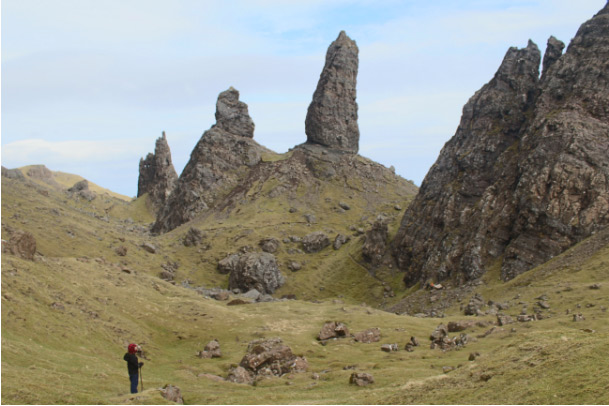
The Old Man of Storr
The Island of Skye is nearly always on peoples ‘bucket list’ and with good reason. The island is very large with so many different things to see its hard to know where to start. Dominated by the brooding ‘Black Cuillins’ a ragged mountain range that sits in its centre the island fans out to a number of peninsulas. All of them have spectacular views and hidden gems to explore but our favourite is the Trotternish peninsula.
Travelling north beyond Portree; the island’s main town a strange jagged ridge comes into view, this ridge features the Old Man of Storr, a giant rock tower that sits at an impossible angle near the rugged Storr cliffs. Further up the Quiraing extends the ridge line, the remnants of an ancient landslide of epic proportions. Walking through this area is like entering another world, the complexity of the landscape and broad vistas as you reach the ridge tops is quite simply astonishing.
What else is like this: In many ways it reminds me of Hadrian’s Wall (yes I know thats in England). Also the sea stacks of Orkney.
2. Glencoe and Rannoch Moor.
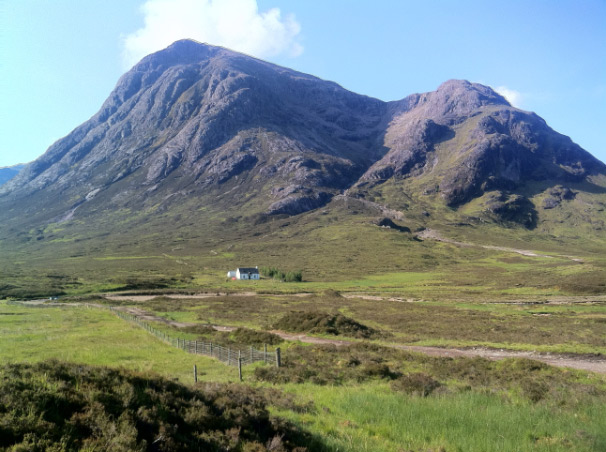
Glencoe
It would be impossible and indeed unforgivable to not include Glencoe in this list but I would extend it a little south to cover Rannoch Moor, an extraordinary landscape of bogland and small lochans that signal your approach to the glen as you venture north. The main road seems to float over the landscape and its hard not to find yourself trying to imagine what it must have felt like in the days before Thomas Telford build the first metalled road here as people picked their way through the moor. It must hold many dark secrets.
Then there is Glencoe. The majestic Buchaille Etive Mor stands guard at the entrance to the glen with her sister peaks lined up beside her, on the other side the Aonach Eagach ridge, the narrowest and most exposed ridge in Britain is a place not for the feint hearted. Handy parking places are scattered along the length of the glen, nearly always packed with tour busses and the odd bagpiper raking in the cash. The real rewards though, come when you take a step or two away from these busy lay byes and out into the glen itself. Despite its fearsome reputation in winter Glencoe has meny less challenging low level walks that get you away from the crowds and give you the space to contemplate life before the ‘quieting of the highlands’ and the tragic events that have been so linked to this place forever more. Caution and a sensible attitude (and footwear) of course goes without staying, this is a wild place that can claim lives in any season.
What else is like this: Scotland has many deep glens like Glencoe though few are so well known. Glenshiel with it towering 5 sisters comes to mind or for a more scaled down version Mennock and Enterkin passes in Dumfriesshire feels like a lowland rural equivalent.
3. The Border Abbeys
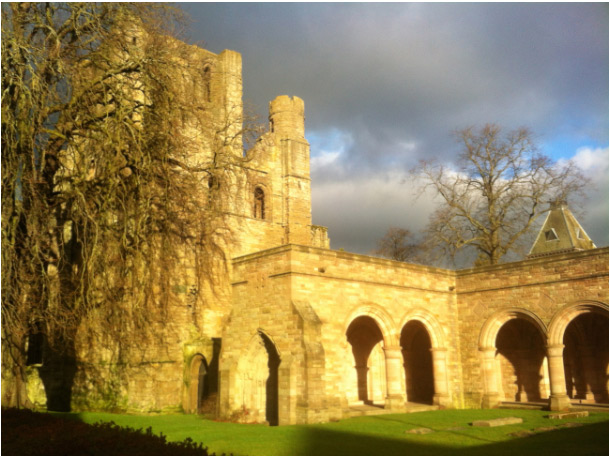
Kelso Abbey
The cluster of small border towns that nestle in the south east part of the Scottish borders feature a ring of magnificent ruined abbeys. In their heyday Monks from the Tironesian, Augustinian, Premonstratensian and Cistercian orders occupied these impressive buildings which became centres of learning and sat at the centre of many small communities. Inevitably though, sitting as they do in the heart of the sometimes lawless border region and with neighbouring England a few hours ride away the abbeys were partly destroyed, much of the damage being done during the ‘Rough wooing’ of King Henry VIII of England.
The violence of that time has long gone now and what is left of the abbeys are preserved as they were left all those centuries ago. Each has its own character and are peaceful places where you can sneak away from a busy market day and try to imagine the sounds of morning prayers being offered up in an echoing chapel.
For people of a fitter disposition it is possible to follow a 5 day walking route that takes in these wonderful buildings. The walk is not too challenging and gives you even more opportunity to explore this often missed part of Scotland.
What else is like this: Our own Holyrood Abbey in Edinburgh of course, Iona (featuring shortly) and Linlithgow Palace certainly have a similar feel in many ways.
4. Arisaig
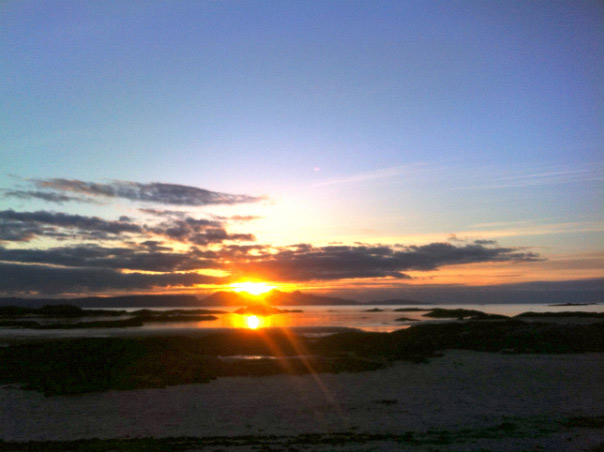
Arisiag at Sunset
As you take the route north to venture into the North West Highlands you hit the town of Fort William, spreading near the foot of Ben Nevis this busy town is an inevitable stop off for a quick snack and a stretch of the legs. Most travellers continue to the north towards Skye and Loch ness but just taking a left turn will lead you on a journey that rewards you with fantastic beaches, scenes from Harry Potter and romantic tales of Bonnie Prince Charlie. This road which was once a twisting and perilous single track is much improved, it takes in the Jacobite monument at Glenfinnan and an added bonus of a view from there of the Glenfinnan Viaduct a victorian marvel of railway engineering that will now forever be known as ‘the Harry Potter Bridge’. If you are very lucky you might catch the steam train that regularly travels this way on tourist trips puffing over the viaduct.
This was where the ‘Young Pretender’ (not the young wizard) first landed on the Scottish mainland in 1745, raised his standard and forever changed the covers of shortbread tins and tea towels, just a few minutes drive away loch Nan Uamh is where he set sail back to Europe a year later, his followers scattered in the highlands or buried in the mass graves at Culloden.
At the small village of Arisaig is what could only be described as a camper’s paradise, a collection of campsites sit along this stretch of coast set into grassy areas beside beaches with impossibly white sand. Its hard to compete with the feeling of settling down to a mug of tea or something stronger watching the waves on the shore as the sun sets over the islands of Rhum and Eigg. A sunset in Arisaig is not just a sunset, its gods own theatre, and he knows how to put on a good show!
For those who want to venture further though this route has one last gift to give, the Malliag ferry to Skye. An altogether gentler and more dignified way to reach our first destination on the list. As the ferry pulls out of Malliag harbour its inevitable that you catch yourself humming the Skye Boat Song to yourself.
What else is like this: The west coast and in particular the islands have incredible beaches, Tiree for example or Durness in the far north, The small island of Eriskay has the connection with Bonnie Prince Charlie too as of course does Culloden.
5. South Uist
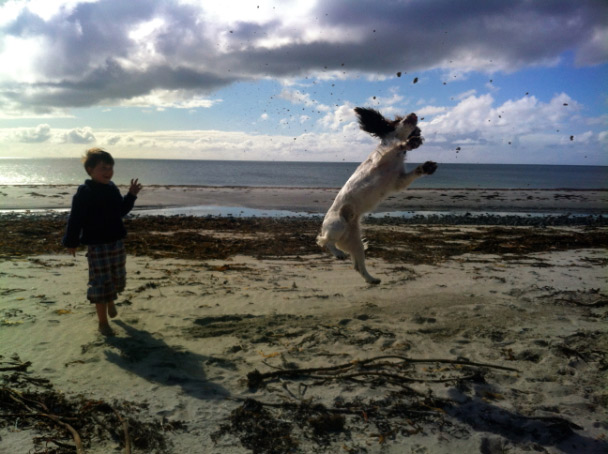
Happy Dog on South Uist!
The island of South Uist forms part of the Outer Hebrides (more of them to feature later). The island stretches from north to south linked by causeways to Benbecula and Eriskay. A modest range of low mountain peaks run like a spine down its east side and to the west is the legendary Machair. The Machair is a low lying coastal plain, formed by millennia of wind blown, calcium rich sand that forms a valuable fertile layer. The habitat is the fragile home to many species of birds and small crofting communities are scattered along the island’s east side.
There is something about the light here that feels like nowhere else on earth. There always seems to be some drama in the sky as another raincloud skids in over the Atlantic to the sound of oystercatchers and gulls.
This is an ancient place too – Settlers have been here since neolithic times and this is the only location in Britain where prehistoric mummies have been found. Looking at the ramshackle collection of little crofts you are reminded that now just as then the people who live here have a relationship with the land and pace of life that many of us would envy (in the summer at least).
What else is like this: Orkney and Shetland certainly have that feel of a link with the prehistoric past though the Machair is peculiar to the Outer Hebrides. also Barra and Vatersay just to the south and further on, the islands of Islay and Jura.
6. St Kilda
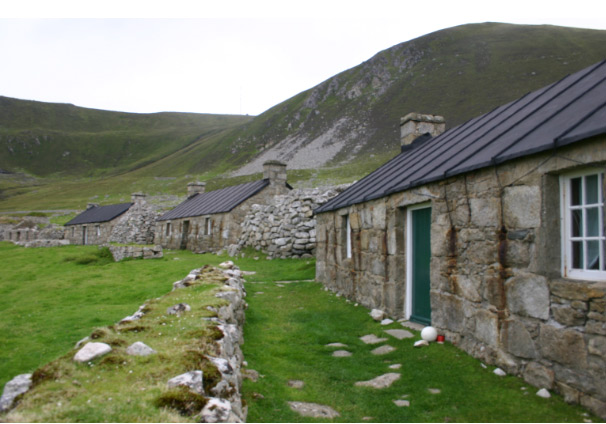
St Kilda
On 29 August 1930, 36 men women and children boarded a boat to the mainland from the island of St Kilda. Breaking a continuous period of settlement that had stretched back over two thousand years. These people were not evicted by harsh landlords, they had asked to be taken away to start a new life elsewhere. For them life in the most remote part of the British Isles had simply become too difficult.
Remote is too simple a word for St Kilda, just getting here is an adventure, and something of a hit and miss affair as the journey over rough seas is not always possible at all. Arriving at the small bay on Hirta, the main island in this small group is like arriving at the edge of the world, the deafening sounds of Gannets, Fulmars and Skuas fills the air and the island itself seems to rise out of the sea to meet you, one second there, one second disappearing as the boat lurches between the waves. As you step onto the shore you step back in time to the moment those last settlers left the island behind. The village street still stands as if trapped in amber, the remains of centuries of island life lie scattered up the hill side.
If you want to come to Scotland and get the feeling of being totally alone try spending a few days here with just the mice for company (and the army personnel who man a nearby base but thankfully never leave their quarters). There is a peculiar feeling to standing on the shore watching the tiny boat head back out into the open sea wondering if it really will be ‘back on Wednesday’ as promised.
Where else is like this: The Monach Islands off the coast of Uist were also until lately inhabited and North Rona is another remote destination. There are also a number of clearance villages such as Bororaig in skye and near Tongue in Sutherland.
7. The Isle of Lewis.
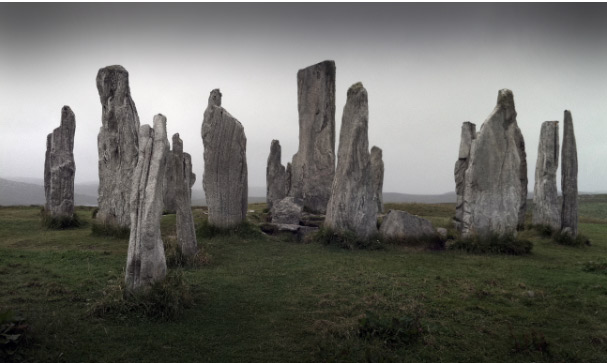
Callanish Standing Stones – Lewis
A few years ago I was on a flight back from Iceland on a clear summer evening. The flight path took us over the Butt of Lewis and as first sights of ‘home’ go, its about as good as it gets (also see entry number 10). Lewis has become a popular destination recently thanks to Peter May’s ‘Black House’ trilogy of books, May’s infectious description of the landscape has also inspired an excellent coffee table photography book. A trip to Lewis inevitably begins with the long ferry journey from Ullapool to Stornoway, passing by the Summer Isles, the setting for the classic British horror movie ‘The Wicker Man. Stornoway is a bustling small town that has a bit of a frontier feel about it, its a bit rough round the edges and can be a bit wild of a Saturday night before the ‘sabbath’ calls a halt to all activity. But before you disappear off to explore the island, stop off at MacLeod’s Butchers and stock up on as much Black Pudding as you can sensibly carry.
The stand out feature of Lewis is the standing stones at Callanish. For nearly 5,000 years these remarkable stones have stood here. Academics still argue over their true purpose, partly as a burial site possibly as a calendar no one can really say for certain. Folk tales say that they were a family of giants who refused to convert to Christianity and Saint Kieran turned them to stone as punishment.
Like many parts of the west coast, Lewis has its fair share of incredible coastal landscapes with wide open beaches and stark cliffs. As you travel south from Stornoway towards the mountains of Harris you pass seemingly endless expanses of peat bog, stacks of freshly cut peat stacked up and drying ready for collection. The smell of peat smoke is the air is a reminder once again that this is a place where people work and live not just a toilet stop and cafe.
What else is like this: Again, Orkney springs to mind for its unrivalled collection of ancient artefacts (the only reason Orkney is not on our list is because we have yet to visit there and this is our personal list). Wick and Thurso in Caithness have a similar frontier feel about them that Stornaway does and the wetlands of Caithness and Sutherland are very much like the Interior of Lewis in some ways.
8. Iona
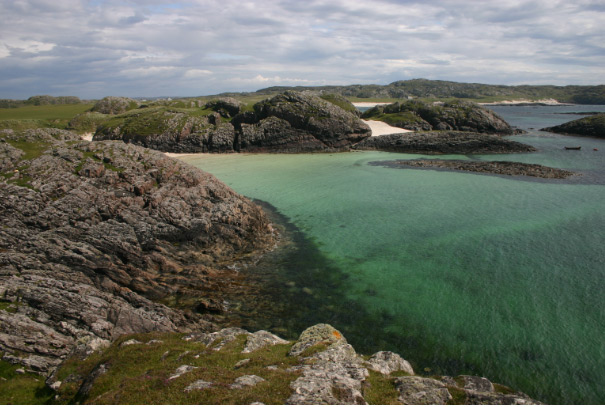
West Coast of Iona
Sometimes the beauty of a place is magnified by the effort it takes to get there. If thats the case then Iona must be one of the most beautiful places on earth! First of all you need to get to the island of Mull, that is either reached via a ferry from Oban or by a couple of smaller ferries and a long drive down towards Ardnamurchan. This is followed by a long drive down the Ross of Mull until you literally ‘run out of island’. From there a small ferry takes mostly foot passengers (theres is not much point in taking the car as theres not really anywhere to drive to) over the short hop to Iona. The famous abbey is immediately visible as you land in the tiny village that sits beside it.
Iona abbey is one of the most famous in Scotland. its by no means the largest and would be dwarfed by the Border abbeys though it is one of the best preserved. St Martins Cross is probably the most photographed and recognisable celtic cross there is and the abbey grounds have more than a few famous interments: Kenneth MacAlpine, Donald II, Malcolm I, Duncan I and Macbeth all lie here, as does the late Labour leader John Smith.
The island is tiny and can be walked round entirely in a day. If you chose to do this there is a good chance you will hardly spot a soul the whole time as pretty much all the tourists flock to the abbey. Their loss is your gain though, the island circuit takes in more sandy beaches on the north shore the rugged west coast with crustal clear waters and small secluded bays, a spouting cave and the remains of an abandoned marble quarry before returning back to the village for a well earned drink while you wait for the ferry back.
What else is like this: Right next to Iona is the small island of Erraid. its tidal so can easily be walked to. There is an incredible campsite at Fidden farm nearby too. Holy isle (in England,,, just) is also very similar and also Inchcolm Abbey in the Forth Estuary.
9. Plockton
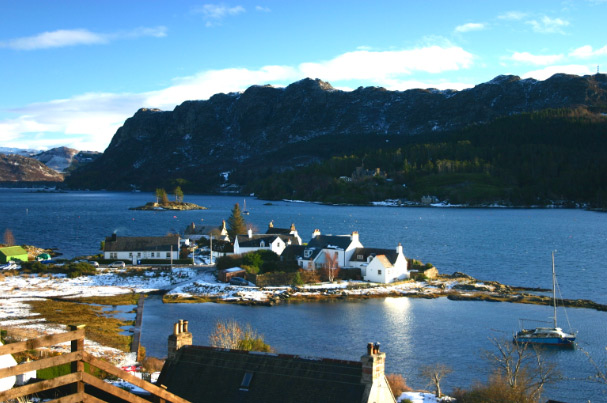
Plockton
The tiny village of Plockton sits at around the same line of latitude as Moscow, yet the little road around the bay is lined with palm trees! These are not made of plastic but thrive here thanks to a phenomena properly known as the Atlantic Conveyor though most of you know it as the Gulf Stream. a current of warmer water that runs North-East from the Gulf of Mexico makes landfall on Scotland’s north west coast leading to a far milder climate than we would expect. Before you pack your bermuda shorts and beach volleyball set though remember this is STILL Scotland.
The small village was a fishing community that sprung up in the 19th and 20th centuries in an attempt to slow down emigration from the highlands. The end result is possibly the most picturesque small village in Scotland. Just like Iona above, getting here is half the fun. There is the long drive skirting within touching distance of the Skye bridge and up the road to the ironically named ‘Stromferry (no ferry)’ , or you can take a more indirect route via Lochcarron, or you can treat yourself to one of the worlds greatest train journeys, travelling north to Inverness and then west via the tiny settlement of Achnasheen through some of the grandest majesty that the highlands can serve up, it might be a long journey but I really wouldn’t bother with a book unless its dark 
For those who like an element of terror on their days out then its not too far from Plockton to the small town of Applecross. The last half hour of your trip will be memorable as you wind up the notorious Bealach na Ba (the pass of the cattle) a single track road that twists steeply up an impossible looking slope before sliding down the other side. On the way back you can reward yourself with an early tea at the excellent seafood cafe at Kishorn, where the seafood is so fresh it answers you back.
What else is like this: Rothsay on the Isle of Bute is also known for its palm trees though its a much larger and busier town. The East Neuk of Fife also has a string of quaint fishing villages and Tobermory on Mull is also very picturesque.
10. Edinburgh
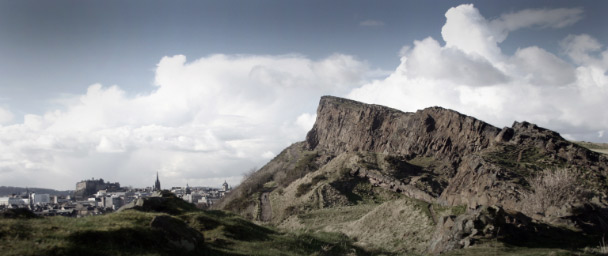
Salisbury Crags, Edinburgh
This comes as no surprise to anyone who knows us, after all its where we live. what can you say about Edinburgh that not already been said. Known as the Athens of the North the city has some of the most impressive architecture in the world covering the Middle ages, and Neo Classical eras in particular. Arriving in Edinburgh by train is one of the great tourist experiences of all time: As the train slips through the outskirts it could be anywhere in Britain, then the train dives into a long tunnel, for a moment you emerge to catch a glimpse of the castle rock and gardens before ducking under the art galleries on the mound and arriving in the station. If you have never been before (or even if its been a while) Then walk up the sloping roadway to emerge on Waverly Bridge. Ahead of you stands the impressive if rather rocket like structure of the Scott Monument, the Classical pillars of the National Gallery and Royal Scottish Academy and behind that Castle rock with the iconic Edinburgh Castle crowning the top. It really is one of the most impressive cityscapes in Europe if not the world.
Edinburgh is bursting to the point of overflowing with history and culture, the compact city centre makes most sites easily walkable (for those who can easily walk), you can take in an art gallery, loose yourself in a museum or scare yourself witless on one of the many ghost tours that run from the high street.
And if all that bustle is too much then in 15 minutes or so on foot you can find yourself at the bottom of the Royal Mile past Holyrood palace and into Holyrood park, Here you can leave the city behind and feel like you are back in the highland wildernesses that I’ve eulogised about above (in fact parts of Arthurs Seat in Holyrood park have been used to represent the wild highlands in film shoots). After half an hour or so of puffing you might find yourself on top of Arthurs seat or nearby Salisbury Crags giving you a reward of an incredible view over the city and down the east coast on one side and up to the Forth bridges on the other.
What else is like this: Glasgow’s west end is for Victorian architecture what Edinburgh is for Georgian. Stirling has its castle too and is handy for Wallace Monument and Bannockburn, Inverness too is worth visiting if only for the beautiful Ness islands and Leakeys bookshop.
Well thats our personal top ten list for now. I’ve set a date in the Calendar to revisit this list same time next year and see what new places we have discovered by then…
Rodger and Amanda Moffet – Scotclans
The post Scotland’s Most Inspiring Places: A Personal View appeared first on ScotClans | Scottish Clans.
]]>The post You and Whose Army? The Story of the Atholl Highlanders appeared first on ScotClans | Scottish Clans.
]]>The Atholl Highlanders are Europe’s only legally recognised private army, although merely a ceremonial regiment and not officially part of the British Army they were awarded colours.

Atholl Highlanders at the 2009 Gathering
The Regiment evolved from the 77th Regiment of the Foot who were raised by the 4th Duke of Atholl in 1777 (not to be confused with an earlier 77th – Mongomeries Highlanders or a later one – the Middlesex Regiment) . This date will be familiar to any scholars of American history since this was a time when the Brits were quite busy attempting to deal with those pesky colonial types on that side of the Atlantic. They were also about to have their already full hands made even fuller by the French and Spanish jumping in too.
Enter the 77th! (sort of)
Unfortunately the regiment didn’t quite make it to the heart of the fighting. Formed as a relief regiment they spent most of their time over in Ireland waiting to be called into the fray. Under the conditions on which the men signed up they were supposed to serve for either three years or the duration of the war with America. In 1781 at the end of their term of service the men were all expecting to return home, however they were transported to England and marched down to Portsmouth ready to embark on a long sea voyage to the West Indies. This was too much for the men of the 77th who promptly mutinied and refused to go. Exasperated their commanders marched them back to Berwick and the regiment was disbanded in 1783, thus ended the less than glorious history of the 77th.
And that would have been the end of it had it not been for, of all people, the Earl of Eglington. In 1839 the Earl had been rather miffed that the year before Queen Victoria’s coronation had been a rather drab affair by normal standards and the traditional banquet had been cancelled after George IV’s coronation nosh up ended in most of the silverware going missing afterwards.
The Earl decided to put on a tournament at Elgington house in Ayrshire. This being the height of the Gothic revival the while thing was to include a medieval jousting competition. Alas this early forerunner of ‘The Gathering’ ran into several problems including the weather and the events own popularity which ended up with most of Ayrshire gridlocked.
Nevertheless one of the ideas planned for the tournament was for a ceremonial guard, The 6th Duke of Atholl, also Lord Glenlyon offered to supply this and the regiment was reborn as the Atholl Highlander’s. As a purely ceremonial guard the regiment performed several duties such as escorting Queen Victoria during her tour of Perthshire in 1844 and while a guest at Blair Castle.
In recognition of the service performed by the Highlanders, All local volunteers raised from around the estate the Queen agreed to award them with colours and this was presented by Lady Glenlyon.
The only private army in Europe have withstood the times and indeed are still there albeit 100 strong when many other famous Scottish Regiments have long since disappeared. Many of those who have volunteered with the regiment have seen active service elsewhere, for instance serving with other regiments during both world wars.
So if you ever get into a standup fight with the Duke of Atholl and feel tempted to utter the phrase ‘oh yeah, you and whose army?’ you might want to rethink that strategy.
The post You and Whose Army? The Story of the Atholl Highlanders appeared first on ScotClans | Scottish Clans.
]]>The post The Benbecula Mermaid. appeared first on ScotClans | Scottish Clans.
]]> While touring recently around the islands of the Outer Hebrides we came upon this strange story.
In 1830 people were busy cutting seaweed at Sgeir na Duchadh near Grimnis on the west coat of the island of Benbecula. One woman spotted a creature several yards out in the water. The creature looked like a woman in miniature. Alarmed she called to the others working on the shore who also saw this strange sight. Men went into the water to try to catch the creature but she evaded them. A boy aimed a rock at her which struck her on the back, she cried out in pain and disappeared beneath the waves.
A few days later a creature was washed up dead on the beach at Culle bay near the township of Nunton which lies a few miles north of this spot. The creature was said to have the upper shape of a well developed woman but was around the size of a 4 year old girl. She had long dark glossy hair and white skin, however her lower half was described as being ‘like a salmon’ but without the scales.
As the crowds gathered on the beach they all agreed that this was the body of a mermaid.
The factor for the chief of MacDonald of Clanranald who was also the local sherif was called. On seeing the creature he called for a shroud and coffin to be brought to the beach and the creature was layer into this and buried in the nearby churchyard. It was said that the funeral for this creature was one of the largest attended on the island and was carried out like any proper christian burial.
No grave marker related to the incident can be seen at the churchyard and others have said that the creature was buried near the dunes and not in the churchyard at all, in fact a recent survey of a large stone near the south end of the bay was carried out, suspecting that this may indeed be the resting lave of the mermaid but this was inconclusive.
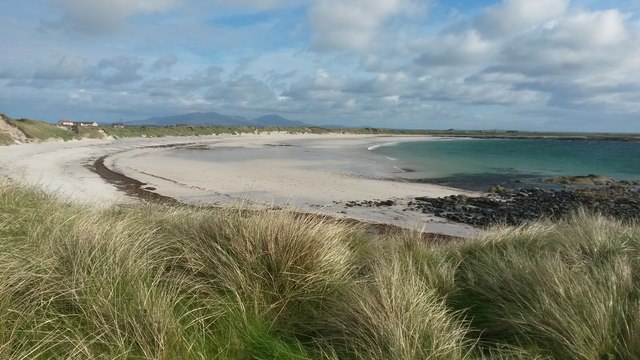
Culla Bay, Benbecula
So what do you think? evidence of mermaids or another ‘fishy tale’ from the islands. Certainly mermaid stories like this do bring in the tourists who were beginning to find their way to the islands in the mid 19th century. Many other tales of mermaids exist on the islands. A crofter from Barra called Colin Campbell spotted what looked like an otter fishing near the shore, he was about to shoot it but decided to check it though a telescope only to see what he described as a woman carrying a small baby in her arms. the creature then spotted him on the shore and disappeared. Whatever the truth is they do make great stories.
The post The Benbecula Mermaid. appeared first on ScotClans | Scottish Clans.
]]>The post A Beginner’s Guide To The Jacobites appeared first on ScotClans | Scottish Clans.
]]>The reason I wrote this was to put together a newbies guide to what this period of history was all about, what started it and most importantly to dispel the misinformation that this was some Scotland V England struggle. Ive tried to keep it as light and simple as possible, I tested it on my 12 year old daughter last night and it made sense to her so fingers crossed here goes….

Charlie Tour T Shirt
It all started with King James the VII as we called him in Scotland or James II as he was known in England. He was the second surviving son of Charles I
First, A bit of Background…
Charles I had a pretty difficult relationship with parliament and this led to the English Civil War, which, actually started in Scotland not England when Charles managed to also get on the wrong side of the Church as well and started the bishop’s war. Incredibly the Bishops war was started by Charles attempting to introduce a new prayer book so two sides who couldn’t agree on how to give praise to the same god started a fight which spilled over into Ireland and then into England like some sort of viral cowboy bar brawl and ended up creating the biggest armed conflict on British soil. Say what you like about the Scots we are damned good at starting a fight.
Charles lost the war and his head in 1649 which in turn led to Oliver Cromwell, the Protectorate and a ban on Christmas, singing and anything else regarded as mildly fun. When Cromwell died of a mixture of malaria and kidney stones he was succeeded by his son who couldn’t get the hang of ‘protecting’ at all and the Monarchy was restored, Charles II became King with much rejoicing and Cromwell was executed, yes I know he was already dead but they hung him again anyway just to make sure.
Charles II was known as the ‘Merry Monarch’ and his reign began with one massive party although it wasn’t all fun since his reign also included the great plague and the great fire of London. Charles II had one last laugh on his people though when he converted to Catholicism on his deathbed.
Now it would take more time than I have here and more pages than I’d like to fill to explain why the Monarchy and parliament had a bit of an issue with Catholicism so trust me, from around the time of the Tudors they most definitely did, it goes without saying that the Church of England were not huge fans, after all they were the competition in the business of eternal life and The Catholic church had some pretty good moves like ‘give us lots of money and we will fast track you through purgatory’ etc.
Charles’ late entry into the world of Catholicism before his exit from the world of the living was inconvenient to say the least but with no heir the next in line was his brother James and what wasn’t so well known was that James had been a practicing Catholic for some time. Like it or not Britain was about to get a Catholic monarch.
James VII takes charge (briefly)…
This led to a number of problems for James. For starters two rebellions kicked off, one led by Duke of Monmouth and another by Campbell of Argyll in Scotland, Argyll’s rebellion came to nowt as they say and his head was soon gracing the space formerly occupied by Royalist hero and shampoo model the Marquis of Montrose. Monmouth was a tougher nut to crack and James also had another issue to deal with, literally as he had quite inexplicably allowed his daughter to marry his protestant Dutch nephew William of Orange, a bit of an own goal as this handed the protestant supporters a ready made replacement..
The protestant nobles called on William and over he came in 1688 to take the throne, James legged it and in the process chucked the Great Seal of the Realm into the River Thames. He was captured before he could leave England but William, not keen to create a Stuart martyr sort of turned his back, whistled a bit and left the cell door slightly open and allowed James to escape. After a great deal of parliamentary debate it was decided that James throwing the Great Seal in the Thames like Dirty Harry throwing away his cop badge was really an act of abdication so that was good enough for them (don’t let anyone ever tell you there aren’t any seals in the Thames). They also quickly shored up the legislation to make sure there could NEVER be another Catholic monarch, a statute that has stood to this day, albeit recently amended.
So that was it. The Stuart dynasty that had ruled Scotland for nearly 300 years and latterly the whole of the newly United Kingdom was over, or was it?
James was determined for a rematch and his campaign began and pretty much ended in Ireland with defeat at the Battle of the Boyne, an event that has been celebrated by the Orange Order to this day, mostly by people in bowler hats parading with flute bands round small towns in Northern Ireland and Lanarkshire.
If anyone wants to discover what is essentially wrong with Scotland then you have to look no further than the petty sectarian nonsense that has plagued this country since then. Where we have become a country divided by tribal lines mostly based on which Glasgow based football team you support, insular, inward looking and regressive.
But enough about that back to the Jacobites…
The Old Pretender…
James may have been done with the throne of Britain but his progeny were not. His second daughter, Anne became queen in 1702. Queen Anne gave us many things including the Act of Union and bow legged furniture (considering she had 17 pregnancies during here reign you can see where they got the idea from).
When Anne died in 1714 succession fell in a rather oblique way to George of Hannover, a German and grandson of James VI(and I) as the nearest non Catholic everyone could agree on. (there were 50 more eligible Catholics in the way which the Act of Settlement conveniently ignored).
A year later in 1715 the Whig party won a majority to become the new government defeating the Tory party. Many rebels in the Tory party were Jacobites (from ‘Jacobus’ the Latin for ‘James’) and supported the return of the Stuart Dynasty. James VII was long dead but his son James Francis Edward Stuart was very much alive and in exile in France. Although the support for his claim sprouted in the Tory rebellion in London it really took root in Scotland. There was still a strong Catholic contingent in Scotland and James was able to get support from them. He arrived in Scotland in 1715 to start his campaign to regain the throne but it didn’t go at all well. James (the Old Pretender) was timid, didn’t like crowds and couldn’t handle cold weather, not ideal traits for fighting battles in Scotland!
He abandoned the whole idea in 1716 and headed back to France where he was welcomed with… folded arms. And sent off to Italy to bother someone else.
In 1719 he married Maria Clementina Sobieska a Polish princess and they had two sons, the eldest being Charles Edward Louis John Casimir Sylvester Severino Maria Stuart (I’d hate to have been the one icing his birthday cakes), fortunately he was more commonly referred to as Charles Edward Stuart or ‘Bonnie Prince Charlie.
Charlie was a very different man to his father. Born in Italy he was determined to restore the Stuarts to the throne so his father named him regent in 1743 and his adventures began…
Bonnie Prince Charlie and the ’45…
Charlie managed to get some support in kind from France and was given a pair of well fitted out ships. His hopes of getting some well fitted out men too were less successful but nevertheless he set off for the West of Scotland, preferring his fathers recruiting ground to the North. The Jacobites still had much support from the Northern Clans mostly, but not exclusively Catholic, he also had Jacobite support from Ireland and places like Carlisle and Manchester in the North of England.
Resistance to the Jacobites came not just from England (who made up the bulk of the UK population and still do) but also from Scotland and Ireland.
As everyone probably knows by now the second Jacobite rebellion made it as far south as Derby before turning back when they picked up far less support along the way than they were expected, the additional French troops didn’t turn up and the Scots army were frustrated at the lack of square sausage and irn bru.
They headed back for Scotland, managing a last hurrah at Falkirk before the whole thing came to a sticky end on Culloden Moor in 1746. Bonny Prince Charlie fled the field and pursued by redcoats managed to hide in every cave in Scotland if tourist brochures are to be believed, disguised himself as a woman and high tailed it back to France, where after numerous affairs, not the least of which was with the bottle, he died in Italy.
The reason I was inspired to write this really is because all too often I see Culloden mentioned as some sort of romantic defeat where the dastardly English dashed Scotland’s hopes. This is sentimental rubbish. If you really want to understand Culloden and the Jacobite rising all you need to do is memorize this Sentence:
“Culloden was a battle between an army of Scots, English and Irish led by an Italian against an army of Scots, English and Irish led by an Englishmen with a German dad representing a German king over the throne of the United Kingdom.”
Simples…
The post A Beginner’s Guide To The Jacobites appeared first on ScotClans | Scottish Clans.
]]>The post The Red Wedding and the Dwarf Assassin. Not ‘Game of Thrones’ But Everyday Clan Warfare appeared first on ScotClans | Scottish Clans.
]]>
The Red Wedding in Game of Thrones
The Island of Islay is a beautiful jewel in the inner Hebrides. A gentle low lying island of pastoral lands, expansive sandy beaches and more than a few whisky distilleries. The local population are among the friendliest you will ever meet so it seems surprising that such intrigue could play out in such an idyllic place. Read on…

Finlaggan
The Island was once the power base of the MacDonald Lords of the Isles. From their castle at Finlaggan the new lords were appointed and Islay was clan Donald’s spiritual home. However clan Donald had, to put it mildly, an uneasy relationship with the crown and in 1493 after various misdemeanours their lands had become forfeit.
Such was the extent of MacDonald lands that it took the crown accountants 20 years to take stock of all their estates. The estates were distributed among those loyal to the Scottish crown; mostly clan Campbell and the MacIan’s of Ardnamurchan, a branch of Clan Donald who were related to Campbell’s through marriage.
An area of Islay known as ‘The Rinns’, the part of the island running out to the north west that includes Port Charlotte and Portnehevan was granted to the MacLeans of Duart, a powerful clan from Mull. With so many large clans sharing such a small area it was inevitable that tensions would spill over, nevertheless an uneasy peace was maintained. but it wasn’t to last long…
In 1567 Angus MacDonald succeeded as chief of the MacDonalds of Islay. Angus had a bitter rival in the young Lachlan MacLean of Duart and when Lachlan came of age the authorities realised it was just a matter of time before matters would get out of hand. In an effort to spare bloodshed the king commanded that Angus was to marry Lachlan’s sister. By all accounts the marriage went as planned, however when Angus decided to go to Mull to visit the ‘in-laws’ things took a dramatic turn for the worse.
Despite the forfeiture of the Rinns, Angus had never officially signed the papers over to the MacLeans and they were determined to get their land. When the newlyweds arrived at Duart castle Angus was taken prisoner until he signed away his rights to the Rinns. Even after signing the deeds the MacLeans rightly mistrusted Angus and so kept his brother and his son James as hostages.
So having signed away a part of his clan’s spiritual home Angus and his wife returned to Islay. Angus though was determined that the MacLeans would not be enjoying their new territory any time soon but nevertheless kept his own council playing a much longer game. Eventually Lachlan in triumphant mood arrived on Islay to look over his new possessions. he brought with him 86 of his clansmen and the young James MacDonald as a token of conciliation. Angus welcomed them with a lavish banquet but mid way though the meal the mood turned suddenly very ugly and on Angus’ cue a horde of heavily armed MacDonald’s burst into the room and took the MacLeans captive.
News of the capture of Lachlan and his MacLean kinsmen made it’s way back to Mull. Terrible news for most of the clan but not so for Alan MacLean a rival to Lachlan’s chiefship and uses Lachlan’s absence as an opportunity. Realising it would be in his best interests if Lachlan never returned he leaked out a lie that Angus’ brother, still a captive at Duart had been put to death. Alan MacLeans subterfuge almost worked and Angus began to put to death two captives a day until all 86 had been executed – all that remained was Lachlan himself and Angus was on the way to watch his rival’s demise when news reached Islay that the story was false.By all accounts Lachlan’s neck was saved with minutes to spare.
Giving new meaning to the phrase ‘thats a bit awkward’ the MacDonald’s now had a fairly angry Lachlan as a captive they would much prefer not to have. Once again the Crown intervened and sent a Campbell representative to broker a hostage exchange and some peace. Peace however was not in the vocabulary of these two clans… As soon as Lachlan returned to Duart (and dealt with his scheming kinsman). He put together a raiding party to take revenge on Islay. Angus in return laid waste to settlements on Mull and Tiree. During another raid while Angus was mustering forces on the south of Kerrera, the party were ambushed by MacLean men and MacDonald of Sleat, Macleod of Lewis and and MacFee of Colonsay were all captured.
Once again the crown intervened and while most of the hostages were returned Angus MacDonald refuse to hand over his – as a result Angus was outlawed. As it was Lachlan was not much better at keeping his word and he too refused to return some of his captives. he had also been hatching his own particularly dark revenge…
in 1588 Macian of Ardnamurchan arranged to marry Lachlan’s mother. with the MacIan being a branch of clan Donald it was hoped that this marriage bond would help force a peace between them. This wasn’t Lachlan’s plan though… as the wedding festivities progressed Lachlan’s men stormed the reception and ordered all the MacDonalds present to be massacred. Only the bridegroom was spared.
Game of Thrones fans will be able to picture this scene well since the ‘red wedding’ is a pivotal moment in the series (the same events were played out with the Douglas Clan so its clearly not an uncommon occurrence) . This was not the end of Lachlan’s bloody crusade though and he then set off on a murder tour of a number of small islands including Rhum, Eigg, Muck and Canna. With assistance from some Spanish mercenaries who had survived the disastrous wrecks of the Spanish Armada they set about all but exterminating the population of these islands.
Angus’ revenge was taken out on the settlements of Mull and in this he was in turn assisted by English mercenaries. By 1589 the King had lost all patience with his warring subjects and both parties are summoned to Edinburgh.
On arrival both were arrested and held prisoner until they finally agree to behave. As a token of his willingness to comply Angus left his son James at the Royal court, the young man proved himself to be very popular and received a knighthood. And so peace descended on Islay again, but not for long. in 1592 a revolt of Scottish Nobles threatened the position of the King.
While he was otherwise occupied the MacLeans and MacDonalds saw the distraction as an opportunity to have another go at each other and war broke out again. This time it led to charges of treason being laid against both parties and this very serious threat calmed them both down. Now during all this time the Rinns of Islay (remember the Rinns?) had still never officially been handed over by the devious Angus so he agreed to make settlement including any arrears. Still, after 6 years of making promises Angus had still not officially made settlement so his son Sir James, now very much ‘in’ with the royal court decided to bring his father to book.
On James’ invitation Angus visited Cambletown, staying at Askomel House, James was lodged nearby. Angus and his son met and dined with each other with no hint of James’ plan. After one such meeting Angus returned to Askomel and was awakened in the night by some 300 men at James’ command , armed to the teeth and demanding that Angus give himself up. Angus understandably refused and so James decided to set light to the house with his mother and father inside. In making his escape though Angus is burned quite badly and ends up fleeing in only his nightshirt. James was cunning though and had set traps of felled logs around the grounds of the house and Angus tripped and fell and so was captured. He was then taken in chains to Dumbarton.
James returned to Edinburgh expecting a heroes welcome for finally taking care of his warmongering father but his over zealous methods didn’t go down at all well and such was the outrage that Angus had to be pardoned. James was now the outlaw and Angus got his revenge on his son 5 years later when he captured him on Islay, He was promptly delivered to the Campbells and taken to Perth to answer charges of fire raising and treason. Somehow though (and this does make you wonder about the level of security in the 16th century prison system) James managed to escape and fled back to Islay.
Now while all this in fighting has been going on Lachlan had been busy… Seeing his advantage Lachlan gathered a huge force with the aim of sending the MacDonalds to the afterlife once and for all. He sailed for Islay and the two sides squared up for battle at Traigh Ghruineart (Gruinard Bay) in August 1598.
As the MacLeans were preparing for battle Lachlan was approached by a dark skinned hunchback dwarf, the ‘Dubh Sith’ was half human and half fairy; his father being a Shaw from Jura and his mother from the other realm. This deformed dwarf offered the services of himself and his no doubt enchanted crossbow to Lachlan who laughed at him and considering himself to be far superior in numbers sent him on his way.
The dwarf hobbled off to the MacDonald camp and made the same offer to Sir James who gratefully accepted. The dwarf said to James ‘you take care of the rest of the MacLeans and I’ll take care of Lachlan’ and then promptly scurried away and climbed into nearby Rowan tree. And so battle commenced on a hot August day. During a lull in the fighting Lachlan was overcome with thirst and so went to a nearby stream, he removed his helmet and knelt down to drink – right in range of the lurking dwarf who with one shot of his crossbow found his target on the back of Lachlan’s neck – the point of the crossbow bolt exiting his eye and killing him instantly.
With Lachlan dead the MacLeans lost heart and fled the field. The MacDonald’s pursued them to a church at Kilnave and with the surviving MacLeans barricaded in the church the MacDonalds set light to the thatch roof of the church killing all inside. Except one. One man; a MacMhurich (clan Currie) was able to escape from the church and fled into Loch Gruinard. As the bloodthirsty MacDonalds searched the land he hid under the waters of the bay using a hollow reed to breath through.
The story goes that after dark he made his escape and was taken in by some locals and it is said that his descendants live in the village of Bowmore on Islay to this day.
And so what became of our principal characters in this dark play? Well Lachlan was dead and buried at Kilchoman, Angus grew old and died naturally on Rothsay. Sir James had a more troubled future though; when James VI became king of a united England and Scotland he was determined to put behind him the reputation of his warring barbaric Scottish ancestry and so set about ‘cleaning up’ the Scots nobility. James was brought to justice, his possessions forfeited and charged with treason. He was condemned to death but managed to escape in 1615 (prison security had still not improved). James fled to Spain until 1620 when the King decided to offer him a royal pardon. He was forbidden from returning to Scotland though so lived out his few remaining years in London.
Apologies for anyone expecting dragons to feature at some point but you can’t have everything!
The post The Red Wedding and the Dwarf Assassin. Not ‘Game of Thrones’ But Everyday Clan Warfare appeared first on ScotClans | Scottish Clans.
]]>