The post Scottish Heraldry 101: The Court of Lord Lyon appeared first on ScotClans | Scottish Clans.
]]>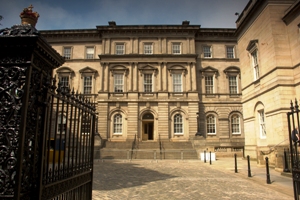
HM New Register House, Edinburgh
Just off Edinburgh’s bustling Princes Street sits a grand old building that houses hundreds of years worth of Scotland’s records. HM New Register House is well known as home to the General Register Office for Scotland but also houses the Court of Lord Lyon – Scotland’s centuries-old heraldic authority that can be traced back to at least 1388. The court regulates and has jurisdiction over matters relating to Scottish heraldry, which includes establishing and issuing Coats of Arms and maintaining the Public Register of All Arms and Bearings and the Public Register of Genealogies and Birthbrieves in Scotland.
Inside the first-floor office, bookshelves stacked full of leather-bound publications line the corridor that is also decorated with heraldic antiquities including tabards and carved coats of arms of past knights of the Order of the Thistle. Central to the Lyon Court is the Lord Lyon King of Arms and the Lyon Clerk and Keeper of Records, the latter from whom I’ve come to receive an introduction on all things heraldry. While the Lord Lyon is the judge responsible for determining and granting new arms, the Lyon Clerk puts the Lord Lyon’s instructions into operation and makes sure they are properly adhered to. The Lyon Clerk is also specifically responsible for the maintenance of the registers and records within the office.
The position of Lyon Clerk is currently held by Elizabeth Roads LVO, whose other quite separate hats include assistant secretary to the Order of the Thistle and Snawdoun Herald of Arms. Mrs. Roads started off as the then Lord Lyon’s assistant in 1975 on return to Edinburgh from overseas travel. She came from a fine arts background, and had no particular knowledge of heraldry other than how it related to art and decoration. “I’ve been here for nearly 39 years, which the then Lord Lyon is probably laughing at, bless his heart. I told him I didn’t think it was likely I would stay here more than five years.”
In 1986 Mrs. Roads was appointed Lyon Clerk, the first woman to be so, and said that the job hadn’t changed an awful lot during her 26 year tenure in the post. “The office has existed in its current form since at least the late 17th century. So 40 years isn’t a very long time in the court’s existence. I would like to think that if Colonel Lawson (Lyon Clerk 1929-1966) walked in now, he would be able to sit down at this desk and do exactly the same job as he did in 1929.” One thing that has changed is the amount of correspondence received from all over the world, as a result of the enormous quantity of genealogical information available online. Thus a large number of the court’s records have been digitised and archived online, available to view and download at £10 per record.
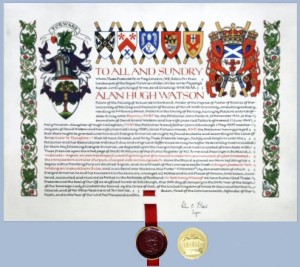
Grant of Arms issued by The Lyon Court
In order to apply for a new Coat of Arms, or marticulate older arms, Lyon Clerk recommends doing as much research as possible into heraldry beforehand. “Very often [applicants will] come and have a chat with us first about the process. It’s a formal process so you have to lodge a petition and give us such documentary evidence as is necessary for your particular case.” Information about applying is available on the court’s website, with petitioners increasingly using this avenue to begin their heraldic journey. In terms of designing a Coat of Arms, very often petitioners will come with only the broadest of ideas, in which case the Lord Lyon or Lyon Clerk will work out something that is simple, clear and appropriate. “For private individuals our starting point would always be their surname. If it’s an established Scottish surname then we’ll look at what the underlying arms of the chief are and use that as the basis.”
Perhaps the most common misconception among applicants is who a Coat of Arms belongs to. “A Coat of Arms belongs to a person, not a family. It’s a piece of personal property that will pass down an individual’s senior line. A family Coat of Arms just doesn’t exist”. Lyon Clerk likens it to saying that you have a family passport, or a family driver’s licence.
The application involves fees which go to the Exchequer and the heraldic artists and calligraphers who hand-paint the arms on vellum paper. The Exchequer’s fees are paid as protection so that if somebody misuses your arms, the Crown will take action at no cost to you. “Normally it doesn’t get as far as prosecution. In fact in my time only once has someone insisted on using arms to which they were not entitled, which resulted in prosecution. If arms are being used unlawfully then the Procurator Fiscal to the Court of the Lord Lyon will write to them saying they shouldn’t be doing so. They’ll then provide advice as to what they should do if they want their own Coat of Arms.”
Along with arms enquiries, the court also receives many queries from people asking about clans, with questions ranging from what their clan or family is, who their chief is and what tartan to wear. “We get a lot of these sorts of general queries very often because they don’t know where else to go. This office is sort of thought of as being the office that knows everything. Sometimes we do know the answer and can help and sometimes we merely direct them towards the answer.” In fact, the only relationship the court has with the clans is when a chief comes to record their coat of arms. “We’re only concerned with the heraldry of the clan chief. Lyon doesn’t recognise a clan chief as such. What he does is vest that person in what are called the Undifferenced Arms of the Name, showing they are the principle person of their name and the clan chief.” The Standing Council of Scottish Chiefs, the organisation that represents chiefs of clans and families in Scotland, will only invite chiefs to be members if they have been granted the Undifferenced Arms of the Name by Lord Lyon.
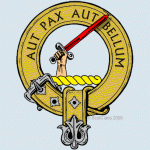
Clan Gunn Badge – Aut pax aut bellum (Either peace or war)
The majority of clans have a fairly clear succession down the senior line so the question of who is the rightful chief is usually straightforward. However, when the line has been lost it presents huge problems and a large amount of research must be undertaken. In order to assign a new chief, concrete evidence must be shown by the petitioner that the line has died out completely. “A particular instance would be Clan Gunn where we know what the principle line was. What we don’t know is what happened to [the many] descendents of that line. They undoubtedly will still be there, it’s just a matter of who they are and where they are now.” When a chief is missing, a commander can be appointed. The current commander of the Clan Gunn is Iain Gunn of Banniskirk who has been the clan’s leader for a very long time. Lyon Clerk added he is an efficient and effective commander. But there are an enormous amount of Gunn descendents and the search continues in determining exactly who is the senior descendent.
Commanders can go on to become chiefs, as in the case of Clan MacArthur, where the principle line was lost around 1820. “It took a lot of research but it was possible to show that actually those people all died without issue.” The resulting research showed that the commander was in fact the senior line of the surviving genealogical descendants. The Lyon Court is a court of law, therefore they are unable to undertake the successional research which then comes before them to be examined. Clan and family societies are very often the bodies who drive chieftainship petitions, with Lyon Clerk stating that it’s not their role to decide who should become chief, but rather to present research to the court.
One of the most enjoyable parts of Lyon Clerk’s job is providing genealogical records to those who are tracing their roots. “There is absolutely no classic person you can say is going to take an interest in heraldry or genealogy. People come from all sorts of backgrounds and there’s no rhyme or reason why people take an interest in it, so I get to meet an enormously interesting cross section of people.” For budding genealogists, Lyon Clerk says it’s easy to get back to the middle of the nineteenth century with no difficulty because birth, marriage and death records were statutory. Prior to that it helps if you’re tracing an unusual surname. She also adds to remember: “if you can’t find records, it doesn’t mean they don’t exist”. Genealogical websites have different records so it’s important to check out a few. Names were also sometimes spelt phonetically, so you won’t necessarily get the spelling you’re looking for. Lyon Clerk’s own genealogical journey has revealed such esteemed ancestors as Robert the Bruce and a 17th century Lord Lyon. “As one of my predecessors said, no individual has a longer genealogy than anyone else, they just happen to know more. I warn you now, it’s a complete drug. You always think – I wonder if I can just find that little bit more.”
The post Scottish Heraldry 101: The Court of Lord Lyon appeared first on ScotClans | Scottish Clans.
]]>The post Francis Alexander Mackinnon, 35th Chief — A Hat-Trick Victim in his Only Test appeared first on ScotClans | Scottish Clans.
]]>
Caisteal Maol
THE MACKINNONS OF MACKINNON
The Caisteal Maol stands near Kyleakin, a picturesque seaside village on the east coast of the Isle of Skye in the Inner Hebrides, Scotland. Till the Battle of Largs in 1263, this quaint Scottish hamlet was ruled by the Norwegian monarchy.
Legend has it that Caisteal Maol, or the castle of Dunakin, was built by a Norwegian princess known as ‘Saucy Mary’. This Nordic lady ruthlessly collected toll from ships that had to pass through the narrow stretch between the castle and the mainland. Only Norse vessels were exempted. She married Findanus, the man who is considered the forefather of the Mackinnon clan. And Casisteal Maol became the original seat of the Mackinnons.
According to the Scottish mythology, the McKinnon clan is supposed to have defeated the Vikings at Goir a’ Bhlair, on the eastern slopes of Beinn na Cailleach, above Broadford. Down the years, in recorded history, the clan played a major role in the Wars of Scottish independence. The early Mackinnons supposedly provided shelter to Robert the Bruce during his escape to Carrick. After Bruce triumphed in the Battle of Bannockburn in 1314, the Mackinnons were rewarded with land on the Isle of Skye.
By the early 19th century, the chieftainship of the clan had passed to William Alexander Mackinnon, the 33rd Mackinnon of Mackinnon. And it was during the time of this patriarch that his grandson Francis Alexander Mackinnon was born on April 9, 1848, three months before the birth of WG Grace. And by the time Francis Alexander Mackinnon passed away on February 27, 1947, he had almost outlasted the career of Don Bradman.
At the time of his death, Francis Alexander Mackinnon, the 35th Mackinnon of Mackinnon, had lived through an eventful 98 years and 324 days, which made him the oldest Test cricketer ever till that time. The record lasted 62 years until Eric Tindill went past him by spending 99 years and 226 days on earth before passing away in 2010. Of course, both these venerable gentlemen have been left behind now by South African fast bowler Norman Gordon, who is still going strong on 102 years and 246 days as we celebrate Mackinnon’s 164th birthday.

Francis Alexander Mackinnon. Photo Courtesy of kentcricket.co.uk
MACKINNON THE CRICKETER
Mackinnon the cricketer was not quite born in the ancient islands of Scotland. He saw the light of day at Acryse Place, Kent and was schooled in Harrow.
As a Harrovian, he did not quite manage to get into the playing eleven. But, by the time he was in St John’s College, Cambridge, he was a good enough player to get his Blues.
In 1870, he was a member of the Cambridge side during their historic encounter with Oxford. That was the match at Lord’s in which Frank Cobden, the Cambridge fast bowler, claimed the last three wickets with a hat-trick to win the match by two runs.
Years later, Mackinnon recalled the game with a sense of mock-vanity, “I really won the match, for I scored two.” Yes, his score in the second innings amounted to the margin of victory. However, he always omitted to say that in the first knock he had scored a very useful unbeaten 17, the second highest score of the innings.
Later, Mackinnon’s only Test match went down to be associated with another famous hat-trick. He played for Kent for a decade from 1875, and was one of the members of the side of Lord Harris that went to Australia in the winter of 1878.
It was not a very happy tour for the batsman. The only decent runs he made were in the matches against the odds teams put together by the local sides. In the Test match at Melbourne, Mackinnon scored a duck and five and on both occasions had his stumps flattened by the demon bowler Fred Spofforth.
In the first innings, on the first day of the Test, he walked in to bat at 26 for five after Spofforth had whisked one past Reverend Vernon Royle. The ball that greeted him was too good for Mackinnon and his stumps were rearranged as well. And then Tom Emmett, one of the two professionals, came in and lofted the first ball down the throat of the long stop. It resulted in the first hat-trick in Test cricket.
Mackinnon continued to play for Kent till 1885, and in his penultimate year he enjoyed his most prolific season. When Australia played Kent that year, he opened the innings and scored 28 and 29 in a fantastic victory, earned mainly through the memorable bowling of Alec Hearne. That same summer he hit 115 against Hampshire and 102 against Yorkhsire, the only two hundreds of his career. He was second in Kent’s averages that year, his 33 following the 41 of Lord Harris.
He ended his career with 2310 runs from 88 matches with two hundreds and an average of 15.71. He never bowled.
THE LONG LIFE
After giving up cricket, Mackinnon was made the President of the Kent County Club in 1889. A Captain in the Royal Kent Yeomanry from 1871 to 1893, he was promoted to Honorary Major in 1886. He was later appointed a Justice of the Peace and Deputy Lieutenant for Kent from 1900 to 1902.
In 1903, his father William Alexander Mackinnon, the 34th head of the clan, passed away. Francis Alexander Mackinnon succeeded him to become the 35th Mackinnon of Mackinnon.
Till ripe old age, Mackinnon remained in close contact with the game. He could be seen meeting old cricketing cronies in the Kent grounds, even after his legs had long called it a day, venturing around the ground leaning on two sticks. Occasionally, he could be glimpsed at Lord’s as well. Generally the I Zingari tie would be proudly worn around his neck. From time to time, he would take peeks at his watch, dangling from a chain decorated with a gold medallion bearing the insignia of crossed bats — a memento from the Australian tour, presented by Lord Harris. He used to regale the audience with hilariously narrated reminiscences of his happy days.
During the Tunbridge Wells Cricket Week in 1946, at the age of 98, Mackinnon watched the cricket from the pavilion, as also the Band of Brothers’ tent. One afternoon during the week, he visited the Rose Hill School, with his daughter and the Marchioness of Abergavenny in tow. It was here that he had sat as a pupil 89 years ago. Now, he embarked on a search for his old desk where he used to sit. He followed it up by inspecting the Sea Scout Troop before giving a talk to the whole school.
A few days later, he presented a picture of a Kent and Sussex match at Hove to the Canterbury pavilion — the painting depicting a century-old match, with Alfred Mynn and Fuller Pilch wearing tall hats.
When a few days later he was called on telephone and asked about his health, Mackinnon cheerfully responded, “I am going into hospital tomorrow — but only for the annual meeting at which I shall preside. I am very well in health — very well indeed. I still do a lot of work in the garden: weeds don’t like me at all.”
On February 27, 1947, Francis Alexander Mackinnon passed away at his home, Drumduan, in Forres, Morayshire, Scotland.
————
Arunabha Sengupta is a cricket historian and Chief Cricket Writer at CricketCountry. He writes about the history and the romance of the game, punctuated often by opinions about modern day cricket, while his post-graduate degree in statistics peeps through in occasional analytical pieces. The author of three novels, he can be followed on Twitter at http://twitter.com/senantix
The post Francis Alexander Mackinnon, 35th Chief — A Hat-Trick Victim in his Only Test appeared first on ScotClans | Scottish Clans.
]]>The post The Legend of Twinlaw Cairns appeared first on ScotClans | Scottish Clans.
]]>
The Twinlaw Cairns, Lammermuir Hills, East Lothian
This weekend I visited my friends in the countryside, as I had heard there was going to be snow. Being from a semi-tropical climate, snow is still quite a big deal for me, so I jumped at the chance of getting even a tiny bit of white gold.
We set out for a walk on Sunday with dogs in tow and thankfully, plenty of snow falling. Over snow dusted fields, across icy streams, through the woods and down into the valley – every old stone wall and wind swept flank we passed seemed to whisper clues to the area’s rich history. I asked my friend if he knew any stories from the surrounding area and he told me a tragic tale from the Lammermuir Hills, about half an hour down the road from where we were.
The Lammermuirs form a natural boundary between Lothian and the Scottish Borders. The name literally means “lambs’ moor”, and sheep farming on the moors have provided the basis for the local economy since earliest times. The Lammemuirs have a rich history – remains of Iron Age forts built by the Celts dot the countryside, and the hills were the scene of many battles between the Scots and English in the 14th Century until the Union of the Crowns in 1603. In yet another piece of wonderful synchronicity between Scotland and my home, The Lammermoor Range in the South Island of New Zealand takes its name from the Lammermuirs in Southern Scotland.
On top of the hill stand two cairns about 100 meters apart from each other. Named the Twinlaw Cairns, the ancient stones are a monument to a pair of mighty twin brothers. Legend goes that there was once an ancient Scottish chief named Edgar who had twin boys. When the twins were infants, Saxon assailants attacked Edgar’s village, killing many and capturing those not killed. The twin’s nurse was able to escape alongside the chief, but only managed to conceal one of the twins from the invaders.
Many years later, old Edgar and his men again came up against invading Saxons, this time upon the hilltop of the Lammermuirs. As the two sides prepared to fight, the Saxon leader challenged one mighty Scottish warrior to a one-on-one battle. Edgar sent forth his son and an epic battle ensued between the two champions who were matched physically. Steel clashed and blood flowed from the Saxon and Scot, but they fought on until finally the Scot set the final blow upon the Saxon.
Lamenting the death of his leader, an aged Saxon let slip the true identity of the fallen Saxon warrior. He was in fact the lost twin brother, captured in infancy then raised Saxon. Frantic with remorse, and suffering heavily from the battle, the Scot tore the bandages from his wounds and died on the body of his long lost brother.
The two armies, aghast at what had happened, worked side by side to raise two large piles of stones. They stood in a line from the burn to the hilltop, and hand by hand passed stones up the hill to build a lasting memorial to the fallen twins.
The legend was also immortalised in an old border ballad, with the final verse appearing on a plaque at the hill summit. Sadly the cairns were used for tank and artillery firing practice during the Second World War. However they have been restored and you can still see the tragic memorial to local lore at the top of the Lammermuirs today.
“And they biggit twa cairns on the heather
And they biggit them round and high
And they stand on the Twinlaw Hill
Where they twa brithers lie.”
The post The Legend of Twinlaw Cairns appeared first on ScotClans | Scottish Clans.
]]>The post The Curious Case of Dubh Sith appeared first on ScotClans | Scottish Clans.
]]>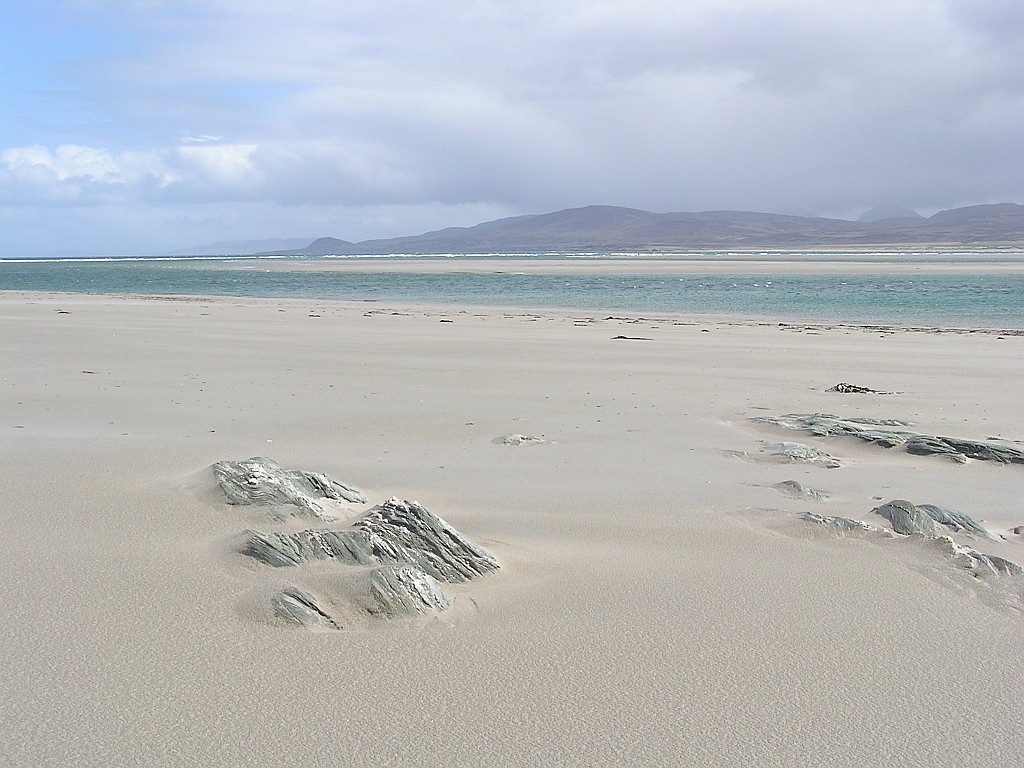
Loch Ghruinneart, Isle of Islay
If you picture troops involved in a 14th Century clan battle, fairies are the last thing you would expect to find among the ranks. However according to legend, a fairy is said to have appeared at the Battle of Traigh Ghruinneart, fought between Clan MacDonald and Clan MacLean in 1598. Although it wasn’t the kind of sweet, tinkerbell-esque fairy you’re probably imagining. According to legend, Dubh Sith (Black Fairy) was named after his dark skin and hairy body, and was an excellent archer. But the thing to remember about fairies is that they make great enemies – so you should never, ever cross a fairy.
In 1598 the Isle of Islay in the Inner Hebrides was held by Clan MacDonald, much to the annoyance of the chief of Clan MacLean, Sir Lachlan Mor MacLean. Sir Lachlan claimed that part of the Isle – the Rhinns – were part of the dowry given to his wife in 1566 by her brother Angus MacDonald, chief of Clan MacDonald. However Angus had also promised the Rhinns to Brian Vicar MacKay, lieutenant to the MacDonalds. For years Sir Lachlan had contested this, and in 1598 he finally decided to seek the lands that he claimed were rightfully his from his nephew, the new chief Sir James MacDonald.
In those days a battle was never fought without consulting a ban-fhaidh (wise woman), so Sir Lachlan sought out words of advice before embarking on his campaign. The ban-fhaidh told him under no circumstances should he go to Islay. Sir Lachlan replied that he was honour-bound to do so, and he must go, so the woman gave him three warnings to heed:
1.) Do not land at Islay on a Thursday
2.) Do not fight on the shores of Loch Ghruinneart
3.) Do not drink from the well known as Tobar Niall Neonaich
Three easy pieces of advice to follow to ensure a MacLean victory. However, upon arrival in Islay it wasn’t as easy to take heed of the ban-fhaidh’s warning. After assembling his forces of about 800-1000 men, Sir Lachlan set sail for Islay on a Wednesday. Unfortunately for him, bad weather meant the ship could not land until Thursday. Sir James rode to meet his uncle on the shores of Loch Ghruinneart and pleaded with him for peace, offering the MacLeans half of the island for Lachlan’s lifetime. Sir Lachlan had since learned he had double the men of Clan MacDonald, and was in no mood to compromise, instead demanding Sir James give him the entire island.
And so the troops from each clan lined up to battle at Traigh Ghruinneart (traigh meaning shoreline), which must have sent shivers down Sir Lachlan’s spine. Just before the battle the fairy from Jura known as Dubh Sith approached Sir Lachlan and offered his services as an archer during the battle. Sir Lachlan laughed in the fairy’s mutilated face, turning his back on the creature. Dubh Sith then approached Sir James, who received the fairy with open arms. Dubh Sith told Sir James to look after the battle, and he would take care of Sir Lachlan.
Unseen by the busy troops, Dubh Sith hid and waited in a Rowan tree near Tobar Niall Neonaich. The battle ensued under the hot August sun, and during a lull Sir Lachlan stopped at the well to take a drink. On removing his helmet, Dubh Sith jumped at the chance and shot Sir Lachlan through the eye with an arrow, killing him instantly.
The battle continued, with MacLean men full of rage upon hearing the news of the death of their chief. The MacDonald forces feigned retreat toward the setting sun then turned around to fight with the sun in the eyes of their enemy. The MacDonalds were victorious and chased the remaining MacLeans back to their boats, with some seeking refuge in the Chapel of Kilnave. The chapel was burnt to the ground, killing all but one of the men inside. According to local legend, this man was a aMacMhuirich (Currie) who managed to climb through a hole in the roof when the burning thatch collapsed. He eventually found refuge on the island, with his ancestors still there today.
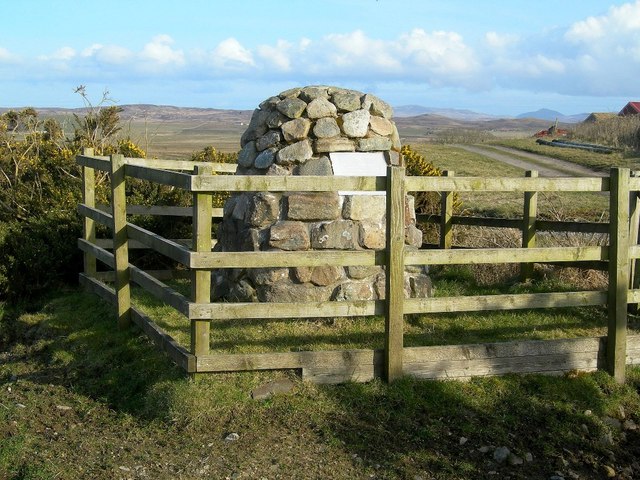
Cairn marking the spot where Sir Lachlan MacLean fell
Sir Lachlan’s foster mother heard of his death and came to collect the body shortly after the battle. She made a cairn beside the well where he was shot, and carried the body by cart to the church at Kilchoman where she buried him inside the church. When the new church was built on the old site, it was a smaller building, so today Sir Lachlan lies in the grounds outside the church.
It is not known what became of the mysterious Dubh Sith. Following the battle James VI and I awarded the MacDonald lands of Islay to Clan Campbell, leading to an extension of the feud. Clan MacDonald’s reign in Islay came to an end in 1612 when Angus MacDonald, 8th of Dunnyveg, sold his land holdings to Sir John Campbell of Cawdor of Clan Campbell.
The post The Curious Case of Dubh Sith appeared first on ScotClans | Scottish Clans.
]]>The post BBC on the lookout for Canadian/American descendants of the Marloch & Metagama appeared first on ScotClans | Scottish Clans.
]]>Within two weeks in 1923, two ships carried approximately 600 people from the Outer Hebrides of Scotland to their new home in Canada.
At the time most Scottish emigrant ships were leaving from Glasgow, however the April 1923 voyages of the SS Marloch and SS Metagama embarked first from Glasgow, then stopped en-route to pick up passengers in Lochboisdale and Stornoway respectively.
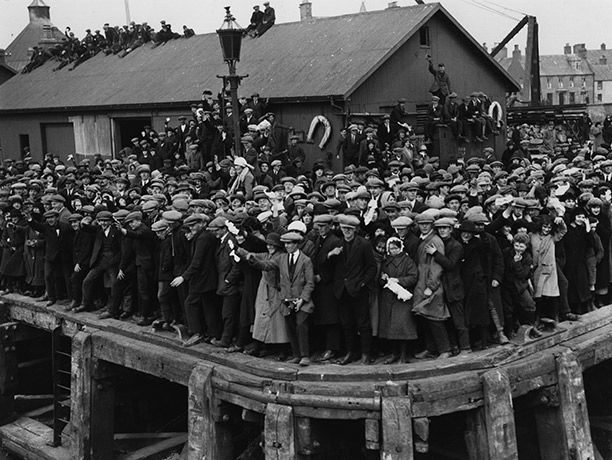
The Marloch set sail for St John, New Brunswick from Lochboisdale on the 15th of April 1923. On board were at least 50 families from the southern outer islands of the Outer Hebrides, including Barra, Eriskay and North and South Uist. Over 300 men, women and children were on their way to the Clandonald colony in the Red Deer area of Alberta.
When the Metagama sailed for from Stornoway on the 23rd of April 1923, the ship contained 300 people mostly from Lewis with an average age of twenty two – all but twenty were young men. They were on their way to Montreal, Quebec.
The BBC is keen to hear any personal stories from any Canadians or Americans descendant from those who boarded either ship in Lochboisdale or Stornoway in 1923. Similarly, any stories from people descendant from those who stayed behind in the Scotland will be gratefully received.
You can contact researcher Nadine Lee by e-mail nadine.lee02@bbc.co.uk or by phone +44 1224 384 816.
The post BBC on the lookout for Canadian/American descendants of the Marloch & Metagama appeared first on ScotClans | Scottish Clans.
]]>The post The Storehouse of Foulis appeared first on ScotClans | Scottish Clans.
]]>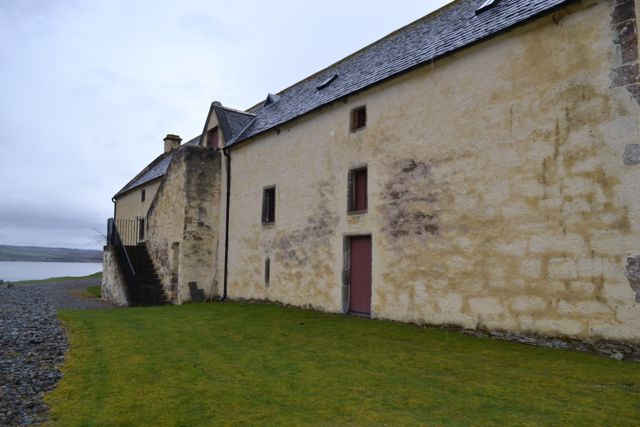
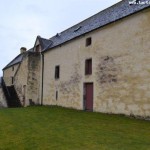
The Storehouse of Foulis on the banks of the Cromarty Firth
Sitting on the banks of the Cromarty Firth between Evanton and Dingwall, the Storehouse of Foulis is a fully restored 18th Century building that once housed the rent paid in kind from the Munro estate. Once only visited by horse and cart, the Storehouse now sits alongside the busy A9 with cars zipping past on the main road in and out of the Northern Highlands.
Thought to have been completed around 1740, the Storehouse was built for the Munros of Foulis at a time when rent on the estate was largely paid in goods. The area surrounding Foulis provided good growing and farming conditions because of the rich soil and relatively mild temperatures. Oats and barley received from the tenants were stored here before being portioned out to farm workers and household staff as wages. Surplus goods were shipped off to markets further south via ferry. The Storehouse is positioned towards the sea on the gently sloping shore just above high-tide mark so boats could be safely beached to load goods, floating away on the next incoming tide.
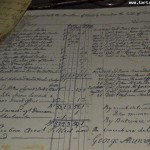
Surviving documents show the export of grain and foods such as salt salmon as well as timber sent by sloop to Fort George in 1753. A letter from Sir Hugh Munro to his factor in October 1795 stated that tenants should be given a receipt for grain brought to the storehouse, bringing as much as they conveniently could at one time. On February 3rd 1796 at a time when oatmeal was scarce, a group over 150 people marched on the Storehouse. They believed it to hold stores of oats but, after threatening to break in to the building, a deputation was allowed in by the storekeeper. Finding only barley and wheat they refused to buy saying that they “… lived chiefly by oatmeal and they did not mind tho’ he should send away all the wheat and barley… provided he left the oats.”
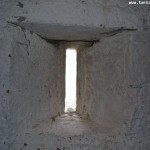
The building is constructed of lime harled sandstone rubble masonry bonded by lime mortar with dressed stone margins around the openings and a Ballachullish slate roof – a fine example of vernacular architecture. All the windows are small with those on the ground floor mere slits to provide necessary ventilation for the grain, and to provide security for the goods stored inside.
By the early 19th Century most rents were being paid in money, but the Storehouse continued to be used to store bulky goods moving in and out of the estate by sea until well into the 20th Century. Today the wooden pillars, capitals and longbeams survive whilst the joists and planking date from the refurbishment in 1998. The building is now a visitor attraction run by Clan Munro, with the store house hosting information about the building’s history, the clan and the area’s wildlife. An accompanying restaurant and farm shop have been built next door, with fresh and local produce for sale. In 2010 Prince Charles visited the Storehouse as part of his role as founder of the North Highland Initiative, which aims to bring together the farming community, local businesses and the tourism industry to promote the economic development by creating and marketing a powerful North Highland brand.
Photos taken from The Storehouse of Foulis


Quick Links to Clan Munro Products from The Clan Shop
- Munro Tartan Tie
- Munro Tartan Pocket Square Handkerchief
- Munro Tartan Scarves
- Munro Tartan Kilts
- Munro Clan Crest Badge
- Munro Clan Crest Mug
- Munro Clan Crest T-Shirts
- Munro Clan Crest Belt Buckle
- Munro Phone Covers
- Munro Tartan
- Munro Clan Crest Crystal Glasses
- Munro Clan Crest Cufflinks
- Munro Clan Crest Sgain Dubh
- Munro Clan Crest Kilt Pin
- Munro Clan Crest Plaques
The post The Storehouse of Foulis appeared first on ScotClans | Scottish Clans.
]]>The post The Friendly Falls appeared first on ScotClans | Scottish Clans.
]]>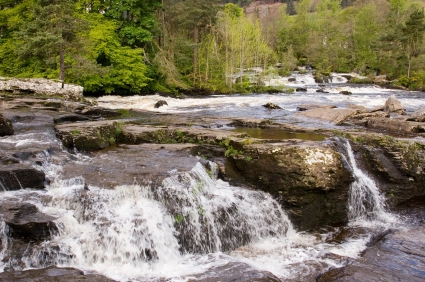
The Falls of Dochart
Monty Python’s Michael Palin is featured in the book, discussing the Falls of Dochart in Killin. Killin is the ancestral home to Clan Macnab, with many of the clan’s chiefs buried on the island situated in the falls – Innis Bhuidhe.
You can read Palin’s piece below, and for more information on the burial island you can read my report from the Macnab chief’s memorial which was held in 2013.

Michael Palin
It’s hard to know where to begin. Scotland is so richly endowed with great landscapes, breathtaking views and fine cities that picking out a favourite place seems unfair to all the others. But if I had to narrow my focus and forget the Forth-Clyde canal walk in Glasgow, the Bruichladdich Distillery on Islay and the King’s House Hotel in Glencoe, I’d settle for the Falls of Dochart in Killin. They’re dramatic without being fierce and the way the water twists and tumbles over the rocks is pleasing rather than awesome. They’re accessible too. You can get close to them. Thrilling for a child, I should think, and not intimidating to an oldie like me. I’d call them the friendly falls.
So much of what is beautiful about Scotland has water at the heart of it, whether it’s the rivers and streams, or the lochs and Sounds and Firths into which they flow. One of the great delights of a visit to the Falls of Dochart is their location. From whichever direction you approach the landscape is magnificent. From the west the valley of the Dochart leads you towards the Falls, with Ben More the sentinel to the south, rising over 1,100 metres. Coming at them from the east the road runs, for 14 glorious miles, beside the silver finger of Loch Tay with the dark flanks of the Ben Lawers range rising over 1,200 metres on the far side. Powerful, mysterious, hugely impressive highland scenery.
I think though that a favourite place has to be something more than just an aesthetic choice. There have to be personal elements. And so there are with me and the Falls of Dochart. In my mid-teens I’d met a girl on holiday in Suffolk, and we’d got on very well and the next year we’d met up again by the chilly grey North Sea and our holiday romance blossomed again. The year after that she wasn’t there and I was, for a while, very sad, as I never expected to see her again. Two years later, through the letter-box, came one of those significant communications that can change the course of a lifetime, like unexpectedly good exam results or a successful job application. In my case it was a postcard with a picture of the Falls of Dochart on the front.
On the back was a message from the girl I’d never expected to see again. She was on holiday up in the Highlands and had heard via a friend that I had got into Oxford University. This was followed by some snide reference to the fact that they must have lowered their standards, which, as humour had always been at the heart of our relationship, I found deeply reassuring. Reunited by the Falls of Dochart, we later met up and the holiday romance has developed into a 46- year marriage.
Was it predestination or just plain good fortune that led me to another relationship that was to shape my life, and which was to bring me to see the Falls of Dochart for myself? Whilst at Oxford I met and started to write with a Welshman from Esher in Surrey called Terry Jones. A few years later, by way of The Frost Report and Do Not Adjust Your Set, he and I teamed up with three fellow writers and performers from Cambridge, called Idle, Cleese and Chapman. Joined by an American animator named Gilliam, we became Monty Python’s Flying Circus. After a few years of television we wrote and produced our first film, Monty Python and The Holy Grail. Among many other things it featured a killer rabbit that lived in the terrifying Cave of Caerbannog.
The film was almost entirely shot in Scotland and the home of the killer rabbit was on the hillside overlooking Loch Tay. Which is how, on 6 May 1974, on an afternoon free of filming, I first saw the Falls Of Dochart for myself. I was with John Cleese and we sat on the rocks with the water spilling around us and talked about the future of Python and John’s urge to be free of his obligations to the group. When the time came to go, my hired car wouldn’t start and John helped me push it up the hill to Killin’s only garage.
In 2005, Terry Jones and myself returned to Scotland to film a short video of our search for the Holy Grail locations which was to be included in a new DVD release. By now, just over 30 years after John had expressed his frustrations with the group, the Holy Grail had been a huge international success and transformed the outlook for Python. We had stayed together, on and off, for two more films, the Life of Brian and The Meaning of Life.
Before Terry and I went on our quest to rediscover the location of the Cave of Caerbannog I insisted that we stop at the Falls. I stepped carefully out onto a rock in the middle of the river, sat down, took my shoes off and dangled my feet in the cool fast-flowing waters of the Dochart. I thought about my life and how this place had come to mean so much to me.
Seven years has gone by since then. John Cleese has just got married, for the fourth time, Terry Jones and I are meeting for a drink tomorrow and my wife has just rung to check on our three-year -old grandson who has come down with what he calls chicken pops. And a few hundred miles north the river will be bubbling and swirling down the Falls of Dochart.
© Michael Palin from My Favourite Place, which is being distributed throughout Scotland as part of Book Week Scotland
The post The Friendly Falls appeared first on ScotClans | Scottish Clans.
]]>The post Top 5: Whisky of the Clans appeared first on ScotClans | Scottish Clans.
]]>1. Dalmore

Dalmore 12 Year Old Whisky
In 1263, an ancestor of Clan Mackenzie saved King Alexander III of Scotland from being gored by a stag whilst out hunting. The grateful King granted the Mackenzies the right to bear a stag’s head, with twelve points to its antlers, signifying a ‘Royal’ in their coat of arms. Today every bottle of the Dalmore single malt is adorned with the clan’s proud emblem. The distillery is located on the northern shores of the Firth of Cromarty overlooking the Black Isle, and was originally established in 1839 by Alexander Matheson, a trader who made his fortune in opium imports. The Mackenzie family bought the distillery in 1866 and have recently begun to use the Mackenzie motto of Luceo Non Uro (I shine, not burn) as the company’s philosophy. The Dalmore Single Highland Malt Collection is matured in a wooden casks (both sherry wood and American white oak) which, along with the years and the climate, contributes to the flavour of each malt.
2. Clan MacGregor

Clan MacGregor Blended Whisky
Clan MacGregor blended whisky takes its name from the highland clan, honouring one the descendents of ancient Celtic royalty as proclaimed in the motto ‘Royal is my Race’. The blend is made from 15 malt and grain whiskies from the heart of Scotland, blended to create a delicate, sweet aroma and smooth, mellow taste. The bottles proudly carry the Clan MacGregor badge and motto, and with his kind permission, the personal crest of the 24th Clan Chief, Sir Malcolm MacGregor of MacGregor. The Clan badge, a crowned lion’s head on a wreath encircled with a belt and buckle, signifies the unity and loyalty of the clan who suffered two centuries worth of oppression. It is enjoyed in over 60 countries around the world, from the USA to Venezuela and the Middle East to Thailand.
3. Talisker

Talisker 10 Year Old
My personal favourite, this wee gem of single malt is produced at the Talisker distillery on the shores of Loch Harport on the Isle of Skye. It’s the only distillery on the isle, with the distillery’s seaside home giving it a deep peaty character followed by a hint of sweet. The distillery was built in 1831 by brothers Hugh and Kenneth MacAskil after they acquired the lease of Talisker House from the chief of Clan MacLeod. When a new lease for the distillery was negotiated with the chief in 1892 the annual payment was to be £23.12s and a ten-gallon cask of best-quality Talisker. Today the single malt continues to be the preferred dram of clan chiefs – the MacNeil of Barra leases their seat of Kisimul Castle to Historic Scotland at a cost of £1 per annum and a bottle of Talisker. In 2007 Talisker 18 year old won ‘Best Single Malt in the World’ at the World Whiskies Awards and was one of three whiskies described by poet Robert Louis Stevenson as “The king o’ drinks, as I conceive it” in his poem The Scotsman’s Return From Abroad.
4. Clan Campbell

Clan Campbell Blended Whisky
While the link between this blended whisky and the actual clan is unclear, the whisky takes it names from the clan who have 14 million descendents around the globe. Clan Campbell is one of the largest clans in Scotland and renowned for its bravery and influence over the country’s history since the 13th century. The whisky is distilled, blended and aged in the Highlands, combining Scotch grain and malt whiskies that have aged in oak casks for at least three years. The present clan chief, Torquhil Ian, combines his duties as Duke or Argyll, chief and landowner with a consultant role with Pernod Ricard, promoting Scotch Whiskies including Chivas Regal and Glenlivet.
5. Drambuie and Glayva

Drambuie Liqueur

Glayva Liqueur
Technically not a Whisky, Drambuie is a sweet golden coloured liqueur made from malt whisky, honey, herbs and spices. Produced in Broxburn, West Lothian, Drambuie derives its name from the Gaelic phrase an dram buidheach, (the drink that satisfies). After the Battle of Culloden in 1746, Prince Charles Edward Stuart fled to the isle of Skye. There, he was given sanctuary by Captain John MacKinnon of Clan MacKinnon. According to family legend, after staying with the captain, the prince rewarded him with this prized drink recipe. This version of events is disputed by historians who believe it to be a story concocted to boost sales of the drink. The MacKinnon family produce the liqueur to this day. A similar liqueur is Glayva, produced in Leith since 1947. It made from a blend of aged Scotch whiskies, herbs, anise, cloves, almonds, heather honey, and citrus fruits. Legend has it that when Bonnie Prince Charlie was served a whisky based liqueur, he looked at his host, held up the glass and spoke the Gaelic “Gle mhath!”(very good) thus giving the drink the name it carries to this day.
The post Top 5: Whisky of the Clans appeared first on ScotClans | Scottish Clans.
]]>The post The View From the Ground in Aberdeen appeared first on ScotClans | Scottish Clans.
]]>
The view from my window in Aberdeen
It could be any other lazy, late summer afternoon today in Aberdeen. Sunlight is attempting to squeeze its way through the clouds, seagulls are circling in droves, and ship horns are belching at the city’s bulging harbour. Right on cue, the haar has begun to roll in off the North Sea, making the crowd of the oil industry’s supply ships anchored off the coast look spectacularly ghostly.
But there’s something peculiar in the air today. The view from my window looks out on to one of Aberdeen’s relics from the not-so-distant past – a magnificent 1950s council tower block, that’s today dotted with saltires and simple one-worded banners. I kid you not, I can also hear the sound of someone playing Flower of Scotland on the bagpipes somewhere down the street. Today the atmosphere in Aberdeen, and indeed all over Scotland, is a mash of anxious-electric-hope as we all sit on the very edge of history.
I’m roughly 17,800 kilometers from my hometown of Rotorua, New Zealand. Sitting here today in the North East of Scotland, I somehow have landed myself right at the crossroads of what is one of the most important moments in this country’s already exceptional history. And thanks to my London-born father I’m one of those lucky buggers with dual-citizenship, which alongside my Scottish address gives me the right to vote in Thursday’s Independence Referendum.
New Zealand’s path to independence from the UK is, I’m rather embarrassed to admit, one of national confusion. We don’t even have an Independence Day, because no one can agree on when it actually happened. However we’re still part of the Commonwealth – which to me means that a well-to-do woman from London graces us with her presence on our coins and banknotes.

The Signing of the Treaty of Waitangi by Marcus King
Our independence came about after well over 150 years worth of baby steps, beginning with the signing of the ‘Treaty of Waitangi’ in 1840. The Treaty is a hotly contested topic at home to this day, and depending on who you speak to, it’s either the official date that we became a Crown Colony of Britain, or, when Maori chiefs gained sovereignty over the Crown. See why we’re so confused?
Over the next century, following our own war, then two world wars, our relationship with Old Blighty eroded as we slowly found our own feet in the world. We established and gained more and more degrees of self-rule, until finally, one day in 1986 the last remaining shreds of apron strings that stretched to the other side of the globe were cut. We developed our own constitution, removing the residual power of the UK to legislate.
A few weeks before I moved to Scotland almost two years ago, I watched from the other corner of the globe as Mr Cameron and Mr Salmond signed the Edinburgh Agreement. I remember thinking that Cameron seemed a little too calm in his post-signatory interview, and wondered why the prospect of the break-up of perhaps the mightiest Union in history didn’t seem to bother him. I thought perhaps the campaign for independence was too small and wasn’t perceived as a serious matter by Downing Street.
It’s now two years later, and let me tell you that this matter is so very far from small. Never mind what the people in suits have said – whichever side of the campaign ordinary folk are on, the sheer engagement and engrossment by every man, woman and child in the future of this land has been unprecedented. It’s been a truly electrifying and galvanising experience that I will cherish with all my heart for the rest of my days.
And so here I sit in my adopted home, right in the thick of it, poised and ready with poll card in hand.
I look around me at the gigantic gap between the rich and the poor in this city and wonder how the outcome on Thursday will affect the people who are visibly struggling to make ends meet. I look at the single mother and her daughter who walk past my door on the way to school each morning and wonder if my vote will affect that girl’s education prospects. And the wee old man who gives me a wave from his window every afternoon on my way home from work, how will this affect his pension scraps?
On Thursday morning I will place a tick beside the box marked Yes. Because I believe that there is a real genuine hunger in this country for something better. And I believe that the alternative is something that we will all be better off without. How incredibly fortunate we all are, that we have the right to choose.
As we say in my home – Kia kaha, Scotland. It means stay strong. If little old New Zealand can do it, then you sure as hell can too. Grab your independence by the baws and aim for the stars.
The post The View From the Ground in Aberdeen appeared first on ScotClans | Scottish Clans.
]]>The post Historic Dundee Drinkers to go Under Hammer appeared first on ScotClans | Scottish Clans.
]]>
Jane Swadel (above) features heavily in the book. Picture: Alan Richardson
Police mugshots of Dundee’s heaviest 20th century drinkers are set to go under the hammer next week. Published in 1905, the book depicts dozens of citizens who were banned from the city’s bars after flouting the era’s strict public drinking laws.
Anyone convicted under the Inebriates Act of 1898 three times in the space of 12 months faced being added to the book and having their picture and description circulated around the city’s bars.
Those pictured could then be fined up to 40 shillings if they tried to buy alcohol again – and landlords could be fined up to £20 for serving those depicted.
Each page describes one offender – with names, addresses, places of employment, a description and space for “peculiarities and marks” to be noted. It was signed by the constable in charge.
Jane Swaddel, aka Jane Williamson, a factory worker, was the oldest person listed, aged 63. It was noted that she “wants teeth in the upper jaw”. She was included after being convicted under the Licensing (Scotland) Act on 15 March 1905.
John Boyd, 46, of Commercial Street, Dundee, found himself listed after being “found in a state of intoxication and incapable of taking care of himself, and not under the care of a suitable person”. He was convicted at the Police Court in Dundee.
He was described as of “proportionate” build with “fresh” complexion. But officers noted under “peculiarities” that his left eye was “awanting”.
Dundee auction firm Curr and Dewar, which is selling the book next Tuesday, said it was being put under the hammer by a former landlord who ran a pub on the site of the current Bissell’s Bar on Dundee’s Polepark Road.
Steven Dewar, of Curr and Dewar, said: “I’ve never seen anything quite like it. It’s quite fascinating really – a real snapshot of the time it comes from. It was very much a recognised thing at the time, but I suppose it’s the kind of thing you wouldn’t be allowed to do now in case it contravened someone’s privacy.
“It covers a big age range – from 16 to 63 – and surprisingly is mostly females. These are all hard-working people living at a hard time – jute mill workers and factory workers.
“We’ve only valued it at £50 to £100 but that’s just because we’ve no idea what it will be worth to someone.”
The post Historic Dundee Drinkers to go Under Hammer appeared first on ScotClans | Scottish Clans.
]]>