The post The Order of the Thistle appeared first on ScotClans | Scottish Clans.
]]>Like many ‘ancient’ Scottish traditions, the origins of the order are actually relatively new; albeit not modern. It is a function of monarchy to be seen to be regal and full of pomp and circumstance – part of the pageantry that makes the institution so appealing. This was not lost on kings going back into the mists of time, but many of the outfits, ceremony, customs and ritual surrounding the British Crown can be traced back only a couple of hundred years in many instances; and some are 20th century in their design – but, meant to hearken back to an age when kings ruled as well as reigned.

HM The Queen and Duke of Edinburgh in Thistle Robes
The Order of the Thistle in it current guise (which may be its only ever incarnation) was established by King James VII (James II of England) on the 29th of May 1687. As an absentee monarch who actually enjoyed a fair amount of support in Scotland he, like now, was keen to foster a close relationship with his northern subjects; and he turned to two of the most important ministers of state to come up with a innovative idea that combined regal authority, ceremony, exclusivity and importance. Two brothers, John Drummond, Earl of Melfort and Secretary of State for Scotland and James Drummond, Earl of Perth and Lord Chancellor then went about ‘resurrecting’ the Order. In truth they essentially invented it.
Legend has it that a Scottish/Pictish king granted the order to the great emperor Charlemagne in 809; which may have some plausibility to it as he was known to have used Scottish mercenaries in his bodyguard and in the van of his armies. But, if it ever happened it was probably some token or gift exchanged between two rulers. Historians also point to James III (1451 – 1488), who is said to have made a presentation to King Francis I of France of an “Order of the Burr or Thissil’. Again, probably a personal inter-sovereign gift; but there may have been such an order. If late medieval and renaissance knightly orders did exist in Scotland, they may have sprung up sporadically, lasted for a few years and then disappeared again. Certainly nothing substantial or lasting; and certainly nothing akin to the modern order developed.
The Drummond’s order looked also to be short-lived as James VII was deposed from the throne of England in 1688 and then Scotland in 1689 and his successors William and Mary did not maintain it. However, in 1703 Queen Anne, the last Stewart monarch resurrected it and it remains pretty much in the same format and ceremonial as it was then. However, in 1987 the present Queen allowed for the membership of women as Ladies of the Thistle. As our parliamentary customs and practices developed to be more constitutional throughout the 18th and 19th centuries with real power shifting from the monarch to Prime Minister, virtually all honours gifted by the sovereign are done so on the advice of the Government. George VI (the queen’s father), felt that the Orders of the Garter and Thistle were being overused as devices for patronage, and in agreement with his Prime Minister, knighthood in both these orders became the personal gift of the monarch with no government interference – it is this which makes being a Knight of the Thistle so unique.
Equally unique are the small number that can be knights at any given time: There are only ever sixteen ordinary knights, a handful of officials and a few ‘extra’ knights, who are mainly members of the Royal Family. Members of the Order are addressed as Sir (or Lady) and can use the letters KT (or LT) after their names. It outranks all other orders with the exception of the Garter.
The Chapel of the Knights is in St Giles Cathedral, Edinburgh and the order meet on an annual basis and to confirm new members (such as Prince William). Whenever they so meet they are fully kitted out in their ceremonial robes, which are a beautiful deep green, with white trim; they wear the star and other emblematic accessories and a feathered cap. It can look somewhat anachronistic, but it serves to bind the functions of the state at a deeply symbolic level; and the ordinary members are chosen for their lifetime commitment to serving their country and for working toward the welfare of the people of Scotland.

Star of the Order of the Thistle
The motto of the order is: Nemo me Impune Lacessit, which means ‘no-one provokes me with impunity’ or who dares meddle with me. It is considerd the motto of Scotland and of the Royal Regiment of Scotland.
Chivalry is an unpopular word in a world that is too reliant on popularism; ceremony and duty underrated in an age of consumer commercialism and sycophantic celebrity. But, our institutions and such quirky roles are the glue that binds the fabric of our multi-patched nation; and it is a good thing to see the Earl of Strathearn maintaining that link and function.
The post The Order of the Thistle appeared first on ScotClans | Scottish Clans.
]]>The post The Scottish Nobility appeared first on ScotClans | Scottish Clans.
]]>The times they have a changed. The Great Estates are still there, but are a shadow of their former glories; the castles now lie open to the public to raise enough revenue to heat the huge halls and ballrooms that once sat at the fulcrum of society; and the lords of the manor themselves reduced to living in former servants quarters to save on the electric bill. Political changes over the last 100 years have altered the role the nobility play in our legislative procedures, and no longer is the wealth concentrated in their hands. The Middle Class, political creatures and the Nuevo Riche have stolen a march on their erstwhile lords and masters. Still, the fire is not quite out. Having a noble title still infers a certain amount of wealth; a large degree of privilege and influence and will certainly open doors (there are plenty lords of the realm sitting on boardroom tables); and of course a residual amount of deference. To visitors from overseas our castles and titles, lords and ladies can be archaic if not downright incomprehensible. But, thousand year old ways are ingrained and hard to shift.

- Dunrobin Castle – Seat of the Countess Sutherland

Scotland was born out of warring factions and semi-kingdoms; a baptism of fire, and any king ruled only by the grace of his great lords. Traditionally, the nation was split into six provinces, each governed by a sub-king; such as Atholl, Moray and Fife. Our understanding of this social organisation comes from ancient, but not contemporary texts and may give an unclear, politically motivated or distorted view of Scotland1200 years ago. Indeed, like all Celtic-based societies of the time it is likely to have been far more complex, fluid and personal. The Church too played a big role and was a major landowner. The king had lots of juggling to do. By 1100, Scotland following on from the revolution in England after the Norman Conquest was introducing the Feudal System – a body politick that placed the king at the apex and then a screed of layered nobility below him ranked in order of precedence. At the bottom of course as always was the peasant who propped up the system.
The Feudal System involved reorganising trade, erecting towns and markets, streamlining authority and the wielding of real power. It was fully introduced into Lowland Scotland by 1200, but its adoption in the Highlands was far more haphazard, and in truth never fully implemented. Instead there was a two-tier system layering the aristocratic feudal structure against a traditional clan heritage. As authority became increasingly centralised around a powerful monarchy the royal house took control of lordships across the country as a tool in maintaining their authority, often displacing the native nobility: it was an omelette out of which our modern nobility was born.
From the early kinglets and a patchwork of lordships new titles emerge around 1000 – Mormaers, Thanes and Toisichs: the first two perhaps an interchangeable title that conveyed either noble rights or as placemen of the king and second only to him; the term toisich is Gaelic and probably equates to Chief, as would emerge in the developed clan system. The earliest mormaers are noted as far back as the 960s with the lords of Atholl; but by the middle of the 12th century the title had been merged with others, including thanages, to become Earl. This is an Anglo-Saxon title, similar to the Scandinavian Jarl and comparable to the continental title Count. The adoption of the English title is symptomatic of the changes in Scottish society and language away from a traditional Celtic one; and part of a wider reorganisation.
William the Conqueror had tried to supplant the title Earl with Count in England, but without success; however, the wife of an earl would be Countess, his son a Viscount and the land under his jurisdiction a County – all European terms. In England, as in the emerging feudal Scotland, the king had parcelled the land into Shires; counties were essentially the same thing and then as now the term is interchangeable. Women can hold the rank under their own right and pass it on to their children, but use the title Countess; for example the Countess of Sutherland (her son will be the next earl).
Some earls had greater responsibilities – perhaps their lands lay along important boundaries, or controlled valuable resources; and they were given a higher rank to donate this added role. From the old French Marchis meaning a border, the title of Marquess emerged. Today there are only four marquisettes in Scotland, the oldest and most senior being the Marquess of Huntly, who is the head of the Gordon family. Ranked even higher than a marquess is that of a Duke. From the Latin Dux, the title was originally a military one, given in Roman times to province commanders. In some countries Dukes or Archdukes are ruling monarchs; and in Scotland the title was originally reserved only for senior members of the royal family – the Duke of Rothesay for example is the official Scottish title for the heir to the throne (not Prince of Wales). Not until 1643 did a non-royal receive the title – the Duke of Hamilton. Today there are seven Scottish dukes, including the Duke of Buccleuch –Britain’s largest landowner – and the Duke of Montrose, who still sits in the House of Lords.

- Arms of the now extinct Earldom of Breadalbane
The wife of a duke is called a duchess, but a woman cannot hold the title on her own accord; even if she’s a queen. Thus a king is also Duke of Normandy (for the Channel Islands) and Duke of Lancaster; but the present Queen is not – although she holds the titles in privilege. She is the Duchess of Edinburgh however, as she is married to the Duke of Edinburgh. There are several Royal Dukes, Edinburgh being one, including the Duke of York (Prince Andrew) and Duke of Cambridge (Prince William) – dukes are addressed as ‘your grace’, but royal dukes as ‘your royal highness’.
Ranked lower than an earl are viscounts (often the courtesy title for the eldest son of an earl), such as the Viscount Falkland; and Lords of Parliament, such as Lord Lovat. There are no Barons in the peerage of Scotland as such, and Lord of Parliament is the equivalent. However, none were created after the Union of Parliaments in 1707 instead new hereditary Scottish lords were ennobled as United Kingdom barons.
By 1900 the aristocracy owned virtually every square inch of Scotland, with vast estates such as those held by the Dukes of Sutherland, Dukes of Atholl, Earls of Breadalbane, Dukes of Argyll, Dukes of Montrose, Earls of Angus and so on. Some titles are now extinct; two world wars and subsequent social upheaval changed the landscape forever. Many have found a new role, perhaps in business; others spending more time in their roles as clan chiefs, while others a quiet life on their estates. But, the age of the warrior aristocracy which has ruled Scotland for 2500 years is in its twilight and it will probably be gone by the end of the century.
The post The Scottish Nobility appeared first on ScotClans | Scottish Clans.
]]>The post Twilight of the Stewarts appeared first on ScotClans | Scottish Clans.
]]>The Stewarts rose from relative obscurity to a place of importance in the Scottish Court through the 13th century, and during the Wars of Independence they sided with the Bruce faction; and Walter Stewart married Robert the Bruce’s daughter Marjorie. Eventually, in 1371 after a half-century wait for his uncle to die Robert Stewart became king ofScotland. It was the beginning of a dynastic rule that would last 343 years until the death of Queen Anne in 1714. Throughout that time, the family – which employed mafia tactics – extended their control over Scotland, and finally reached the giddy heights of the throne of England.
As British kings their successes were less evident – one was executed and another deposed; and their increasing disengagement with the political momentum and religious intolerance of the times would see the great House permanently exiled. From James VII to his grandson Charles Edward the exiled Stuarts (French spelling) would set up counter-courts in France and Italy; where they’d be hocked from palace to palace maintaining a veneer of royalty and influence. It was back to this fantasy world that the L’Heureux would bring the young Pretender following the disaster of the ’45: but in reality it was to an alcohol fuelled life of obscurity.
Charles’ stay in France was short-lived, for within a couple of years of the rising the British and the French signed the Treaty of Aix-la-Chapelle’ effectively ending the War of the Austrian Succession, which the Jacobite rebellion was essentially part of; and with the deal the Pretender was expelled. He returned to Italy, where his father still held a degree of social influence. Shattered by the failure of the Cause, and haunted by ghosts of Culloden Charles began a string of affairs and sought solace in the bottom of a bottle. His principal mistress was the Scottish socialite, Clementina Walkinshaw, who in 1753 bore him a daughter, Charlotte.
Henry Stuart, Charles’ younger brother took a different route after 1746, perhaps armed with more realism, and entered the Catholic Church. His father was on good terms with the Pope, who still recognised him as the rightful king, and Henry made a meteoric rise through the ranks of the episcopacy, becoming Cardinal-Bishop of Frascati in 1761. While his brother became a Prince of the Church; Charles, drunk half the time, still entertained dreams of fantasy thrones.
In 1759, at the height of the Seven Years War, a conflict that for the first time took on a global perspective, the French drew up plans for a full-scale invasion of England. As part of the project he wanted to enlist the support of the still-loyal Jacobites; and Charles was summoned to Paris. Boorish and unrealistic, the French government were soon repelled by him, and sent him packing: he’d play no part in the operation. However, significant British victories overseas essentially put paid to the expedition and it was permanently shelved. This was Charles’ last true, albeit slim, chance to be king. His drinking worsened, his life increasingly nomadic and his treatment of Clementina increasingly abusive. In 1760 she left him, and took Charlotte with her. There is a strong suspicion that Prince James helped out, and gave her an allowance.

Prince Charles Edward Stuart in later life
As she grew up, Charlotte was bounced from convent to convent as her father refused to provide for her or her mother; and with James dead in 1766 that avenue dried up as well. James Francis Stuart, born in 1688 to James VII was the last prince of the House of Stewart to be born in Britain and to the reigning dynasty. As such the Pope and kings across Europe still either recognised his claim, or treated him on an equal footing. The world by 1766 had moved on, and neither the Papacy nor the crowned heads would give the increasingly distant, melancholic and unpopular Charles the same recognition. His downward spiral continued.
In 1772 he married Princess Louise of Stolberg-Geden; but, due to the nature of the man, now a broken alcoholic, it was doomed to failure: she left him eight years later. Now an old man in ill-health he reached out again to his family, and was reconciled with his daughter; who also engaged her uncle, the Cardinal Henry, to bring the once-Bonnie Prince back to Rome, where she would care for him until he died of a stroke in 1788. Chronically ill herself, she died three years later.
Charles Edward Stuart had lit up Scotland like a firework during the 1745 rebellion; but the rest of his life had been an unfulfilled damp-squib; and on his death the Jacobite claim fell to his brother: Cardinal Henry Stuart. As a successful and powerful clergyman (Henry was raised to the Dean of the College of Cardinals in 1803) he did not press his case. He died in 1807: last of the Royal Stewarts. Both he and Charles were buried within the Basilica of St Peter’s in the Vatican. He may have been the last of the dynasty; but not last of the bloodline.
In the years before she returned to her father, Charlotte Stuart had a long term affair with Ferdinand de Rohan, Archbishop of Bordeaux, which considering his position was a risky enterprise. She had three children by him: Marie Victoire, Charlotte and a boy, Charles Edward. Little is known about the two girls, or whether they married and had children – it is believed that Marie Victoire ended up in Poland (Charles’ mother was Polish) and that Charlotte was absorbed into polite society in England. Either way, they and any possible descendants vanished into anonymity.
The son, Charles became a distinguished soldier and something of a globetrotter; and while he never pressed his Jacobite claim, he did maintain links with leading Scots. Indeed, it was while returning from a meeting with the Duke of Atholl in 1854 he was killed in a coaching accident; and is buried in the grounds of Dunkeld Cathedral in Perthshire. With him, the last of the true direct bloodline ended. Meanwhile, fanatical Jacobites searched around for an heir to Henry Stuart; and with his death the ‘claim’ passed to King Charles Emmanuel IV of Sardinia; the senior living descendant of Charles I Stuart through his daughter Henrietta. In a parallel universe the line has passed down to Franz von Wittelsbach, Duke of Bavaria; although he declines ever to talk about his Stewart ancestry.
The bitter wars of the 17th and 18th centuries shaped the modern Britain that emerged, the nature of the monarchy, and indeed the dynastic future itself. The Royal Stewarts had their time; their crown slipped, fell and it was eventually buried in the setting sun amid the hallowed walls of Dunkeld. And few were there to mourn it.
The post Twilight of the Stewarts appeared first on ScotClans | Scottish Clans.
]]>The post The Scottish Cup & Hampden Park appeared first on ScotClans | Scottish Clans.
]]>England’s version of this top prize, the FA Cup founded in 1871, is the oldest soccer competition of them all; but the actual silver cup itself has gone through several incarnations and the first few versions are long gone. However, the trophy that the winners on the 19th will lift at Hampden is the game’s oldest and goes right back to the dawn of the sport itself. The competition was first held in the season 1873/74 and the final was played at a field close to the modern stadium and was won by Queens Park, Scotland’s oldest team and one of the co-authors in the formation of the rules. Hampden Park is still the home stadium for Queens Park; and throughout the formative years of football’s development they were the nation’s most successful team. The dominance of Celtic and Rangers, the so called Old Firm was yet to come.
Properly the Scottish Football Association Challenge Cup, the current trophy was first held aloft in 1885; and to date Celtic have won it 35 times, and Rangers 33 times, with the rest a long way behind. Since 2001, the winning team only gets to hold and show off the prize for around half an hour as they do the lap of honour and pose for the press. Then, due to its fragility it gets taken back to the cabinet at the Scottish Football Museum, which is inside the stadium. The team then get a replica to display in their own cabinet; which should Hibs win will be for the first time in over a hundred years.

- The Scottish Cup at Hampden

The superlatives of the day don’t end there. Hampden Park, one of the longest continually used international grounds, was when it was built in 1905 the largest stadium in the world with a capacity of around 100,000 (the second and third largest were Ibrox and Celtic Park – also in Glasgow). That capacity would rise to nearly 150,000 by 1937; and it holds the record for the largest crowd at an international match in Europe. It was an intimidating place for visiting teams, greeted as they were by the famous Hampden Roar while walking up onto the pitch. Ironically, the stadium is named after an Englishman, John Hampden, a key player during the civil wars of the 17th century, who had a nearby street named for him.
The first international match in the world was held at a nearby cricket ground in 1872 when Scotland hosted the old enemy England (Scotland was essentially Queens Park). It finished 0-0 – an inauspicious start to the oldest rivalry in world football. England played at the current Hampden for the first time in 1906 (Scotland won 2-1); and this cemented its position as the home of Scottish football. In a way I think this is right and to the benefit of the game in Scotland as a whole; that the national stadium, and the ground where the Cup is contested, is neutral from Celtic or Rangers.
Football is very much part of the Scottish psyche; and as we settle down to watch the showcase event in the calendar it is worth remembering the history, the memories, the highs and lows that have taken place in this great cathedral of sport in the battle for this most venerated and priceless of cups.
This article was written by David McNicoll who runs Vacation Scotland; a travel company specialising in Scottish travel packages. For more information – http://www.vacationscotland.biz/
The post The Scottish Cup & Hampden Park appeared first on ScotClans | Scottish Clans.
]]>The post The Union Jack appeared first on ScotClans | Scottish Clans.
]]>
Late in the evening of the 26th of March 1603 Robert Carey arrived exhausted, battered and bruised at the gates of the Palace of Holyroodhouse at the foot of Edinburgh’s Royal Mile. With him he carried important news, news that would change everything: the Queen of England was dead. Sixty hours earlier he’d left Richmond Palace in London the moment Elizabeth I had expired, and now he was being taken by candlelight to see the King of Scots, James VI in his bedchamber. Without permission or authority from the English parliament, Carey announced to the king that he was being offered the throne of England. It was news that James had been waiting a lifetime to hear.
Not that it came to him as any surprise, for over the last three years or so Elizabeth’s chief councillor, the rather dyspeptic Robert Cecil, had been conducting informal negotiations with the Scottish king; and when it became clear that the old queen was on her last legs those discussions became more official. Indeed, so astute was Cecil that James’s succession was one of the smoothest in English history; no mean feat considering that the king of Scotland was about to wear the crown of St Edward. For centuries kings of England had attempted to make Scotland subordinate to their will; and in one of the great ironies of European history the tables had now been turned.

King James VI
James left Edinburgh on the 5th of April, having pledged to his Scottish subjects that he would come back ever three years (a promise he failed to keep) and became the first Scottish monarch in nearly a hundred years to cross the River Tweed and enter England. It took over a month for the travelling show to wind its way to London, and everywhere cheering crowds greeted their new king all along the Great North Road, culminating in a stupendous fanfare as he entered the capital on the 7th of May. Edward I, Hammer of the Scots, must have been spinning in his grave.
James was crowed in Westminster Abbey in July 1603, sitting on the ancient Stone of Destiny, wearing the Crown of England and amid the great and grand of the English aristocracy. To them he was now James I of England; but the new monarch had grander ideas. He once told his parliament, that he now “ruled Scotland from London with a pen, which English kings had never managed with the sword”; a backhanded complement to his Stewart ancestors and his native land, but showing firmly that one king ruled both nations. From the very start he called the new joint-monarchy ‘Magna Britannia‘, or Great Britain: resurrecting an old Roman term for a modern Caesar.
Above all James wanted to unite his kingdoms, it was almost an obsession, and this didn’t go down too well with his English ministers and parliament. Every step towards British-ness was a step away from English-ness; although north of the border the Scots were still basking in the fact that they’d just given England a king and didn’t really care as much. He also didn’t really understand the English system, its laws or customs, so he brought south a Scottish court and surrounded himself with the familiarity. This caused serious tensions, and played a huge part in the Gunpowder Plot of 1605. Still, undaunted and with a cunning wilfulness his programme of integration, at least in symbolism, continued.
James VI was the son of the stunningly beautiful Mary Queen of Scots and her equally handsome husband Lord Darnley; yet he turned out to be a rather strange looking character. He had a pronounced limp, odd stature and a tongue too large for his mouth which meant he tended to slaver like a simpleton. All this was combined with a raft of personality disorders, all stemming from a childhood that at best could be described as traumatic. However, James was no simpleton; he was well educated, sharp and political expedient – every thing he said or did was done in calculation of his own conceit as a divine king. In Europe he was half-mockingly called the ‘Wisest Fool in Christendom’. He may have looked and sounded like a half-wit, but his brain was razor-sharp; and his English ministers never really grasped that.
The king was passionate about heraldry and symbolism, and he saw this as an effective way to smooth the path to genuine union. His first move was to create a personal heraldic badge: a motif combining the rose of England with the thistle of Scotland. He then changed the Royal Standard, merging elements from both the English and Scottish coats of arms – although Scotland would, and retains a separate royal standard where the Scottish lion rampant takes precedence over the English ‘three lions’ emblem). As independent nations though both Scotland and England retained their own national flags; but here too James decided that his two realms should have one; and it remains his greatest contribution to the symbolic life of the nation.
According to the king there was contentions at various ports in Scotland allowing English ships to enter, and vice versa; a cover story for sure, but one that allowed James to realise an ambition: a national flag. He asked the Privy Council to come up with a flag that ships and navies from both countries could fly and several options came back to his desk for approval. Now considering that his English ministers saw Scotland as little more than appendage, their designs reflected it: with the St Andrew’s Cross reduced to little more than an afterthought against their Cross of St George. James was having none of it, and commissioned a flag that displayed both ensigns with parity, and the result was the red-white cross of England emblazoned against a backdrop of the white-blue cross of Scotland. And so on the 16th of April 1606 the new Union Flag was born.

A very English candidate for the Union Flag
With such a Scottish influence over their coveted flag the English parliament and army refused to adopt it; but with direct authority over the navy the new flag was made compulsory. A flag flown at sea is smaller than one flown on land and is known as a ‘jack’. Thus, for the first hundred years of its existence it was known as the Union Jack, a name that has kinda stuck. Also, James was Christened by his French-speaking mother as Jacque (the French for James), and behind his back he was snidely called ‘Union Jacque’. This play on words sealed the name in our national psyche, and few today realise that it is properly the ‘Union Flag’, not ‘Union Jack’.
James VI died in 1625, but his dream of union didn’t; and it took over a hundred years of civil war, fiscal disparity and ultimately bullying tactics to take Scotland into political union with England. With the Act of Union in 1707 James’ flag was adopted as the British national flag as England and Scotland ceased to be independent nations. By this time colonial ambitions were taking the flag to the farthest corners of the globe; and in time it would flutter across a quarter of the world. In 1801 Ireland was united with Great Britain (thus adding the red X cross of St Patrick to the flag) to create the United Kingdom and the standard we know to day was complete.
The British Empire is long dead, but the Union Flag is still an important part of the flags of many Commonwealth nations, such as Australia and New Zealand and most Canadian States (it’s even in the flag of Hawaii). It remains an integral part of the colourful pageantry and pride in our country; a reminder that our United Kingdom is exactly that. Scottish James would be very happy.

The Union Flag
The post The Union Jack appeared first on ScotClans | Scottish Clans.
]]>The post Prophecy – Scottish Second Sight appeared first on ScotClans | Scottish Clans.
]]>
Easily the best known and most popular of Highland prophets is Kenneth Mackenzie, The Brahan Seer; who may (or may not) have lived around 400 years ago to the north and west of Inverness. The story goes that his mother cut a deal with the spirit of a Danish princess, and in return for letting the wraith return to her grave the power of second sight would be gifted upon her child. In the morning Kenneth awoke to find a stone with a hole cut through the middle next to his bed. On looking through the stone he was engulfed with visions, good and bad, of a future yet to come. In time he would learn to control this gift and make numerous predictions for his own people and for the Highlands as a whole.

The Brahan Seer
Although he is most famous for predicting the downfall of his own clan, the Mackenzies of Seaforth, with a dramatic vision of deaf chiefs, white-hooded lassies and tragedy; he also foresaw the destinies of many other clans as well, for example – “When the big-thumbed sheriff officer and the blind man of the twenty-four fingers shall meet, then MacNeil of Barra shall prepare for a flitting“. It is known that this prophecy came true in 1838 when the last of the MacNeils of Barra left Kisimul Castle behind bankrupt (a ‘flitting’ in Scotland is to move house). Most of his predictions follow this vein, with many being very specific. Many of the prophecies are about battles or hardship ahead, and often a little macabre: “The day will come when the raven will drink its three fills of the blood of Clan Donald on top of the Hills of Minaraidh in Lewis“; ravens drinking the blood is a recurring theme. He would also foresee the changes that ravaged the Highlands during the Clearances of the 18th and 19th century that began in Ross-shire.
“The day will come when there will be a road through the hills of Ross-shire from sea to sea, and a bridge on every stream. Then the people of the land will degenerate and grow weak as their country improves . . . and the clansmen will flee from their native country before an army of sheep” Anyone who knows something of the history of the Highlands will know just how much that sadly came to pass, with sheep replacing men, and whole glens emptied of their people by a brutal aristocracy and their agents. Still, the seer goes on in another vision: “the people will emigrate to islands now unknown in the boundless oceans, after which the deer and other wild animals shall be exterminated by horrid Black Rains. The people will then return and take undisturbed possession of the lands of their ancestors.” This is a reference to the mass emigration from Scotland in the 19th century; but we still await the horrid black rain, and this is one of the most feared predictions in the Highlands still to be fulfilled.
The Brahan Seer wasn’t the only prophet to foretell the Clearances, and considering the social and personal upheavals it caused it’s no wonder. In the 1640s on the shores of Loch Tay in Highland Perthshire lived a seer known as the ‘Lady of Lawers’. It is likely she was Mary Campbell who married John Stewart of Appin, and lived at the big house in the now deserted village of Lawers. She too saw the coming of the sheep and the evicting of the people: “The land will first be sifted and then riddled of its people, and the jaw of the sheep will drive the plough from the ground. The homes on Loch Tay shall become so scarce that a cock crowing will not be heard from one to the other.” Today, the once heavily cultivated slopes of Loch Tay are now almost exclusively put over to sheep grazing.
The landlord was the Marquess of Breadalbane, who’s estate in the 19th century was nearly half a million acres; and he was instrumental in evicting at least 3000 people from Lochtayside during the worst excesses of the Clearances. Not that his family would be spared from the foresight of the Lady of Lawers either: “The day will come when the Campbells of Breadalbane will have a thousand rents, then one rent, then no rents at all; what was put together in hides shall be rent asunder in laces. The last laird will pass over Glenogle with a grey pony leaving nothing behind.” In the 1920s the estate fell into a sharp decline with mounting debts and by the 30s it was bust. Countess Breadalbane sold the last of the estate in 1948 and left the area in a trap pulled by a grey pony.

Breadalbane – Hard hit by the Clearances
Sometimes landowners made the mistake of evicting seers as well, and one such soothsayer forcibly removed from Jura in the early 1700s left her Campbell landlord with an ominous prediction: “The last Campbell laird of Jura will be blind in one eye, and will leave the island with all of his belongings tied to a cart pulled by a lone white horse.” This was well known to the islanders, and finally came true in 1938 when Charles Campbell, who’d been blinded in the First World War fell on hard times, sold up and left the island behind with nothing but a cart and horse. Today, the Isle of Jura distillery produces a whisky commemorating the story, called “Prophecy”
Not all prophecies are doom and gloom; some have a more positive aspect. For example it is well known to the Clan Cameron that “As long as there’s snow on Ben Nevis the Camerons will command Locheil“. At 4409ft, Ben Nevis is the highest mountain in the British isles and looms high and large over the Cameron estates of Locheil; being so high the snow has only melted six times in the last 120 years, only to remain the next year. The Camerons I think are safe. But, eventually we may all be doomed by the famous words of the Border prophet known as ‘Thomas the Rhymer’: “When the Cows of Gowrie come to land, the Judgement Day is near at hand.” The Cows of Gowrie are two boulders sitting in the sands of the Firth of Tay near Dundee, and it is said they move landward at about an inch a year.
The legend goes that Thomas the Rhymer, who lived in the 13th century in the village of Earlston near Melrose, was enchanted by a fairy queen dwelling deep within the Eildon Hills. He was allowed to return to the mortal world for a short time, and was granted the gift of second sight; before eventually spending eternity in the world of the fairies. The story is similar in theme to the ‘gifting’ of the power to the Brahan Seer; and the sidhe, or fairy people play a large part in old superstitions and legends in Scotland. It may be a folk-memory of an older, lost culture that had certain shamanic ritual, and thus lots of prophecies. Many people across the globe, through their own natural shrewdness and perhaps with the help of hallucinogens have been venerated in their culture as being able to divine the future. The seers are our version of this, and many people have claimed the gift, or curse, right down to the present day – it may well have its origins in our very ancient past. It certainly makes for great storytelling.
This article was written by David McNicoll, who runs Vacation Scotland – a travel company specialising in tours and vacation packages to Scotland. For more info – www.vacationscotland.biz
The post Prophecy – Scottish Second Sight appeared first on ScotClans | Scottish Clans.
]]>The post Ice Age Scotland appeared first on ScotClans | Scottish Clans.
]]>The Ice Age was more than just a never ending cold, or ice building up and flowing across the landscape; it carved that very landscape, obliterating what went before and providing a new canvass for nature to re-conquer once the glaciers finally melted. The geology of Scotland in places is billions of years old, and for the most part hundreds of millions of years old; but it has been sculpted over the last two million by repeated glacial episodes, the last of which began around 30,000 years ago and finally ended 10,000 years ago. But, what causes these events and what legacy have they left us?
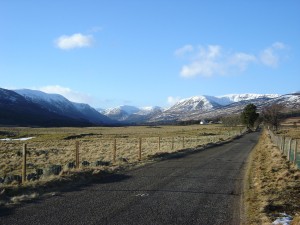
Glen Doll in Angus – A landscape carved by Ice
The principal reasons that the earth experiences enhanced ice age events periodically are astronomical; and collectively termed the Milankovitch Cycles (named after the Serbian scientist, Milutin Milanković, who first made the connection). We assume that the planet meanders through the vastness of space in a uniform manner, fixed in place: but not so. Over time periods we cannot comprehend the earth wobbles about and shifts its patterns of orbit and rotation; and does so cyclically, repeating the pattern across the ages.
Each cycle has its extremes, and can individually trigger enhanced ice growth; but they peak at differing time intervals, and so it’s only when they click together that the results can be truly spectacular. They’re not the only factors involved, others include the strength or non-existence of the Gulf Stream, plate tectonics and mountain building, and many more – and to be honest we really don’t know how it all connects together. Still, 30,000 years ago, the Milankovitch cogwheels clicked into place and the Gulf Stream turned off; resulting in the rapid build up of ice at the poles and the southward advance of the polar front: the summer limit of pack-ice.
Initially as the polar front moved southward, Scotland experienced extremely cold winters, somewhat like Canada today; resulting in glacier ice forming in the Northwest Highlands, the Nevis Range, the Cairngorms and Lochnagar; plus winter sea ice probably reached as far as the Shetland Islands. This is colder than we’ve experienced in the last 10,000 years, but there was no respite and the mercury continued to drop. Ice ages don’t happen because of cold winters, they happen because of cold summers, where the ice and snow from the previous season doesn’t melt and it builds up, layer upon layer, until it starts flowing under its own weight towards the sea via a path of least resistance. The glaciers then pool in lower ground.
It would only take a couple of thousand years to go from small glaciers in the mountains to ice caps forming in places like Rannoch Moor, Royal Deeside and the Great Glen. Around 25,000 years ago large glaciers, the like we’d associate with Alaska today would be flowing steadily down our main valleys, to perhaps a thickness of 2000ft in the upland areas. By now there is glacier ice in the Southern Uplands, the Lake District, Yorkshire and Snowdonia; and large ice flows streaming through the Central Belt mainly towards the North Sea via Strathmore and the Forth Valley.
The glacial maximum came around 18,000 years ago, when the polar front which today is to the north of Iceland reached to Portugal. Scotland was now buried under an ice-sheet over 4000ft thick in places: akin to Greenland today; and it was small in comparison. The whole of Scandinavia was buried under a much thicker dome centered over the Baltic Sea, and North America groaned under the vast weight of the Laurentide Ice Sheet, which may have been 10,000ft thick, and was over half as big again as the Antarctic sheet today. The result of all this water locked away as ice was a severe drop in sea levels: over 400ft lower than today. The North Sea didn’t was a meadowland, grazed by mammoths and other lost fauna during the short summer season. It is possible that people followed the game on to the plains; but we also know that the population of Europe was very low, and forced into cluster ‘refuges’.
From around 18,000 years ago the earth slowly warmed again and the cogs came out of sync; and by 13,000 years ago the British ice sheet, which had stretched to the English Midlands, and covered most of Ireland had gone. The ice itself had carved out a new landscape, digging deep into the rock as it ground its way to the sea. The picturesque fjord landscape of the west coast, deep valleys like Glencoe and Glen Muick, the rounded hills of the Southern Uplands and the sharp ridges of the Cuillin of Skye: all sculpted out of the bedrock by the sheer power of the glaciers. The melting of that ice had no less a dramatic effect either.
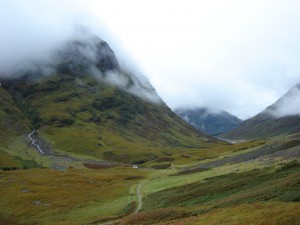
Glencoe – A typical U-Shaped valley
Most of the Highland valleys and all of the Lowlands are blanketed in debris either left directly by retreating ice, or washed out by meltwaters. Torrential flooding and reworking of sediment created terraces, gravel fans and deep, sandy deposits; in other places the retreating ice can be mapped by way of the unique landforms left behind, like the horseshoe shaped moraines dumped at the front of the glacier. Only the far northwest, where the landscape was heavily scoured, saw little deposition – giving us a glimpse of the immediate post glacial world of Scotland 13,000 years ago. But everywhere you look you will find evidence of Scotland’s Ice Age: from Edinburgh’s Royal Mile to the deep lochs of the Great Glen; and from the macro to the micro.
Global temperatures dropped again around 11,500 years ago, and there was further ice growth in the Highlands, but by 10,000 years ago the last of the glaciers had melted; and thus it has remained. A new world emerged from the grip of the big freeze, great rivers now flow where ice once ruled, and soon forests and grasslands came to dominate. The sea also rose, rapidly and to levels higher than today. This is thanks to a phenomenon where the land, having been compressed by the sheer weight of the ice, rebounds, but at a slower rate than the sea. So, relative to one another the sea reaches a certain height, and then the land slowly rises out of it. And all around our coast are archaic cliffs and raised beaches: testament to an older shoreline when sea levels were over 100ft higher. Scotland continues to rise.
For 10,000 years humankind has basked in the warmth of the current inter-glacial and flourished like never before in our history. But, eventually the Milankovitch cogwheels will click once more, and Scotland along with half the globe will be plunged again into the abyss of an Ice Age.
This article was written by David McNicoll, the owner of Vacation Scotland; a travel company specialising in tours and vacation packages to Scotland. If you are interested in exploring Scotland’s landscapes, please contact them by clicking their website – www.vacationscotland.biz
The post Ice Age Scotland appeared first on ScotClans | Scottish Clans.
]]>The post The Gaelic Calendar appeared first on ScotClans | Scottish Clans.
]]>
Wheel of the year
As another year draws to a close and we look forward to a few drams in front of the fire this Christmas, we may afford ourselves the opportunity to reminisce on a year gone and the new one ahead; but through the looking glass of the Gaelic calendar, and the insights it brings to our forefathers view of the world.
The Gaelic word for month is Mios, and like most European languages it relates to the disk shape of the moon; which waxes and wanes across the heavens every 28 days or so. This was very much part of the great clock by which the farming societies of early Scotland operated; a year punctuated by celestial events such as solstices and equinoxes by which seasons could be predicted, and the right time calculated for things like harvesting. For thousands of years, dating back to the Neolithic, this was the only necessary calendar for the vast majority of the population; and much of this ideology remains encapsulated in the old traditions and our interpretation of the year.
Gaelic is a wonderfully descriptive language, an ancient tongue firmly rooted in the agrarian world of our forebears; it is not a language of commerce or town, but of farm and hearth, of natural observation with a deep sense of being part of the environment. As such, the breakdown of the year doesn’t necessarily correspond with the familiar 30 days or so per month of the modern Gregorian calendar; but splits the year up into periods that are underpinned by the cycle of the Mios. The Gaelic for ‘year’ is Bliadhna, which is a word that derives from a sense of ‘separation of time’; and the key segmentation of time for the Gaels was, and to a certain extent still is the seasons.
The Gaelic year began in November following the festival of An Samhain (which evolved into Halloween); and it ushers in the first of the new seasons: winter. The cold was considered necessary to cleanse the land and prepare it for the new bountiful year ahead. In Gaelic it is rendered An Geamhrachd, coming from an early Celtic term for cold, which in turn comes from an even more ancient linguistic source for ‘stiff and rigid’, describing the frosty ground. Within An Geamhrachd there are the three ‘months’ of An Dubhlachd, Am Faoilleach and An Gearran, meaning – the Dark Days, the Wolf Month and the Cutting or Gelding Month respectively.
The ‘dark days’ certainly capture the essence of December with its long, long nights – always more bearable with a couple of single malts of course. The ‘wolf month’ takes us back to the harsh and hungry weeks of January and early February when the wolves came down from the hills to scavenge – it is a common theme in many traditional winter tales across northern Europe. The gelding or castration of the cattle took place in late February so to let the wounds heal better, and without the nuisance of flies. As you can see each month has a significant theme, folk memory or important task on the farm; and this is repeated throughout the year as it unfolds.
When spring finally comes it usually arrives on the back of storms, rain and fierce winds. This is why it is so associated across Europe with the Roman God of War, Mars – and in the Highlands it was no different. March is Am Màrt, which comes from the same root. April is called the ‘Pudding Month’, An Giblean. The reason for this is more obscure, but my sources tell me that with summer just around the corner the fats, oatmeal and other stocks that saw the village through the winter were gathered together for a great feast, and that pudding (in the traditional sense) was the best way of cooking the leftovers. Spring is known as An t-Earrach, and reflects the sun rising more towards the east and the end of the cold days.
Summer is ushered in at the start of May with the great festival of the Beltane, and takes its name An Samhradh, from the very earliest Indo-European language root for the sun – samh, meaning heat. The English word ‘sun’ originates in the same way. It probably had quasi-religious connotations originally. June in Gaelic is An t-Ogmhìos, which probably means the ‘youthful month, or the month of the young’ This maybe the month when the younger beasts, went to the slaughter; or it could be more metaphorical. An alternative suggests it is the month of the God of communicaton, Ogmha, and there may have been ceremony based on the theme, it is an unlikely etymology.
The hottest month of the year in Scotland is July, and the main holiday month correspondingly (it is also the month with the least chores on the farm). In Gaelic it is An t-Luchar, simply the ‘warm month’. The first great harvest festivals began in the balmy days of August, which in Gaelic is An Lùnasdal. The God Lùgh was a hero god, of skill, artistry and war, and seems to have had a pan-Celtic appeal. The name derives from root words for sun, shining bright or lightening; and it may simply correspond to the long blue-sky days of August, or to the lightening storms that accompany the humidity. Either way, he was a popular figure in Celtic mythology, and the bread feasts were almost certainly dedicated to him. In old Scots the Lammas (or loaf-mass) fair took place in August, and there maybe a linguistic connection.
The final month of the summer is September, which is known as the fattening time: An t-Sultain. Here you can see the cycle of the year creaking back towards the winter ahead, and the start of the preparations to see the village through those harsh days on the horizon, and the cattle needed to be fattened now if they were to survive. With the passage into October the calendar moved into Am Foghar, autumn. The root of this word is fogh, meaning hospitality. This is the time for festivals, feasting on the harvest riches, drinking of the ale made from the corn finally brought in: one last Hurrah before stocking up and bedding down for winter.
Out in the hills nature too is preparing for winter, and for the spring that will surely follow. The Red Deer stags begin their bellowing and rutting; fighting with those huge antlers for the right to control and have sole mating rights over their harem of hinds. So, October is known as An Dàmhair, the ‘stag or rutting month’. As the first frosts start to bite, and the snow returns to the high peaks, our villagers know that the great festival of fire and water, Samhain is nigh. This is last feast of the autumn; a time to cleanse the village of evil spirits, to go through ritual and trial, and to pray for a benign and short winter. The festival lasted for two days, but the Gaelic calendar affords the whole month of November as An t-Samhain due to its importance.
And so we are back where we started; a whole year of events, festivals, tasks, observance and respect for man, nature and the gods colouring the life of our ancestors’ lives. The language retains now in name only, that which was either sacrosanct or vital for the farming community; but it gives us a chance to see the world through their eyes, and just perhaps glimpse the last fragments of the Neolithic.
Written by David McNicoll who runs Vacation Scotland - a tour company that specialises in travel and vacation packages to Scotland. For more information – www.vacationscotland.biz
The post The Gaelic Calendar appeared first on ScotClans | Scottish Clans.
]]>Following the war, Sir Douglas Haig was promoted to the peerage as the Earl Haig; he was then instrumental in setting up the British Legion and the Poppy Appeal - two institutions with the purpose of raising funds and providing help and welfare for soldiers and their families, which is very much the legacy of this most controversial of Scotsmen.
The post The Earl Haig – A Study in Controversy appeared first on ScotClans | Scottish Clans.
]]>
Field Marshall Haig
Charlotte Square is the jewel in Edinburgh’s New Town, a wonderful expression of Georgian architecture and understated majesty. On the north side of the square facing the statue of Prince Albert is pseudo-palatial Bute House, the official residence of the First Minister of Scotland; in the southeast corner is the birthplace of Alexander Graham Bell, the inventor of the telephone, and it was here that Joseph Lister, the pioneer in anaesthetics lived and worked. It was here too in 1861 that one of Scotland’s most controversial figures was born: Field Marshal Sir Douglas Haig.
As we approach another Remembrance Sunday, when the Queen leads the nation in commemorating those who fought and died for king and country, we look back and reflect. The bloody First World War came to an end with an armistice truce that became effective at 11.00am, on the 11th day of the 11th month in 1918 – and since then, that moment has been remembered across the nation. In the lead up to the formal ceremonies and minutes of silence, Britons proudly wear their red poppies on their lapels, as mark of their respect and gratitude. It represents the vast poppy fields that bloomed across France and Belgium over the battlefields that claimed so many.
The poppy wearing tradition raises much needed funds which support veterans and their families. It began the early 1920s following the establishment of the British Legion in 1921. For the last 90 years the Legion has helped the old soldiers, provided a social club where they can meet, and generally been at the forefront of their welfare. One of the founders of, what is now the Royal British Legion was the Earl Haig, and in the years following the First World War he was instrumental in using his influence and importance in making sure that those returning from this and every conflict would be cared for and have a support structure. It is one of the greatest legacies of a man vilified in many quarters as the Butcher of the Somme.
By 1916 the war in the Western Front had disintegrated into a bloody war of attrition. Both the British and French on one side, and the Germans on the other were ensconced in mile upon muddy mile of trenches, stretching from the Alps to the North Sea. For most of the time it was a tedious existence for the millions of mainly volunteer soldiers; occasionally punctuated by a foray into No Mans Land, where almost inevitably the men were caught up in barbed wire or cut to ribbons by machine gun fire and artillery. It was a horrible existence. That spring the Germans launched a massive attack on the French position of Verdun. There was little strategic value to the old medieval city, but it was a symbolic site for the French. A position they would defend to the last man – and that was very much the German plan.
Earlier in the year the British supreme commander, Sir John French had been replaced by Sir Douglas Haig following a series of public disasters. Haig was a golden boy in certain circles and his promotion was encouraged by The Secretary of State for War, Lord Kitchener, and the king. He did have his detractors too, including David Lloyd George, which would cause issues as the war dragged on. He brought a sort of fresh outlook to the table, but his caution was a concern for the French High Command.
The French were getting pummelled at Verdun, and insisted their British allies launch a counter offensive in the early summer to relieve the pressure. Haig felt his army of volunteers weren’t ready, and preferred to hold off until August. In no uncertain terms the French commander, General Joffre told the British that unless a major operation was carried out as soon as possible, the “French army would cease to exist”. Pressure was put on Haig by the government at home, and he and his staff began preparations for an offensive in the Somme valley.
It was to be an attack on a truly awesome scale. In the week beforehand the German lines were bombarded with shellfire, so loud that it could be heard on the outskirts of London – it was the greatest deployment of artillery in the history of warfare to that point. The British believed that the enemy trenches would be so utterly destroyed that the soldiers would simply walk over no man’s land and take them. In reality, the huge bombardment had virtually no effect at all. Also, the barbed-wire that needed to be blown away by the guns as a necessity remained in many places pretty much intact.
The Battle of Somme began on the 1st of July 1916, when hundreds of thousands of British and allied soldiers left their trenches and went ‘over the top’. They were met with a hail of bullet and mortar fire from the German positions. It was a slaughter. On that first day there were 60,000 British casualties – the worst single day in British military history. And day, after day the Generals sent the men up and over, convinced that the breakthrough would come: it didn’t. There were several phases of the battle, and it saw the first introduction of the tank, but by the end in November the allies had only advanced 7 miles. The cost in lives and injured is mind-numbing – British and Commonwealth: 420,000; French: 204,000 and German: 465,000.
Much of the blame for this loss of life to success gained was placed on the shoulders of Haig and his generals; Lloyd George did much to expound this belief. However, modern scholars have revisited the battle and realised that it would have been hard to avoid these casualties in any event, and that it did have the effect of relieving Verdun and letting the French regroup. It also dealt a huge blow to the German army, which wobbled a bit. It is now considered by some that without the Somme offensive, the war may not have been won by the allies at all.
Haig was made a Field Marshal by the king, who thanked him in a personal note. Much as Prime Minister Lloyd George loathed the commander, he simply couldn’t get rid of him. So, he spent much of his time after the war discrediting him, and many of his memoirs form the basis of the British image of Haig. In 1917 Haig launched another offensive, known as the Battle of Passchendaele. The weather conspired against him as much as German resistance and again the high casualty figures for little gain seemed to highlight the incompetence of Haig and his command.
However, Haig’s fortunes turned and in 1918 he at last broke though what by then was a thoroughly demoralised German force. The German Empire was collapsing, and with the arrival of the Americans in 1917 allied victory was assured. Haig masterminded the final assaults and in November the Germans surrendered. The ‘Butcher’ had now won the war. Many said that it came at too high a price and that the campaigns were an unacceptable waste of men. However, through the looking glass we can see that these battles took so much out of the Germans, that their demise became inevitable. The cost was high, yes – but the war was won.
Begrudgingly, and probably at the king’s insistence, Haig was raised to a peerage, and created the Earl Haig. For the rest of his life he remained hugely popular with the veterans and soldiers; and his dedication to their welfare casts a very different light on the man. He died in 1928 in London; he then lay in state in Edinburgh before being buried at Dryburgh Abbey in Borders near his family’s ancestral home.
Whatever your opinion of Field Marshal Sir Douglas Haig, whether cold-hearted butcher or the man who won the bloodiest war fought in Western Europe; there is no doubt of his influence and contribution both to our psyche; and to the nation.
For more information on the Royal British Legion Poppy appeal – www.poppy.org.uk
This article was written by David McNicoll, owner of Vacations Scotland - a travel company specialising in Scottish vacation packages, including historical, family heritage and tailor-made tours – www.vacationscotland.biz
The post The Earl Haig – A Study in Controversy appeared first on ScotClans | Scottish Clans.
]]>The post The Great Wood of Caledon appeared first on ScotClans | Scottish Clans.
]]>
As well as the Black Wood, substantial sections of the old forest are also to be found in Glen Affric, the Cairngorms, in upper Deeside and in small patches across the Highlands. Collectively the expanse today of this unique environment is restricted to around 40,000 acres, about 1% of the forest’s original scope. These last remnants form the western fringe of the Eurasian Boreal Forest: dense woodlands that cover much of Scandinavia and northern Russia; and, have remained more or less intact since the end of the last Ice Age

The Eurasian Boreal Forest
In the centuries that followed the final melting of the ice 10,000 years ago, the British Isles became covered in a great forest, known in our folk memory as the Wild Wood. This was the landscape of fairytales: full of big, bad wolves, witches and green men; a place to be feared, respected and tamed. Reflecting Britain’s north-south climate and relative altitude displacement the Wild Wood morphed from oak, lime and elm in the south to the ubiquitous pines and birches in the north. As well as the trees, juniper bushes and heathers, intermixed with grasslands and marsh, this arboreal realm was home to a host of animals now long since vanished from these shores – bears, wolves, lynx and elk. There are of course animals and birds that have survived, and who now find the Caledonian Pineforest their last stronghold – wildcats, capercaillie, pine martens, red squirrels and golden eagles. The first major inroads into the forest came around 6000 years ago, and the arrival of Neolithic farming practices.
Starting with the great oak forests of southern England our Neolithic ancestors, having adopted the new fangled notion of farming from their European cousins began a systematic destruction of the Wild Wood to make way for cultivation. In Scotland these farmers settled mainly in the lowlands between the Clyde and the Forth, and up the east coast towards Aberdeen; as well as up the fertile valleys of the Tay, Tweed, Spey and Great Glen. Initially the process of forest clearing in preparation for cereal production and animal husbandry was slow, and often the woodlands were able to recover if sites were abandoned. This process however gathered apace throughout the Bronze Age and on into the Iron Age (c. 500BC), by which time the huge deciduous forests of Strathclyde, Fife and Strathmore had been all but eradicated. Climate deterioration 2500 years ago also had an affect, and the cooler conditions saw a substantial lowering of the tree-line, turning great woodlands such as Rannoch Moor into vast peat-bogs, and reducing still further the amount of forested land.
Yet, despite nearly 4000 years of encroachment, by the time the Romans arrived into Scotland, most of the land north of the Tay was still forested – indeed the name ‘Caledonian’ itself maybe reflective of the thick forests of the Highlands that posed such an impenetrable barrier to Argricola’s forces in 84AD. Although the Roman legions had little direct impact on the Highlands, they did cut down vast amounts of trees in Lowland Scotland to build their forts and roads. It would also appear that the native Celtic tribes protected their Highland homelands by maintaining thick woodlands at the entrances of all the valleys exiting the mountains – Birnam Wood near Dunkeld could be one such forest that existed into historical times.
The next thousand years would see further incursions into the ever-diminishing Wild Wood including deliberate burnings by Norse invaders in the west. However, it was the three centuries following the 1066 conquest of England by William the conqueror and the adoption of the Feudal System in Scotland by David I that saw the end of the mighty oak forests of England and Lowland Scotland. Rapacious warfare between the English and the Scots during the period exacerbated by ‘scorched-earth’ tactics brought to an end the forests of the borderlands. By 1400 wood had to be imported into the Lowlands, as it had simply run out of trees (in 1503 it was reported officially that the forests of the Lowlands had been destroyed completely). The Great Wood of Caledon, protected by the high peaks and deep inaccessible glens of the Highlands remained considerable, with huge swathes of pine and birch in many areas. Southern eyes turned to the north.
From around 1600 the pine woods of the Highlands came under increasing pressure from various angles. Some came north to exploit the forest for charcoal – essential for iron forging, others to build boats, some to take the wood to build the houses of the growing towns and cities, and some with far more sinister motives. As technology improved so extraction problems were overcome: log floating, reminiscent of Canadian timber was a common site on Scottish rivers. Yet for all that, some parts of the forest were either so remote or owned by more progressive lairds that the destruction of the Highland forest was a initially apiece-meal process, leaving much of the heartland intact.
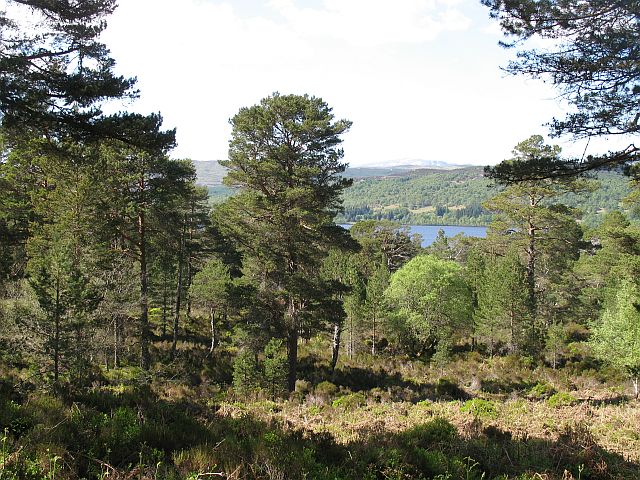
The Caledonian Pine Forest – Black Wood of Rannoch
As well as the rapacious need by the industrial cities of the south for wood, the Highlands underwent a cataclysmic social reorganisation in the years following the Battle of Culloden in 1746. Known as the Highland Clearances, from around 1780 there was a systematic removal of people from their native glens at the hands of a brutal and unsympathetic aristocracy. The driving force was enrichment, and many thousands emigrated or moved to the industrial cities. In their wake came sheep. The wholesale introduction of sheep also had a devastating effect on what remained of the ancient forest. Over-grazing prevented regeneration, and the promotion of the heather moorlands, that now dominate the Highland landscape, to provide a habitat for grouse and deer during the heyday of the Victorian shooting estates put paid to the last significant areas of Britain’s remaining virgin forest. The writing was on the wall.
By 1917, and the dark days of the First World War, Britain had run out of trees, and was now relying on imports from Canada the time had come to fell the last pine stands in the Highlands; regardless of how remote. Thankfully, by November 1918 the war was over and the condemned pines were saved. Following the war the Government established the Forestry Commission, a state owned body that would oversee a massive reforestation project. Most of the trees planted were non-native (Sitka Spruce), but the FC would also take into state ownership most of the remaining sections of the Caledonian Pineforest – saving them for future generations. In addition over the next 200 years the plan is to extend, perhaps even treble the acreage covered: an ambitious project, but worthwhile.
Today, the remaining parts of the Great Wood of Caledon are very much protected. They are living cathedrals, drawing us home to a past we so very nearly lost; and one that allows us to appreciate the landscape and world of our forefathers.
This article was written by David McNicoll
Owner of Vacation Scotland – www.vacationscotland.biz which specialises in vacation packages and tailor-made tours of Scotland.
The post The Great Wood of Caledon appeared first on ScotClans | Scottish Clans.
]]>